15 Ways to Decorate a Minimalist Christmas Tree Like a Designer
Decorate a minimalist Christmas tree with 15 designer-minded ideas for lights, neutral ornaments, natural textures, small spaces, and safer fresh-tree care.
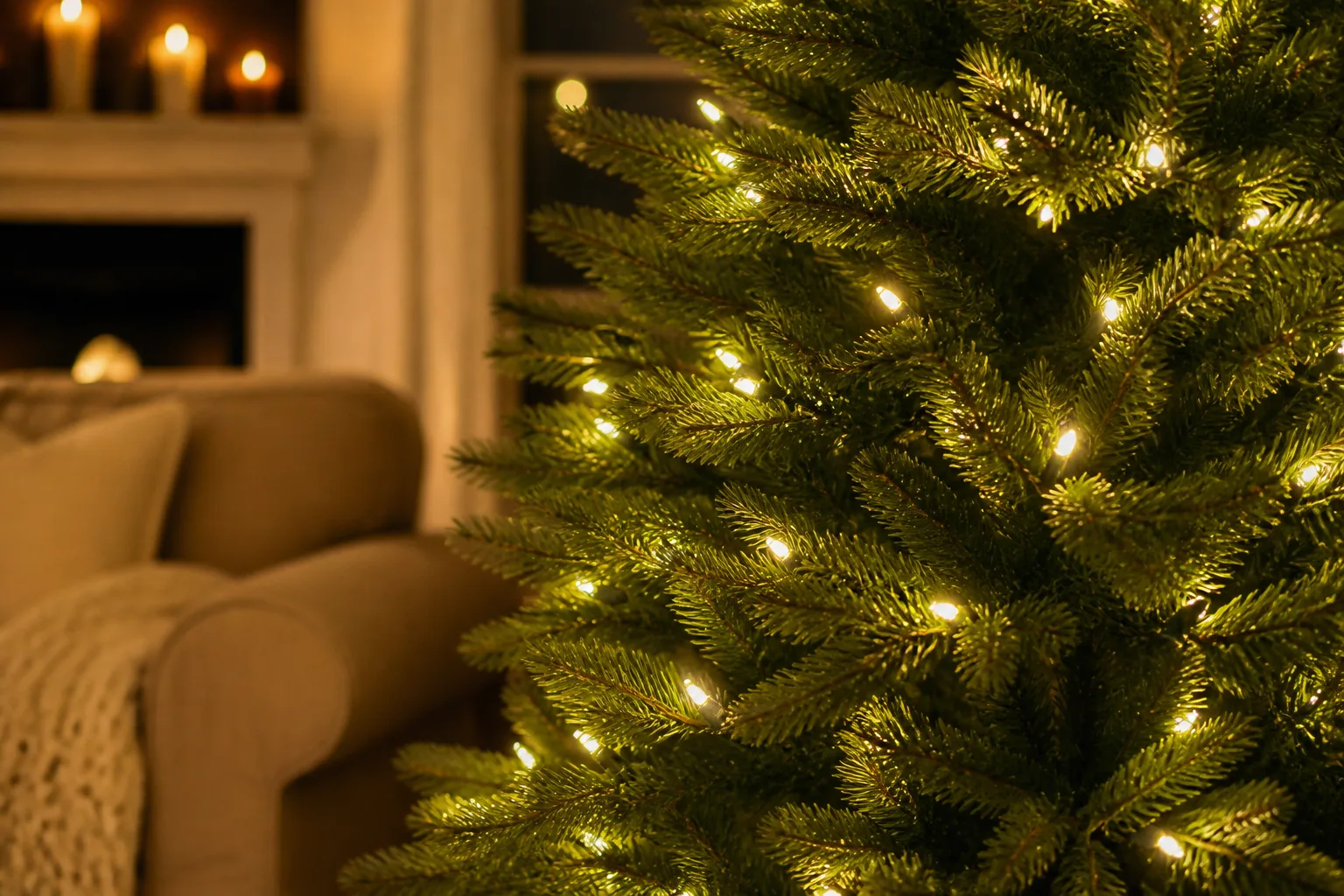
Minimalist Christmas tree decorating is not the same as stopping halfway. The look works when every visible choice has a job: the lights create glow, the ornaments establish rhythm, the base grounds the silhouette, and the empty space keeps the branches readable.
The easiest way to get there is to edit before you decorate. Choose one palette, one repeating material, and one focal point; then stop adding when those three elements already make the tree feel finished. These 15 ideas give you different ways to make that decision, whether you have a full-size evergreen, a slim artificial tree, a flocked model, or a few branches in a vase.
Start with one visual rule
Before opening the ornament boxes, decide what you want the tree to communicate. “Warm and natural,” “quiet and Scandinavian,” “graphic and modern,” and “soft and snowy” are all workable directions, but they need different materials. A warm natural tree might use wood, paper, pinecones, and amber light; a graphic tree might need only green ornaments and a clean strand of lights.
Use the room as your starting point. BHG’s nature-inspired palette guidance shows why greens, warm browns, wood tones, stone colors, and creamy whites can feel balanced together rather than flat (BHG’s earthy color palettes). You do not need to copy a palette from a photograph; pull two or three colors already present in the room and let the tree echo them.
1. Leave a bare tree as sculptural decor
A healthy evergreen or well-shaped artificial tree can be the decoration. Leave the branches completely bare, or add a simple stand and a soft textile at the base so the silhouette has a finished landing place. This works especially well when the tree has an open shape, visible trunk, or interesting branch spacing.
Bare does not mean neglected. Fluff an artificial tree carefully, rotate the best side toward the room, remove bent or broken-looking tips, and check the outline from the doorway. For a real tree, let its natural asymmetry show instead of trying to force every branch into a perfect cone.
The trade-off is that a bare tree asks more of the room around it. Put it against a quiet wall, beside a window, or near a warm wood piece; a crowded backdrop can make the same tree look unfinished rather than intentional.
2. Let warm lights do the decorating
Warm white lights are the cleanest minimalist choice because they add celebration without adding another shape, color, or material. Wrap them loosely enough that some bulbs sit deeper in the branches and others sit near the tips. That layered glow gives a sparse tree depth without covering its structure.
For an artificial tree, test the strand before you place it and keep the cord routed away from walking paths. For a fresh tree, choose low-heat lights and inspect every strand before hanging it. The National Christmas Tree Association specifically recommends low-heat lights, checking light sets, switching them off when you leave or go to bed, and keeping the tree away from heat sources (National Christmas Tree Association care tips).
If the tree still looks too plain, resist the urge to add three more colors. First try changing the light temperature, moving the bulbs inward, or adding a dimmer or timer made for the light set. Light placement often solves the problem that extra ornaments would only conceal.
3. Limit the palette to one or two colors
Minimalist trees look designed when the eye can understand the color story at a glance. Pick one base color—green, white, metallic, wood, or the tree itself—and add one supporting color such as brass, cream, black, or warm brown. A third color can work as a tiny accent, but it should appear deliberately rather than arrive by accident from a mixed ornament box.
Silver and gold can look elegant together when one is clearly dominant. Green and white feel fresh; brown and cream feel calm; black and warm white create a sharper modern contrast. If your room already contains strong color, repeat a small amount of it on the tree instead of introducing a separate holiday palette.
Lay the decorations on the floor before hanging them. If the colors look busy in a small group, they will look busier when scattered across the whole tree. Remove the pieces that do not support the chosen story and save them for another display.
4. Make pinecones the only ornaments
Pinecones give you ornament density without a glossy collection of unrelated shapes. Choose a single size for a clean, graphic effect, or mix two sizes if the tree is large enough to need variation. Leave generous gaps so the needles and branch structure remain visible.
Use clean, fully dry pinecones and attach them with secure wire or florist picks rather than flimsy hooks that tip forward. Do not hang heavy cones from thin branch tips. If you gather them outdoors, inspect for insects, sap, mold, and moisture before bringing them inside; a store-bought set is easier when you want predictable size and condition.
Pinecones are especially effective with warm lights and a woven or wool base. They also give a very plain artificial tree an organic texture without requiring garland, ribbon, baubles, and a topper all at once.
5. Fully decorate one tree and leave the rest quiet
If you have several trees, the minimalist move may be to choose only one for a complete treatment. A single decorated focal tree creates hierarchy; bare or lightly lit companion trees become a quiet backdrop instead of competing displays.
The same rule works in a small home with multiple holiday vignettes. Let the living-room tree carry the ornaments, then use a bare branch arrangement, a small lit tree, or a bowl of pinecones elsewhere. Repeating one material across rooms—such as wood, paper, or warm white light—will connect the displays without making each surface demand equal attention.
This is also a budget decision. You can spend your time and best decorations on one tree while keeping secondary displays simple, reusable, and easy to store.
6. Match green ornaments to the branches
Green-on-green decorating creates a tree that reveals itself slowly. Choose ornaments one or two shades lighter or darker than the needles, then let the lights catch their curves. Matte green baubles disappear into the branches from across the room but add small flashes of form when someone comes closer.
This approach is forgiving because gaps do not read as mistakes. Use a mixture of matte, satin, and a few glossy finishes so the tree has texture without needing more colors. If the branches are dark, olive, moss, sage, and smoky blue-green can separate; if the tree is pale or flocked, deeper forest green gives the ornaments enough contrast.
Keep the hooks short and place the ornaments at different depths. A green ornament at the front reads as a shape; one tucked inside the tree reads as shadow and movement.
7. Let a white or flocked tree supply the finish
Flocking is built-in visual texture, so it can carry more of the design than a plain green tree. Start with lights only, then add one material—wood, glass, paper, or a single metallic—and stop earlier than you think. Cream, clear glass, soft gold, and natural wood keep a snowy tree quiet; bright multicolor ornaments turn it into a different style.
The important distinction is between texture and clutter. A flocked tree already has a high-contrast surface, so dense garland may flatten the branch pattern. If the flocking is uneven or shedding, use a light hand with ornaments and keep the tree away from damp areas, pets that may lick loose material, and high-traffic corners.
A white tree can also be a strong choice for a room that needs contrast, but it should relate to something else nearby: a pale rug, white ceramic, light walls, or a cool metal accent.
8. Drape one simple wooden bead garland
A wooden bead garland gives a minimalist tree a line to follow without the sparkle and visual interruption of tinsel. Use one long strand and let it fall in relaxed, uneven arcs rather than wrapping every branch tightly. The goal is to guide the eye downward through the tree, not to build a second layer of foliage.

Choose beads that suit the scale of the tree. Tiny beads disappear on a full-size evergreen; oversized beads can make a mini tree look top-heavy. Natural wood warms a cool room, while painted white or black beads create a more graphic effect.
A Scandinavian-inspired approach often succeeds because it combines restraint with tactile materials. Modern Glam’s example pairs a simple tree with pared-back natural and wood-toned elements, a useful reminder that “minimal” can still feel warm (Modern Glam’s Scandinavian tree example).
9. Place ornaments with deliberate negative space
The difference between sparse and unfinished is usually placement. Do not scatter ornaments evenly like dots on graph paper; group a few pieces in loose triangular or diagonal movements, then leave visible stretches of branch between them. The eye reads those gaps as part of the composition.
Start with the largest pieces, place them slightly inside the tree so they do not pull the silhouette outward, and add smaller pieces only where the shape needs a visual bridge. Step back every few minutes. A tree can look balanced close up but have a heavy left side from across the room.
There is no magic ornament count. A useful stopping test is to turn off the lights and ask whether the tree still has rhythm; if the ornaments look random without the glow, edit their positions before adding more.
10. Add natural elements in a controlled mix
Dried orange slices, paper stars, small branches, berries, pinecones, and wood shapes can make a minimalist tree feel connected to winter without looking themed. Pick one or two natural materials and repeat them at a calm interval. Five dried orange slices and ten wood stars usually look more intentional than five different natural elements used once each.
Natural materials also soften a modern artificial tree. Editorial tree coverage frequently pairs dried citrus, beads, wood, pinecones, and relaxed ribbon with greenery because those materials bring color and texture without requiring a shiny ornament collection (Elle Decor’s tree ideas).
Check every dried item before hanging it. It should be clean, completely dry, light enough for the branch, and placed away from a bulb that gets hot. On a fresh tree that has begun to dry, skip extra flammable material and remove the tree instead of trying to disguise its condition.
11. Use one oversized bow as the focal point
One large bow can replace a topper, ornament collection, or garland. Choose a ribbon with enough body to hold its shape, then place the bow either at the top or slightly off-center where the tree has a strong branch junction. Let the tails fall naturally, but trim them if they overwhelm the lower branches.
Scale is the decision. A bow should be large enough to read from across the room but not so heavy that it bends the leader or makes the tree look top-heavy. On a small tree, use a narrow ribbon and a compact bow; on a tall tree, a wide linen, velvet, cotton, or paper ribbon can become the single statement.
If the ribbon is synthetic, keep it away from heat and lights that become hot. Battery-operated flameless candles are a safer choice for nearby glow than open flame; the U.S. Fire Administration advises keeping candles at least 12 inches from anything that burns and recommends considering flameless alternatives (U.S. Fire Administration holiday fire safety).
12. Forage a few safe evergreen branches
You do not need a full tree to create a minimalist Christmas display. A few sound evergreen branches in a heavy vase can bring the same winter shape to a console, dining table, entryway, or apartment corner. Use one long branch as the line, then add two shorter pieces to create a loose asymmetrical silhouette.
Only cut or collect material you have permission to take, and avoid branches that are diseased, wet, brittle, or close to a power line. A branch arrangement is best treated as a short-term display: keep it stable, keep it away from heat, and remove it when it becomes dry or sheds heavily.
Foraged branches are a useful answer when a full tree would block a walkway or make a small room feel crowded. They also let you decorate a secondary space without multiplying boxes of ornaments.
13. Build a neutral palette through texture
Neutral does not mean everything must be white. A richer minimalist tree can use warm beige, charcoal, brown, brass, cream, gray-green, and natural wood, provided the materials do different work. A matte ceramic ornament, a rough wooden bead, a soft ribbon, and a single glass bauble will feel more dimensional than four shades of identical plastic.
Repeat texture before adding color. If the room is full of smooth surfaces, introduce wool, woven fibers, paper, or unfinished wood at the base and on the tree. If the room already has rugs, baskets, and upholstery, a quieter glass or metal accent can keep the display from becoming visually heavy.
BHG’s palette examples show the value of layering related earth tones instead of treating “neutral” as one flat shade. Use that idea on a tree: vary the finish and warmth within a narrow color family so the result stays calm but does not disappear (BHG’s color palette guidance).
14. Make the tree base part of the design
The base is where a minimalist tree either looks finished or suddenly looks like a temporary object. Replace a distracting stand with a simple skirt, a woven collar, a heavy basket used only as an outer cover, or a low stack of wrapped boxes that repeats the room’s texture. Keep the base wider than the trunk area so it visually anchors the tree.
Do not conceal a water reservoir in a way that prevents daily checking. For a real tree, the stand still needs to fit the trunk, remain stable, and stay accessible. The National Christmas Tree Association recommends a reservoir stand sized for the tree and warns against shaving down the trunk to force a poor fit (National Christmas Tree Association care tips).
For a mini tree, the base may be the main visual weight. Use a ceramic pot, a simple wooden stool, or a shallow woven basket only if the tree is secured and the container cannot tip when someone brushes past it.
15. Use a lit mini tree when the room calls for less
A small tree is not a compromise if its proportions suit the room. Place a two- to four-foot tree on a sturdy console, side table, plant stand, or floor basket, then give it one clear treatment: lights only, a bow, pinecones, or a few matching ornaments.
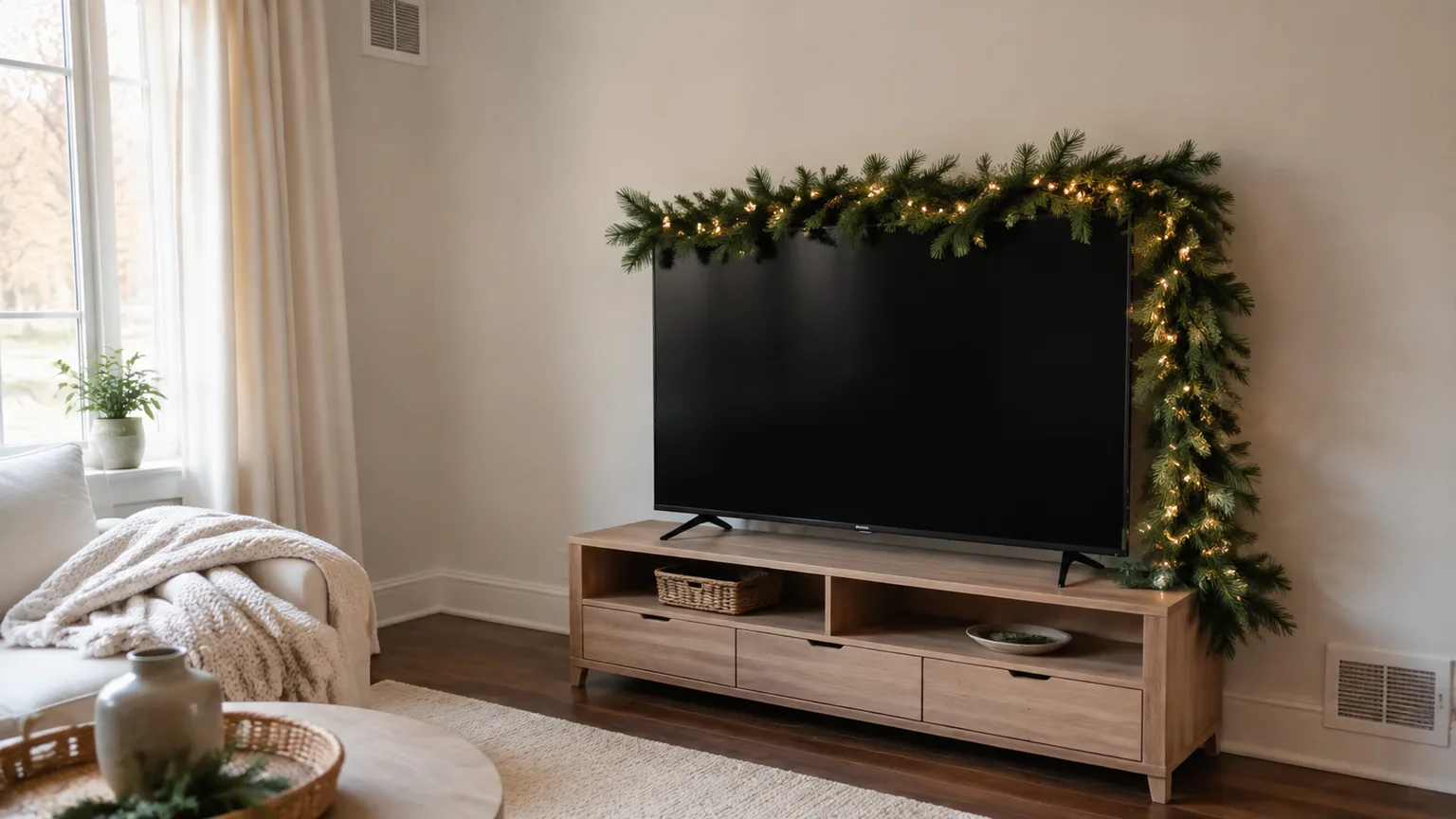
The most common mini-tree mistake is using full-size decorations. Oversized ornaments and long garlands overwhelm the branches, while tiny details disappear. Choose one hero element and repeat it at a scale the tree can carry; three paper stars or a short strand of beads may be enough.
Mini trees are also useful for bedrooms, kitchens, home offices, and apartments where a full-size tree would crowd furniture. The final check is practical: the stand or surface should be stable, the cord should not create a trip hazard, and the tree should not block a door, radiator, vent, or exit.
Layer the choices in the right order
Once you choose an idea, decorate in an order that protects the minimalist look. First place the tree and judge its silhouette in the room. Second add the base treatment, because the skirt or collar changes how tall and grounded the tree feels. Third add lights, then one line element such as beads or ribbon, then the largest ornaments, and finally only the small accents that solve a visible gap.
Use a three-pass edit. In pass one, remove anything that clashes with the palette. In pass two, remove anything that repeats a job another decoration already performs. In pass three, remove roughly 10 percent more than feels comfortable, then look again after the lights are on.
If the tree feels empty after editing, change one structural variable before buying more decor. Move it away from a busy wall, improve the base, shift the light depth, add one larger focal object, or use a stronger contrast color. Minimalism depends more on hierarchy than on a low object count.
Keep the tree safe, fresh, and easy to live with
Design decisions should never override basic holiday safety. The U.S. Fire Administration recommends inspecting light strands, following the manufacturer’s connection limits, watering a live tree every day, keeping the tree at least three feet from fireplaces, radiators, space heaters, candles, and heat vents, and removing it after the holiday or when it becomes dry (U.S. Fire Administration holiday fire safety). It also notes that almost one-third of home Christmas tree fires are caused by electrical problems.
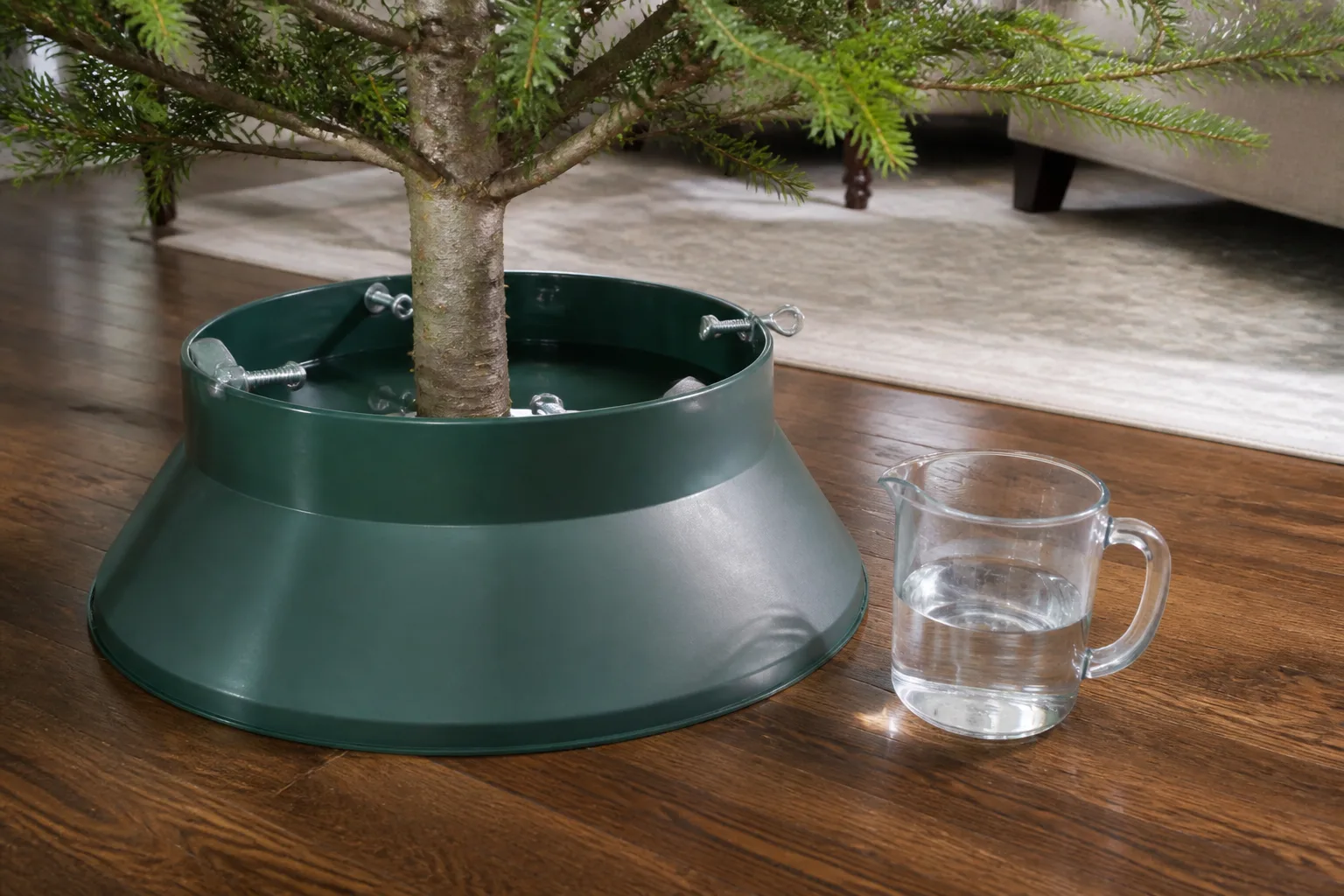
For a fresh-cut tree, use a stand with a water reservoir and check it daily; the trunk base must stay submerged. If the tree needs a new cut, the National Christmas Tree Association recommends removing a straight slice from the base and placing the tree in water promptly, not carving the trunk into a point or shaving its sides. Never use candles on the branches, even if the tree is styled sparsely.
Keep fragile glass, long ribbon tails, and loose small pieces out of reach of toddlers and pets. Secure a tall or narrow tree if it can be pulled or brushed into, hide cords without pinching them, and use flameless light sources around dry branches. When the needles become brittle, the branches shed heavily, or the tree no longer takes up water, remove it rather than refreshing the decor.
Conclusion: let the tree breathe
A designer-looking minimalist Christmas tree comes from decisions, not deprivation. Start with the tree’s natural shape, restrict the palette, repeat one useful material, give the eye a focal point, and protect the empty space that lets the whole arrangement read.
The best version may be a bare evergreen with warm lights, a flocked tree with wood beads, a pinecone-only display, a single oversized bow, or three branches in a vase. Choose the version that fits your room, budget, household, and maintenance tolerance; then stop before the tree loses its quiet shape.