How to Grow and Care for Nemesia
Learn how to grow nemesia from seed or nursery plants, choose the right light and soil, water containers, prune for another flush, and diagnose summer dieback.
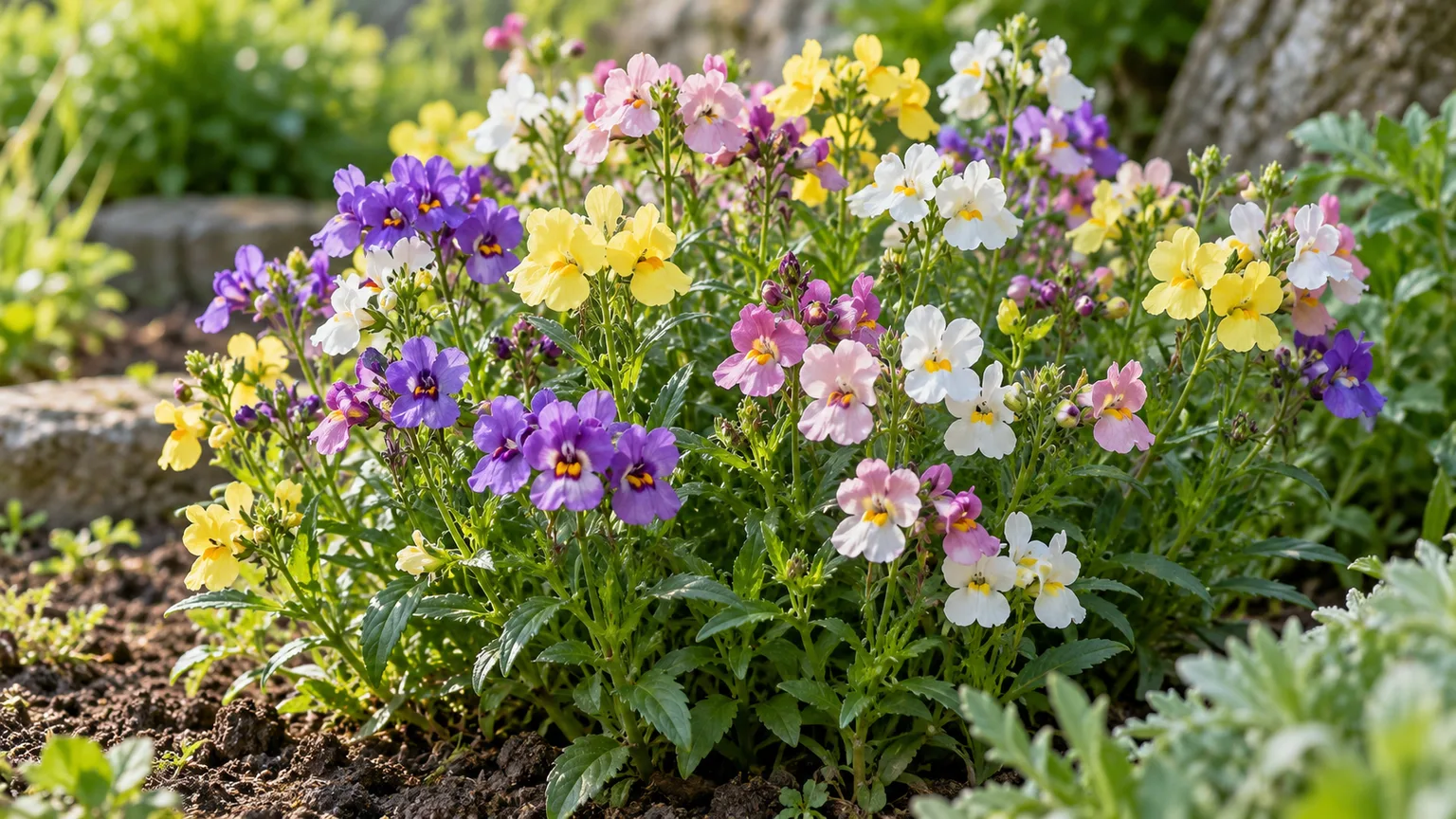
Nemesia is a compact, flower-heavy plant that can brighten a border, window box, or patio pot for months—if its growing season matches your weather. It generally performs best in cool to moderate conditions. In a mild spring, it may bloom steadily; when hot weather arrives, flowering can pause and the plant may thin or die back. Planning around that seasonal limit is more useful than expecting every cultivar to flower nonstop from spring to frost.
The genus includes annuals, short-lived perennials, and hybrids, so a nursery tag matters. Choose a named cultivar for its habit and local performance, plant it after frost risk has passed, and give it sun with protection from harsh afternoon heat where summers are hot. Keep the roots moist but never waterlogged, then decide whether to trim, shelter, or replace the plant based on its type and condition.
Is Nemesia Right for Your Climate?
Nemesia is a southern African genus of more than 50 species, often grown for small, two-lipped flowers in white, pink, violet, blue, yellow, orange, and mixed colors. The flowers have a distinctive upper and lower lip, and many garden forms stay low and branch into a rounded mound. They work especially well at the front of a bed, along a path, in a mixed container, or spilling over a basket edge.
The key question is not whether nemesia can grow in your hardiness zone in the abstract; it is whether the specific plant can handle your frost and summer heat. The Royal Horticultural Society’s growing guide describes the genus as mostly tender and notes that flowering can finish early in hot, dry weather. NC State Extension’s profile of Nemesia strumosa likewise characterizes it as a cool-weather annual that performs best in cool to moderate temperatures. In a cool-summer region, you may get a long spring-to-fall display; in a hot-summer region, think of nemesia as a spring or fall crop.
Annual, Tender Perennial, or Hybrid?
Some nemesias complete their life cycle in one season, while other species and named hybrids are tender perennials that can survive more than one year in a mild or protected setting. A plant marketed simply as “nemesia” may be a hybrid whose mature size, heat tolerance, and winter behavior differ from another plant sold under the same common name. Treat broad species descriptions as a starting point, then use the cultivar label and local nursery advice for final decisions.
This distinction changes your end-of-season plan. A true annual can be removed when it finishes or is killed by frost; saving seed may not reproduce a hybrid reliably. A tender perennial may be worth sheltering if you have a bright, frost-free spot and enough room, but survival is not guaranteed. The RHS guide gives different guidance for annual and perennial types, including protected overwintering for tender perennials. If the label is missing and the plant has already declined, replacing it is often more dependable than trying to preserve an uncertain hybrid.
Choose Nemesia by Growth Habit and Use
The best cultivar is the one that fits the container or bed you have, not simply the one with the most striking flower color on its tag. Compact upright plants suit edging and the center of small containers. Semi-trailing forms look better near a pot rim or in a hanging basket, where their stems can spill without being crowded by taller neighbors. Fragrant cultivars make more sense near a doorway or seating area than at the back of a large border.
Color is an easy way to plan a display, but bloom timing and mature spread are more important for reliable results. Nemesias are widely hybridized, and a cultivar selected for a cooler climate may stall in a hot, humid summer even if it grows vigorously in spring. The RHS plant guide lists examples such as the fragrant ‘Wisley Vanilla’ and trailing Sunsatia series; NC State Extension describes compact ‘Blue Gem’ and the multicolored ‘Carnival’. These names illustrate the range, not a promise that a particular cultivar is available or suited to every region.
Match the Cultivar to the Display
Before buying, check the label for mature height and width, upright or trailing habit, heat tolerance, fragrance, and whether the plant is described as an annual or perennial. Select plants with several firm side shoots, healthy green leaves, and a moist root ball that is not sour-smelling or saturated. A plant already covered in open flowers may still establish, but a compact plant with buds and little visible stress usually has more time to settle before its main display.
For a bed, group several plants at the spacing recommended for their mature spread rather than planting them shoulder to shoulder for instant fullness. Air needs to move between the foliage, and each plant needs room for branching. For containers, decide whether nemesia is the focal plant or a spiller, then pair it with companions that prefer similar light and moisture. The RHS recommends combinations with other cool-season bedding plants such as pansies, diascias, and osteospermums; avoid a vigorous companion that will shade or smother a low nemesia.
When to Plant and Start Nemesia
Plant outside after the local frost danger has passed, when the soil is workable and temperatures are not swinging between freezing nights and summer heat. In cool-summer regions, spring planting gives nemesia time to build roots and flower before the season turns hot. In mild-winter climates, a fall planting can provide color during the cool season, while late summer can be a useful time to start a new display for autumn. NC State Extension notes that hot-climate nemesia is best grown in spring or fall, while the RHS advises protecting tender plants from frost.
If a heat wave is forecast, delay transplanting or keep nursery pots in a bright, sheltered place until conditions ease. Newly planted roots have not yet explored surrounding soil, so they dry faster and have less ability to recover from heat. Likewise, do not plant a tender start just before a hard freeze; a light covering may reduce minor chill, but it does not make a frost-sensitive plant reliably hardy.
Starting Nemesia from Seed
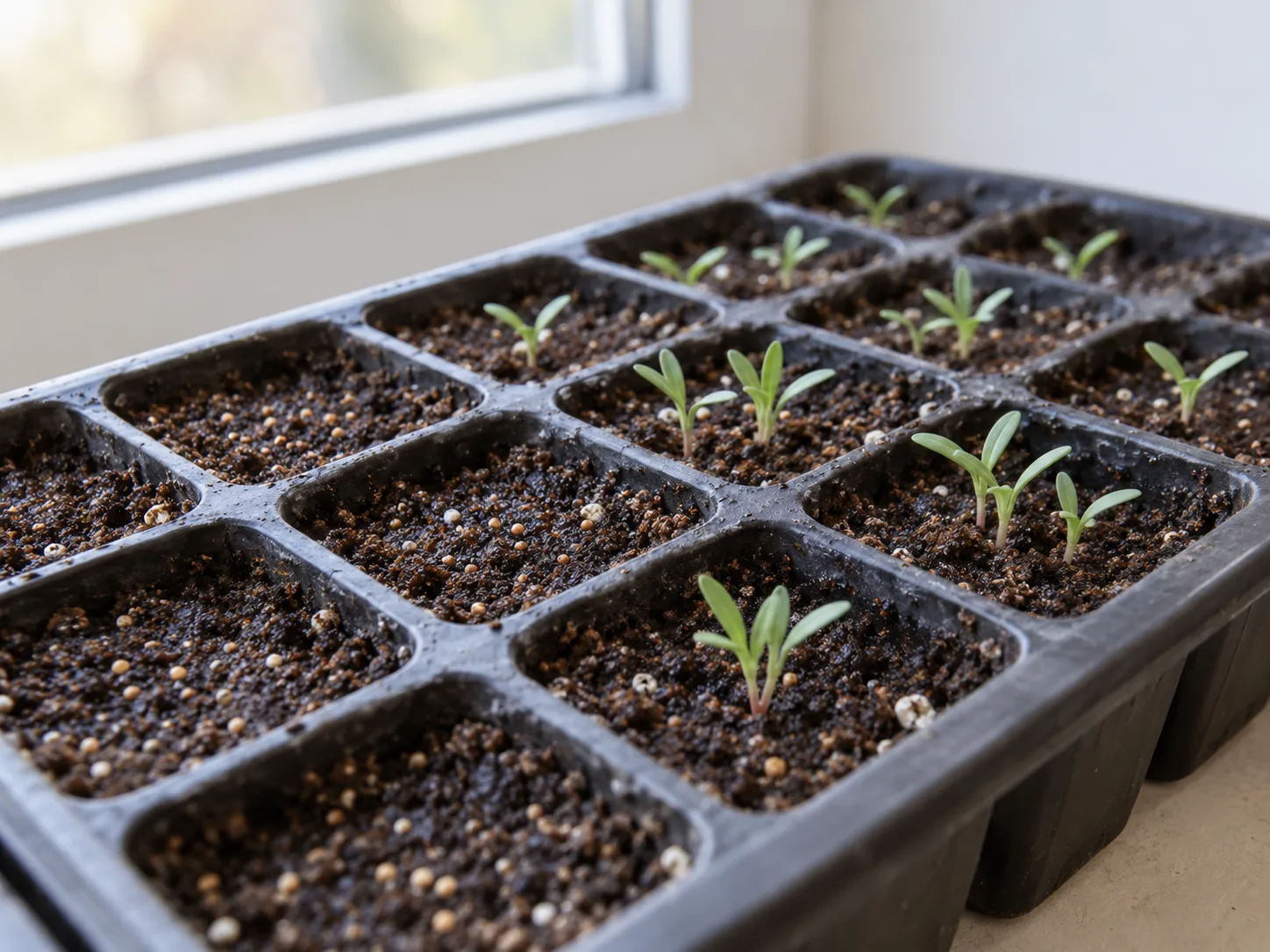
Seed is a cost-effective option when you want many plants or a color mix, though a named hybrid may not come true from saved seed. Start indoors roughly six to eight weeks before the planned outdoor planting date, or follow the seed packet if it gives a cultivar-specific schedule. Use a clean tray with fine seed-starting mix, moisten the mix before sowing, and scatter seed thinly so crowded seedlings are easier to separate.
Cover the seeds only lightly. Keep the surface evenly damp, not soaked, and place the tray in a bright spot at a cool-to-moderate temperature. The RHS recommends about 15°C (59°F) for good germination; growing guidance from Epic Gardening and Gardener’s Path also emphasizes light coverage and steady moisture. Seedlings often appear in about one to two weeks, but germination time varies with seed freshness and conditions. If nothing emerges, check that the mix has not dried out or remained cold and saturated before sowing again.
Once seedlings have true leaves and can be handled safely, thin or pot them individually so their stems receive good light and airflow. Pinch the tip only after a seedling is actively growing and has several sets of leaves; pinching too early can stall a very small plant. Before planting outdoors, harden seedlings off over about a week by gradually increasing their time outside. This transition reduces shock from stronger sun, wind, and temperature swings.
Planting Seedlings and Nursery Starts
Set a nursery plant at the same depth it was growing in its pot. Dig a hole just wider than the root ball, ease the plant out without tearing apart the roots, backfill, and water thoroughly to settle the soil. Space plants according to their expected mature width; many compact types need roughly 6 to 12 inches, but the cultivar label should take precedence.
For tight root balls, tease only the outside roots that circle firmly around the pot. Avoid rough handling, since nemesia can sulk after a disruptive transplant. Water the plant consistently as it establishes, but do not keep the planting hole wet. A thin mulch can slow moisture loss in a bed, provided it is not piled over the crown or stems.
Give Nemesia Light, Drainage, and Room
Nemesia needs enough light to make compact growth and abundant flowers, but the hottest exposure is not always the best one. In mild summers, an open sunny position is usually productive. In hotter places, morning sun followed by afternoon shade can preserve a longer flowering window. Deep shade is a poor substitute: plants may stretch toward light and produce fewer flowers.
Soil must hold some moisture while letting excess water escape. This balance is easier to achieve in a raised bed or container than in heavy soil that stays wet after rain. If your garden has compacted clay or a low spot that puddles, do not try to solve it by watering less and hoping for the best; choose a better-drained position or grow nemesia in a pot.
Sun, Heat, and Airflow
Aim for full sun in a cool climate and at least several hours of direct light in a warm one, while observing how the plant responds. A spot that gets early sun and filtered or open shade during the hottest afternoon hours is a useful compromise for hot summers. In a container, you can move the pot as the season changes, which makes it easier to test whether the plant needs more sun or relief from heat.
Give plants enough spacing for air to move through the foliage. Crowding traps moisture, makes inspection harder, and can raise the risk of mildew in humid weather. If a plant becomes leggy, first check its light and spacing; pruning can improve shape, but it will not make a persistently shaded site produce strong, flower-covered growth.
Soil and Spacing
Use fertile, moisture-retentive, well-drained soil. Blend compost through a broad planting area if the soil is poor, but do not create a tiny pocket of rich material inside dense clay; water can collect in that pocket like a basin. For a heavy or poorly drained bed, a raised planting area is more reliable than adding a small amount of grit to an isolated hole.
Published pH advice varies slightly by species: the RHS describes a preference for mildly acidic soil, while NC State’s profile for N. strumosa lists neutral conditions. For most home gardens, drainage and steady moisture matter more than chasing a precise pH for a hybrid without a soil test. If your soil is extremely alkaline or acidic, use a test and the cultivar’s information before making a correction.
Water and Feed by Growing Conditions
Water newly planted nemesia when the root zone begins to dry, then adjust as roots establish. The goal is evenly moist soil—not soil that stays shiny, muddy, or saturated. In a bed, rainfall may provide enough moisture except during a dry spell; in a small pot or hanging basket, wind and sun can dry the root ball quickly. Check the mix with a finger rather than following a weekly schedule.
When watering, soak the root zone and let excess drain. If the top of a container mix feels dry but the plant is still heavy and damp below, wait; if the whole root ball has pulled away from the pot or feels dry several inches down, water thoroughly. Empty standing water from saucers, and avoid leaving the crown in a puddle. These small checks prevent the common mistake of treating every wilt as thirst.
Established nemesia in fertile garden soil often needs little or no fertilizer. If growth is weak and the soil is poor, use a modest, balanced fertilizer according to the product label during active growth. Container plants have a smaller reserve of nutrients, so a slow-release feed mixed into fresh potting mix or occasional label-rate liquid feed may help them continue growing. Do not overfeed: lush leaves with few flowers can point to excess nitrogen, insufficient light, heat, or a plant that is simply past its best season.
Extend Bloom with Pinching and Pruning
Young plants can be pinched once they are established to encourage more side shoots and a fuller shape. Use clean fingertips or snips to remove only the growing tip above a pair of leaves. This can delay the first flowers slightly, so skip the pinch if a nursery plant is already compact and budding or if you need an immediate display.
Deadheading is useful when spent blooms are making the plant look untidy or setting seed. Snip the faded flower stem back to a leafy point rather than pulling hard on the soft stems. Some modern cultivars keep flowering without regular deadheading, so use the plant’s performance as your guide instead of treating the task as mandatory. Removing old blooms cannot overcome sustained high heat or poor drainage.
Deadheading and the Midseason Cutback
After a strong first flush, a light cutback can prompt fresh branching and another round of flowers if cool weather is returning or conditions remain mild. The RHS recommends shearing flowering shoots back by about half after initial flowering, while UC Master Gardeners of San Luis Obispo County suggest reducing a plant by roughly one-third to one-half when summer flowering stops or dieback begins. Those are practical ranges, not a command to remove the same amount from every plant.
Use the gentler end of that range on a small or stressed plant, and leave healthy leafy growth below the cuts. Do not shear into bare, leafless stems or prune heavily during a drought or extreme heat; weak regrowth is likely. Water after trimming if the root zone is dry, then give the plant time to respond. If temperatures remain too high, it may pause until cooler weather or fail to rebloom at all.
Grow Nemesia in Containers and Baskets
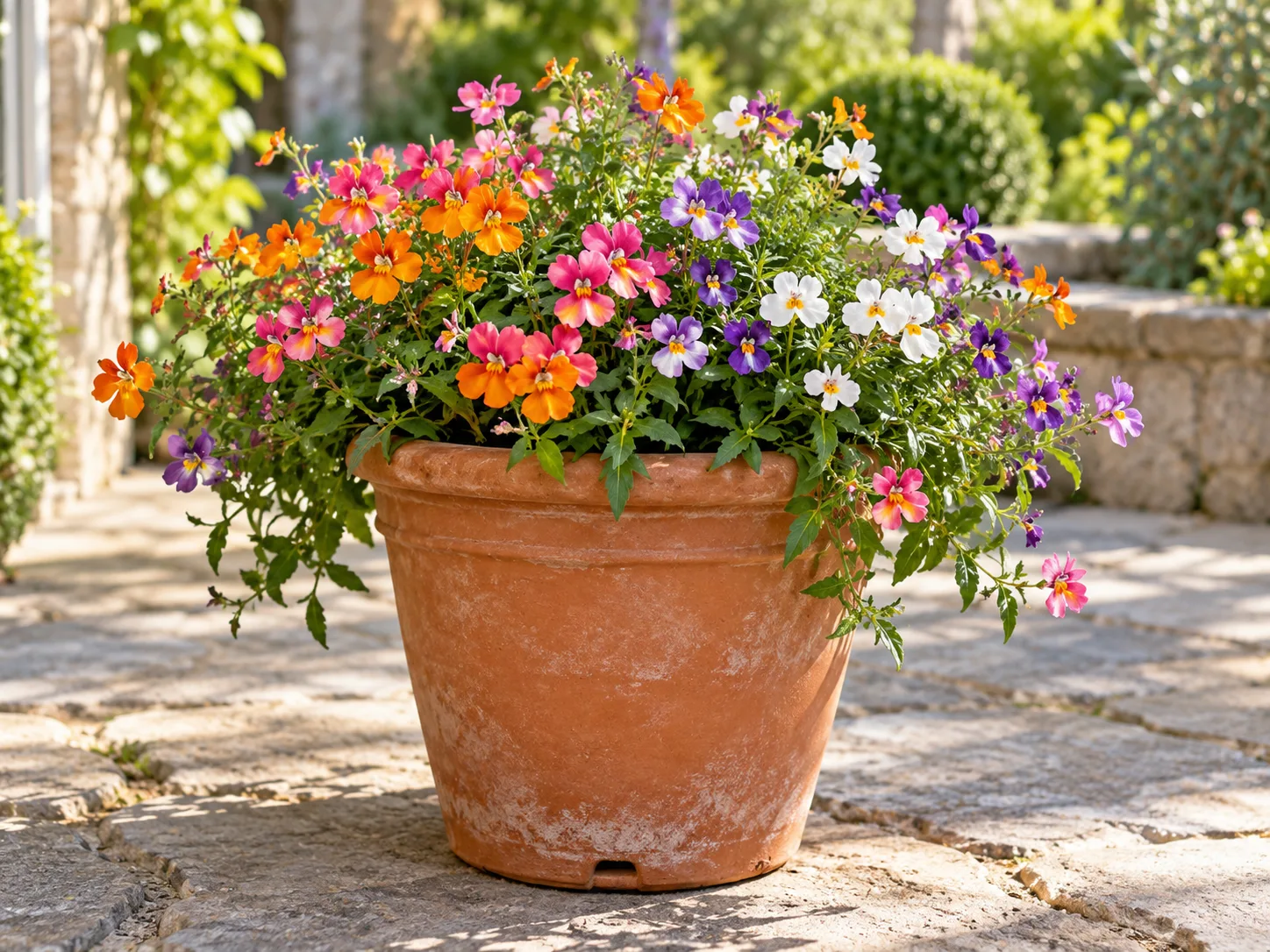
Containers make nemesia easier to manage because you control the potting mix and can move the plant to morning sun or afternoon shade. Choose a pot with open drainage holes and a quality potting mix that drains freely but does not dry instantly. Garden soil is too dense for most pots and can compact around the roots. A little perlite or horticultural grit can improve drainage in a moisture-retentive mix.
Pick a container based on the cultivar’s mature spread, not the size of the nursery plug. Nemesia can share a larger planter with compatible seasonal plants, but leave enough space so that air can circulate and each root ball can expand. A trailing type can sit near the rim; an upright type works better in the center or toward the back of a mixed display. The RHS guide recommends a gritty component in container compost and keeping the mix just moist rather than soggy.
A hanging basket needs closer checks than a bed because the mix is exposed to air on more sides and can dry rapidly on breezy days. Water slowly until moisture reaches the whole root ball, not just the surface. If the plant wilts by afternoon but recovers by morning, check moisture before watering; if it wilts while the mix remains wet, move the basket into a cooler, airier position and inspect drainage. A movable pot is also a practical way to stretch a cool-season display as the weather warms.
Troubleshoot Common Nemesia Problems
When nemesia looks poor, inspect the weather, soil moisture, and roots before adding fertilizer or pruning. A short pause in flowering during heat is different from root rot, and both can produce limp or yellowing growth. Look at the whole plant and the root zone: are stems firm or collapsing, is the soil dry or wet, and does the plant recover overnight? That sequence narrows the likely cause.
Check Heat Stress Before Adding Water
Heat stress is likely when the plant wilts during the warmest hours, the soil is dry, leaves look tired or scorched, and the plant improves in cooler evening conditions. Water deeply if the root ball is dry, and give the plant afternoon shade if possible. A nemesia that has stopped flowering in sustained heat may simply be outside its preferred season. Do not keep the soil waterlogged in an attempt to force new blooms.
Root rot is more likely when a plant wilts despite wet soil, lower stems soften or collapse, or the roots are dark and mushy rather than firm. Stop routine watering, clear standing water, and check whether the pot drains or the bed stays saturated. If much of the root system is still firm, improve drainage and allow the surface to dry before watering again; if most roots and stems have rotted, replacement is usually more sensible than repeated rescue attempts. NC State Extension identifies poor drainage as a root-rot risk.
Manage Mildew, Aphids, and Leggy Growth
Powdery mildew appears as white, dusty growth on leaves and stems, often when foliage stays crowded and air movement is poor. Water at the soil line, remove badly affected material, and open up nearby plants enough for airflow. Mild cosmetic damage is not always a reason to discard a plant, but a severe, spreading infection or repeated decline suggests the site is too humid or crowded. The RHS lists aphids among the pests that may affect nemesias; inspect soft new tips and remove small colonies with a firm water spray or by pinching them off.
Long, sparse stems usually point to low light, crowding, or a plant that has passed its strongest flush. Move a container into brighter light with heat protection, or trim it lightly back to leafy growth. If a plant is both bare at the base and declining in hot weather, do not cut it down to the soil; nemesia may not produce a useful new mound from old, leafless stems. Decide whether to wait for cooler weather or replace it.
Overwinter or Replant
If your nemesia is an annual, treat the end of its life cycle as normal rather than a care failure. Remove a frost-killed plant and compost it if it was healthy. Seeds collected from an open-pollinated type may produce variable offspring, and seed from a hybrid may not resemble the parent, so buy fresh seed or starts when you need a predictable cultivar.
For a labeled tender perennial, overwintering is worth trying only if you can give it a bright, frost-free, cool place. Before cold weather, remove spent growth and reduce the plant by about half if it has become loose; keep the mix only slightly moist over winter, never wet. In spring, refresh the potting mix, resume watering as new growth appears, and wait until frost danger has passed before returning it outdoors. The RHS notes that many tender perennial nemesias are discarded, while those kept can be protected in a frost-free greenhouse or similar shelter. Expect some losses, especially after a cold or damp winter.
The best seasonal plan depends on where you garden. In a cool-summer climate, plant in spring after frost and enjoy the main display through the growing season. In a hot-summer climate, use nemesia for the cool spring window, then start or plant a fresh crop for fall if your winters are mild. In a frost-free region, it may be grown as a winter annual, but sustained summer heat can still end its display.
Conclusion
Nemesia flowers best when its calendar fits the climate: plant after frost, give it bright light with afternoon relief in hot weather, and keep its roots moist but freely drained. Choose a cultivar for its habit and life cycle, then use the plant’s condition—not a rigid schedule—to decide when to water, feed, deadhead, or cut it back. If heat has ended the bloom or the plant is an annual, replacing it for the next cool season is often the right care.



