Invasive Plants: How to Identify and Remove Them
Invasive plants spread by seed, runners, rhizomes, and root suckers. Use this practical guide to identify, remove, contain, and replace them.
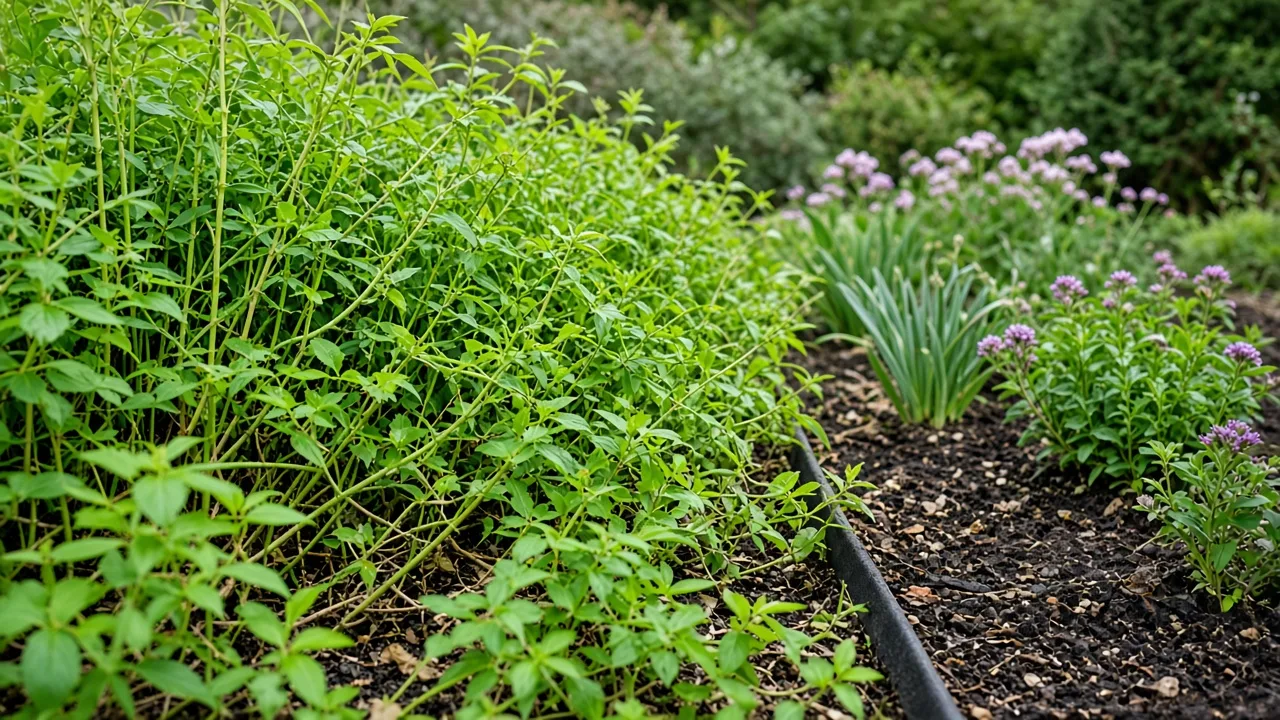
The safest rule is simple: do not buy, share, or remove a spreading plant until you know how your region classifies it and how that species reproduces. A plant that behaves politely in one climate can spread aggressively in another, while a native volunteer can look “invasive” simply because it arrived in a bare bed.
If you suspect a problem, photograph the leaves, stems, flowers, fruit, and whole plant before pulling it. Then match the identification to a state or provincial invasive-plant list, choose a control method that fits its growth system, and plan on follow-up. Many invasives are not defeated by one dramatic afternoon; they are reduced by stopping seed production and exhausting the underground parts over time.
What “invasive” means—and what it does not mean
Invasive is not a synonym for foreign, vigorous, weedy, or unattractive. In the United States, the National Invasive Species Information Center describes invasive species as non-native organisms whose introduction causes or is likely to cause economic or environmental harm, or harm to human health. The important part for gardeners is that invasive status is regional: a plant may be listed in one state, tolerated in another, and harmless in a third.
That distinction changes what you do next. A fast-growing plant that needs regular pruning is a maintenance decision. A plant officially listed as invasive is a stewardship and containment decision, especially when it can escape into waterways, woodland edges, roadsides, or neighboring property.
“I keep it trimmed” is not always a reliable containment plan. Seeds can leave on wind, birds, muddy shoes, mower decks, or improperly handled compost. A vine can cross a fence, a grass can shed seed before it looks untidy, and a root fragment can travel in a load of soil or mulch.
The four ways invasive plants travel
Seed spread is the easiest to overlook. Flowers and berries can look ornamental, but the plant only needs one successful seed crop to create a new patch. Deadheading buys time, but it does not replace removal if the plant is prohibited or damaging local habitat.
Runners and stolons move horizontally along or just below the soil surface. They root at nodes, so chopping a mat into pieces with a tiller or string trimmer can create several new plants.
Rhizomes and crowns are underground stems or storage organs. They explain why a plant can return after the visible foliage is gone. Ground elder, some running grasses, and knotweed relatives are particularly poor candidates for casual chopping and loose composting.
Root suckers emerge from a parent plant’s root system. Pulling a sucker may be pointless, and injuring the roots can stimulate more shoots in some woody species. With these plants, the correct method depends on the species rather than on how small the new shoot looks.
Start with your state department of agriculture, natural-resources agency, university extension office, or local invasive-species program. The National Invasive Species Information Center’s terrestrial plant resources provide a useful national starting point, but a national list cannot tell you what is regulated or damaging in your exact county.
Do not rely on a nursery tag alone. A plant can be legal to sell and still be a poor choice for your landscape, and names can be confused across cultivars. The University of Florida’s Assessment of Non-Native Plants in Florida’s Natural Areas is a good example of why regional assessment matters: the recommendation is tied to Florida’s climate and ecosystems, not to a universal verdict about every garden.
If the plant is near a wetland, natural area, utility corridor, or property boundary, ask for local guidance before disturbing it. Large infestations and regulated species may need a management plan, special disposal, or a licensed applicator.
Confirm identity with a four-part inspection
Take several clear photographs in daylight. Include one image of the whole plant, one of the leaf arrangement, one of the stem or bark, and one of any flower, fruit, seed head, or underground structure you can expose without spreading it.
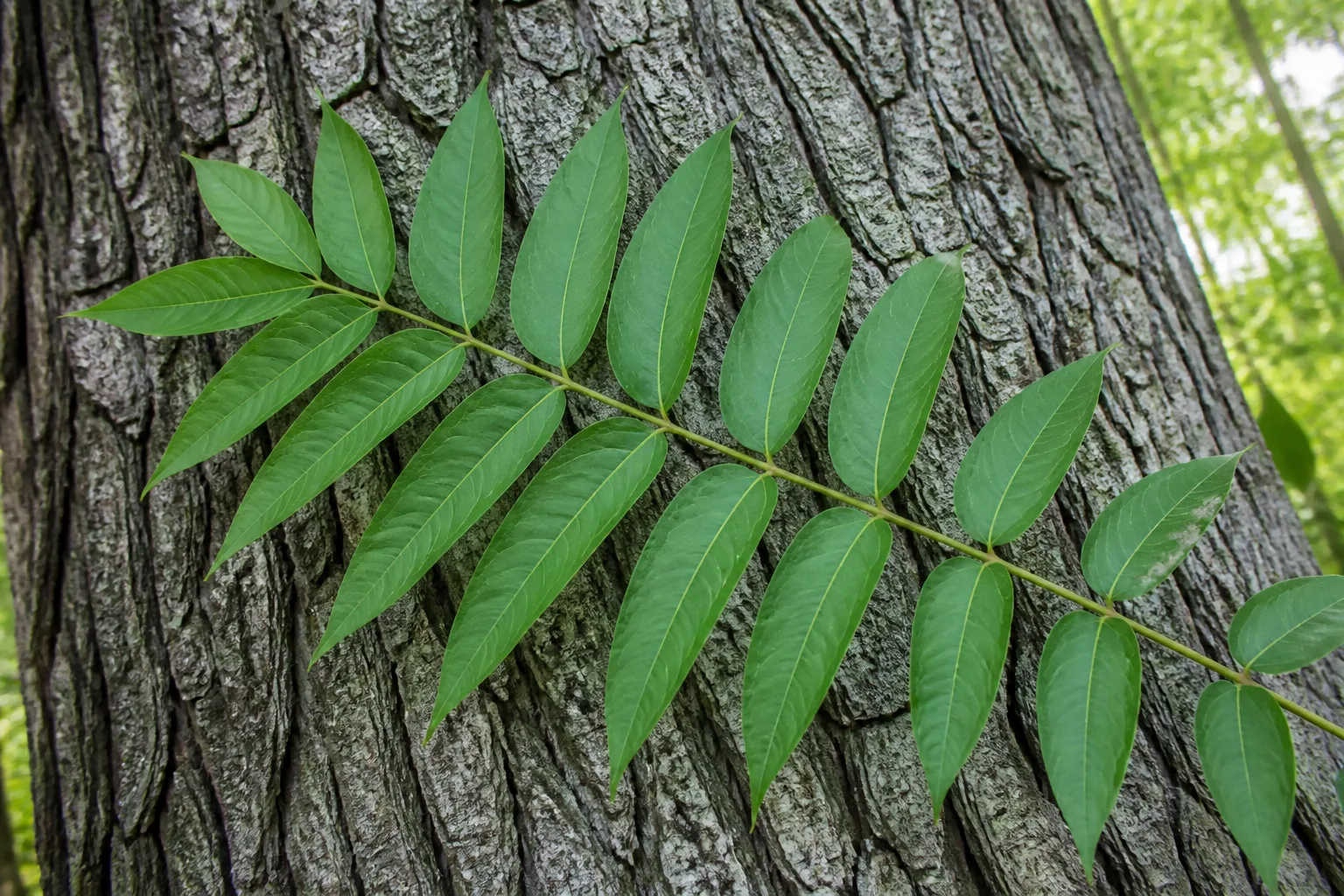
Record four details: where it grows, how fast the patch is expanding, whether new plants appear far from the parent, and what happens after cutting. A volunteer that appears only in disturbed soil behaves differently from a plant sending shoots through lawn, gravel, or a neighboring bed.
Compare the photos with a regional extension key or invasive-plant atlas. Identification apps can suggest a name, but treat the result as a lead rather than proof. When two plants look similar, keep the sample contained in a sealed bag and ask an extension office, master gardener program, or qualified local botanist.
Sort the plant by its growth system
The right control method follows the plant’s biology. A seedling with one shallow root is a hand-pulling job; a woody shrub with a persistent crown is not.
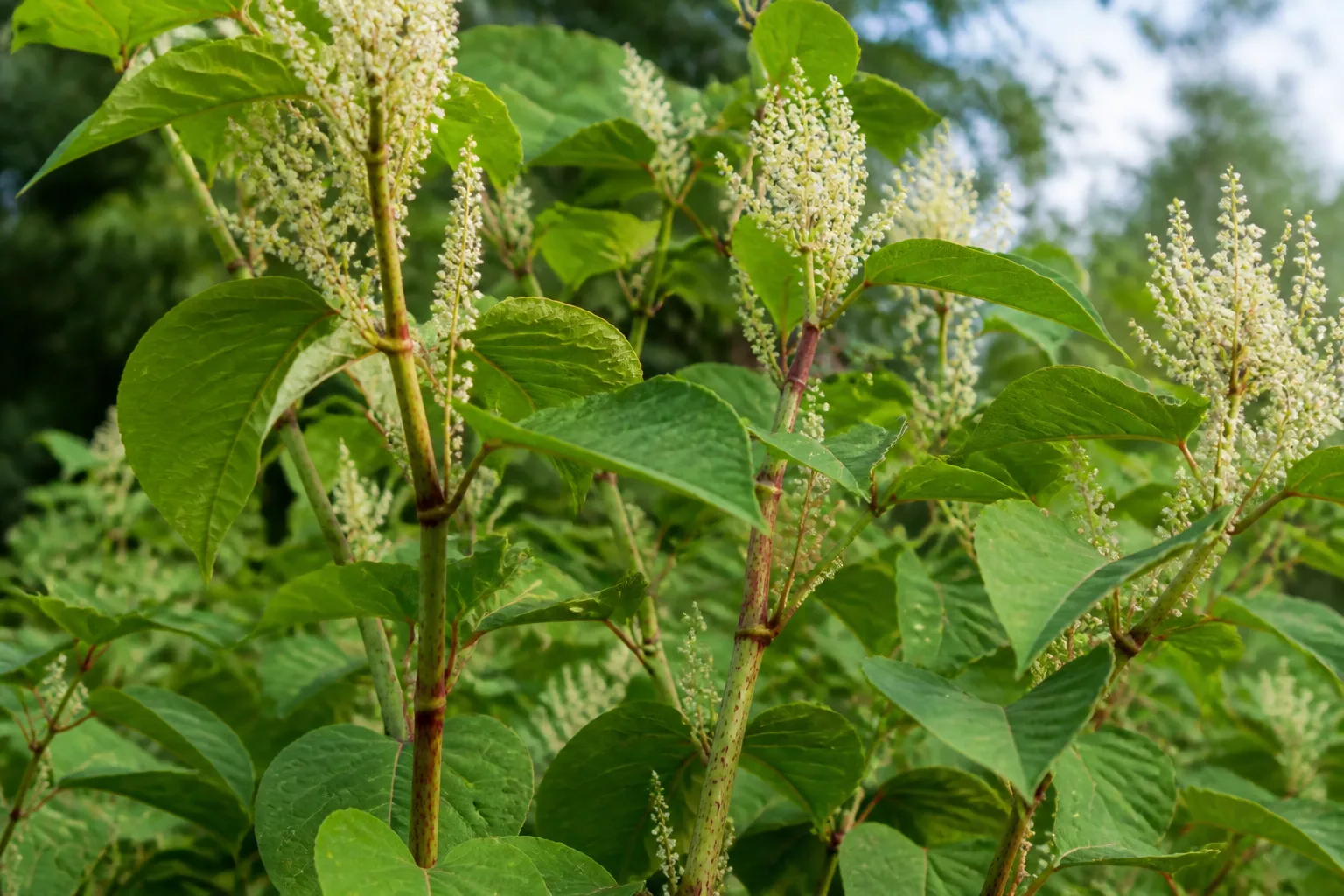
Seed-spreading annuals and biennials
Pull or cut these before flowers mature and before seed heads dry. Bag the material if you cannot identify its composting risk. Repeated removal of seedlings is often more effective than disturbing a large area and bringing buried seed to the surface.
Rhizomes, stolons, and creeping mats
Work from the edge toward the crown and collect every root or stem fragment you can see. Do not rototill a patch you are trying to eradicate. For a dense area, a light-blocking barrier may be safer than repeated chopping, but it must overlap the edges and stay in place long enough to outlast regrowth.
Woody shrubs, trees, and root suckers
Pull young plants when soil is moist and the entire root crown can come out. For larger stems, cutting alone often produces vigorous resprouts. The Woody Invasives of the Great Lakes Collaborative’s physical-removal guidance notes that soil disturbance can expose seed and that root suckers make physical removal impractical for some established species.
Choose a removal method by site size and growth form
| Situation | First choice | What can go wrong |
|---|---|---|
| One seedling, moist soil | Pull and remove the root | Stem snaps; the plant returns |
| Small clump with a crown | Dig and screen the soil | Root pieces remain |
| Large patch of soft-stemmed plants | Repeated cutting or smothering | Seed set or edge escape |
| Woody shrub with a stump | Cut, monitor, or use targeted treatment | Resprouting and herbicide injury |
| Wetland or regulated species | Get local instructions first | Spread, legal, or water-quality risk |
 |
Use the least disruptive method that has a realistic chance of control. “Natural” does not automatically mean safe: vinegar, salt, flame, and broad spraying can damage desirable plants and soil or create fire, drift, and runoff hazards.
Remove a small seedling before it flowers
Choose a cool day after rain or irrigation. Wear gloves, grip the stem low, and pull slowly while rocking the plant rather than yanking the top. If the root resists, loosen the soil with a narrow trowel and lift the plant with the root attached.
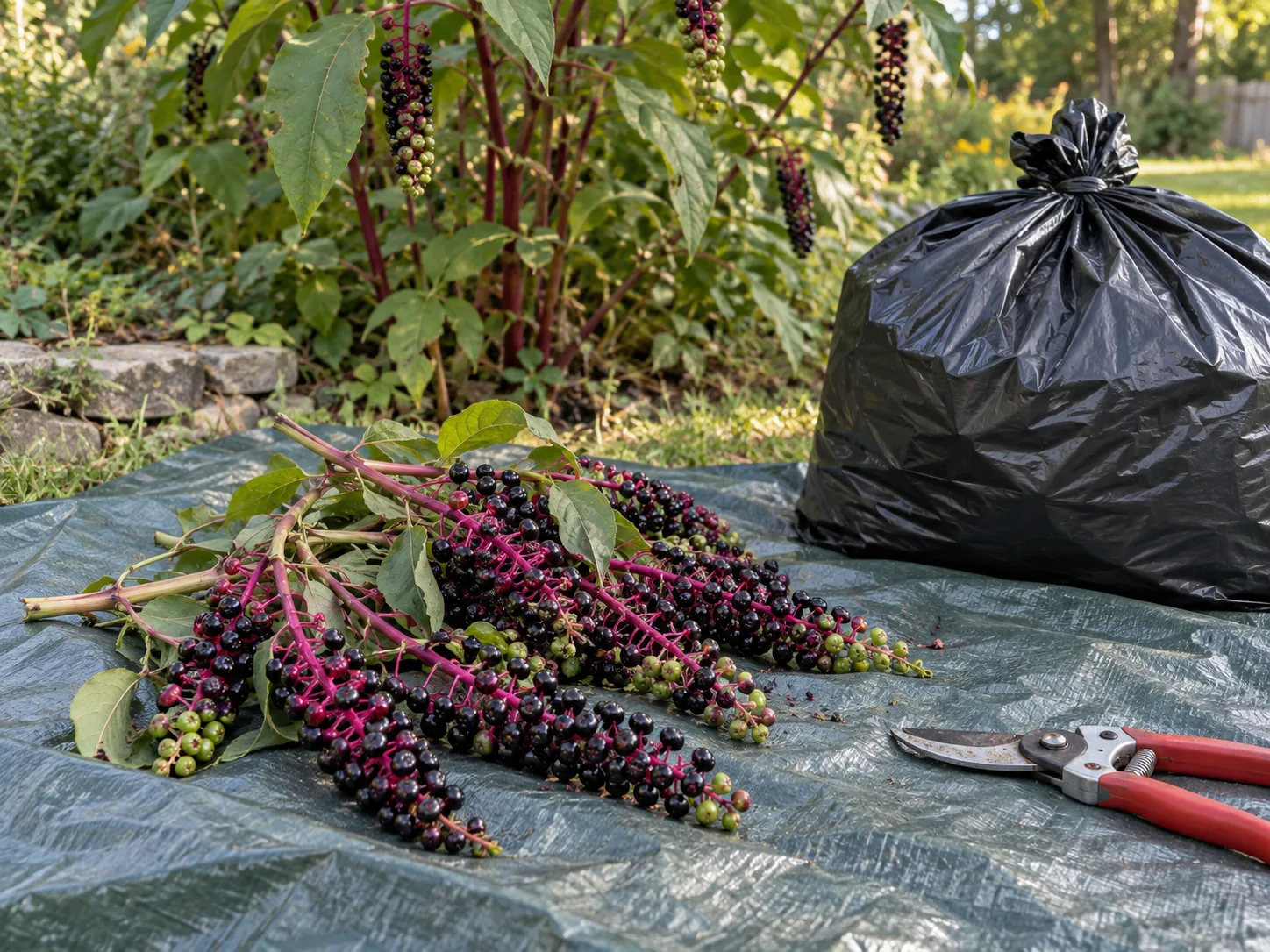
Place the plant directly into a bag or bucket, not on bare soil. Tamp the disturbed spot and check it every week or two through the growing season. Early removal is valuable because it prevents one small plant from becoming a seed source while the soil is already easy to inspect.
Dig crowns and root masses without scattering fragments
For a clump, cut only enough foliage to see the crown, then dig around the outside with a fork or sharp spade. Lift the root mass onto a tarp, shake soil gently over the hole, and inspect the soil and tools for fragments before moving to a clean bed.
Do not use a tiller unless the species-specific guidance explicitly supports it. A tiller turns roots and runners into a distribution system. The Connecticut Invasive Plant Working Group’s home-management resource emphasizes that repeated cutting, digging, smothering, and herbicide have different strengths and limitations; no single technique works for every growth form.
Use repeated cutting when digging would cause more damage
Repeated cutting is useful when a patch is too large to dig, desirable roots are interwoven with the target, or soil disturbance would expose a large seed bank. Cut low enough to prevent flowering and repeat whenever the plant begins to rebuild a canopy.
This method works by repeatedly interrupting photosynthesis and the movement of carbohydrates back into the roots. It is suppression, not an instant kill. UConn’s guidance says it can be effective in spring when new growth is drawing down stored reserves, but woody plants may require multiple cuttings per year over multiple years.
For a practical garden-scale sequence, Epic Gardening’s invasive-plant removal guide likewise emphasizes matching the tactic to the plant, removing the root system where feasible, and returning to the site for regrowth. That is useful context, but species-specific extension guidance still takes priority when methods conflict.
Bag seed-bearing cuttings and clean mower decks, footwear, and tools before leaving the patch. If cutting causes the plant to spread by fragments, stop and switch to a method designed for that species.
Smother large patches with a planned barrier
Smothering works best on a defined bed or patch where you can cover every edge. Mow or cut the vegetation low, remove seed heads and loose debris, overlap the barrier so light cannot enter, and weigh the edges down. Add a deep layer of clean wood chips or another appropriate mulch if the method calls for it.
The University of Connecticut recommends that wood-chip smothering be deep enough to block light and left in place for a long period, with at least two months of observation after removal. Cardboard can reduce the amount of chips needed, but it can also reduce air and water exchange around the roots of nearby trees and shrubs. Keep barriers away from trunks and inspect edges for escape routes.
Solarization with clear plastic is climate- and exposure-dependent. In a hot, sunny site it can heat the upper soil; in a cool or shaded site it may simply create a protected greenhouse for weeds. Do not assume solarization will defeat deep rhizomes or every woody crown.
Know when herbicide is justified—and how to limit harm
Consider a targeted herbicide only when the plant is well identified, mechanical control is impractical or repeatedly failing, and the product label permits that use on the site. A licensed professional is sensible for large trees, wetlands, steep ground, utility corridors, or plants tangled through desirable vegetation.
The label is the legal instruction for mixing, protective equipment, weather limits, re-entry, and disposal. Choose a product that lists the target and site, use the smallest effective treatment area, avoid windy or rainy conditions, and protect nearby plants and water. For some woody plants, a cut-and-paint treatment on a freshly cut stump can reduce drift compared with spraying foliage, but it still requires exact species and label guidance.
Do not improvise with stronger kitchen vinegar, salt, bleach, or mixed products. Organic products can still burn skin, injure pollinators, and kill every green plant they contact. The UF/IFAS invasive-plant guidance recommends mechanical control first and stresses reading the label before a targeted treatment.
Dispose of invasive plant material safely
Disposal is part of removal, not cleanup after the real work. Keep roots, rhizomes, runners, fruit, and seed heads out of loose compost unless local species-specific guidance confirms that the material will be rendered nonviable. A cool backyard pile is not a guaranteed kill step.
Place uncertain material in sturdy bags, seal them, and use the disposal route your municipality or invasive-species program recommends. Some regions require landfill trash; others accept invasive material at a facility with special handling. Never dump it in woods, vacant lots, drainage ditches, or streams. Do not transport loose plants in an open trailer.
The Park Pride removal guide and Homegrown National Park’s removal resource both frame disposal and safe handling as separate steps. When rules are unclear, bag the material and ask before composting, chipping, burning, or leaving it curbside.
Monitor the site after the first removal
Mark the cleared area and revisit it at least monthly during the growing season, then inspect again the following spring. Look for seedlings, shoots emerging at the edge, and regrowth from a stump or root fragment. Photographing the same spot from the same angle makes small changes easier to see.
Expect a flush of seedlings after disturbance. That does not necessarily mean the removal failed; it may reveal a pre-existing seed bank. Pull seedlings while they are small, cover bare soil with a suitable replacement, and continue checking for several seasons. If the same plant returns in a ring around the original patch, suspect runners, rhizomes, or root suckers rather than a new invasion.
Prevent invasive plants from entering your yard
Check a plant’s scientific name against your regional list before buying or accepting it from a friend. Be skeptical of vague labels such as “easy-spreading ground cover” or “vigorous self-seeder,” especially for plants intended near a fence, woodland edge, or water.
Clean soil and seeds from shoes, gloves, mower decks, pruners, and vehicles after working in a weedy area. Keep purchased soil and compost from unknown sources away from sensitive restoration beds until you know what it contains. Inspect nursery pots for volunteer seedlings, and do not share divisions of a plant whose regional status you have not checked.
Choose plants that fit the site without constant containment. A locally native plant is not automatically right for every bed, but regional native-plant societies and extension offices can suggest alternatives that support wildlife and stay manageable in your conditions.
Replace the plant with a regionally appropriate choice
Replacement is not cosmetic. Bare ground invites new weeds, while a well-matched replacement competes for light and reduces the temptation to reintroduce the original plant. Choose by the same job—screening, shade, erosion control, seasonal color, or pollinator value—then match sun, moisture, mature size, and soil.
Ask for a native or non-invasive alternative rather than searching for a universal “safe replacement.” For example, UF/IFAS pairs Florida problem plants with regionally appropriate alternatives, but those choices should not be copied into a colder or drier climate. A plant’s behavior, hardiness, and legal status all belong in the decision.
Common mistakes that make invasives spread faster
The most damaging mistake is misidentification. Pulling the wrong plant can remove a valuable native while leaving the actual invasive untouched. The second is cutting before checking reproduction; some plants spread more readily from fragments than from seed.
Other common failures include composting seed heads, leaving roots on damp soil, using a broad spray beside ornamentals, covering only the center of a patch, and declaring victory when the first flush of foliage disappears. The fix is a written sequence: identify, prevent seed set, select the method, contain debris, inspect the edges, and schedule follow-up.
Conclusion: remove early, replace wisely, and keep watching
You do not need to panic when a spreading plant appears, but you do need to slow down before acting. Confirm the regional status, learn whether the plant travels by seed, runners, rhizomes, or root suckers, and select a control method that fits both the biology and the surrounding garden.
Small plants are easiest to remove before they flower. Large patches often need repeated cutting, smothering, or professional treatment, followed by careful disposal and years—not days—of monitoring. Once the site is stable, replace the vacancy with a regionally appropriate plant and keep checking the edges. That combination protects your garden and the habitat beyond it.



