How to Grow and Care for Night-Blooming Jasmine
Night-blooming jasmine is not true jasmine. Learn where Cestrum nocturnum can grow, how to overwinter it, and when local invasive or toxicity risks rule it out.
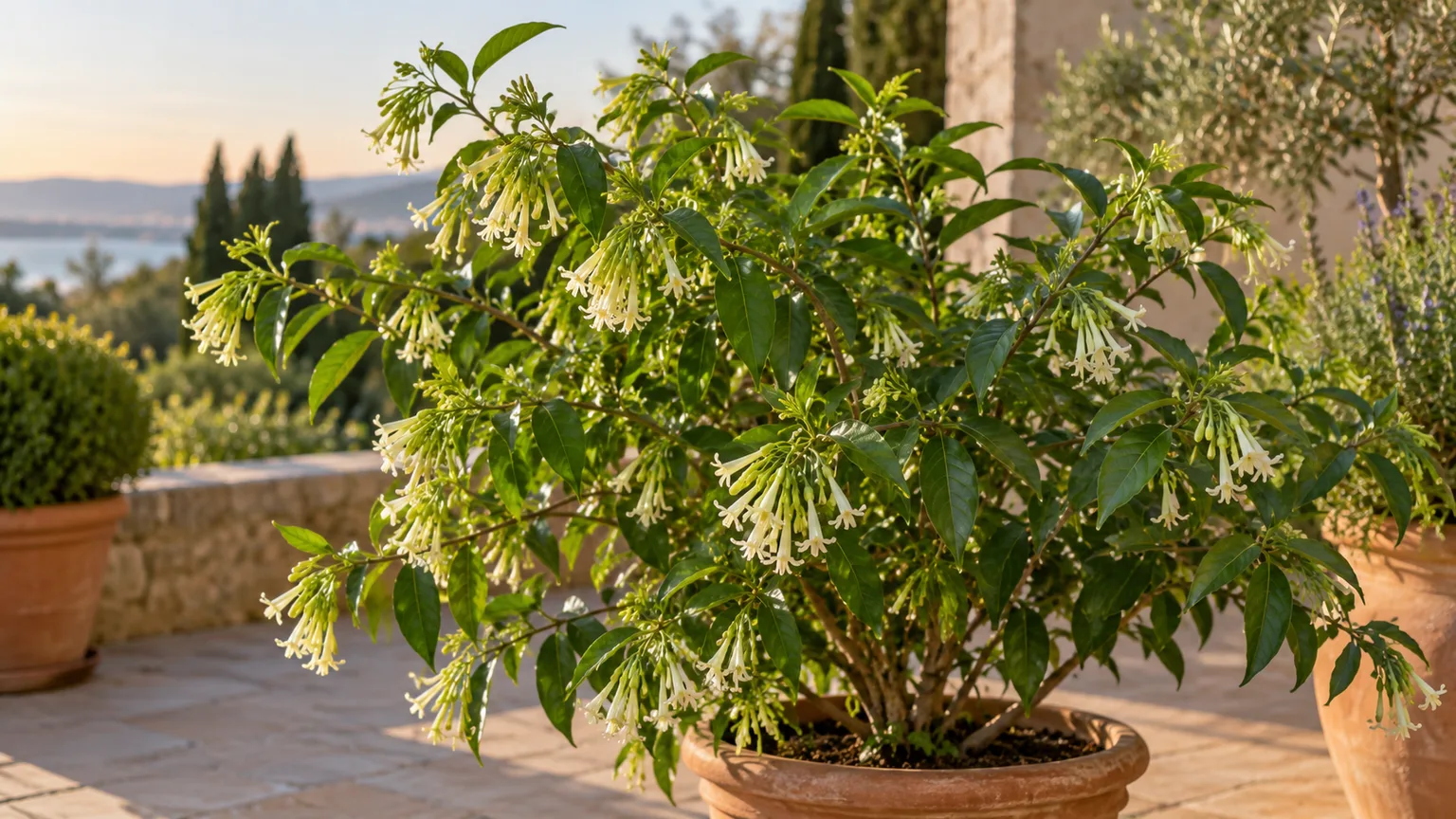
Night-blooming jasmine, Cestrum nocturnum, is a fast-growing tropical-to-subtropical shrub valued for flowers that release a powerful scent after dark. It is also a plant to screen carefully before bringing home: the common name is misleading, the shrub is frost-sensitive, all parts are toxic if eaten, and it is classed as high risk or invasive in some regions.
If your local invasive-plant guidance allows it and your climate is warm enough, the practical formula is bright sun or light shade, fertile soil that drains freely, steady moisture while the roots establish, and a light hand with pruning. In colder areas, a container may let you move a manageable plant to a bright protected space; in a region where it is an invasive concern, the better care decision is not to plant it at all.
Night-blooming jasmine care at a glance
Grow Cestrum nocturnum outdoors only where local guidance permits and winter conditions are mild. Give it full sun to partial shade, moist but well-drained soil, and enough open space for a woody shrub that can reach several feet in height and width; use a bright, movable container where outdoor winter cold is a problem. Water according to the soil, not a weekly rule, and do not leave the roots standing in water.
Before buying, check the botanical name on the label, confirm local invasive status, and decide whether its strong evening fragrance and toxic fruit are compatible with your household. A pot can make frost protection easier, but it cannot prevent birds from carrying seed away if berries form, and it does not make the species suitable in a place where it is discouraged.
Identify Cestrum nocturnum before you buy
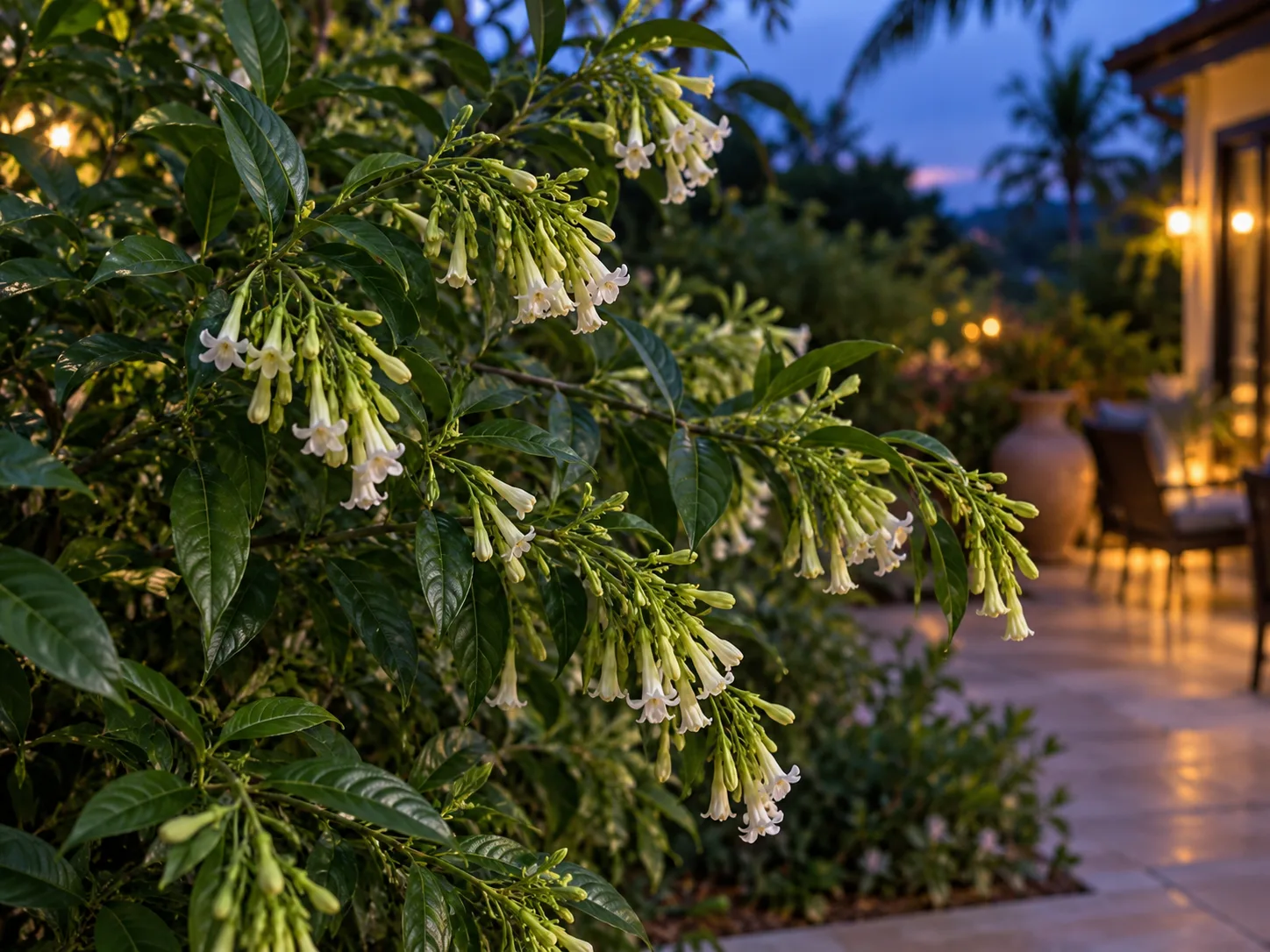
The plant sold as night-blooming jasmine is Cestrum nocturnum, also called night jessamine or lady of the night. It is an evergreen or semi-evergreen, woody shrub with arching branches, glossy simple leaves, and clusters of small tubular flowers that are cream or greenish white. The flowers are most strongly scented at night; the RHS describes a mature shrub reaching roughly 2.5 to 4 meters tall in suitable conditions, though size varies with climate, pruning, and container restriction. (Royal Horticultural Society plant profile; NCBI Taxonomy)
That mature size matters more than a nursery pot suggests. A young specimen can look like a compact patio plant, then become a broad shrub with branching woody stems when it receives heat, moisture, and a long growing season. Plan for the adult plant and the fallen fruit, not just the size of the specimen on purchase day.
How it differs from true jasmine
Despite its familiar name, Cestrum nocturnum is not a true jasmine. It belongs to Solanaceae, the nightshade family; true jasmines are members of the genus Jasminum in Oleaceae, the olive family. The family distinction is not a care detail: it helps prevent plant-label mix-ups and flags that this shrub’s toxicity profile should not be inferred from another plant sold as “jasmine.” (NCBI Taxonomy; Fine Gardening’s Cestrum and Jasminum profiles)
When shopping, look for Cestrum nocturnum on the botanical label, not simply “jasmine.” Several unrelated plants use jasmine in their common names, and other Cestrum species can have different flower colors and habits. If the label is vague, ask the nursery for the species name before you buy; a small flower-color difference can conceal a meaningful difference in growth or regional status.
Decide if the shrub belongs in your region
What Florida and Hawaiʻi gardeners should know
Check regional invasive-plant guidance before you decide on a site or start propagation. Florida’s University of Florida IFAS Assessment lists Cestrum nocturnum as “High Invasion Risk” across its North, Central, and South Florida zones and says it is predicted to be invasive and not recommended by IFAS. That is an expert risk assessment, not the same statement as a statewide legal prohibition, so check current local regulations and extension guidance rather than translating the label into a claim about legality. (UF/IFAS Assessment of Cestrum nocturnum)
In Hawaiʻi, Plant Pono documents the shrub as invasive on Hawaiʻi Island, Kauaʻi, Oʻahu, Maui, and Lānaʻi. It describes shade-tolerant growth in moist places, seed spread by birds, and branches that can root at nodes; in that setting, containing the root ball in a pot is not a complete containment plan. A single shrub may produce viable seed, so planting one specimen near natural land can still create a pathway beyond the garden. (Plant Pono’s night-blooming jasmine assessment)
Outside those documented regions, do not assume either that the plant is invasive everywhere or that it is harmless because it is sold locally. Check your state or provincial invasive species council, county extension service, and local rules; sales availability alone is not an ecological assessment. If the plant is listed as invasive, high risk, or “do not plant” where you live, choose a locally appropriate fragrant alternative instead of relying on deadheading or container walls to solve the problem.
If you inherit an established shrub in a sensitive area, avoid distributing its cuttings, fruit, or seed. Ask the local invasive-species or extension authority how to remove and dispose of it, because the right method depends on the location and the way the plant is spreading. Do not put ripe fruit in a home compost pile when you do not know whether seed will remain viable.
Choose an in-ground spot or a movable container
In a frost-free region where the plant is not a local invasive concern, an in-ground shrub can work as a fragrant background plant or informal screen. Give it room to branch without pressing against a walkway, doorway, neighboring shrub, or window; the scent can be intense at night, so planting it right beside a bedroom window may turn a feature into a nuisance. A sheltered position also reduces stress from cold winds and gives you a chance to evaluate how far the fragrance carries before planting more than one.
A container is useful when you need to move the plant away from frost or bring it into a conservatory for winter. Choose a stable pot with unobstructed drainage and enough room for the root ball to expand, but avoid an oversized pot filled with wet mix around a small root system. Use a loam-based, free-draining container medium and a saucer that you empty after watering; the RHS recommends container culture under glass and a sheltered sunny outdoor position where climate permits. (RHS plant profile)
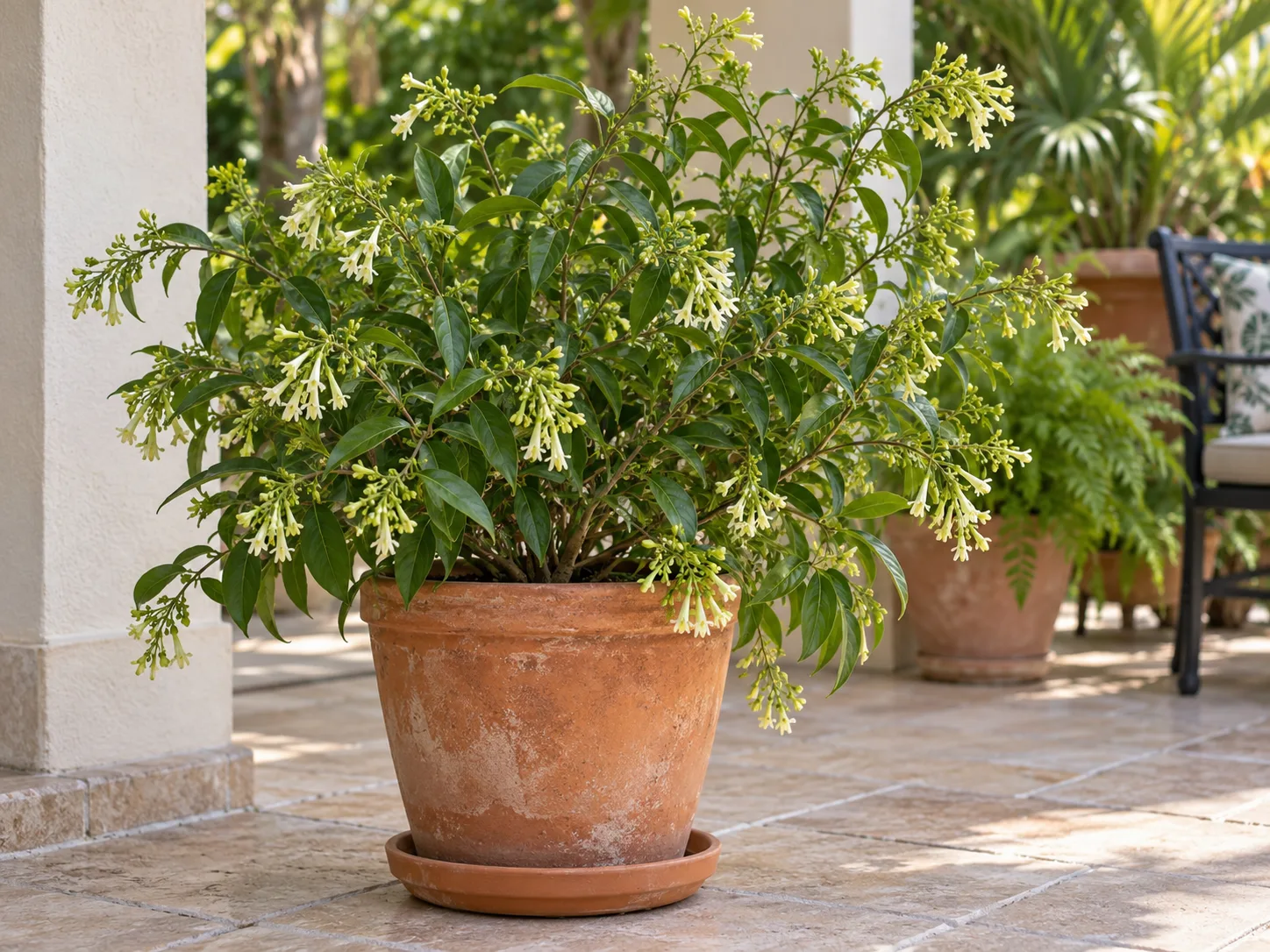
Be realistic about the weight and size of a mature container. A pot that is easy to move while the shrub is young may become difficult after the plant and damp soil gain mass, so use a wheeled plant caddy or choose a smaller trained specimen if you must move it every year. A compact container also makes inspection and pruning easier, but does not remove the toxicity or seed-spread concerns.
Indoor culture is possible in a bright conservatory or greenhouse, but it is not automatically an easy houseplant. This is a shrub with a strong fragrance and significant mature size, not a small, low-light windowsill jasmine. If the plant must live indoors, make sure you can provide strong light, airflow, room for the canopy, and a location inaccessible to pets and children.
Give it bright light with room for airflow
Set the plant in full sun or partial shade. NC State Extension describes Cestrum species as preferring full sun to partial shade, while RHS lists both exposures for C. nocturnum; in very hot climates, afternoon shade can reduce heat stress without placing it in deep shade. More light generally gives a sturdier, more compact shrub and better flowering potential than a dim indoor corner. (NC State Extension Plant Toolbox; RHS plant profile)
For a container brought indoors, choose the brightest available window or a bright conservatory and rotate the pot occasionally so the canopy does not lean toward one light source. Watch the plant’s growth: long, weak stems and sparse flowering usually call for more light before they call for more fertilizer. When moving it outside in spring, acclimate it gradually to stronger direct sun so leaves grown indoors do not scorch.
Airflow is useful around a dense shrub, especially after rain or irrigation, but do not plant it in a wind tunnel that dries the root zone and damages new growth. A little open space between the plant and a wall also makes it easier to inspect the undersides of leaves for scale or whiteflies and to remove spent flower clusters before fruit develops.
Keep roots moist but never waterlogged
The goal is consistently available moisture during active growth, paired with oxygen around the roots. “Moisture-loving” does not mean permanently wet: waterlogged soil can deprive roots of oxygen, while a shrub in a small pot can dry quickly on a hot, breezy day. The RHS specifies moist but well-drained soil and recommends freely watering container plants in summer, then keeping the compost just moist in winter. (RHS plant profile)
For a container, press a finger into the top layer of mix and check the pot’s weight rather than following a fixed weekday schedule. If the upper inch or two has dried and the pot feels lighter, water thoroughly until excess drains from the bottom; empty the saucer so the roots are not left soaking. If the mix is still wet, wait and check again. This simple check automatically adjusts for pot size, weather, light, and how quickly the plant is growing.
For a newly planted shrub, check soil around the root ball frequently during establishment. Water slowly enough to wet the original root ball and surrounding soil, then allow excess to drain; do not respond to every drooping leaf with more water if the soil is already saturated. In established outdoor plantings, adjust irrigation to rainfall and soil texture, watering more during hot dry spells and less when growth slows or rain is regular.
If leaves yellow while the soil stays wet, inspect drainage and roots before feeding. A blocked drain hole, water-holding saucer, compacted soil, or oversized pot can keep roots wet long after the surface looks dry. Correct the drainage problem first; fertilizer cannot repair roots that are short of oxygen.
Plant after cold risk and establish the roots
Plant outdoors in spring after the risk of frost has passed for your area. Choose a day that is not exceptionally hot or windy, water the nursery pot before planting, and set the root ball at the same depth it grew in its container. Backfill with the excavated soil, firm gently to remove large air gaps, and water the entire root zone so soil settles around the roots without burying the stem base.
Do not enrich the planting hole with a concentrated layer of fertilizer or compost that creates a sharp difference from the surrounding soil. The priority in the first season is root establishment: keep moisture even, maintain drainage, and use a thin mulch layer to slow evaporation while leaving a clear gap around the stems. If you are planting in a container, loosen tightly circling roots gently and use fresh, well-drained medium rather than packing the pot with garden soil.
If your growing season is short, wait until nights are reliably mild before moving an overwintered plant outdoors. A gradual transition over several days protects indoor-grown leaves from sudden sun and wind. Keep the container close enough to a sheltered entry or greenhouse that you can move it quickly when the forecast changes.
Adjust water and feeding by season
During spring and summer growth, check soil more often as days get longer and the canopy expands. A container in full sun may need water much more frequently than an in-ground shrub in partial shade, but the plant’s root-zone moisture—not the calendar—should make the decision. Reduce watering as temperatures fall and growth slows; the aim in winter is lightly moist mix, not drought or a permanently saturated pot.
A shrub in fertile garden soil may need little or no extra fertilizer. For a container plant that has been growing for a full season in the same medium, use a balanced fertilizer at the label rate during active growth if growth has slowed and the plant has no drainage, light, or pest problem. Do not keep adding fertilizer in hopes of forcing blooms; excess feeding can produce soft leafy growth and can create salt buildup in a pot.
Avoid feeding a plant that is stressed by cold, waterlogged soil, pests, or an abrupt move indoors. Correct the stressor first, then reassess new growth. Stop routine feeding as growth slows before winter, and do not use fertilizer as a substitute for sufficient light or appropriate pruning.
Move container plants before frost
Cestrum nocturnum is a tender shrub, not a dependable choice for a garden that experiences hard freezes. NC State’s Cestrum genus guidance gives a broad hardiness range of zones 9 to 11, while RHS classifies this species as H2 and describes container culture under glass. These are screening guides rather than guarantees: sheltered walls, local microclimates, pot exposure, and the exact species all influence winter survival. (NC State Extension Plant Toolbox; RHS plant profile)
If frost is forecast, move a manageable container to a bright, protected space before leaves are damaged, not after several cold nights. Keep it away from cold drafts and heating vents, check for pests before bringing it indoors, and water less often as growth slows. If a large container cannot be moved and your climate routinely freezes, do not plant the shrub in ground unless local experts confirm it is a suitable, survivable choice.
Prune lightly and prevent unwanted seedlings
RHS places night-blooming jasmine in pruning group 9, a group of later-flowering evergreens that generally need little pruning and are trimmed lightly in mid-to-late spring. For this shrub, remove dead, damaged, crossing, or badly placed stems first; if shaping is needed, take small cuts rather than shearing the whole plant into a tight shell. If it is still flowering or close to flowering, delay shaping until the flowers finish so you do not remove the display unnecessarily. (RHS plant profile; RHS evergreen pruning guide)
If you do not want fruit, inspect the shrub after flowering and remove spent clusters before berries mature. This is especially important in regions where the plant can escape cultivation: Hawaiʻi’s Plant Pono guidance describes seed dispersal by birds, so pruning after fruit has already ripened is too late to prevent every seed from leaving the garden. Bag the removed material and follow local invasive-species disposal instructions; do not distribute fruiting branches or compost mature berries.
Wear gloves as a sensible handling precaution, keep clippings away from children and pets, and wash tools after pruning. If you have a plant in a region where it is considered invasive, do not assume routine trimming will make it ecologically safe; ask the local invasive-species authority whether removal is recommended and how to dispose of the material.
Propagate only where the plant is appropriate
The simplest propagation method is a stem cutting, but first answer the more important question: should you make another plant? Do not propagate, swap, or sell Cestrum nocturnum in a region where it is listed as invasive, high risk, or not recommended. A successful cutting increases the number of plants that can produce toxic fruit or spread seed beyond your property.
Where local guidance permits propagation, take a healthy softwood or semi-ripe cutting in summer, as recommended by RHS and Fine Gardening. Choose a non-flowering stem with several nodes, remove the leaves from the lower portion, and place one or two nodes into a clean, free-draining propagation medium. Keep it warm, bright but out of harsh direct sun, and evenly moist; a loose clear cover can reduce drying, but air it regularly to limit excess condensation.
New growth alone does not prove that a cutting has rooted. Wait until it resists a gentle tug or roots are visible at the drainage holes before potting it into its own container. Keep the young plant protected from cold while it establishes, and do not take berries as a casual seed source: fruit is poisonous, germination is less predictable, and seedlings can contribute to unwanted spread. (RHS plant profile; Fine Gardening’s Cestrum profile)
Troubleshoot poor flowering and lanky growth
When a night-blooming jasmine is healthy but produces few flowers, check light first. A plant in deep shade or a dim room can keep growing leaves while failing to build enough energy for a strong display; move a container to brighter light gradually, or prune nearby plants that are shading an outdoor shrub if doing so will not create a safety or ecological problem.
Next, consider season and recent stress. A newly purchased plant, a hard cut, cold damage, a sudden move, or a prolonged dry spell can delay flowering. Give it a full active growing season under suitable conditions before concluding that fertilizer is the answer; adding more nutrients cannot fix low light, cold injury, or a poor root system.
Check the root zone if growth is weak or leaves yellow. Waterlogged roots, a pot with blocked drainage, or a root ball that dries completely between waterings can all interrupt growth. Correct the specific moisture problem and wait for new growth before pruning or feeding again, so you can tell whether the change helped.
If stems are long and sparse, distinguish a light problem from normal arching shrub growth. A plant reaching toward a window likely needs brighter exposure; a dense, established shrub may simply need selective thinning to let air and light reach the center. Do not cut off half the canopy in one session just because the outer branches look untidy—make a few considered cuts, then reassess after the next flush.
Account for night fragrance
A lack of flowers may not be the only reason a plant disappoints. The perfume that attracts people to night-blooming jasmine can become overpowering near a bedroom, dining area, or small courtyard, especially when several shrubs flower together. Place one specimen farther from seating and windows first, then judge how far the scent carries before planting more.
Some people may experience irritation or other symptoms around the flowers. Queensland’s Poisons Information Centre identifies the plant as potentially toxic and a respiratory irritant, with respiratory symptoms reported near flowers; if the scent causes breathing difficulty, throat irritation, headache, nausea, or dizziness, move away, ventilate the area, and seek medical advice for severe or persistent symptoms. That precaution is separate from the plant’s ingestion hazard: strong fragrance is not a reason to taste any part of the shrub. (Queensland Poisons Information Centre)
Manage pests without treating every insect
The shrub is often relatively trouble-free, but inspect leaves and tender stems when growth looks dull or distorted. NC State notes whiteflies as a pest to monitor, and Fine Gardening lists scale among potential Cestrum problems. Look under leaves and along stems for small insects, sticky residue, or fixed scale coverings before deciding that a plant has a pest outbreak. (NC State Extension Plant Toolbox; Fine Gardening’s Cestrum profile)
For a small infestation, isolate a container plant, remove heavily affected tips, or rinse accessible foliage with water. Recheck the plant after a few days; a single rinse may not reach insects tucked into a dense canopy. If you consider an insecticidal product, identify the pest first and use only a product labeled for that plant and setting, following every label direction and protecting pollinators and beneficial insects.
Avoid routine neem or soap sprays just because a general care page mentions them. A pesticide can injure leaves, affect non-target insects, or be inappropriate for the location, and neither the product name nor a “natural” label guarantees safety. If you cannot identify the pest or the infestation persists, ask a local extension service for a diagnosis before escalating treatment.
Protect people and pets from toxic parts
Treat every part of Cestrum nocturnum as unsafe to eat. NC State Extension warns that all parts of Cestrum plants are toxic if ingested and notes that the berries are especially poisonous; Queensland’s Poisons Information Centre likewise says all parts of night-blooming jessamine are toxic, especially the fruit. Do not rely on the berry’s appearance, a child’s age, or a pet’s past behavior to judge whether a nibble is harmless. (NC State Extension Plant Toolbox; Queensland Poisons Information Centre)
Choose a site where a child or pet cannot reach leaves, flowers, or fruit, and collect fallen berries and pruning debris promptly. If that separation is not realistic, do not grow the plant. Label the pot clearly, keep it out of play areas, and wash hands after handling; never use edible-looking berries in crafts, food, or flower arrangements accessible to children or animals.
If someone may have eaten any part of the plant, treat it as urgent: contact your local poison center or medical service immediately and share the plant’s botanical name and a photo if available. Queensland’s Poisons Information Centre advises urgent medical attention for any ingestion. For a pet, call a veterinarian or animal poison service right away; do not induce vomiting or try a home remedy unless a poison professional or veterinarian specifically directs you to do so. (Queensland Poisons Information Centre)
Conclusion
Night-blooming jasmine rewards the right gardener with a dramatic evening scent, but its care begins with more than choosing a sunny spot. Confirm that Cestrum nocturnum is appropriate where you live, plan around its mature shrub size and cold sensitivity, and decide whether a container, a bright overwintering space, and its powerful perfume fit your home.
Where it is suitable, give it light, drainage, moisture that responds to the weather, and only light purposeful pruning. Remove spent clusters before fruit matures when seed control matters, keep all plant parts away from people and pets, and choose another fragrant shrub if local invasive guidance or household safety makes this one a poor fit.



