15 Parsley Companion Plants for a Healthier Garden Bed
Find 15 parsley companion plants for garden beds and containers, with practical spacing, timing, and pest caveats for pairing herbs, vegetables, and flowers.

The best parsley companions are plants that share its preference for sun to light shade and evenly moist, well-drained soil, or that add a specific function without crowding the herb. Tomatoes, asparagus, basil, chives, peppers, peas, beans, brassicas, and a few small-flowered annuals can all fit that brief. None is a guaranteed shield against pests, and the right spacing and timing matter more than a companion chart.
Parsley is a leafy biennial usually grown as an annual: it gives its main harvest in the first season, then commonly flowers and sets seed in the second. That life cycle creates two different companion strategies. If you want tender leaves, keep the parsley compact and harvest regularly; if you want more insect activity, leave a plant or two to flower and accept that the foliage will become coarser.
What companion planting can and cannot do for parsley
Companion planting means arranging different crops so they share space in a useful way. The reliable benefits are often practical: a quick crop fills a gap before a larger plant spreads, flower nectar and pollen support beneficial insects, or a mixed bed makes more efficient use of light and soil. The Royal Horticultural Society describes these as several different mechanisms, not one universal effect. Its examples include sweet alyssum supporting aphid predators and intercropping quick crops before taller plants shade them (RHS companion-planting guide).
A companion plant is not automatically a pest repellent. University of Minnesota Extension’s companion-planting review notes that many popular pairings have little research behind them, while others have evidence for a particular crop, pest, and growing system. So treat “parsley deters beetles” or “basil makes tomatoes taste sweeter” as claims to test, not guarantees. The useful question is: What does this pairing do in this bed? It may share water needs, fit at the edge, bring flowers into the garden, or provide another harvest.
Parsley has an especially useful second-year role. Its small clustered flowers can feed visiting insects, but parsley foliage is also a host plant for black swallowtail caterpillars. The adults’ eggs and hungry caterpillars may mean less parsley for the kitchen; that is normal wildlife use, not proof that the plant is sick. If you want leaves and caterpillars, grow a few extra plants rather than expecting one small clump to serve both purposes.
The 15 best parsley companion plants at a glance
| Companion | Best reason to pair it with parsley | Practical placement |
|---|---|---|
| Tomato | Similar warm-season bed conditions; low parsley can use the bed edge | Along the sunny edge, outside the tomato’s airflow zone |
| Sweet pepper | Warm-season crop with a similar steady watering rhythm | Front or side of the pepper row |
| Bush bean | Compact edible crop for a sunny bed; a second harvest from the space | Leave room for both mature canopies |
| Sweet corn | Adds a tall crop and supports a diverse bed | At the back or north edge in most U.S. gardens |
| Cabbage | Cool-season crop with similar moisture needs | At the outer edge, not under a closed cabbage canopy |
| Broccoli | Fits a fertile, evenly watered spring or fall bed | Beside the row with space to inspect leaves |
| Cauliflower | Another cool-season crop that values steady soil moisture | Keep the parsley accessible for harvesting |
| Peas | Cool-season crop that can share an early-season bed | Sow where pea supports will not shade parsley |
| Asparagus | Parsley fits as a short-lived herb at the edge of a perennial bed | Keep it away from crowns and fern paths |
| Basil | Warm-season herb with a similar watering schedule | In a sunny, well-drained bed or separate pot |
| Chives | Compact perennial herb with edible leaves and flowers | At the border where the clump can be divided |
| French marigold | Adds flowers; some marigold–crop effects are documented, but not universal | Choose a simple-flowered type and leave air gaps |
| Nasturtium | Edible flowers and a possible trap-crop role worth monitoring | Use one plant on the bed edge; prevent it from sprawling |
| Sweet alyssum | Low flowering plant that can support hoverflies and other beneficials | Border the bed without letting it cover parsley |
| Calendula | Adds a long flowering window and accessible pollen and nectar | Tuck a few plants near, not on top of, the herb row |
These are useful neighbors, not a ranked list of biological promises. Almanac’s herb guide also lists basil, chives, and several other culinary herbs as plants that grow well with parsley; Gardening Know How includes tomatoes, asparagus, peppers, corn, peas, and chives among common pairings. Those sources are useful for generating options, but their broad “mutually beneficial” language should not be read as proof that each pairing increases yield (Almanac’s herb companion guide; Gardening Know How’s parsley pairing guide).
The 15 companions, explained by garden job
Warm-season crops for a sunny parsley bed
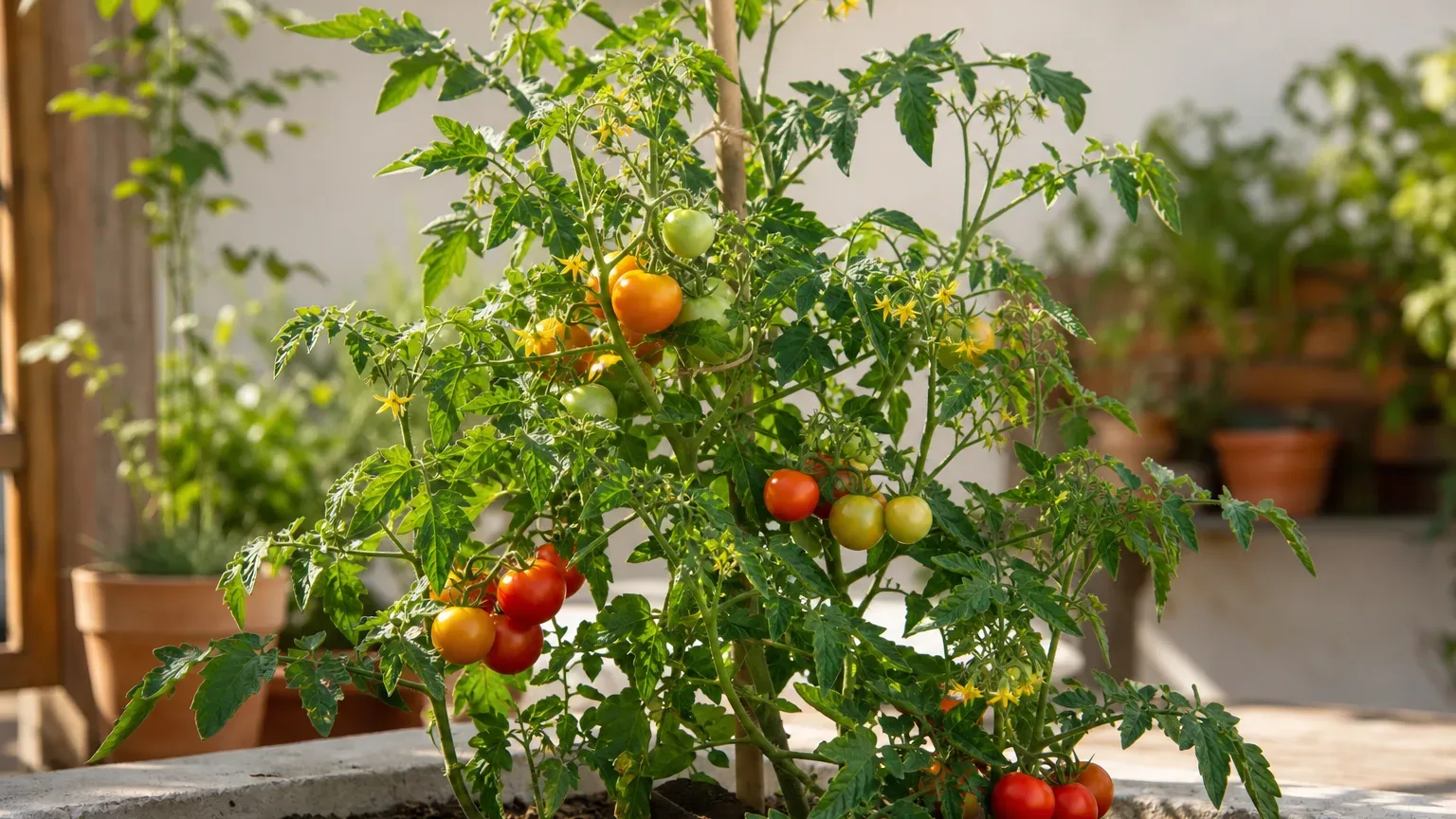
Tomatoes are a practical match when parsley sits at the edge of the bed, where it can use open soil without being buried under tomato foliage. Both crops grow in a sunny vegetable garden and appreciate consistent moisture during active growth. Keep enough space around tomato stems for airflow, pruning, and harvest; do not pack parsley tightly between two mature tomato plants. Parsley flowers may offer a food source for beneficial insects, but leafy parsley alone will not reliably repel aphids or hornworms. For the common claim that companion planting works by scent alone, there is not enough evidence to promise that outcome in an ordinary home bed.
Sweet peppers have a similar warm-season schedule and can share the bed with parsley once nights are reliably warm. Plant parsley on the side where it will receive morning sun and some afternoon relief, especially in a hot climate; it tolerates partial shade better than fruiting peppers do. Leave the pepper’s canopy open and keep the parsley within easy reach, because a crowded pepper row can make both plants harder to water and inspect.
Bush beans give a useful second crop in the same sunny bed, and their low profile need not shade parsley if rows are planned first. Do not count on beans to feed nearby parsley with nitrogen while both are growing: nitrogen fixation happens through a relationship between the bean and soil bacteria, and the benefit is not an instant fertilizer transfer to every neighbor. Give each plant enough room, and avoid sowing parsley so densely that you cannot pick beans or check for pests.
Sweet corn can work only where there is enough space and light. Set corn on the side that will not shade parsley for most of the day; in many Northern Hemisphere beds, that means the north or back edge, while gardeners in the Southern Hemisphere should reverse the sun-side logic. Parsley can fill a sunny outer strip, but it will struggle beneath a dense corn block once the stalks grow tall. A small plot with limited sun is better used for a shorter companion.
Cool-season crops for spring and fall
Cabbage, broccoli, and cauliflower are three separate options with much the same basic layout rule. Each can share a fertile bed that stays evenly moist, while parsley occupies an accessible edge or the gap between widely spaced transplants. These brassicas become broad, and their leaves can shade small parsley plants as the heads develop, so measure the mature spacing on the seed packet rather than judging by the size of nursery starts.
Parsley is especially handy near brassicas because it can remain in the bed as the vegetable crop is harvested or replanted. That does not mean it will stop cabbage worms. A diversified bed can support beneficial insects and make a monoculture less uniform, but row covers, regular scouting, and good crop rotation remain more dependable tools when caterpillars are a recurring problem. The RHS documents a specific low-cover approach with clover and trefoil for cabbage root fly; that evidence should not be generalized into a promise that parsley itself controls brassica pests.
Peas are a cool-season companion that can share a bed early in the year, before warm-season crops fill it. Parsley tolerates light shade, so it may handle the edge of a pea row, but do not place it directly under a tall trellis where airflow and harvesting become awkward. Sow or transplant the crops with their mature shapes in mind. When summer heat arrives, peas often finish while parsley can keep producing leaves, making the timing more useful than any supposed nitrogen “gift” from peas to parsley.
Asparagus for a permanent bed edge
Asparagus is a strong layout partner because the crops have different lifespans: asparagus is a permanent perennial, while parsley is usually replaced after its first productive year or allowed to flower in its second. Put parsley along the outside of an established asparagus bed, where it can be removed without digging among the crowns. Never turn a parsley planting into a reason to disturb the asparagus row after spears have emerged.
The common claim that parsley stimulates asparagus growth or reliably deters asparagus beetles is more confident than the evidence warrants. The safer benefit is that a few parsley plants can use an open bed edge and, if allowed to flower, contribute to insect habitat. Keep the asparagus fern exposed to sun after the spear harvest; do not let herbs or flowers form a dense ring that competes for water or blocks airflow.
Herbs that share parsley’s care
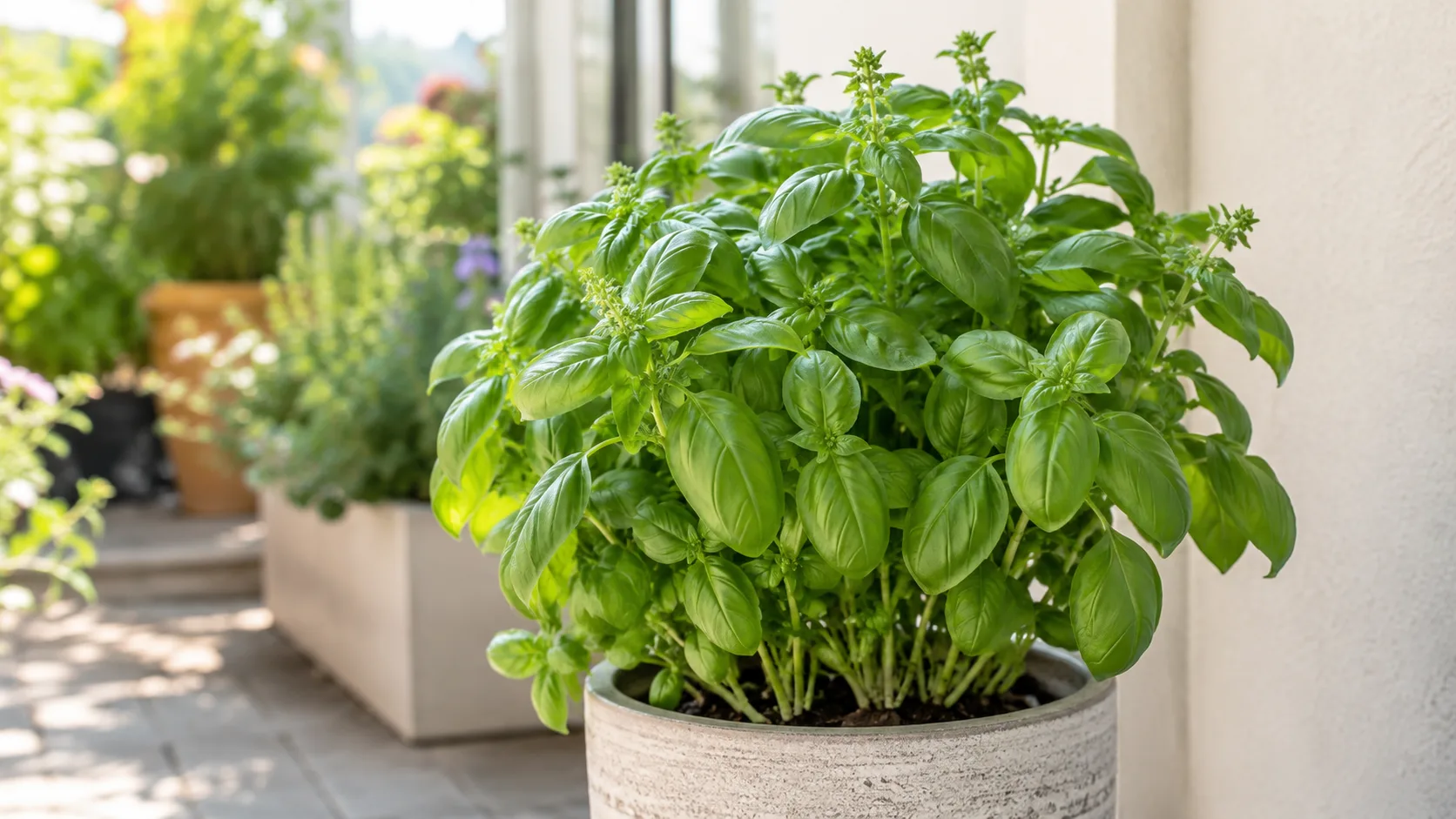
Basil is one of the easiest culinary pairings if both herbs can receive warmth, sun, and regular watering. Plant basil near, but not directly over, parsley; keep both plants open enough that wet leaves dry after rain. Almanac lists basil as a parsley companion, and that is a good kitchen-garden pairing even if a home gardener should not assume it will repel mosquitoes or improve tomato flavor. A pot is often easier than forcing basil and parsley into one crowded container.
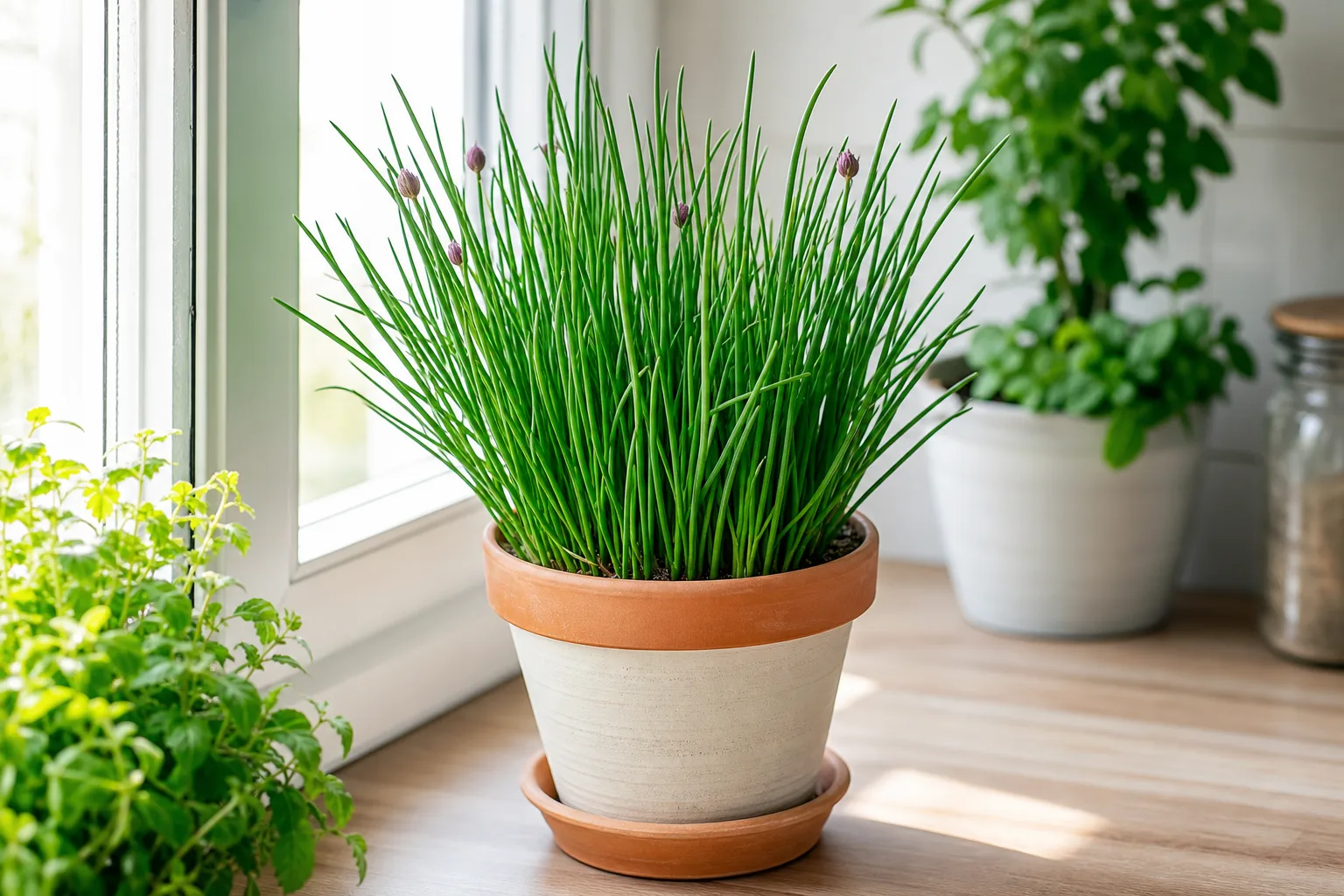
Chives make a compact border plant and can provide edible leaves along the edge of a parsley patch. Their purple flower heads add another bloom, but the familiar claim that chives repel onion maggots from all nearby crops is not a dependable substitute for crop protection. Keep the clump separate enough to divide it when it thickens; perennial chives return, whereas parsley may be replanted or replaced after flowering.
Parsley, basil, and chives can share a larger herb bed, but not every herb wants the same water. University of Minnesota Extension groups parsley with moisture-preferring members of the carrot family and notes that mint-family herbs such as rosemary, thyme, and sage tolerate drier soil once established. A dedicated damp strip for parsley and basil, with drier herbs along a raised or gravelly edge, prevents the gardener from overwatering one group to satisfy another (UMN Extension’s herb-growing guide).
Flowers that add a useful bloom window
French marigolds add color and flowers to a vegetable bed. The RHS reports that marigolds can deter whiteflies and thrips in some crop systems, while also noting that mixing plants without marigolds can have similar effects. That is a reason to include flowers, not to promise a pest-free tomato or parsley row. Choose an open, single-flowered variety where possible, and leave room for the vegetable foliage.
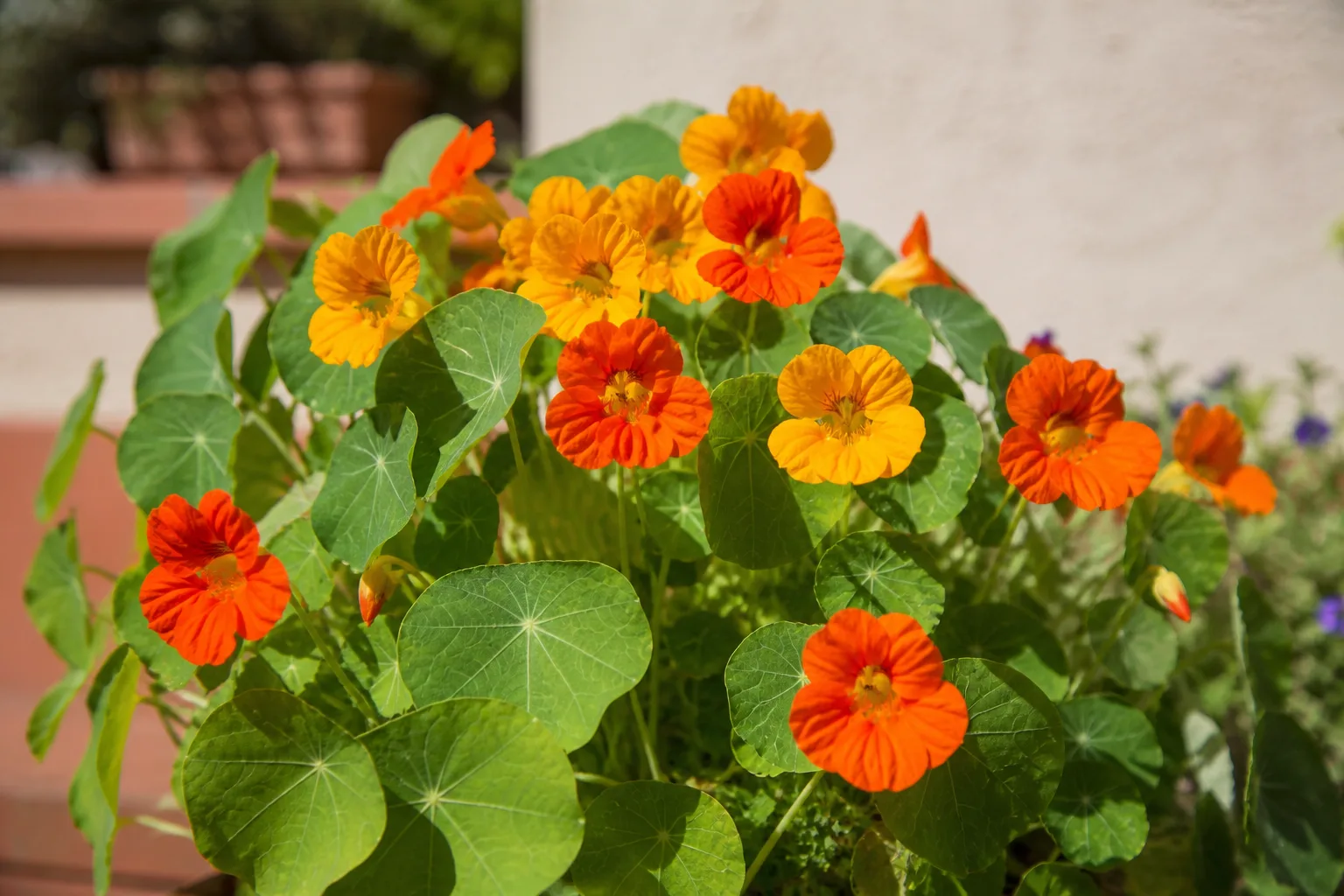
Nasturtiums are edible and easy to tuck at a bed edge, but they can spread far beyond their allotted space. Some gardeners use them as trap crops; if you try that approach, inspect the nasturtium and nearby vegetables regularly. A trap crop that fills with aphids or beetles without being monitored may simply create another pest nursery. One controlled plant is more useful than a whole trailing mat over the parsley.
Sweet alyssum is a low border flower with a particularly clear garden job: its small flowers can provide nectar and pollen to insects that prey on aphids. The RHS describes alyssum as a companion crop that has reduced aphid populations in lettuce by attracting natural enemies; that does not prove the same measured result around every parsley plant, but it supports a reasonable trial in a mixed bed. University of Minnesota Extension explains the life-cycle link: adult hoverflies feed on nectar or pollen, while larvae of some species hunt aphids (UMN Extension on syrphid flies).
Calendula is another low-effort flower for a mixed garden. Its open blooms offer pollen and nectar, and the plant can be removed when it finishes without disturbing a permanent crop. Treat it as part of a season-long flower sequence, not as an insecticide. Beneficial insects need food and shelter through the season, and insecticide sprays can harm the same predators and parasitoids a gardener hopes to attract.
How to place parsley with its companions
Start with spacing, light, and water
Give parsley the central requirements first, then fit other crops around them. The RHS recommends full sun or partial shade and spaces parsley plants 15–30 centimeters (6–12 inches) apart; it calls for moist but not waterlogged soil. That spacing applies to parsley plants, not to the larger crop next door, so use the tomato, pepper, or brassica’s own mature-size guidance as well (RHS parsley-growing guide).
A simple test is to imagine both plants at full size. Can you reach the parsley to harvest it? Will air still move through the leaves? Can you water the root zone without soaking a drought-tolerant herb? If any answer is no, offset the plants or use a separate pot. Companion planting should make routine care easier, not turn weeding and pest checks into a puzzle.
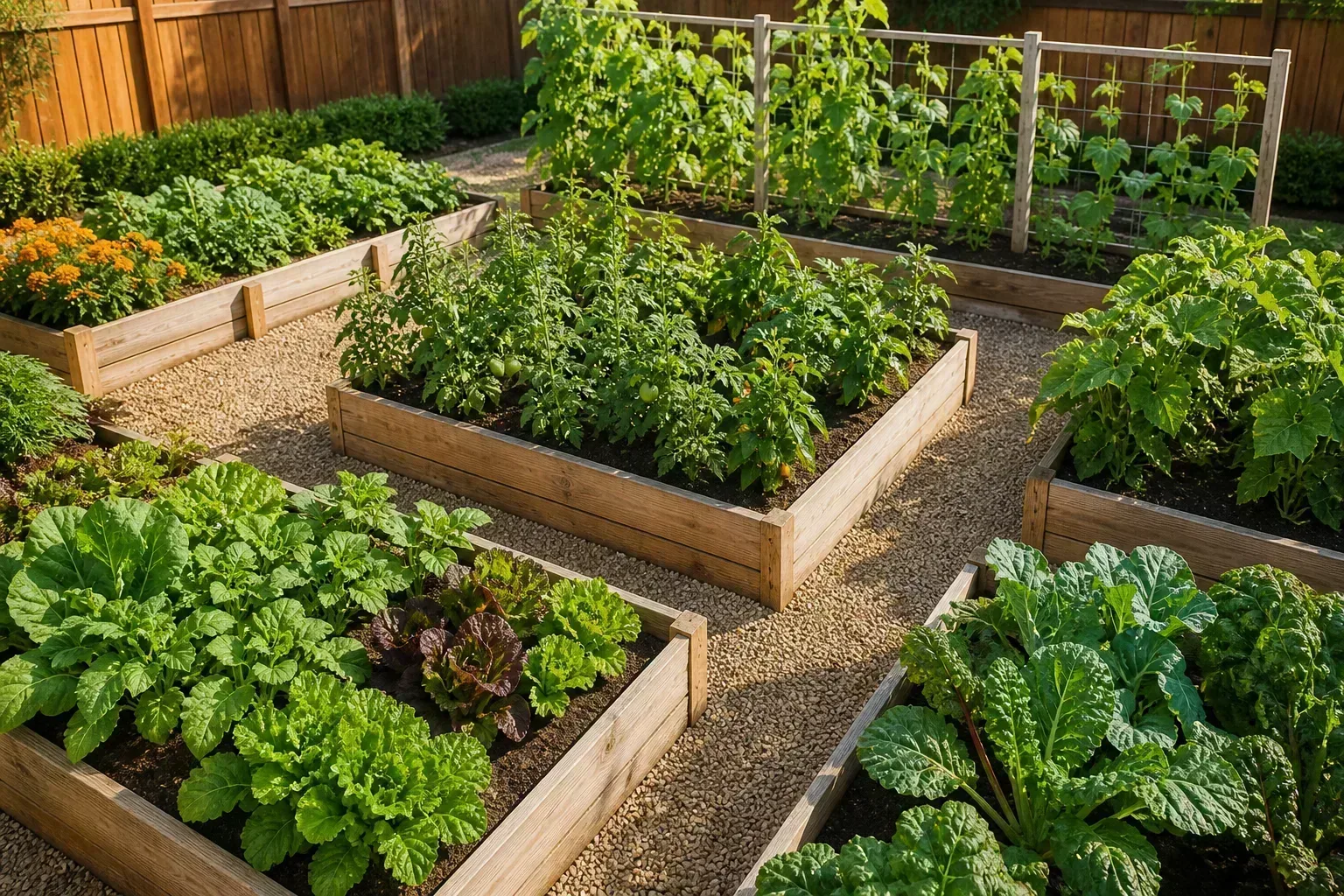
Three bed layouts that work
For a tomato bed, plant one or two parsley clumps on the front or side edge, not in the dense center below the tomato. Put marigolds or alyssum at the opposite edge so flowers are not all crowded around the same stem. If the tomato grows large, keep lower leaves from sealing off air movement around both crops.
For a spring brassica bed, set cabbage, broccoli, or cauliflower at the spacing recommended for the variety, then use parsley along the path-side border. Add alyssum in a separate small patch and leave the route open for picking caterpillars or harvesting leaves. After a brassica is harvested, you can replant the gap with a quick crop rather than packing another large plant beside the parsley.
For a perennial asparagus row, keep parsley outside the crown line and mark the asparagus bed so you do not accidentally dig into it. A few parsley plants can occupy the border for one season, then be pulled or allowed to flower. The more permanent the crop, the more important it is to keep a clear maintenance lane.
Growing parsley with companions in a container
A container is easiest when it holds plants with similar needs. A wide pot can pair parsley with basil or a compact chive clump if it has drainage holes, enough root volume, and a sunny position. Use a container at least 12 inches wide for one mature parsley plant plus a small companion, and water when the mix begins to dry near the surface; hot weather may require checking every day.
Avoid mixing parsley in a small pot with rosemary, thyme, or sage just because they are all herbs. Those Mediterranean herbs prefer a faster-draining, often drier root zone, so the frequent watering parsley wants can keep them too wet. If space is tight, group separate pots together instead of sharing one pot. You retain the visual mix without giving every root the same soil conditions.
What changes when parsley flowers
Parsley usually grows foliage in its first season, then sends up flower stems in the second if it survives the winter. As the plant bolts, leaf production declines and the leaves can become tougher. For a dependable kitchen supply, sow a new batch before the older plants flower; for insect habitat, leave a few older plants to bloom and set seed.
The tiny flowers are most useful as part of a broader sequence, not a stand-alone pest treatment. Adult hoverflies feed on pollen and nectar; their larvae, not the adults, consume aphids. University of Minnesota Extension says a single larva can eat dozens of aphids a day, though how many appear depends on the insect species, prey, weather, and nearby habitat. Do not spray these insects or assume every hoverfly larva is a caterpillar damaging the crop.
There is another trade-off: parsley is a host for black swallowtail caterpillars. If you see striped larvae, decide whether you can share a few leaves before removing them. A simple solution is to keep one parsley patch for harvest and another flowering patch at the edge of the garden. That lets the herb serve dinner and wildlife without asking one small plant to do both jobs.
Plants to separate or manage carefully
Most plants do not have a universal “enemy” relationship with parsley. The reasons to separate them are usually practical: one spreads too aggressively, casts too much shade, wants a different watering rhythm, or shares a serious pest with parsley. The Old Farmer’s Almanac lists fennel as a plant to keep away from other herbs and vegetables; use that as a cautious layout suggestion, not evidence that fennel poisons every nearby crop.
Contain mint and give fennel room
Mint is not a proven chemical enemy of parsley, but many mints spread by runners and can overtake a small bed. Grow it in a pot with drainage, set the pot on a hard surface, or give it a separate contained space. University of Minnesota Extension specifically warns that hardy perennial mints can spread aggressively; this is a more concrete reason to separate mint than a claim that its scent harms parsley (UMN herb-growing guide).
Fennel grows larger and taller than parsley and can shade or crowd a compact herb patch. If you want both, give fennel its own position rather than planting it in the center of a tight raised bed. Claims that it is universally toxic to neighboring crops are commonly repeated but not a sound reason to panic over a nearby plant. Use observed height, root competition, and space as your decision criteria.
Be cautious with carrots, celery, and parsnips
Carrots, celery, parsnips, and parsley are all in the carrot family, Apiaceae. They can grow in the same garden, but they share some pests. The RHS identifies carrot fly as a pest of parsley as well as carrots, parsnips, celeriac, and celery, and its parsley guidance notes that related plants can share pest and disease problems (RHS carrot-fly advice).
That does not make carrots a forbidden neighbor. It does mean that planting several susceptible Apiaceae crops side by side may make a pest problem easier to maintain in one spot. Rotate the family between beds, remove affected debris, and use insect-proof mesh where carrot fly is a known issue. Do not rely on parsley’s scent to protect a carrot crop. Also, parsley and dill do not cross-pollinate simply because both are Apiaceae. Cross-pollination requires compatible plants; sharing a broad plant family is not enough to make every pair compatible.
Common companion-planting mistakes to avoid
The first mistake is trying to plant all 15 companions in one small bed. A list is a menu, not a planting plan. Choose two or three companions based on the crop already in the space—tomato plus basil and alyssum, for example, or parsley at the edge of an asparagus bed—and leave room for mature plants.
The second is planting for a promised pest outcome instead of the right conditions. A marigold flower does not replace a tomato cage, a row cover, or regular inspection. A tall corn row does not help parsley if it blocks light. A bean does not instantly donate nitrogen to its neighbor. If an article or chart says a companion “repels all pests,” look for the exact crop, pest, method, and evidence before building a bed around that claim.
The third is forgetting timing. Parsley can overlap with cool-season crops in spring and fall, while basil, tomatoes, beans, peppers, and corn prefer warmer weather. The University of Minnesota Extension’s companion-planting overview gives the same useful rule for early greens paired with tomatoes or peppers: harvest the short-season crop before the later crop’s canopy fills the bed. That is often the most reliable win from companion planting—two useful harvests from one carefully timed patch.
For more background, see the practical guide to whether companion planting actually works and the overview of which herbs can grow together. Use those principles to adapt the pairings to your climate, bed size, and watering setup.
Conclusion
Parsley grows well beside many vegetables, herbs, and flowers when you match mature size, season, sunlight, and moisture. Start with a pairing that solves a real need: parsley on the edge of a tomato bed, beside a small basil or chive patch, near flowering alyssum, or along the outside of an asparagus row. Leave enough space to reach each plant, and do not expect aroma or flowers to guarantee pest control.
The strongest companion strategy is simple: give parsley the conditions it needs, add one or two compatible neighbors, and watch how the combination performs through a full season. Harvest the leafy plants you want to eat, let a few flower if you can spare them, and use barriers or scouting when a specific pest threatens the crop. That gives you a better garden plan than following a list as if every pairing worked everywhere.