12 Pergola Roof Ideas for Shade, Rain, and Style
Compare 12 pergola roof ideas by shade, rain cover, material, and upkeep so you can choose a style that suits your patio and local weather.
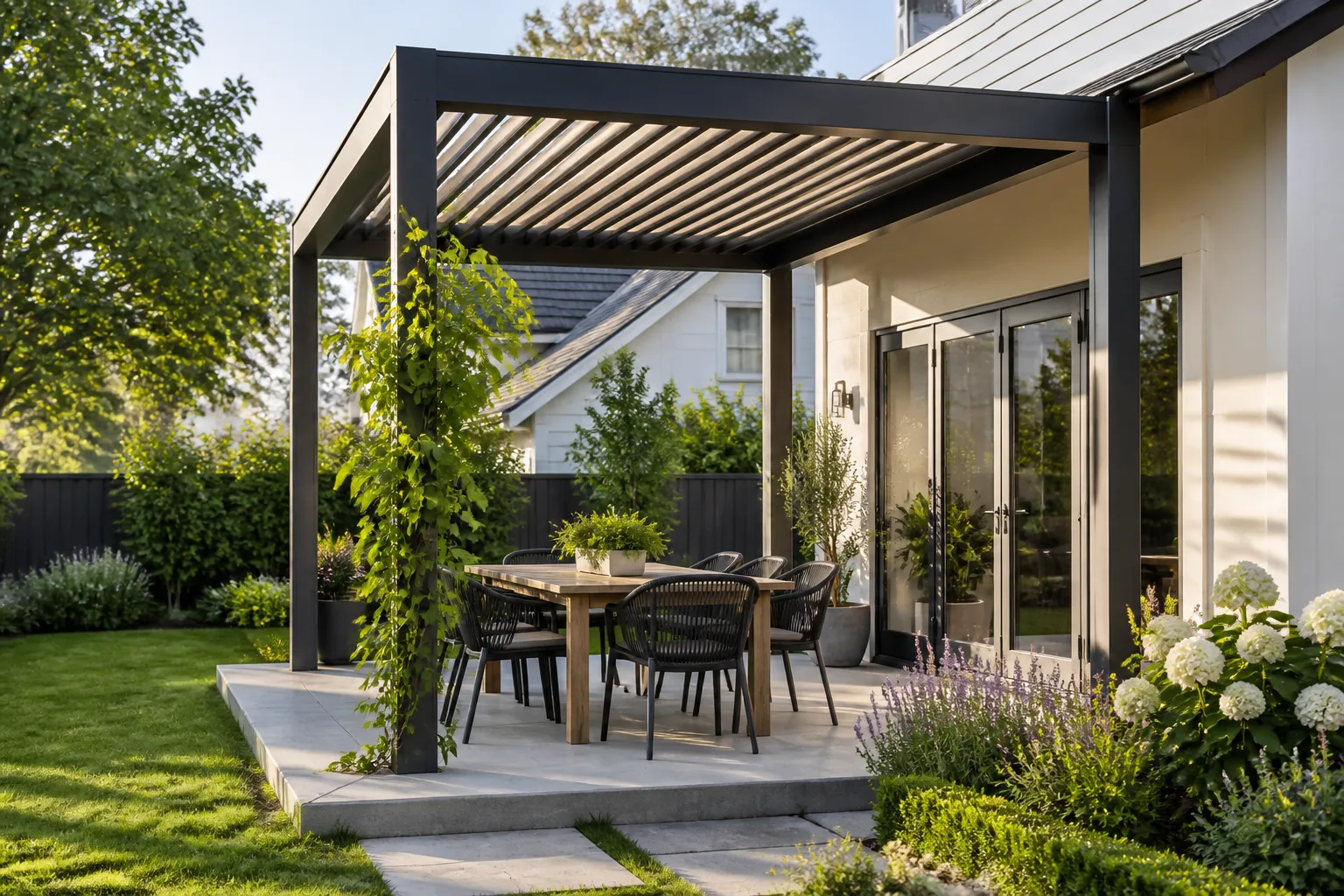
A pergola roof can filter sunlight, create an overhead garden, or keep a dining area usable in light rain. Those are different jobs, so start with how you want the space to work rather than with a photo you like.
A classic pergola has posts and an open framework of crossbeams; University of Florida IFAS Extension describes the form as an open lattice that can carry vines over a walk or terrace. Once you add fabric, panels, or adjustable blades, you change how much sun and weather the structure blocks—and what it must support.
The quickest test is to decide whether you want dappled shade, adjustable shade, or reliable rain cover. Then check the sun at the hours you use the patio, the amount of upkeep you will accept, and whether the existing frame is designed for the roof you have in mind. A slatted roof can make a patio more comfortable, but it will not make outdoor cushions waterproof.
Choose the roof by the job you need it to do
| If you want… | Start with… | Keep in mind… |
|---|---|---|
| A bright, leafy patio with filtered sun | Open or windowpane rafters | Shade shifts through the day; rain still comes through |
| More predictable shade you can adjust | Louvers or a retractable canopy | Check wind instructions and whether the closed system actually drains rain |
| A bright seating area protected from rain | Properly installed translucent panels | Direct sun can still heat the space; panel color and roof pitch matter |
| A soft, seasonal roof on a budget | Reed rolls or outdoor fabric | Plan for wind, wet weather, cleaning, and replacement |
| A garden room with living shade | A strong beam grid with carefully chosen vines | Mature plants add weight, need pruning, and may take time to fill in |
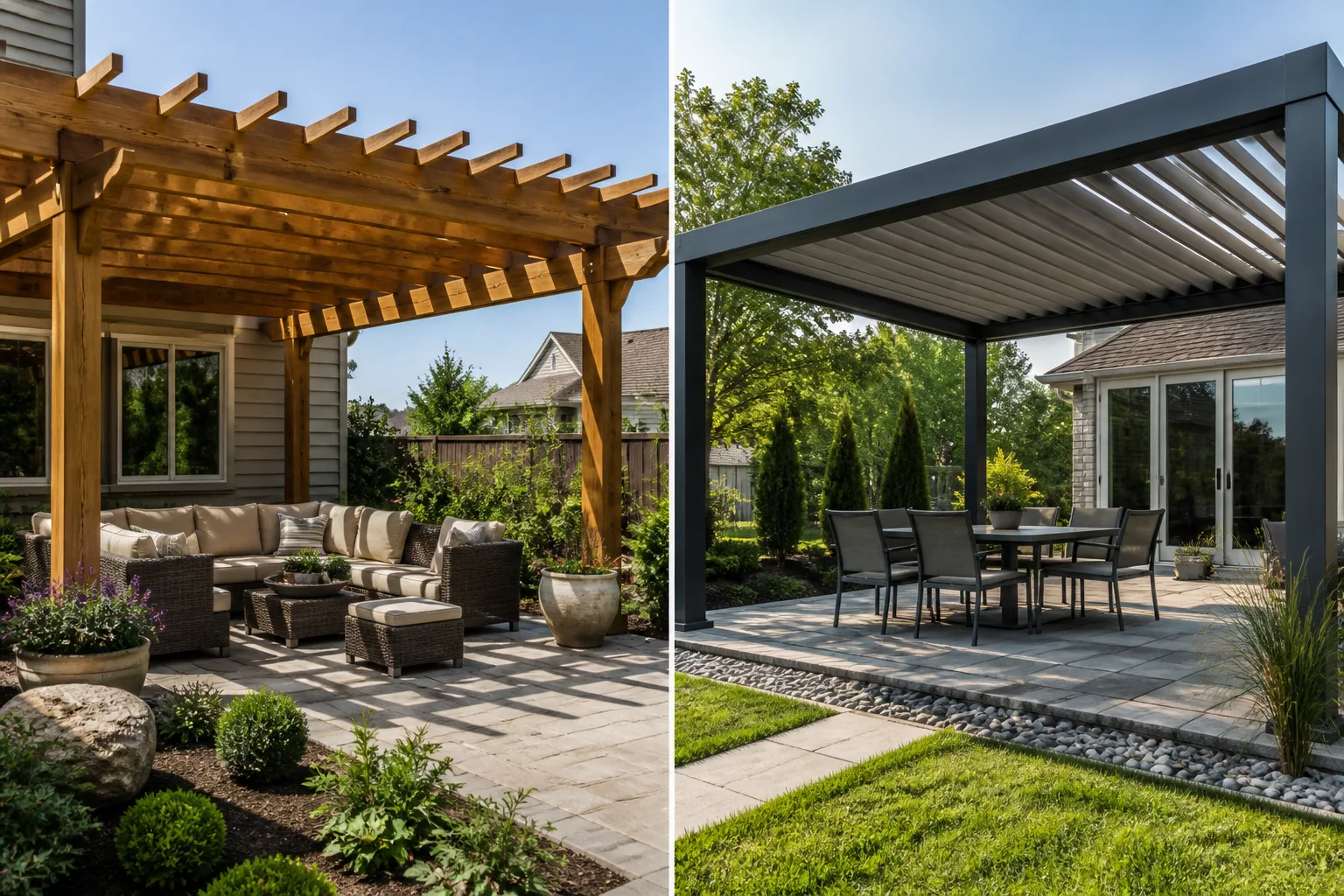
No roof gives every benefit at once. A more solid cover may block more sun and rain but can make the patio darker, hotter, or less airy; an open grid retains the garden feel but leaves furniture exposed. Think of “waterproof” as a performance specification, not a visual description: ask how water exits the roof, where it lands, and what the manufacturer allows during wind or snow.
1. Open rafters for a light, dappled ceiling
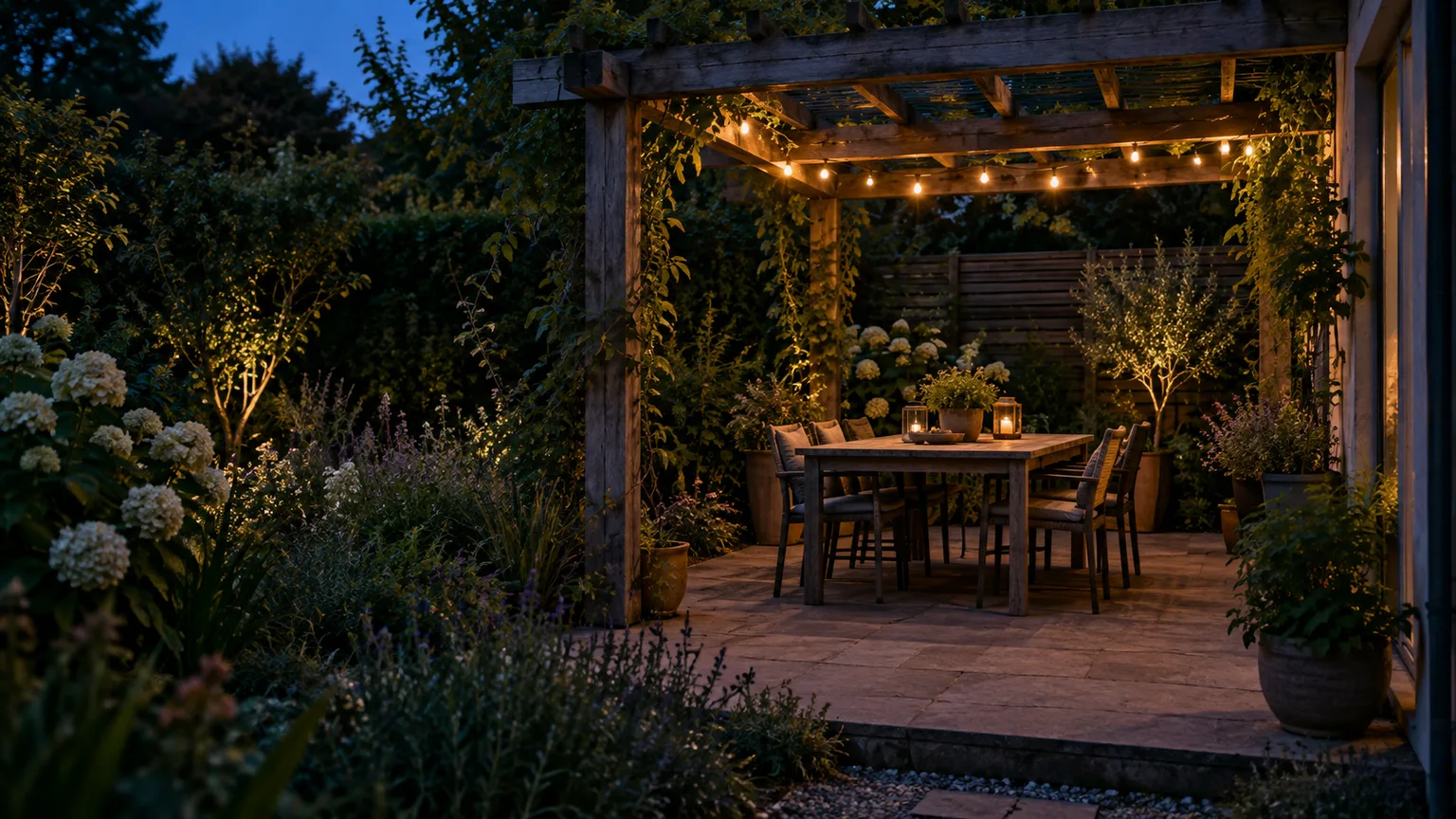
Widely spaced rafters are the simplest way to keep a pergola open and architectural. The beams draw a clear ceiling line overhead while sun passes between them, so the patio stays connected to the sky and nearby garden. This works well over an outdoor dining area where you want a little relief from direct sun without losing daylight.
The trade-off is that the shade moves and rain falls through. If the patio faces west, wide gaps may do little against low late-afternoon sun; a side screen, taller planting, or closer beam spacing may solve that better than adding a solid roof. Keep the spacing consistent for a crisp modern look, or let a vine climb the posts if the frame and plant choice suit each other.
This is also the easiest roof to adapt later because the open grid can accept a compatible shade layer, lights, or a light vine without changing the basic silhouette. Decide which additions matter before you set the beam spacing: very wide openings may not give a plant enough places to cross the roof, while very narrow spacing can make a small patio feel visually crowded.
2. Close-set fixed slats for stronger shade
Bringing the rafters closer together creates more shade and a more finished ceiling without fully enclosing the pergola. This approach is useful over a lounge chair or table that becomes uncomfortable under high midday sun. White or pale slats can make the overhead grid feel lighter, while dark-painted wood or metal gives it a more graphic outline.
Close spacing does not make the roof rainproof, and it can reduce the amount of light that reaches the patio and nearby windows. Before building, mark the pergola footprint and observe the sun at the time you expect to sit there; slat direction and the sun’s angle change which areas are shaded.
A close-set wood ceiling also collects leaves and needs enough access for seasonal cleanup. If you plan to wrap string lights around the beams, leave room for the wiring and choose outdoor-rated lights and connections.
There is no universal spacing that gives the “right” amount of shade because beam width, orientation, and local sun angle work together. If the roof also sits over a light-sensitive room, test the shadow pattern first with temporary battens or a tape outline rather than discovering in winter that the space indoors has become too dark.
3. Adjustable louvers for shade you can change
An adjustable louvered roof lets you tilt overhead blades to admit sun, soften glare, or close the roof when a shower starts. It is a strong fit for a patio used at different times of day, especially when the same space needs bright morning light and deeper afternoon shade. A motorized system is convenient, while a manual crank may be simpler to maintain and less expensive.
Do not assume every closed louver roof is watertight. Systems differ in blade overlap, seals, channels, and gutter design, so check the product’s rain rating and where downspouts discharge.
Wind and snow instructions matter too: some systems must be opened or cleared in particular conditions, and motors need power and occasional service. A louvered system is most useful when its operating limits fit the weather where it will stand.
For a small courtyard, louvers can make one roof do more than one job without adding a second shade layer. Still, consider the controls as part of the design: the crank or motor needs reachable clearance, and an automatic rain sensor is only useful if its wiring, service access, and drainage route are planned before the frame goes up.
4. A double-layer grid for a deeper beam pattern
A second, thinner layer of beams set across the main rafters creates a denser, more dimensional roof. It adds shadow lines and can make an ordinary patio feel like an outdoor room, even when the structure remains open to rain and breeze. Use the upper layer as a deliberate design detail: matching timber reads classic, while a contrasting color or material makes the frame feel more contemporary.
Every extra member adds visual weight and can trap more leaves and debris. The thicker roof may also block more light than expected, especially where the beams overlap. Before adding a second layer to an existing pergola, confirm the frame was designed for that load and that fasteners can hold the added material through local wind conditions; appearance alone is not a capacity rating.
A layered grid is easiest to keep tidy when the upper and lower beams meet at accessible edges rather than creating narrow pockets that are hard to brush out. If you expect to add a fabric insert later, plan the attachment points at the same time so the shade can be tensioned without drilling extra holes into finished structural members.
5. A windowpane lattice for a cottage-style look
A large-square lattice roof borrows the rhythm of window panes and gives a pergola a softer, garden-oriented character. The broad openings let in more sky than close-set rafters, and the repeated grid can make a small structure look carefully composed. It is also an easy structure to decorate with a few lights or trainable stems without turning every beam into a dense canopy.
Treat the lattice as a visual framework, not a weather cover. The openings are too large to stop rain, and the square pattern can leave clear patches of sun on a table or seat. This style suits a patio that needs definition more than deep shade; for stronger sun control, pair it with an outdoor fabric panel that is rated for the structure and can be removed or retracted when weather demands it.
6. A retractable fabric canopy for on-demand cover
A sliding fabric canopy gives you the option to cover the seating area at lunch and open the sky later. It suits renters or homeowners who want a softer look than metal panels and do not need a permanent roof. Some systems run on tracks between the beams; simpler versions use a tensioned shade cloth or panels that can be removed seasonally.
Check whether the fabric is designed for shade only or also for rain, and follow the maker’s guidance for retracting it before high winds. Fabric can flap, fade, collect pollen, and stretch if it is left wet or poorly tensioned. A canopy that will not retract smoothly is likely to stay in one position, so test the movement and confirm replacement fabric is available before choosing an unusual size.
7. A fixed fabric awning for a soft, shaded ceiling
A taut outdoor awning stretched across the top gives a pergola a relaxed, resort-like look and creates broad shade without the visual weight of a solid roof. It can work particularly well over a compact patio, where closely woven fabric shields a seating zone while open sides preserve airflow. Choose a material specified for prolonged outdoor use, and match the fabric color to the light you want: a darker textile usually creates a more enclosed feel than a pale one.
The installation needs a plan for tension and runoff. A flat fabric panel can sag into a pocket, hold water, and stress its fasteners; a roof intended to shed rain needs enough pitch and a route for water away from doors and furniture. If the awning is shade-only, label it that way in your expectations and remove it for storms if the manufacturer says to do so.
8. Translucent polycarbonate for rain and daylight
Corrugated or multiwall polycarbonate panels can turn a pergola into a brighter shelter from rain while still letting daylight through. Clear panels preserve the feeling of an open sky, while tinted or diffused versions soften glare and make the covered area feel less exposed. This can be useful beside a kitchen door or over a table that you want to use during passing showers.
Panels need a compatible support layout, correct fasteners, a roof pitch, and careful edge treatment; follow the panel maker’s installation instructions instead of improvising with whatever screws are on hand. Even a transparent roof can increase heat beneath it on a sunny day, and runoff may concentrate at the lower edge unless you add gutters or another controlled drainage route. If your priority is a cool, breezy patio, compare a diffused panel or adjustable roof with a fully clear sheet before committing.
Panel color is a comfort choice as well as an appearance choice. Clear sheets keep the view of the sky but can transmit sharp sunlight; opal or bronze panels soften the light, though they also alter the color and brightness under the roof. If the space is close to a window, view a sample from inside and outside before ordering a full run.
9. Corrugated metal for a crisp, solid roofline
A metal roof creates a sharp, modern silhouette and blocks more direct sun than an open beam grid. It is a practical style for a slim side patio, a covered grill zone, or a narrow passage where a defined roofline helps the structure feel intentional. Galvanized or coated finishes can coordinate with dark window frames and outdoor kitchens, while a lighter color may visually recede against a bright exterior.
Metal also makes the space feel more enclosed, and rain can sound louder against it than against a soft canopy. The roof’s weight, edge details, and runoff need to be accounted for by the frame; do not attach panels to a decorative pergola unless its specifications allow that roof. Direct water into a gutter or a designated planting area rather than letting it pour onto a walkway or at the base of a post.
An opaque roof changes the planting conditions below it: beds that formerly received intermittent rain may need a separate watering plan, and plants that depended on full sun may flower less. Keep the roof edge clear of branches and check the underside and fasteners after storms, particularly where wind-driven rain or falling debris reaches the roofline.
10. Bamboo or reed rolls for light seasonal shade
A reed or bamboo roll laid across the beams adds texture and filters sunlight into a warm, patterned glow. It is a relatively simple way to soften an open pergola for summer without replacing the underlying frame. The look works with natural timber, gravel paths, and informal garden planting, and the material can be cut to fit a smaller roof.
Expect dappled shade, not rain protection. Natural reed can weather, loosen, or become brittle, so inspect it at the start and end of the season and remove it before severe weather if its attachment system calls for that.
In damp climates, letting the roll dry fully between wet periods helps you spot deterioration before it becomes a falling panel. Use outdoor-rated ties or fasteners that suit the roof instead of assuming the roll will stay put through gusts.
Because the roll is a thin surface laid over the beams, the best-looking result comes from measuring the roof first and keeping the edges straight. A loose, uneven edge catches the eye and can lift in wind; trimming it flush and securing it at the points specified by its maker gives the roof a cleaner finish and makes it easier to remove for storage.
11. A living vine canopy for a garden-first roof
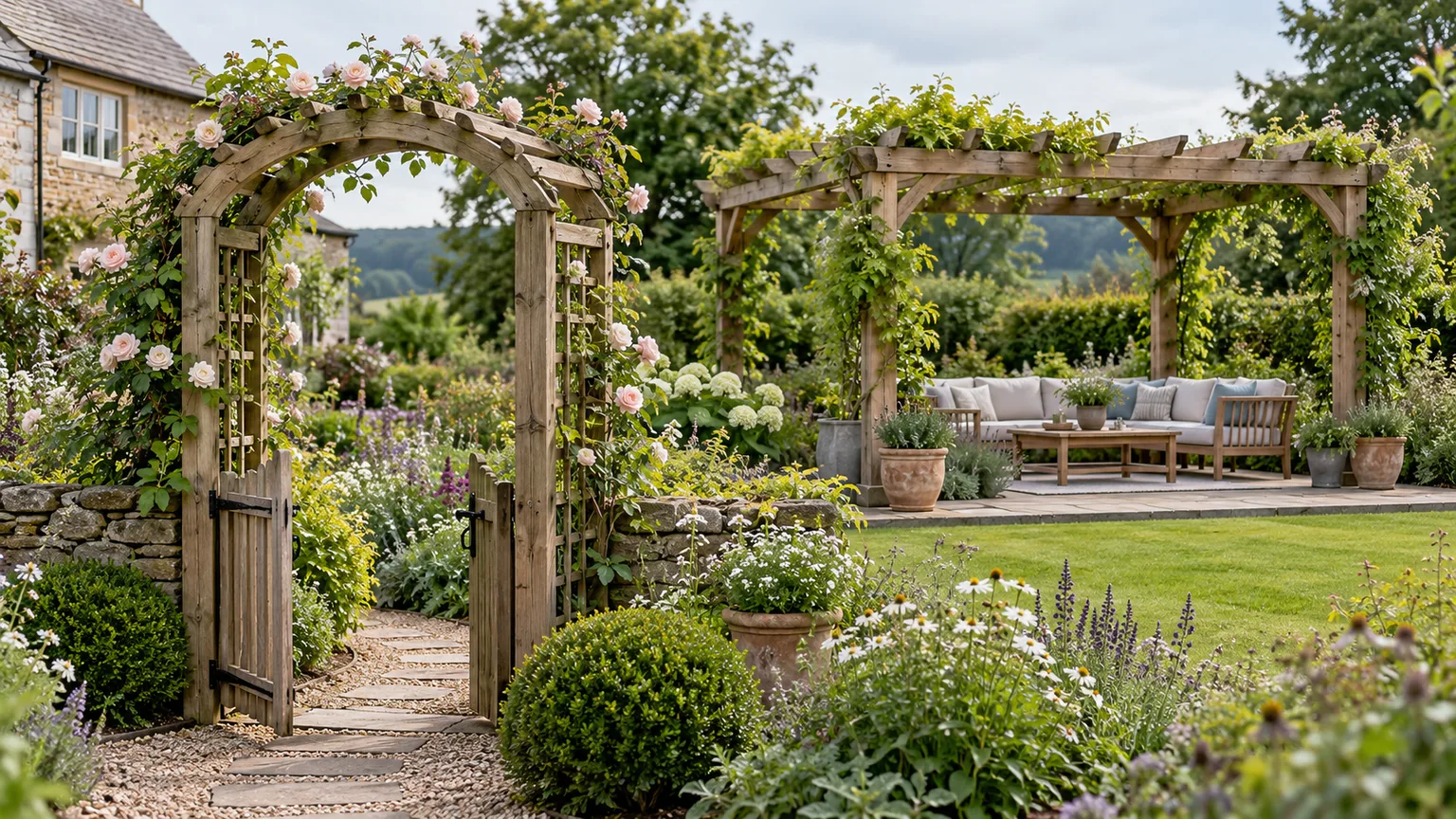
Training climbers over a pergola creates a changing roof of leaves and, depending on the plant, flowers, fragrance, or fruit. It is a good choice when the garden should feel lush and when you can wait for a plant to establish; the first season may provide little shade, while later growth can create a dense canopy that needs pruning. BBC Gardeners’ World Magazine’s pergola plant guide is a useful starting list for climbers chosen for fruit and scent, and Epic Gardening’s guide to manageable vines discusses options selected for less aggressive growth.
Match the vine to the frame, climate, and maintenance you can manage. A twining vine needs posts or wires it can wrap around, while climbing roses need their canes tied in place; neither can simply attach itself to a thick smooth post.
Fast-growing woody vines can become much heavier than they look in a young plant. North Carolina State Extension describes Chinese wisteria as rapid-growing and invasive in its region, reaching 10 to 20 feet tall and needing sturdy supports and regular pruning. Check local invasive-plant guidance and the structure’s capacity before choosing any vigorous climber.
Deciduous vines can provide summer shade while allowing more winter light after their leaves drop; evergreen foliage offers a longer screen but may keep the patio darker year-round. A living roof is not a quick replacement for fabric: choose one or two plants suited to your region, direct new growth along the beams, and expect to prune around gutters, lights, and roof mechanisms as the canopy fills in.
12. A pitched or gabled roof for a more architectural frame
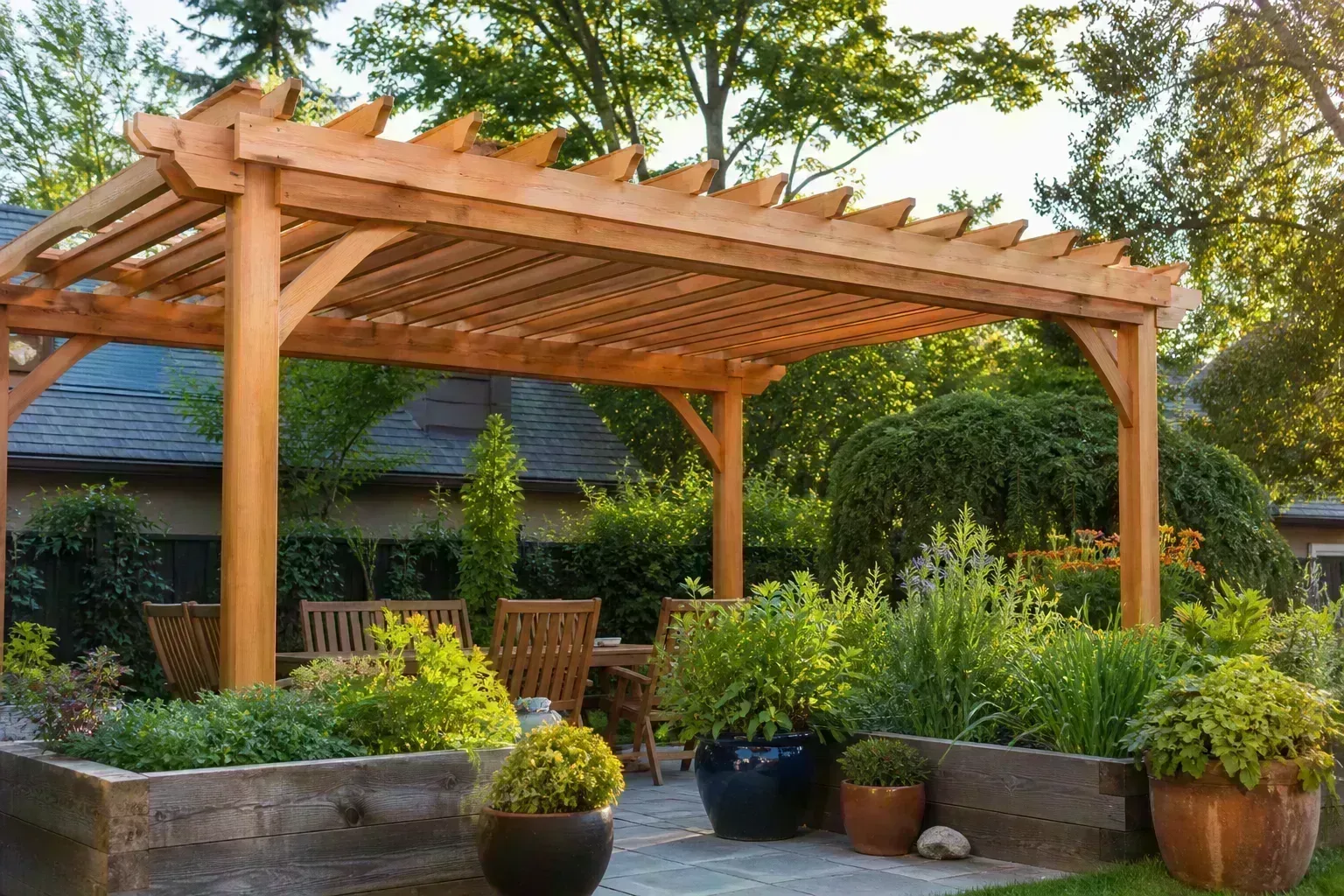
A shallow pitch or gable changes the pergola’s profile from a flat garden grid into something that echoes a porch or roofline. It can make a freestanding structure feel more substantial and create a focal point at the end of a garden path. The shape is especially effective where the pergola should read as a destination, rather than as a light frame that disappears into the landscape.
A pitched shape can help direct water, but only if the covering, roof slope, flashing, and drainage were designed as one system. A gabled frame with open rafters still lets rain through, and a pitched panel roof adds weather and wind loads that an ordinary pergola may not be built to carry. If you like the look but need dependable rain cover, compare a properly engineered pavilion or porch roof with a pergola kit before building.
The gable also changes the proportions of the whole yard. Check the ridge height against the house, trees, fences, and nearby windows, and view the outline from inside before choosing a steep or tall profile. A shallow pitch may feel more at home beside a low ranch house, while a taller gable can hold its own near a large home or broad garden terrace.
Check the frame, drainage, and local rules before you add a roof
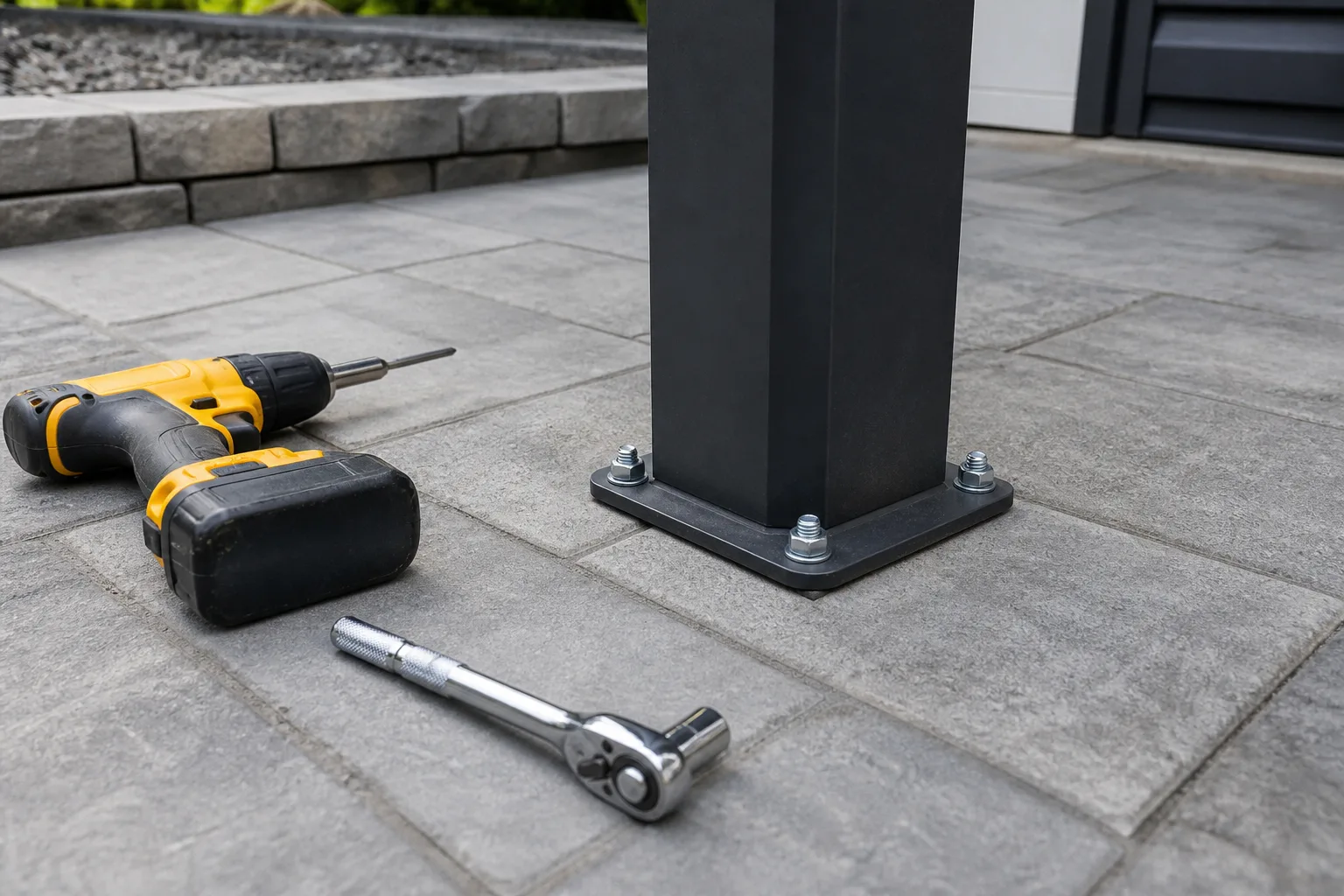
Adding a roof to a pergola that was designed with open rafters is a structural change. Solid fabric, metal, or plastic panels give wind more surface to push against and direct rain toward specific edges, while vines add seasonal weight and can catch wind once their foliage fills in. Read the manufacturer’s instructions for the exact roof configuration; if the frame is home-built or the documentation is missing, have a qualified builder assess the posts, beams, connections, and footings before attaching a cover.
Look at the entire load path, not only the roof slats. Posts need secure bases, beams need suitable connections, and an attached pergola must be fastened to the home’s framing rather than to siding alone. If a kit only lists an open-roof configuration, ask the supplier in writing whether the roof you want is approved for that exact frame, span, and anchoring method.
Plan the water path before choosing panels or fabric. Identify where runoff will land, whether it could splash a doorway or neighboring property, and whether a gutter or downspout can route it safely.
A small roof slope is not enough by itself if seams leak or the low edge pours water onto a slick step. Keep the roof clear of gutters, vents, and doors, and leave access for cleaning leaves from valleys and channels.
Rules vary by municipality and can depend on attachment to the house, size, roof coverage, electrical features, setbacks, and location. Ask the local building department and any homeowners association before ordering materials, then use the installation details for your climate’s wind and snow conditions. This check is especially important when converting an open pergola into a mostly solid roof or adding a motor, lights, or ceiling fan.
Conclusion
Choose a pergola roof by the experience you want underneath it. Open rafters, lattice, and reed give you an airy garden ceiling; close slats and vines increase shade; retractable fabric and louvers let you respond to changing sun; and panels or metal provide a more defined rain-shedding roof when the structure is designed for them.
Before you buy, watch the sun on the patio, decide whether rain cover is essential, and check the frame, drainage path, and local requirements. The right design is the one that makes your outdoor space more comfortable without adding a roof you cannot maintain or a structure that is not built to carry it.