Bird Nest Removal: When to Wait and What to Do
Before removing a bird nest, check the species, activity, location and local rules. Learn when to wait, when removal may be allowed and how to act safely.
The short answer: identify, check activity, then check the rules
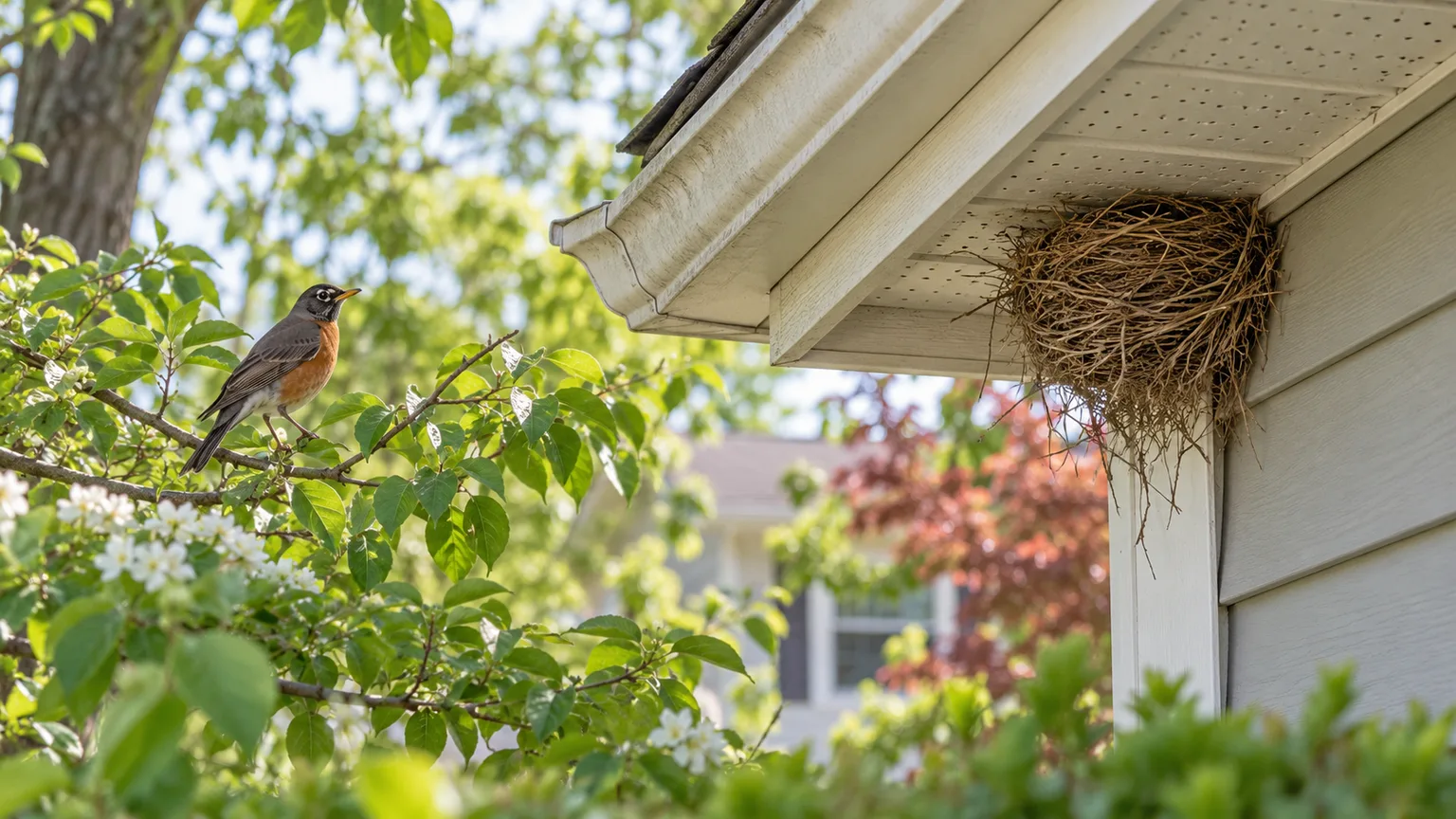
If you find a nest in a tree, porch light, vent, eave or birdhouse, do not pull it down just because it looks empty. First identify the bird as well as you can, watch from a distance to see whether adults are tending it, and check the rules that apply where you live. If you see eggs, nestlings, or repeated visits from adult birds, leave the nest in place and keep pets and people away while you get advice if needed.
In the United States, federal rules distinguish in-use nests from inactive nests for most species protected under the Migratory Bird Treaty Act. The current regulations also contain a narrow exception for nests inside the interior of a human-occupied building when birds prevent normal use, but that exception does not cover nests on exterior eaves or siding. State, tribal, territorial and local rules, plus separate protections for eagles and listed species, can change what you may do. (50 CFR 21.14; 50 CFR 21.16)
The most reliable default is simple: wait if activity or species is uncertain; remove only after you have checked both the law and the nest’s status. A nest that is inconvenient is not automatically an emergency, and moving an occupied nest can disrupt care even when a person means well. For a nest in a vent, chimney, busy doorway or high roofline, keep your distance and call a wildlife agency or qualified wildlife professional before attempting work.
Identify the bird and the kind of nest
Before making a legal decision, work out what animal built the structure. Birds use a surprising range of sites: a cup-shaped nest in a shrub may be a songbird’s, a mud nest under a ledge may belong to a swallow, and a stick platform high in a tree could be a raptor’s nest. A squirrel drey, wasp nest or debris caught in a gutter can look like a bird nest at first glance, so observe entrances and activity rather than reaching in to inspect.
Take a photo from a safe distance and note the location, height, materials, approximate size and the birds you see arriving or leaving. A local wildlife agency, bird club, university extension office or licensed wildlife rehabilitator may be able to help with identification. Do not climb a ladder, peer into a cavity or disturb the structure to get a better view; a phone camera with zoom or binoculars is safer.
Species matters because the federal list of protected migratory birds is specific, and eagles and federally listed threatened or endangered species have additional rules. A bird being described as “common,” “invasive” or a nuisance is not enough to settle the question; verify the actual species and ask your state wildlife agency if you cannot identify it confidently. (50 CFR 10.13)
How to tell whether a nest is active
An active nest is one still being used to raise young. Live eggs or nestlings are strong evidence, but you do not need to see inside the nest to recognize activity: adults repeatedly bringing food, carrying nesting material, exchanging places at the nest or defending the area are all reasons to leave it alone. Avoid testing whether a nest is active by touching it, shining a light inside, shaking a branch or blocking the entrance.
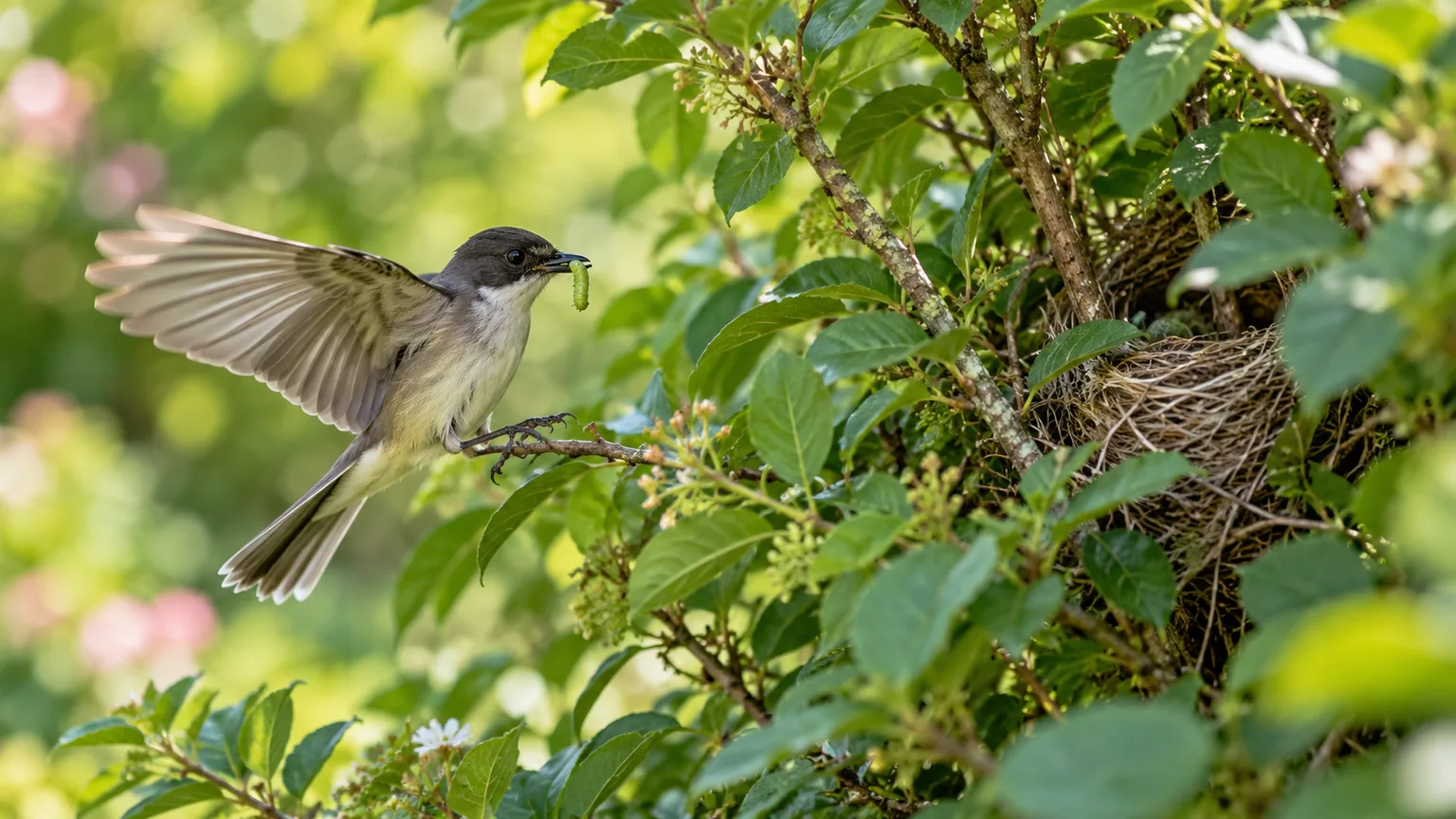
Watch from a window or another spot far enough away that the adults behave normally. Check briefly at different times of day over several days, keeping people and pets away; a single quiet period proves little because birds may forage, rest or stay still when a person is nearby. Cornell NestWatch advises treating a nest as active when it contains live eggs or young, and recommends patience when its status is uncertain. (Cornell NestWatch: unhatched eggs or dead young)
Signs that do not prove a nest is abandoned
No bird being visible when you look is not proof that the nest is empty. Parents may leave to feed, wait until you move away, or stay out of sight because the nest is concealed. A nest that has not changed in a day, or one that appears untidy or quiet, also cannot be judged from one glance.
Do not assume that eggs are nonviable or that a nest has been abandoned based on appearance alone. If there are eggs or you cannot tell what is inside, avoid opening the nest; ask a wildlife professional or the relevant wildlife agency how long to monitor and what signs to use. Cornell recommends waiting rather than disturbing a suspected failed clutch, and its guidance is designed for monitored nest studies, so follow local expert advice for a home nest. (Cornell NestWatch: unhatched eggs or dead young)
What federal law says about bird nest removal
There is no single answer that applies to every nest. The Migratory Bird Treaty Act regulations distinguish between a nest currently in use and one that is inactive, and they list limited authorizations and exclusions. Under the current federal salvage rule, an inactive nest of a covered migratory bird may be salvaged, but the authorization does not apply to live birds, viable eggs or in-use nests; bald and golden eagle nests or eggs are not authorized for salvage under that rule. Disposal and possession limits also apply, so do not keep an old nest as a decoration or craft material. (50 CFR 21.16)
“Inactive” is a legal and biological status, not just a nest that looks old. It means the nest is no longer in use; it does not mean that you can skip checking for another brood, a returning bird or another species using the site. Many birds raise multiple broods in one season, and some cavities or nest boxes are also used for shelter at other times of year. When in doubt, ask a wildlife authority before removal rather than relying on a calendar date or a generic online rule.
The limited exception for the inside of an occupied building
Federal regulation 50 CFR 21.14 allows humane removal of a migratory bird from the interior of a residence, business or similar building where people live or work, but only when the bird’s presence prevents normal use—for example, because it creates a health or safety risk, damages food or products, or may be injured because it is trapped. The rule allows nests, eggs and nestlings to be removed from that interior space under its conditions and says that, when possible, people should wait until nestlings fledge to avoid taking an occupied nest.
This is a narrow rule, not a general permission to remove nests from a house. It expressly excludes birds or nests on exterior siding and eaves, as well as structures without people living or working in them, such as bridges. Humane handling, bird exclusion that is monitored to prevent entrapment, additional eagle or endangered-species authorization, and state or tribal requirements may also apply. A nest in an attic or indoor warehouse that truly prevents normal use is different from one tucked beneath the outside roof edge; confirm the facts with the relevant authority before acting. (50 CFR 21.14)
Check state, tribal and local rules too
Federal rules are only one layer. The eCFR says people must also comply with applicable federal, tribal, state and territorial requirements for birds in buildings, and the salvage authorization notes that additional permits may be required. Local ordinances, protected-species rules, property restrictions or rules on handling wildlife can also matter. Because requirements vary by location and species, an answer from another state—or a general claim that all abandoned nests can be removed—may not apply to your home.
For a site-specific answer, contact your state fish and wildlife agency or tribal wildlife office and describe the bird, whether you have seen eggs or young, where the nest is located and why it creates a problem. If you live in a city or manage a rental or commercial property, check local rules and contact the property manager before arranging work. Keep the written guidance or permit details with your project notes; that makes it easier for a contractor to follow the same restrictions.
When to pause and call a wildlife professional
Stop and ask for help if the nest is active, species identification is uncertain, or the site might involve an eagle, owl, hawk or federally listed bird. Eagles have their own protections, and the general inactive-nest salvage provision specifically excludes eagle nests and eggs. A large stick nest, a nest near an electrical line, or one that requires roof or ladder work is also a poor do-it-yourself job, even if it appears inactive.
Call a licensed wildlife rehabilitator or wildlife agency if a bird is trapped, injured, orphaned or entangled, and follow their directions rather than trying to relocate the nest yourself. For construction, pruning or repairs close to a nest, ask the agency or a qualified arborist how to avoid disturbance and whether the work should wait. Audubon’s nest guidance similarly recommends leaving a nest where it is when possible and seeking local advice when the bird or situation is uncertain. (Audubon Great Lakes: I found a bird nest in a bad location)
If a nest creates an urgent safety problem
First reduce the immediate risk without disturbing the nest. Move a doorway path, keep children and pets away, stop using an affected fixture or vent if safe to do so, and avoid blocking an opening that birds are using. If there is a fire, electrical, ventilation or structural emergency, contact the appropriate emergency service or building professional and tell them a nest may be present so they can coordinate the response.
An exterior nest that blocks a gutter or is near a frequently used entrance may still be possible to leave in place until the young fledge. If people must pass nearby, use another route, put temporary distance between the nest and foot traffic, and keep pets inside. When a nest is in an indoor space and genuinely prevents normal use, ask the relevant wildlife office whether the building-interior authorization fits your situation; do not assume that inconvenience alone qualifies.
How to confirm nesting is finished
Look for a combination of evidence, not a single sign: young have left, adults no longer visit the site, and repeated distant checks show no renewed activity. Even then, wait and observe before touching the nest. Some birds raise a second brood, reuse a cavity, or return after an apparent pause; a nest site can remain attractive after one family has moved on.
There is no universal “safe month” for removal across the United States because climate, species and breeding schedules differ. A late-season hedge trim in one region can still overlap with nesting elsewhere, and birds may nest outside the period a homeowner expects. Gardeners’ World advises checking carefully for nesting activity before hedge work, including later in the season when a second brood may be present; the same practical caution applies to pruning or repairs around a suspected nest. (Gardeners’ World: how to prune a wildlife hedge)
How to remove a legally removable inactive nest
Once you have confirmed the species and inactive status, checked the applicable rules, and ruled out a professional-only site, keep the work simple and brief. Choose a dry, calm time when no birds are present, and do not remove structural material from a chimney, vent, roof drain or other system without a qualified contractor. If you encounter eggs, live young, an adult bird, a second nest layer or fresh activity, stop, put the material back only if you can do so without risk, and get advice.
For an accessible small nest on a permitted surface, wear disposable gloves and avoid crushing dry material or stirring up dust. Put the nest and loose debris into a bag or closed container, then dispose of it according to local waste rules; do not keep, sell, or move it to another location. The federal salvage rule has limits on the possession and disposition of migratory-bird specimens, so it is safest to treat removal as disposal, not collection. (50 CFR 21.16)
Do not spray pesticides, repellents or disinfectants into a nest, and do not seal a hole while birds could still be inside. Exclusion work is useful only after the area is clear and the chosen device will not trap or injure wildlife. If the nest is high, large, tangled with wiring, or inside a chimney or ventilation system, hire a qualified professional who can verify the system is safe and the species rules are followed.
Clean the surface and manage droppings carefully
After a small nest is legally removed, clean only the surface that needs it. Lightly dampen loose debris before collecting it so it is less likely to become airborne, then wash the area with ordinary detergent and water if the surface allows. Wear gloves, avoid touching your face, and wash your hands when finished; a disposable mask is sensible if debris is dusty, but do not turn routine cleanup into a hazardous-material project without a reason.
Large accumulations of bird or bat droppings are a different job from a small nest. The CDC notes that disturbing soil or plant matter contaminated with bird or bat droppings can increase exposure to Histoplasma, and advises professional cleanup for large amounts of droppings. If you see a thick buildup in an attic, loft, chimney, barn or air-handling system—or if someone in the home is at higher risk for severe infection—do not dry-scrape or sweep it; contact a company experienced in that type of cleanup. (CDC: Reducing Risk for Histoplasmosis)
Skip a strong bleach mixture unless a product label, public-health authority or qualified professional specifically recommends it for that surface and situation. A nest box is not the same as an occupied room, painted siding or HVAC equipment, and bleach can damage some materials or create harmful fumes if mixed with other cleaners. The aim after a routine nest is removal of loose material and ordinary surface cleaning, not sterilizing the outdoors.
Prevent a new nest without trapping birds
Prevention belongs after the nest is confirmed inactive and the rules allow action. Repair the entry point, add a properly fitted cover or bird-exclusion device, or adjust a light or ledge that attracts nesting—only when you can do so without sealing birds inside. Check the space carefully before closing it and recheck any exclusion device regularly so a bird cannot become trapped or injured.
The most effective timing is before a bird begins nesting, not after eggs appear. Keep vents and chimneys maintained with appropriate screens installed by a qualified contractor, close openings that do not need to remain accessible, and keep outdoor lights and sheltered ledges clear of loose nesting material before the breeding cycle starts. Do not use sticky products, loose netting that can entangle wildlife, or repeated nest destruction as a deterrent.
Some birds may defend a nest site, especially when young are nearby. If adults swoop or call, back away and use another route rather than trying to scare them off; the behavior usually eases after young leave. Audubon recommends giving birds space and waiting out a nest when practical, which is generally safer than attempting a mid-cycle relocation. (Audubon Great Lakes: I found a bird nest in a bad location)
What to do if a baby bird is on the ground
Not every young bird on the ground has fallen from a nest. A fully feathered fledgling that hops, flutters or grips a branch is often in its normal first days outside the nest; its parents may be nearby and still feeding it. Keep cats and dogs away, move back, and watch from a window or other quiet place rather than carrying the bird off.
A nestling is usually less feathered and cannot hop or grip well. If you can identify it confidently and reach its nest safely, Cornell Lab guidance says to return it to the nest; parent birds do not abandon young simply because a person touched them. If the nest has been destroyed, the young bird is injured, cold, covered in insects, or was caught by a cat, contact a licensed wildlife rehabilitator promptly and follow instructions. Do not feed it, give it water, or attempt to raise it yourself. (Cornell Lab of Ornithology: I found a baby bird—what do I do?)
Should you remove an old nest from a birdhouse?
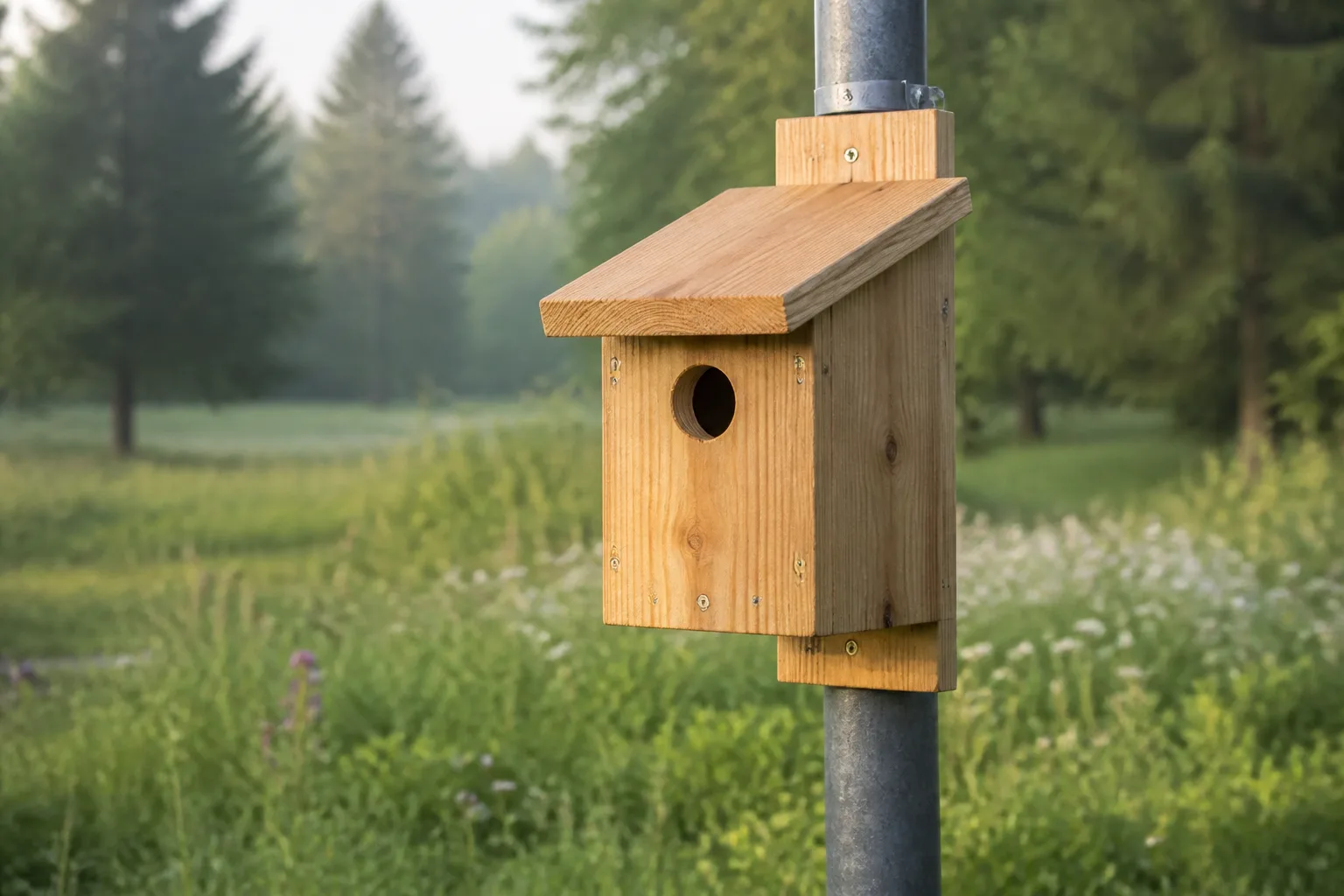
A nest box is different from a natural nest tucked into a hedge or eave because its interior can be inspected and cleaned, but it still needs to be empty before you open it. Some cavity-nesting birds raise more than one brood, and boxes can be used for roosting outside the breeding period. Check the entrance and nearby activity over repeated observations; if birds are using it or you are unsure, leave it alone and ask a local birding organization or wildlife agency.
When the last brood has left and local rules permit cleaning, wear gloves, open the box carefully and look for wasps or other animals before putting a hand inside. Remove old material, brush out loose debris and let the box dry. Birding experts Kenn and Kimberly Kaufman recommend cleaning nest boxes after a brood or at the end of the year, while Cornell NestWatch notes that cleaning practices vary with box type and species; use the box maker’s guidance and local monitoring advice rather than treating every natural nest the same way. (Birds & Blooms: when to clean out birdhouses; Cornell NestWatch: should I clean out my nest box?)
Conclusion
Before removing a bird nest, identify the species, confirm that it is no longer in use and check federal, state, tribal and local rules. The current federal rules allow salvage of many inactive migratory-bird nests, but they do not authorize disturbing in-use nests, and eagle nests, listed species, exterior building nests and the narrow interior-building exception have important separate conditions.
If you are unsure, wait and call your wildlife agency or a licensed professional; a few days of patience is usually safer than a rushed removal. Once the site is empty and removal is lawful, dispose of the nest rather than keeping it, clean small amounts of debris with basic precautions, and prevent another nest only after checking that birds cannot be trapped.



