How to Grow a Cherimoya Tree: Care, Pollination & Fruit
Learn how to grow a cherimoya tree with climate limits, planting and pruning advice, hand-pollination steps, and clear cues for picking and ripening fruit.
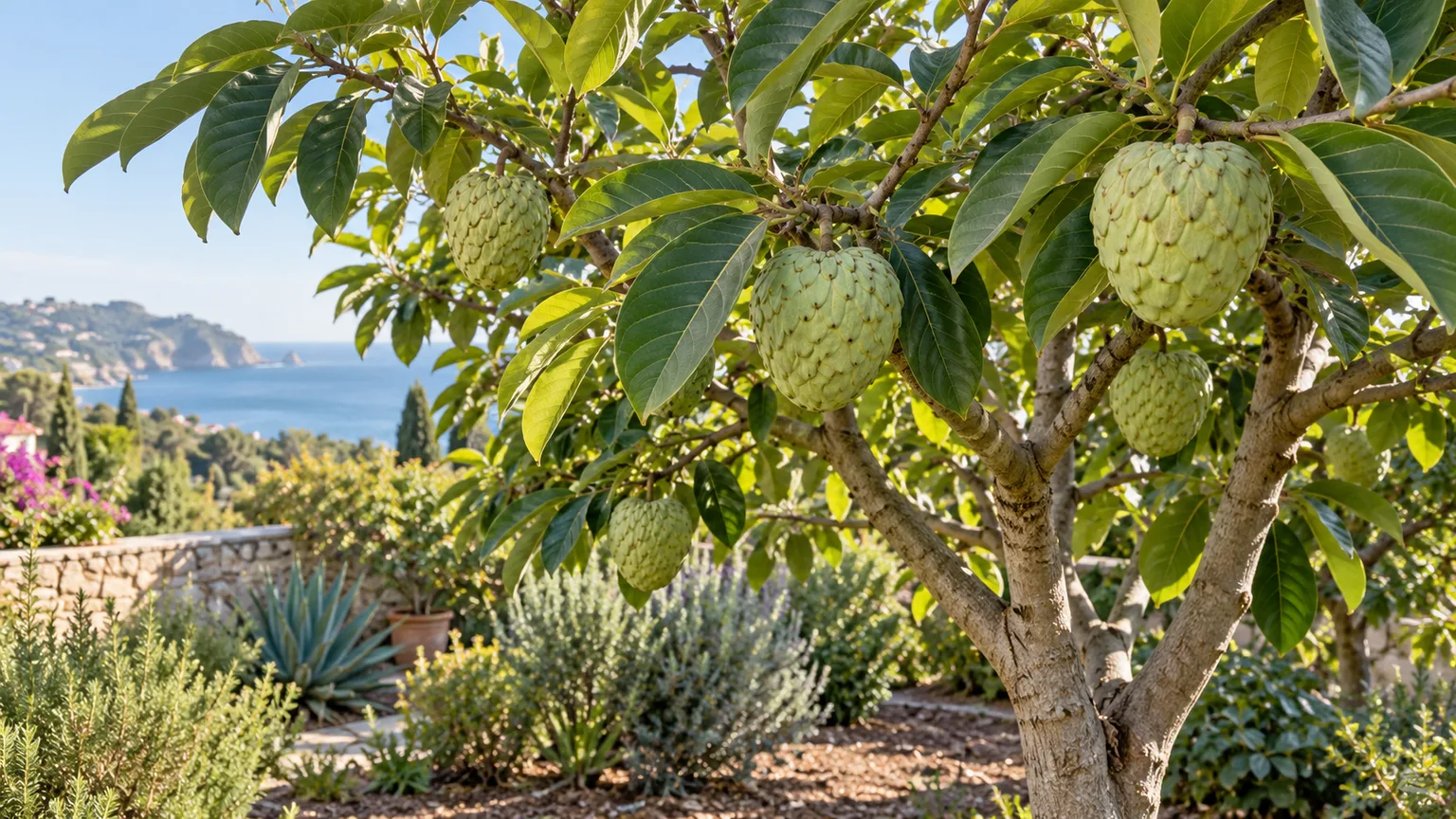
Cherimoya (Annona cherimola) is worth growing when your climate is mild enough for the tree to flower and mature fruit, and when you are willing to help pollinate it. The tree needs moisture but not soggy soil, shelter from drying wind and severe heat, and a harvest plan that protects its soft fruit from bruising. A sunny, frost-protected site with excellent drainage is the first decision; hand pollination is often the next.
A cherimoya is not a reliable match for every warm garden. It comes from subtropical highland conditions, so a hot low desert can be a worse fit than a cooler coastal or foothill garden even if both are technically frost-free. The California Rare Fruit Growers describes the tree as suited to mild-temperate conditions and reports best performance in coastal and foothill areas with cool nights. (California Rare Fruit Growers)
Can You Grow Cherimoya in Your Climate?
Cherimoya grows best where summers are warm rather than relentlessly hot, winters are mild, and the air is not extremely dry during flowering. The California Rare Fruit Growers estimates a need for roughly 50 to 100 chill hours and notes that young growing tips can be damaged around 29°F, while mature trees can be severely injured near 25°F. These are regional horticultural reference points, not a guarantee for every cultivar or site; a brief dip, wind exposure, tree age, and how quickly temperatures fall all matter.
That is why a USDA hardiness zone alone is a blunt tool for choosing a location. A sheltered coastal yard may have cool nights and fewer sharp freezes, while an inland yard at the same zone can experience both summer heat and winter frost. In a marginal climate, look at the temperatures your actual planting spot experiences, not just the broad zone label. A south-facing wall can help in a cool site, but it can trap too much heat in an already hot location.
The tree briefly sheds leaves in some climates and needs a seasonal rest before spring growth. Insufficient winter chill may delay or disrupt leafing and flowering, while intense dry heat can stress leaves and fruit. If your summers are consistently very hot or your winters routinely fall well below the tree’s tolerance, choose another fruit tree or grow cherimoya as a protected, experimental container plant rather than planning around a dependable harvest.
Choose a Site That Balances Sun, Heat, and Wind
Give a cherimoya a bright outdoor location, ideally with full sun for productive growth. The trade-off is that unrelenting reflected heat can scorch foliage and fruit. In a hot inland garden, morning sun with some protection from the harshest late-afternoon exposure can be safer than planting beside a south- or west-facing wall. In a cooler coastal garden, a sunny wall may help warm the site and support earlier growth.
Choose a spot with enough room for a tree that can become large, even if you plan to prune it smaller. Cherimoyas develop spreading branches and can reach 20 to 30 feet if left alone. A sheltered position also protects their brittle limbs and developing fruit from strong, persistent wind. Do not squeeze the tree between a fence and another large plant; an open canopy is easier to prune, inspect, and hand-pollinate.
Soil and drainage matter more than amendments
Cherimoya tolerates more than one soil texture, but roots do poorly in ground that stays saturated. Aim for moderately fertile soil that drains after irrigation or rain. The California Rare Fruit Growers lists a pH range of about 6.5 to 7.6; use a local soil test before trying to correct pH, because adding lime or sulfur without a measurement can make the root zone less suitable.
If water stands in the planting area after a storm, choose a different spot or build a broad, raised planting mound so water can move away from the root zone. Do not solve heavy clay by filling only the planting hole with a loose, highly amended mix. That can create a basin where water collects at the boundary between the amended pocket and the surrounding soil. Improve the wider bed, plant slightly high where appropriate, and keep irrigation away from the trunk.
Plant the Tree Without Burying Its Root Flare
In mild-winter regions, plant when the tree can establish roots without facing peak summer heat; in colder-edge gardens, spring planting after the hardest frost risk has passed gives a young tree more time to settle before winter. A container-grown tree can be planted with its root ball level with the surrounding grade. Dig a hole about twice as wide as the root ball but no deeper, loosen circling roots gently, and backfill with the soil removed from the hole unless a soil test calls for a broader amendment.
Keep the root flare—the point where the trunk widens into the first roots—at or just above the finished soil line. A tree planted too deeply is more vulnerable to trunk and crown problems, especially in wet ground. Water slowly to settle the soil around the roots, then apply a shallow layer of mulch over the root zone while leaving a clear gap around the trunk.
Young cherimoya trees benefit from support because their root systems are relatively weak and exposed sites can rock a new root ball. Set a stake before or during planting so you do not drive it through the roots later. Tie the trunk loosely with a flexible tree tie, leaving enough movement for the trunk to strengthen, and remove or adjust the tie as the tree becomes stable.
Choose a Grafted Tree or Grow from Seed
If you want fruit with known qualities, buy a healthy grafted tree of a named cultivar from a nursery that can tell you how it was propagated. A grafted tree is a closer route to the parent cultivar’s fruit and may bear sooner than a seedling, though the first crop still depends on age, site, pollination, and care. California Rare Fruit Growers lists cultivars such as ‘Bays,’ ‘White,’ ‘Honeyhart,’ ‘McPherson,’ and ‘Nata’; local nurseries may stock only a few, and performance can vary by climate.
Seed is a reasonable choice if the goal is to learn, grow an ornamental tree, or experiment with a species that is hard to find locally. It is not a way to reproduce a favorite fruit exactly. Seed-grown plants vary genetically, take longer to reach maturity, and may produce fruit that differs in size, texture, flavor, or season from the fruit you saved the seed from. Keep seedlings in a deep pot while young so the developing roots have room, and transplant before the taproot becomes badly constrained.
Cherimoya seed germination is not the same as getting a fruiting tree. Even vigorous seedlings may need several years to reach flowering size, and good flowers still need suitable weather and successful pollination. If fruit is your main goal and a grafted tree is available, that is usually the more predictable starting point.
Water for Growth Without Keeping Roots Wet
Water newly planted trees deeply enough to moisten the root ball and nearby soil, then let the surface begin to dry before watering again. The correct interval changes with soil texture, rainfall, wind, tree size, and temperature, so a fixed weekly schedule is less useful than checking the ground. If the soil is still cool and wet several inches down, wait; if the root zone is dry and leaves are losing firmness during active growth, water slowly and thoroughly.
Once established, a cherimoya needs regular moisture while it is actively growing and carrying fruit, but not standing water. Drip irrigation or a soaker hose helps wet the root zone without repeatedly splashing the trunk. Mulch moderates soil temperature and slows drying, especially in hot weather, but mulch should not touch the bark. Reduce irrigation when the tree is dormant or leafless, particularly during cool, wet weather.
Two opposite problems can look similar at first: drought and waterlogged roots may both cause leaf drop or yellowing. Check the soil before adding water. Dry soil with crisping at the edges points toward inadequate moisture or heat stress; persistently wet soil, poor drainage, and declining roots point toward excess water. If the root zone stays wet for days after irrigation, correct the drainage or watering pattern rather than treating the canopy symptom.
Feed Lightly and Read Yellow Leaves Carefully
Start with a soil test and the fertilizer label, not a heavy feeding schedule. A balanced fruit-tree fertilizer may be appropriate where growth or a test indicates a need, but excess nitrogen can push long, soft shoots instead of helping a tree carry fruit. Apply fertilizer over the active root zone rather than against the trunk, and water it in as directed. Young trees need enough nutrients to establish; mature trees should not be fed simply because they have stopped growing during their normal seasonal rest.
Yellow leaves do not automatically mean the tree needs fertilizer. Cold, drought, saturated soil, root damage, and nutrient imbalance can all affect leaf color. Look at the pattern and the root-zone moisture first: widespread yellowing after wet weather suggests a different response from yellowing during a hot, dry spell. If the cause is unclear, use a soil or leaf test before increasing fertilizer.
Prune for Strong Branches and Reachable Fruit
Cherimoya can grow into a tall, spreading tree, but regular structural training makes later care easier. While the tree is young, select a few well-spaced scaffold branches with sturdy, outward-facing angles and remove competing leaders gradually. A low, open canopy lets light reach fruiting wood and keeps flowers within reach for hand pollination. Keep ties and supports loose enough that branches are not girdled as they thicken.
The wood can be brittle, and a heavy crop can strain weak limbs. Remove dead, damaged, crossing, or sharply upright shoots during the tree’s quieter period, using clean tools and cuts that do not leave long stubs. Avoid topping the tree or removing a large share of the canopy at once; severe pruning can provoke vigorous shoots and remove potential fruiting wood. If you need to reduce height, do it over more than one season and retain strong horizontal branches.
If fruit set is unusually heavy, thinning a few developing fruits can protect branch structure and allow the remaining crop to size up. Do not thin just because a young tree has a small crop. First confirm the branches are bending or overloaded, then remove damaged or crowded fruit rather than stripping the tree.
Learn the Two Stages of a Cherimoya Flower
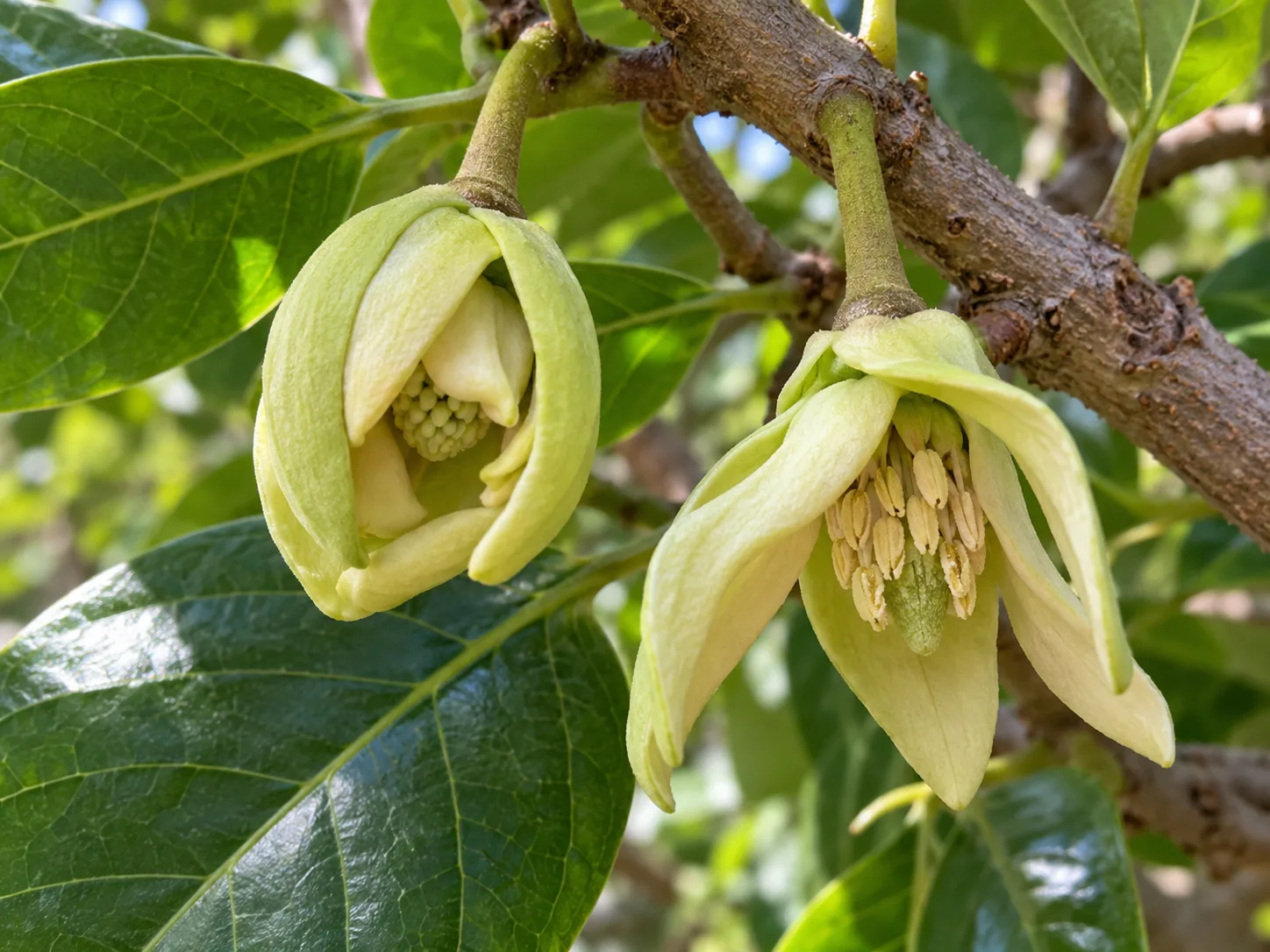
Cherimoya flowers contain both male and female reproductive structures, but those parts do not function at the same time. This timing pattern is called protogynous dichogamy: a flower is receptive first, then later sheds pollen. The California Rare Fruit Growers describes the female phase as lasting roughly a day and a half before the flower moves into the male phase, although exact timing changes with local conditions and cultivar. (California Rare Fruit Growers)
A horticulture reference reviewed by an agricultural engineer also describes cherimoya flowers as carrying both reproductive parts while maturing in separate phases. That detail matters because a flower can be complete without being ready to receive and shed pollen at the same moment. (Botanical Online)
In the female stage, petals are only partly separated and the central receptive area can look glossy or moist. In the male stage, the petals open wider and pollen-bearing anthers become visible; pollen may collect as pale grains. Do not rely only on a clock or assume every flower on the tree is in the same phase. Check blossoms directly over several days so you learn how the stages appear on your tree.
A peer-reviewed study of Annona cherimola found that stigma receptivity is affected by weather: high temperature shortens the receptive window, while higher humidity can extend it. The same study found evidence of self-fertilization despite the staged flower cycle. That means a single tree can sometimes set fruit, but relying on incidental pollen transfer may still produce a light or uneven crop. (PubMed study on cherimoya flower receptivity)
Hand-Pollinate Flowers for Better Fruit Set
Hand pollination compensates for unreliable natural pollen transfer in many home gardens. Use a small, clean, soft artist’s brush and focus on flowers you can reach without bending or breaking branches. A second tree or cultivar can supply pollen if its flowering overlaps, but it does not remove the need to match pollen to a receptive flower. Some cultivars may show more self-fruitfulness than others, so treat cross-pollination as helpful rather than an absolute requirement.
Pollination is worth trying when a healthy tree flowers but drops most blossoms without setting fruit, or when fruit develops lopsidedly. Each cherimoya fruit forms from many flower parts; incomplete fertilization can leave the developing fruit irregular. Hand pollination will not fix a tree that is too young, suffering root stress, exposed to damaging heat, or losing flowers to wind, but it gives you a controllable test before you change fertilizer or blame the cultivar.
A repeatable pollination routine
- Inspect flowers at two times of day. Look for partly open female-stage flowers with a glossy center and more open male-stage flowers whose anthers are releasing pollen. Record the timing for a few days; the exact window is local.
- Collect pollen when anthers are shedding. Tap or brush pollen from a male-stage bloom into a clean, dry container. Fresh pollen is preferable because viability declines after release.
- Transfer pollen to a receptive bloom. Gently touch the brush to the stigma inside a partly open female-stage flower. A light dusting is enough; avoid crushing petals or repeatedly rubbing the flower.
- Bridge a timing gap carefully. If no receptive flower is ready while pollen is being shed, seal the pollen in a small dry container and refrigerate it overnight. Bring it out when you pollinate the next morning, and discard it if it becomes damp or clumped.
- Repeat while bloom continues. Check the tree every day or two during the flowering period and pollinate newly receptive flowers. Marking a few treated blooms with loose tags can help you learn whether timing or weather is limiting fruit set.
The California Rare Fruit Growers recommends collecting pollen in the early evening and applying fresh pollen to partly open female-stage flowers, with overnight refrigeration as a short bridge when stages do not line up. Do not treat this as a rigid schedule: temperature, humidity, cultivar, and the flower’s actual stage matter more than the hour on a clock. (California Rare Fruit Growers)
Diagnose Flowers That Do Not Become Fruit
If a tree produces leaves but no flowers, check age, winter chill, light, and the previous season’s growth before changing fertilizer. A very young seedling may not yet be mature enough to bloom. Excessive shade, weak growth, severe pruning, or a climate that stays too hot or too warm through winter can also interfere with flowering. Give a new tree time to establish, then evaluate it over a full growing cycle.
If flowers open and then fall, look at the weather and the flower stages first. Dry heat can shorten the receptive period; strong wind can damage flowers; irregular soil moisture can stress a tree during bloom. Try hand-pollinating a small group of flowers while leaving others untreated. Comparing the two groups is a practical way to see whether pollination timing is the main bottleneck in your garden.
If fruit forms but remains lopsided or drops early, incomplete pollination is one possibility, but it is not the only one. Water stress, heat, physical damage, or an overloaded branch can also interrupt fruit development. Keep notes on when flowers were treated, the weather, and which fruit grew normally. A few seasons of observations are more useful than assuming every misshapen fruit needs more fertilizer.
Watch for Root Rot, Mealybugs, and Ants
The most important disease prevention is keeping the root crown out of soggy soil. Root and crown rots are more likely where irrigation repeatedly wets the trunk or where heavy soil stays saturated, especially in cool weather. Keep mulch away from bark, avoid lawn sprinklers that splash the trunk, and correct drainage if the planting site remains waterlogged. Once a tree has extensive root damage, simply cutting back the canopy will not restore it.
Inspect the undersides of leaves, branch junctions, and young fruit for mealybugs or scale. Ant trails on the trunk can be a clue that sap-feeding insects are present, because ants feed on their honeydew. Start by confirming the pest, pruning out badly affected material when appropriate, and preventing weeds or branches from creating a bridge into the canopy. If you consider a pesticide or horticultural oil, use only a product labeled for the crop and pest in your location and follow its current label; do not spray flowers that pollinators are visiting.
Strong winds can also cause losses without any pest or disease. Check ties, stake young trees, and harvest exposed fruit before it is battered against branches. A sheltered site and an open but sturdy framework prevent many problems more reliably than reactive treatments.
Pick Mature Fruit and Let It Ripen Indoors
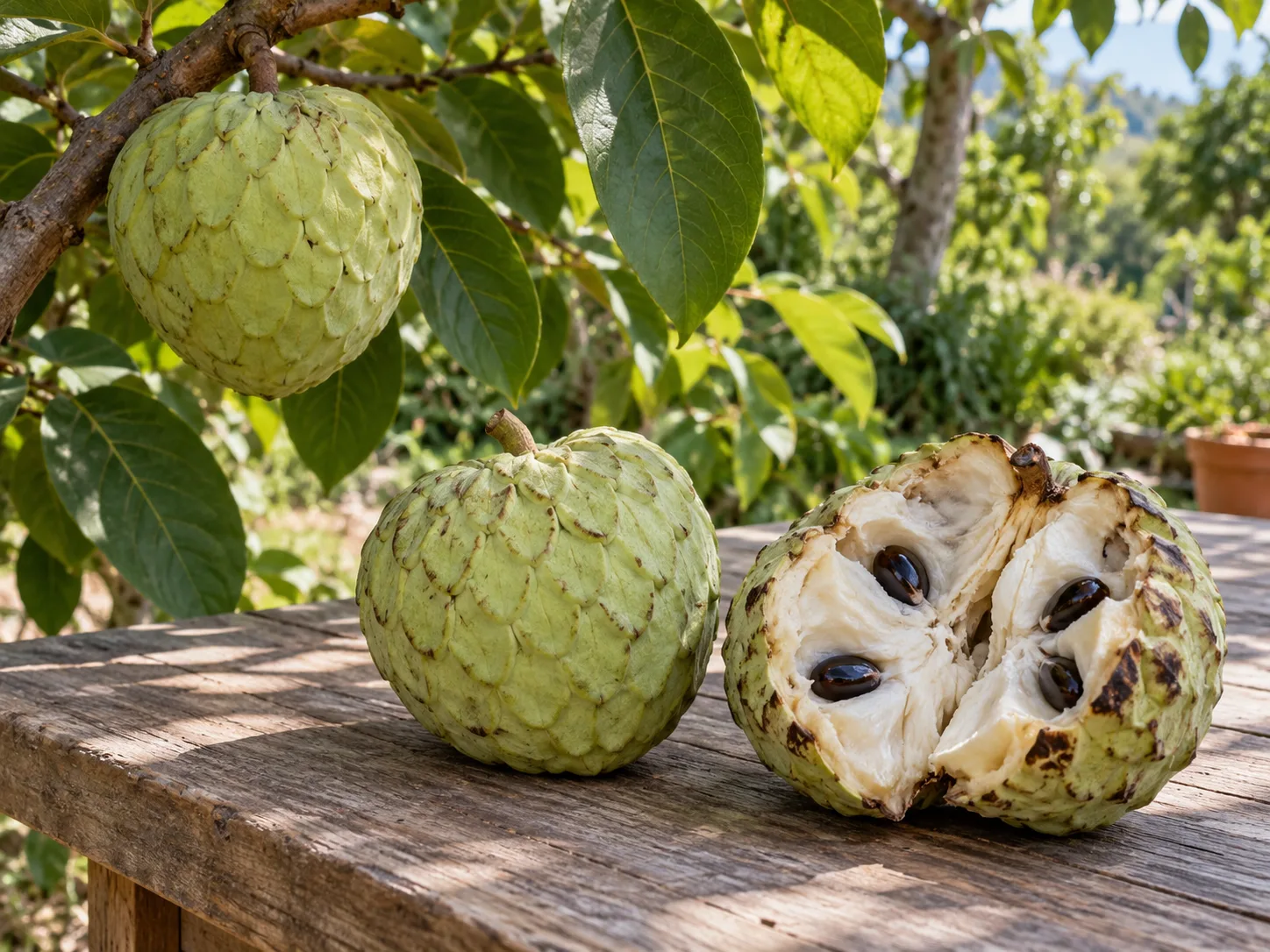
Cherimoya fruit is delicate and usually ripens after it is picked. Mature fruit becomes fuller and often changes from a darker green toward a paler green or yellow-green, but the color shift can be subtle in cool weather and differs among cultivars. Use more than one clue: the fruit should have reached a good size, the skin between its scales may lighten, and a gentle press near the stem may show a slight give only as ripening approaches. Do not wait for the fruit to turn dark brown; that often signals overripeness or deterioration.
From pollination to mature fruit commonly takes about five to eight months, although cultivar and weather shift the calendar. In California growing areas, the harvest season can extend from October through May, so use the fruit’s maturity cues rather than a date copied from another region. (Growables cherimoya profile; California Rare Fruit Growers)
Clip mature fruit from the branch rather than pulling or twisting it. Leave a short stem or cut it close enough that it will not puncture neighboring fruit during storage. Carry each fruit in a padded basket or shallow box, and avoid stacking heavy fruit on top of it. A bruised cherimoya can soften unevenly and deteriorate before you get to eat it.
Let firm fruit soften at room temperature, checking it daily with gentle pressure. When the flesh yields slightly, chill it briefly if you prefer it cold and eat it soon. The California Rare Fruit Growers cautions that cold storage can injure the skin and flesh, so avoid keeping mature, unripe fruit in a very cold refrigerator for a long period. (California Rare Fruit Growers)
Is a Container a Good Way to Grow Cherimoya?
A container can keep a cherimoya alive where winter freezes would damage an in-ground tree, but it is a compromise rather than the easiest route to fruit. The species can grow into a large tree, has substantial root needs, and depends on a suitable seasonal climate to flower and mature fruit. A cramped pot, indoor shade, or repeated root disturbance makes fruiting less likely even if the leaves look healthy.
If you try container culture, begin with a deep, sturdy pot that has generous drainage holes and a free-draining mix. Move the plant only when necessary, keep it outdoors in bright conditions during favorable weather, and protect it from frost without placing it in a dark, heated room for months. Check moisture more often than you would for an in-ground tree because pots dry faster, but do not let the container sit in a saucer of water.
Before buying a tree for a pot, ask a local subtropical-fruit nursery whether a compact cultivar is suited to your climate and container size. The California Rare Fruit Growers does not recommend container culture as a standard method, so treat a potted tree as an experiment and do not count on a reliable harvest. A warm greenhouse or protected patio may improve survival, but it cannot erase the need for suitable flowering and fruiting conditions.
Conclusion
Cherimoya succeeds when the site suits its mild-climate preferences and its roots stay moist without becoming waterlogged. Choose a sheltered, bright planting area with excellent drainage, protect a young tree from frost and wind, and buy a grafted cultivar if known fruit quality matters more than the experiment of growing from seed.
When the tree flowers, learn the female and male stages and hand-pollinate receptive blooms if fruit set is poor. Then let mature fruit ripen off the tree and handle it gently. If your garden is too hot, too cold, or persistently wet, changing the site or choosing a different fruit tree is a better plan than trying to overcome a climate mismatch with fertilizer.