Fountain Grass Care: Why Species Choice Matters Most
Fountain grass care differs by species. Learn which type you have, where to plant it, how to water and prune it, and what to know about pots and winter.
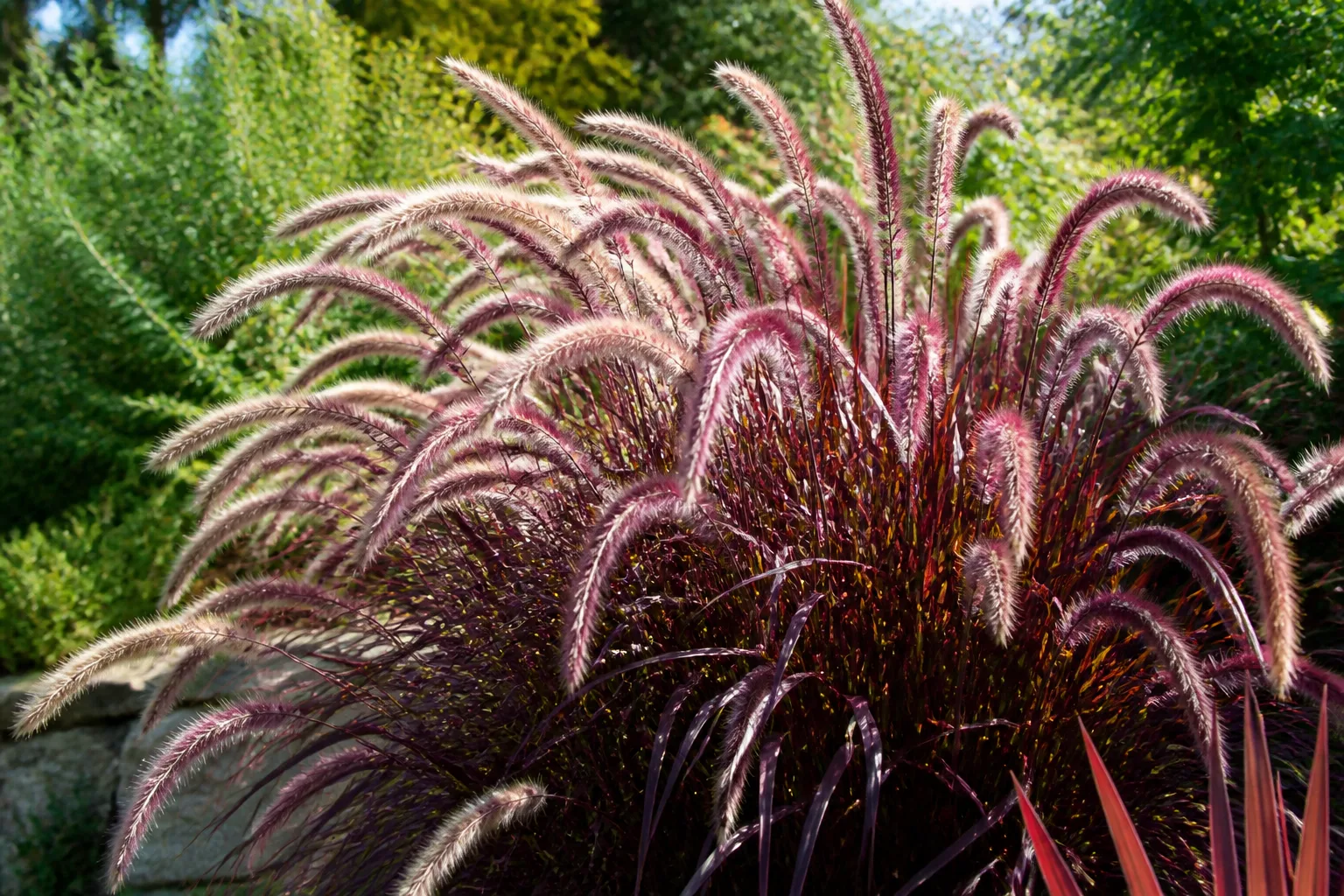
Fountain grass earns its name from narrow leaves that arch outward and flower spikes that rise above the clump like soft bottle brushes. The name is also a source of confusion: plants sold as fountain grass include more than one species, and some references use the updated genus name Cenchrus while others retain Pennisetum. A cold-hardy Chinese fountain grass and burgundy purple fountain grass may look related, but they do not share the same winter limits or ecological cautions.
The simplest way to grow one successfully is to start with the full botanical name on its tag. Once you know whether you have a hardy Cenchrus alopecuroides cultivar, tender C. setaceus, or another ornamental grass, you can choose a site, watering routine, and winter plan that fit the plant instead of guessing from its common name.
Start by identifying the kind of fountain grass
Before planting, read the nursery tag or seed packet for a scientific name and named cultivar. “Fountain grass” alone does not tell you whether the plant is a perennial where you live, how large it will get, or whether it can set viable seed. If the label is missing, ask the seller for the name rather than relying on foliage color or a photo; several grasses share a fountain-like outline.
The botanical name may appear as either Pennisetum or Cenchrus. University of Wisconsin–Madison Extension explains that Pennisetum species have been reclassified into Cenchrus, but the older name remains common in horticultural references and catalogs (UW–Madison Extension). Searching or comparing both names can therefore help you find accurate cultivar information.
Common species and what their names tell you
The most commonly sold hardy fountain grass is Chinese fountain grass, Cenchrus alopecuroides (often labeled Pennisetum alopecuroides). It forms a dense, deciduous clump with green leaves and late-season bottlebrush plumes. Cultivars range from petite ‘Little Bunny’ to larger forms; ‘Hameln’ is compact and tends to bloom earlier than the species, a useful trait in shorter growing seasons. Cultivar size, bloom timing, and winter tolerance still vary, so check the label instead of assuming every C. alopecuroides behaves identically. Gardenia’s species profile shows how wide that range can be, from dwarf selections around a foot tall to larger forms several feet high (Gardenia).
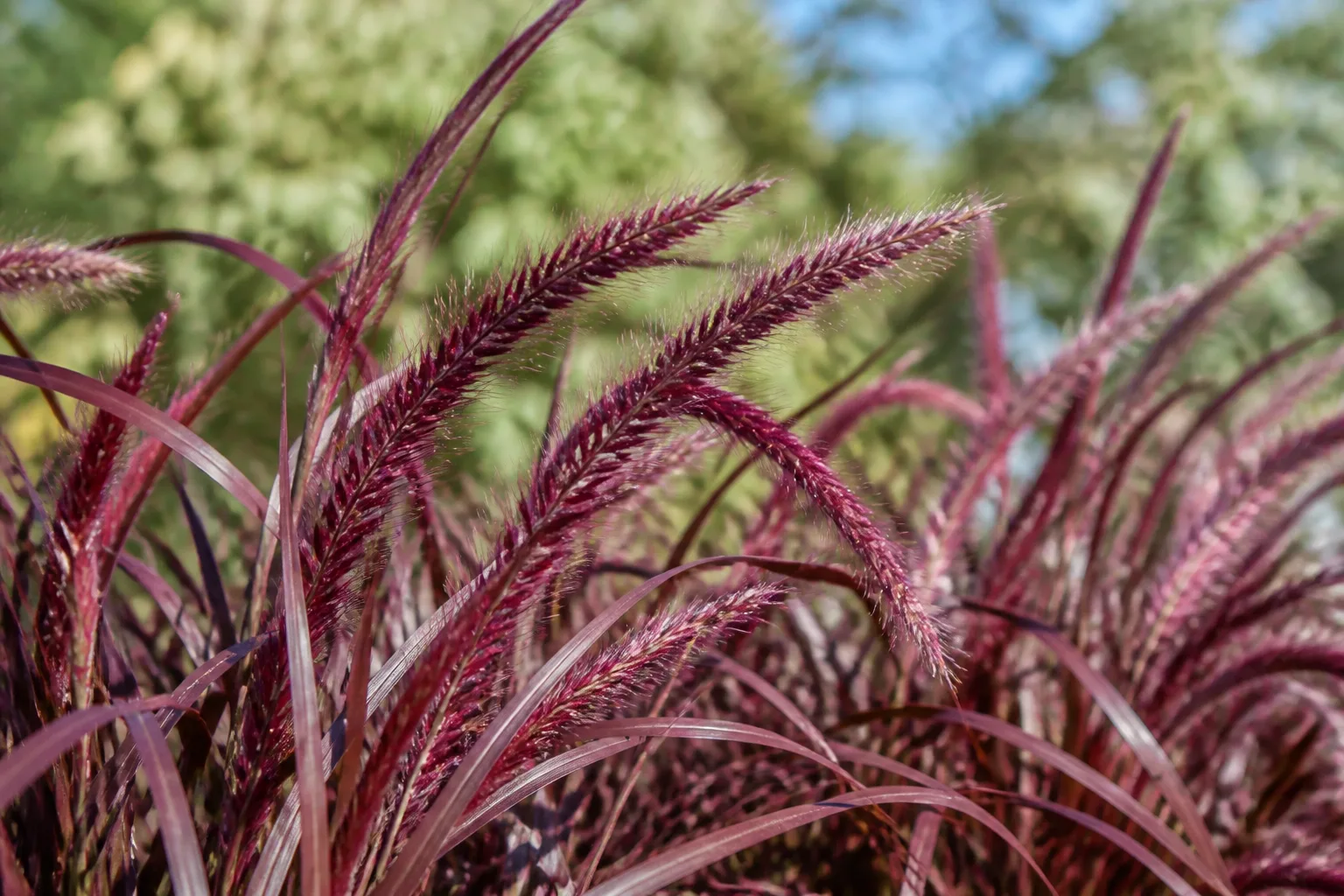
Purple or crimson fountain grass is usually Cenchrus setaceus (often Pennisetum setaceum), particularly the burgundy-leaved ‘Rubrum’. It is a tender warm-season ornamental that many gardeners in cold-winter climates grow as an annual or in a movable container. Another plant sometimes sold alongside these is ornamental pearl millet, Cenchrus americanus (syn. Pennisetum glaucum); it is generally grown as an annual foliage plant, not as a winter-hardy clump. The RHS also lists different fountain-grass species and cultivars separately, which is a useful reminder that the genus name is not a complete care label (RHS Pennisetum guide).
Match the species to your climate and site
Hardiness information is useful only when it matches the species and cultivar in your hand. Some C. alopecuroides cultivars are rated hardy in zones 4 or 5, but Extension notes that zone 4 and northern zone 5 can be marginal: winter crown loss may leave a lopsided plant even when part of it survives. ‘Hameln’ is often treated as a comparatively hardy, compact choice; late-flowering ‘Moudry’ is less cold-tolerant and may self-seed more readily in warm areas (UW–Madison Extension).
The tender grass C. setaceus is a different proposition. UF/IFAS lists the species for zones 8 through 10, while other regional references may use a narrower range; a hardiness number is not a guarantee for a particular cultivar, microclimate, or wet winter. If your area regularly experiences hard freezes, plan to use purple fountain grass as a seasonal plant or keep it in a pot you can shelter. For a permanent border in a cold climate, choose a cultivar specifically recommended by a local Extension service for your area.
Check seed spread and regional invasive lists
Do not treat the whole genus as invasive, and do not assume that every ornamental cultivar is sterile. A clumping plant can remain in one crown yet also produce seedlings from flower spikes; some grasses may spread by rhizomes. The distinction matters because a tidy-looking parent plant does not rule out volunteers nearby.
The documented concern varies by species and place. UF/IFAS classifies P. setaceum as a Category 2 invasive plant in Florida and describes seedlings appearing near parent plants (UF/IFAS Extension). The RHS says P. setaceum can be invasive through self-seeding and is no longer sold in British and European garden centers (RHS Pennisetum guide). UF/IFAS Gardening Solutions also advises using cultivars that do not reseed, while the Extension species profile documents the local risk for P. setaceum (UF/IFAS Gardening Solutions). Those statements should not be generalized to every fountain grass or every U.S. state. Before planting a tender type near natural land, check your state or county invasive-plant list; where the plant is allowed but reseeding is a concern, remove spent plumes before seed dispersal and pull volunteers while small.
Give fountain grass full sun and draining soil
Choose a position with at least six hours of direct sun for the best flower display and a dense, upright shape. Cultivation guidance for commercial fountain-grass cultivars commonly uses a six-to-eight-hour target, so treat six hours as a practical baseline rather than a guarantee of equal flowering in every climate (Proven Winners). Most fountain grasses tolerate some partial shade, but more shade usually means fewer plumes, weaker stems, or a looser mound; this is not a reliable solution for a plant that is already flopping. In especially hot climates, light afternoon shade may reduce stress for a tender purple cultivar, but flowering may be lighter.
Drainage is as important as light. Chinese fountain grass can grow in a range of garden soils, including clay or sand, if water drains rather than pooling around the crown. It tolerates dry spells better after establishment, but repeated winter saturation or a crown buried under wet soil can cause decline. Wisconsin Extension advises keeping the crown above the soil line in moist situations; the same principle is useful when planting in a heavy border or low spot (UW–Madison Extension).
Improve the site rather than trying to correct a bad planting hole with a rich pocket of compost. If water sits after rain, choose a raised bed, a slope, or a container. A modest layer of finished compost worked into the surrounding bed can improve structure, but a highly enriched, water-retentive pocket is not a substitute for drainage.
Plant it at crown level and allow mature width
Plant warm-season grasses after the soil has begun to warm and the danger of hard frost has passed. In a cold region, spring or early summer gives a hardy cultivar time to grow roots before winter. In a mild climate, local planting windows may be wider, but avoid setting a new plant into saturated ground during the coldest part of the year.
Dig a hole about as deep as the root ball and wider than it. Loosen circling roots gently, position the plant so its crown sits level with or just slightly above the surrounding soil, then backfill with the soil you removed. Do not bury the base of the leaves. Settle the soil with water and apply a light mulch around the root zone, leaving a small clear space around the crown so it does not stay constantly damp.
Space the plant for its mature cultivar width, not the size of the nursery pot. A compact cultivar may suit a path edge, while a larger selection can spread several feet and crowd its neighbors. If you want a repeated drift, use the label’s mature spread to calculate spacing; close planting can look full sooner but increases competition and makes division harder. A year-one gap is usually easier to correct than a year-three tangle.
Water deeply while roots establish
Water a new fountain grass thoroughly after planting, then check the root zone regularly through its first growing season. When the upper inch or two of soil begins to dry, soak the ground slowly enough for water to reach the root ball. The exact interval depends on rainfall, soil, heat, and the size of the plant; use the soil rather than a weekly calendar as your cue.
Once an in-ground clump is established, many C. alopecuroides cultivars tolerate dry periods and need supplemental water mainly during extended drought. That does not mean the grass should be left dry immediately after planting or during a prolonged hot spell. Brown leaf tips can signal drought stress, while yellowing and a soft or collapsing crown in persistently wet ground suggest that drainage may be the larger issue. Let the soil and plant condition guide the next step.
Containers dry faster because the root zone is limited and exposed on all sides. Check a potted plant more often in summer and water until excess drains from the holes; do not leave the pot sitting in a full saucer. If rain has kept the mix wet, wait rather than adding water just because a scheduled day has arrived. Gardeners’ Path likewise distinguishes the stronger drought tolerance of established plants from the need to keep young plants evenly moist without waterlogging (Gardeners’ Path).
Fertilize lightly, or skip it
Fountain grass rarely needs a routine, heavy fertilizer schedule. If it is growing normally in average garden soil, leave it alone; a thin top-dressing of compost in spring is usually enough. Fertilizer cannot compensate for inadequate light, poor drainage, or a cultivar that is too tender for the site.
If growth is unusually weak and a soil test or the planting context points to low fertility, use a modest, balanced product according to its label in spring. Avoid excess nitrogen, which can produce soft, leafy growth that flops and may reduce the clean shape you planted the grass for. Do not fertilize late in the season to force new shoots before frost, and do not feed a dormant plant as though fertilizer could repair winter injury.
Grow fountain grass in a container
A container is especially useful for tender purple fountain grass in regions where it cannot reliably overwinter outdoors. Choose a sturdy pot with several unobstructed drainage holes and enough room for the cultivar’s mature clump; a small pot dries quickly and becomes root-bound sooner. Use a quality container mix rather than dense garden soil, which can compact and hold too much water in a pot.
Set the crown at the same height it occupied in its nursery pot, water thoroughly after planting, and place the container where it receives bright sun. In warm weather, check moisture more often than you would in a border. If you combine the grass with other plants, choose companions with similar light and watering needs so that the grass is not kept wet for a thirstier neighbor.
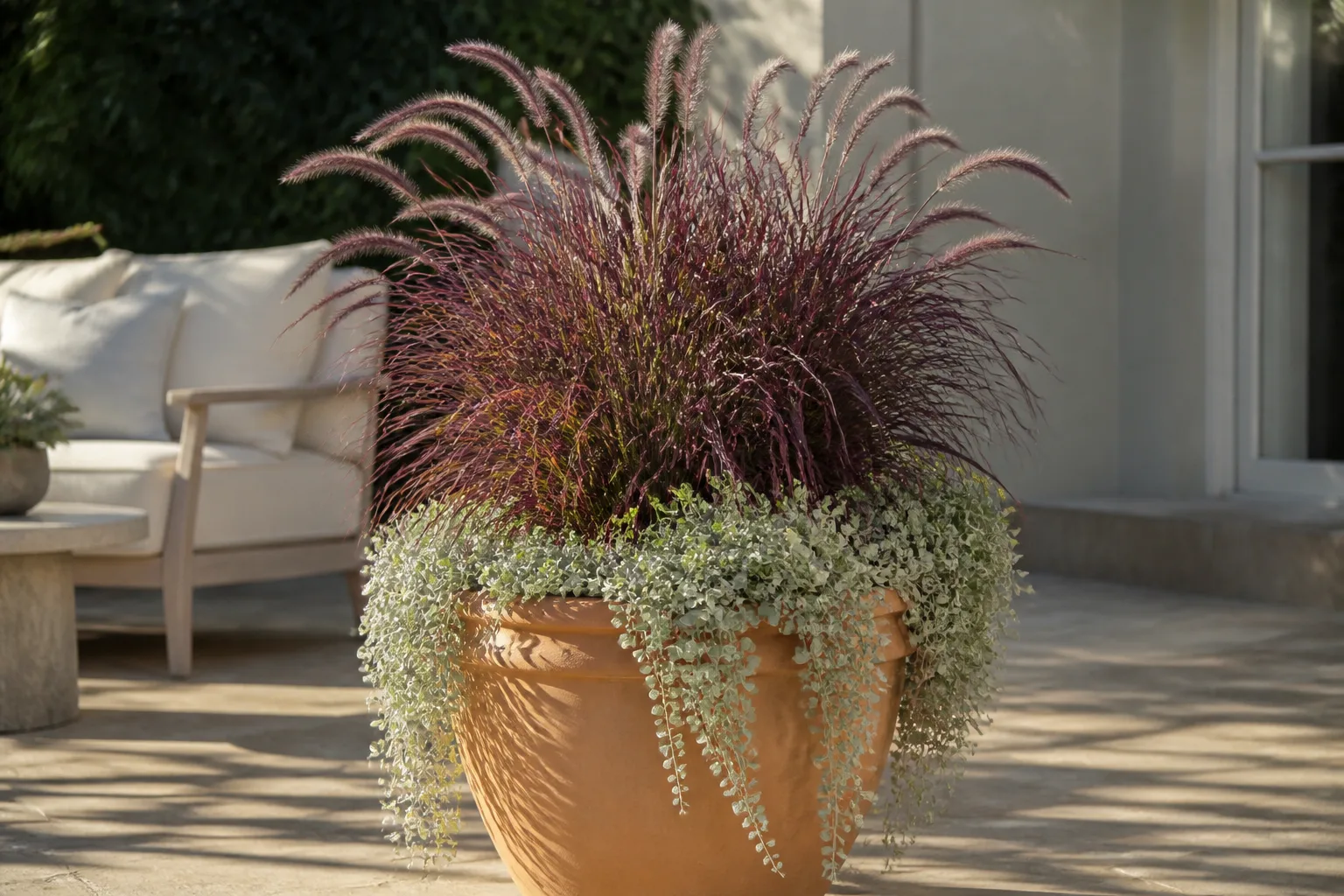
Repot when roots circle densely, the plant dries out unusually fast despite careful watering, or the clump has outgrown the pot. Move up one container size or divide the plant in spring; an oversized pot that stays wet around a small root ball can create the same drainage problem as a poorly prepared bed.
Overwinter pots according to hardiness
A pot does not make a tender plant hardy. If you want to keep a purple C. setaceus for another season, move it before damaging frost to a bright, cool, frost-free place, reduce watering as growth slows, and keep the mix only lightly moist rather than saturated. The exact indoor conditions depend on whether the plant stays actively growing or becomes semi-dormant, so local greenhouse or Extension advice is useful if you want to overwinter it rather than replace it.
Hardy C. alopecuroides can also be more vulnerable in a pot than in the ground because the root ball experiences colder temperature swings. In a region with severe winters, place the container in a sheltered spot, protect the pot from repeated freeze-thaw exposure, or sink it temporarily into soil if practical. Do not bring a hardy dormant grass into a warm room and expect it to grow well without adequate light. When the plant’s label and local climate do not give you a reliable overwintering route, treat it as a seasonal container accent.
Cut back dormant foliage in late winter or spring
For deciduous hardy fountain grass, leave the tan foliage and plumes standing through winter if you like their structure. Cut it back in late winter or early spring, before new leaves become tall enough to be caught by the shears. Warm-season grasses often start growing later than gardeners expect, so a brown clump in early spring is not proof that the crown is dead. Wait until the soil warms and inspect the base for new shoots before deciding that a plant has failed.
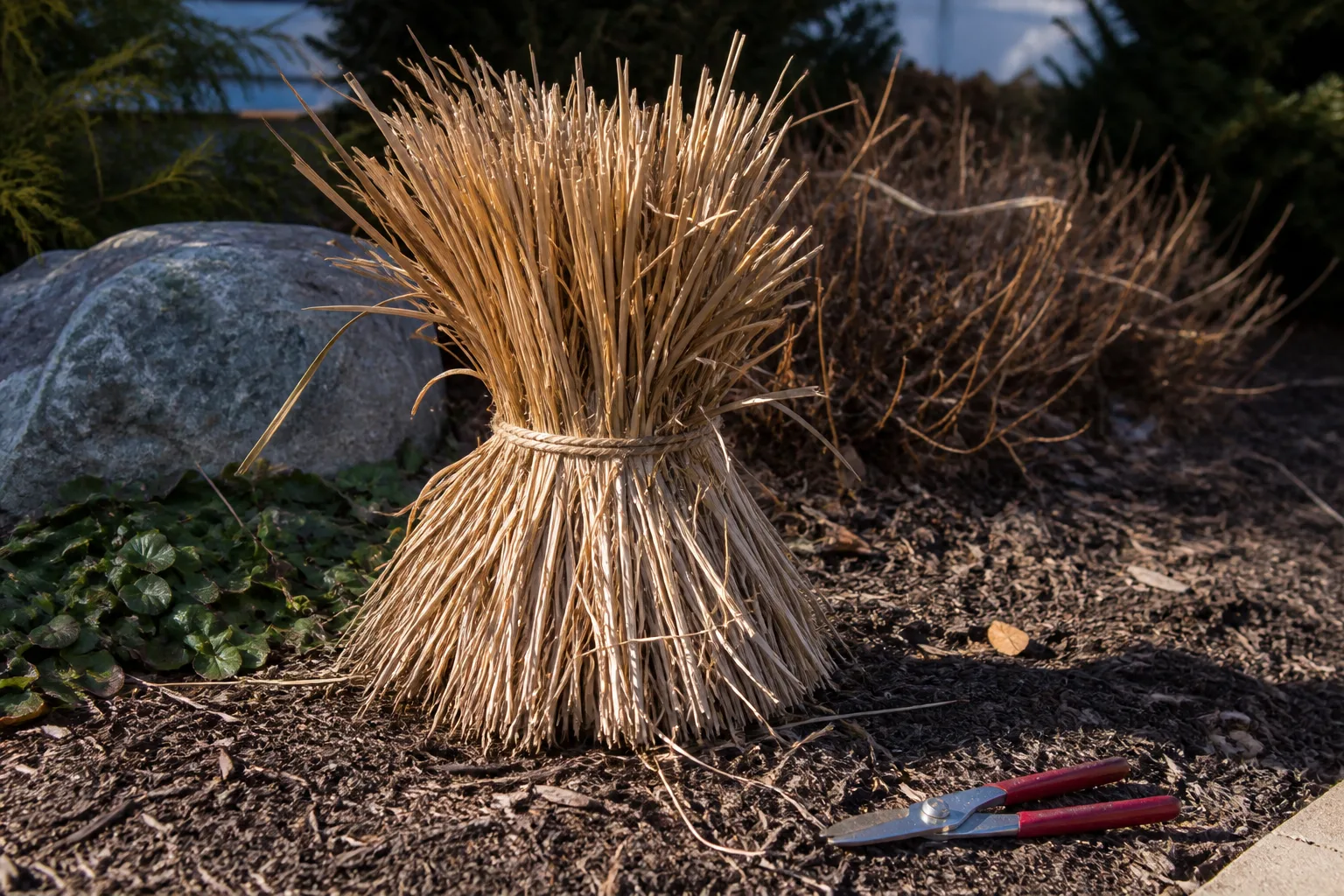
To cut back a large clump, tie the dry leaves together loosely, then shear the bundle to about 3 to 6 inches above the ground. Keep the blades above the crown and use sharp tools; dry grass blades can be rough or sharp against skin, so gloves and long sleeves make cleanup more comfortable. Remove the cut material from the crown so light and air can reach new growth.
Avoid cutting a hardy clump to the ground in fall just to make the bed look tidy. Standing leaves preserve winter form and make it easier to see where the crown is, while a spring cut aligns cleanup with the grass’s warm-season growth cycle. If you grow a tender annual type, remove it after frost has killed it or compost it when you refresh the bed; do not assume it will return simply because hardy fountain grass does.
Divide crowded plants and propagate them
Division is the most dependable way to increase a named cultivar without relying on seed to reproduce its traits. A mature clump may benefit from division when its center dies out, it forms a hollow ring, or growth becomes uneven and crowded. Do not divide only because a calendar says three years have passed; some clumps need attention sooner, while others remain vigorous longer. RHS guidance groups Pennisetum among warm-season grasses, which are generally divided after growth begins later in spring rather than in the earliest cold weeks (RHS division guide). Its broader ornamental-grass guide likewise recommends waiting until warm-season grasses begin active growth before dividing them (RHS growing guide).
Water the plant the day before if the soil is dry. In spring, cut back old foliage enough to see the crown, dig around the clump, and lift as much of the root mass as you can. Use a sharp spade or sturdy knife to split it into sections that each have healthy roots and live shoots; discard a dead or rotten center instead of treating it as a viable division. Replant divisions promptly at the original crown height, firm soil around the roots, and water them in. Keep an eye on moisture as they establish, especially if the weather turns warm and dry.
Large, old clumps can be tough to lift, and division may take more effort than the plant’s compact appearance suggests. If the whole root ball is too heavy, work around the outside and remove a few viable sections while leaving the parent in place. Do not take tiny pieces with little root attached; they will recover more slowly and may fail before they form a useful plant.
Sow seed only when the plant is true and locally suitable
Seed can be practical for a species plant, but seedlings of named cultivars may not resemble the parent in height, color, or bloom timing. Some fountain grasses self-seed freely in favorable climates, while others are sterile or produce little viable seed. If the cultivar must remain true, choose division or a nursery-grown plant instead of saving seed.
If you do sow a permitted, non-problematic type, start with fresh seed and a clean seed-starting mix in warm conditions. Press seed lightly into the surface or cover it only thinly, keep the mix evenly moist rather than waterlogged, and provide bright light after germination. Transplant seedlings only after they are strong enough to handle and the outdoor conditions suit their species. Where seed spread is discouraged, remove the flower spikes before they mature; do not put viable seedheads in a home compost pile unless the composting process reliably reaches seed-killing temperatures.
Troubleshoot slow growth, browning, or no plumes
A clump is brown in spring. First check the plant’s identity and remember that warm-season grasses may stay dormant after nearby perennials begin growing. Look closely at the crown for firm, green shoots and give the soil time to warm. If no growth appears by the normal start of the growing season in your region, the crown may have suffered winter damage; a wet planting site, severe freeze, or tender species in a cold zone can all explain failure. Do not repeatedly dig into the crown while waiting.
The grass has leaves but few flowers. Start with sunlight and age. A plant in shade may make foliage but fewer plumes, and recently planted clumps may need time to establish. Some cultivars flower later than others, so compare the label’s bloom time and your local growing season before concluding that the plant is unhealthy. If a mature clump has a dead center, division can restore a more balanced shape, but moving it to a brighter site may matter more than dividing it.
The foliage is floppy. A loose arch is normal for fountain grass, especially when mature leaves and flower stalks lean outward. If the entire clump lies flat, check whether it receives enough sun, whether it is crowded, and whether heavy nitrogen has encouraged soft growth. A site that stays wet or a cultivar planted too close to a walkway can also make the plant look untidy. Correct the growing condition and allow new growth to show the result rather than shearing the whole plant midseason.
Leaf tips are brown. Drought can dry the tips, especially in a recently planted clump or a small pot in hot weather. Check moisture several inches into the root zone, then water deeply if it is dry. If the root zone is already wet, more water is unlikely to help; inspect drainage and check whether the crown has been buried or covered by mulch.
The crown is soft or the center collapses. Persistent soggy soil, a buried crown, or an old clump with a dead center can lead to decline. Improve drainage where possible, avoid piling mulch over the base, and divide a healthy plant when active growth begins. If the entire crown is mushy and there are no live shoots, replacing it with a climate-appropriate cultivar may be more practical than trying to rescue it.
Seedlings appear around the parent. Identify the parent species before taking action, then pull small volunteers while the soil is moist and remove spent seedheads earlier next season. If volunteers continue in a sensitive landscape or local rules discourage the plant, replace it with a non-invasive alternative suited to your site. A cultivar marketed as low-seeding is not the same as a guarantee that no seed will ever germinate.
Fountain grass is generally not plagued by serious pests, but lack of flowers, browning, and collapse are not automatically insect problems. Check the roots, crown, light, and water first. Avoid broad pesticide use without identifying a pest and confirming a treatment is labeled for that plant and location.
Use fountain grass where its form and mature size make sense
Fountain grass works as a specimen, a repeated rhythm along a sunny border, or a soft edge beside a path when the selected cultivar fits the space. The plumes catch backlight well, and the arching leaves contrast with upright perennials or broad-leaved shrubs. Choose companions that tolerate similar sun and drainage, and leave enough room for the mature clump so air can move around it.
For a small garden, a compact cultivar such as ‘Little Bunny’ or ‘Hameln’ is easier to fit than a tall, spreading selection, but verify the label’s actual mature dimensions. For a bold seasonal pot, purple fountain grass can supply height and color, provided you treat its tender winter behavior and local seed risk as part of the planting plan. If the plant is close to a natural area, utility corridor, or property edge where seedlings could escape notice, a regionally appropriate alternative may be the better design decision.
Conclusion
Fountain grass is straightforward to grow once you stop treating the common name as a complete plant identity. Confirm the species and cultivar, match its cold tolerance and seed behavior to your location, give it sun and a draining root zone, and water according to establishment and soil conditions.
For hardy deciduous types, leave the foliage through winter and cut it back before spring shoots lengthen; divide only when a clump needs rejuvenation. For tender purple forms, plan for seasonal use or a protected container, and check local guidance before planting where self-seeding could matter. Those few decisions prevent most avoidable problems and let the plumes do what you planted them for.