Philodendron 'Black Cardinal' Care: Light & Water
Learn Philodendron 'Black Cardinal' care, from indirect light and dry-down watering to soil, pruning, propagation, mature size, and safe pet placement.
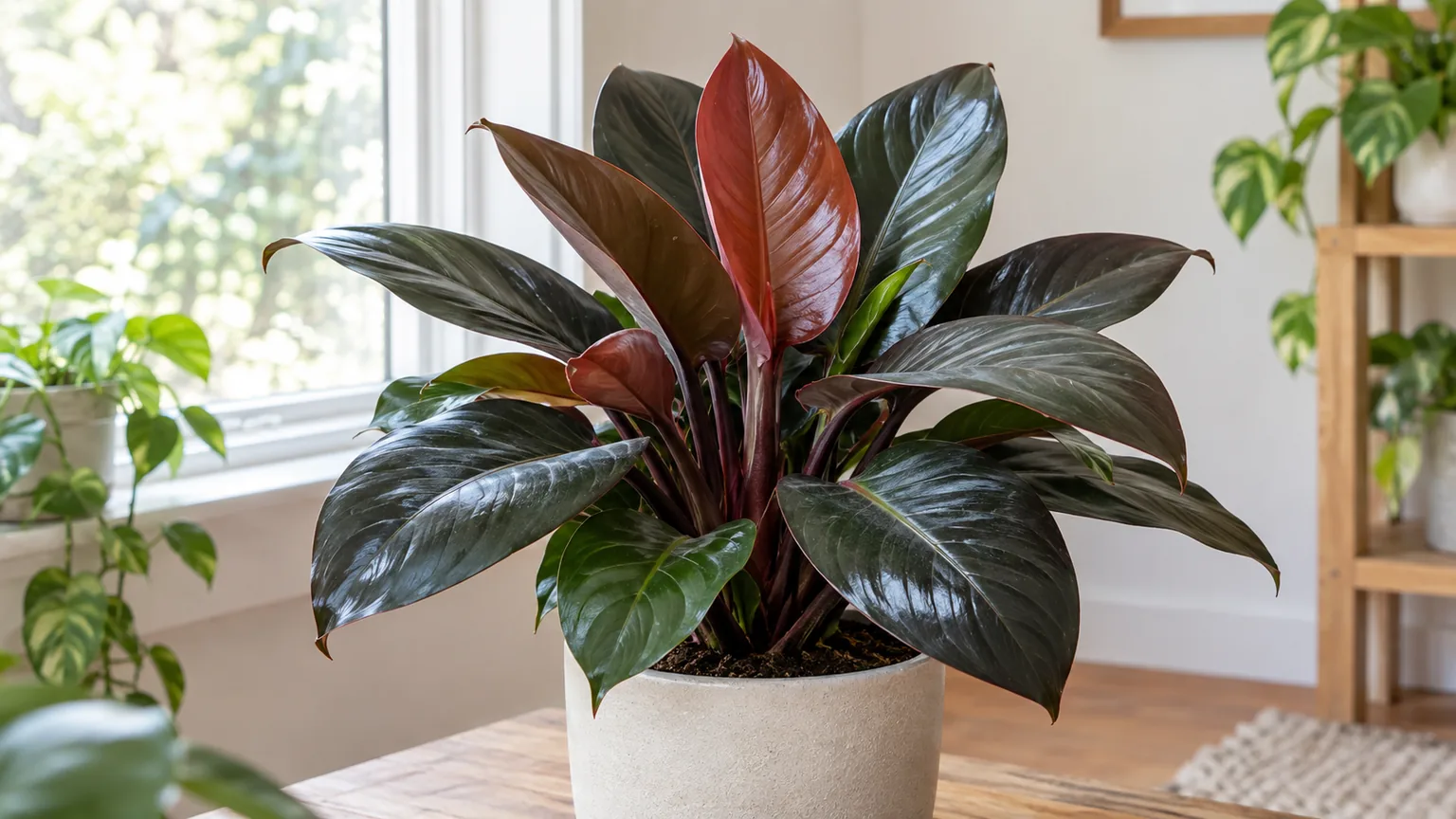
Philodendron ‘Black Cardinal’ earns its name from broad, glossy leaves that move through burgundy and green tones before darkening to a deep, near-black green. It grows as an upright clump rather than a trailing vine, so you can give it a stable floor stand or a broad plant table instead of planning for a hanging basket or tall climbing pole.
The care routine is straightforward once you stop treating it like a generic philodendron. Give it bright, filtered light, let the upper potting mix begin to dry before watering thoroughly, and make sure the pot drains. Most problems come from a wet root zone, too little light, a cold draft, or misreading a normal color change as damage.
Black Cardinal at a Glance
Black Cardinal is a cultivated philodendron valued for its upright habit and unusually dark mature foliage. Plantophiles describes it as a medium-sized houseplant with leaves that emerge reddish, shift through green, and mature toward a very dark shade; that color sequence is a cultivar feature, while its basic warm, indirect-light needs fit the broader philodendron group. The name is used consistently for the cultivar in horticultural care writing, while species labels can vary between references, so use the cultivar name when comparing plants and keep care claims appropriately general. Plantophiles’ cultivar guide provides the most direct description of its appearance and houseplant size.
Unlike the familiar heartleaf philodendron sold in hanging baskets, Black Cardinal is self-heading: leaves rise on individual petioles from a compact central base. A cultivar-specific overview from Garden Pals describes Black Cardinal as a self-heading rosette with no climbing or trailing stems. The University of Connecticut Home & Garden Education Center notes more broadly that philodendrons include both vining and self-heading forms, and that self-heading types do not require a support. That distinction matters when choosing where to put the pot and how to propagate it.
Quick Care Snapshot
| Care factor | Starting point | What to observe |
|---|---|---|
| Light | Bright, filtered or indirect light | Slow, stretched new growth can signal a dim location; bleached patches suggest harsh direct sun |
| Water | Let the top inch or two begin to dry, then water fully | Pot weight, mix, container size, and season all change the interval |
| Potting mix | Airy, moisture-retentive, and quick to drain | The root ball should not remain cold and saturated for days |
| Temperature | Warm, stable room conditions | Protect from cold glass, doors, and air-conditioning drafts |
| Humidity | Average indoor humidity is often workable | Correct watering and vent placement before adding a humidifier |
| Fertilizer | Light feeding while new leaves are growing | Do not fertilize a dry, stressed, or freshly repotted plant |
| Habit | Upright and self-heading | A moss pole is unnecessary; plan for lateral spread |
| Safety | Keep leaves and clippings away from children and pets | Philodendrons contain irritating calcium oxalate crystals |
These are starting points, not rigid targets. Pot size, material, the density of the mix, room temperature, and light determine how quickly the root ball dries, so use the plant and pot as your guide rather than counting days.
Identify the Cultivar Before You Copy Advice
A Black Cardinal should have broad, smooth-edged leaves on sturdy petioles that rise from a central base. The newest leaves are often red, copper, or burgundy; as they expand, they deepen into green and eventually a dark glossy green that may read as nearly black in indoor light. A leaf that looks greener than its neighbors may simply be younger or catching a different angle of light.
This upright architecture is a more useful care clue than a loose label such as “dark philodendron.” A vining heartleaf type benefits from something to climb or trail from, while Black Cardinal normally supports itself as it grows. The cultivar guide from Plantophiles documents its color progression and compact upright shape; UConn’s genus guide explains why support needs vary between philodendron growth forms.
New Leaves Change Color as They Mature
Do not move a healthy plant into harsh sun just to make the leaves darker. Normal leaves can open red, look lighter as they unfurl, and darken as their tissue matures; the color change happens over time, not in response to an instant change in fertilizer. Judge color together with leaf size, firmness, and the pace of new growth.
A sudden pale or yellow cast across several leaves is different from a single new leaf opening red. Look for the pattern: scorch is usually localized on the window-facing side, water stress often affects several leaves and comes with a very dry or very wet pot, and normal aging usually starts with one of the oldest outer leaves. Use those clues before adjusting light, water, or feeding.
Give It Bright, Filtered Light
Set the plant near a bright window where direct midday or afternoon rays do not stay on the leaves. A bright east-facing window may provide gentler morning light; in a strong south- or west-facing exposure, move the pot back from the glass or use a sheer curtain. The right position is the brightest one that does not leave hot sun on the foliage for hours.
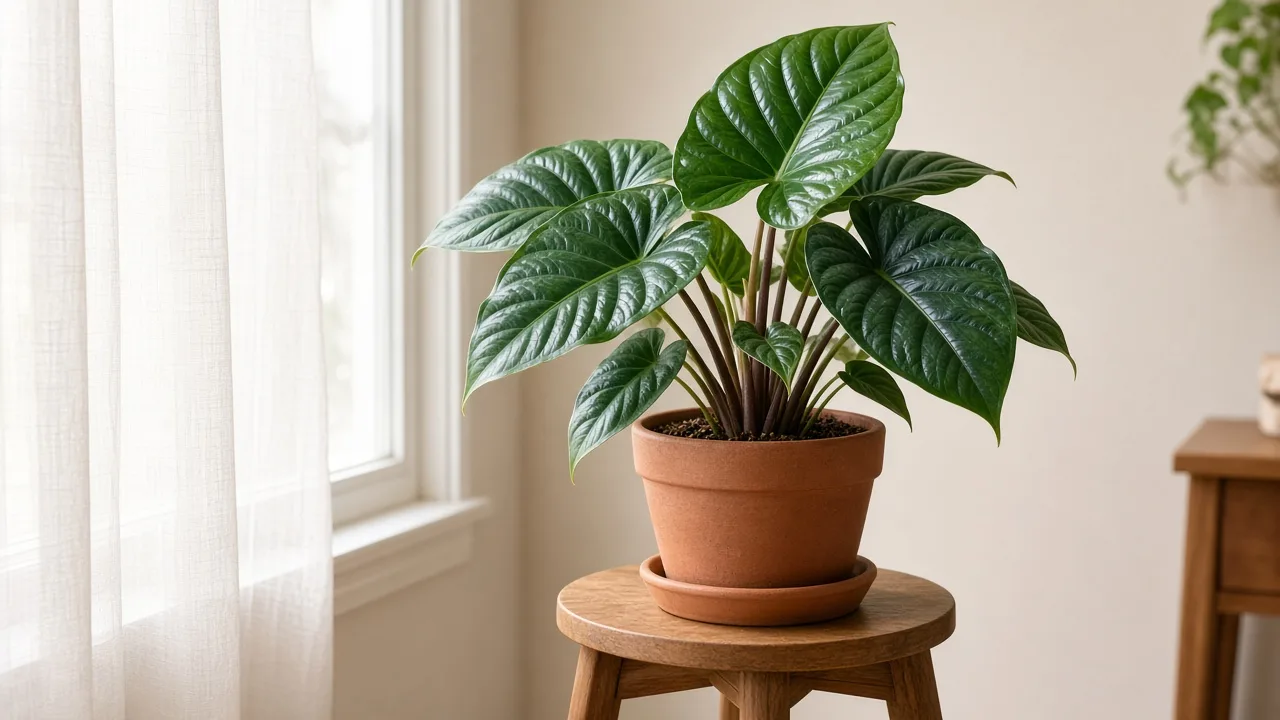
Filtered window light gives an upright philodendron a bright growing spot without exposing leaves to harsh direct rays.
Philodendrons can persist in lower light, but “tolerates shade” does not mean the plant will keep its best compact form there. New petioles may stretch toward the window, growth may slow, and leaves may come in smaller or farther apart. Gardening Know How similarly uses leggy stems as a sign that a philodendron needs more light, while Gardenista’s general philodendron guide recommends filtered light and reading the plant’s growth rather than assuming all philodendrons have identical needs.
Rotate the pot a quarter turn every week or two if the crown leans toward the window. Do not keep moving it across the room, though; a steady bright spot makes it easier to interpret changes. If you move it from a darker room to a brighter window, acclimate it over several days so the leaves are not suddenly exposed to direct sun.
Water When the Root Zone Starts to Dry
Check the potting mix before watering. For a typical indoor container, feel the upper inch or two with a finger or a wooden skewer; water when that layer has dried while the deeper root zone remains only slightly moist. If the pot is very shallow, use a shallower check; if it is large, do not assume a dry surface means the bottom of the root ball is dry too.
When the plant is ready, pour slowly over the mix until water runs from the drainage holes. Let it drain completely, then empty the saucer or decorative cachepot. This wets the whole root ball without leaving the roots in standing water. UConn describes philodendrons as needing moderately moist conditions but warns that sitting in water or overwatering can injure roots; Gardening Know How gives the upper inch of mix as a practical check.
There is no dependable number of days between waterings. A small nursery pot in a warm, bright room may dry in a few days, while a larger ceramic pot in winter may stay damp much longer. Check more often while learning the plant, then build a rhythm from the pot’s dry-down instead of using a weekly reminder as a command to water.
Read Pot Weight and Soil Together
A light pot with dry mix and slightly relaxed leaves is consistent with thirst. A heavy pot that remains wet, yellowing lower leaves, or a musty smell points more toward poor drainage or roots that have stayed saturated. Drooping alone is not a diagnosis: both dry roots and damaged, oxygen-starved roots can make the foliage lose firmness.
If the mix is wet, wait before adding water and check that drainage holes are clear. If it remains wet for many days, improve the mix or container at the next appropriate repot rather than repeatedly replacing the soil or adding a watering product. If the root ball is bone dry and water runs down the sides, water in two slow passes so the dry mix has time to absorb moisture.
Use an Airy Mix and a Draining Pot
Choose a loose houseplant or aroid mix that holds some moisture but leaves air around the roots after watering. A practical blend is two parts indoor potting mix, one part perlite, and one part small orchid bark or coco chips, measured by volume. If you already have a bagged aroid mix that drains well, there is no need to make a custom recipe.
Avoid dense garden soil or a potting medium that packs into a wet block. The aim is not to make the roots dry instantly; it is to prevent the bottom of the pot from remaining saturated after a thorough watering. UConn’s philodendron guidance recommends loose, well-drained soil with organic matter, while Gardening Know How explains that poorly drained soil can lead to root rot.
Use a pot with open drainage holes and enough room for the current root ball, not a container several sizes too large. A cachepot is fine for display, but lift out the nursery pot when watering and let it drain before returning it. A decorative pot without a drainage hole can hide runoff at the bottom, leaving roots wet even when the surface looks dry.
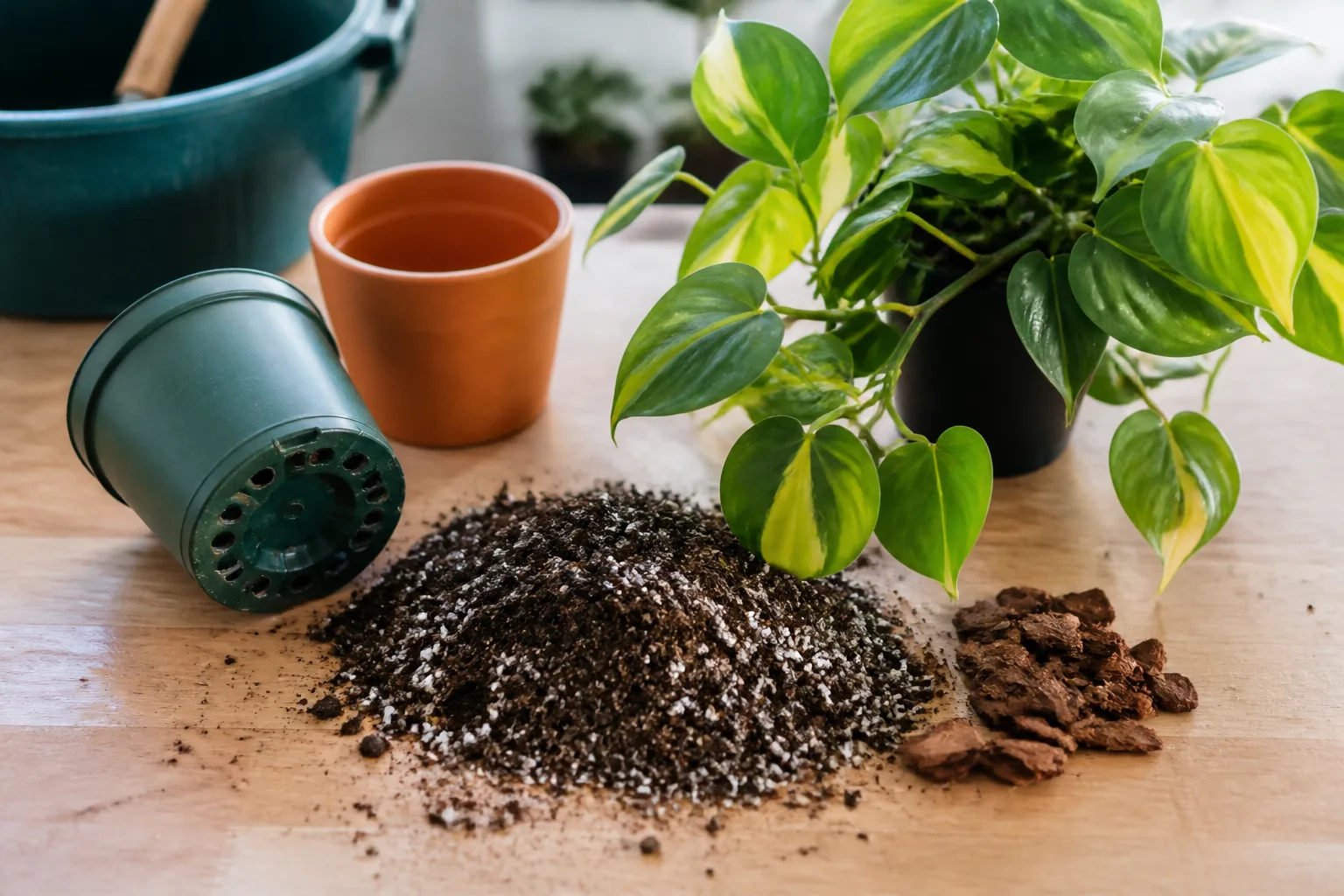
An airy mix and a container with open drainage holes help excess water leave the root zone.
Keep Temperatures Warm and Humidity Moderate
Keep Black Cardinal in a warm, stable room and away from cold drafts, exterior doors, chilly window glass, and direct blasts from heating or air-conditioning vents. UConn advises keeping philodendrons at a minimum of about 65°F, a conservative cue for steady indoor care rather than a cultivar-specific laboratory threshold. If the plant lives outdoors in a warm climate, place it in bright shade and bring it inside before temperatures approach cold or frost.
Average household humidity is usually workable when watering and light are right. Higher humidity can support comfortable growth, but the plant does not need a sealed cabinet or a pebble tray to survive in an ordinary home. If leaf edges repeatedly dry during winter, first move the pot away from a vent and check whether the root ball is drying too far between waterings; a room humidifier can help a group of tropical plants if the room itself is consistently dry.
Misting gives only a brief change in humidity and can leave water sitting on leaves without correcting dry air. It is not a substitute for a humidifier, a suitable mix, or a good watering routine. If the plant is producing firm new leaves and the edges stay clean, do not chase a precise humidity percentage just because it is a tropical plant.
Feed Lightly During Active Growth
A balanced liquid houseplant fertilizer can support new growth in spring and summer, especially when the plant has been in the same mix for a while. Follow the product label and start conservatively if you do not know whether the potting mix already contains slow-release fertilizer. Apply fertilizer to a moist root ball, not to dry soil.
Philodendron feeding advice varies: UConn describes the genus as a heavy feeder but recommends more frequent applications at half strength rather than one strong dose, while Gardening Know How notes that many owners grow healthy plants without regular feeding. A cautious middle course is more useful than an aggressive schedule: feed lightly during active growth, then reduce or pause when growth slows in a dim, cool season.
Do not use fertilizer to force a darker leaf color or fix a plant that is yellow because its roots are wet. A white crust on the mix or crispy tips after repeated feeding can indicate salt buildup; stop fertilizing and flush the pot only if it drains freely. Freshly repotted plants also need time to settle before another dose.
Plan for Its Mature Width; Skip the Moss Pole
Black Cardinal is a compact but substantial floor or tabletop plant, not a tiny trailing philodendron. Plantophiles’ cultivar guide estimates an indoor plant at about 3 feet tall and 18 inches wide, though age, growing conditions, and container size change the final footprint. Give the leaves space to fan out instead of wedging the pot between furniture or placing it where the petioles are constantly bumped.
Because it is self-heading, a moss pole is not part of routine care. A climbing pole is designed to support a plant with extending vine stems and aerial roots; it does not turn Black Cardinal into a heartleaf vine. If a mature plant leans, rotate it toward the light and check whether the root ball is crowded or the pot is unstable. A temporary stake can steady a newly repotted or top-heavy specimen, but tying every petiole to a pole can damage the natural form.
Use a sturdy, wide-based stand if the canopy is heavy or the plant shares a room with children or animals. Leave enough space around the plant to reach the soil and inspect the undersides of leaves. Its upright habit can make maintenance easier than untangling a long vine, but the broad leaves can still be knocked or bent in a narrow passage.
Prune Only for a Clear Reason
Black Cardinal does not need frequent shaping to keep it from trailing across a shelf. Remove a yellow, dead, or badly damaged outer leaf by cutting its petiole close to the base with clean pruners. Do not tear the petiole away; a rough wound can damage nearby tissue and leave an unnecessary opening.
If one side of the plant becomes sparse, correct the light or rotation first. Pruning a healthy leaf will not make a weak plant branch like a vining species, and removing many leaves at once reduces the plant’s ability to recover. Wipe dust with a damp soft cloth so the glossy surface stays clean; skip leaf-polish products that can leave residues.
Keep cut foliage and the pruning tool away from pets and children. Philodendron sap can irritate skin or eyes, so wash your hands and tools after handling a cut. If you have sensitive skin, gloves are a reasonable precaution.
Propagate from a Node or Rooted Division
Propagation works best when you have a healthy, actively growing plant. A Black Cardinal with multiple stems or rooted offsets can sometimes be divided while repotting; keep a growing point and a healthy root portion attached to each division.
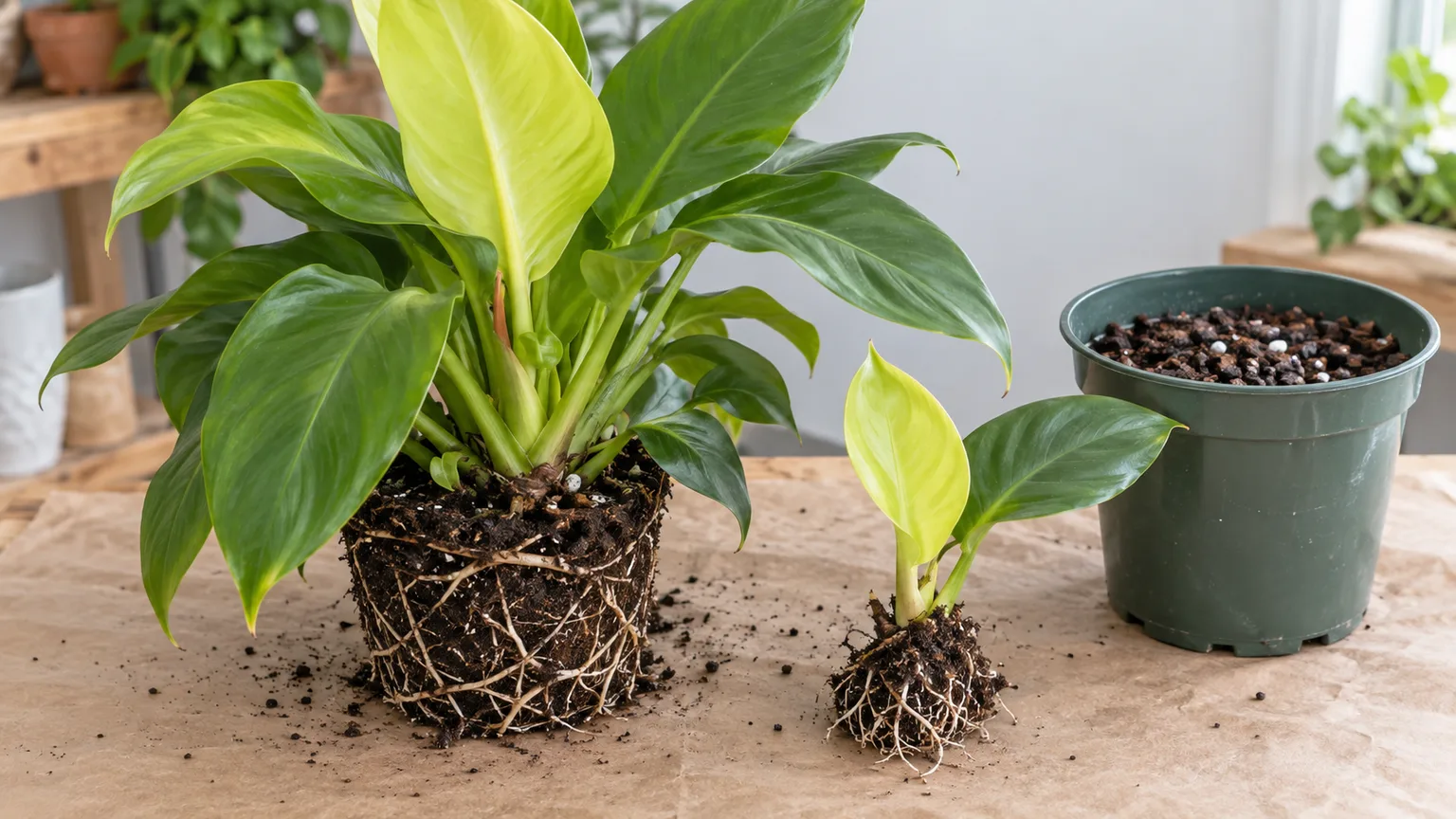
When dividing a philodendron, keep roots and a growing point attached to each separated crown. Do not pull the plant apart by the leaves. Loosen the root ball gently and separate only where the stems and roots naturally allow it.
A stem cutting is another option, but it must include a viable node or bud. A leaf blade or petiole by itself may stay green for a while without producing a new plant. With clean pruners, take a short stem section that has at least one node and a healthy leaf; set the node in water or in a lightly moist, airy propagation mix while keeping the leaf above the surface.
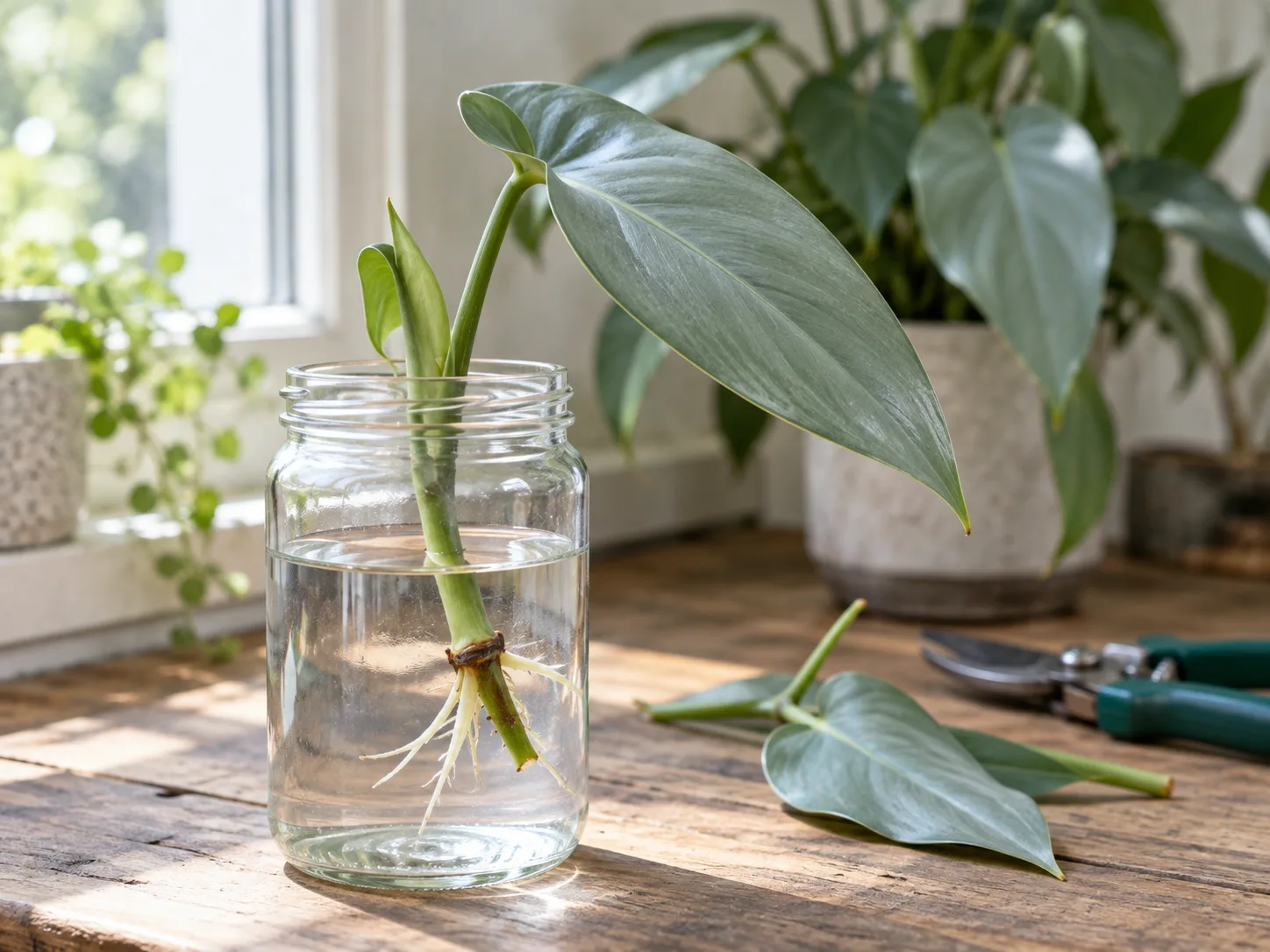
This cutting shows node placement on another philodendron; a Black Cardinal cutting also needs a viable node to form a new plant.
For water rooting, keep the jar in warm, bright indirect light and change the water when it becomes cloudy. Pot the cutting once it has several roots that are a few inches long, then keep the new mix slightly more evenly moist while the roots adjust. For soil rooting, keep the mix just damp—not soggy—and wait for new growth or gentle resistance before treating the cutting like an established plant. UConn lists tip and leaf-bud cuttings among philodendron propagation methods, while Gardening Know How notes that many philodendrons root readily from cuttings.
Expect the propagation pace to depend on warmth, light, and the cutting’s maturity. A cutting that has no node, a leaf pulled from the plant, or a weak stem with no healthy growing point is not a reliable shortcut. Division is often less fiddly when the parent has produced a separate rooted crown; cuttings are useful when you have a healthy stem with a clear node.
Repot When Roots or Dry-Down Say It Is Time
Repot when roots fill the container, circle densely around the bottom, emerge from drainage holes, or the mix dries unusually fast despite normal conditions. A plant leaning because its root ball has become top-heavy can also need a wider, more stable pot. A calendar interval alone is not a reason to disturb a plant that is still growing well.
Move it during active growth if possible, into a pot only about 1–2 inches wider than the current root ball. Tease loose roots gently, remove only roots that are mushy or clearly dead, and set the crown at the same depth it was growing before. Fill the sides with fresh airy mix, water through once, and drain the pot completely. A much larger pot can leave unused soil wet around a small root system.
After repotting, keep the plant in bright indirect light and do not fertilize immediately. A short pause in growth is normal while roots adjust. If the old mix was soggy, correct the drainage problem at the same time rather than carrying a saturated, compacted root ball into a bigger container.
Check for Pests Before They Multiply
Inspect new plants before setting them beside an existing collection, then check leaf undersides, petiole bases, and the center of the plant every week or two. Mealybugs resemble small cottony flecks, scale can look like fixed brown bumps, and spider mites may leave fine stippling or webbing. Thrips can scar new leaves and leave tiny dark specks, while fungus gnats often signal that the potting mix stays wet for too long.
Isolate a plant with pests and wipe or rinse what you can see. Recheck nearby plants, because insects can spread before damage looks dramatic. If the problem persists, use only a product labeled for the pest and indoor ornamental plants, follow its directions, and test a small area first; “natural” does not automatically mean harmless to pets or safe for every leaf surface. Gardening Know How and Better Homes & Gardens both list common sap-feeding insects and mites among pests that can affect philodendrons.
A few yellow lower leaves do not prove there is a pest or disease. Inspect carefully before treating, since unnecessary sprays can stress foliage and do not fix the wet soil that may be attracting fungus gnats.
Troubleshoot Yellow, Brown, Curling, or Slow Growth
Use the location and sequence of symptoms to narrow the cause before changing care. One older outer leaf yellowing while the rest of the plant is firm can be normal turnover; several leaves changing at once deserve a root-zone and light check. Make one change at a time and wait for new growth to show whether it helped.
| What you see | What to check first | Useful next step |
|---|---|---|
| One old lower leaf turns yellow | Is new growth firm and healthy? | Remove the spent leaf; keep observing |
| Several leaves yellow while soil stays wet | Drainage, cachepot runoff, and root smell | Let the mix dry appropriately; inspect roots if decline continues |
| Pale or scorched patches on the window side | Direct sun or a hot pane | Filter the light or move the pot back gradually |
| Brown, crisp edges | Dry root ball, vent blast, or fertilizer residue | Check soil moisture, move from the vent, and pause feeding if salts are visible |
| Leaves curl or droop | Pot weight and moisture below the surface | Water if truly dry; improve drainage if it is still wet |
| New leaves stay small and growth is stretched | Light level, roots, and recent seasonal change | Improve filtered light first; repot only if roots are crowded |
Brown mature leaves are not a normal Black Cardinal color stage when the tissue is crisp, dead, or spreading in spots. Likewise, new red leaves are normal, but widespread pale leaves or a persistent lack of growth may signal poor conditions. UConn links waterlogged roots with yellowing and leaf drop, and Gardening Know How distinguishes normal aging leaves from multiple leaves yellowing under excessive light or water.
If the base of the plant is soft, the mix smells sour, or a petiole collapses at soil level, unpot and inspect rather than adding fertilizer or watering more. Healthy roots should feel firm; remove only mushy, dark, dead material with clean tools and repot into fresh, airy mix. Severe rot may not be reversible, so prevention through drainage and dry-down is more dependable than a last-minute rescue.
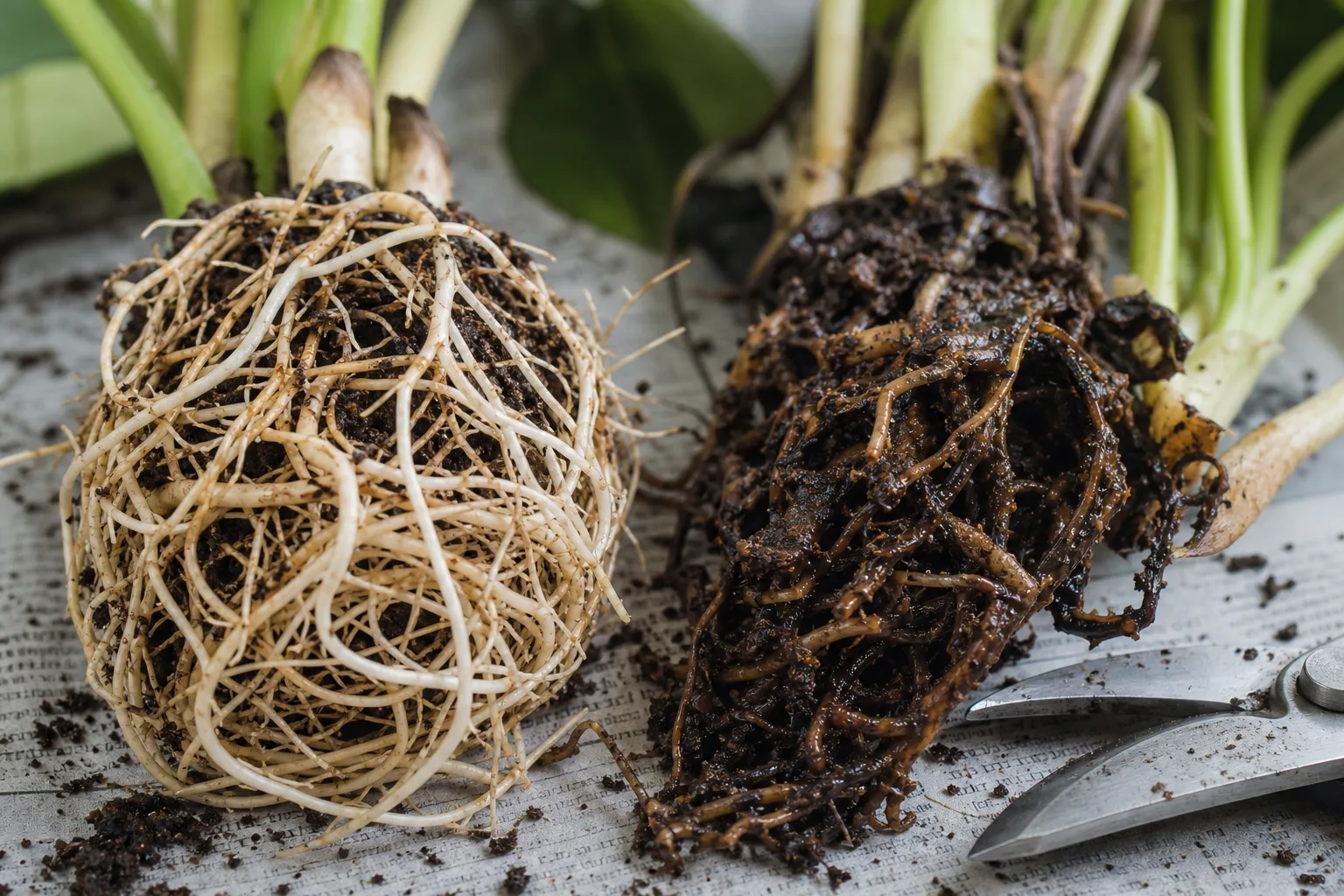
Root color and firmness help distinguish healthy growth from roots damaged by prolonged saturation.
Handle Foliage and Sap Safely Around Pets and Children
Keep Black Cardinal where children and pets cannot chew the leaves or reach fresh clippings. Philodendrons contain insoluble calcium oxalate crystals that can cause immediate pain and irritation in the mouth; Poison Control describes swelling, drooling, and difficulty swallowing after exposure. The Pet Poison Helpline reports oral irritation, drooling, gagging, or vomiting in pets that chew philodendron.
If a person chews a leaf, remove plant material and rinse the mouth, then contact Poison Control for individualized guidance. Trouble breathing or severe swelling needs emergency care. If a pet chews the plant, call a veterinarian or animal poison-control service; do not wait for symptoms to worsen or attempt home treatment based on a guess about the amount eaten.
Sap can irritate skin and eyes as well. Wash exposed skin with soap and water; if sap reaches the eye, rinse promptly with clean water and seek medical advice if pain or irritation persists. Wearing gloves when pruning is optional for most people, but keeping the plant and cuttings inaccessible is the essential precaution.
A Simple First-Month Setup
For the first week, keep the plant in a bright filtered-light spot and avoid repotting unless the nursery pot is damaged or the mix is clearly waterlogged. Check the upper mix every few days, but water only when the dry-down cue is met. Empty the saucer after each watering and notice how heavy the pot feels before and after.
During the second and third weeks, look at the newest leaves and the overall shape rather than expecting older leaves to change color on demand. Rotate the pot if it is leaning toward the window. If it stretches, move it a little closer to filtered light; if direct sun marks the foliage, shift it back or add a sheer curtain.
After a month, decide whether it needs any intervention. Repot only if roots or a persistently wet mix justify it, fertilize only if active growth and the condition of the existing mix support feeding, and add a stake only if the whole plant is unstable. Keeping the first changes small makes it easier to tell which adjustment actually helped.
Conclusion
Philodendron ‘Black Cardinal’ is easiest to care for when you plan around its upright, self-heading growth and its changing leaf color. Give it bright filtered light, water according to root-zone dry-down, use an airy mix in a draining pot, and leave enough room for the mature canopy instead of building a support system it does not need.
When leaves change, check their age, the pot’s weight, and the pattern of damage before you react. That simple sequence protects the roots, preserves healthy new growth, and makes this dark-leaved cultivar a manageable houseplant rather than a guessing game.