How to Grow and Care for Philodendron Mamei
Learn how to grow Philodendron mamei with bright indirect light, an airy mix, soil-based watering, a wide pot, and propagation tips for its creeping stems.
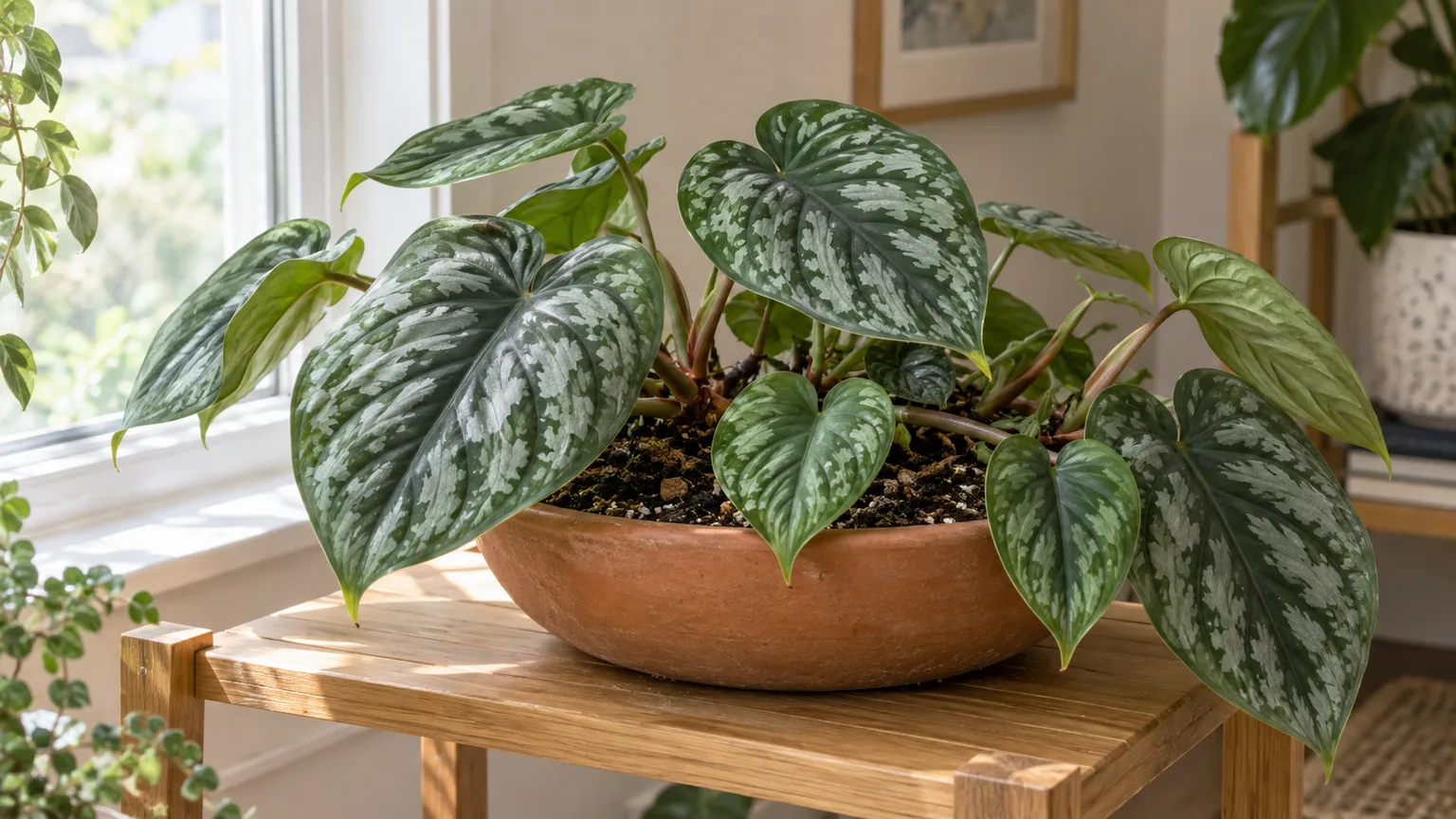
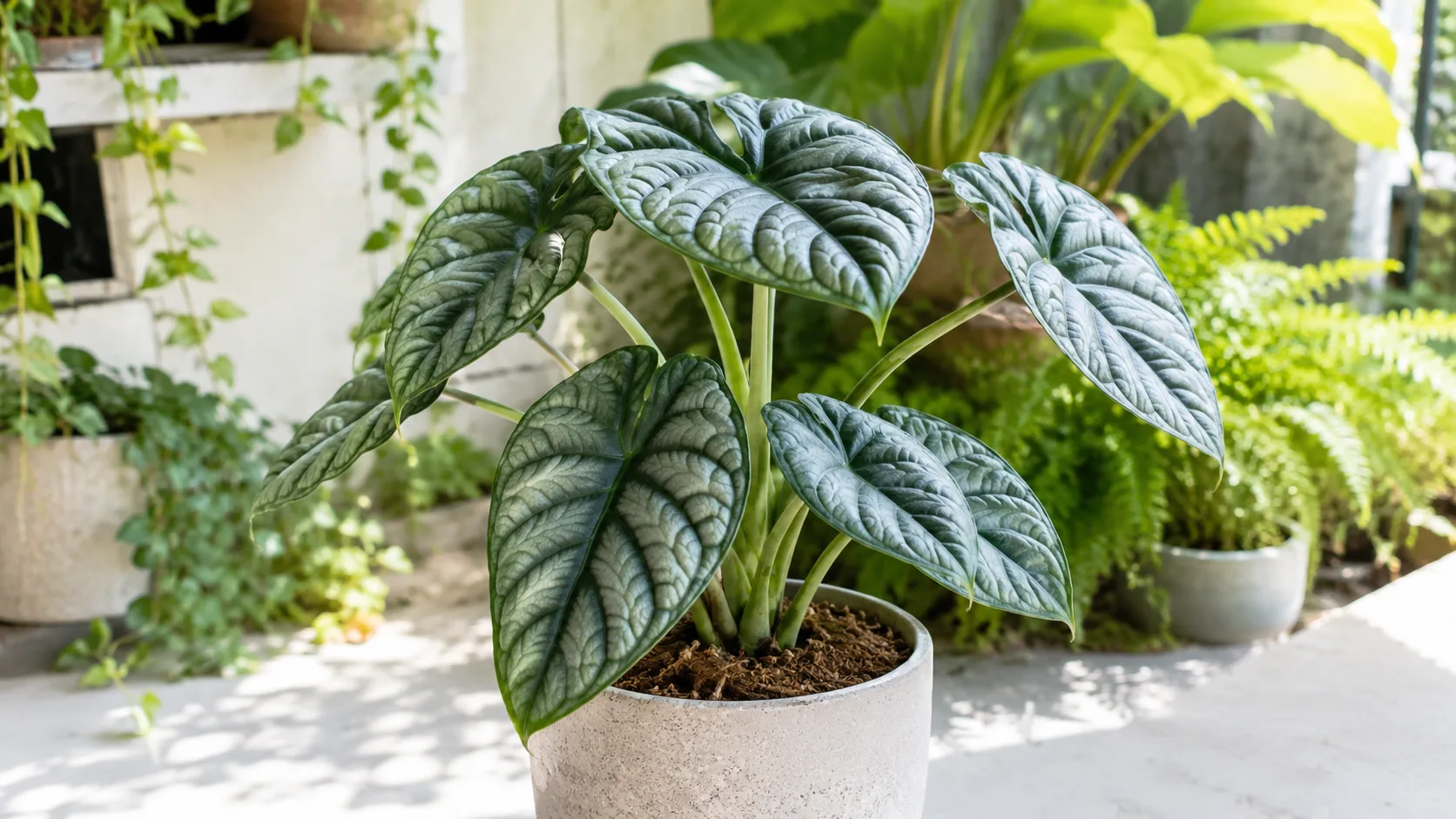
Philodendron mamei is grown for broad, heart-shaped leaves patterned with irregular silver marks over deep green. The plant is often presented as a climbing philodendron, but its spreading, creeping stems make a wide, stable pot a better starting point than a tall moss pole. Once you give the stem room to travel, care is mostly a matter of bright filtered light, an airy root zone, and letting the mix partly dry before you water again.
This is a tropical aroid, not a plant that wants either a swampy pot or weeks of bone-dry soil. Its leaves can look dramatic while the plant is still establishing, so judge success by firm new growth and healthy roots rather than by a fixed growth rate or a particular humidity reading. The recommendations below help you build conditions around the plant you have, whether it is a small nursery start or a mature specimen spreading across a tabletop planter.
Philodendron Mamei at a Glance
| Care factor | Practical target | Read this cue |
|---|---|---|
| Light | Bright, indirect light; gentle early sun can be tolerated | Long gaps between leaves or smaller new growth suggest too little light |
| Water | Water after the upper layer of mix has dried; then drain fully | Persistently wet mix calls for less frequent watering or a looser mix |
| Soil | Loose, chunky aroid mix that holds some moisture but lets air reach roots | A sour smell or mix that stays wet for many days signals a root-zone problem |
| Pot | Stable container with open drainage and room for the stem to spread | Choose width for the plant’s horizontal growth, not extra depth |
| Temperature | Warm, steady room conditions; protect from cold drafts | Growth often slows as rooms cool and daylight fades |
| Humidity | Average home air is workable; moderate humidity supports smoother foliage | Brown edges can also come from dry roots, salt buildup, or sun |
| Feeding | Light feeding while the plant is actively growing | Do not fertilize a plant with damaged roots or a dry root ball |
| Habit and size | Creeping, terrestrial; RHS lists about 0.5–1 m in height and spread | Plan for horizontal room and leaf clearance |
Use the table as a starting point, not as a fixed schedule. NC State Extension describes philodendrons as a diverse genus that generally prefers indirect light, warm temperatures, and moist but well-drained soil; it also notes that species differ in form and requirements. The RHS growing guide likewise recommends indirect light, slight drying between waterings, and avoiding saturated compost. For Mamei, the most useful adjustment is to account for its creeping growth when choosing the pot and arranging the stems.
Identify Its Growth Habit Before You Choose a Pot
Mamei’s stems travel horizontally and can root as they spread, giving the plant a low, widening outline. That growth habit is the reason a broad planter often displays it better than a narrow tall pot. The RHS species profile describes Mamei as a creeping, terrestrial plant from Ecuador, with leaves that rise on strong stalks from its horizontal stem. It lists mature height and spread at roughly 0.5 to 1 meter and notes that individual leaves can reach 45 cm across. In a home, that means planning for width and leaf clearance instead of assuming the plant will climb a pole.
A moss pole is not required for the plant to grow well. A short stake can keep a heavy leaf from tipping or hold the plant steady while it settles, but training the whole stem vertically can crowd leaves together and make watering or inspection harder. If you want a compact display, let the plant extend over the soil surface and rotate the pot occasionally so growth does not all lean toward one window.
Select a pot with enough surface area for the current stem and a little space for new growth. Keep the pot stable: oversized leaves on long petioles can make a lightweight container tip, while a container that is much too large can hold excess wet mix around a small root system. For a hanging look, a wide bowl on a shelf works better than suspending the plant where the newest leaves rub against a wall.
What “Silver Cloud” Means on a Plant Label
“Silver Cloud” appears on retail labels for Mamei, but the name alone does not settle whether a seller means the species or a selected form. In a first-hand account, grower Brittany Goldwyn describes the naming as confusing and says she could not confirm a clear distinction from the species. Use the botanical name Philodendron mamei as your anchor; the RHS profile lists “blotched philodendron” as its common name. BBC Gardeners’ World also describes the species’ large, heart-shaped leaves with silver markings.
Young plants may have smaller leaves and less pronounced patterning than established specimens. New leaves can unfurl paler and then deepen as they harden, so avoid moving the plant or feeding it heavily because one emerging leaf looks different from the older foliage. Compare several mature leaves and the overall growth form before deciding that a plant has lost its identity or is unhealthy.
Light and Placement for Silver-Marked Leaves
Give Mamei a bright spot where the leaves receive strong ambient daylight without prolonged harsh sun. An east-facing window is a useful starting place; near a south- or west-facing window, filter the strongest afternoon rays with a sheer curtain or move the pot a short distance back from the glass. A north-facing room can work if it is genuinely bright, but growth will be slower if the plant sits far from the window.
The room’s brightness can fool you. A shelf several feet from a window may feel comfortable to a person but deliver little usable light to a plant. Fine Gardening’s general philodendron care guidance recommends medium to bright indirect light and warns that direct sun can scorch foliage. Keep leaves clean with a soft damp cloth so dust does not dull their appearance, and rotate the pot a quarter turn every week or two if growth consistently faces one direction.
Watch the newest leaves after changing the location. If new growth becomes smaller, stems stretch, or the plant reaches toward the window, increase light gradually. If the window-facing side develops pale, dry patches while the room is warm, reduce direct exposure. Existing sun-scorched areas will not turn green again, so assess the next leaves rather than waiting for damaged tissue to recover.
A grow light can help through a dark winter or in a windowless room. Place it above the foliage according to the manufacturer’s distance guidance, start with a modest daily schedule, and observe the leaves over several weeks. Artificial light should extend useful daylight, not heat the leaf surface or run around the clock; the plant still benefits from a dark rest period.
Water by Soil Condition, Not by Calendar
Water when the upper portion of the potting mix has dried, then soak the root ball evenly until water exits the drainage holes. Let the container drain before returning it to a saucer or decorative cachepot, and empty any collected runoff. The exact interval changes with pot size, light, temperature, mix texture, and season, so a weekly reminder can prompt a soil check but should not decide whether the plant gets water.
Check in two places when possible: feel the surface and insert a finger or wooden skewer a little below it. If the top feels dry but the deeper mix is still cool and damp, wait and check again in a few days. If the pot is light and the mix is dry well below the surface, water thoroughly. This simple check is more reliable than misting the top or adding a small splash each time a leaf droops.
Bright, warm conditions and active new growth shorten the dry-down time. In winter, lower light and cooler temperatures slow water use; keep the same deep-watering method but wait longer between drinks. A moisture meter can offer a second data point, but compare it with the actual mix and the pot’s weight rather than treating a single reading as a command.
Repeatedly wet soil deprives roots of air and raises the risk of root rot. If the plant wilts while its mix is still wet, do not respond with more water. Check whether the container drains, whether the mix has compacted, and whether the stems near the base are firm. Conversely, a severely dry root ball can shrink away from the pot and shed water down the sides; water slowly in two passes so the mix has time to re-wet instead of letting the first pour escape through gaps.
Build a Loose Aroid Mix and Choose a Wide Pot
Use a mix that drains freely but does not dry immediately after watering. A practical starting blend is roughly one part quality indoor potting mix, one part orchid bark, and one part perlite or pumice. The proportions are adjustable: use a little more moisture-retentive base in a hot, dry room, or more coarse material in a cool room where pots stay damp. A commercial aroid mix is also suitable if water moves through it and the center of the pot does not remain saturated.
Avoid packing fine soil tightly around the roots. Small particles can settle and collapse the air spaces after repeated watering, especially when the pot has no drainage hole. Skip a gravel layer at the bottom; it does not make a blocked container drain. Use a pot with open holes, and set it inside a decorative cachepot only if you can lift it out to empty excess water.
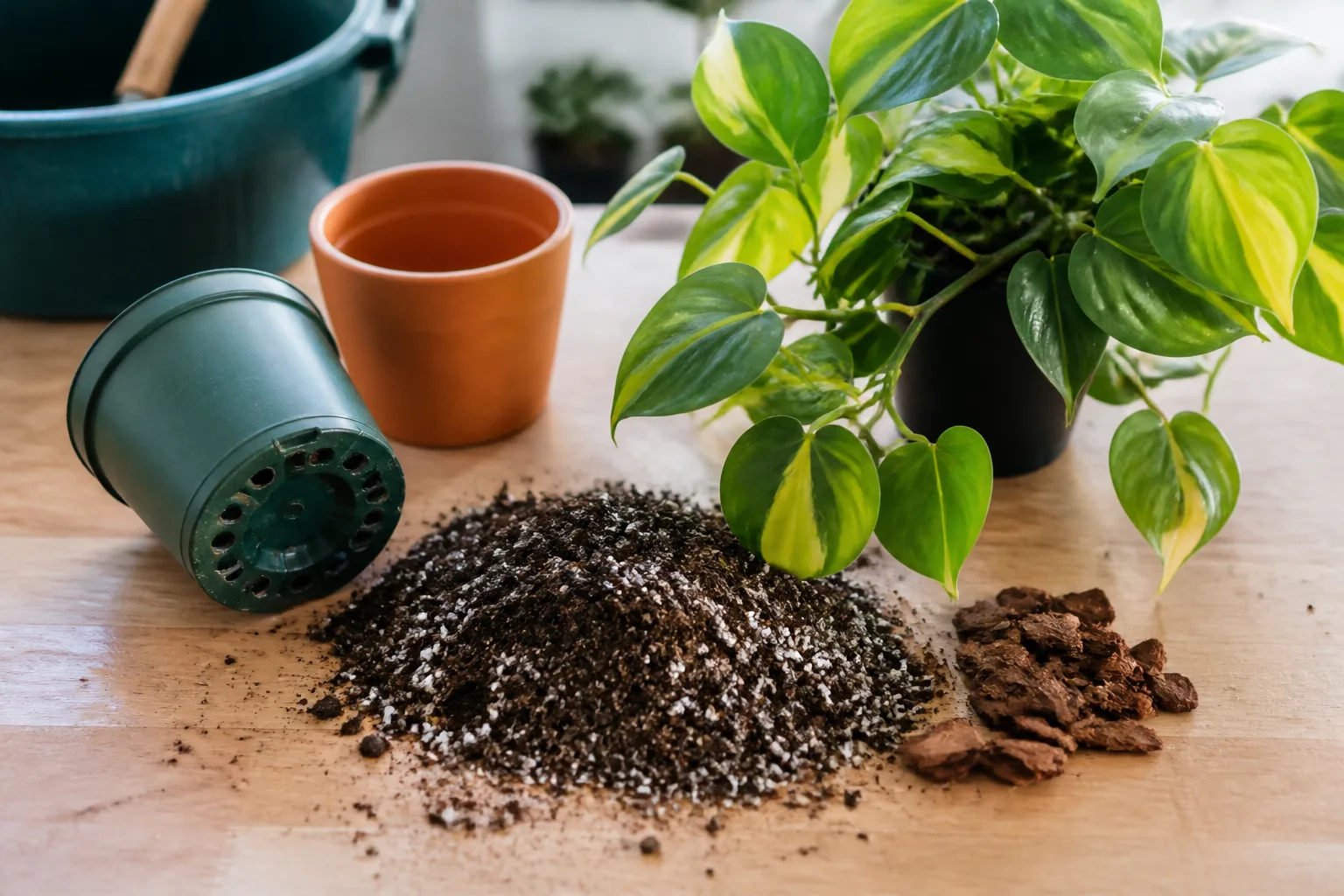
A shallow, wide pot suits a creeping stem, but it still needs enough depth for the roots and enough weight to remain stable. Do not size up by several inches “for future growth.” A large ring of unused soil dries slowly around a small root ball and can keep the center wet long after the surface looks dry. Keep the stem at about its existing soil level when repotting; burying the petioles or packing mix over the growing point can trap moisture and damage new growth.
When to Repot Without Stalling Growth
Repot when roots densely circle the bottom, emerge from multiple drainage holes, or the mix breaks down and stays wet much longer than it used to. A few roots at one hole do not automatically mean an emergency. If the plant is healthy and the mix drains, you can wait until active growth begins in spring or early summer, when it can resume root growth after the move.
Choose a container only modestly wider than the root mass while preserving the broad shape the plant needs. Slide the plant out, loosen only roots that are circling tightly, and remove soft, dark roots with clean shears. Firm pale roots are healthy; do not strip away all of the old mix or cut sound roots just to make the root ball smaller. Set the plant at its former depth, backfill loosely, and water once to settle the mix.
After repotting, return it to bright indirect light and avoid fertilizer until you see stable growth. Keep the mix lightly and evenly moist as fresh roots establish, not waterlogged. If the plant droops for a day after the move but the stems remain firm, give it time rather than repeatedly disturbing the root ball.
Temperature and Humidity in a Real Home
Mamei prefers warmth and dislikes abrupt cold. A comfortable room temperature is usually suitable; keep it away from a drafty window in winter, a heating vent, or direct blasts from an air conditioner. NC State Extension gives a broad preferred range of about 65 to 85°F for philodendrons as a genus, while the RHS notes that common room temperatures above roughly 59°F suit many types. These references describe the genus, so use them as guardrails rather than a species-specific thermostat setting.
Humidity can support larger, smoother leaves, but Mamei does not require a greenhouse to survive indoors. BBC Gardeners’ World notes that the species tolerates lower humidity than some philodendrons, and the RHS describes many philodendrons as comfortable in ordinary home humidity. If the air is especially dry and leaf edges repeatedly crisp despite correct watering, a room humidifier can help; keep air moving and do not let condensation sit on foliage for long periods.
Misting is brief and does not reliably raise room humidity. A pebble tray can slightly change the air immediately around a small plant, but it cannot replace a humidifier in a dry room. Prioritize an appropriate light level and a root ball that cycles between moist and partly dry before buying humidity equipment. If the plant grows well and the leaves stay firm, a reading below a tropical greenhouse target is not a reason to intervene.
Fertilizer and Seasonal Growth
Feed lightly while the plant is actively producing leaves. Use a balanced houseplant fertilizer at half the label strength every four to six weeks in spring and summer, or follow the product label at a reduced concentration if the plant grows slowly in your light conditions. The RHS philodendron guide recommends feeding during the growing season; that seasonal approach avoids pushing weak, soft growth when light is limited.
Do not fertilize a thirsty plant, one with suspected root rot, or a recently repotted plant that already has nutrients in fresh mix. Fertilizer will not restore silver markings, correct stretched growth from low light, or revive damaged roots. If you see a crust on the soil or brown tips after repeated feeding, flush the mix with plain water and allow it to drain thoroughly, then resume at a lower strength only after growth is steady.
A plant under a grow light that continues to make leaves through winter may still be growing, but reduce feeding if growth slows or the mix stays wet longer. Let the plant’s activity and available light set the schedule, not the month printed on a calendar.
Pruning and Leaf Care
Mamei usually needs little pruning. Remove a yellowing or damaged leaf only after it is clearly declining, using clean shears at the base of its petiole without cutting into the central growing point. A leaf with one cosmetic tear can stay if most of its surface is green and firm; keeping healthy foliage helps the plant support new growth.
To manage a stem that extends beyond the container, cut just behind a node with sterile scissors. The cutback can become a propagation piece if it contains a healthy node. Avoid stripping multiple healthy leaves at once to make the plant look smaller, because the remaining roots then have less foliage to support them and recovery may be slower.
Dust can obscure the silver pattern and interfere with the leaf’s surface function. Wipe each leaf gently with a damp, lint-free cloth, supporting it underneath so the petiole does not bend. Do not use leaf shine or oily products; they can leave residue that traps dust and makes it harder to spot pests. If the leaves are dirty, rinse them with lukewarm water and allow the plant to dry in a warm place with good air circulation.
Propagating Philodendron Mamei
The reliable route is a rooted division or a stem section with at least one viable node. A leaf and its petiole alone cannot make a new plant because it lacks the stem tissue and growth point needed to produce another shoot. For Mamei specifically, the RHS species profile lists stem-tip and leaf-bud cuttings as propagation methods. The RHS general guide also describes cuttings and rooted divisions for philodendrons; for this creeping species, preserve a viable node and roots when separating established growth.
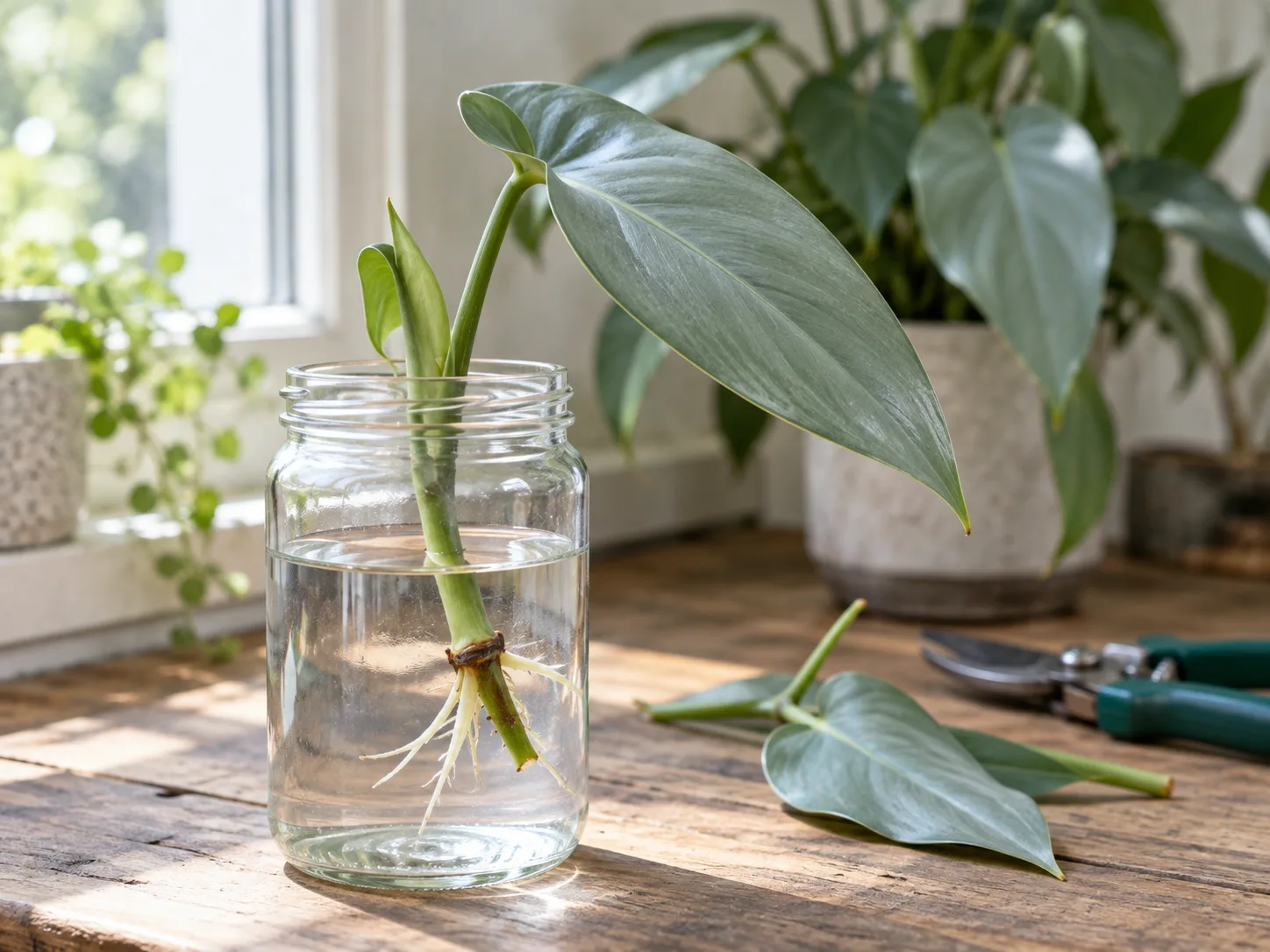
Choose spring or early summer, when healthy growth is visible. Wear gloves if your skin is sensitive, and use a clean blade to reduce the chance of transferring disease. Water propagation makes roots easy to watch, while potting directly into a lightly moist, airy mix avoids a later transition from water roots to soil; either method can work if the node stays warm, bright, and not submerged too deeply.
Rooted Divisions vs. Stem Cuttings
Divide a rooted section when the plant has several growing points or a stem that has already formed roots along the soil surface. Slide the plant from its pot and locate the natural separation between sections. Make a clean cut that leaves each division with at least one healthy shoot, a node, and a useful amount of roots. Pot the sections separately in containers sized for each root system, then keep the mix lightly moist while they re-establish.
Take a stem cutting when you want to shorten a long, healthy stem or share a piece with someone. Make the cut just below a node; remove a lower leaf if it would sit under water or soil, and keep one or two healthy leaves above the rooting medium. Place the node in clean water or press it against moist, airy mix. Change the water when it becomes cloudy, or keep soil barely moist rather than saturated.
A cutting is ready to pot up when it has several roots and the new growth point looks firm. Do not wait for a huge tangle of water roots; long, fragile roots can be harder to settle into soil without damage. After planting, hold it in bright indirect light and let the mix partly dry between thorough waterings. A few weeks without visible leaf growth can be normal while the cutting establishes roots, but a soft, blackening stem usually indicates rot.
Preventing Pests and Root Problems
Inspect a new Mamei closely before placing it near established houseplants. Look along leaf undersides, petioles, and the points where stems meet the mix for cottony mealybugs, scale bumps, fine webbing, or clusters of small insects. Isolate a plant with pests, rinse the foliage where practical, and remove visible insects with a damp cloth or cotton swab. Repeat inspections because eggs and young pests can be difficult to notice on the first pass.
A persistently damp pot also attracts fungus gnats and weakens roots. Sticky traps can catch adult gnats and show whether the problem is ongoing, but they do not fix larvae in wet soil. Let the top layer dry more between waterings, remove standing runoff, and improve airflow; for a severe outbreak, choose a treatment labeled for indoor plants and follow its instructions. Do not apply a pesticide or soap mixture more often or at a stronger rate than its label allows.
Root rot is a condition, not a single aboveground symptom. Yellow leaves can occur for several reasons, but yellowing combined with wet mix, a sour smell, or soft roots strongly points to a drainage or watering issue. Remove the plant from the pot if the base is collapsing, trim only decayed tissue, and repot into fresh airy mix in a clean pot. If most of the root system has rotted, take a healthy node cutting as insurance while you still have firm stem tissue.
Diagnose Common Leaf Problems
Look at the age of the affected leaves, the pattern of damage, and the soil before changing care. A single old leaf turning yellow can be normal; several new leaves yellowing together deserve a closer check. The quickest useful diagnosis combines three observations: how wet the mix is below the surface, whether roots or stem bases feel firm, and whether damage faces the window or appears evenly across the plant.
Yellowing, Curling, and Brown Edges
Yellow leaves with wet soil: pause watering and check drainage first. If the mix stays saturated or smells sour, inspect roots and repot if they are soft. Adding fertilizer at this point can add stress rather than solve the cause.
Curling leaves with a very dry pot: water thoroughly and watch the next few days. If the mix is wet instead, curling can reflect root stress or heat; move the plant away from hot sun and inspect the roots before watering again.
Brown, crispy edges: compare humidity, watering, sun, and fertilizer history rather than assuming that dry air is the only cause. Dry roots, harsh direct light, and accumulated fertilizer salts can all produce brown margins. Correct the likely cause gradually and do not cut the damaged edge off unless it is spreading or mostly dead.
Smaller or stretched new leaves: improve light first and allow several new leaves to show the result. A plant cannot enlarge leaves instantly, and existing leaves do not change size after a move. If the plant is already in strong indirect light, check whether roots are crowded or the mix has become compacted before increasing fertilizer.
Silver marks look muted: silver mottling is a natural pattern, not a symptom that fertilizer can create. Dust, low light, a juvenile plant, or differences between individual leaves can change how noticeable it appears. Clean the foliage and assess mature new leaves in consistent light before deciding the pattern is fading.
Pet and Child Safety
Keep Mamei away from children and pets that chew plants. NC State Extension lists philodendrons as containing calcium oxalate crystals and warns that ingestion can cause mouth and throat pain or swelling; the sap can also irritate skin. Wear gloves when pruning if you are sensitive, wash tools afterward, and place the pot where trailing stems and fallen leaves cannot be reached.
If a person or animal chews the plant, remove remaining pieces from the mouth and seek advice from a medical professional, veterinarian, or poison-control service. Do not induce vomiting or rely on an online symptom list to decide that ingestion is harmless. The ASPCA Animal Poison Control guidance advises contacting a veterinarian or its poison hotline when an animal may have eaten a listed plant.
Conclusion
The easiest way to grow Philodendron mamei well is to plan for its creeping shape: give it a stable, broad pot, bright indirect light, and airy soil with working drainage. Water after the mix partly dries, and let the room’s temperature, light, and pot size set the interval rather than following a fixed calendar. Most homes do not need special humidity equipment if the plant is warm, the roots are healthy, and new leaves continue to open.
For propagation, preserve a node and roots; a leaf alone is not enough. When the plant declines, check the soil and root zone before treating yellowing or brown edges as a fertilizer or humidity problem. With those basics in place, Mamei can spread into a striking silver-marked foliage plant without a complicated setup.