Resurrection Lily Care: Planting, Watering, and Blooming
Get practical resurrection lily care for sun, soil, watering, bulb depth, containers, division, and winter protection, with a clear seasonal calendar.
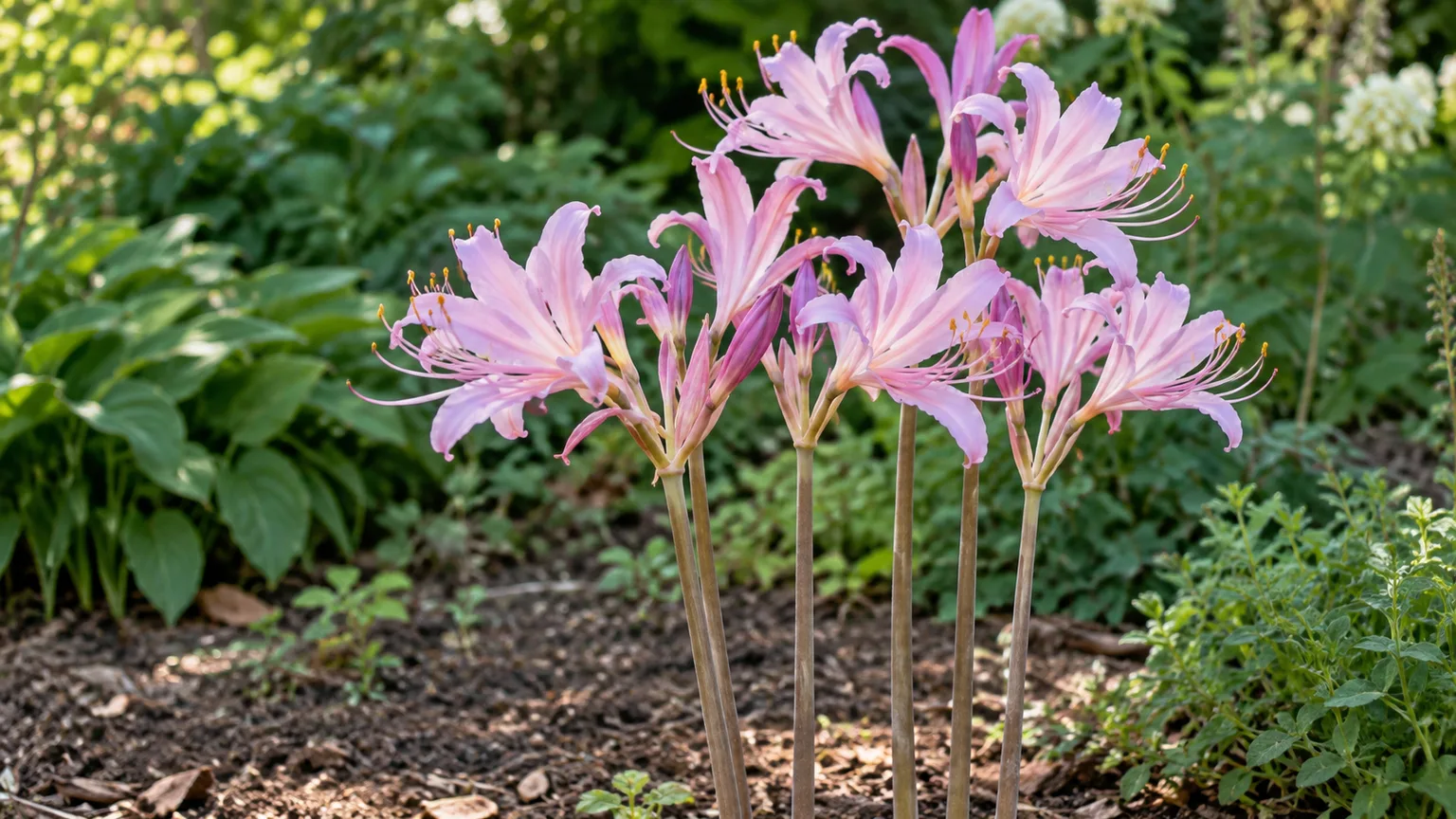
Resurrection lily (Lycoris squamigera) is a hardy, fragrant bulb that sends up clusters of pink-lilac flowers in late summer or early fall, weeks after its spring leaves have disappeared. That gap is normal: the leaves gather energy, fade, and leave the bulb resting underground until the flower stalks appear. The plant is also called surprise lily or magic lily, but it is not a true lily, and it is not the red spider lily (Lycoris radiata).
The care is simple once you plan around that unusual calendar. Give the bulb a lasting spot with good drainage, let its spring foliage finish naturally, water while it is actively growing, and keep the summer resting period from turning into a soggy one. The details that deserve more attention are planting depth, first-year flowering, and how to protect bulbs at the cold or wet edge of their range.
What Makes Resurrection Lily Different From Other Lilies?
Resurrection lily belongs to the amaryllis family, Amaryllidaceae. A typical bulb forms a clump of narrow, arching leaves in late winter or spring, then those leaves yellow and vanish by late spring or early summer. Later, leafless flower stalks rise from the soil, usually about 18 to 24 inches tall, carrying several fragrant, trumpet-shaped blossoms with recurved pink petals and lavender tones.
This split schedule is why the common name fits. Gardeners may see foliage, assume the plant has finished for the year, and then be startled by flowers emerging from what looks like bare ground. Do not mistake that bare patch for a dead bulb if the plant has completed its normal spring growth. Marking the location with a small, unobtrusive garden marker can prevent accidental digging or hoeing during the dormant stretch.
The botanical name matters when buying bulbs. “Spider lily” is used for several species in the genus Lycoris, and some nurseries use it loosely. The familiar red spider lily is L. radiata; resurrection lily is L. squamigera, with pink-lilac flowers and greater cold hardiness. Check the botanical name on the label so the bloom color, winter expectations, and care match the plant you actually want.
Is Resurrection Lily Hardy Where You Live?
Resurrection lily is generally listed for USDA Zones 5 through 9, with some regional references extending its range slightly. The Missouri Botanical Garden Plant Finder lists Zones 5–9, while North Carolina State Extension’s plant profile includes 5a through 9a. These are useful starting points, not a promise that every bulb will thrive in every yard within those zones.
Winter survival depends on more than the lowest air temperature. A bulb in fast-draining soil, sheltered from severe exposure, has a better chance than one in a low spot that stays cold and wet. In a Zone 5 garden or an exposed site, plant in a protected bed and use an airy winter mulch after the ground cools. In a warmer Zone 9 garden, provide afternoon shade if summer heat is intense and keep the bulb out of persistently wet soil.
If your local nursery sells the species as a perennial in your area, that is useful local evidence. Still, consider a sheltered microclimate or a container if your winters are colder than the listed range or your soil stays saturated through winter. A container gives you control over drainage and placement, but its roots experience colder temperatures than roots insulated by garden soil, so the pot also needs winter protection.
Choose a Site That Matches Its Annual Cycle
Choose the location before planting because resurrection lily resents repeated disturbance. It can take a season to settle after planting, and moving an established clump for convenience can interrupt flowering. Place it where you can tolerate its spring foliage, its summer gap, and its sudden late-season flower stalks without needing to mow or dig through the area.
Light: Full Sun to Afternoon Shade
Full sun to partial shade both work. For the strongest flowering, give the bed several hours of direct sun, especially while the spring leaves are growing; in a hot climate, light afternoon shade can reduce heat stress. A spot that is deeply shaded throughout spring may keep leaves alive but produce fewer flower stalks over time.
Check the site during the season when the foliage is present rather than judging only by its summer appearance. A deciduous tree may cast dense shade by late spring, or a fence may block morning light. Resurrection lily can flower in partial shade, but if a mature clump has stopped blooming, light is one condition to assess before digging it up or adding fertilizer.
Soil: Drainage Matters More Than Fertility
The bulb needs soil that holds some moisture during active growth but drains freely after rain. Loam or sandy loam enriched with organic matter is a good fit, though the plant tolerates a range of soils. The practical test is what happens after a heavy shower: if water pools for hours or the bed stays sticky and saturated, choose a raised or better-drained location rather than trying to solve the problem with more frequent watering or a small dose of compost.
Work finished compost into the broader planting area if the soil is poor, but avoid making a rich, water-holding pocket around each bulb. In heavy clay, a raised bed or a gently elevated planting mound is more dependable than a deep amended hole surrounded by dense clay. That hole can collect water like a basin. Keep the planting area free of aggressive perennial roots that could make future care or division difficult.
When to Plant Resurrection Lily Bulbs
Plant dormant bulbs in late summer or early fall when fresh bulbs are available and the soil is workable. That timing lets roots begin developing before winter without leaving the bulb exposed in storage. If you receive bulbs by mail, plant them promptly according to the supplier’s instructions instead of holding them for months; dry, damaged, or soft bulbs are less likely to establish well.
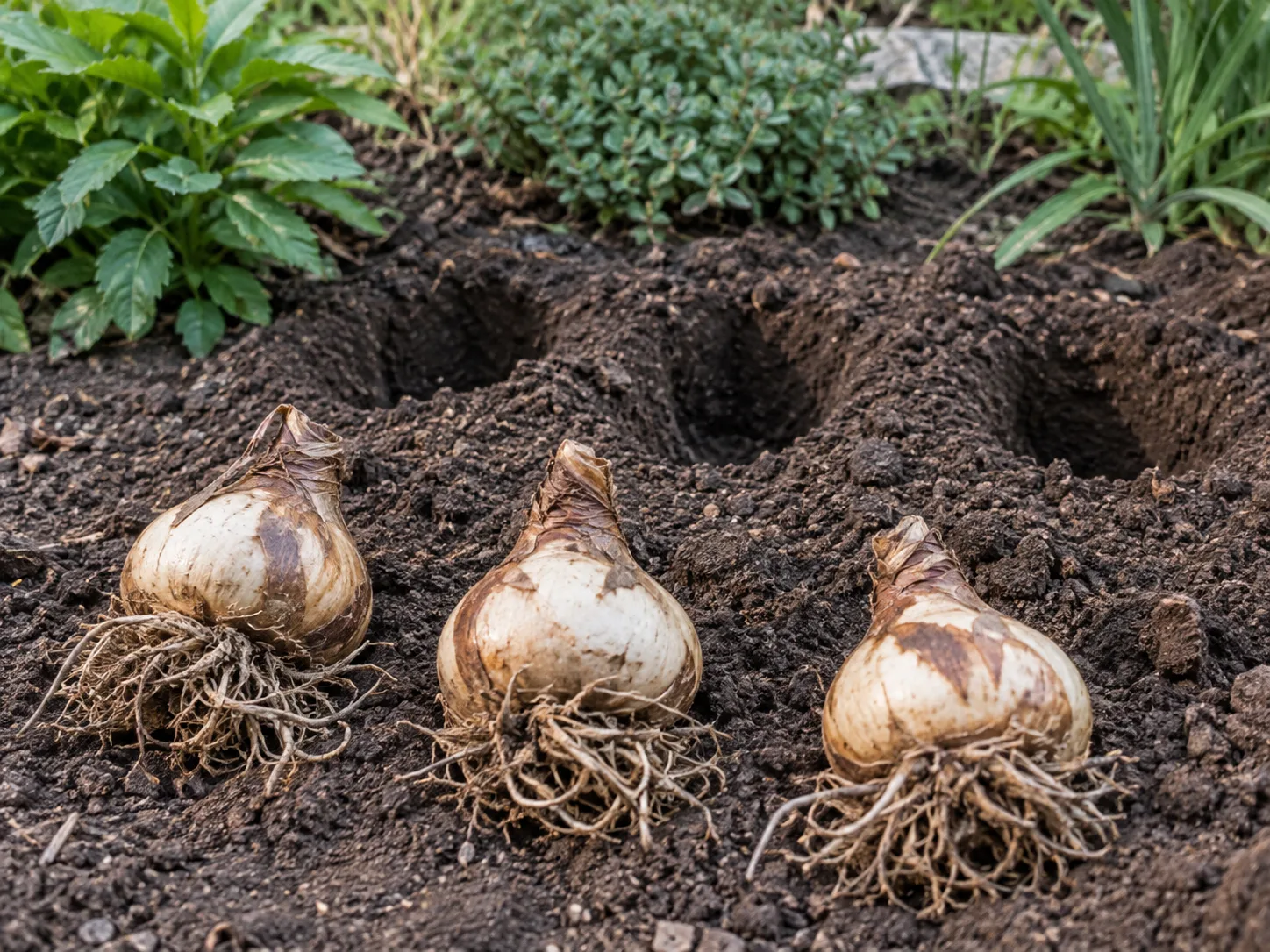
Choose firm bulbs with intact outer skins and no mushy spots or foul odor. Set each bulb with its neck or pointed end facing upward and spread the roots below it rather than bending them sharply. Water once after planting to settle soil around the roots, then let the bed drain. Newly planted bulbs may focus on roots rather than flowers during the first season, so a quiet first year is not necessarily a failure.
How Deep and Far Apart to Plant
Planting-depth advice for this species varies more than a quick care summary suggests. The Missouri Botanical Garden recommends bulbs 5–6 inches deep and 6 inches apart; the University of Missouri Extension’s account of Lycoris gives a similar 4–6-inch range. North Carolina State Extension lists 8–12 inches for the species and notes that planting too deeply can delay flowering. Those measurements are not interchangeable if a bulb label defines “depth” differently or the bulb size and local conditions differ.
Use the depth printed by the nursery that supplied your bulb when available, and follow a local extension recommendation in a marginal climate. If neither provides a clear direction, the Missouri Botanical Garden’s 5–6-inch guidance is a reasonable starting point for a well-drained bed; measure consistently from the soil surface to the base of the bulb, and note the measurement for future reference. Do not bury the neck under a thick mound of wet soil or compensate for cold exposure with extreme depth. Mulch and a sheltered site are easier to adjust than a bulb planted too deep.
Space bulbs about 6 inches apart for a compact group, or farther apart if you want each clump to remain distinct for several years. Small groups make more visual impact than a lone stalk, and offsets gradually fill the space. If you are planting several groups, leave access around them so spring foliage can be allowed to yellow without being trampled or cut down.
Follow the Foliage-to-Flower Cycle
A seasonal view makes care decisions much easier. The exact dates shift with climate, weather, and planting conditions, but the sequence is more reliable than any calendar date:
| Part of the year | What you may see | What to do |
|---|---|---|
| Late winter to spring | Narrow, arching green leaves grow from the bulb | Water during prolonged dry spells; leave the leaves intact |
| Late spring to early summer | Foliage yellows and dies back | Wait until it is fully yellow or collapsed before removing it |
| Summer rest | Little or nothing visible aboveground | Keep the site marked; avoid routine irrigation and digging |
| Late summer to early fall | Leafless flower stalks appear, then open | Water if the soil is very dry; enjoy or cut a few stems |
| After bloom | Stalks fade; the bulb returns to rest | Remove spent stalks if desired and keep the bed well drained |
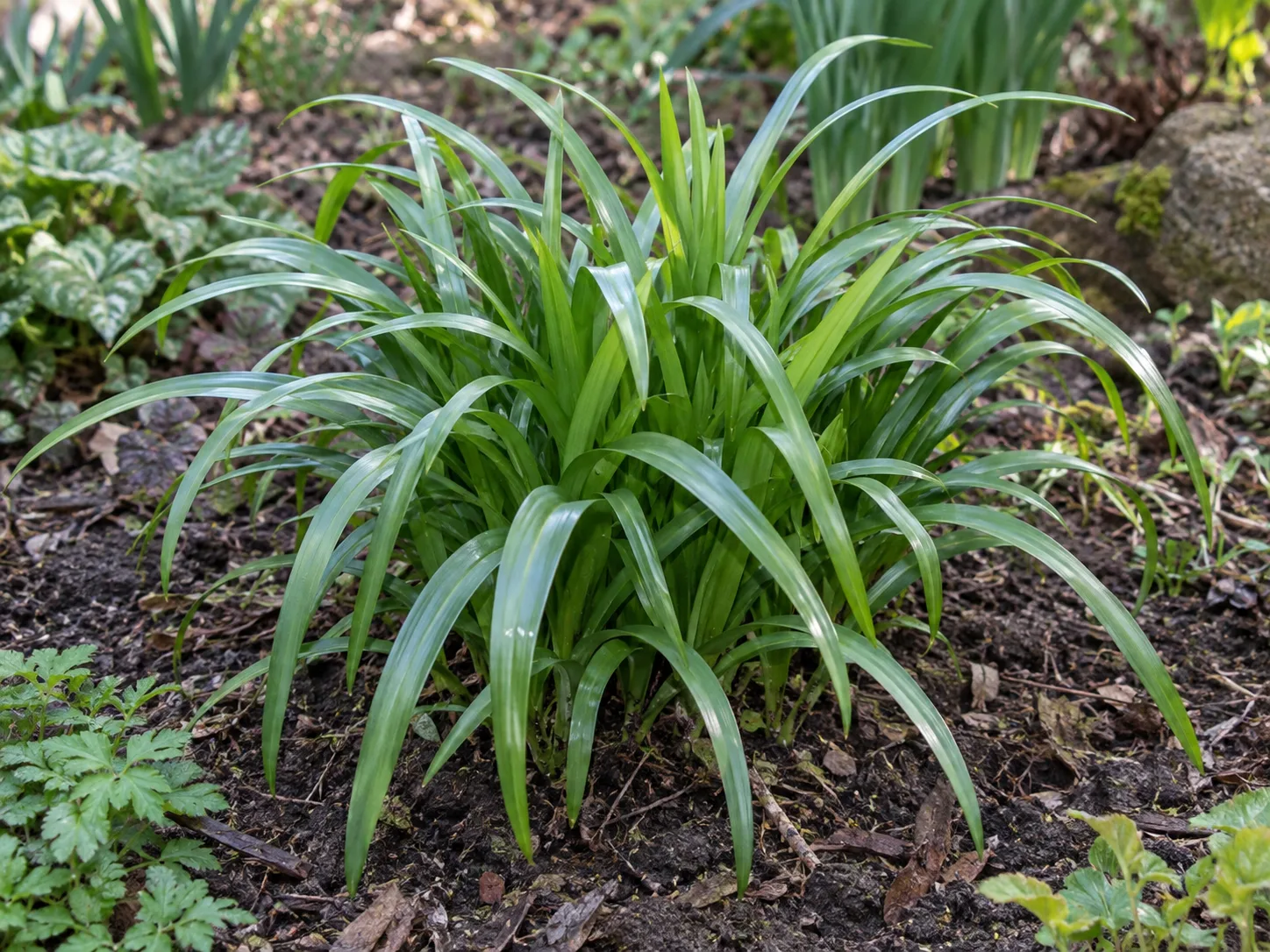
The spring leaves are not disposable decoration. They photosynthesize and replenish the bulb before it rests, helping support the next flowering cycle. Gardening Know How’s Lycoris care guidance also advises leaving the fading foliage in place until it dies naturally. If the leaves turn yellow, that can be normal; if they collapse early while still green, especially in soggy soil, inspect the site conditions rather than assuming the plant is simply dormant.
Once the leaves have completely yellowed, you can remove them to tidy the bed. Do not braid, tie, or cut green leaves to make the garden look neat. If the patch is visually awkward, use low, nonaggressive companions nearby, but keep enough space for the foliage to grow and for the flowers to be seen later.
Water at the Right Time of Year
Water depends on the stage of growth. When spring foliage is active, give the bulb moderate moisture during extended dry periods; a newly planted bulb needs more attention than an established clump. After the leaves die back and before flower stalks emerge, reduce supplemental watering. The bulb is resting, and soil that remains wet around it is a greater risk than a short dry spell in an established bed.
Do not assume “summer dormant” means the bulb must be baked bone-dry for months. Established bulbs can handle a relatively dry rest, but extreme drought in very sandy soil or a container can still stress them. Use rainfall and the root zone as your guide: if you have had weeks without rain and the soil is dusty well below the surface, a modest deep watering is reasonable; if the soil is cool and damp, wait.
When flower stalks appear, water during prolonged hot, dry weather, especially in the first year after planting. Keep water at the soil rather than repeatedly wetting flowers and stalks. Overwatering cannot compensate for poor drainage, and frequent shallow sprinkling encourages a damp surface without reaching the bulb’s root zone. In containers, check more often because pots dry faster than garden beds, but never let the pot sit in a full saucer.
Fertilizer, Mulch, and Routine Cleanup
Resurrection lily does not need an elaborate fertilizer program. North Carolina State Extension describes the genus as needing no fertilization, while other horticultural references suggest feeding under certain conditions. For a healthy clump in decent soil, routine fertilizer is optional. If the soil is poor and spring leaves are weak, add a modest amount of balanced bulb fertilizer as growth starts, following the product label; do not feed a dormant bed in the hope of forcing flowers.
Fertilizer is not the first fix for no blooms. Too much nitrogen can push leafy growth, and no fertilizer can reverse shade, chronic wetness, a recent division, or the normal delay of a small offset. If growth has declined, first check sunlight, drainage, and whether the clump was recently disturbed. A soil test is more useful than repeatedly applying a product without knowing what the bed lacks.
Use a light, loose mulch in cold-winter areas after the ground cools, keeping it airy and not packed against the bulb location. A two-inch layer is often sufficient for insulation; remove or thin it as spring growth begins. In warm, wet climates, heavy summer mulch can hold unwanted moisture, so prioritize drainage and avoid keeping the resting bulbs continuously damp.
For cleanup, remove only fully dead leaves and spent flower stalks. You can snip a stalk after flowering if its appearance bothers you, but leave green foliage alone. The plant’s naturally low maintenance comes from letting it complete its cycle, not from feeding and pruning it on a weekly schedule.
Grow Resurrection Lily in a Container
A pot is useful when garden soil stays wet, space is limited, or you want the flowers close to a patio. Choose a deep, sturdy container with several open drainage holes and enough room for the bulbs and their roots. Use a free-draining potting mix rather than dense garden soil. Group bulbs for a fuller display, but leave some space between them and avoid cramming offsets into a small pot.
Container care follows the same seasonal cycle as bed-grown plants, with one important difference: pots dry and freeze faster. Water while leaves are actively growing, reduce watering during rest, and never let water remain in the saucer. Place the pot in sun or partial shade; a hot, dark container can heat the root zone sharply during summer.
In a cold climate, move the pot to a sheltered, unheated place or insulate it before hard freezes. The goal is to protect the dormant bulb from severe temperature swings while preserving drainage, not to bring it into a heated living room. Resurrection lily is a temperate outdoor bulb, and warm indoor conditions do not replace its outdoor seasonal rhythm. Divide or refresh the container only when the clump is crowded or flowering declines, because repeated repotting delays establishment.
Divide Clumps Only When There Is a Reason
Resurrection lily naturalizes through offsets and can remain in one place for years. Division is useful when a clump has become congested, flowering has declined despite good light and drainage, or you need to move the plant. It is not a task that must be done on a rigid three-year schedule. Digging every few years can interrupt bloom and removes a plant that often does best undisturbed.
Wait until the spring foliage has completely died back, then mark the clump before its location disappears. Loosen soil around the outside of the group with a fork or spade and lift carefully, working below the bulbs so you do not slice through them. Brush away enough soil to see the natural offsets; separate those that come free with a gentle twist, and keep the main bulb and its roots intact where possible.
Replant the largest bulbs promptly at the original depth and spacing, water once to settle the soil, and label the location. Smaller offsets may take a year or more to reach flowering size, and newly divided bulbs often skip bloom while rebuilding roots. If the plant was already flowering well, leave it alone and add new bulbs elsewhere instead of dividing simply to create more plants.
Why Is My Resurrection Lily Not Blooming?
Start with the plant’s history, not the fertilizer shelf. A newly purchased bulb, a small offset, or a recently divided clump may produce leaves first and flowers later. Even established bulbs may not flower every single year if conditions are poor or the bulb is rebuilding after stress. Compare what you see against its normal calendar before deciding something is wrong.
Newly planted or divided bulbs
If leaves appeared but there is no flower stalk, give the bulb time if this is its first season or the first season after division. Smaller bulbs need to size up, and root disturbance can set back flowering. Keep the foliage intact, avoid digging it up to check progress, and judge the following season rather than making multiple changes at once.
If a bare patch has no flowers and no leaves, remember that the bulb naturally spends months underground. Check your marker and wait through the expected emergence window before digging. If no growth appears after a full growing cycle, gently inspect only then; a soft, hollow, or foul-smelling bulb suggests rot or damage, while a firm bulb may simply be slow or deeply planted.
Too much shade, planting depth, or wet soil
For a mature clump that repeatedly makes leaves but no flowers, check four likely constraints in this order: spring sunlight, drainage, planting depth, and crowding. Several hours of direct sun during foliage growth supports stronger flowering. Soil that stays wet can weaken bulbs, while excessive planting depth can delay emergence; if the bulb was planted recently, give it a full season before relocating it.
If the clump is crowded, divide only after the foliage dies back and replant healthy offsets. Avoid adding high-nitrogen fertilizer as a guess. It may produce more leaves without solving the cause, and changing light, water, depth, and fertilizer all at once makes it impossible to learn what helped. Correct the clearest problem first and observe the next bloom cycle.
Pests and Flower-Stalk Damage
The plant is usually trouble-free, but “resistant” does not mean invulnerable. Extension references report occasional aphids, lily leaf beetles, and narcissus bulb flies in the broader Lycoris group; the University of Missouri notes that grasshoppers may chew emerging stalks or buds in some years. Look closely at damaged new growth before treating, because chewing, sap-sucking insects, and rot call for different responses.
If stalks are clipped or buds disappear, inspect at dawn or dusk for insects and look for fresh chewing. If leaves are distorted or sticky, check their undersides for aphids and rinse small infestations away with water. If the bulb itself is soft or discolored, improve drainage and remove severely rotted material rather than spraying the flowers. A plant that has lost one season’s stalks can still recover if the bulb remains firm and its foliage gets to complete the next growth cycle.
North Carolina State Extension flags low-severity poison characteristics for this plant. Treat the bulb and other parts as ornamental, not edible, and store unplanted bulbs away from children and pets. If a person or animal chews the plant, contact a poison center or veterinarian for case-specific advice instead of waiting for symptoms.
Place the Plant Where Its Seasonal Gaps Make Sense
The best spot is one where bare ground in midsummer will not look like a mistake. Plant bulbs in a group toward the middle or back of a mixed border, along a woodland edge with sufficient light, or near low groundcover that does not smother their spring leaves. The contrast between a leafless flower stalk and leafy neighbors makes the late bloom feel intentional, while companions help disguise the gap after the foliage fades.
Choose companions for overlapping garden conditions rather than matching bloom color alone. In a sunny bed, low, nonaggressive groundcovers or spring perennials can occupy the space around the dormant bulbs; taller late-summer flowers can provide a backdrop for the pink stalks. In partial shade, use compatible plants that will not form a dense mat over the bulbs. Leave a visible or marked access lane if you plan to divide later.
For a clear display, plant a small cluster instead of scattering single bulbs far apart. Gardenia’s resurrection lily profile recommends groups of at least three to five bulbs for visual impact; leave enough space around that group for the offsets to expand and for you to preserve the spring leaves.
The flowers can be cut for a vase when the first buds begin opening, but do not cut the spring leaves for arrangements or tidiness. Grouping several bulbs gives a stronger display than relying on a single stalk, and the offsets can fill in naturally if you leave them undisturbed. Deer and rabbits often avoid Lycoris because of its alkaloids, but wildlife pressure varies; protect a valuable new planting if browsing is common in your yard.
Conclusion
Resurrection lily care is mostly about respecting the bulb’s timing. Plant it once in a sunny to partly shaded, well-drained spot; use supplier or local guidance for depth because published recommendations vary; water while it is growing and ease off during summer rest; then leave spring foliage intact until it yellows naturally.
Expect a newly planted or divided bulb to take time before it flowers, and troubleshoot an established clump by checking light, drainage, depth, and crowding before feeding or digging. Once settled, Lycoris squamigera can return for many years with little routine work—and its sudden pink-lilac bloom is all the more satisfying when you know why it appeared after the leaves were gone.