24 Pictures of Plants With Variegated Leaves
See 24 plants with variegated leaves, from silver Brunnera to pink-edged beech. Compare their patterns, garden roles, light needs, and spreading habits.
Variegated foliage gives a garden contrast even when nothing is flowering. A leaf may have a cream edge, a pale center, silver veining, yellow streaks, or a pink flush that changes as it matures. The effect can brighten a shady border or make one container stand out, but a plant’s pattern is only useful if its light needs, mature size, and spread suit the place you have.
Below are 24 plants with variegated leaves, grouped by how they tend to work in a landscape. Some are shrubs and trees that make lasting structure; others are perennials, annuals, vines, or grasses. The captions focus on what makes each plant distinct and the practical detail to check before buying.
What makes a leaf variegated?
Variegation is a visible pattern of different colors on foliage, often green combined with white, cream, yellow, silver, pink, or purple. The pattern may run along a leaf edge, fill its center, appear as mottling, or break into streaks and splashes. The Royal Horticultural Society’s variegated-foliage guide uses the term for leaves with streaks, blotches, or patches of different colors, and notes that pale areas can have less chlorophyll than green tissue. That is one reason a strongly variegated cultivar may grow more slowly than a comparable all-green form, though the amount of difference depends on the plant.
A named cultivar is the best clue to the pattern you can expect. Two plants from the same species can have plain green, golden, silvered, or edged leaves, while a young plant may show a different balance of color from an older one. The RHS also explains in its variegated-foliage advice that some plants can send out a plain green shoot, called a reversion; that is different from a leaf changing tone naturally as it matures.
Trees and shrubs that carry color through the season
Shrubs and small trees are useful when you want foliage to anchor a border rather than provide a short seasonal accent. Check the mature height and width before choosing one: several foliage favorites become substantial woody plants, and a compact nursery specimen may eventually need more space than a narrow foundation bed can offer.
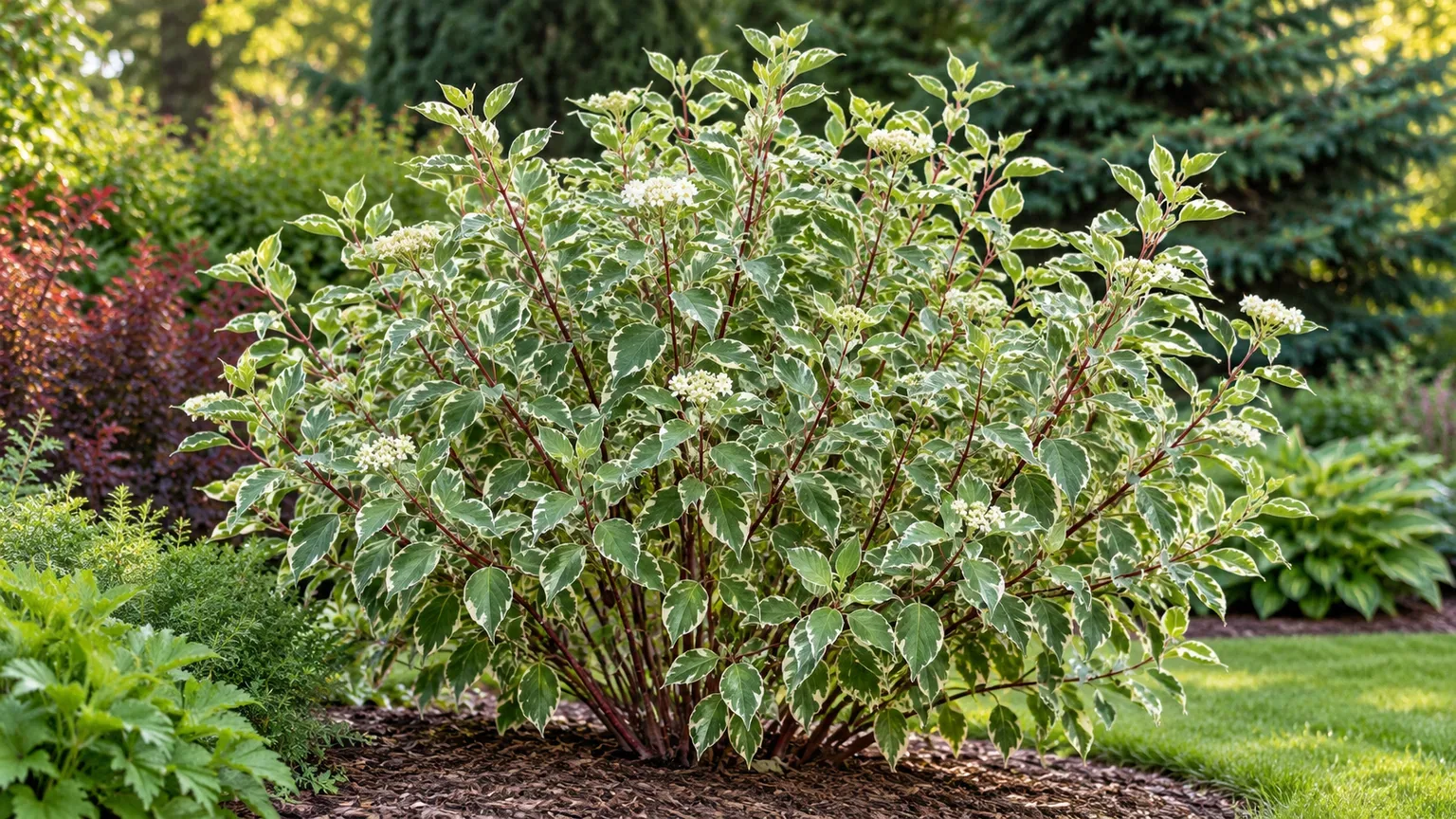
- Redtwig dogwood ‘Elegantissima’ (Cornus alba). This deciduous shrub pairs gray-green leaves with clean white margins and red young stems, so it gives two kinds of contrast: a bright leaf display in the growing season and colored branches after leaf fall. It can reach a broad, multi-stemmed size, so give it room to renew its shoots rather than squeezing it into a tight hedge. The RHS profile describes its white-edged leaves, red stems, and preference for sun or partial shade.
-
Wolf Eyes kousa dogwood (Cornus kousa ‘Wolf Eyes’). This small tree has green leaves with wide, pale margins that can make the whole canopy look almost silver from a distance. It is a better fit where you want a specimen or understory tree than where a fast-growing shade tree is needed; the foliage is the main event, with white flower bracts providing a second seasonal display. Leave room for its layered outline instead of pruning it into a tight ball.
-
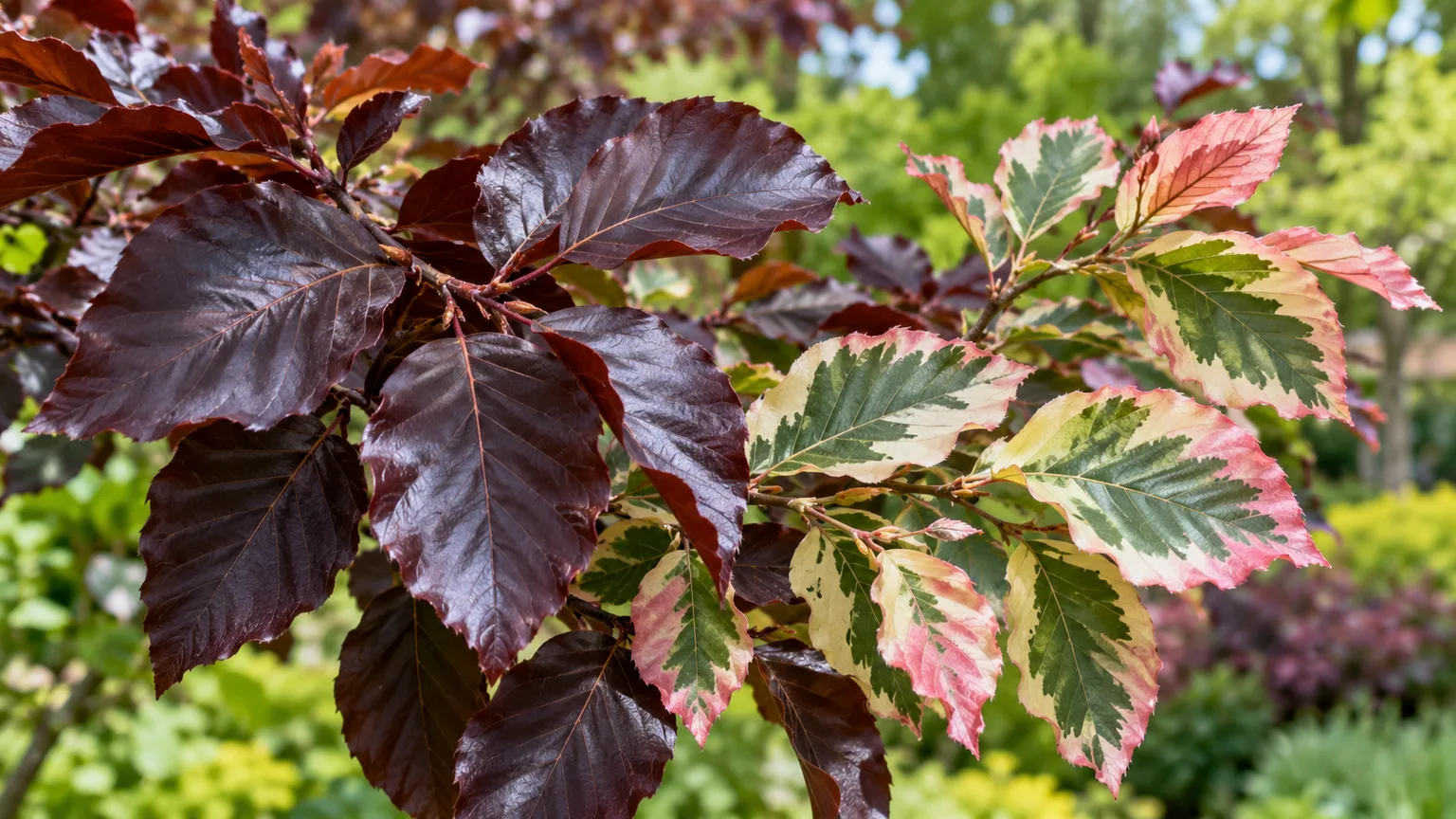
Tricolor beech (Fagus sylvatica ‘Purpurea Tricolor’). The leaves open purple with pink edges, then mature toward purple with cream-pink margins, creating a changing three-tone effect rather than a fixed pink stripe. It is a long-term choice for a large garden: the RHS describes the cultivar as a medium-sized tree that can exceed 12 meters, not a small ornamental that stays compact. Its new leaves show the strongest contrast, so view it where you can appreciate spring growth as well as the mature canopy. See the RHS profile for ‘Purpurea Tricolor’ for its color progression and scale.
-
Harriet Waldman Japanese maple (Acer palmatum ‘Harriet Waldman’). New leaves may show pink, white, and green, while the pink becomes less prominent as the foliage matures. This is a refined small-tree accent for a sheltered place where the leaf color can be seen close up. Choose it for its spring flush and finely divided maple shape, not because every leaf will stay pink through summer; new growth and season strongly influence the display.
-
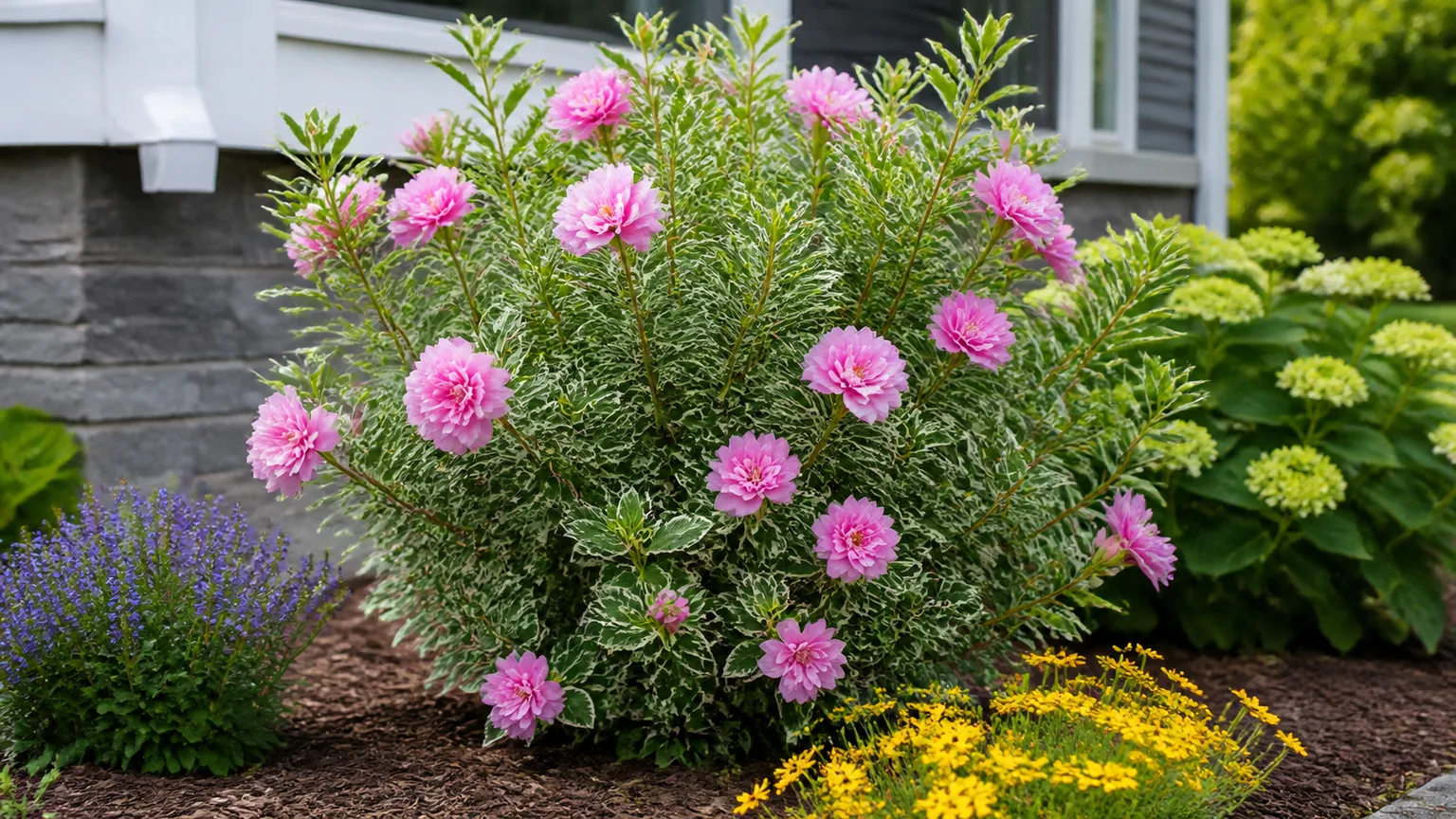
Sugar Tip rose of Sharon (Hibiscus syriacus ‘America Irene Scott’). Sold under the Sugar Tip name, this shrub combines white-edged foliage with double pale-pink flowers. It earns its place when you want patterned leaves before and between blooms, and a summer-flowering shrub rather than an evergreen backdrop. Leave enough room for a rounded shrub and check how the cultivar performs in your climate, because winter hardiness and flowering time vary by region.
-
Carol Mackie daphne (Daphne × burkwoodii ‘Carol Mackie’). Cream-edged leaves surround clusters of fragrant spring flowers, making this a good choice near a path or entry where the scent can be noticed. Daphne is not a plant to select only from a photograph: it dislikes being moved once established and needs a site with suitable drainage and climate. Check the local nursery’s advice on winter exposure and soil before planting, then leave the shrub undisturbed.
-
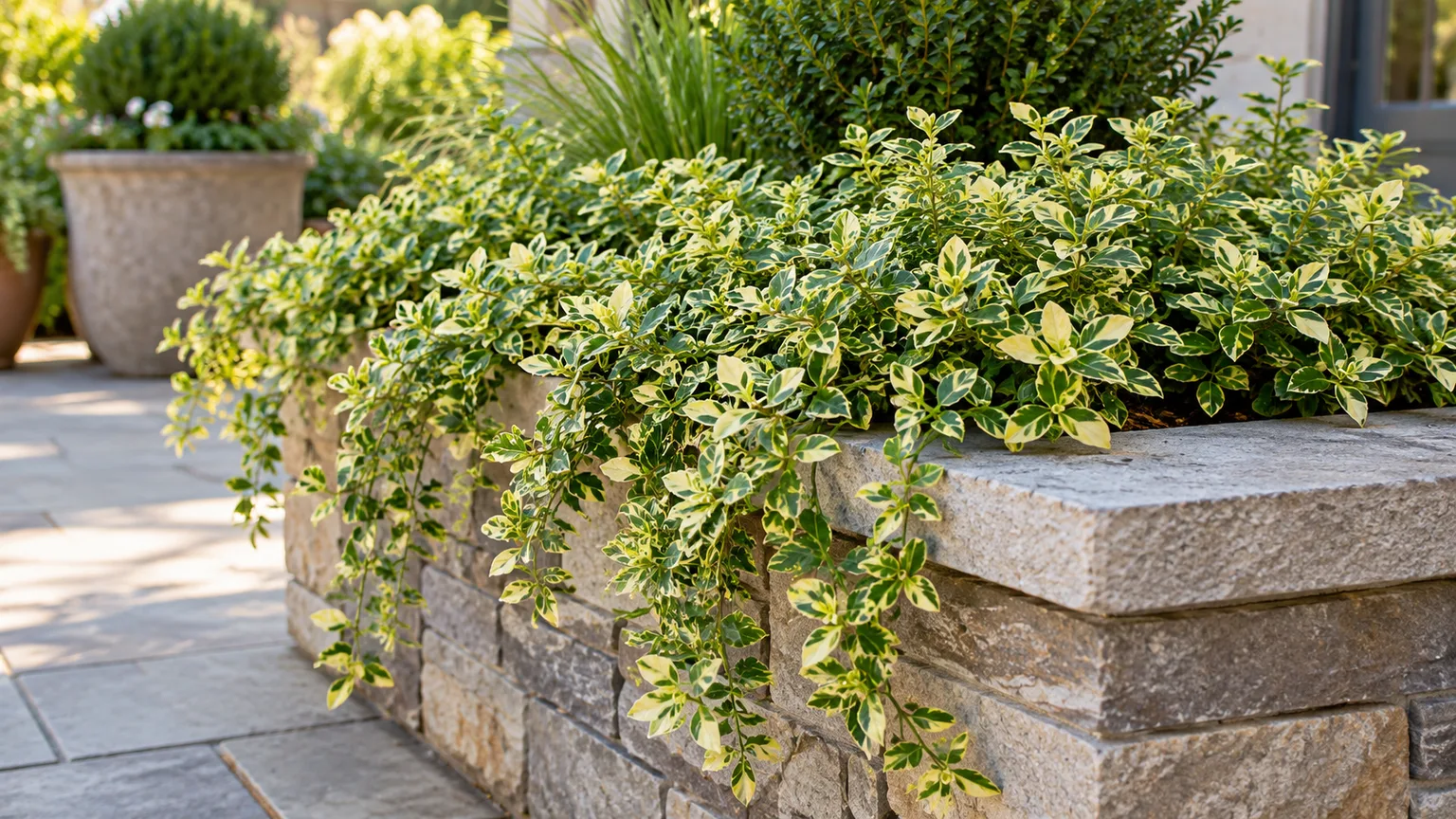
Moonshadow euonymus (Euonymus fortunei ‘Moonshadow’). This low, spreading evergreen has a green outer rim and a golden center, with the yellow often softening toward cream on older leaves. It can work as a bright edge or groundcover where a small, persistent shrub is useful. Confirm the cultivar’s mature spread and local invasive status before using it as a groundcover; keep it away from trunks, walls, and places where a creeping stem would be hard to remove.
-
Emerald ’n’ Gold euonymus (Euonymus fortunei ‘Emerald ’n’ Gold’). Its leaves reverse the pattern of Moonshadow: green centers with yellow margins, sometimes tinged pink in cold weather. The compact leaves bring a brighter edge to a shrub border, but the plant can also climb or spread when given support and favorable conditions. If a branch grows with plain green leaves, compare it with the rest of the shrub before pruning; green shoots can outgrow the slower variegated growth.
Shade perennials for leaf-first borders
The most reliable way to use a pale-leaved perennial is to give it enough usable light without exposing it to punishing afternoon sun. “Shade plant” does not mean total darkness: most still need bright ambient light to stay compact and show their markings. Combine broad leaves with finer textures so the pattern reads clearly rather than merging into a patch of visual noise.
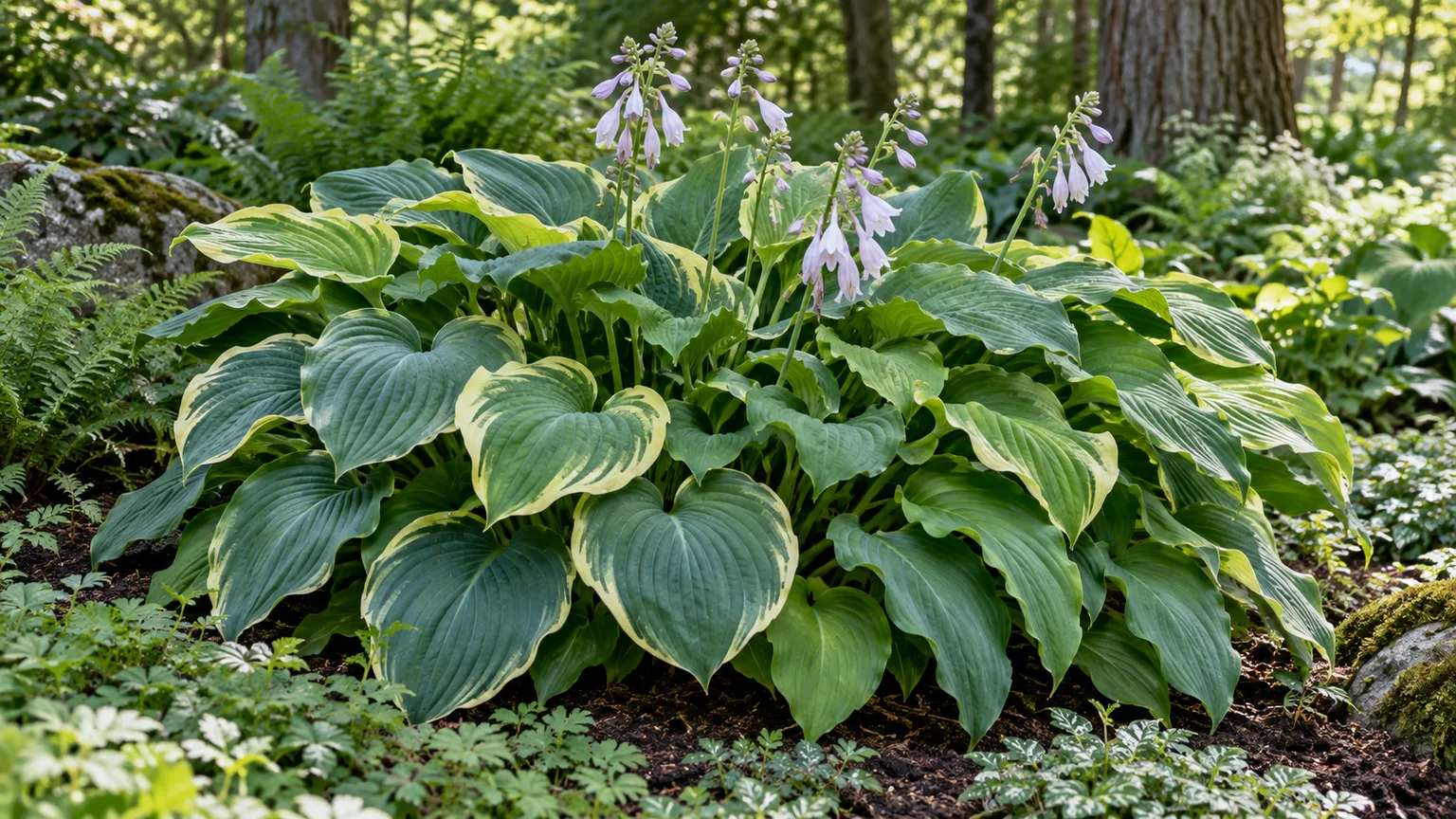
- Minute Man hosta (Hosta ‘Minute Man’). Broad, ribbed leaves have green centers and crisp white edges; the foliage forms a dense mound that is easy to read from a path. Hostas suit partial to full shade, but leaf color and sun tolerance vary among cultivars. Iowa State University Extension notes that blue types need deeper shade, while many yellow and gold hostas develop stronger color with some sun. Treat that as a cultivar-specific decision, not a reason to put a white-edged hosta in hot afternoon exposure; see its hosta light guidance.
-
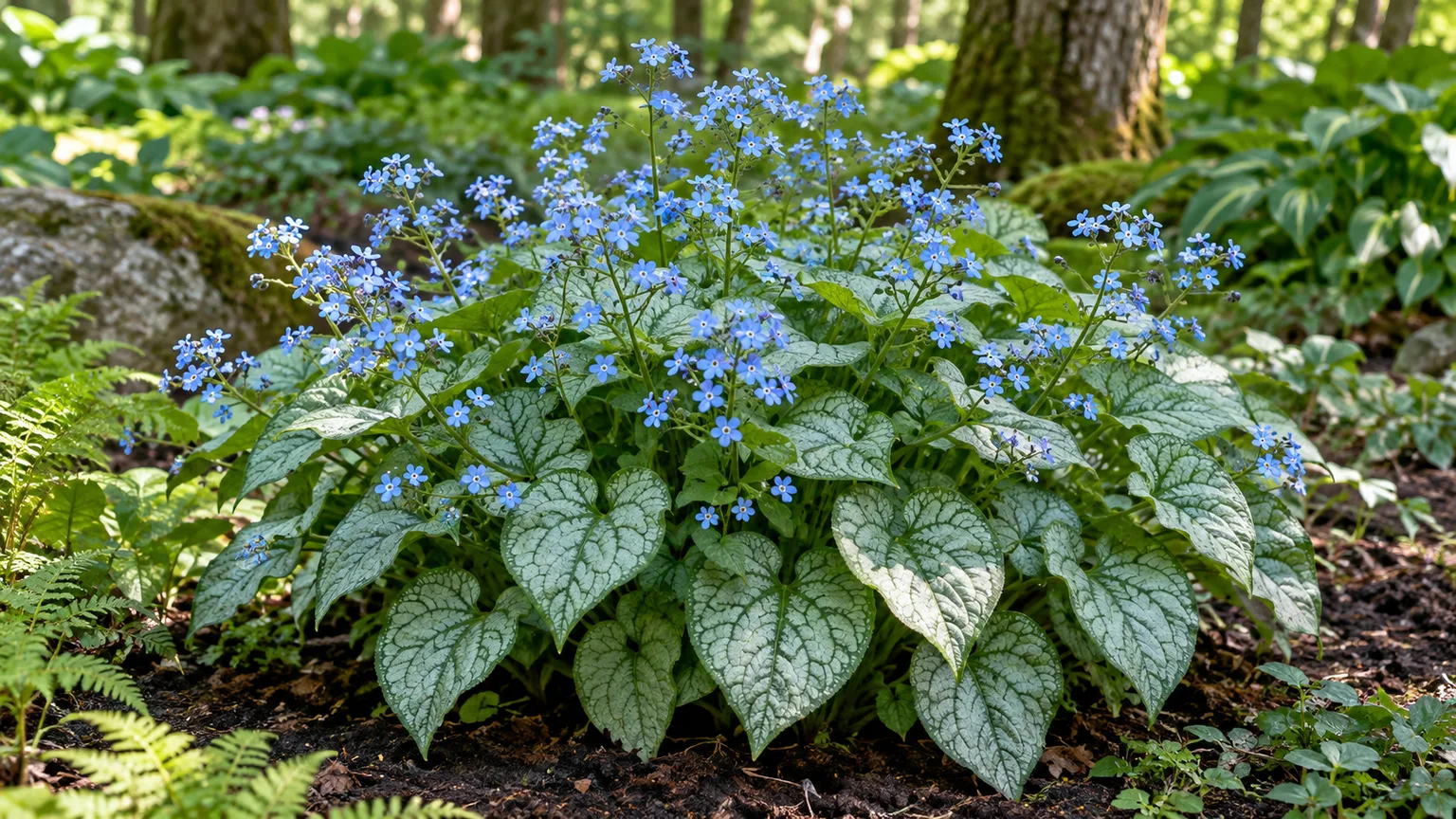
Jack Frost Siberian bugloss (Brunnera macrophylla ‘Jack Frost’). Its heart-shaped leaves look silvered, with a dark green outline and veins that draw a fine network across each blade. The effect brightens woodland edges while small blue flowers add an early-season accent. NC State Extension lists the cultivar’s silver leaves and green veining and warns that Brunnera can scorch in hot sun or suffer in dry soil; it fits best in a cool, evenly moist, partly shaded site. Its Brunnera profile also lists cultivars with different patterns if you want a green-and-cream edge instead.
-
Sweet Tea heucherella (Heucherella ‘Sweet Tea’). This compact perennial has a dark cinnamon or reddish center that fades toward a lighter orange-green perimeter, so the pattern looks more like a wash of color than a sharply outlined margin. It adds warmth to a shady container or the front of a border and keeps its foliage as the main feature even when flowers are absent. Give it moist, well-drained soil and some protection from harsh afternoon sun in hot climates; its exact color can shift with the season.
-
Alexander’s loosestrife (Lysimachia punctata ‘Alexander’). Young leaves can emerge pink and green before settling into a clearer cream-and-green edge, while yellow flower spikes arrive in summer. This makes it a useful choice when you want a variegated plant that also has a visible bloom season. Check its mature spread and keep it within a bed boundary; a vigorous perennial can occupy more ground than its small starter pot suggests.
-
Nora Leigh garden phlox (Phlox paniculata ‘Nora Leigh’). The leaves have green centers and creamy edges, and the flower clusters repeat the two-tone idea with pink centers and paler petals. It is a good bridge between a foliage-focused planting and a summer flower border. Place it where it gets enough light for flowering and air can move through the stems; crowded, shaded growth is more likely to look thin than the catalog photograph.
-
Woodside Variegata columbine (Aquilegia vulgaris ‘Woodside Variegata’). This cultivar’s leaves are patterned with creamy white and green, while the familiar nodding columbine flowers add a spring-to-early-summer accent. It suits the front or middle of a lightly shaded perennial bed, where the foliage can be seen without being swallowed by larger plants. Columbines can self-seed, and seedlings may not keep the parent’s exact leaf or flower pattern, so remove seedheads if you want the area to stay controlled.
-
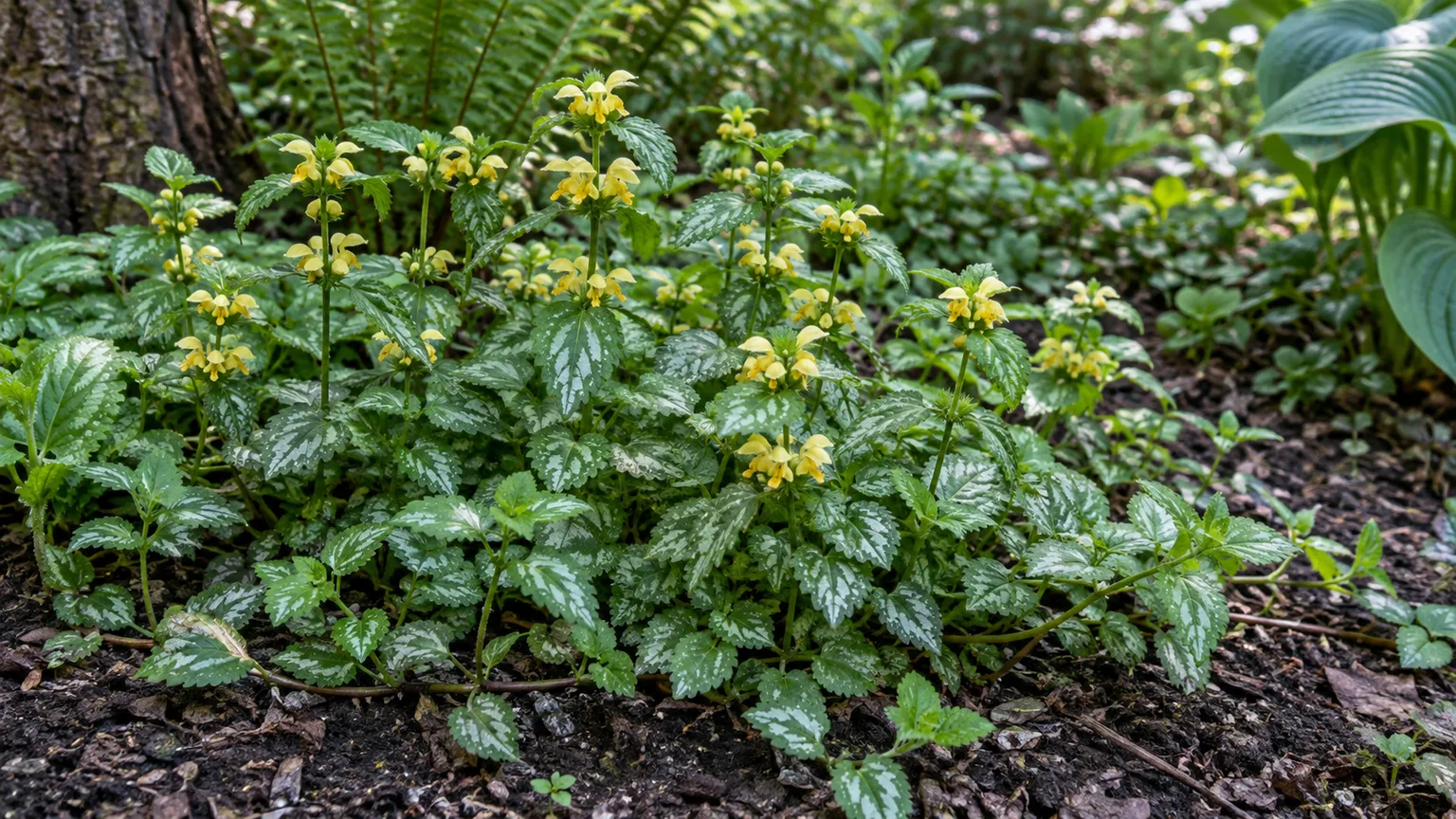
Yellow archangel (Lamiastrum galeobdolon ‘Variegatum’). Silver markings brighten the small toothed leaves, and yellow flowers appear in spring. It can form a dense mat in shade, which is exactly why you should check local invasive-plant guidance before buying it. University of Wisconsin–Madison Extension says the species is invasive in parts of the Pacific Northwest and Mid-Atlantic and advises using only named forms where appropriate; Oregon State University’s invasive-plant guide explains how stems root where they touch soil and why fragments can restart growth. In some regions, the safest choice is to skip it and use a locally recommended native groundcover instead.
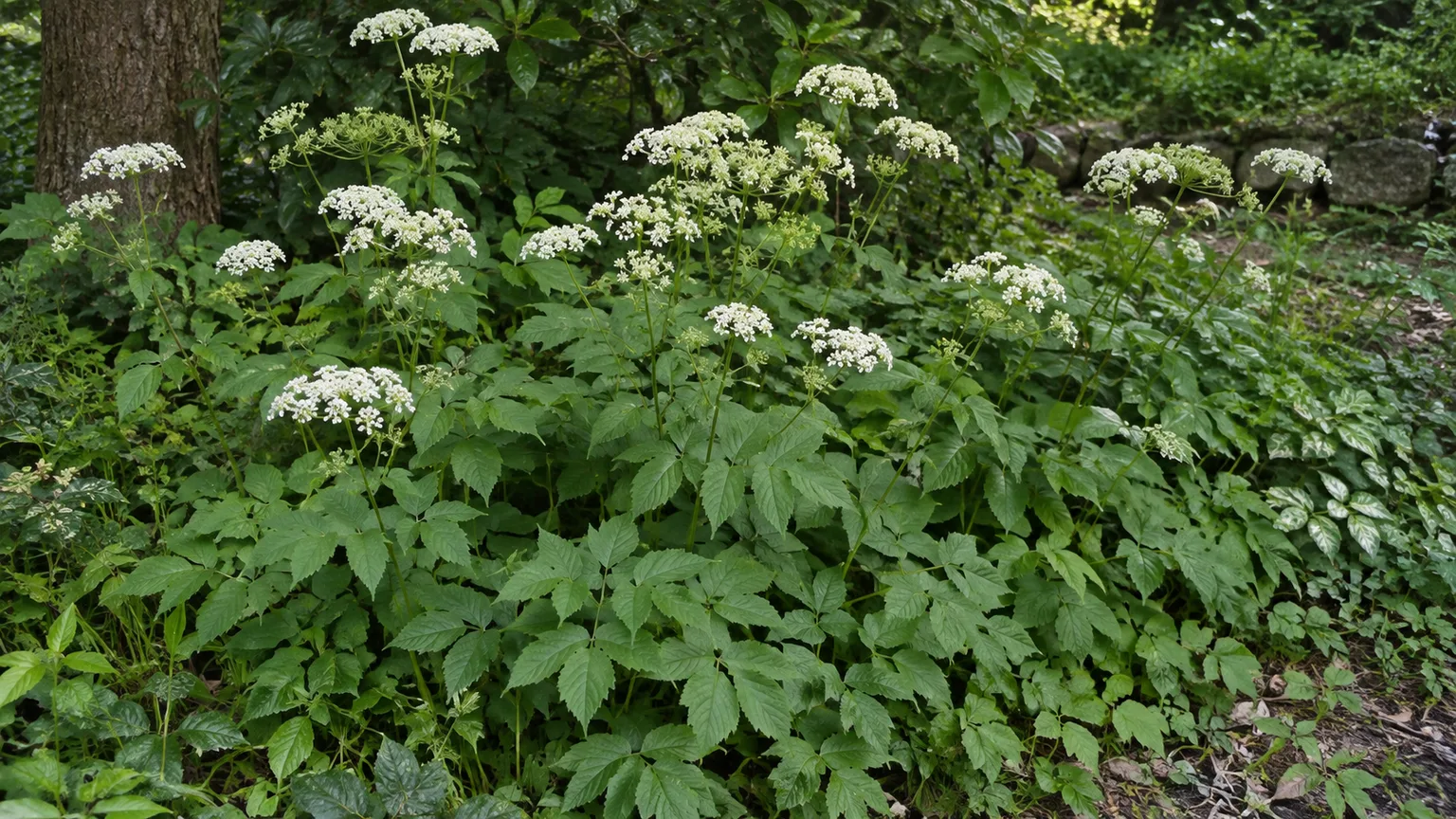
- Snow-on-the-mountain or goutweed (Aegopodium podagraria ‘Variegatum’). The green leaves have a broad irregular cream center and can brighten a shaded bed, but the plant spreads by underground growth and can be difficult to remove once established. It is not a casual groundcover purchase. Oregon State University identifies variegated goutweed as a look-alike to yellow archangel and notes that it spreads in gardens and is hard to control; check state and county invasive lists before planting, and do not put it where it can escape into natural areas.
Annual and container plants with high-contrast foliage
Annuals and tender ornamentals let you try strong color without committing a permanent bed to a large shrub. They are especially useful in pots, where the leaf pattern can be viewed close up and the plant can be moved to the light it prefers. For cold-winter climates, many tropical selections are grown outside only during warm weather or kept as houseplants.
-
Dancing Flames scarlet sage (Salvia splendens ‘Dancing Flames’). This unusual salvia has yellow-and-green variegated leaves beneath spikes of bright red flowers, a high-contrast combination that works as a container focal point or bedding plant. Chicago Botanic Garden recommends a sunny location for the best leaf coloration and describes it as a tender perennial for warm climates. In colder regions, treat it as a seasonal annual rather than expecting it to overwinter outdoors; its plant profile notes the foliage and flower contrast.
-
Tricolor garden sage (Salvia officinalis ‘Tricolor’). This woody herb has gray-green leaves edged in cream and flushed with pink or purple, especially on newer growth. It can be grown for ornamental foliage as well as culinary use, but it needs a bright position and sharp drainage rather than the rich, constantly wet soil that suits many shade perennials. Use it in a sunny pot or border edge where you can brush past it and enjoy its aromatic leaves.
-
Alaska nasturtium (Tropaeolum majus ‘Alaska’). Round, shield-shaped leaves are splashed with cream and light green, paired with flowers in warm shades such as yellow, orange, and red. It is an easy annual for a sunny bed, a low container, or an edging where the leaves can spill over the rim. A seed packet labeled ‘Alaska’ is important: ordinary nasturtiums may have plain green leaves, and the cultivar’s flower mix can vary.
-
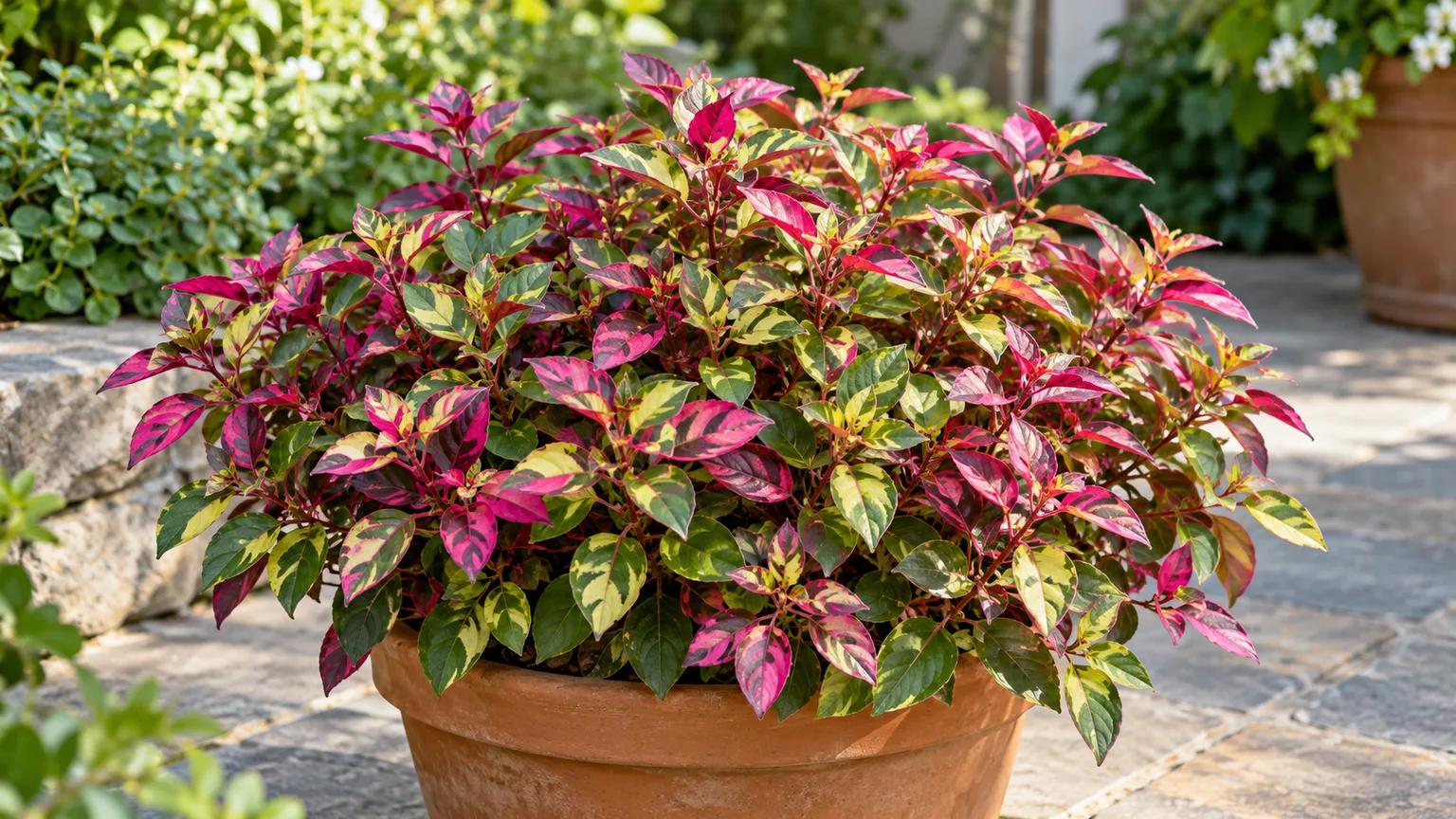
Joseph’s coat (Alternanthera ficoidea). Cultivars of this tender foliage plant can combine green with red, orange, purple, or copper, creating some of the boldest color in the list. Use one as a warm-season container accent or as a low annual in a sunny border, and choose the cultivar by its actual leaf palette rather than relying on the common name. In cold climates, move a plant indoors before frost if you want to keep it; many garden forms are treated as annuals.
-
Frosty Morn stonecrop (Sedum ‘Frosty Morn’). Fleshy leaves carry pale margins that look almost frosted against the green center, then clusters of flowers rise above the foliage later in the season. It fits sunny, well-drained beds and containers better than damp, shaded ground. Treat it as a succulent: avoid frequent watering and heavy, wet soil, which can undermine the compact growth that makes its edging visible.
-
Variegated Dalmatian iris (Iris pallida ‘Variegata’). The sword-shaped leaves carry gold-and-green stripes, making the plant architectural even when it is not flowering. Its fragrant lavender blooms are a seasonal bonus, but the foliage is the reason to place it along a sunny or lightly shaded border edge where the upright blades can be seen. Leave room for the rhizomes to form a clump and divide only when the planting becomes crowded or flowering declines.
Vines and grasses that bring pattern into motion
Vines and narrow-leaved plants add movement that broad, mounded perennials cannot. Their spread, however, can be harder to judge from a pot-sized specimen. A climber needs a support and pruning plan; a running grass needs a boundary or a container, and in some regions it should not be planted at all.
-
Ribbon grass (Phalaris arundinacea). Its long blades have vertical white or cream stripes, producing a bold, graphic clump that moves in the wind. The same fast growth that makes it a quick visual screen can make it a problem: University of Illinois Extension calls it a rapid spreader and advises caution, while NC State Extension lists the species as invasive in many states. Check local listings first; where it is allowed, a container or a root barrier can reduce—but not erase—the risk of escape.
-
Arctic beauty kiwi vine (Actinidia kolomikta ‘Arctic Beauty’). On male plants, new leaves can develop patches of white and pink over green, especially in spring, before the color softens later in the season. It is a climbing woody vine, so provide a strong trellis and enough room for mature growth rather than treating it like a small patio climber. The display is most reliable on a plant with the appropriate cultivar and sex; ask the nursery to confirm what it is selling, and plan for pruning if the vine reaches its support.
Choose the right plant for your actual site
A photograph can show you the pattern, but it cannot tell you whether the plant will tolerate your summer heat, soil, or available space. Start with the spot, then shortlist the plants whose needs match it. That order prevents a common disappointment: buying a beautiful pale-leaved plant and then trying to force it into a climate or light level it does not suit.
Start with the light the plant can handle
“Variegated plants need sun” is too broad to be useful. Some shrubs keep their color in full sun or dappled shade, while shade plants such as hostas and Brunnera need protection from hot afternoon exposure. Pale tissue can be more vulnerable to scorch, but deeply shaded conditions may also weaken a plant or reduce the contrast of a cultivar that needs brighter light. Follow the named plant’s profile and use morning sun or filtered light as a cautious starting point when a plant’s tolerance is uncertain.
If the leaves develop dry, tan patches on the side facing a hot window or afternoon sun, move a container to a gentler position or provide temporary shade. Do not respond to scorch by watering every day unless the soil is actually dry; damaged tissue does not recover, and soggy roots create a second problem. Wait for the next flush of healthy growth before judging whether the new exposure is working.
Plan for mature width and spread
Look at the plant’s mature dimensions and its way of spreading, not just the label’s current pot size. A small tree, a creeping groundcover, and a running grass can all appear manageable in a garden-center container while having very different long-term footprints. Use a clumping perennial for a tidy border; choose a vine only where you can support and prune it; avoid aggressive groundcovers near open soil, waterways, or natural areas.
For any plant described as invasive or aggressive, check your state or local invasive-species authority before purchase. The risk is regional: a plant considered manageable in one climate may spread readily in another. Yellow archangel, goutweed, and ribbon grass are the three selections here that deserve the most caution, and alternatives recommended by local extension staff are often the better decision.
Repeat a color instead of stacking patterns
Variegated leaves already contain multiple colors, so a border often looks more deliberate when one color repeats than when every plant introduces a new pattern. Use white or cream edges to lift a green planting, gold centers to add warmth, or silver foliage to cool a hot palette. Fine Gardening’s design advice recommends using dramatic variegates singly or in small groups and placing them where viewers can see the markings up close, such as near a path, at the front of a border, or in a container. Gardening Know How’s patterned-foliage guide also recommends mixing leaf shapes so broad leaves do not compete with narrow, arching foliage.
A simple arrangement might pair one white-edged shrub with a plain green companion and repeat the white in a flowering perennial. Avoid lining up several busy cultivars with unrelated stripe widths and colors; from a distance, their patterns can merge into visual static. The goal is not to collect every color, but to let one or two plants act as clear accents.
Keep a variegated plant healthy without chasing color
Variegation is part of a plant’s identity, but it is not a reason to give it more fertilizer or stronger sun automatically. Provide the conditions the species prefers, keep moisture consistent with its natural growth habit, and compare new leaves with older ones before changing care. A shift in leaf color is a clue to investigate, not a diagnosis by itself.
Reversion is different from seasonal change
If one branch or shoot repeatedly produces solid-green leaves while the rest of a variegated shrub stays patterned, it may have reverted. Green tissue can photosynthesize efficiently and grow more vigorously, so the plain branch may eventually dominate. When the plant’s identity is clear and the change is limited to one shoot, prune that shoot back to its point of origin with clean tools. The RHS recommends removing reverted growth before it takes over the plant.
Do not remove every leaf that looks greener than expected. New leaves may begin pale and gain color as they mature, and some cultivars shift naturally with temperature or season. Compare several leaves on the same branch and look for a stable pattern across the whole shoot. If the mottling is irregular, distorted, or unlike the cultivar’s normal marking—especially on a hosta—treat it as a possible plant-health issue and ask a local extension service or nursery for an identification rather than labeling it reversion.
Protect pale leaves from scorch
A variegated plant can lose leaf quality when placed in harsh direct sun, even though a nearby all-green plant thrives there. If scorching appears on exposed leaf edges or surfaces, first reduce the intensity of light and check whether the root zone is drying too quickly. Move a potted plant back from a hot pane of glass or give a newly planted shrub time to acclimate rather than shifting it abruptly from shade into midday sun.
Conversely, very low light can encourage weak, stretched growth or reduce a cultivar’s visual contrast. If the plant is healthy but its new leaves are less patterned, compare the label’s light recommendation with the actual light at the plant’s height. Make one gradual change at a time; a sudden combination of brighter sun, extra fertilizer, and heavy watering makes it difficult to tell what helped or hurt.
Mistakes that make variegated plants disappoint
The most common mistake is treating leaf color as a care guide. White edges do not tell you that a plant wants full sun, and a silver leaf does not automatically mean a plant tolerates drought. Check the individual species and cultivar, then pay attention to drainage, heat, and mature size.
Another mistake is ignoring spread because the foliage looks ornamental. Goutweed and yellow archangel can form dense mats; ribbon grass can run beyond the clump. If you want foliage contrast without that risk, pick a contained plant such as a hosta, Brunnera, or a cultivar grown in a pot, and choose a locally recommended alternative for open ground.
Finally, do not expect the same photograph every week of the year. New growth may have stronger pink or cream; older leaves can fade; cold weather can tint some evergreen euonymus; deciduous plants lose their leaves entirely. A good choice is one whose pattern you like across the season, not only at the most dramatic moment on a nursery tag.
Conclusion
The best variegated plant is the one whose pattern and growth habit fit your garden. Choose from a tree or shrub for lasting structure, a shade perennial for a bright woodland edge, or a container annual for color you can move and replace. Then confirm the cultivar, light, mature size, and local spread risk before planting.
Use the 24 examples as a shortlist, not a reason to buy all 24. One carefully placed cream-edged hosta, pink-flushed beech, or silver Brunnera can make a stronger focal point than a border crowded with competing patterns. Watch the new growth, adjust light gradually, and remove a true all-green reversion before it overtakes the plant.



