Planting Easter Lilies Outside: Timing, Depth, and Care
Learn when to move a forced Easter lily outdoors, how deep to plant it, and what to do with its leaves, water, and mulch so the bulb has a fair chance to return.
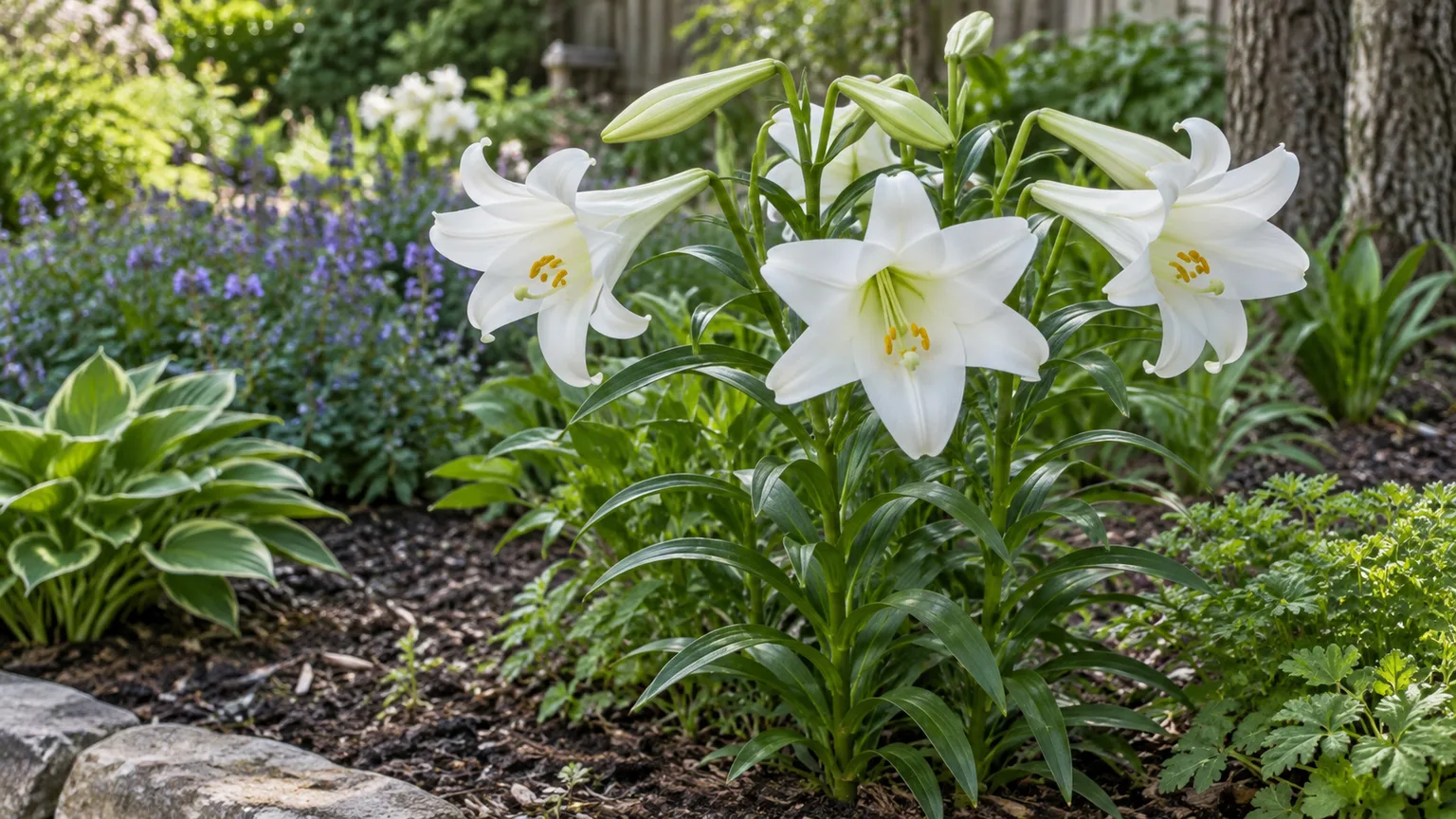
A potted Easter lily does not have to be a one-holiday plant. The white trumpet lily sold for spring celebrations is a perennial bulb, and many gardeners can move it into a garden bed after flowering. Success depends less on a special “Easter lily trick” than on timing the move around frost, giving the bulb fast-draining soil, and keeping its leaves until they have finished feeding it.
The first-year result is not guaranteed. Greenhouse growers bring lilies into flower on a retail schedule, so a plant that looks ready for summer may still be recovering from an artificial bloom cycle. Plant it once your garden is ready, then judge the bulb by its foliage and winter conditions—not by whether it produces another flower immediately.
Can a potted Easter lily live outdoors after Easter?
Yes. A healthy Easter lily can be planted in the ground and may return as a perennial, especially where the soil drains well and winters are not harsher than the bulb can tolerate. Penn State Extension describes Easter lilies as garden plants and recommends planting potted specimens after frost risk has passed; its current guidance gives a hardiness range of USDA Zones 4 through 8. Penn State Extension
That range is not a promise for every garden. Melinda Myers describes the traditional Easter lily as reliably hardy in Zones 7 through 9, while also sharing success with sheltered plants in Zones 4 and 5. Those claims differ, so treat the bulb, cultivar, local winter pattern, drainage, and exposure as a combined risk rather than trusting one zone number to settle the question. Melinda Myers Melinda Myers
For a mild or moderately cold site with a sunny, drainable bed, planting is a reasonable way to try to save the bulb. In a very cold region, a frost pocket, or a yard that stays wet through winter, survival is less predictable; a protected container or composting the plant may be the more realistic choice. Keep the nursery tag if it identifies the cultivar, and ask a local extension office how similar lilies perform in your county.
What the bulb needs after a forced bloom
An Easter lily is timed to flower for the holiday by greenhouse temperature and other controlled growing conditions. Its spring flowers are therefore out of sync with the plant’s natural outdoor season: Penn State Extension says garden-grown Easter lilies normally flower from July into August. A spent holiday bloom does not mean the bulb is dead, but the plant has already spent energy making flowers on an accelerated schedule. Penn State Extension Penn State Extension
Think of the green stem and leaves as the bulb’s recovery equipment. They keep making energy after the flowers fade, and the bulb uses that energy to maintain itself and form the next season’s growth. Cutting the entire stem while it is still green removes that supply just when the bulb needs it most.
The plant also needs a transition from a warm indoor display to outdoor light, wind, and temperature. While you wait for a safe planting day, keep the potting mix evenly moist rather than saturated, remove any decorative foil that traps water, and put the plant in a bright, cool room away from heating vents. Melinda Myers likewise advises keeping the mix moist but not wet before moving the lily outdoors. Melinda Myers
When to plant an Easter lily outside
Plant after the last expected frost for your area, when the ground is workable and not waterlogged. Calendar dates are only a rough guide: a late cold snap can arrive after a warm spell, and soil that is frozen or saturated is difficult to plant into without damaging roots. Penn State Extension says potted lilies may be planted from after spring frost through fall; for a gift plant, earlier in the growing season gives the foliage more time outdoors to support bulb recovery. Penn State Extension
Before planting, acclimate the lily instead of carrying it from a heated room straight into full sun and wind. For several days, place it outside in a sheltered, bright-shade spot for a few hours, then bring it in at night. Gradually increase its outdoor time and morning sun over about a week; if leaves wilt sharply, flowers scorch, or a freeze is forecast, give it a gentler transition.
If the lily has already finished flowering and a safe planting window is open, do not wait until every leaf begins to yellow. The plant can go into the bed with green foliage, as long as you protect that foliage during the move and continue watering it while it establishes. A cloudy day or late afternoon is easier on a recently acclimated plant than a hot, bright afternoon.
If frost is still possible
Keep the lily in its pot until the frost threat has passed, and move it outside only for short, sheltered periods on mild days. The pot is easy to bring back indoors; a newly planted bulb is harder to protect from a sudden freeze. If you must plant during a marginal stretch, choose a sheltered bed and keep frost cloth ready, but do not let a cover press against the flower stalk or leave the plant covered in warm sun.
Choose a site with sun and drainage
Choose a spot that receives several hours of direct sun, with light afternoon shade where summers are hot. Penn State Extension recommends full sun to part shade for garden Easter lilies, and RHS guidance notes that lilies need conditions that avoid persistently wet roots. The practical balance is enough light for sturdy growth without placing the bulb in an exposed heat trap beside reflective paving. Penn State Extension Royal Horticultural Society
Drainage is the deciding factor. A lily may tolerate a range of ordinary garden soils, but a bulb sitting in cold, saturated ground is vulnerable to decline. Avoid the bottom of a slope, a downspout outlet, or a bed that remains sticky and puddled after rain. If water stands in the planting area for hours, move the lily to a raised or naturally sloped bed instead of trying to rescue the spot with a handful of sand.
Leave room for the full-size plant. A compact florist’s lily may have been treated to stay short in its pot; in a garden, a stalk can grow much taller and may need a stake. Keep separately planted bulbs roughly 12 to 18 inches apart, as Penn State Extension advises, and position them where a tall flower stalk will not be constantly buffeted by wind. Penn State Extension Melinda Myers
Prepare the bed before you dig
Loosen a broad area of soil rather than making a tiny pocket with radically different texture. Work in a modest layer of finished compost if the bed is poor or compacted; blending organic matter through the surrounding soil improves the rooting area without creating a rich, soggy “bathtub” around the bulb. Do not pour loose sand into heavy clay as a shortcut. If the site stays wet, changing the bed height or choosing another location is more reliable than a small amendment.
Have water ready before you lift the lily from its pot. Remove plastic sleeves and foil, check that the pot has drained, and water the rootball if it has dried to the point of pulling from the container. The roots should be damp and pliable, not dripping or packed in standing water.
Dig a hole wide enough to spread the roots without bending them sharply. The bulb needs depth as well as room for roots: Easter lilies are stem-rooting lilies, and the RHS notes that Lilium longiflorum can need deeper planting than lilies that root only from the bulb base. Royal Horticultural Society Avoid breaking apart a pot containing several bulbs during the first transplant unless they are already loose and separable without tearing roots.
How to transplant a potted Easter lily
Slide the plant from the pot while supporting the soil around the bulb and roots. If the rootball is tightly circling, tease only the outermost roots loose with your fingers; do not wash away all the potting mix, cut healthy roots, or pull the stems apart. Keeping the bulbs and roots intact reduces unnecessary damage during a stressful transition.
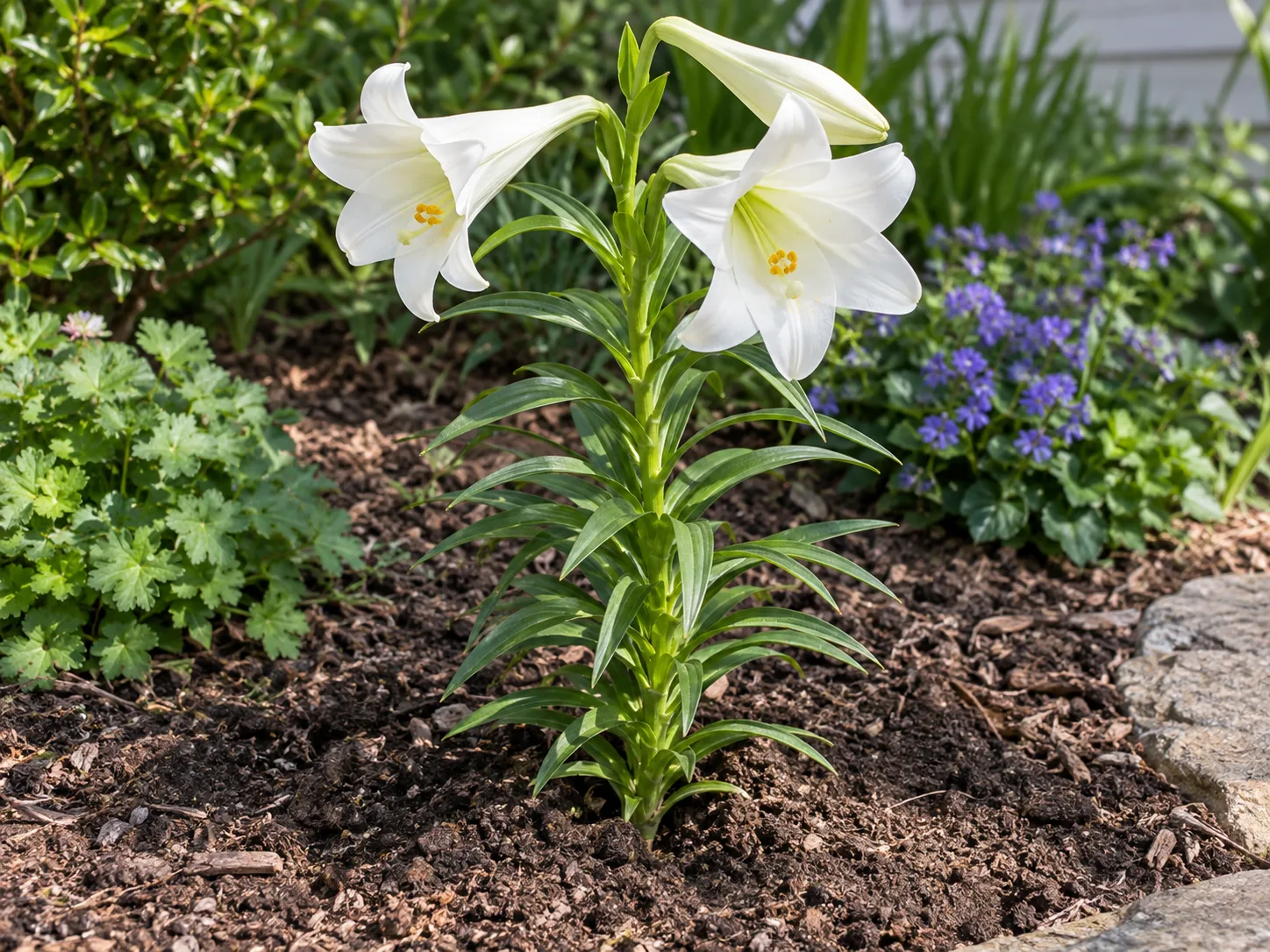
Set the plant in the hole, spread the roots outward, and backfill with the original soil mixed with compost if needed. Firm the soil gently with your hands so there are no large air gaps, but do not tamp it into a hard, compacted plug. Keep the green stems and leaves above grade; burying foliage is not the same as planting the bulb deeply.
Place the bulb at the right depth
For a garden-planted Easter lily bulb, aim for roughly 4 to 6 inches of soil over the bulb, adjusting to the size and position of the bulb in the rootball. Penn State Extension recommends 4 to 6 inches for dormant bulbs, while Melinda Myers advises planting the bulb about 6 inches deep. Both describe the bulb’s position, not a direction to bury the leafy stem to that depth. Penn State Extension Melinda Myers
With a potted plant, the bulb may sit several inches below the visible soil surface, so inspect the rootball gently before setting it. If the top of the bulb is already near the correct depth, do not add another 6 inches over the shoots. Instead, make the hole deep enough for the bulb and roots, then finish the soil around the existing stem without covering the leaves.
Settle the roots and water
Water slowly after backfilling until the soil is evenly moist through the root zone. This settles soil around the roots and reveals whether the site drains; if water remains pooled, clear the channel or move the plant before the problem becomes a winter-long issue. A brief, thorough watering is more useful than keeping the bed continuously soggy.
Add a light layer of mulch if the surface dries quickly, but keep it pulled back from the stems. Mark the location with a small garden marker so you do not dig into the bulb after its foliage dies down. Do not stake the plant immediately unless it is leaning; a stake placed through the root zone can injure the bulb.
Care for the lily through its first summer
For the first few weeks, check soil moisture more often than you would for an established perennial. Water when the upper few inches of soil begin to dry, then let excess water drain away. A recently transplanted root system needs consistent moisture, but “keep it moist” does not mean letting water stand around the bulb.
Watch the leaves for signs of adjustment. A little droop after moving is not proof the bulb has failed; first check whether the soil is dry, whether the plant is suddenly exposed to hot afternoon sun, or whether wind is drying the foliage. If the soil is wet and the stem is collapsing from its base, do not add more water—check drainage and look for soft, foul-smelling tissue.
Keep the plant’s location in mind when mowing, edging, or planting nearby. The stem may die back well before you expect, and a marked spot prevents accidental digging. The bulb can be alive below ground even when the aboveground leaves have completely browned.
Remove faded flowers, keep green leaves
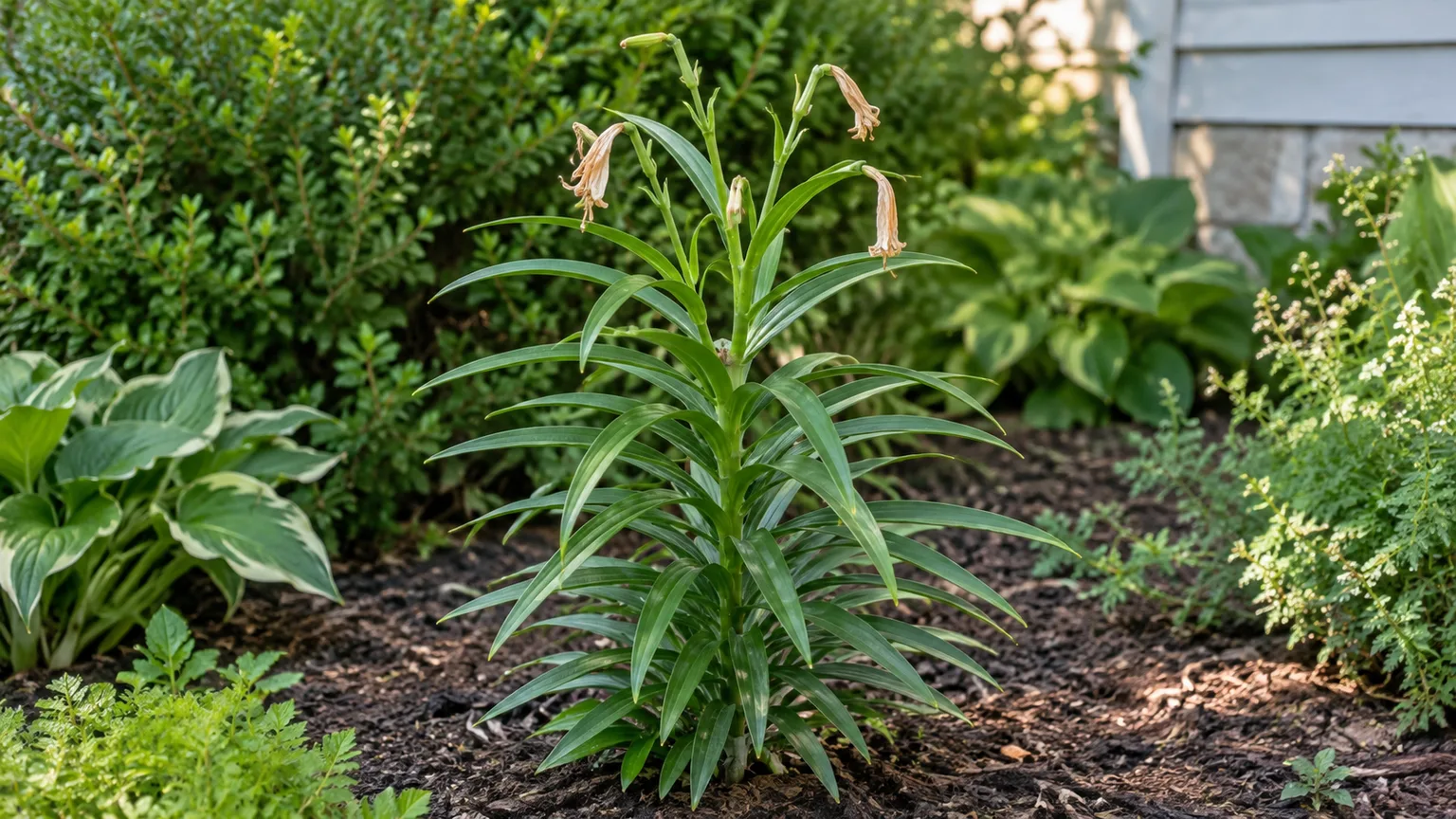
Pinch or snip each faded flower where it joins the stem, and remove any seed pod that begins to form. Deadheading keeps the plant from spending energy on seed and makes the bed tidier, but do not cut the whole flowering stalk while its leaves are green. Penn State Extension specifically recommends allowing leaves and stems to yellow before cutting them back because they help supply energy for the next year’s bloom. Penn State Extension
When the stem finally turns yellow or brown, cut it close to the soil line with clean pruners. Do not braid, tie, or fold the leaves to make the plant look neat; that reduces the leaf area doing the recovery work. If the green foliage is unattractive, let neighboring perennials partly screen it rather than removing it early.
Water and feed with restraint
Continue watering during dry spells while the leaves remain green. Check below the mulch before watering, especially in clay soil or a rainy period; the goal is evenly moist soil, not a wet bulb. Once the foliage yellows naturally and the plant enters dormancy, reduce supplemental watering and let normal seasonal rainfall take over.
If the bed is low in organic matter, a thin compost top-dressing after planting is a gentle way to improve the soil. A bulb or balanced garden fertilizer can be used according to its label if the soil is poor, but a forced lily does not need repeated strong feeding to make up for missed care. Avoid high-nitrogen or off-label doses that encourage soft, floppy growth rather than steady root and bulb development.
Stake a tall stalk only if it leans or is exposed to strong wind, placing the support outside the bulb’s center. Penn State Extension notes that Easter lilies may need staking as they grow. Keep ties loose enough to allow stem movement and remove the stake after the stalk has died back. Penn State Extension
What to expect from next year’s bloom
Do not expect the Easter-season flowers to repeat on the same holiday schedule. In a garden, Easter lilies bloom naturally in summer; Penn State Extension gives July to August as the usual period. A plant moved outdoors after its forced spring display may flower the following summer, but it can also spend a season rebuilding its bulb before it has enough reserves to bloom. Penn State Extension
The bulb’s first year is a recovery year, not a performance test. If it produces healthy foliage but no flowers, review whether it received enough light, whether the leaves were left to die naturally, and whether winter soil stayed well drained. A missing bloom does not by itself mean the bulb is dead.
Over time, a settled bulb may produce offsets and a larger clump, but multiplication is gradual rather than an immediate guarantee. Professor Geoff Dixon’s horticulture article describes lilies forming ancillary bulbs and notes that a low-level lily beetle problem can be managed by picking off beetles and larvae. Use that as a reminder to watch the whole plant, not as a promise that every forced Easter lily will spread quickly. Professor Geoff Dixon
Protect the bulb through winter
Winter survival depends on both cold and moisture. The available hardiness guidance is not uniform: Penn State Extension lists Zones 4 through 8, while Melinda Myers gives Zones 7 through 9 for reliable hardiness and reports success in protected Zone 4 and 5 locations. That difference is a reason to be cautious, not a reason to assume one range applies to every cultivar and yard. Penn State Extension Melinda Myers
In a colder or exposed garden, add a loose layer of mulch after the soil has cooled in fall. Shredded leaves or another airy mulch can reduce rapid freeze-thaw swings; keep the layer light enough not to mat into a soggy blanket, and pull it back in spring before shoots have to push through it. Penn State Extension also recommends fall mulch removed in spring. Penn State Extension
If your winters are colder than the range recommended by your local extension service, or the bed remains wet in winter, consider growing the lily in a deep container with drainage holes. A container is not automatically safer: roots above ground experience colder temperatures than bulbs planted in the earth. Move the pot to a cool, sheltered, frost-protected place when conditions demand it, and avoid a warm living room that interrupts the bulb’s seasonal rest. RHS guidance similarly cautions that container lilies may need frost protection and protection from waterlogging. Royal Horticultural Society
Diagnose weak growth, rot, or a missing lily
Use the timing and texture of the foliage to separate normal dormancy from a problem. Leaves turning yellow gradually after flowering, while the stem remains firm, are usually finishing their seasonal work. An abrupt collapse while the soil is cold and wet deserves a closer look.
| What you see | More likely explanation | First response |
|---|---|---|
| Green leaves droop soon after planting | Transplant stress, dry rootball, wind, or sudden sun | Check moisture and provide temporary afternoon shelter |
| Lower leaves yellow slowly after bloom | Normal aging as the bulb stores energy | Keep watering during dry weather; wait for the stem to brown |
| Stem collapses while soil is wet | Poor drainage or bulb/root rot | Stop watering, improve drainage, and inspect only if the plant is clearly failing |
| Chewed holes appear on leaves | Slugs or a lily-feeding insect such as lily beetle | Check leaf undersides and stems; remove visible pests by hand at low numbers |
| No shoot appears in spring | Late emergence, winter injury, or a lost bulb | Keep the marker in place and wait for the local lily season before digging |
| Leaves return but no flower forms | Bulb still recovering, low light, or foliage cut too early | Preserve the leaves through their natural dieback and reassess next season |
If you see a bright red beetle or fresh holes, inspect the plant and nearby lilies every few days while growth is active. Hand-picking adults and larvae is a practical first response for a small infestation; Professor Geoff Dixon describes this as effective at low levels. Avoid spraying a product without identifying the pest and following its label, especially around pollinators or pets. Professor Geoff Dixon
If the bulb is firm and the soil drains, leave it undisturbed through its natural dormant period. Digging it up repeatedly to check whether it is alive can damage roots and make recovery less likely. If the site is waterlogged, the bulb is soft, or the planting depth was clearly wrong, correct the condition once rather than disturbing it every few weeks.
Keep cats away from Easter lilies
Easter lilies are highly toxic to cats. Penn State Extension warns that every part of the plant, including pollen, can cause severe poisoning if eaten or licked, and advises contacting a veterinarian immediately after exposure. Keep the plant out of reach indoors and do not assume an outdoor bed is safe for a cat that roams through it. Penn State Extension
If a cat chews a leaf or flower, brushes against pollen and grooms it off, or drinks water from a vase containing lilies, contact an emergency veterinarian at once; do not wait for symptoms or try a home remedy. If you cannot reliably keep a cat away from the garden bed, do not plant an Easter lily there. Choose a non-lily alternative instead.
Conclusion
Planting a potted Easter lily outside can save a bulb, but the plant needs time and a suitable site more than a promise of next year’s flowers. Wait until frost risk has passed, acclimate it, plant the bulb deeply in drainable soil, water it in, and leave every green leaf until it yellows naturally. Add winter protection where local conditions call for it, and keep the plant completely away from cats.
Expect the garden’s bloom season—not Easter—to set the calendar. If the lily returns next summer, enjoy the flowers; if it grows leaves without blooming, keep caring for the bulb through its recovery season before deciding it has failed.