21 Poinsettia Arrangement Ideas for the Holidays
Try 21 poinsettia arrangement ideas for tables, shelves, wreaths, porches, and small spaces, with live-plant and cut-stem care tips for longer color.
Poinsettias do not have to arrive in one foil-wrapped pot and stay there until January. Their bold bracts can anchor a formal centerpiece, brighten a narrow console, or become a single stem in a vintage cup. The key is to decide what kind of material you have before choosing the container: a living plant needs drainage and a stable indoor spot, while a cut stem needs a water source, and a faux or paper flower can go almost anywhere.
The colored parts that look like petals are actually bracts; the tiny yellow flowers sit in the center. That structure is why a poinsettia can look full even when an arrangement uses only a few stems. The Royal Horticultural Society explains the difference, and its guidance is useful when you are deciding whether to preserve the whole plant or cut it for a display.
Choose the right poinsettia format before styling
The best arrangement idea depends less on your decorating style than on the way the plant will be used. A potted poinsettia lasts as a living seasonal accent, cut stems make a more flexible floral arrangement, and faux or paper blooms solve problems that water and temperature make difficult.
Live potted displays
A live poinsettia is the simplest choice when you want color for several weeks with very little arranging. Choose a compact plant with firm leaves and bracts, then conceal the nursery pot inside a waterproof cachepot, basket liner, or decorative bowl. Leave the original pot intact so you can water it, drain it, and remove it from the cover when needed.
Potted plants also give you the most height for the least material. One medium plant can act as a focal point on a console, while three mini plants can create a more intentional line across a table. The RHS growing guide notes that both standard and mini sizes are available, so use size as a design tool rather than treating every poinsettia as the same centerpiece.
Cut stems and floral foam
Cut poinsettias are the choice for bud vases, low centerpieces, hanging vessels, and arrangements that need to follow the shape of a table. They are especially useful when a large pot would crowd the place settings. The stems need immediate preparation and a reliable water source, but the payoff is a lighter, more floral look.
For a foam design, use wet floral foam in a waterproof container and keep the foam saturated without flooding the table. For a vase design, choose a container that supports the stems instead of forcing them to splay outward. Richard Jackson Garden’s cut-flower method uses a brief dip in hot water followed by cold water to manage the milky sap before arranging; follow the method carefully and keep the hot water away from children and pets.
Faux and paper arrangements
Faux poinsettias are practical for a porch that may freeze, a high shelf that is hard to water, or a wreath that needs to last for years. Paper and felt versions work for craft projects, party backdrops, and homes where open water is a concern. They also let you repeat a color palette without buying several live plants.
The trade-off is that faux and paper flowers need better texture around them. Add real evergreen sprigs, pinecones, dried grasses, or a natural-fiber container so the arrangement does not look flat. Keep paper and fabric away from candles, heaters, and damp outdoor weather.
Set up poinsettias safely before decorating
Before styling, give a live plant a stable home. Poinsettias prefer bright light away from harsh direct sun, and the RHS recommends keeping them away from cold drafts and hot, dry radiator air. A display on a table a little back from a bright window is often safer than one pressed against the glass or perched beside a heating vent.
Remove decorative foil or a plastic sleeve long enough to check that water can drain. If the pot sits inside a cover, water it at a sink, let excess water run out, and return it only when the outer container is dry. Never let a potted plant stand in a puddle simply because the arrangement is attractive.
Inspect the surface of the potting mix before watering. Poinsettias generally prefer the mix just moist rather than constantly wet; the RHS recommends watering when the surface begins to feel dry. This small check matters when several pots are grouped together, because the plant hidden at the back can be forgotten while the front of the arrangement still looks fresh.
Small-vase arrangements for tables and shelves
Small vessels make poinsettias feel collected rather than bulky. Use odd numbers when you can, vary the heights by a few inches, and repeat one material—clear glass, brass, ceramic, or wood—so the collection looks deliberate. These three ideas work on a dining table, mantel, bookshelf, or narrow windowside ledge.
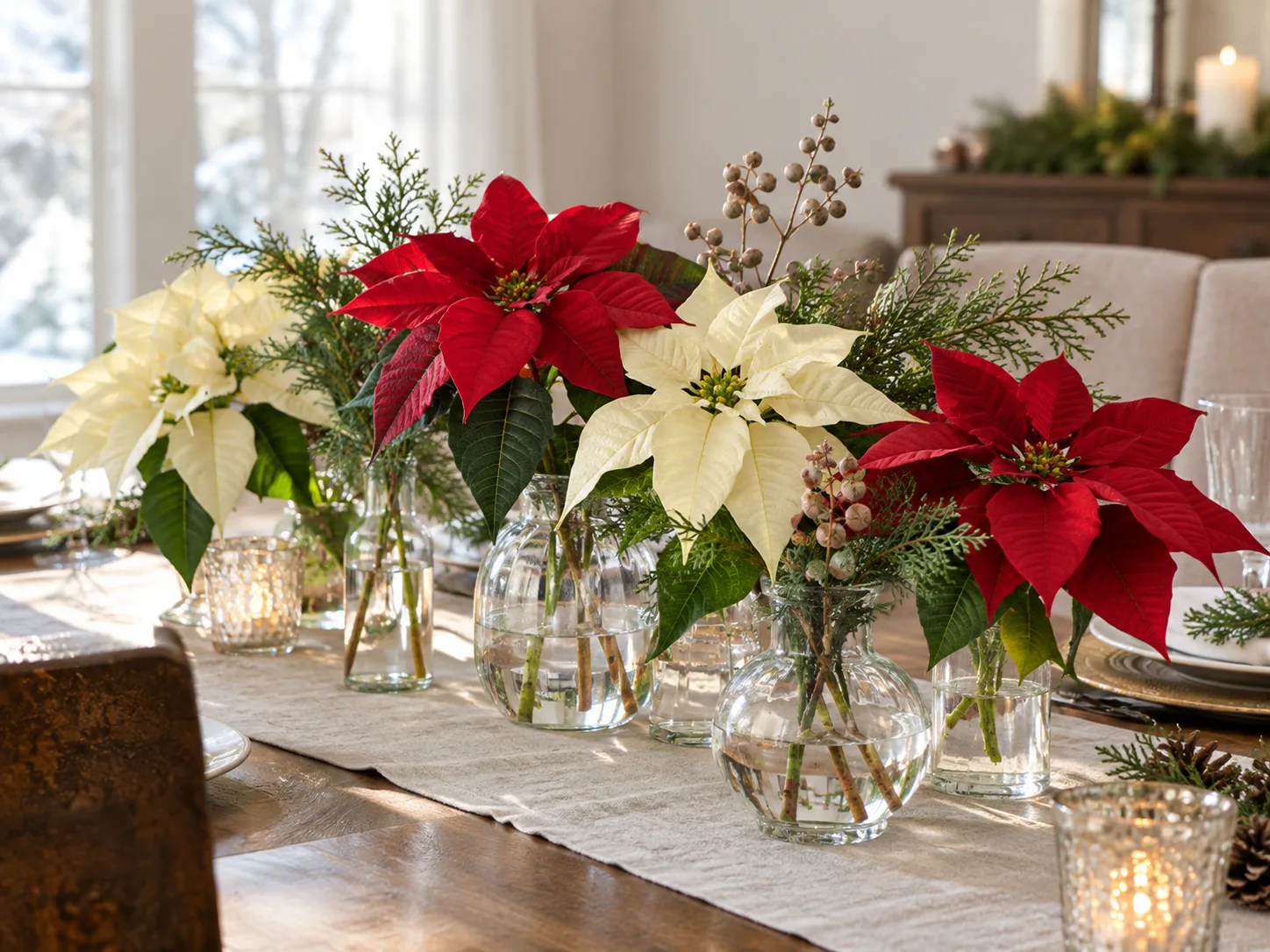
1. A cluster of bud vases. Cut several stems at different lengths and place them in three or five bud vases. Leave some green leaves on the stems and remove others so the bracts do not become one solid block of color. A few slender twigs behind the vases add height without competing with the flowers.
2. Vintage cups and saucers. A teacup gives one stem a generous visual frame without requiring a large bouquet. Use cups that are heavy enough not to tip, fill them with water only after they are on the table, and group two or three cups beside a stack of folded napkins. This is a good option for a tea party because each vessel feels like part of the place setting.
3. A floating-bract bowl. Remove the lower stem and float a single poinsettia head in a shallow bowl for a close-up view of the star shape. Use this only for a short event or photo moment; it is not a substitute for a water source for a whole cut stem. Place the bowl on a waterproof tray and keep it away from table edges.
The cut-flower gallery from Stars for Europe shows why a few well-spaced stems can look more modern than a crowded bouquet. Let the vessel and the negative space do some of the decorating.
Low poinsettia centerpieces for holiday meals
A dinner centerpiece has two jobs: it should be visible from every seat and it should leave room for plates, serving dishes, and arms. A long, low shape is usually more useful than a tall arrangement. Test it from a seated position before adding the final sprig or ornament.
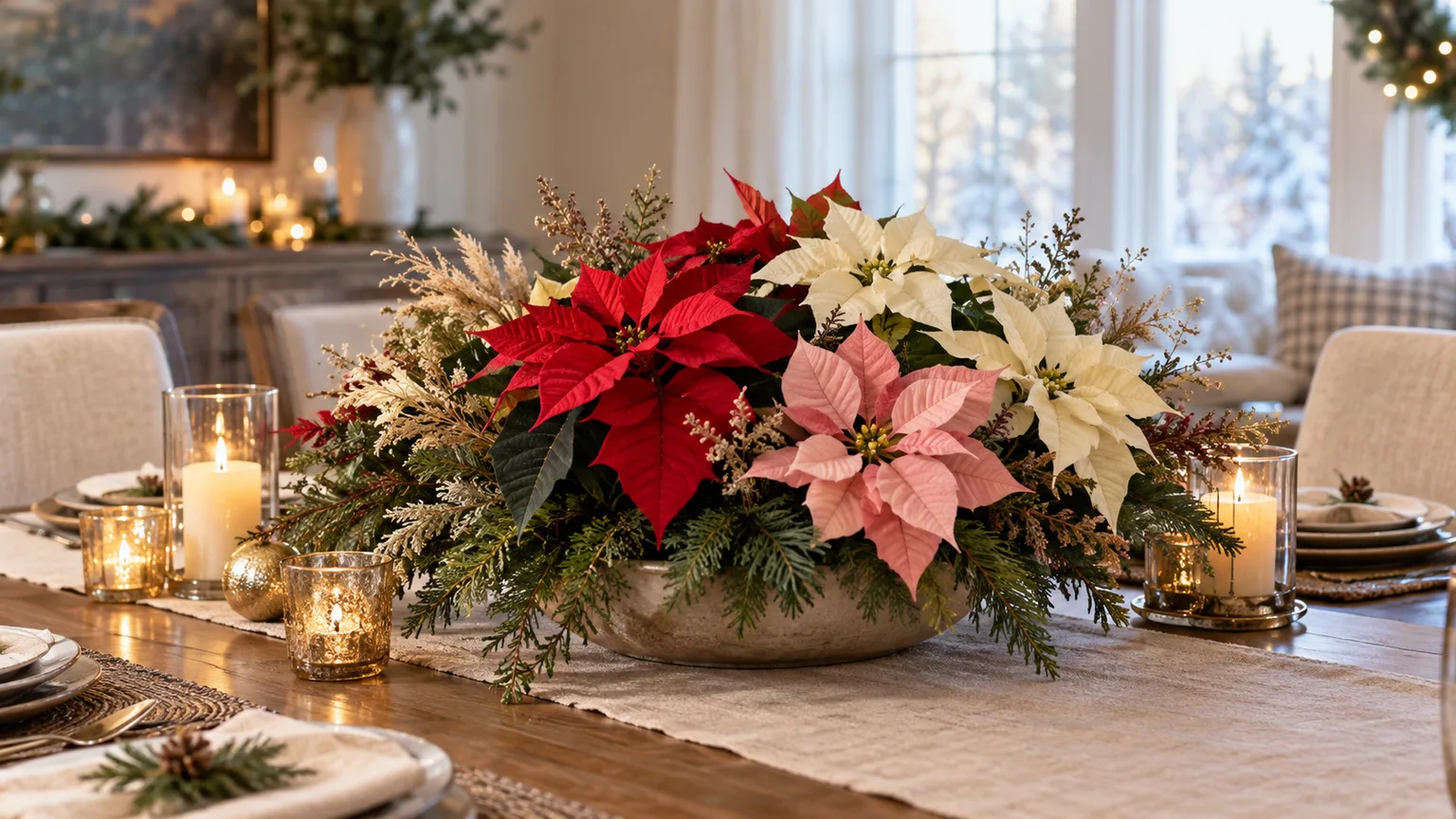
4. A long, low red-and-cream centerpiece. Use a shallow bowl or waterproof trough and place red and cream poinsettias in a loose line rather than a tight mound. Tuck evergreen branches along the rim so the arrangement stretches across the table. Keep candles in separate holders around the outside, not buried where a dry leaf or bract could touch a flame.
5. A mixed-flower winter centerpiece. Pair pink or white poinsettias with white roses, amaryllis, eucalyptus, or other sturdy seasonal stems. Repeat one color in the napkins or glassware, then keep the rest of the palette quiet. The goal is contrast in shape and texture, not a contest between every flower in the room.
6. A poinsettia table wreath. Soak a floral-foam wreath form thoroughly, place it on a waterproof tray, and insert short cut stems around the ring. Leave the center open for a bowl, a hurricane lantern, or a serving-safe decorative object. This creates a strong focal point from above, but it needs frequent checking because foam dries faster at the exposed outer edge.
Mini poinsettias as a table runner or place setting
Mini poinsettias are easier to repeat than standard plants. They can mark a rhythm down a long table, fill a shallow tray, or give each guest a small take-home accent without creating one oversized focal point. Use matching cachepots, or use a deliberately limited mix of containers such as white ceramic and natural fiber.
7. A mini-poinsettia table runner. Line three or five mini plants down the center of the table, leaving open gaps between them. Alternate red, cream, and pink only if the tableware is simple; otherwise choose one bract color and let the greenery provide variation.
8. A place-setting mini pot. Set one tiny plant beside each napkin or at the upper corner of the plate, but keep it on a saucer or waterproof coaster. This works best when the pot is small enough to move before food is served. Add the guest’s name to a separate card rather than attaching paper directly to a wet pot.
9. A pastel trio. Group one pink, one cream, and one soft red mini poinsettia in a shallow tray. Repeat the tray’s color in one detail—perhaps pale ribbon or glass—and stop there. The restrained background keeps the unusual bract colors from looking like unrelated leftovers.
Baskets, crocks, and porch displays
Containers change the mood more quickly than ornaments do. Woven baskets soften a room, old crocks suit a farmhouse entry, and a clean planter makes a red poinsettia look architectural. Always use a waterproof liner or keep the live nursery pots inside the container so the decorative material does not stay wet.
10. A basket full of small poinsettias. Place two or three potted plants in a low basket with their pots hidden by a liner and crumpled paper or moss above the rim. Keep each plant removable so you can water it independently. A neutral basket is especially helpful when the poinsettias are pink, cream, or variegated.
11. A single poinsettia in a vintage crock. Choose a crock with a wide base and use it as a foyer accent, stair-landing display, or fireplace-side color note. One plant is enough; the crock supplies the visual weight. Keep the plant away from a drafty hearth and from any place where a falling bract could touch a heater.
12. A warm-climate porch planter. In a frost-free climate, set a potted poinsettia in a sheltered planter with evergreen or seasonal foliage tucked around the pot. In a cold climate, use a faux plant for the porch and keep the live one indoors. The RHS notes that temperatures below roughly 55–60°F can cause physiological shock, so a pretty porch is not worth sacrificing a live plant to a freeze.
Console tables, shelves, and coffee tables
Living-room arrangements should work with the room’s sight lines. A shelf can take a vertical grouping, a coffee table benefits from one clear anchor, and a console can carry repetition from one end to the other. Do not fill every open spot; the gaps are what keep a seasonal display from becoming visual clutter.
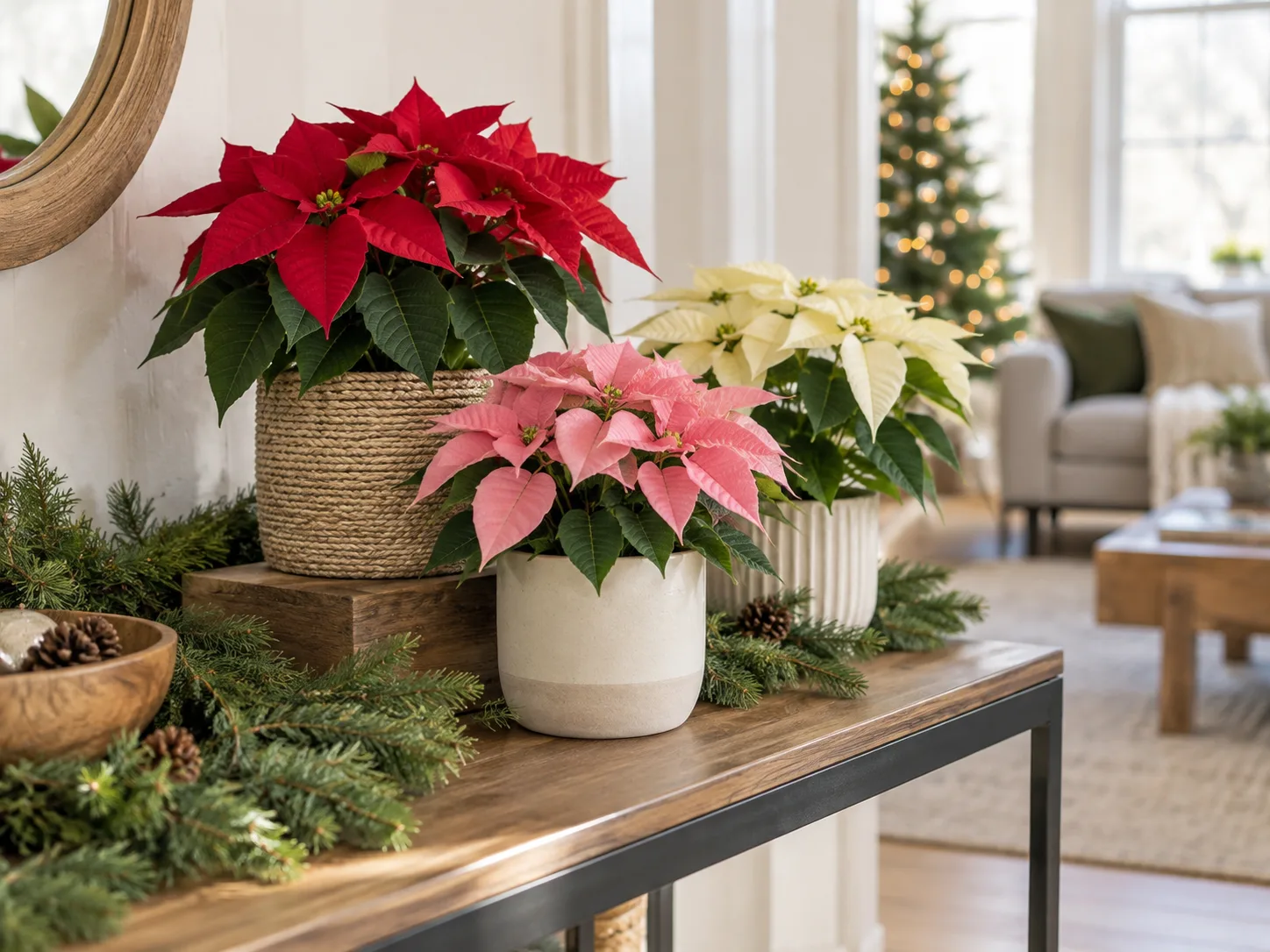
13. A graduated shelf grouping. Put the tallest plant at the back, a medium plant on a stable riser, and a mini plant in front. Remove a few year-round objects rather than layering poinsettias over everything already on the shelf. Repeat the same pot finish once or twice to connect the levels.
14. One poinsettia as a coffee-table anchor. A healthy medium plant in a low, heavy cachepot can be all the holiday decoration a coffee table needs. Place it off-center so people have room to set down a mug, and add a small bowl of pinecones or a single evergreen clipping instead of a second competing centerpiece.
15. A console display with an evergreen sweep. Group plants in two heights at one end of a sofa table and run a loose garland toward the other end. Keep the garland low enough that it does not obscure lamps, art, or the walkway. This arrangement is easy to refresh: replace one tired plant without dismantling the entire display.
Red, pink, white, and tone-on-tone color palettes
Color is easiest to control when you choose one dominant bract shade and one supporting neutral. Red creates the strongest traditional contrast, while white and cream make foliage look more important. Pink, salmon, and variegated plants need a quieter background so their color changes read as intentional.
16. White, blush, and pale-green winter styling. Combine white or cream poinsettias with blush flowers, pale ceramic, and silver-green foliage. This palette suits a bright room and can stay in place after Christmas because it reads as winter rather than as a single holiday symbol.
17. A red-and-gold monochrome display. Use red poinsettias with gold glass, brass, or warm wood, then add only green foliage. The limitation makes the display look polished. Keep metallic ornaments low and stable, especially on a table where they could roll into a candle.
For more color and container combinations, the practical styling examples from Lia’s Flowers are useful inspiration, but translate any florist-scale design to the space, light, and water access in your own home.
Greenery, dried texture, and berry pairings
Poinsettias already have broad bracts, so the best companions usually add a different line or texture. Evergreen gives density, eucalyptus gives a gray-green counterpoint, dried grasses add air, and pinecones or berries supply small points of interest. Use clean, dry materials and avoid anything that sheds heavily over food.
18. Poinsettias with dried grasses. Place dried wheat, bunny tails, or fine grasses behind a group of red, cream, or rust-toned poinsettias. The grasses should sit higher and farther back than the bracts, creating a soft outline rather than covering the flowers.
19. Evergreen and faux poinsettias for an outdoor-facing display. Combine durable faux poinsettia heads with cedar, fir, or another long-lasting evergreen in a porch basket or protected entry display. This is a better choice than exposing a live poinsettia to freezing weather, and you can reuse the arrangement next year. Keep natural evergreen fresh and away from indoor flames as it dries.
Wreaths and hanging poinsettia displays
Wreaths and hanging designs give you the drama of a large arrangement without taking table space. They are also where faux and cut materials make the most sense. A living potted plant should not be suspended unless the container, drainage, and weight are all designed for it; a cut stem needs a tube, vase, or water-holding foam rather than a bare tie.
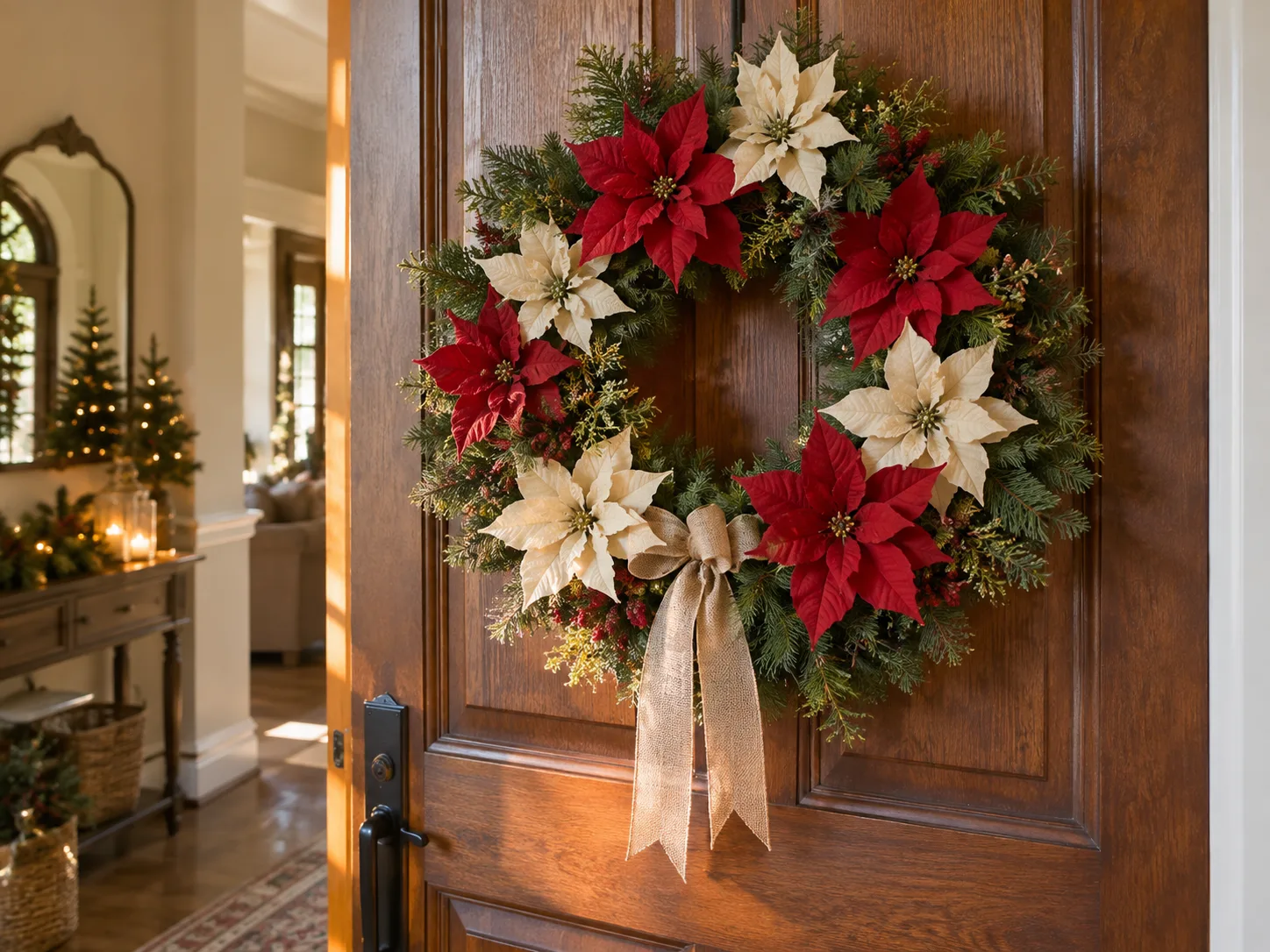
20. An indoor paper or felt poinsettia wreath. Build a wreath from paper or felt flowers and add evergreen-colored fabric, ribbon, or dried material. Hang it on the interior side of a door where it stays dry and protected. This is a good family project because the arrangement can be stored flat and reused without watering.
21. A hanging cut-stem arrangement. Suspend small water-filled tubes or tiny vases from a sturdy rail, a branch, or a ceiling-mounted support, and place one cut poinsettia in each. Keep the vessels secure, below eye level, and away from a doorway that could bump them. A small cluster over a sideboard feels more considered than a single oversized hanging bundle.
Keep the arrangement fresh through the season
The display will last longer when care is matched to the material. A cut arrangement is a short-lived floral design, a potted arrangement is a living plant, and a faux arrangement needs only dusting and safe storage. Do not use one care routine for all three.
Cut-stem care
Prepare a cut stem as soon as it is cut. Richard Jackson Garden recommends snipping with a sharp tool, dipping the cut end into hot water at about 60°C for 20 seconds, then into cold water for 10 seconds before placing it in a vase or wet foam. Use a stable heatproof cup, handle the stem by the upper portion, and let the water cool safely before clearing it away.
Keep the vase topped up, change the water when it becomes cloudy, and recut the stem if it begins to collapse. Place the arrangement in bright ambient light but away from a radiator, heating vent, strong sun, and fruit bowl. Stars for Europe reports that prepared cut poinsettia stems can stay bright for about two weeks, although the actual life depends on the stem, room temperature, and water hygiene.
Potted-plant care
Check the potting mix with a finger rather than watering on a fixed calendar. When the surface feels dry, water thoroughly, allow the pot to drain, and empty any outer cover or saucer. Bright indirect light and an even, comfortable room are more useful than a sunny window that becomes cold at night.
If you want to keep the plant after the holidays, remove it from the decorative grouping so it can receive enough light and be watered individually. The RHS describes poinsettias as tender seasonal houseplants that can be grown on, but reblooming requires pruning, summer growth, and controlled short days. Treat that as a separate project rather than assuming a centerpiece will automatically flower again next year.
Heat, cold, flame, and sap safety
Keep a live poinsettia away from cold drafts, unheated porches, hot radiators, and doorways that open directly to winter air. Cold damage can show up as leaf and bract drop days after exposure, so buying a healthy plant and transporting it wrapped on a mild day is part of arrangement success, not an afterthought.
Broken stems release milky sap. The RHS advises avoiding ingestion and contact because the sap can irritate skin and eyes; wear gloves when cutting several stems and wash your hands afterward. Poinsettias are not a reason to panic, but they are still plants that should not be eaten. Keep cut stems, fallen leaves, floral pins, and small decorative pieces away from children and animals that might chew them.
Use flameless candles inside arrangements or keep real candles in substantial holders with clear space around them. Dried grasses, paper petals, ribbon, and evergreen become more flammable as they dry. A beautiful centerpiece is not successful if a candle can brush it when someone reaches for a serving dish.
Shop and scale the display to your room
Start with the surface, not the plant. Measure the usable length of the table or console, leave a clear path for hands and serving dishes, and decide whether the arrangement will be seen from one side or all sides. Then choose the format that fits: cut stems for a low, flexible centerpiece; mini pots for a repeated runner; one potted plant for a coffee table; and faux materials for outdoor or high-maintenance locations.
For a dining table, look across the arrangement from a seated position and keep the main mass low enough for conversation. For a shelf, use a stable riser and protect the surface from water. For a small apartment, one plant with a strong container often looks more intentional than several plants squeezed together. For a porch in a freezing climate, choose faux poinsettias and save the live plant for a bright, warm room.
Finally, edit one thing out. Poinsettias already provide saturated color and a recognizable shape, so the arrangement usually improves when you remove one ornament, one filler stem, or one extra container. Choose a clear focal point, give it room to breathe, and let the plant do the festive work.
Conclusion
The most successful poinsettia arrangement is the one that suits both the room and the material. Use a potted plant for lasting color, cut stems for flexible centerpieces, and faux or paper blooms for wreaths, porches, and reusable projects. From a single vintage cup to a long low table wreath, the same principles keep the result balanced: stable containers, a restrained color palette, enough negative space, and care that respects water, temperature, sap, and flame safety.