10 Plants for Sandy Soil: Flowers, Grass, and Groundcover
Choose ten plants for sandy soil—from butterfly weed and lavender to little bluestem—with regional cautions, planting tips, and a practical first-season water plan.
Sandy soil is easy to dig, warms quickly in spring, and lets rain drain away fast. That last trait suits plants that dislike waterlogged roots, but it also means a new transplant can dry out between showers and nutrients can wash below the root zone. The best solution is not to water everything constantly or turn the whole bed into rich, damp loam. It is to match plants to the site, improve only what needs improving, and help each new planting establish.
The ten choices here cover flowers, groundcover, grass, and foliage, with different strengths and trade-offs. Several handle lean, fast-draining soil once their roots spread; none is drought-proof on planting day. Use your local extension office or native-plant society to check hardiness, native range, and invasive status before buying a cultivar.
Check whether the bed is truly sandy and dry
Pick up a small handful of moist soil and rub it between your fingers. Sand feels gritty, and a squeezed handful usually falls apart instead of holding a firm ball; sandy loam may feel gritty but stay together briefly. Colorado State University Extension describes this feel test as a useful estimate, while a soil lab can give a more reliable texture and fertility reading. Its texture guide explains how sand, silt, and clay proportions shape the texture name.
Do not infer every garden condition from texture alone. A sandy-looking bed can sit over compacted construction fill, have a high water table, receive runoff from a roof, or dry out under a south-facing wall; each creates a different root environment. Notice how long water stands after rain, how quickly a test hole drains, how many hours of direct sun the site receives, and whether plants wilt between ordinary rain events.
True sand drains freely partly because its larger particles leave wider spaces for water to move through. Utah State University Extension notes that sand also holds fewer nutrients on particle surfaces than finer soils, so frequent irrigation or excess fertilizer can leach resources beyond shallow roots. Yet fast drainage is an advantage for lavender, stonecrop, and other plants that decline in persistently wet ground. The extension’s sandy-soil guide is based on Utah conditions, so use its plant list regionally rather than as a universal planting map.
Match plants to the job, sun, and region
Start with the space you need to fill. A creeping groundcover, an ankle-high border, a tall flowering screen, and a grass clump cannot substitute for one another even if all tolerate dry soil. Decide whether you want spring-to-fall color, a pollinator patch, winter structure, a container spiller, or lower water demand after establishment.
Then sort by sun and climate. Most plants below perform best in a bright, open bed; little bluestem and the flowering perennials may tolerate some variation by species and cultivar, but deep shade changes the list. The RHS and BBC Gardeners’ World both emphasize choosing for the actual soil and site, not just a plant’s drought label. The RHS guide to plants for sandy soils and Gardeners’ World’s plants for light, stony soil are useful cross-checks, especially for the general relationship between quick drainage and moisture needs.
| Plant | Best garden job | Site fit | Main watch-out |
|---|---|---|---|
| Butterfly weed | Native pollinator patch | Full sun; dry to average soil | Slow to emerge; dislikes root disturbance |
| Blanket flower | Long, bright color | Sun; lean, sharply drained ground | Often short-lived; seedlings may vary |
| English lavender | Fragrant edging | Full sun; dry, well-drained soil | Wet winters and humid climates can shorten its life |
| Little bluestem | Upright texture and fall color | Full sun; dry to average soil | Needs space; local ecotype is best where available |
| Moss rose | Low annual color | Hot sun; quick drainage | Frost-tender annual; self-sowing varies |
| Russian sage | Airy, late-season bloom | Full sun; dry, well-drained soil | Mature spread can overwhelm a small bed |
| Angelina stonecrop | Low, spreading groundcover | Sun; lean soil with excellent drainage | Can thin or rot in shade and wet ground |
| Tickseed | Summer flowers | Sun; well-drained average to dry soil | Species and cultivars differ in lifespan and spread |
| Yarrow | Pollinator-friendly flower heads | Sun; dry to average soil | Rhizomes can move beyond the intended patch |
| Purple coneflower | Upright flowers and seedheads | Sun; average to dry, well-drained soil | Needs regular moisture while getting established |
Think of the table as a shortlist, not a guarantee. A plant described as suitable for sandy soil can still fail in a cold-wet winter, an intensely hot inland yard, salty coastal spray, or a shaded bed. For native value, choose a species native to your region and a nursery source that can identify its origin; “native” on a label does not mean native everywhere in the United States.
Ten plants that earn a place in sandy soil
These choices are not ranked. Pick the combination that matches your light, climate, space, and the kind of garden you want. Extension and horticultural references support many of these as dry-soil or sandy-soil candidates, but a plant’s local performance still depends on species, cultivar, drainage, and establishment.
Butterfly weed for a native pollinator patch
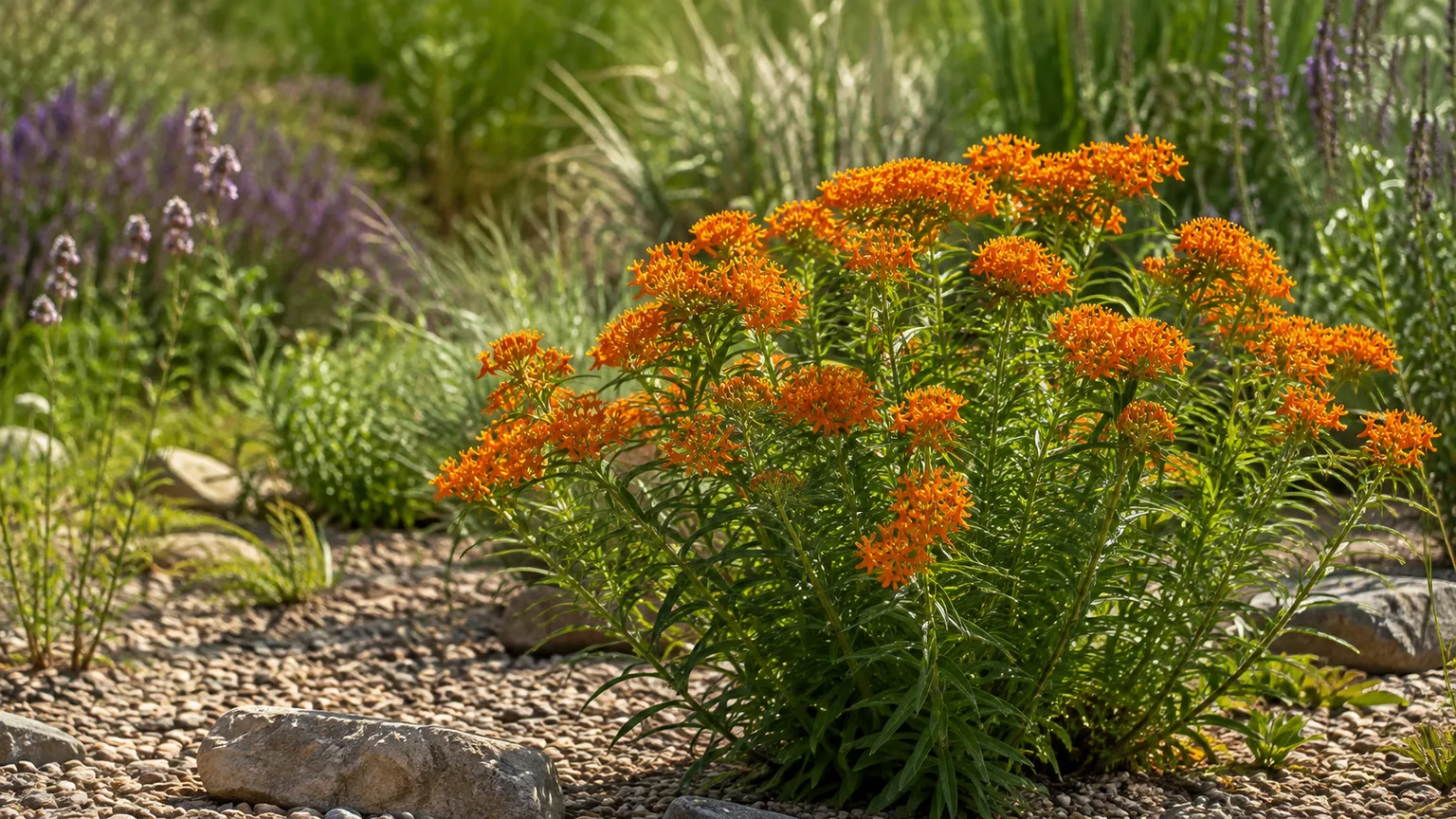
Butterfly weed (Asclepias tuberosa) is a North American milkweed with vivid orange flower clusters and a deep taproot. It is a strong choice for an open, sunny spot with lean, well-drained soil, where its roots can stay in place and the plant can support pollinators. Epic Gardening includes butterfly weed among its flowers for sandy soil, and its sandy-soil landscape list also discusses milkweed in poor soils.
Give it time: butterfly weed can emerge later than neighboring perennials in spring, and it may take more than one season to look established. Avoid digging or dividing it once rooted because the taproot resents disturbance. If you want a monarch host plant, confirm that the species is native to your area and do not treat one milkweed species as a substitute for regionally appropriate habitat.
Blanket flower for long color in lean ground
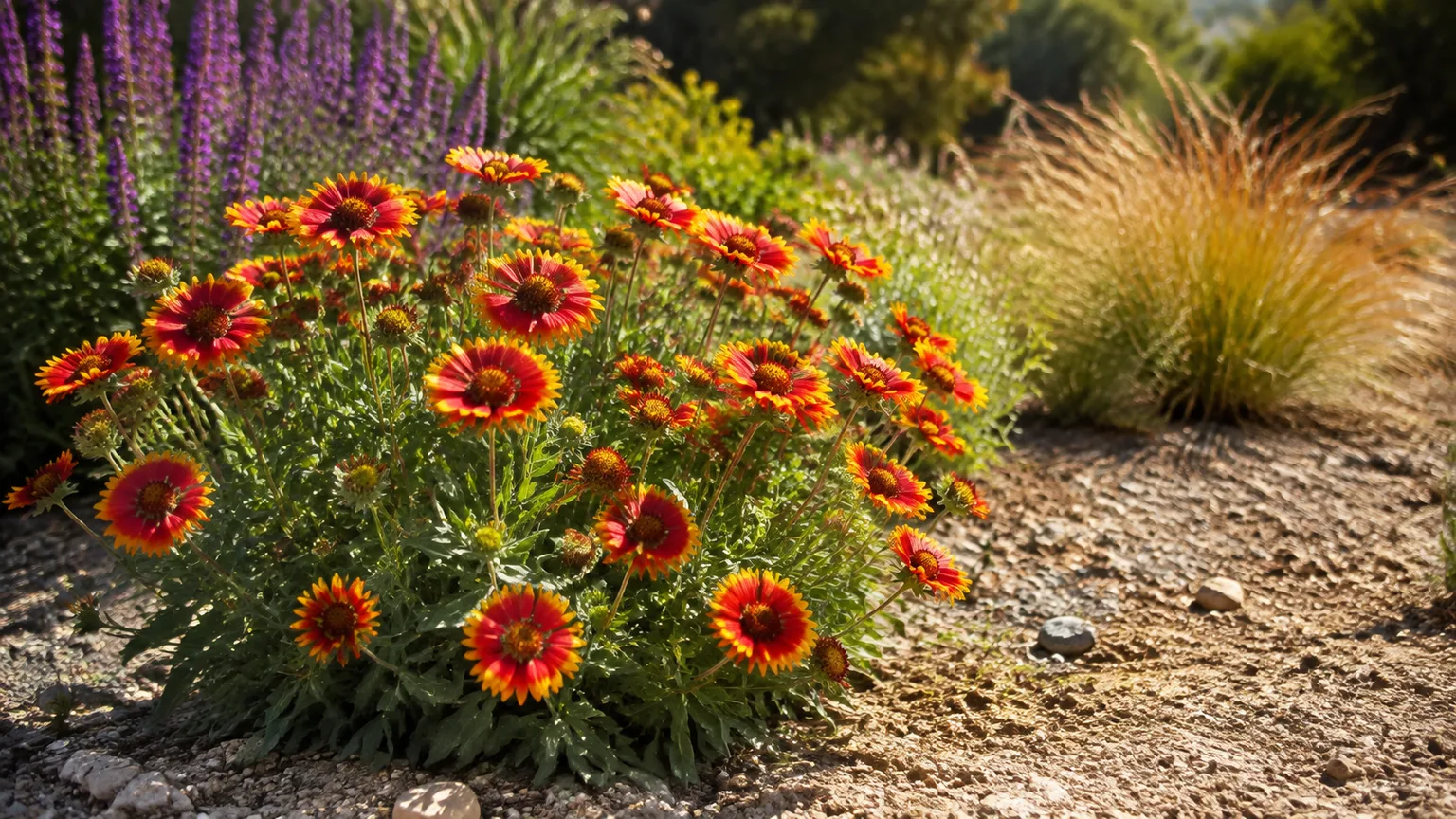
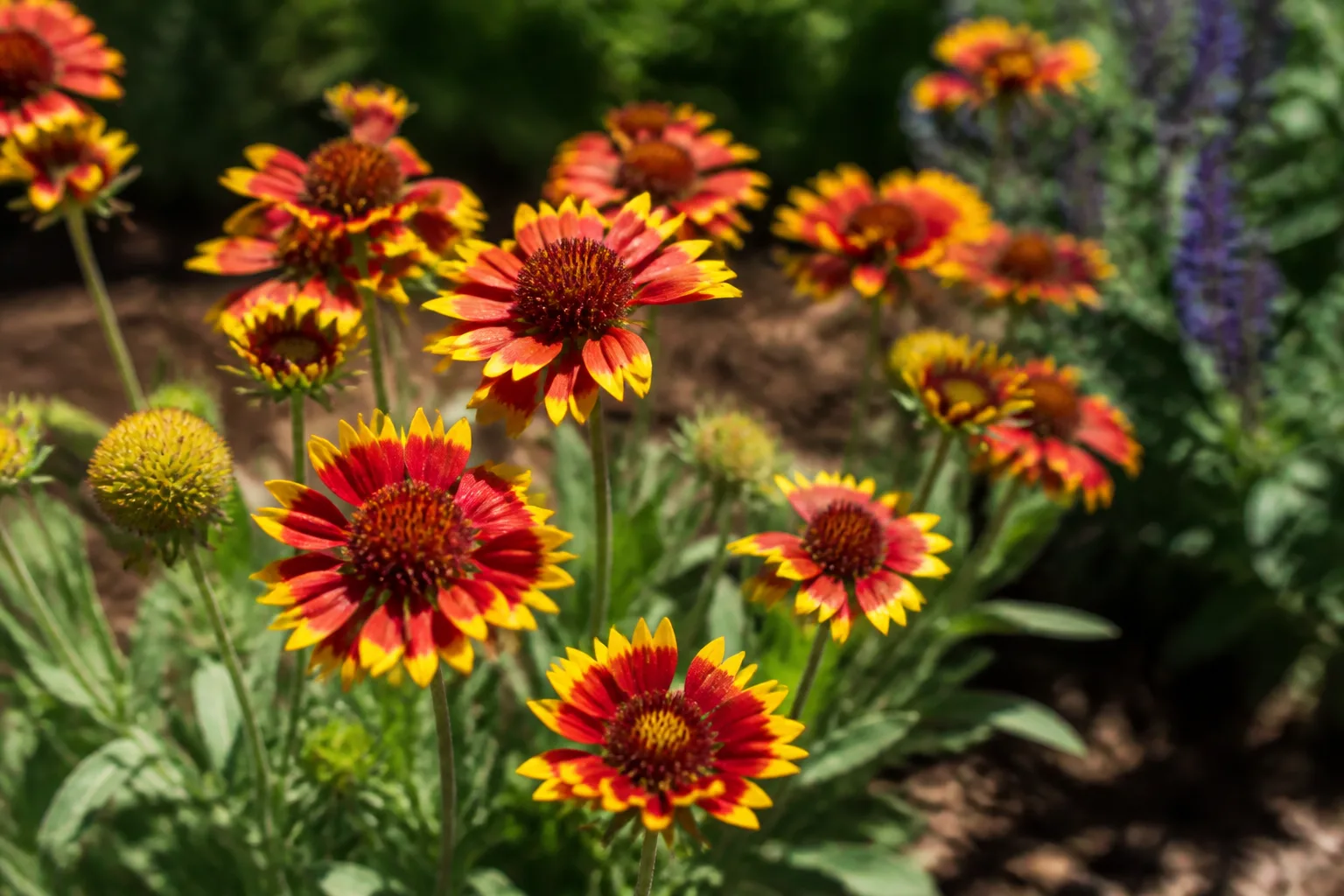
Blanket flower (Gaillardia cultivars) brings red, orange, and yellow daisy-like blooms to dry borders, slopes, and gravelly edges. It tolerates lean soil better than many lush, high-feeding annuals, and its flowers can continue through summer when spent blooms are removed. Epic Gardening’s sandy-soil flower guide recommends blanket flower for poor, dry ground with good drainage.
Use it where you can accept a relaxed, sometimes short-lived perennial. Some varieties reseed, while seedlings may not resemble the parent; deadhead if you want to limit volunteers, or leave a few seedheads for a looser planting. Do not enrich a blanket-flower bed heavily just to make it look more fertile: too much vigor can mean leafy growth instead of the sturdy, flower-rich habit you chose it for.
English lavender for scent and a dry border
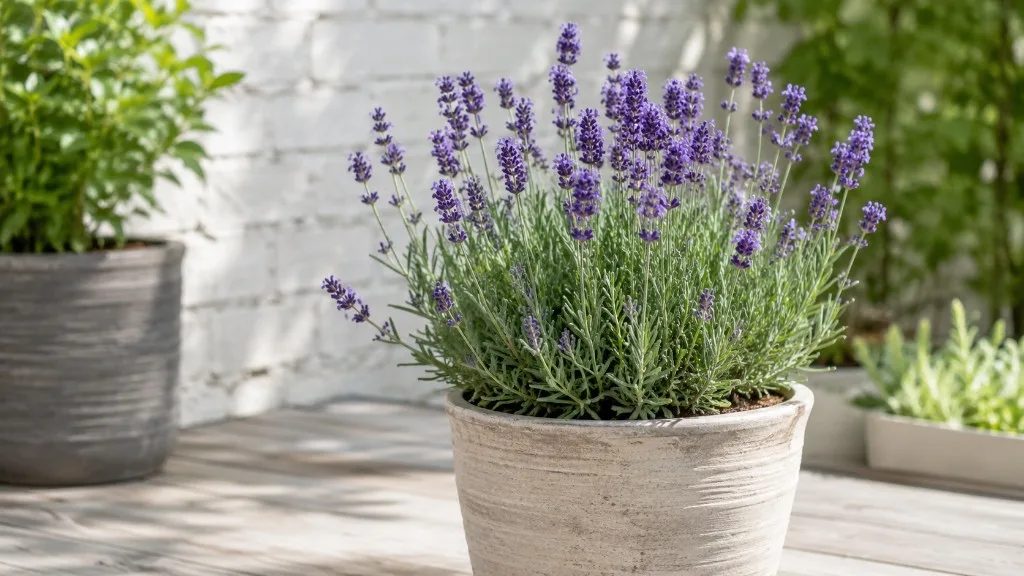
English lavender (Lavandula angustifolia) is a good fit where summers are sunny and the crown will not sit in winter-wet soil. Its evergreen-gray foliage and summer flower spikes work as a low hedge, path edging, or pollinator-friendly focal plant. The RHS lists lavender among its choices for sandy soils, while Gardeners’ World notes its suitability for light soil and full-sun edging.
The key is drainage, not neglect. Give lavender a broad, sunny position, avoid burying the woody crown, and do not keep the root zone constantly moist. In humid regions, select a locally recommended cultivar and provide strong air movement; in colder areas, winter survival depends on the cultivar and local conditions. A light trim after flowering is safer than cutting hard into old, bare wood.
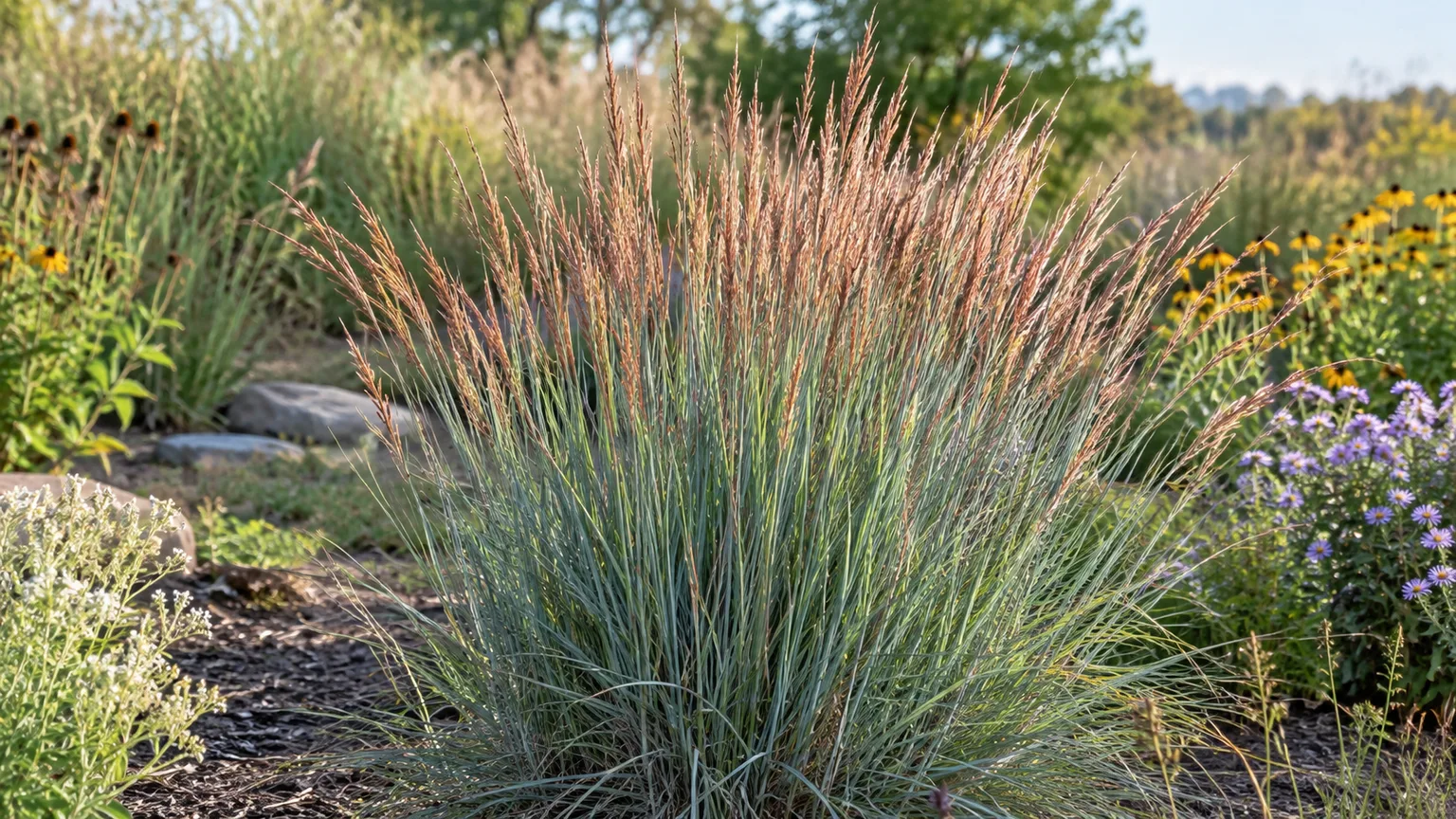
Little bluestem for movement and fall color
Little bluestem (Schizachyrium scoparium) is a warm-season bunchgrass valued for narrow blue-green leaves that develop bronze, copper, or reddish tones later in the year. It adds a different shape from the flowering perennials and can provide vertical texture without asking for a rich, damp bed. In much of North America it is native, but local ecotypes are preferable where available because regional climate and provenance affect performance and wildlife value.
Plant it in full sun and leave room for the mature clump rather than squeezing it into a tight edging. It can look modest early in the season, then develop its strongest color and structure in late summer and fall. Water a new clump while roots settle in; after establishment, avoid routine fertilizer that would push soft, floppy growth.
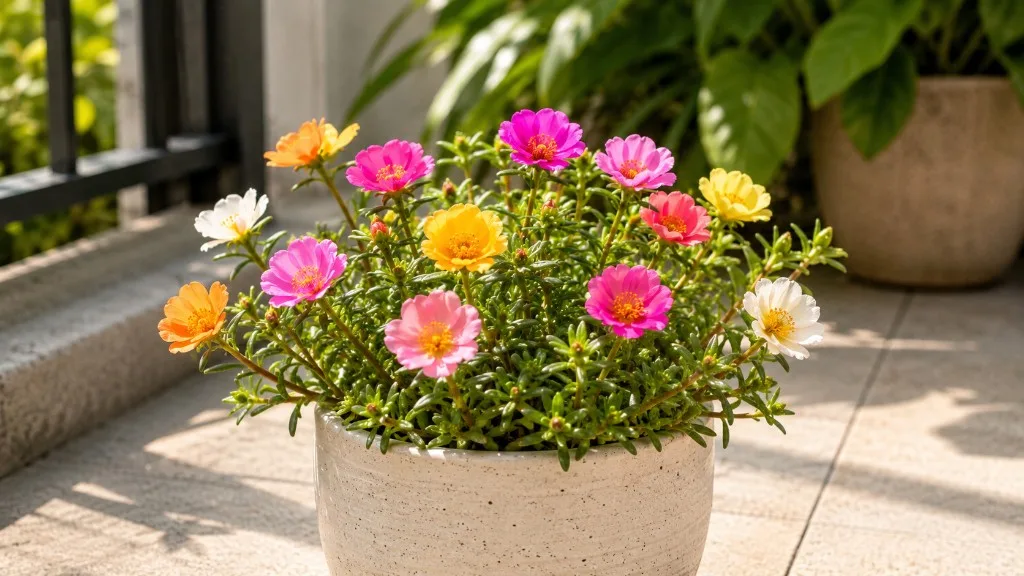
Moss rose for hot, dry edges and containers
Moss rose (Portulaca grandiflora) is a low, spreading annual with succulent leaves and bright flowers that open in strong sun. It suits the hottest edge of a bed, a rock garden, or a container with drainage holes, where more moisture-loving flowers would struggle. This is a seasonal color plant rather than a permanent perennial, so use it to fill gaps while slower plants establish.
Wait until frost danger has passed before planting outdoors, and let the surface dry slightly between waterings. A container may still need water more often than an in-ground planting because its small root zone heats and dries quickly. Some types self-sow, but do not count on seedlings returning true to a named cultivar or surviving a cold winter.
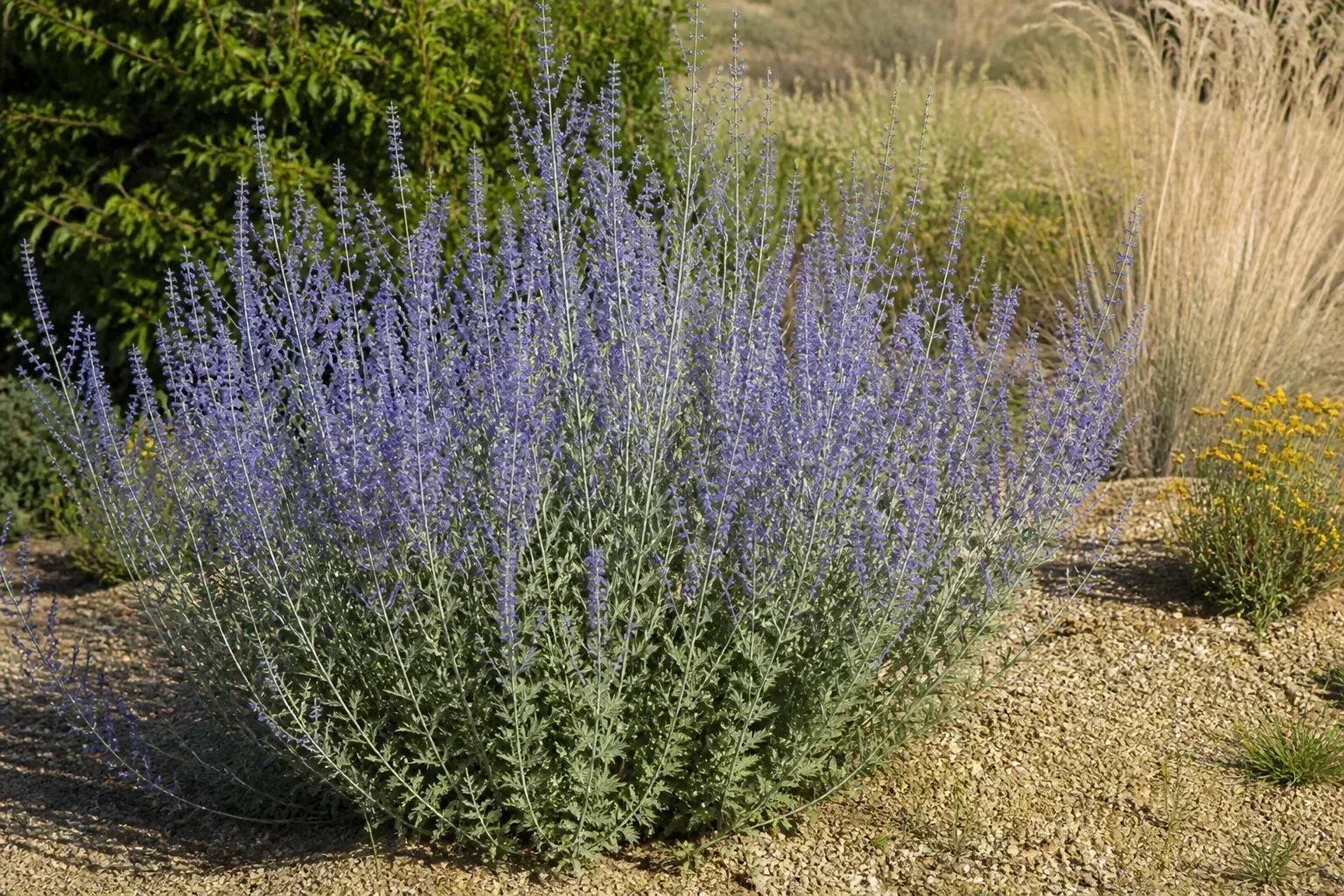
Russian sage for a tall, airy flower display
Russian sage (Salvia yangii, formerly Perovskia atriplicifolia) forms a woody-based clump with silvery stems and blue-purple flower spikes. It makes a useful backdrop or loose screen in a sunny border and tolerates lean, sharply drained soil once established. Epic Gardening includes it among its flowers for sandy soil, while the RHS describes sandy-soil planting combinations that use similarly drought-suited, pollinator-friendly perennials.
Plan for width: mature plants can spread several feet, and a crowded, shaded, or heavily fertilized site may produce a floppy shape. Give it room and prune according to the local growing season, usually cutting back in late winter or early spring where it dies back. It is not a small, tidy edging plant; choose a compact cultivar only after checking its actual mature dimensions.
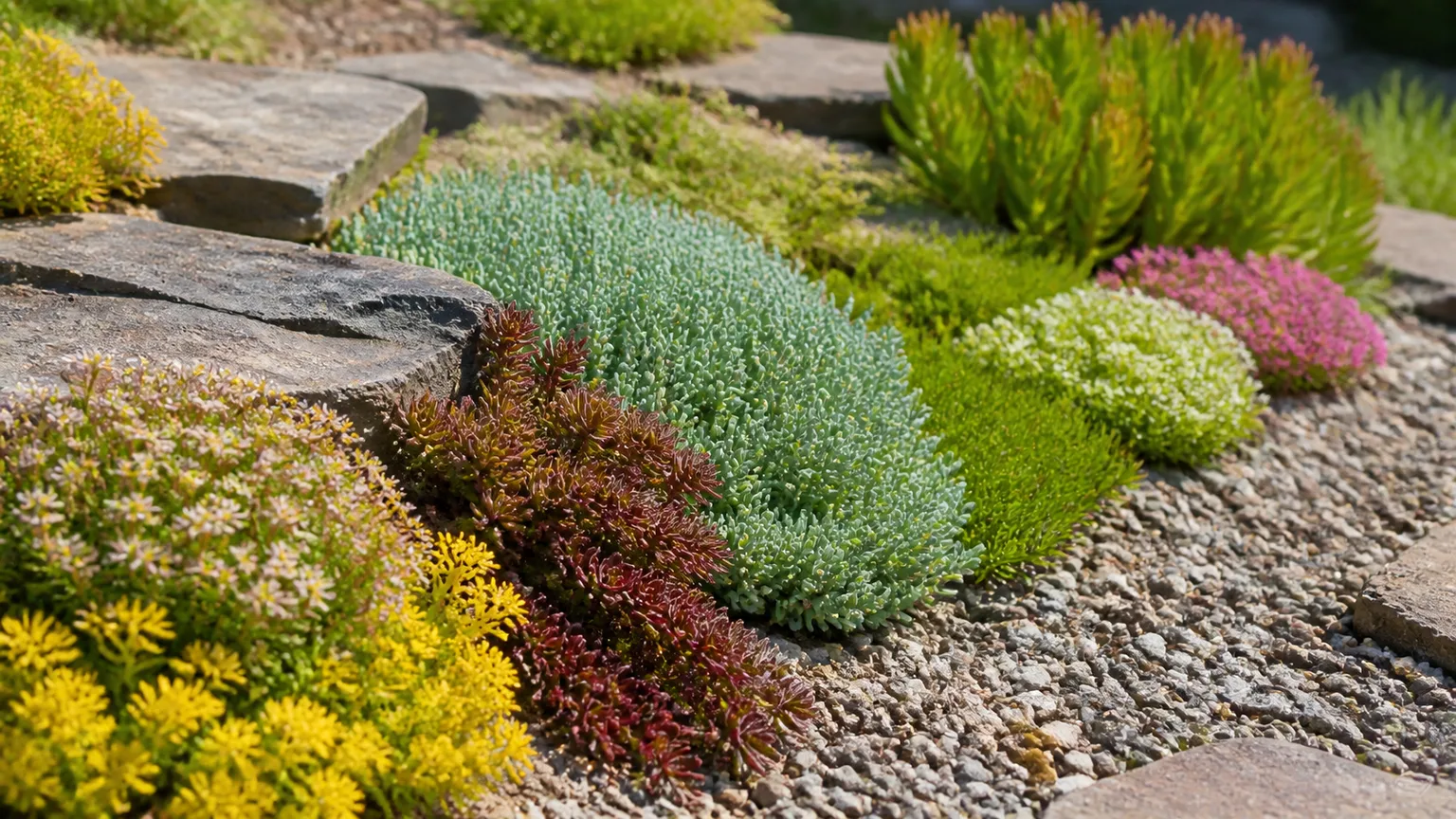
Angelina stonecrop for a low, spreading mat
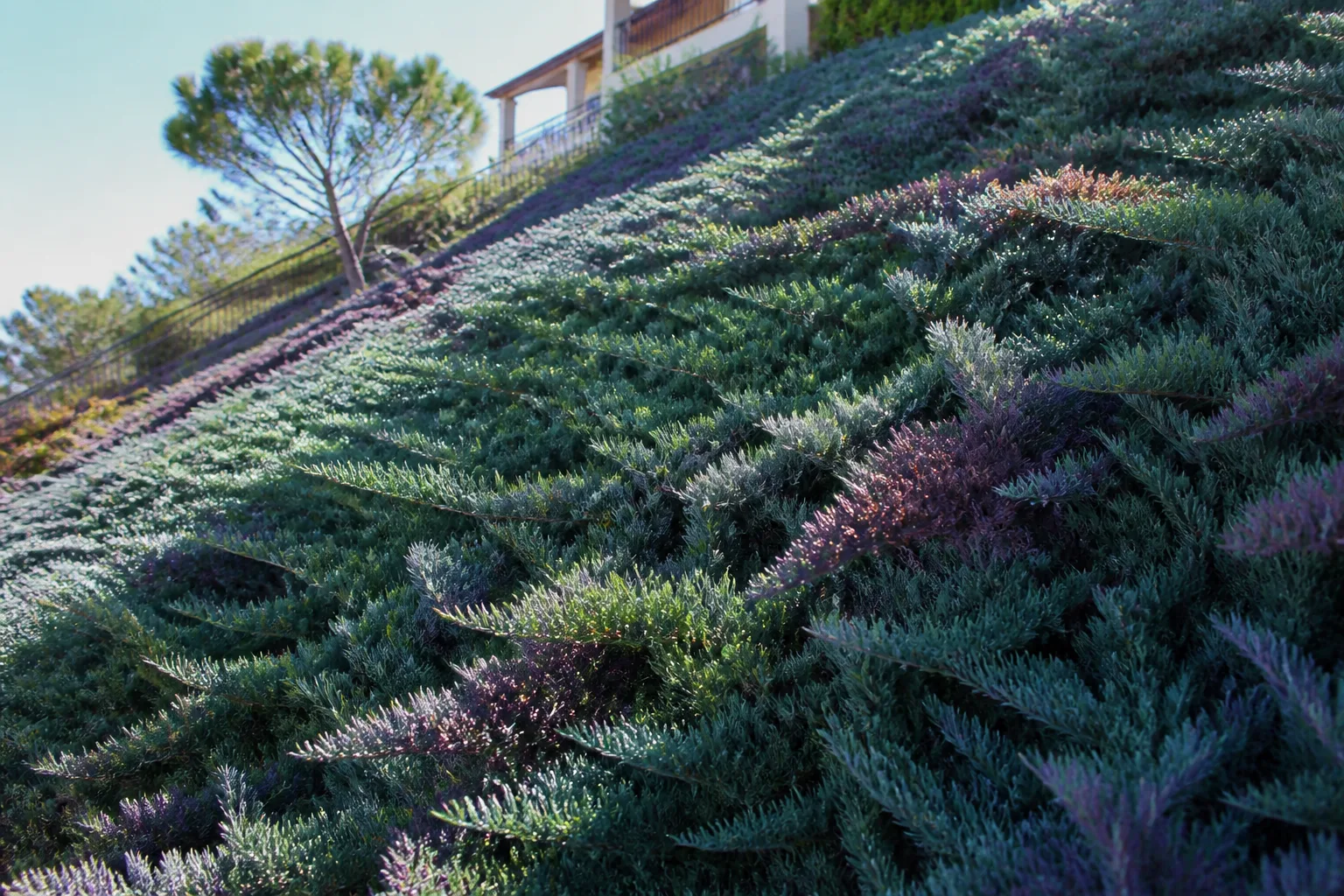
Angelina stonecrop (Sedum rupestre ‘Angelina’) is a low-growing succulent groundcover with needle-like foliage that can turn gold or orange in strong sun and cool weather. It is useful along a sunny path, at a retaining edge, or among stones where a tall perennial would be out of scale. Sedums appear repeatedly in horticultural lists for dry, well-drained sites; Epic Gardening’s landscaping plants for sandy soil includes stonecrop as a flexible groundcover group.
Its tolerance has limits: a mat that thrives on a sunny slope may thin in dense shade or rot if winter rain keeps the crown wet. Keep it away from plants that need frequent irrigation, since their watering schedule can leave the stonecrop too damp. Check the cultivar’s mature spread before planting near a walkway; a groundcover can still need occasional trimming at its edges.
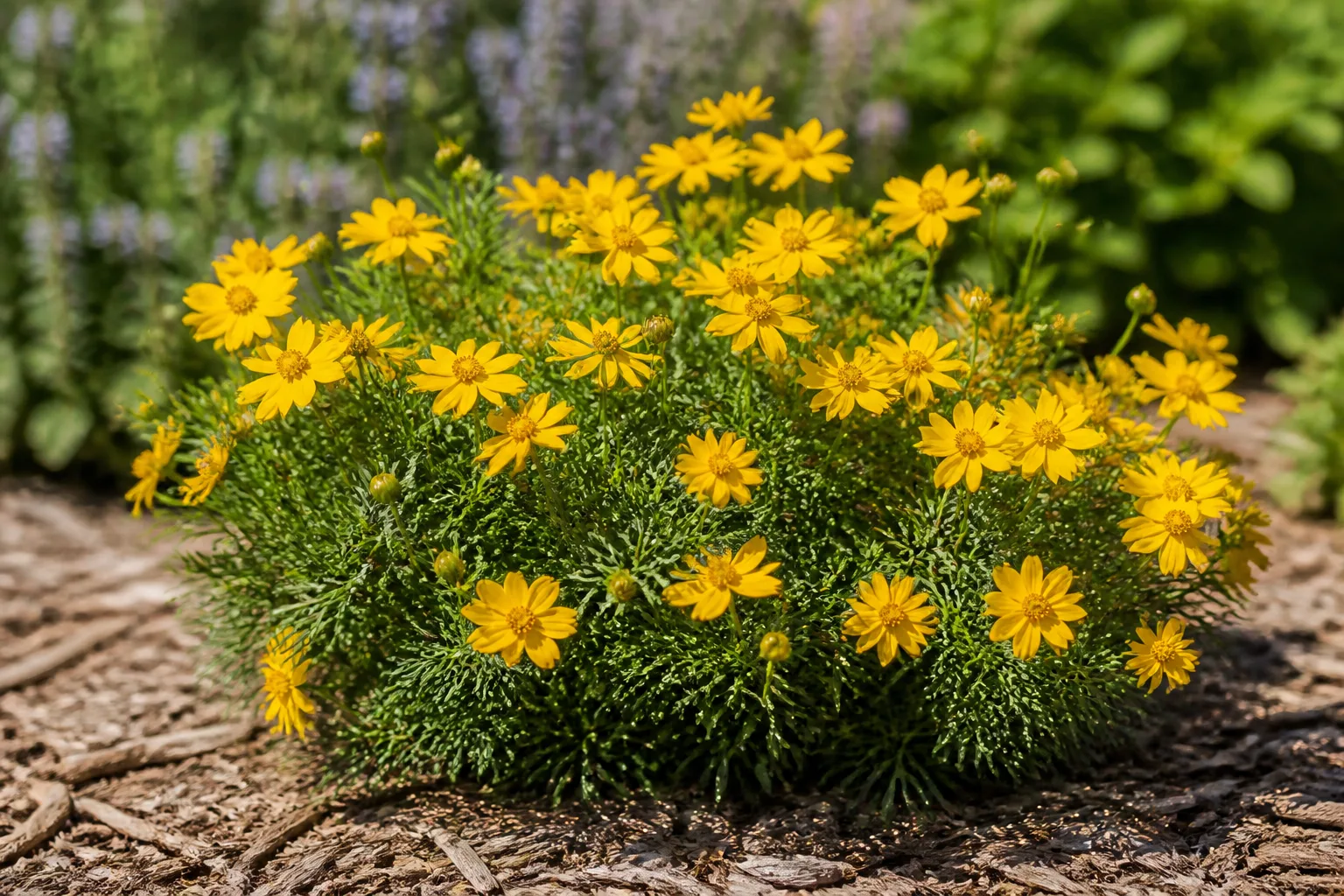
Tickseed for repeat summer flowers
Tickseed (Coreopsis species and cultivars) offers bright yellow, pink, or bicolored flowers above a light, airy mound. It is a practical front-of-border choice when you want a long display without a heavy, thirsty foliage mass. The RHS and Epic Gardening both list coreopsis among the options for light or sandy ground, but the genus includes annuals and perennials with different habits.
Read the nursery label for mature height, hardiness, and whether the plant spreads or self-sows. Deadheading can keep a bed looking tidy and may encourage further bloom, but it is not a requirement for survival. Water transplants as they establish; once rooted, avoid the cycle of frequent shallow sprinkling that keeps only the soil surface damp.
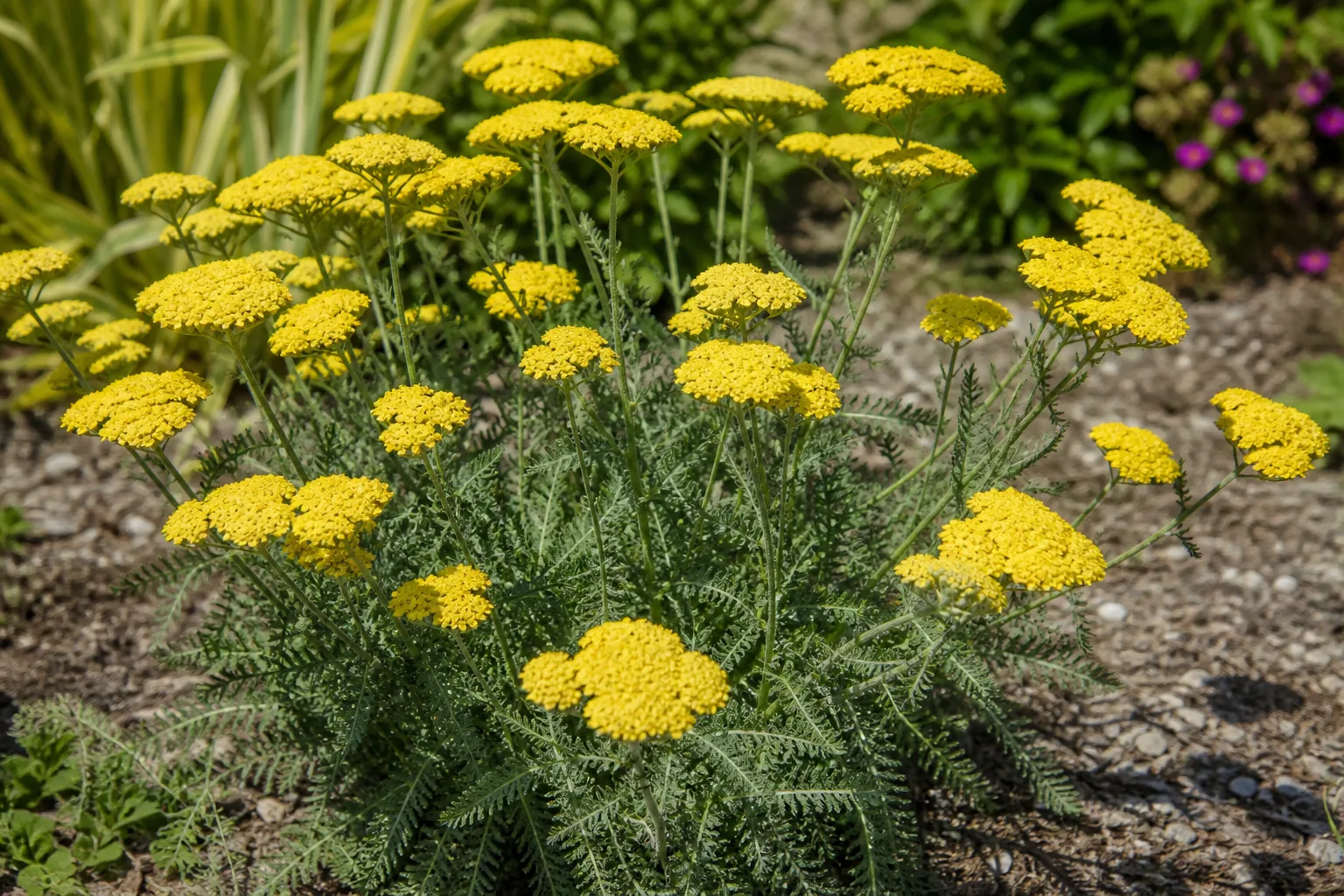
Yarrow for a tough, spreading pollinator perennial
Yarrow (Achillea millefolium) carries flat flower clusters above finely cut foliage and tolerates lean, well-drained ground. It works in a meadow-style patch or a broad border where neighboring plants can soften its informal spread. Epic Gardening identifies yarrow as a reliable perennial for poor soil, and the RHS encourages planting combinations that use groundcover and flowers to build a more continuous, resilient border.
Yarrow spreads by rhizomes and may seed around, so give it a defined area if you want a tidy edge. Cultivars vary in height and flower color, and local native status can vary by region; check with a native-plant society before treating a named selection as an ecological replacement for local wild plants. Remove spent flower stems for a neater look, or leave some for seed and winter structure.
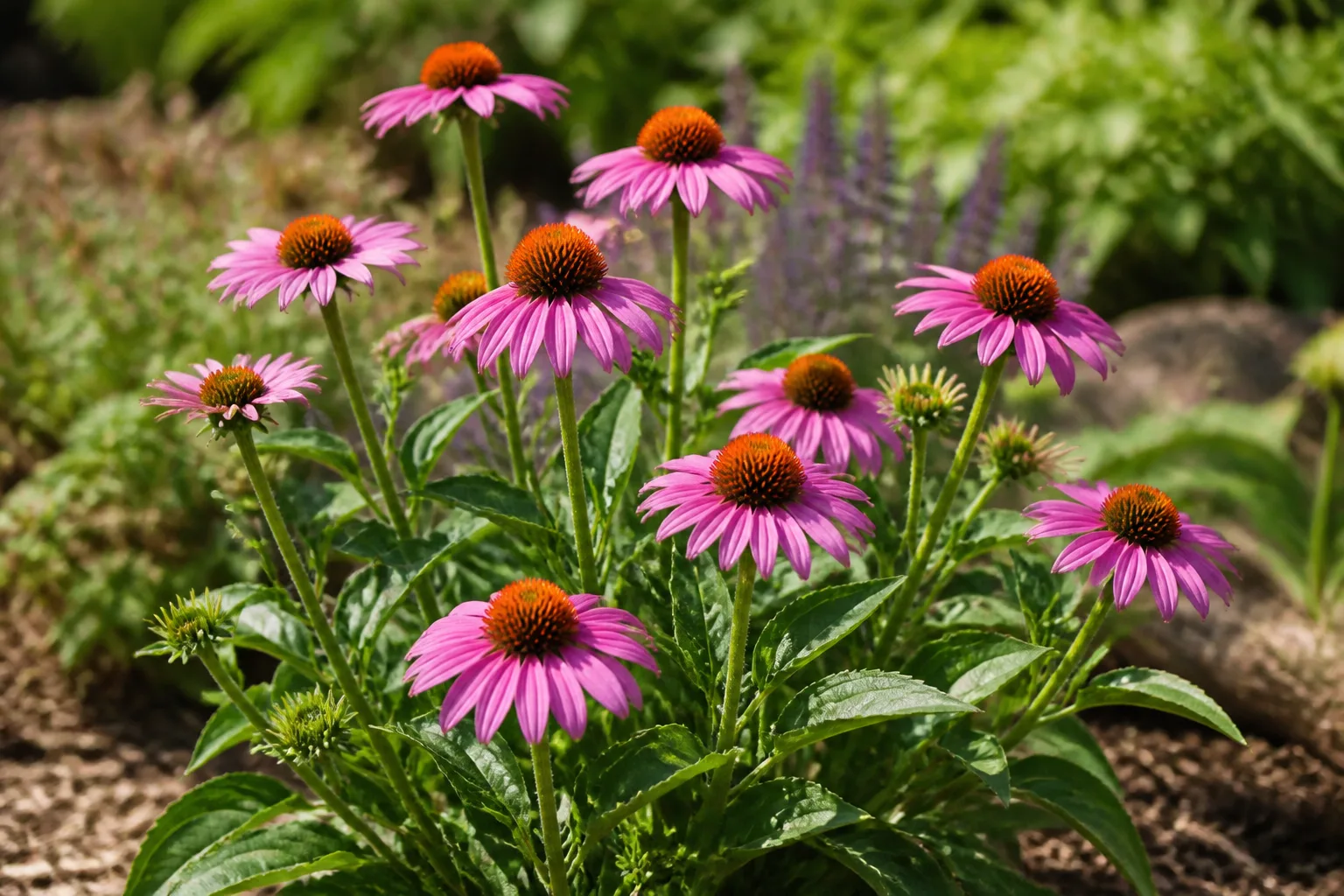
Purple coneflower for sturdy flowers and seedheads
Purple coneflower (Echinacea purpurea) contributes upright stems, prominent flower centers, and seedheads that can remain attractive after petals fade. It is native to parts of eastern and central North America and can grow in sandy soil, especially where the bed is not so dry that a new plant cannot establish. Epic Gardening notes that coneflowers tolerate sandy conditions in coastal and lake-region gardens, while Utah State University Extension lists drought-tolerant plants for sandy western landscapes more broadly.
Do not assume every coneflower cultivar behaves like the species or will thrive in every climate. Plant in sun, water consistently through the first growing season, and let the root zone dry between waterings rather than keeping it soggy. If you want birds to use the seedheads, leave a portion standing through winter; cut back only the stems you dislike or need to clear.
Improve sandy soil without losing its drainage
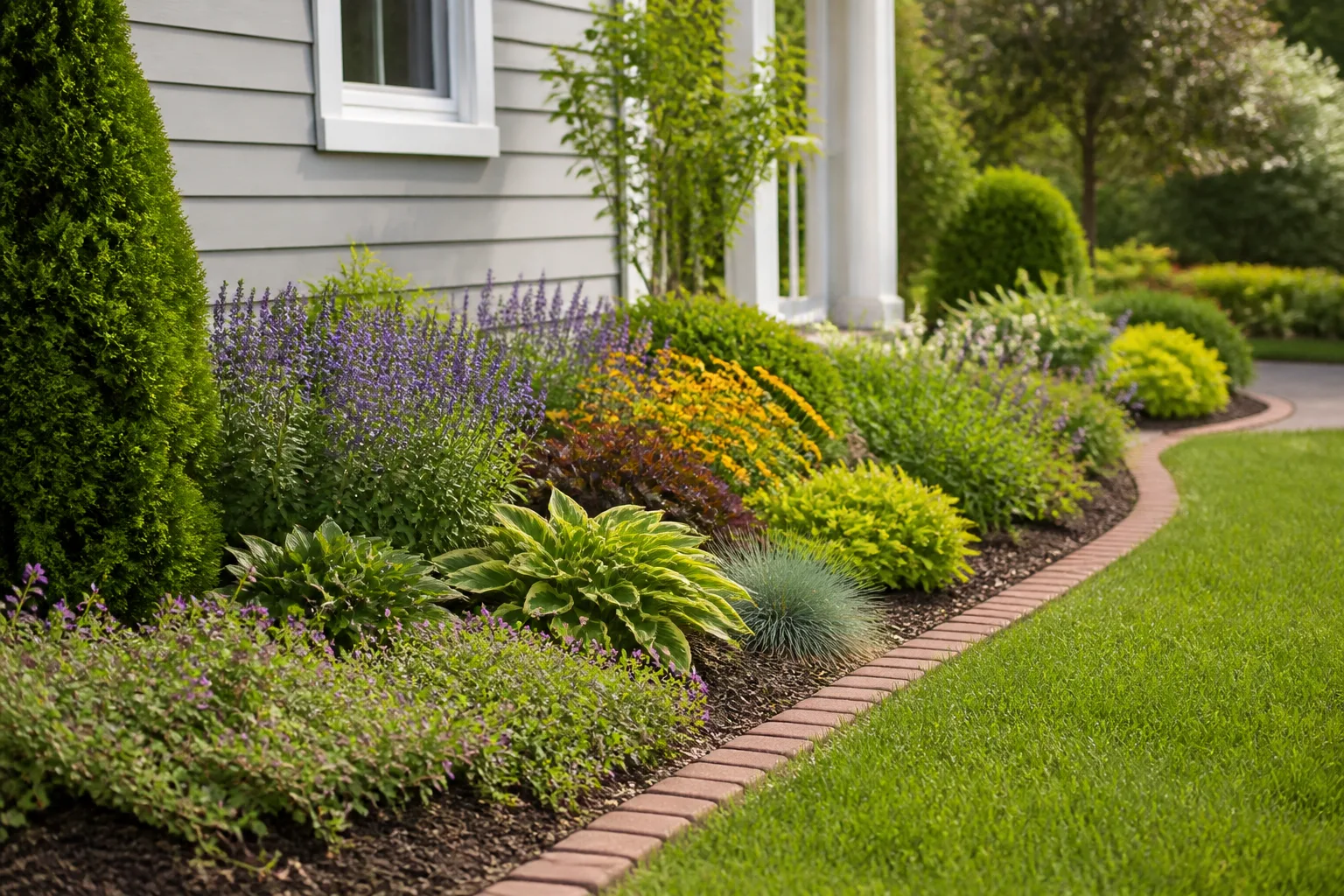
First decide whether your goal is a dry ornamental bed or a bed for moisture-demanding crops and flowers. For a dry-border planting, preserve the quick drainage and amend only if the soil is so infertile or loose that plants cannot establish. For vegetables or moisture-loving ornamentals, incorporating finished compost across the bed can improve water and nutrient retention more evenly than filling individual planting holes with a different mix.
Utah State University Extension identifies organic matter as the main amendment for sandy soil and advises against adding clay, which can create a dense, difficult mixture when the proportions are wrong. The RHS recommends well-rotted organic material and a surface mulch for sandy borders, while Epic Gardening discusses compost as a way to improve moisture retention. These sources differ in the depth and amount they recommend because their garden situations differ; use local soil-test guidance, compost quality, and the plants’ needs to set your approach.
For a new mixed border, spread a modest layer of finished compost and blend it through the planting area rather than making isolated “pockets” of rich soil around each root ball. Fresh manure, undecomposed woody material, or an unknown bulk mix can harm roots or temporarily tie up nutrients. If you are keeping a lean, xeric planting, use less compost and avoid routine fertilizer; if plants show poor growth, test the soil before adding nitrogen, phosphorus, lime, or sulfur.
Mulch the bare spaces after planting to slow evaporation and reduce weeds. A thin layer of compost or shredded bark can work around perennials; gravel is useful around plants that prefer a dry crown and a mineral look, but it does not build organic matter. Keep mulch away from stems and crowns, and do not cover a low stonecrop so deeply that its foliage stays wet.
Plant and water carefully through establishment
Set a nursery plant at the same depth it grew in its pot, loosen circling roots gently, and water the root ball plus the surrounding soil until both are moist. Sand can carry water downward quickly, so a brief surface sprinkle may miss the young roots. Utah State University Extension also notes that water moves downward more than sideways in sandy soil; position a drip emitter near the actual root zone rather than several inches away.
For the first weeks, check moisture by digging a small finger-width hole near the plant, not by reading the surface color alone. If the root ball and nearby soil are dry, water slowly and thoroughly; if they are still damp, wait. The interval changes with temperature, rainfall, mulch, planting size, wind, and the species. A fixed calendar schedule is less reliable than checking the depth where the roots are growing.
As roots expand into surrounding soil, lengthen the time between irrigation and wet a deeper area. This encourages roots to explore beyond the original container, while repeated shallow watering leaves the plant dependent on a small, fast-drying zone. The RHS advises regular, thorough watering during the first growing season for new sandy-soil plantings, even when the mature plants are selected for drought resistance.
During an unusually hot, rainless stretch, check new plants more often and prioritize the newest transplants, containers, and plants under roof eaves. A mature, established lavender or sedum may need little supplemental water in a moderate climate, while moss rose in a small pot can dry out in a day. Drought tolerance describes relative performance after establishment, not immunity to heat or an empty root zone.
Avoid the mistakes that make sandy gardens needy
Do not buy only by a “drought tolerant” tag. That label says little about shade, winter wet, salt, summer humidity, mature size, or whether the plant is locally invasive. Verify the botanical name and cultivar, then check recommendations for your state or region; two plants with the same common name can have very different habits.
Do not overcorrect sand with excessive fertilizer or a rich planting-hole pocket. Nutrients can move through coarse soil quickly, but that is a reason to use a soil test and right-size applications—not to feed every plant frequently. Excess fertilizer can drive weak, lush growth and may wash into groundwater; the ten plants here were selected because many prefer modest fertility once established.
Do not assume a rain shower watered a deep root zone. A quick shower can wet leaves and the top fraction of soil, then evaporate before young roots benefit. Check beneath the surface, especially under a mulch layer or beside concrete, and direct irrigation where the roots actually are.
Finally, resist planting all ten in one small bed. Little bluestem, Russian sage, and yarrow need space; moss rose is an annual filler; lavender and stonecrop prefer a drier crown than coneflower may need during establishment. Group plants with similar water needs, leave room for mature width, and let the bed fill gradually rather than forcing a crowded instant display.
Conclusion
Sandy soil can support a colorful, low-input garden when the plant matches the light, regional climate, drainage, and amount of care you can give it. Start with a soil-texture check, then choose from butterfly weed, blanket flower, lavender, little bluestem, moss rose, Russian sage, Angelina stonecrop, tickseed, yarrow, and purple coneflower according to the role each will play.
Improve the bed only as much as its plants require, use compost and mulch with purpose, and water new roots before expecting mature drought tolerance. Once the planting is established, keep observing: if a plant struggles, check its light, drainage, and root-zone moisture before adding fertilizer or replacing it. That small sequence is what turns “sandy soil” from a limitation into a site you can plant for confidently.