10 Small Pond Waterfall Ideas for a Backyard Garden
Compare 10 small pond waterfall ideas, from a wildlife-friendly basin to a pondless cascade, with practical notes on plants, pumps, upkeep, and safety.
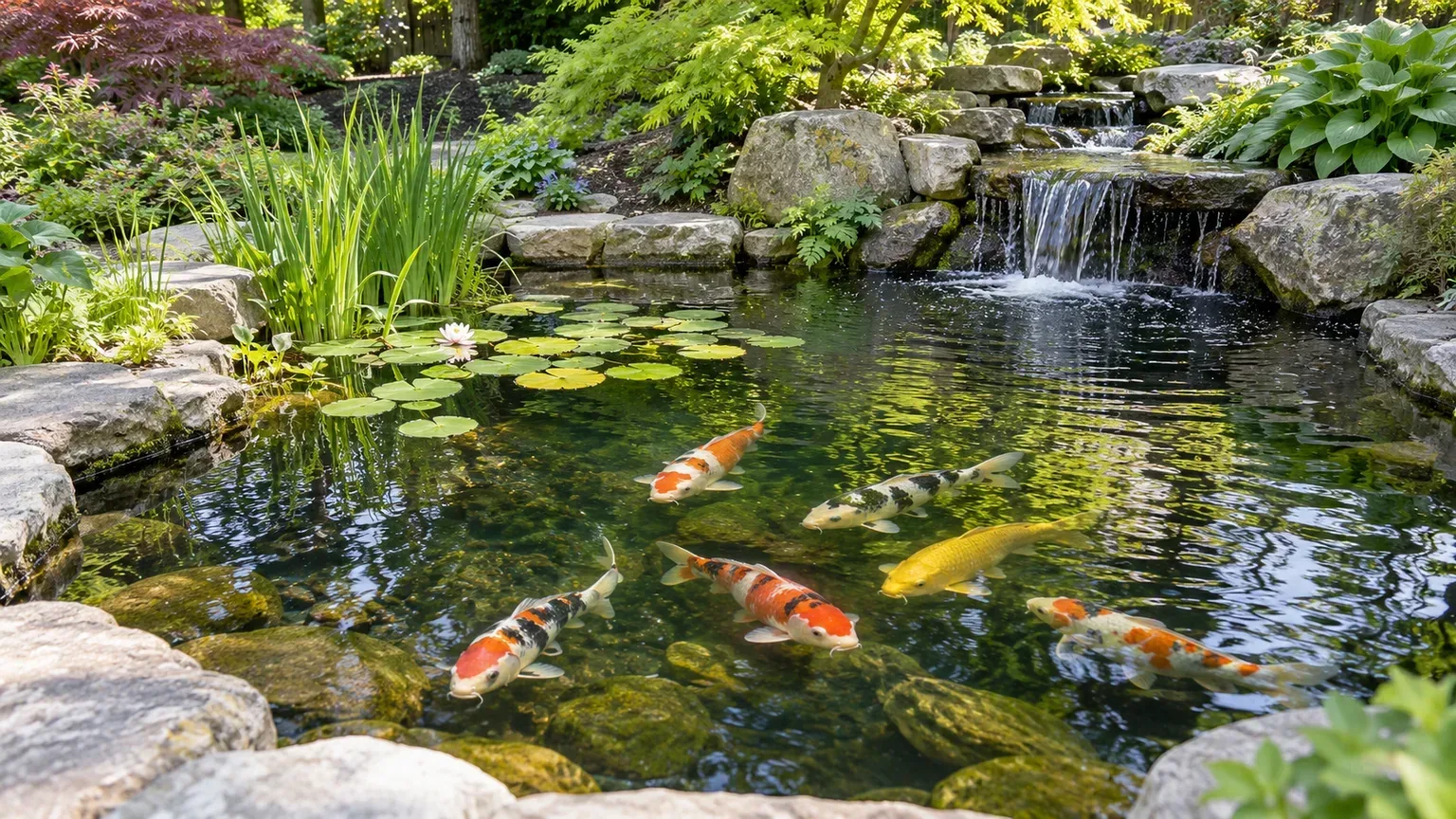
A small pond waterfall succeeds when the water, stone, and planting feel proportionate to the place where you will see and hear them. A low spillway beside a bench can be more restful than a tall cascade; a pondless stream may be the better fit when open water or fish care would become a burden.
Before choosing a rock shape or a plant list, decide what the feature must do. Do you want a reflective basin, a gentle sound near a seating area, a wildlife drinking spot, or a focal point viewed through a window? That answer determines the footprint, amount of open water, pump setup, edge treatment, and maintenance load.
Choose the water experience before the style
“Small” is a relationship between the feature and its setting, not a universal measurement. A narrow side yard can make a short rill feel generous, while a round basin may suit a compact patio; the key is to leave enough space to walk around, clean the intake, and reach plants without stepping on unstable stones.
Map the view from the kitchen, a favorite chair, and the approach path. Mark where the sun falls, where leaves drift from trees, where runoff travels in a storm, and whether the closest outlet or water source can serve the equipment. Garden Design’s overview of water features recommends choosing by scale, function, budget, access, sound, and maintenance; those questions are more useful at the start than picking a style from a photograph.
| If you want… | Consider… | Main tradeoff |
|---|---|---|
| Open water, reflections, and aquatic plants | Lined pond with a modest cascade | More water-quality and edge maintenance |
| Moving water with little exposed surface | Pondless stream and hidden reservoir | Less habitat and no reflective pond surface |
| A compact patio focal point | Tiered bowls or a container cascade | Smaller water volume needs close attention in heat |
| A wildlife-friendly feature | Shallow pond edge with a gentle route out | Requires careful plant selection and safe access |
The table is a starting point, not a promise that any layout will be maintenance-free. A waterfall does not automatically filter or balance a pond, and a pondless feature still needs a pump, clean reservoir, and a way to top up water lost to splash and evaporation.
Reserve room for the feature’s working parts as well as its visible shape. In a tight corner, the path to a pump lid or skimmer can be as important as the surface area of the water; if a person cannot reach the intake without climbing over wet stone or moving plants, routine cleaning is likely to be postponed. Keep the basin proportional to the house and garden, but avoid scaling it down until every useful shelf and service path disappears.
10 small pond waterfall ideas
The ideas below are design patterns, not fixed kits. Adjust stone size, planting, and drop height to the view and grade of your site; a restrained version often feels more natural in a small yard than a miniature copy of a large resort waterfall.
Woodland stream with an irregular basin
A shallow, wandering runnel that disappears into a small planted pond can make a flat yard feel as if water belongs there. Use a few broad stones as visible crossings, vary the channel width slightly, and allow low, moisture-loving plants to soften the edge; one strong bend is usually enough to disguise the origin of the stream.
This layout works especially well where the yard already has shade, mature trees, or a naturalistic border. Keep the basin far enough from heavy leaf fall to protect the pump intake, and avoid letting storm runoff wash mulch or fertilizer into the water. Penn State Extension’s pond ecology guidance explains that sediment and nutrient inputs can accelerate plant and algae growth in ponds, so a planted buffer and clean water route matter as much as the waterfall’s appearance.
Pondless cascade with a hidden reservoir
A pondless waterfall recirculates water from a buried or concealed reservoir up to a spillway, where it runs over stone and drains through gravel back to the pump. The visible feature can be a short stream, a rock cascade, or water slipping from a retaining wall, without leaving a broad open pond at the bottom.
Choose it when you want the movement and sound of water but do not want an open basin as the centerpiece. The reservoir still needs sufficient working capacity for the water held in the channel while the pump runs; otherwise the level can fall and expose the intake. Leave an access point for the pump vault and make sure the surrounding gravel is not so fine that it clogs the intake. A pondless feature can reduce open-water exposure, but it is not a substitute for child supervision or safe electrical installation.
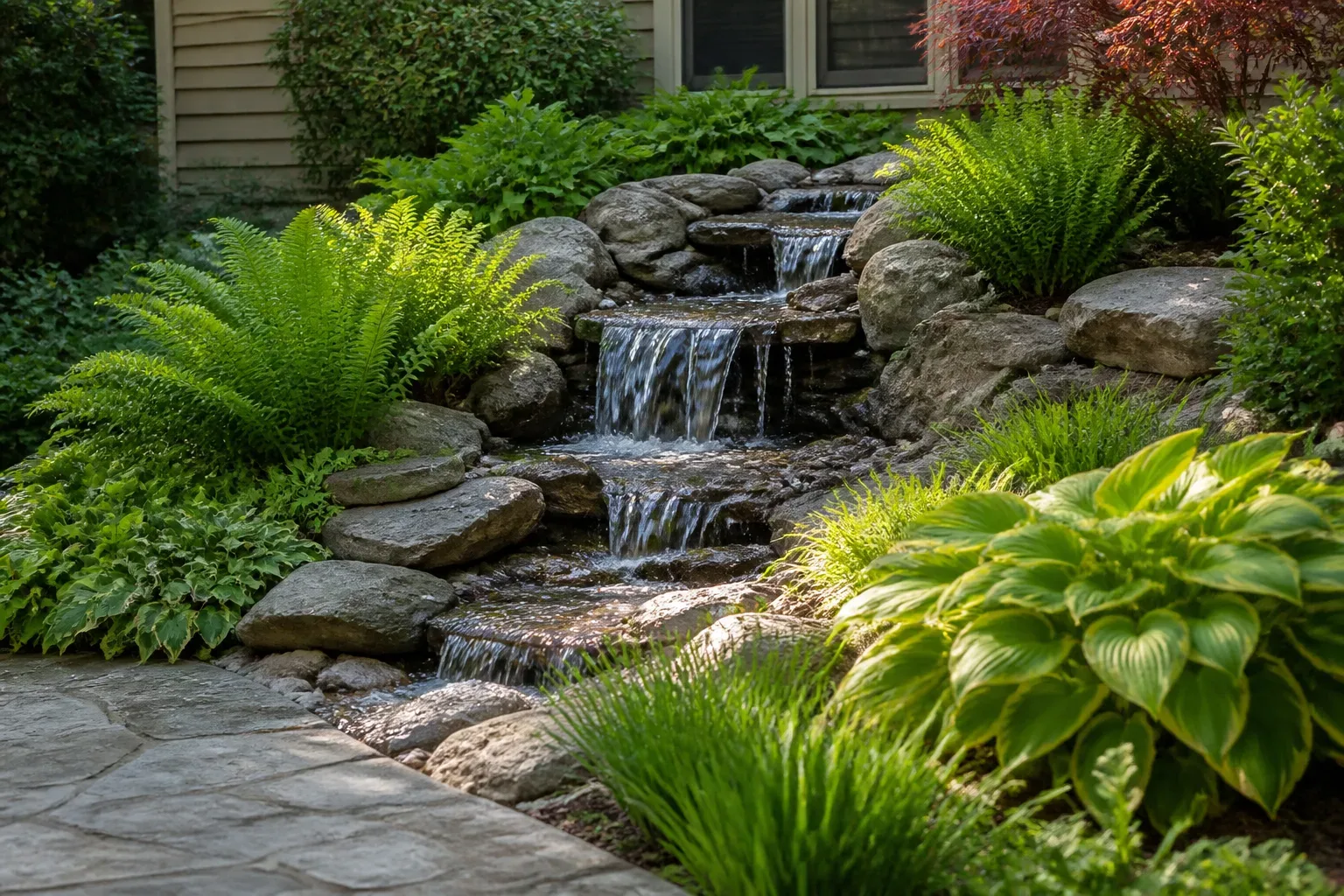
Tiered basins for a tight footprint
Stacked bowls or shallow stone basins create several small drops in a compact vertical arrangement. Because the water travels a short distance between levels, the composition can fit a courtyard corner or a narrow planting bed without requiring a long stream.
Use fewer, wider basins if you prefer a soft trickle; narrow openings and sharp drops tend to make water louder and more splash-prone. Place the tallest element where it will not block a window or dominate a small patio, and set each basin on a stable, level base. Surround the structure with a limited palette of foliage rather than a ring of unrelated ornaments so the water remains the visual center.
A quiet sheet fall beside a patio
A low spillway can send a thin curtain of water over a broad stone lip into a narrow pond. Set it near a seating area if you want sound at close range, but keep the lip low enough that splashing does not wet the paving or spray onto furniture.
The sound depends on the drop, water volume, and landing surface, so test the desired effect before committing to a large pump. A smooth, uninterrupted edge gives a modern look; irregular stones break the sheet into several streams and read more naturally. Leave a dry walking margin between the basin and the main path, and choose paving that remains sure-footed when damp.
Japanese-inspired pond with restrained planting
A small pond can borrow the calm, edited feeling of a Japanese-inspired garden through asymmetry, a few carefully placed stones, and a view that unfolds from one side. Use a low cascade that seems to emerge from the planting rather than a centered, oversized rock mound; a single specimen shrub or small tree can frame the water without crowding it.
This is not a matter of adding a bridge, lantern, and statue to every pond. Decide on one focal element and let negative space do some of the work. If you use a Japanese maple or another tree with seasonal leaf drop, place it so its canopy contributes shade and reflection without sending most of its leaves directly into the skimmer.
A refurbished concrete basin
An existing concrete pond can become a feature again if its shell is sound and its leaks, cracks, and plumbing are understood before any decorative work begins. A modest rock spillway can soften a plain edge, while aquatic containers and marginal plants help connect the rigid basin to the surrounding garden.
Do not cover a failing structure with stone and hope the leak disappears. Check the basin for movement, repair needs, and a practical way to route water back to the pump; if the shell is structurally damaged, ask a pond or masonry professional before adding weight. Reusing a sound basin may save excavation, but the pump and filter still have to match the water volume and intended fish or plant load.
Wildlife pond with a gentle landing edge
For frogs, birds, and beneficial insects, plan the edge as carefully as the waterfall. A shallow shelf, low stone ramp, or small beach of stable pebbles gives visiting wildlife a way to approach or leave the water; a sheer, slippery perimeter can turn an attractive pond into a trap.
Fine Gardening describes a wildlife pond in a space about five feet wide, with a bubbler in a sunnier-than-usual position and nearby native plants. That example shows how a compact water garden can fit a small site, not a minimum size or a universal planting recipe. Choose locally appropriate aquatic plants and keep their growth in scale with the basin. Penn State Extension’s pond ecology guidance also cautions that excessive surface cover can block light and air exchange, so wildlife planting should not become a complete blanket over the water.
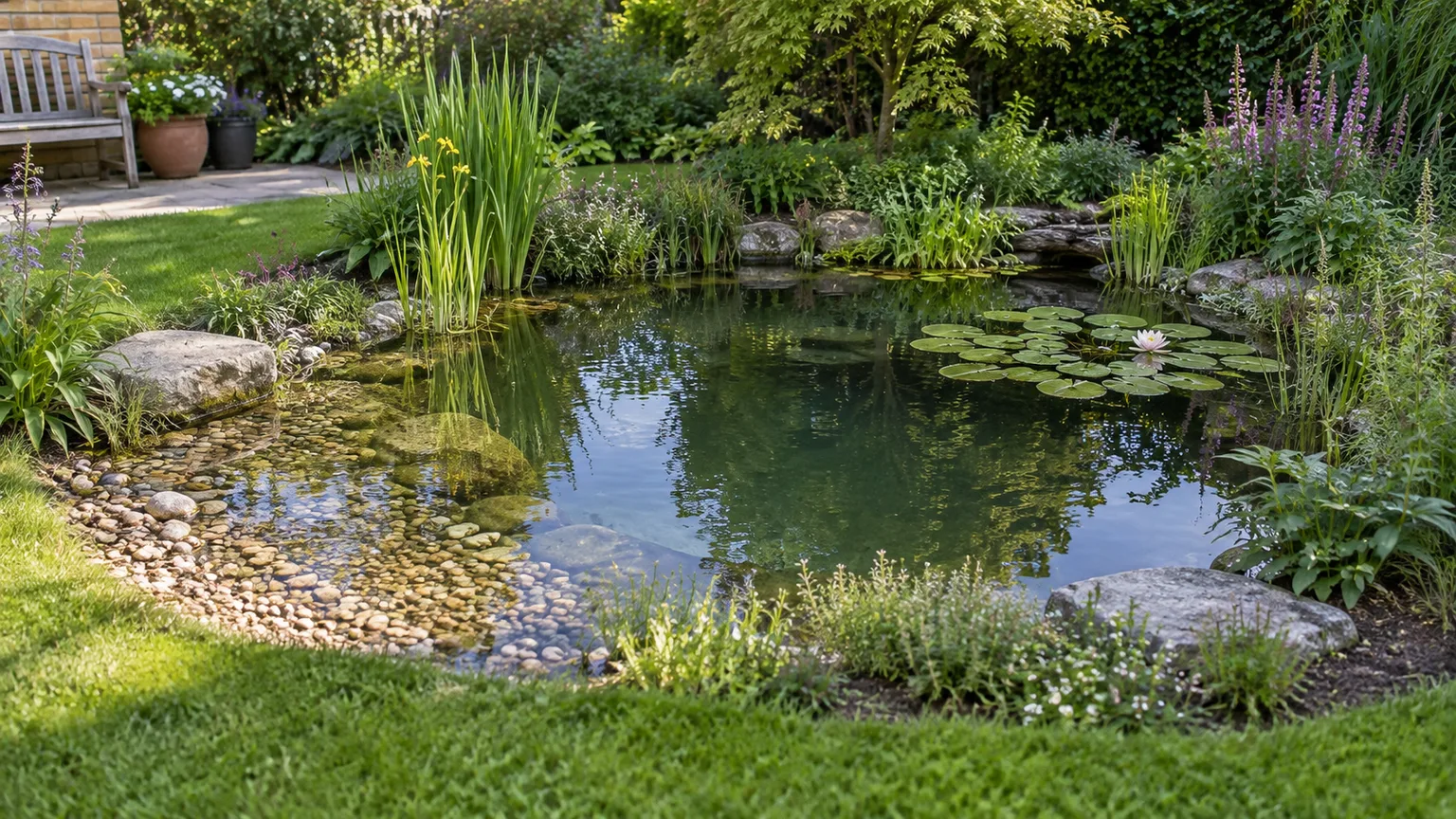
Formal reflecting pool with one spillway
A geometric basin pairs well with a contemporary house, clipped planting, or a small paved courtyard. Keep the outline simple—a rectangle, square, or circle—and let one narrow spillway create movement at a single edge so the rest of the surface can reflect the sky and nearby foliage.
Formal edges make construction accuracy visible: uneven coping, a wandering waterline, or a spillway that is not level will stand out. Use a stable rim and a well-hidden return path, then repeat the basin’s material in a nearby wall or path to make the feature feel integrated. This option needs less decorative planting at the waterline, but the cleaner geometry makes leaves and mineral marks easier to notice.
A wall-backed waterfall for a narrow side yard
When there is little width to work with, a short wall can carry the waterfall vertically while a slim basin catches it below. The wall becomes a backdrop for ferns, sedges, or a climbing plant nearby, and the narrow footprint leaves more room for access along the side of the house.
Check the wall and its drainage before directing water against it. Water should enter the pond or a lined catch basin rather than soak the foundation or run beneath paving; the pump line and return route also need to remain accessible. A wall fall can help mask street noise, but it may sound louder in a confined corridor where hard surfaces reflect sound.
Container cascade on a deck
A glazed ceramic pot, stock tank, or compact stone bowl can serve as the catch basin for a small recirculating cascade. This makes a water feature possible where digging is impractical, although the deck must be able to support the filled container and the pump must be protected from debris.
Containers hold less water than in-ground ponds, so warm sun and wind can change the water level and temperature more quickly. Place the basin in a stable, shaded or partly shaded position, keep the pump submerged at its designed operating level, and top up with clean water as needed. Treat it as an ornamental feature for plants and sound, not a small koi pond; fish require conditions and filtration that a tiny container often cannot provide.
Place plants by wetness, light, and scale
Think of the planting in three bands. Aquatic plants grow in the water, marginal plants sit in shallow shelves or baskets at the edge, and moisture-loving border plants enjoy damp soil but should not have their crowns permanently submerged. A fourth, drier ring can transition the pond into ordinary garden beds and provide room to reach the liner or stones.
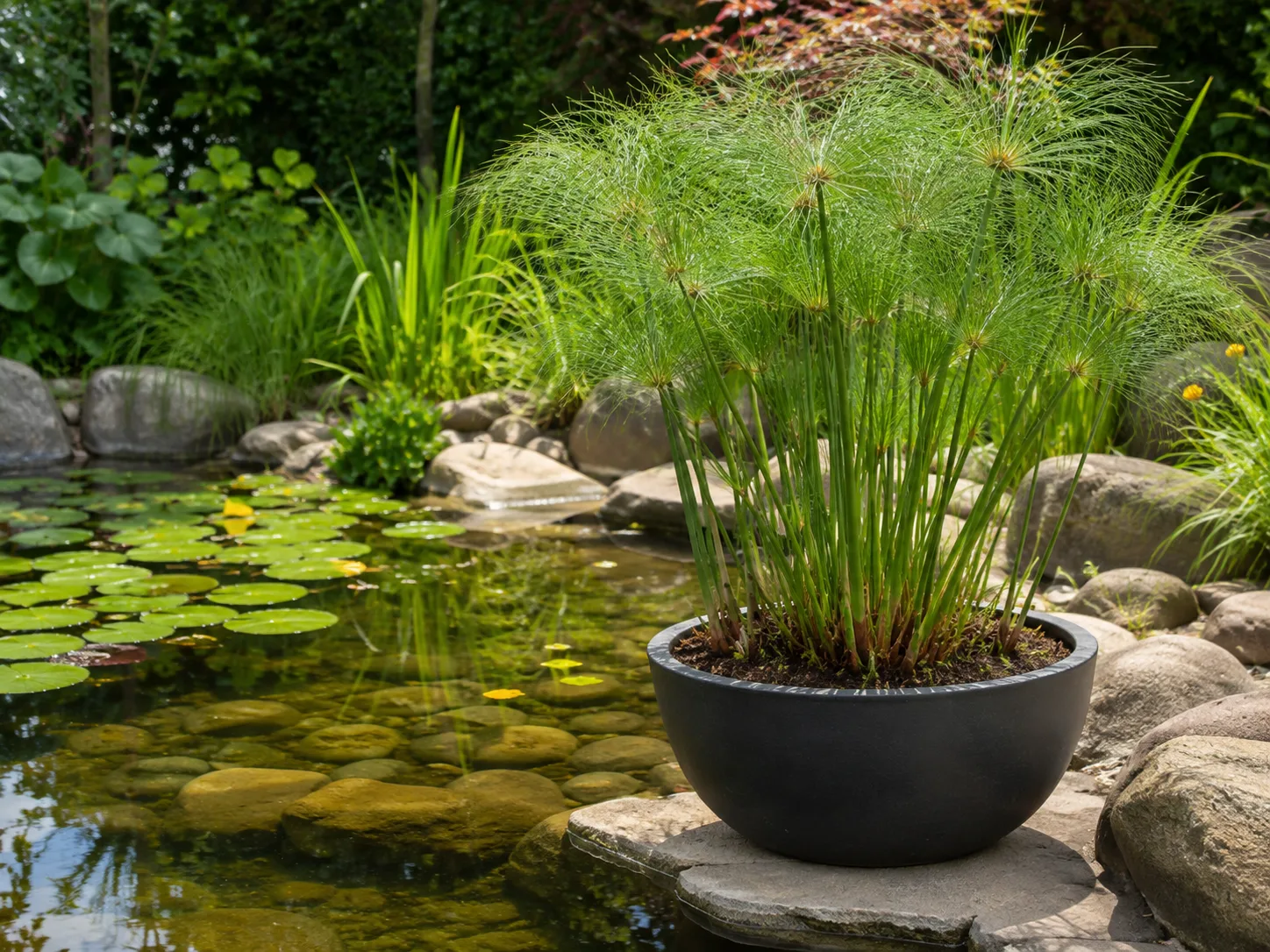
Use floating leaves sparingly if you want reflections or wildlife viewing; they can shade part of the surface, but full cover may reduce light and air exchange. At the waterfall, reserve a clear path for the water and keep tall foliage from hiding the spillway or trapping leaves in the intake. Choose plant sizes for the basin, not for their nursery pot: a full-size cattail or spreading aquatic can overwhelm a small pond.
Plant selection is regional. Check whether a water-garden species is invasive or restricted where you live, and avoid releasing extra plants or water into natural waterways. Garden Design lists common pond and moisture-border choices such as water lilies, iris, ferns, and marsh marigold, but their suitability depends on climate, available space, and local rules. For a wildlife pond, native species from a local nursery are often the safer starting point than importing a vigorous plant simply because it looks good in a photograph.
Size the pump, reservoir, and service access together
Start by sketching the water path: where the pump sits, how high it must lift water, how the supply line reaches the top, where water crosses the spillway, and how it returns. A pump’s advertised flow at minimal lift is not the same as the flow you will get after vertical rise, pipe length, bends, and fittings add resistance. Read the manufacturer’s pump curve at the actual lift and choose the desired sound and spillway width before selecting equipment; there is no single gallons-per-hour number that fits every waterfall.
Measure the pond’s footprint and estimate its depth rather than guessing from the rim. Penn State Extension’s pond-measurement guide explains how to estimate area and volume from measured lengths, widths, and representative depths; its examples address larger ponds, but the underlying point is useful for ornamental features too: equipment capacity and water-treatment decisions depend on a realistic estimate. A fish pond adds specific oxygenation, filtration, stocking, and winter requirements, so do not assume a shallow decorative basin can support koi just because it has a waterfall.
For a cascade, the catch basin must also hold the water that temporarily leaves the pond while the pump is running. The higher the spillway and the longer the channel, the more water can be in motion outside the basin; account for that operating volume and test the system at the intended flow before disguising all plumbing. A pump chosen only by its advertised maximum can create the opposite of the desired effect: too little flow at the spillway or a noisy, splashy fall that loses water over the edge.
Leave access to the pump, prefilter, skimmer, filter, and valves without dismantling the best-looking part of the feature. A hidden service hatch or removable capstone is much easier to live with than a pump buried under a permanent pile of boulders. Size a pondless reservoir to hold the water that drains back after shutdown and the water the running stream occupies; follow the equipment manufacturer’s operating-level requirements, and make the refill point easy to reach.
Keep water clear without overplanting or overcleaning
A waterfall moves and aerates water, but it is not a complete water-quality plan. Penn State Extension describes how nutrients and sediment entering a pond contribute to ecological change, and how aquatic plants can be helpful in balance but harmful when they become excessive. Keep grass clippings, leaf litter, fertilizer, and soil-laden runoff out of the basin; use a planted buffer where runoff crosses a bed, and remove debris from the intake before a clog makes the pump run dry.
Match filtration to the water feature’s use. A decorative pond with no fish has a different waste load from a koi pond; adding a filter that is too small or difficult to clean will not solve overstocking, excess food, or nutrient-rich runoff. If algae appears, first look at direct sun, leaf buildup, fertilizer drift, fish load, and circulation. Avoid treating every green tint as a reason to add a chemical, especially where wildlife or fish are part of the design.
Build a short maintenance rhythm around the season: clear leaves before they sink, check the pump intake and water level during hot weather, trim plants before they crowd the spillway, and inspect the liner edge after storms. In cold climates, ask the pump and pond supplier how the specific equipment should be shut down or protected for winter; a fish pond and a decorative pond may need different winter plans. The goal is not a sterile basin but a balanced, accessible feature whose normal upkeep is small enough that you will actually do it.
Plan for splash and evaporation. Higher or faster falls usually throw more water beyond the basin, and wind can carry droplets farther than expected; observe the feature after the pump runs and correct the spillway or surrounding surface if the water is escaping. A small pond may need topping up during hot, dry weather, while a container cascade can require more frequent attention because it stores less water.
Budget, safety, and permits
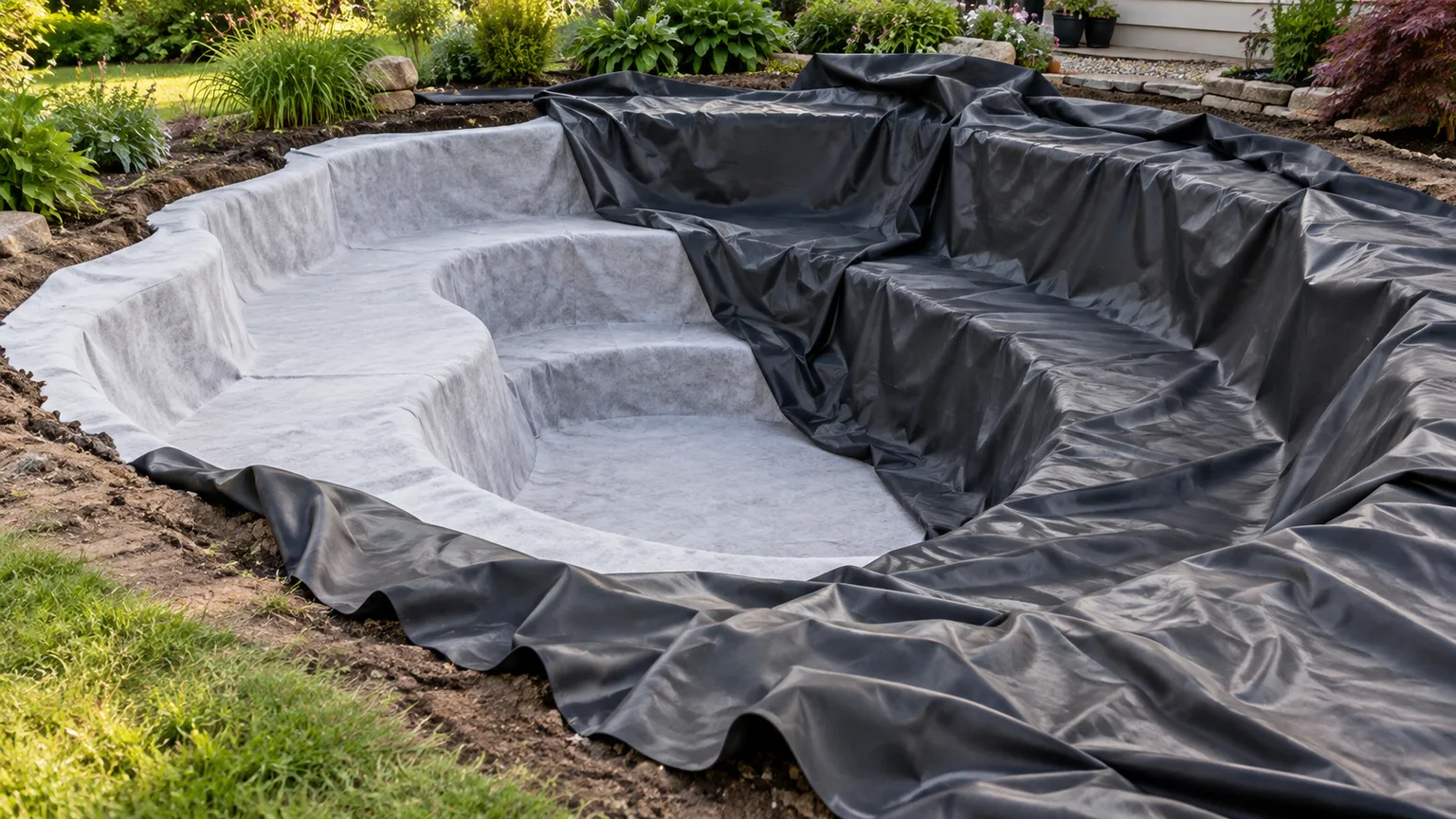
The visible stone is only part of the cost. Include excavation or structural work, liner and underlayment, pump and filter, wiring, plumbing, coping, access path, lighting, plants, and a route for overflow. If the plan involves heavy boulders, a retaining wall, a large pond, or an existing concrete basin, get an experienced installer to check the site and structure before construction; an attractive cascade can be difficult to repair when its plumbing is buried under permanent stonework.
Before requesting a quote, sketch the feature from above and from the side. Mark basin dimensions, the tallest spillway, the length of the supply line, service access, overflow direction, and the mature size of nearby plants. A plan view shows circulation and access; a side view reveals the pump lift and the actual height of each drop. With both drawings, installers can discuss excavation, stone handling, pump duty, and repair access against the same scope rather than comparing prices for different assumptions.
Treat any open pond as a real water hazard, even when it is small or shallow. Penn State Extension’s pond-safety guidance emphasizes active supervision of children and physical restrictions where appropriate; decide on barriers and local requirements before work starts, rather than assuming a waterfall sound or a low edge makes the feature safe. Avoid slick walking surfaces, provide a stable route for maintenance, and do not use loose rocks as an informal child barrier.
Water and electricity need professional planning. Use equipment rated for outdoor water features, and ask a qualified electrician to plan the circuit, protection, and installation under local electrical code. Check local rules for excavation, fencing, setbacks, drainage, and water diversion; requirements vary by location and pond depth. A design that is beautiful but impossible to supervise, service, or legally install is the wrong design for the yard.
Conclusion
The most successful small pond waterfall is the one that fits your way of using the yard. Choose a pond for reflections, aquatic planting, or wildlife; choose a pondless cascade when moving water matters more than an open basin; and use tiered or container designs when the footprint is tight.
Before digging, settle the viewing angle, sound level, overflow route, pump access, planting zones, and safety plan. Then choose stone and plants that make the water look like it belongs there—and leave enough open space to maintain it.