20 Best Plants and Shrubs for Privacy in Your Yard
Compare 20 privacy plants by height, year-round cover, site, and care so you can choose a screen that fits your yard, climate, and maintenance time.
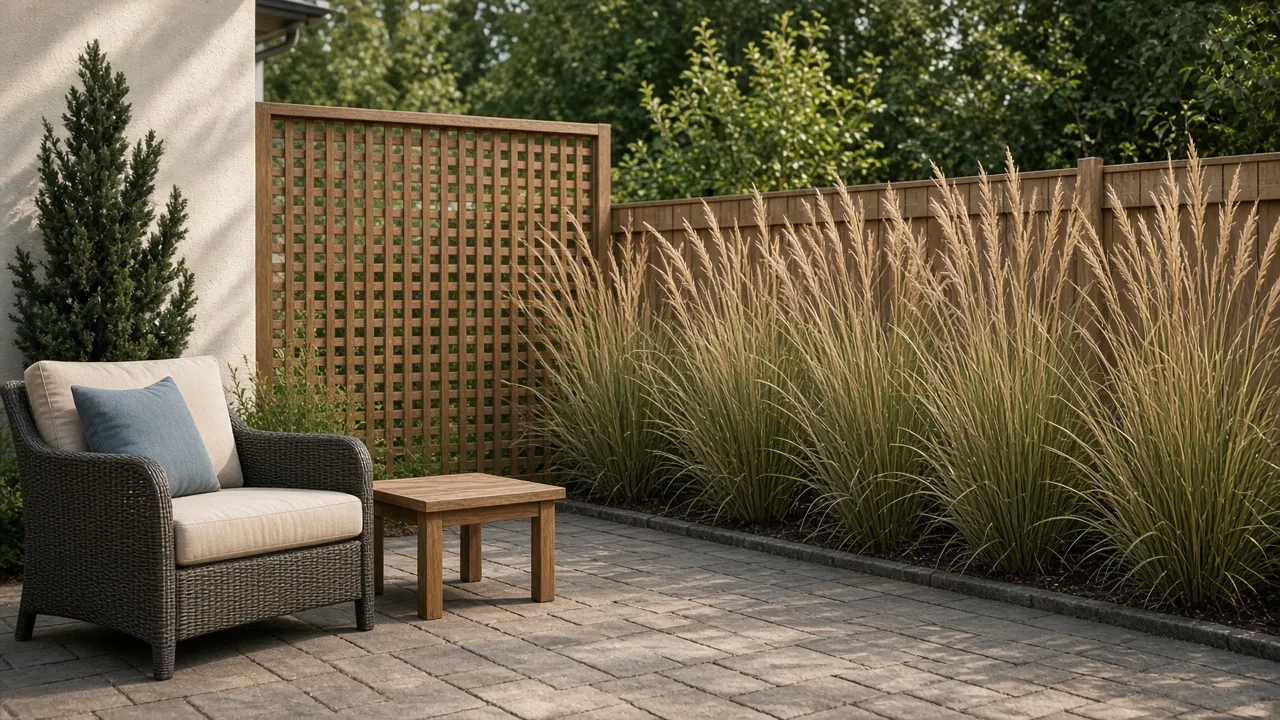
A privacy planting works when it blocks the view you actually want to hide, at the season you use the yard, without outgrowing the planting bed. That might mean a year-round evergreen row along a property line, a flowering hedge around a patio, or a trellis that screens one seat instead of enclosing the whole yard.
Before buying, measure the view from the place where you sit or stand, then compare the plant’s mature height, width, and seasonal coverage with the space available. The 20 options below include evergreen trees, broadleaf shrubs, deciduous plants, vines, grasses, and clumping bamboo; each solves a different privacy problem.
Choose the screen job before choosing plants
The word “privacy” can describe different needs. You may want to hide a patio from a neighboring window, soften a view through a chain-link fence, mark a boundary, or create a quiet corner beside a deck. A six-foot hedge may help with eye-level views but cannot hide a second-story window; a tall tree may screen that upper angle while leaving the ground-level patio exposed.
Decide whether you need year-round coverage. Evergreen foliage blocks more consistently in winter, while deciduous shrubs and ornamental grasses may screen well in summer and open up after leaves fall. A mixed planting can offer flowers, fruit, and texture, but it will not behave like an opaque evergreen wall in every season.
Check sun, soil drainage, wind exposure, available width, and irrigation before comparing plant names. Penn State Extension advises selecting shrubs around the conditions in the actual planting site, including light, moisture, and exposure, rather than trying to force a favorite into a poor fit (Penn State Extension’s shrub-selection guide). The Royal Horticultural Society also recommends deciding the needed final height, accounting for maintenance, and considering roots near buildings, drains, and soakaways (RHS screening guidance).
Is the problem a view, a boundary, or a small privacy pocket?
If one window looks directly into your patio, screen that view with a strategically placed tree, shrub, or trellis instead of planting an entire perimeter. A compact evergreen hedge can mark a property boundary, while a staggered group of shrubs and small trees can block several sightlines and keep the yard from feeling like a corridor. Garden designers use different combinations of plants, fences, and open views to create enclosure without shutting a garden off completely (Fine Gardening’s screening examples).
For immediate privacy, a fence or temporary screen may be needed while plants establish. A new hedge does not become opaque as soon as it goes in, and pushing plants too close together to get a fast wall can cause crowding later. If sound is the concern, plants can soften a view and add a sense of separation, but a hedge alone is not a dependable noise barrier.
20 plants that can screen a yard
Use this list as a shortlist, not a ranking. Mature dimensions vary by cultivar, climate, and pruning, so compare the botanical name on the nursery tag with a regional extension profile before you buy.
Evergreen trees for tall, year-round cover
-
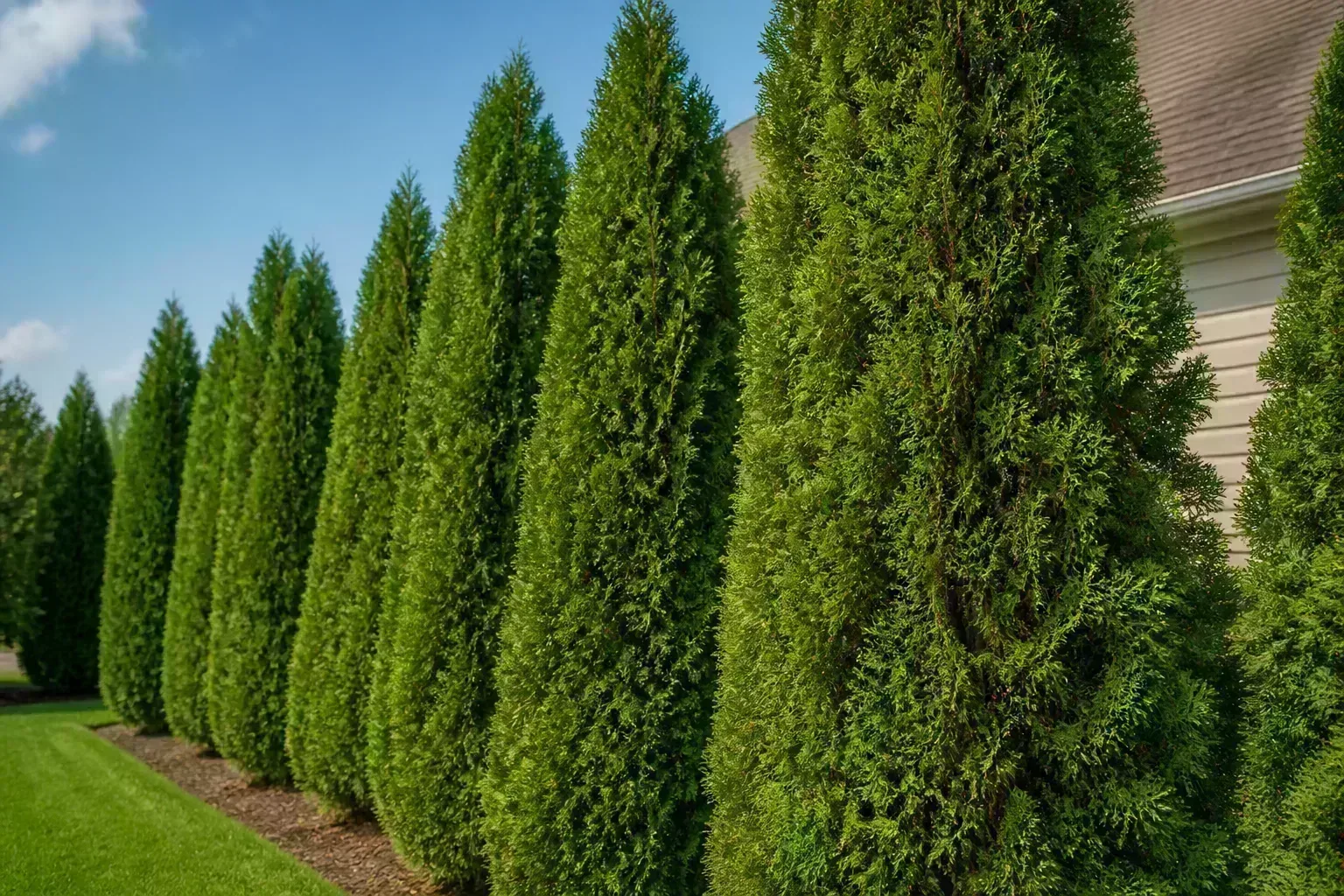
Green Giant arborvitae (Thuja ‘Green Giant’) makes a tall, dense screen where there is room for a tree. NC State Extension reports that it can grow 3 to 4 feet per year in ideal conditions and reach 40 to 60 feet tall and 12 to 18 feet wide; that speed is a reason to plan its mature footprint, not a promise of instant privacy. It keeps its foliage in winter, tolerates a range of soils, and does not tolerate salt spray or salty soil (NC State Extension’s plant profile).
-
Emerald Green arborvitae (Thuja occidentalis ‘Smaragd’) is a narrower, more formal-looking choice for a tighter bed than Green Giant. It is still a woody evergreen that needs room to reach its labeled size, and it may take longer to close gaps than a larger, faster-growing cultivar. Use the exact cultivar name when comparing mature width; “arborvitae” alone is not a useful size specification.
-
Eastern redcedar (Juniperus virginiana) is a native evergreen tree for many eastern and central U.S. landscapes. Its upright habit and tolerance of drier conditions after establishment can make it useful where a moisture-loving hedge struggles, but the species can become a substantial tree rather than a narrow shrub. Check the selected form’s spread and keep it clear of paths and nearby structures.
-
Eastern white pine (Pinus strobus) gives a soft, tall evergreen backdrop in a spacious yard. Its branches are more open than a clipped broadleaf hedge, so it is better for a layered screen or windbreak than a tight wall at eye level. Allow room for its eventual height and spread, and do not shear it into a shape it cannot maintain.
-
Canadian hemlock (Tsuga canadensis) is one of the more shade-tolerant evergreen trees and can be shaped into a dense hedge. It prefers cooler, evenly moist conditions and is not a good fit for a hot, drought-prone site. Check local pest pressure and regional advice before planting, because stress and pests can quickly undermine a long hedge.
Broadleaf evergreen shrubs for living walls
-
American holly (Ilex opaca) can form a tall, broad evergreen screen where a tree-sized shrub fits. It has stiff, spiny leaves and a naturally branching habit rather than the narrow profile of a columnar conifer. If berries are a priority, ask the nursery whether the cultivar needs a separate male pollinator and whether both plants will fit the site.
-
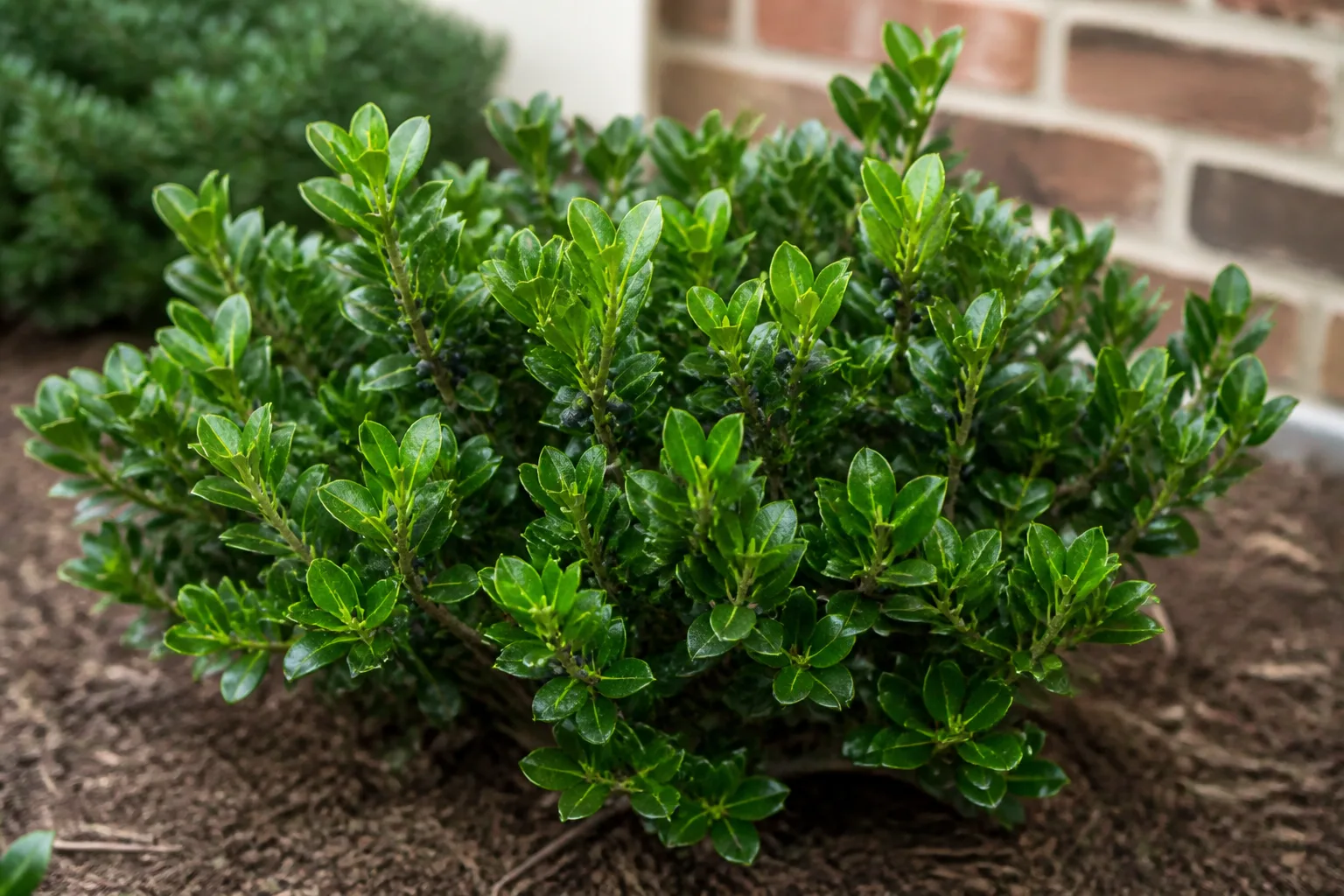
Inkberry holly (Ilex glabra) is a native evergreen shrub for a mid-height screen, especially in moist, acidic soil. NC State Extension lists mature dimensions of about 5 to 10 feet tall and 5 to 8 feet wide and notes that it tolerates occasionally wet soil; cultivar sizes differ, so do not assume every inkberry will fill the same space (NC State Extension’s inkberry profile). It can look sparse at the base if the chosen cultivar or growing conditions do not encourage dense lower growth.
-
Yaupon holly (Ilex vomitoria) brings evergreen foliage to warm southeastern and coastal gardens. Cultivars range from compact forms to larger shrubs or small trees, so match the named selection to the height you need and leave room for its spread. It can be useful in a mixed screen where local climate suits it, but it is not a universal choice for cold northern yards.
-
Wax myrtle (Morella cerifera) is a fast-growing, broad evergreen or semi-evergreen shrub in much of the Southeast and along warmer coasts. Its loose, natural outline suits an informal boundary more than a tightly clipped hedge, and it can become wide. Use it only where the species is regionally appropriate, then confirm whether local winter temperatures keep it evergreen at your site.
-
Podocarpus (Podocarpus macrophyllus) is a useful evergreen hedge or screen in mild-winter regions, where it can be clipped to a tall, narrow outline. It is a poor gamble in places with winters colder than the selected cultivar can tolerate. Look at local plantings and regional recommendations, not just a national catalog photo, before using it as a permanent screen.
-
Boxwood (Buxus spp.) makes a dense, evergreen, formal hedge at low or medium heights. It is a good way to screen a path, utility area, or seated view near the ground, but it is rarely the best answer when you need a very tall, fast-growing wall. Boxwood blight and other pests can affect plantings, so consider disease-resistant alternatives if boxwood problems are common in your area (BBC Gardeners’ World’s evergreen hedge guide).
Deciduous shrubs and trees for a softer screen
-
Arrowwood viburnum (Viburnum dentatum) is a deciduous, multi-stemmed shrub that provides a leafy summer screen, spring flowers, and fruit. It can work in a layered native planting when complete winter privacy is not essential. Size and habit vary among viburnums, so check the exact species or cultivar rather than assuming every plant sold as “viburnum” makes the same hedge.
-
Red-twig dogwood (Cornus sericea) is a useful choice for a damp boundary where many shrubs struggle. It forms a broad, multi-stemmed thicket with white flowers and colorful winter stems, but it loses its leaves, so it does not block views in winter the way an evergreen does. Give it room to spread and prune older stems selectively if you want to keep the red growth visible.
-
Ninebark (Physocarpus opulifolius) is a tough, deciduous shrub with arching stems and exfoliating bark. It can make a substantial summer screen in full sun or partial shade, while flower clusters and seedheads add seasonal interest. Choose a cultivar by mature size; dwarf selections are attractive but may be too short to screen a fence or window.
-
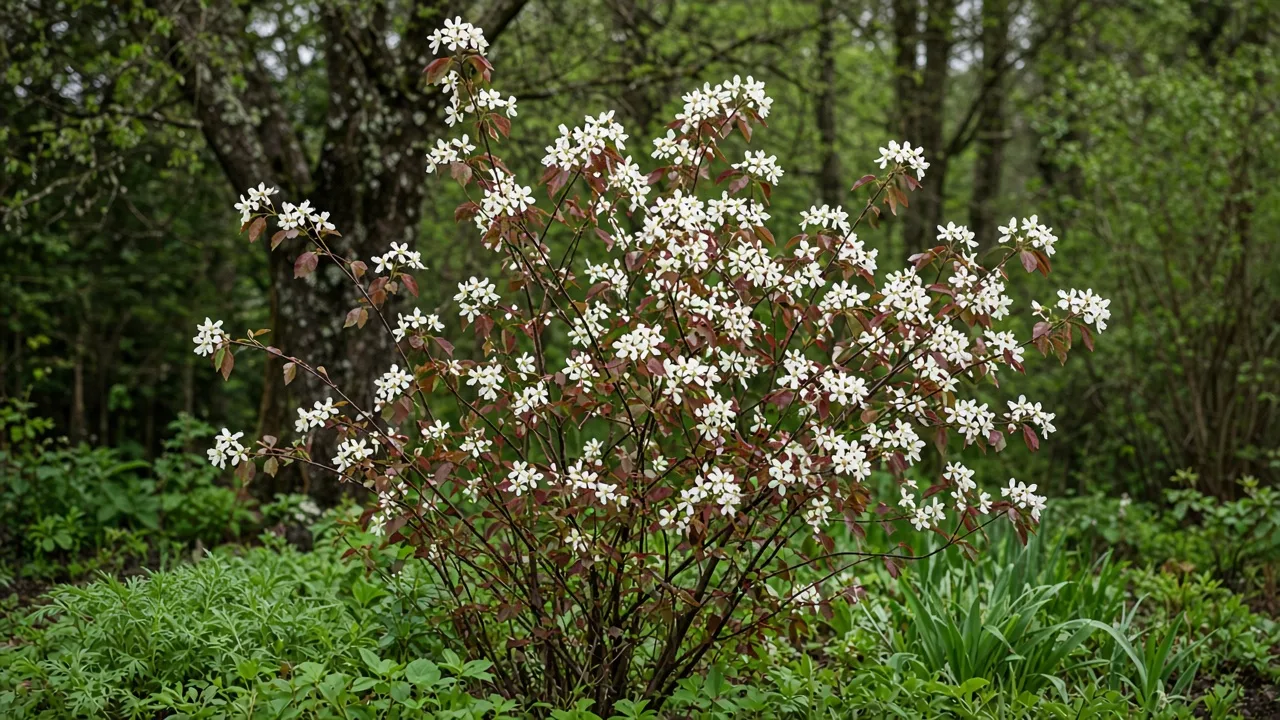
Serviceberry (Amelanchier spp.) provides spring bloom, edible-looking berries for wildlife, fall color, and a loose screen from branching. It is more successful as part of a layered border than as a solid wall because it is deciduous and often has an open habit. Select a species that is native or adapted to your region and give it the space needed for a small tree or large shrub.
-
American hornbeam (Carpinus caroliniana) is a small native understory tree that tolerates partial shade and can be grown as a large shrub or small tree. It works where a mixed screen needs a mid-canopy layer, but its seasonal foliage means it will not provide complete winter screening. Confirm mature height and width before using it near a walkway or tight property line.
Vines, clumping bamboo, and ornamental grasses
-
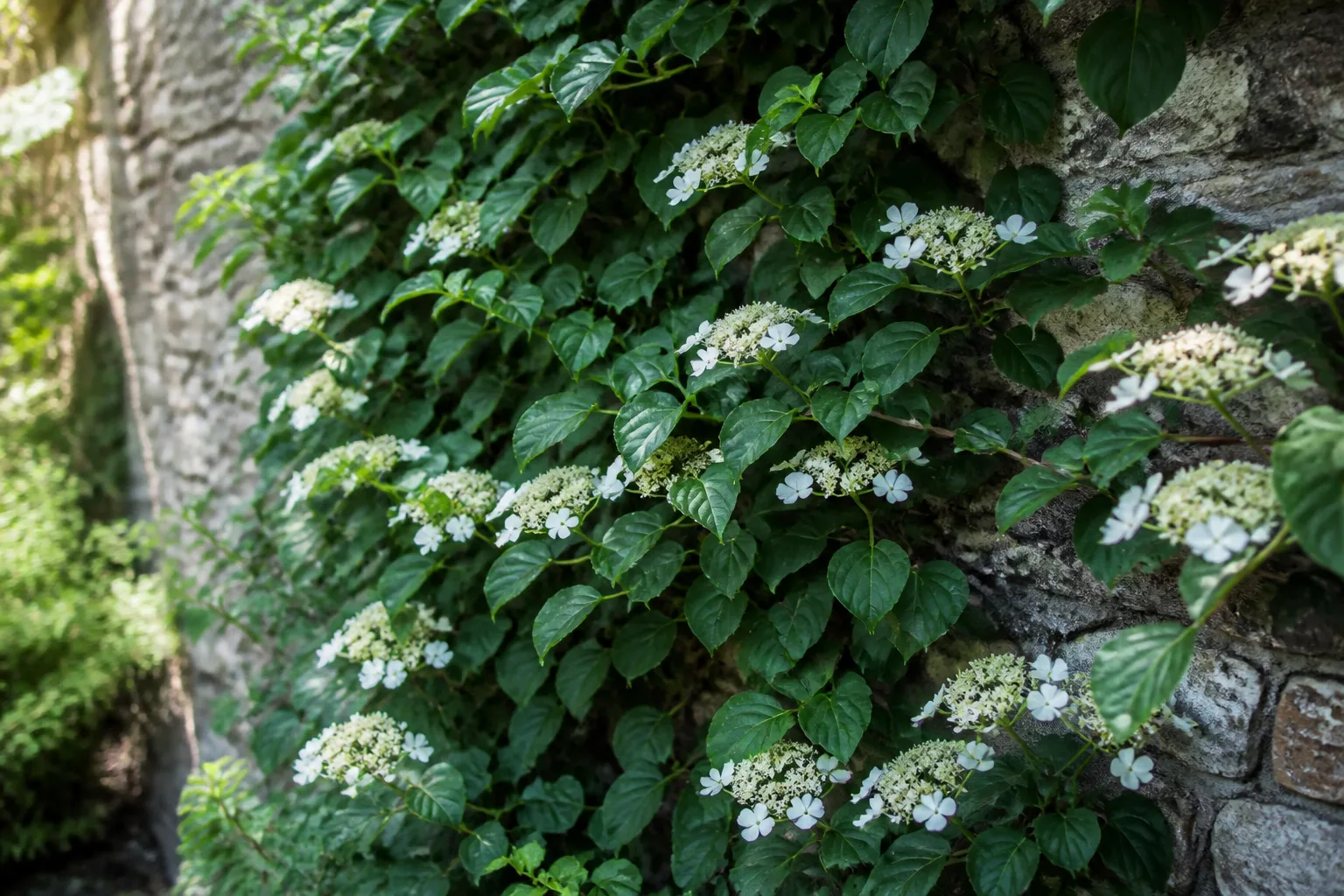
Climbing hydrangea (Hydrangea anomala subsp. petiolaris) can cover a sturdy trellis or suitable masonry surface in a shady yard. It is deciduous, so expect winter gaps, and it needs a support strong enough for a mature woody vine. Give it a defined area; once established, it can extend beyond the panel you meant to cover.
-
American wisteria (Wisteria frutescens) can shade a pergola or soften a fence with vigorous summer growth. Train it on a sturdy freestanding structure and prune it regularly; a woody vine can become heavy and overwhelm light trellises. Choose native American wisteria rather than assuming all wisteria species behave or spread the same way.
-
Switchgrass (Panicum virgatum) creates a tall, upright summer screen in a sunny bed. Cultivars differ in height and habit, so check mature dimensions and match the form to the sightline you want to block. The stems can stand through winter for texture, but the dried clump is translucent and should not be mistaken for an evergreen wall (RHS screening guidance).
-
Clumping bamboo (Fargesia spp.) can provide a dense, vertical screen in a climate suited to the chosen species. Some Fargesia are adapted to cooler summers and may struggle in hot regions, so ask for the exact species and local mature width. Do not confuse clumping bamboo with running bamboo: Fairfax County documents how running types spread by rhizomes and may cross property lines, and local rules vary (Fairfax County’s running bamboo guidance).
Match the plant to your climate and yard
Choose from the list by eliminating plants that fail the site first. A plant that thrives in full sun may thin or stretch in shade, and a shrub for consistently moist soil can fail beside a hot driveway that dries quickly. Penn State Extension recommends taking light, moisture, exposure, and soil into account; its hedgerow example also shows how a layered planting can solve several yard conditions over time (Penn State’s hedgerow guide).
Best options for narrow lots and small yards
For a narrow lot, prioritize mature width and pruning burden over the word “fast-growing.” A narrow arborvitae cultivar, a trellis vine, or a single strategically placed small tree may block the problem view with less bed depth than a row of full-size trees. Avoid planting wide species that you intend to keep narrow by constant shearing; that can create a maintenance job and may expose bare wood.
If the bed is only a few feet deep, screen the seating area rather than the full property line. Use a vine on a fence, tall containers if the site allows them, or a small group of upright shrubs placed across the sightline. Fine Gardening’s examples show how plants and open sections can enclose a yard without turning it into a solid green wall (Fine Gardening’s in-town lot design).
Best options for shade, wind, and wet soil
In partial shade, start with plants that tolerate the measured light at the site, such as Canadian hemlock in a cool, moist climate, inkberry holly where soil and region fit, or climbing hydrangea on a support. “Shade tolerant” does not mean a plant will form a dense hedge under deep evergreen canopy; tree roots, dry soil, and low light can all slow establishment.
For wind-exposed areas, use species proven in your local climate and consider a mixed screen rather than a single row of broadleaf evergreens. Young plants need regular establishment care even when mature specimens tolerate dry spells. In a wet or seasonally flooded location, red-twig dogwood and inkberry may suit the site better than a shrub that needs sharp drainage, but verify the exact planting conditions before ordering.
Should you plant a single hedge or mix species?
A single-species hedge gives a consistent shape and can be easier to prune, but one pest, disease, or bad site condition can damage the whole line. A mixed privacy screen—for example, evergreen shrubs in front of small trees with a few grasses at the edge—has more variation in height, flowering, and seasonal interest. Penn State Extension’s shrub guidance explains the value of diversity and the risk of relying on a mass planting when a pest or disease affects that plant type (Penn State Extension).
The tradeoff is that a mixed planting is less formal and can take more thought to maintain. Group plants in repeated clusters instead of scattering one of everything; this keeps the border readable and lets you prune plants with similar needs together. BBC Gardeners’ World notes that loose hedges can be both lower-maintenance and useful for wildlife when the selected plants suit the space (BBC Gardeners’ World’s informal hedge guide).
If year-round privacy is essential, make evergreen plants the backbone and use flowering or deciduous species in front or between them. If the goal is a softer summer boundary, a mixed row of viburnum, serviceberry, grasses, and one evergreen anchor may be enough. Native plants support local ecological relationships when they are native to your own region, not simply somewhere in the country (Penn State’s hedgerow guide).
How far apart should privacy plants be?
There is no spacing number that works for every privacy plant. Spacing depends on the mature spread, desired density, and whether you are forming a clipped hedge or a naturalistic screen. A row planted too far apart can leave gaps for years; one packed too tightly may force plants to compete, lose lower branches, and need repeated pruning.
Set plants from mature size and maintenance goals
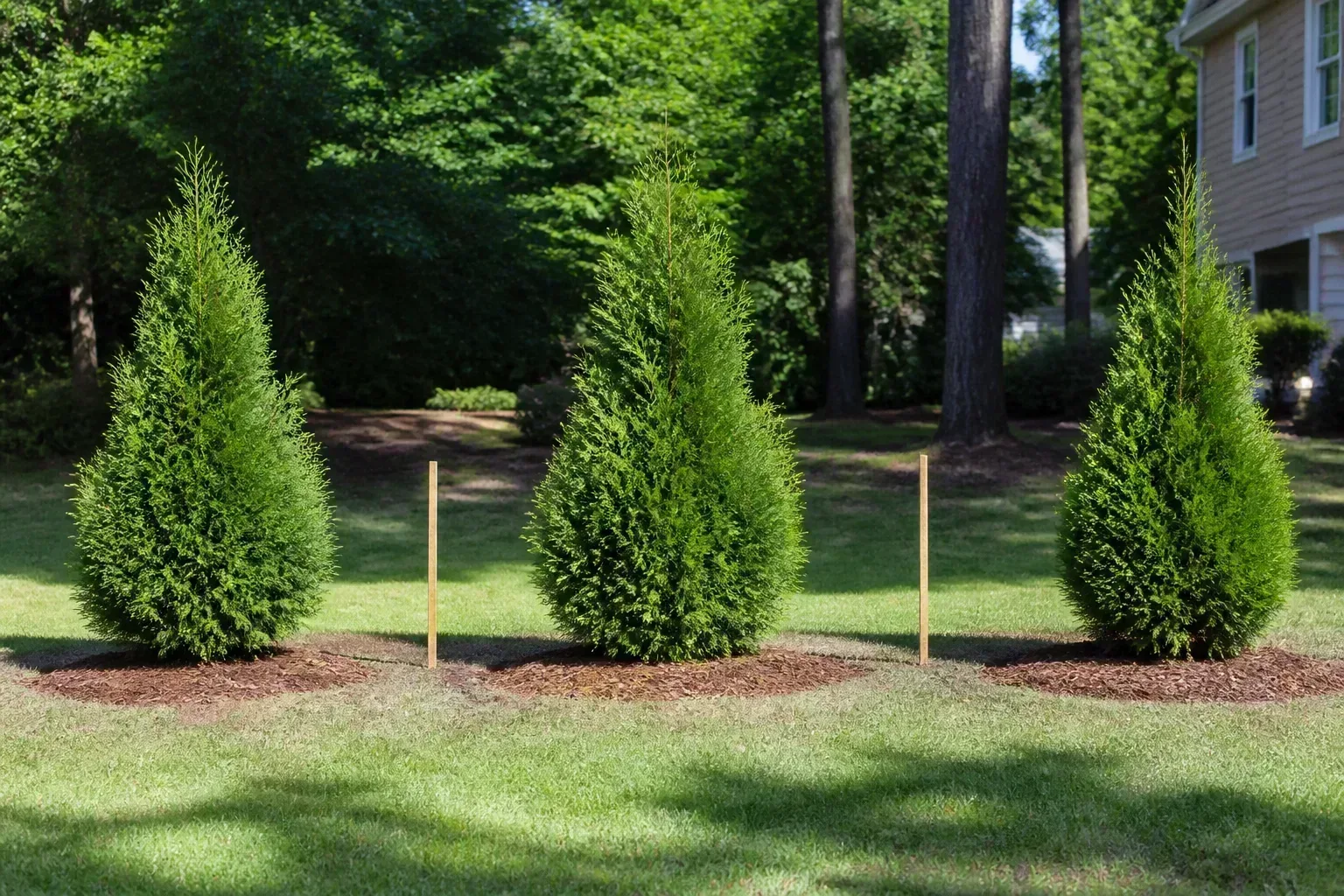
Start with the nursery tag or an extension profile for the exact cultivar, not a generic species average. Note the mature width, then mark the plant centers along the bed and check whether foliage, branches, and access paths will stay on your property. RHS guidance also recommends considering the size of the screen, the maintenance you can manage, and the roots of trees near drains and structures (RHS screening guidance).
For a formal hedge, follow the grower’s recommended hedge spacing for that cultivar and choose whether the plants will be kept clipped. For an informal, mixed screen, allow each plant to reach its natural width and stagger the row where the bed is deep enough. Do not automatically cut a general-purpose spacing rule in half to make the screen fill sooner.
Plant for establishment, not instant cover
Plant during the locally recommended season, water the root ball thoroughly, and keep the soil evenly moist while roots establish. A thick layer of mulch helps conserve moisture, but pull it back from trunks and stems so the crown is not buried. Water deeply during dry spells in the first growing seasons instead of giving frequent, shallow sprinkles.
Leave access for pruning, weeding, and checking irrigation lines. A young hedge may need years—not months—to become a useful screen, depending on plant size, climate, and care. If you need privacy before the planting fills in, use a fence panel, trellis, or temporary outdoor screen while the plants grow.
Keep the screen healthy and dense
Prune according to the plant, not the date on a generic hedge-trimming calendar. Flowering shrubs may need pruning after bloom, while many evergreens respond best to light, regular trimming; a severe cut into bare old wood can leave permanent holes in plants that do not regenerate well. Keep the base slightly wider than the top when shearing a hedge so lower foliage gets light.
Inspect the row for dead branches, bare lower stems, leaning plants, pest damage, and irrigation failures. Replace a dying plant early or adjust the screen design rather than crowding new shrubs into a gap without considering their mature size. For a mixed hedgerow, prune selectively and leave enough flowering or fruiting growth to preserve the seasonal value of the plants.
Avoid fertilizing automatically to force faster growth. Excess fertilizer can push soft, weak growth and will not fix poor drainage, deep shade, or a plant that is too large for its site. If one part of the hedge struggles, check soil moisture and sunlight first, then ask a local extension office or certified arborist about a diagnosis.
Privacy planting mistakes that create more work
- Buying by the pot size: A small nursery plant can become a large tree. Check the mature width and height of the named cultivar before planting.
- Using a single row to block every angle: A neighbor’s upper window may need a taller canopy, while patio privacy may need a lower, closer screen. Place plants across the actual sightline.
- Expecting deciduous plants to screen in winter: Viburnum, dogwood, ninebark, serviceberry, and wisteria lose leaves. Keep that seasonal gap in mind.
- Choosing fast growth without checking local risk: Some vigorous plants spread beyond gardens or need special containment. Research the species in your state and municipality before planting.
- Treating all bamboo as alike: Clumping and running types have different growth habits. Confirm the exact species, containment needs, and local rules before buying bamboo.
- Planting too close to buildings or utilities: Roots, mature branches, and repeated pruning can create costly problems. Locate underground lines and leave enough clearance for access and growth.
- Assuming a hedge will solve noise: Plants can filter a view, but a solid barrier is usually needed for stronger sound reduction.
If you want a broader project plan beyond plant choices, see our guide to backyard privacy ideas and our separate overview of evergreen privacy hedges. For a quicker screen, compare the different growth habits in our guides to fast-growing privacy trees and ornamental grasses for privacy.
Conclusion
The best privacy plants are the ones that fit the view, the season, and the space you can maintain. Use evergreens for reliable winter coverage, deciduous shrubs for a softer seasonal border, and vines or grasses when the screen needs to occupy a narrow or specific spot.
Before ordering, measure the sightline, check the plant’s full mature size, and match the species to your local sun, soil, and climate. A well-planned screen may take time to fill in, but it will be easier to care for and less likely to become an oversized hedge that you later have to remove.