14 Best Ornamental Grasses for Privacy in Your Garden
Compare 14 ornamental grasses for privacy by height, sun, spread, and season. Find strong screens, lighter veils, and the plants that need extra caution.
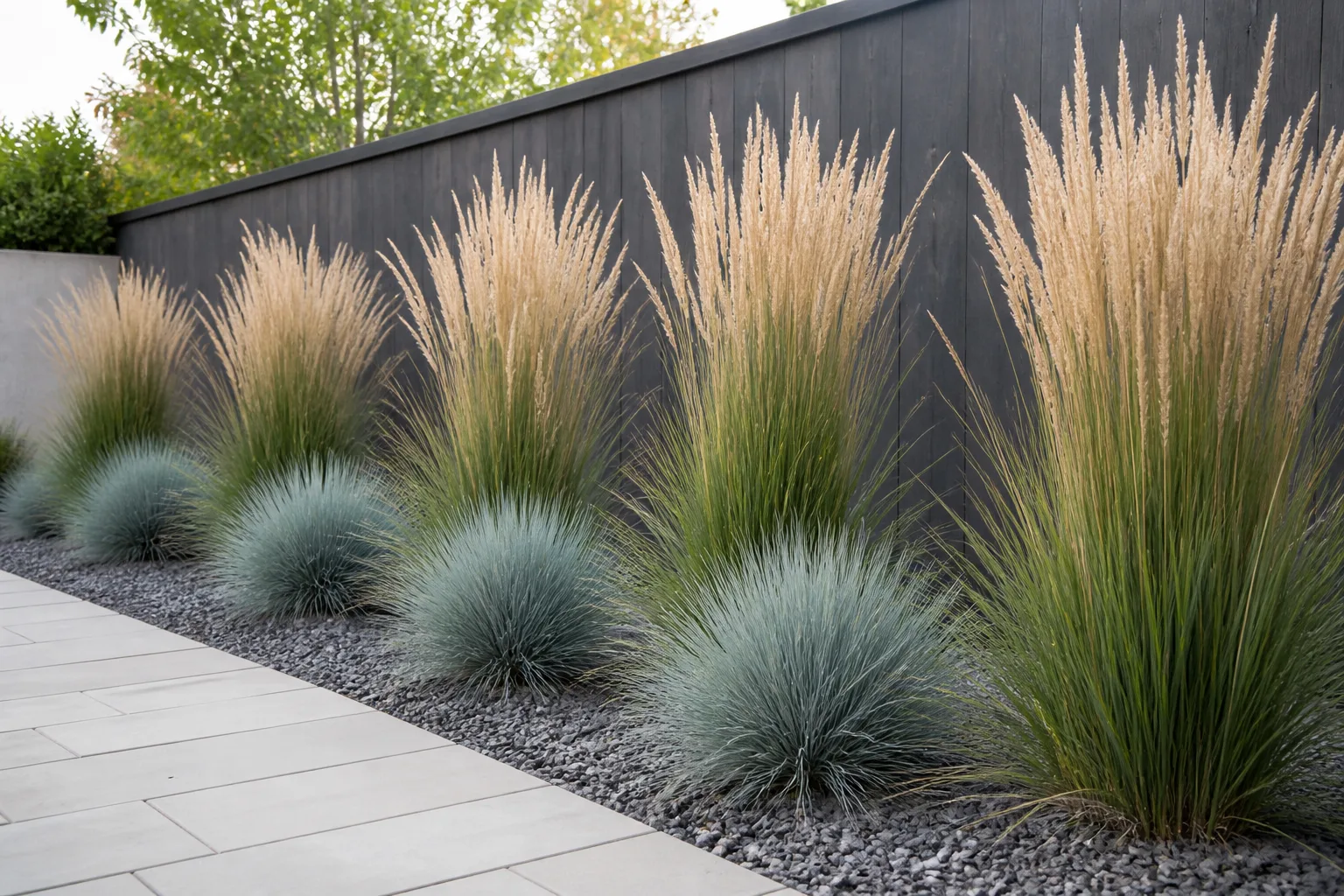
Ornamental grasses can soften a view of a neighbor’s patio, screen a low fence, or make a seating area feel tucked into the garden. Their stems move in wind, their seedheads stay interesting after flowers fade, and many need less shaping than a clipped hedge. They work best as a seasonal visual screen, though: most lose green leaves in winter, leave gaps near the ground, or grow too slowly to hide a view in their first season.
Choose by the view you want to filter, not by the tallest number on a plant tag. A narrow upright grass can screen a seated patio without occupying a deep bed; a tall but airy grass may only blur a view; and a compact grass with beautiful plumes may be too short to block anything. Walk the site from the chair, kitchen window, and property edge before you decide.
A useful shortlist is simple: feather reed grass and upright switchgrass make tidy seasonal screens; clumping bamboo is the strongest evergreen option where its climate suits; and the striped Miscanthus cultivars add height with a regional spread caveat. The other choices below have useful roles, but several are accents or partial screens rather than substitutes for a fence.
What ornamental grasses can screen—and where they fall short
A grass screen blocks some lines of sight while leaving the garden airy. Dense, upright leaves can hide a ground-level view in summer; tall flower stalks can break up a fence or blur a neighboring window. But a plume is not a wall. Some grasses have leaves only at the base, some turn straw-colored after frost, and most are cut back before spring growth, creating a seasonal opening.
There are two different kinds of “evergreen” to keep in mind. A deciduous grass may keep its dry stalks standing through winter, but that does not mean it has green, dense foliage. Bamboo such as Fargesia robusta holds green leaves in a suitable climate; grasslike New Zealand flax can do the same in mild regions. The Royal Horticultural Society’s screening advice likewise treats ornamental grasses as informal summer screening and advises careful choice of clumping bamboo.
Growth habit matters as much as height. A clump-forming grass expands gradually around its crown and is usually easier to site, though it still gets wider. A rhizomatous grass sends underground stems outward; that can close a gap, but also push beyond a small bed. Seedlings create a separate spread route, so “clumping” does not automatically mean “will never appear elsewhere.” Check the exact cultivar and your local invasive-plant guidance before planting a vigorous grass beside wild land.
A plant’s mature height also may refer to flower stalks rather than an opaque block of leaves. If you need to screen a neighbor’s upper-story window, a grass will not solve the problem. For reliable all-season privacy, use a fence or a layered planting with an evergreen shrub or tree; grasses are better for softening a close-range view or filling a seasonal gap.
14 privacy grasses, ranked by the job they do
Feather Reed Grass: A Narrow, Upright Seasonal Screen
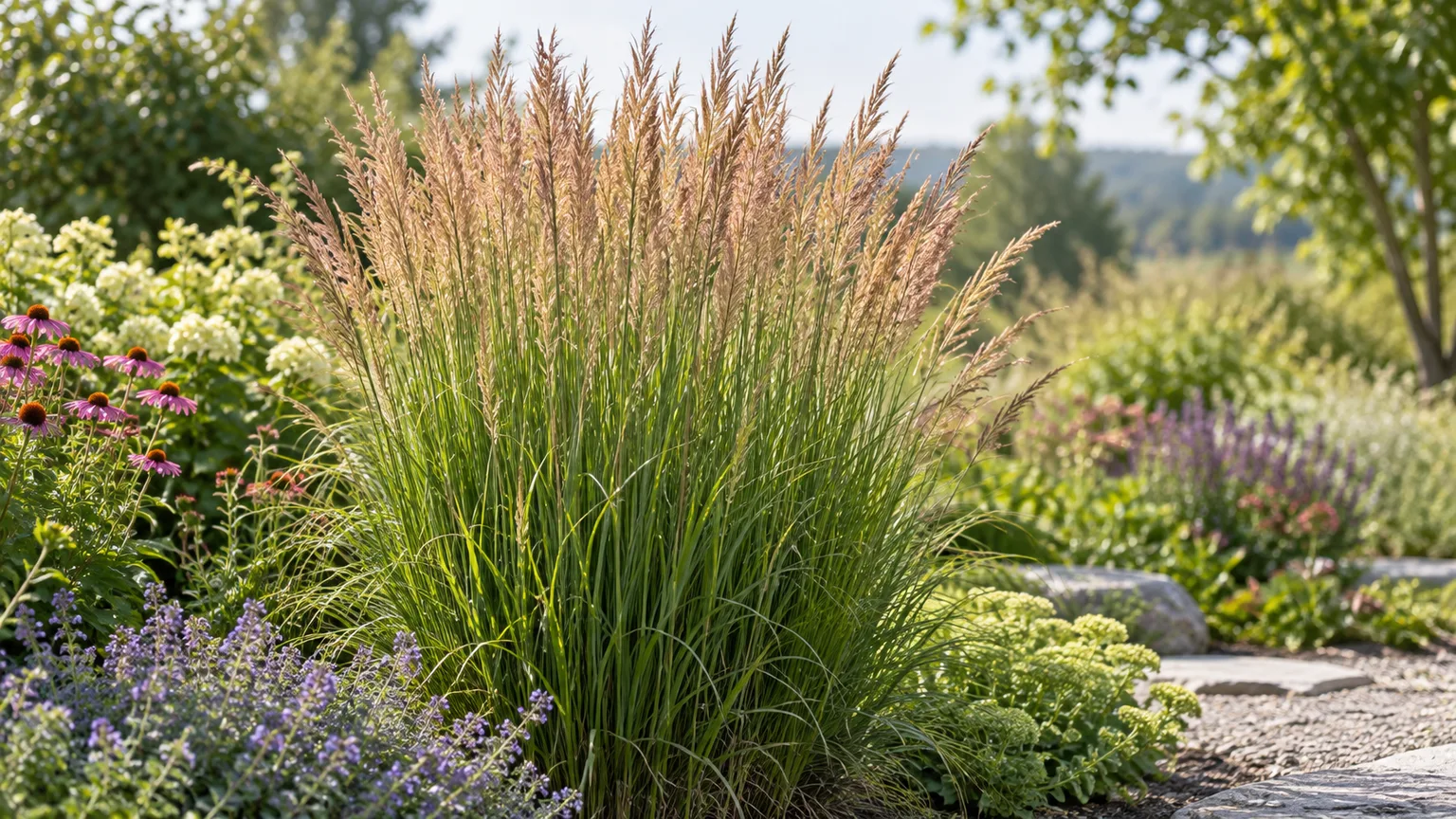
Feather reed grass (Calamagrostis × acutiflora ‘Karl Foerster’) is a strong choice when the bed is narrow and you want vertical lines rather than a wide fountain of leaves. It typically grows about 3 to 5 feet tall, with flower stems reaching higher, and its tight clumps stand upright in a row. The grass tolerates moist soil and clay better than many ornamental grasses, which makes it useful along a rain-garden edge that drains between storms.
‘Karl Foerster’ is a cool-season hybrid that leafs out earlier than many warm-season grasses. NC State Extension describes it as sterile, slow-spreading by rhizomes, and tolerant of clay and wet soil; it can flop in shade. Use it where the site is sunny enough for firm stems, and remember that the screen is still seasonal. A Fine Gardening plant profile also recommends it for a hedge or screen effect.
Switchgrass: A Native Screen With Winter Structure
Switchgrass (Panicum virgatum) is one of the most versatile choices in the group because cultivars range from upright, narrow forms to taller, airy prairie plants. Foliage often stands 3 to 4 feet high, while the plume-bearing stems can reach 5 to 7 feet or more. ‘Northwind’ is especially columnar; ‘Cloud Nine’ is taller and more open. That variation lets you choose a plant that fits a short patio boundary or a deeper naturalistic bed rather than forcing one size everywhere.
In the United States, the species is native across much of the country, but the best choice is a locally appropriate species or cultivar. It prefers sun; too much shade can make a tall selection loose or floppy. Stems usually persist through winter, though the foliage dries, so it offers structure rather than a green wall. NC State Extension’s switchgrass profile details the cultivar differences and notes that partial shade can weaken its upright form.
Clumping Bamboo: The Best Evergreen Grasslike Screen
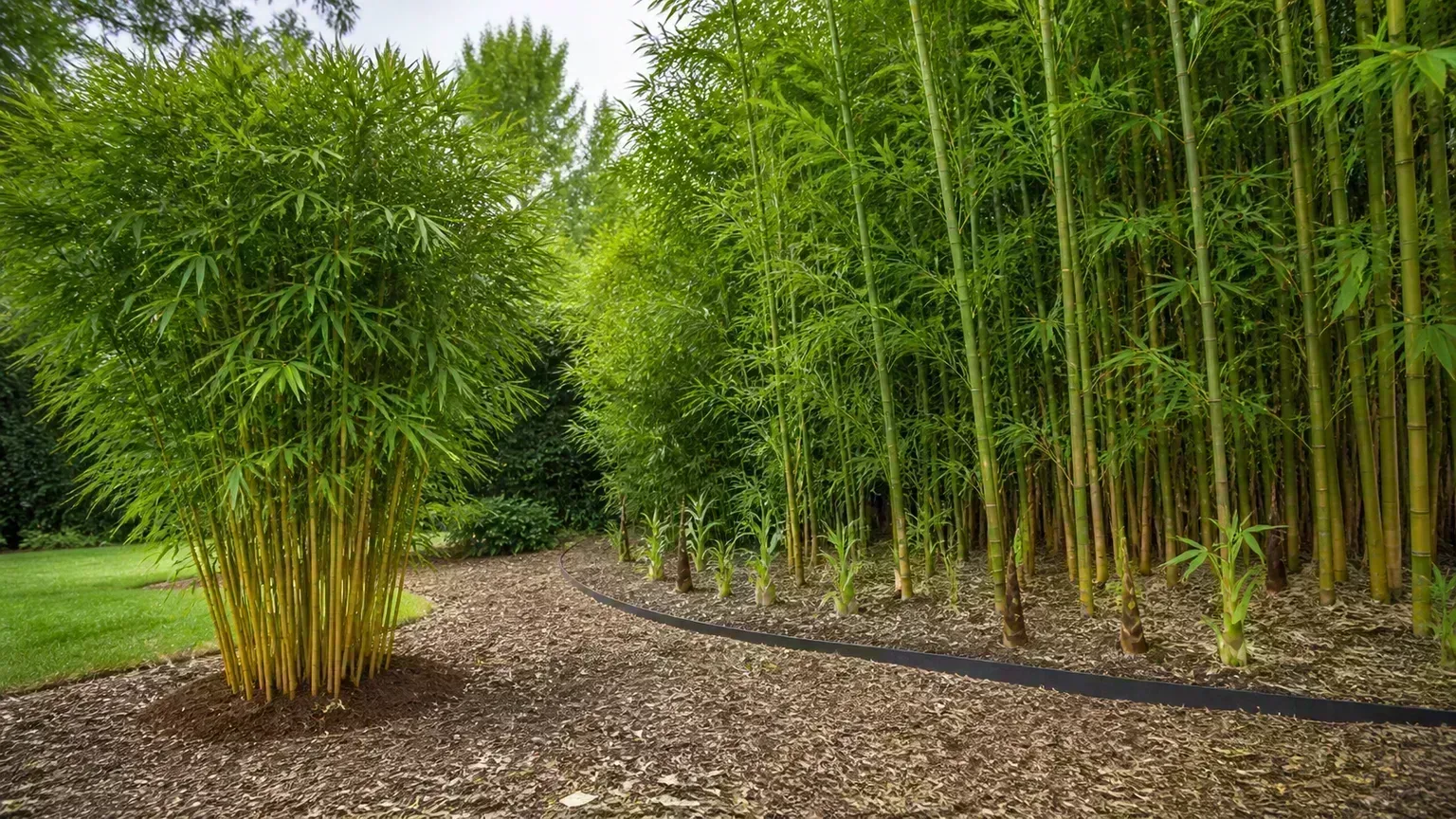
For year-round leafy cover in a cooler temperate garden, clumping bamboo is the strongest option on this list. Fargesia robusta can reach about 10 to 15 feet over several years, stays densely leafy, and grows in a compact clump rather than sending long running rhizomes across the yard. It prefers moisture-retentive soil and partial shade, so it is not the best fit for a hot, exposed, drought-prone bed.
Bamboo is still a long-term commitment: the clump gradually broadens, mature plants need room, and some species struggle in hot summers. Buy a named Fargesia rather than assuming every plant sold as “bamboo” is clumping. The NC State Extension profile for Fargesia robusta gives a 10- to 15-foot mature height and a 5a–8b hardiness range; the RHS bamboo-control guide explains why running types need containment.
Big Bluestem: A Prairie Grass for a Deep, Sunny Border
Big bluestem (Andropogon gerardii) can rise 4 to 8 feet and make a substantial screen in a sunny, open border. Its upright stems and blue-green summer foliage shift to coppery tones in fall, then remain as winter structure if you leave them standing. The species is a North American prairie grass, so in a region where it is native it can bring wildlife value as well as height.
Give it enough room to form a broad clump and do not rush the first season. It may take time to establish, spreads by short rhizomes and occasional seed, and can flop if it grows in too much shade. This is a better fit for a deep boundary bed than a narrow walkway. The NC State Extension plant profile describes its mature size and the trade-off between its drought tolerance after establishment and its slower start.
Chinese Silvergrass: Tall Coverage With a Regional Spread Risk
Chinese silvergrass (Miscanthus sinensis), including ‘Morning Light’, brings tall, feathery plumes and arching leaves that can soften a long fence line. A mature plant may reach around 5 to 8 feet, depending on cultivar and conditions, and a repeated row can create a handsome late-season screen. ‘Morning Light’ has fine green-and-white foliage; it is a showy option when you want a light, bright texture rather than a solid green panel.
The species is invasive or considered problematic in parts of the United States, including North Carolina, so do not treat every cultivar as a safe default. Seed set varies among cultivars; a label that says “low seed set” is not the same as sterile. Avoid it beside natural areas where it is flagged, and choose a locally native switchgrass or big bluestem instead. NC State Extension’s Miscanthus sinensis profile summarizes the regional concern and cultivar variation.
Zebra Grass: Striped Foliage for a Soft Screen
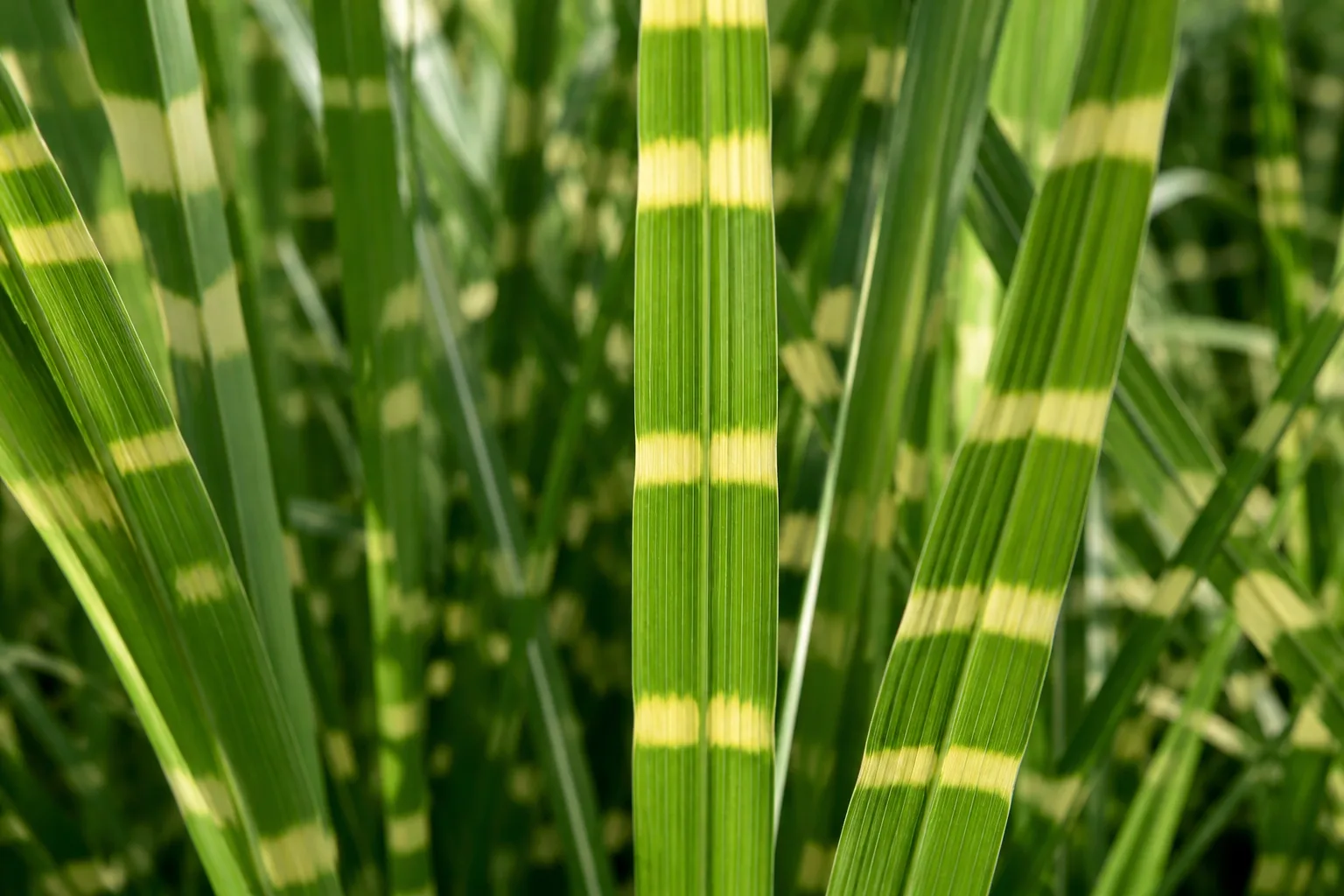
Zebra grass (Miscanthus sinensis ‘Zebrinus’) has horizontal yellow bands across green leaves, so it works as a focal screen where plain green would feel flat. The clump is usually about 5 to 8 feet tall and can arch outward as it matures. Plant it in a sunny border with room for its fountain shape; the stripes are a detail best appreciated close up, while the height helps break up a view farther away.
Its soft, arching shape can leave more gaps than a strictly upright grass, especially before summer growth fills in. It shares the regional invasive concern of other Miscanthus sinensis, though seed production differs by cultivar. Do not plant it simply because its nursery label lists a hardiness range; check the local invasive list and consider a native switchgrass where seed escape is a concern. The Fine Gardening miscanthus trial summary illustrates how seed production can vary widely among cultivars.
Porcupine Grass: A More Upright Striped Miscanthus
Porcupine grass is the cultivar Miscanthus sinensis ‘Strictus’. It carries the same golden horizontal bars as zebra grass, but the leaves tend to point more upright, giving the clump a narrower, spikier outline. It can reach roughly 6 to 8 feet and suits a sunny spot where you want strong vertical texture without the broad arch of ‘Zebrinus’.
The difference is mainly habit and visual effect, not a different species. Both share the same regional spread caution and need adequate space, so avoid planting them close together in a small bed just to compare stripes. If you want a low-risk native screen, choose a native grass instead; if the local list permits ‘Strictus’, keep the clump where you can inspect seedlings and remove them before they mature.
Pampas Grass: A Powerful Screen With Serious Caveats
Pampas grass (Cortaderia selloana) can grow 6 to 12 feet tall and form a broad, dense mound with dramatic cream or pinkish plumes. In a mild, sunny landscape where it is legal and not invasive, it can screen a substantial view. It needs more space than most gardeners expect, so it is not a small-patio solution, and its spiky leaf margins make it a poor plant beside paths, play areas, or a seating edge.
The risks deserve more weight than the plumes. Pampas grass is invasive in some regions, and dry foliage can add fire fuel; check local guidance before planting and avoid it where authorities discourage it. Wear gloves, long sleeves, and eye protection for any pruning. NC State Extension’s pampas-grass profile flags sharp leaves, regional invasiveness, and flammability. In a place where pampas is a concern, consider a native tall grass recommended by your local extension service.
Fountain Grass: A Rounded, Medium-Height Barrier
Fountain grass (Pennisetum alopecuroides, also called Cenchrus alopecuroides) forms rounded clumps, usually about 2½ to 5 feet tall and nearly as wide. Its arching flower spikes add texture from late summer into fall, and the foliage often stands through part of winter. Use it to soften a low fence or screen a seating area from a nearby path; it is not tall enough to block a second-story view.
Cultivar size varies, so read the specific label before buying. The species can self-seed aggressively in favorable conditions, while some named cultivars have lower seed set; check local invasive-plant guidance rather than assuming all fountain grasses behave alike. It does best in sun, although it can tolerate some light shade, and it needs good drainage through winter. The Missouri Botanical Garden Plant Finder describes its size, clumping habit, and self-seeding caveat.
New Zealand Flax: Evergreen Structure for Mild Climates
New Zealand flax (Phormium tenax) is not a true grass, but its bold, strap-shaped leaves make it a useful grasslike screen in mild coastal gardens. The evergreen clump has broad, architectural foliage in green, bronze, red, or variegated forms; mature plants can become several feet tall and wide. Its broad leaves screen more directly than fine plumes do, and the plant can make a patio corner feel private without a row of narrow stems.
Cold is the limiting factor. The plant is best in mild climates and may need protection in colder regions; a pot can be moved, but a mature flax becomes heavy and needs space for roots. Do not plant it where leaf tips or flower stems will crowd a walkway. The RHS plant profile for Phormium tenax lists it in Asphodelaceae, not the grass family, and describes the evergreen habit and mature spread.
River Oats: A Shade-Tolerant Screen That Can Self-Seed
River oats (Chasmanthium latifolium) is one of the few choices here that can handle partial shade. Its bamboo-like leaves form a 2- to 5-foot clump, while the flat, dangling seedheads turn from green to copper and then tan. It is a good choice for a moist woodland edge or shaded boundary where sun-loving screening grasses would thin out.
The trade-off is spread: river oats can self-seed readily and may expand by rhizomes, so it can become weedy in a small bed or natural area. It makes a soft lower screen rather than an evergreen wall, and the seedheads are more visible than the foliage after frost. Use it where a loose, naturalistic edge is welcome and where you can thin seedlings. NC State Extension’s river-oats profile notes its shade tolerance as well as the potential for aggressive spread.
Pink Muhly Grass: Fall Color, Not a Privacy Wall
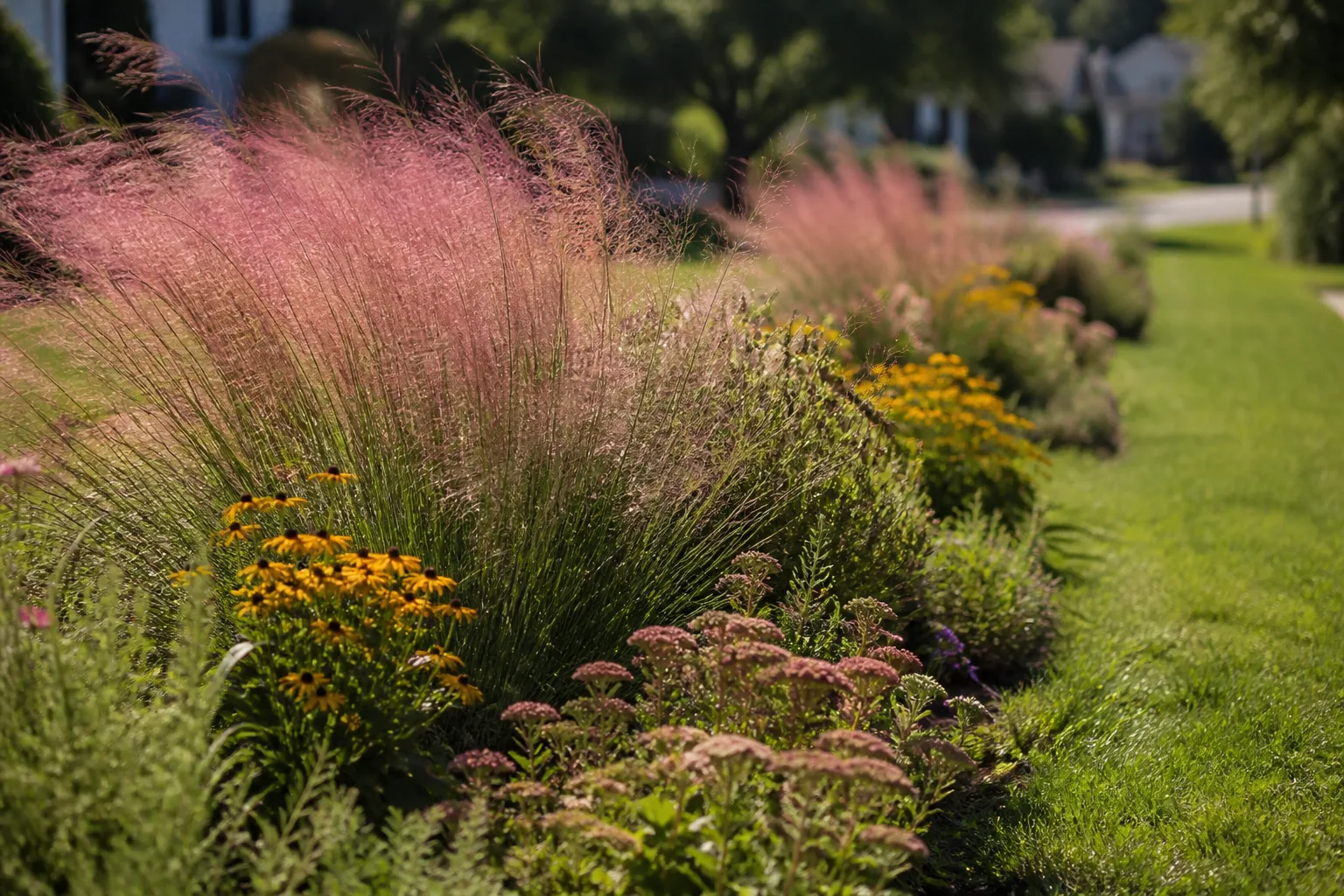
Pink muhly grass (Muhlenbergia capillaris) earns a place in a privacy planting for its fine, airy flowers, which make a pink haze above green foliage in fall. The clump is generally about 2 to 3 feet tall and wide, with the plumes lifting higher. It handles heat, dry spells, and lean soil once established, making it a good foreground plant in a sunny screen bed or a low border around a seating nook.
Because its flowers are transparent and its leaves are low, pink muhly does not hide a neighbor on its own. Plant it in groups for a colorful veil at the edge of a taller screen, not as the screen’s backbone. It is a native choice in much of the southeastern United States, but native status varies by region. NC State Extension’s pink-muhly profile gives its size, fall display, and drought tolerance after establishment.
Giant Feather Grass: A Tall, See-Through Veil
Giant feather grass or golden oats (Stipa gigantea, often listed as Celtica gigantea) produces tall golden stems and airy oat-like plumes that can rise 6 to 10 feet. Its evergreen or semi-evergreen foliage stays in a comparatively low basal tuft, depending on climate, so the flowers create a tall veil rather than a solid visual barrier. Choose it for a sunny, well-drained border where movement and winter seedheads matter more than opacity.
This is a specimen or layered-border plant, not a fast hedge. The stems can be damaged in exposed, windy sites, and the light flowerheads do little to block a view when the breeze moves them. A Royal Horticultural Society profile lists a mature height of 1.5 to 2.5 metres and notes its full-sun preference; Fine Gardening’s plant guide describes the shimmering plumes as a specimen feature.
Purple Majesty Millet: Fast Summer Coverage From an Annual
Purple Majesty millet (Pennisetum glaucum ‘Purple Majesty’) grows quickly in heat and adds purple leaves and seedheads to a summer planting. It can reach about 3 to 5 feet, so a group of plants can screen a patio for part of the warm season while adding strong color. It is useful when you want a temporary screen in a container or annual bed, not when you need a permanent hedge.
Treat it as an annual in most gardens: frost ends the display, and you will need to replant each year. Its height can vary with weather and watering, and the dark color develops as the plant matures. It is also pearl millet, a cultivated grain species, not a cold-hardy perennial grass. University of Wisconsin–Madison Extension’s ornamental-millet guide describes ‘Purple Majesty’ as an annual and gives its typical 2- to 5-foot height.
Design the screen around its gaps, spread, and seasons
Start with the view, not a shopping list. From the chair or window you want to screen, mark the visible slice of fence or neighbor’s yard; check it from seated and standing height because those sightlines are different. A 4-foot clump may screen a seated patio but leave a standing adult exposed, while a tall grass may do nothing for a second-story window. If the view is above the eventual plume height, a grass row is the wrong tool.
Next match the site to the plant. Record hours of direct sun, soil moisture after rain, drainage, and the width of the bed. Full-sun grasses often become open or flop in shade; a shade-tolerant species may survive but still be too short or too loose to screen. Check the plant’s mature width, not the pot size. The University of Minnesota’s native-grass planting guide offers a useful dense-hedge starting point of spacing grasses at about half their mature height, but that is not a universal formula: compare it with the cultivar’s spread and leave room to reach each crown for maintenance.
For a narrow strip, use one row of upright, compact grasses such as ‘Karl Foerster’ or a narrow switchgrass cultivar. For a deeper bed, a staggered second row can close gaps without squeezing every crown together. A small group of mixed species can also make the screen more resilient than a monoculture, but keep the number of plant types limited so different heights and bloom timing do not leave a transparent section at the exact point you need to cover. The University of Maryland Extension’s mixed-screen guidance includes native ornamental grasses and emphasizes matching plants to light and site conditions.
Plant in the season recommended for your climate and species, then water consistently while roots establish. The first year is when a grass screen needs the most attention; established plants may handle dry weather better, but “drought tolerant” does not describe a new rootball in hot soil. Avoid routine high-nitrogen fertilizer, which can produce weak, floppy growth instead of a stronger screen. Water at the base and mulch lightly around, not over, the crown.
Leave most ornamental grasses standing through winter if you want height, seed for birds, and a more sheltered crown. Cut them back in late winter or early spring before new growth rises, using gloves and sharp tools because dried blades can be rough or sharp. Follow local fire guidance near homes or dry vegetation, especially with large, dry grasses such as pampas. Divide a congested clump when its center thins or the plant outgrows its space; division refreshes the screen and gives you new plants without crowding the row.
A container can make a movable patio screen, but a small pot will not support a tall, stable plant. Choose a wide, heavy container with excellent drainage, expect to water more often than an in-ground planting, and account for wind. Pots also expose roots to more winter cold, so a grass hardy in the ground may not overwinter safely above ground. For a deeper layout discussion, see this guide to inexpensive backyard privacy ideas.
If you need immediate and dependable coverage in every month, combine grasses with a structural screen. A fence, evergreen hedge, or suitable clumping bamboo can cover the dormant months; grasses soften the foreground and add seasonal height. Compare evergreen choices in the guide to top evergreens for privacy hedges, and check local height rules before planning a boundary screen.
Conclusion
The best ornamental grasses for privacy depend on whether you need a dense seasonal screen, an evergreen backdrop, or simply a softer view. Start with feather reed grass, switchgrass, or a climate-appropriate clumping bamboo for stronger coverage; use big bluestem or striped miscanthus only where their scale and spread suit the site; and treat pink muhly, golden oats, and purple millet as decorative layers rather than privacy walls.
Measure the sightline, check mature width, and verify local invasive guidance before you buy. When winter opacity or upper-story screening matters, pair the grasses with a fence, hedge, or other dependable barrier instead of asking an airy plant to do a wall’s job.



