10 Poplar Trees: Pros and Cons of Each Type
Compare 10 poplar trees by mature size, growth habit, root suckers, seed fluff, and site fit before choosing one for a yard or restoration project.
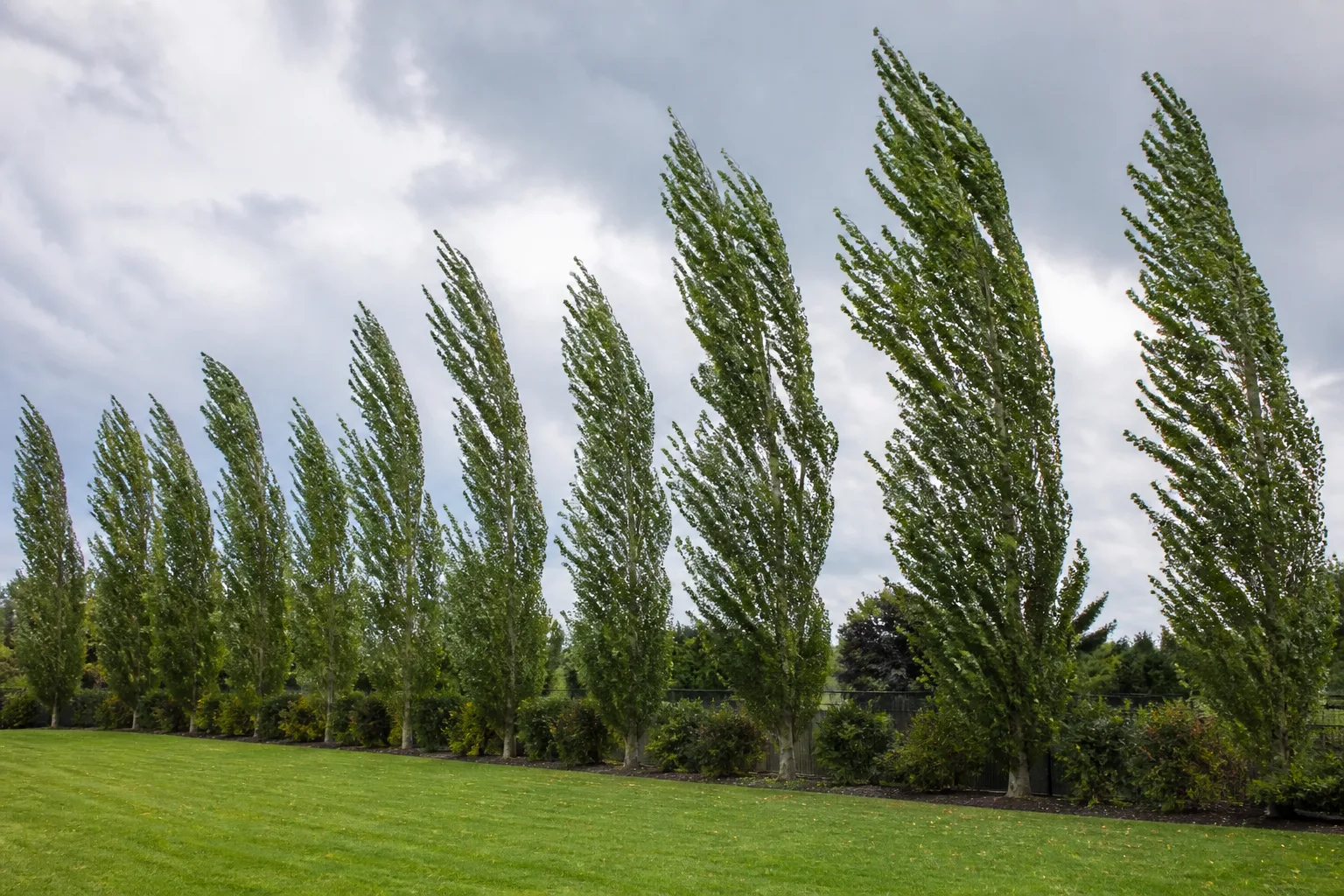
A poplar can be a fast-growing shade tree, a golden-leaved aspen grove, a narrow windbreak, or a cottonwood rooted beside a river. The same genus also includes trees that send up suckers, shed fluffy seeds, or become far too large for a typical backyard. The best choice depends less on a tree’s name than on its mature size, site, and purpose.
The profiles below compare 10 poplars, aspens, and cottonwoods by their likely strengths and limitations. Use the table to narrow the field, then check the botanical name on a nursery label and confirm regional suitability with a local extension service or native-plant source. Common names overlap, and cultivars within one species can differ in shape, sex, and growth.
What Counts as a Poplar?
Poplar is a common name for trees in the genus Populus, a group in the willow family that includes true poplars, aspens, and cottonwoods. Their leaves, sizes, and habitats vary widely. Many grow quickly, and the genus includes both trees suited to wet riverbanks and species that tolerate upland sites. A “tulip poplar,” despite the name, is Liriodendron tulipifera in the magnolia family, not a Populus; NC State Extension identifies it as a tulip tree.
Most poplars have separate male and female trees. Male trees bear pollen-producing catkins; female catkins mature into capsules containing seeds with cottony hairs. Those seeds can travel on wind, but the fluff is not a feature of every individual tree. The Oregon State University genus overview describes the group’s diversity and reproductive pattern, while the Royal Horticultural Society’s black poplar profile notes that female poplars can release conspicuous cottony seed.
Root behavior also depends on species, tree age, soil, and growing conditions. Some poplars readily spread through root suckers; others are valued for a more predictable shape. Even a tidy-looking sapling can mature into a large tree, so identify the exact tree and its cultivar before you plant.
Quick Comparison: 10 Poplar Types at a Glance
| Poplar | A useful match | Main trade-off |
|---|---|---|
| Japanese poplar | Large, open sites needing a distinctive shade tree | Can become very large; susceptible to bacterial canker |
| Big-tooth aspen | Native eastern woodland edges and naturalized groves | Root sprouting can create a colony beyond the original planting |
| Quaking aspen | Cool, moist sites where golden fall color and a grove are welcome | Spreads by root sprouts and may not stay a single-trunk tree |
| Lombardy poplar | Very large properties needing a tall, narrow screen | Extreme height, vigorous roots, and canker risk |
| White poplar | Large naturalistic sites where it is locally appropriate | Vigorous suckering and naturalization in parts of North America |
| Willow-leaved poplar | Streamside or restoration settings in its native range | Needs moisture and is a poor choice for dry garden soil |
| Gray poplar | Broad shelter planting with room for a spreading root zone | Vigorous suckers and large mature size |
| Eastern cottonwood | River edges, floodplains, and other spacious moist sites | Female seed fluff, brittle wood, and frequent root sprouts |
| Canadian poplar | A named hybrid cultivar selected for a specific screen or planting | The name covers variable clones; cultivar traits matter |
| Fremont cottonwood | Large western riparian landscapes with abundant water | Weak branches and little fit for a small ornamental yard |
This is a shortlist, not a planting plan: local climate and cultivar can change performance. Most of these trees need room for both their mature crown and roots. The most important distinction in the table is between a poplar for an open, wet, or naturalized landscape and one a homeowner hopes to manage as a compact specimen.
1. Japanese Poplar (Populus maximowiczii)
Japanese poplar is a large East Asian tree with broad, vivid-green leaves and a shapely crown. It can be a handsome specimen in an expansive lawn or park, and its foliage turns yellow in fall. The International Dendrology Society describes the species as native to Japan, Manchuria, Korea, and the Russian Far East, and notes that leaves emerge early and fall late. A mature tree can be a dramatic source of shade where there is enough open ground.
Its scale is also the main drawback. Wild trees can reach about 100 feet, so this is not a practical choice beneath wires or beside a small patio. The same expert profile flags susceptibility to bacterial canker, a disease that can damage branches or stems. Avoid treating a general common name as a guarantee of performance: ask a reputable nursery for the cultivar name, expected mature dimensions, and any known disease concerns in your region. Trees and Shrubs Online’s species profile provides additional botanical and disease details.
2. Big-Tooth Aspen (Populus grandidentata)
Big-tooth aspen is an eastern North American tree named for its large, blunt teeth along the leaf edge. Its leaves are round to oval, and young growth can have a soft, downy coating. A mature tree may reach roughly 60 to 70 feet in the wild, making it a better fit for an open woodland margin or naturalistic property than a confined ornamental bed. The deep teeth distinguish it from quaking aspen, whose leaf edge is more finely toothed.
Big-tooth aspen regenerates readily from root suckers, a trait documented in the US Forest Service species review. In a restoration or woodland setting, that ability helps create a grove; in a closely maintained lawn, it can mean regular sucker removal. Big-tooth aspen is less commonly grown as a landscape specimen than some other trees, and sourcing can be less straightforward. Before choosing it, decide whether you want a spreading stand or a single focal tree. For identification and the species’ mature form, consult the International Dendrology Society’s profile.
3. Quaking Aspen (Populus tremuloides)
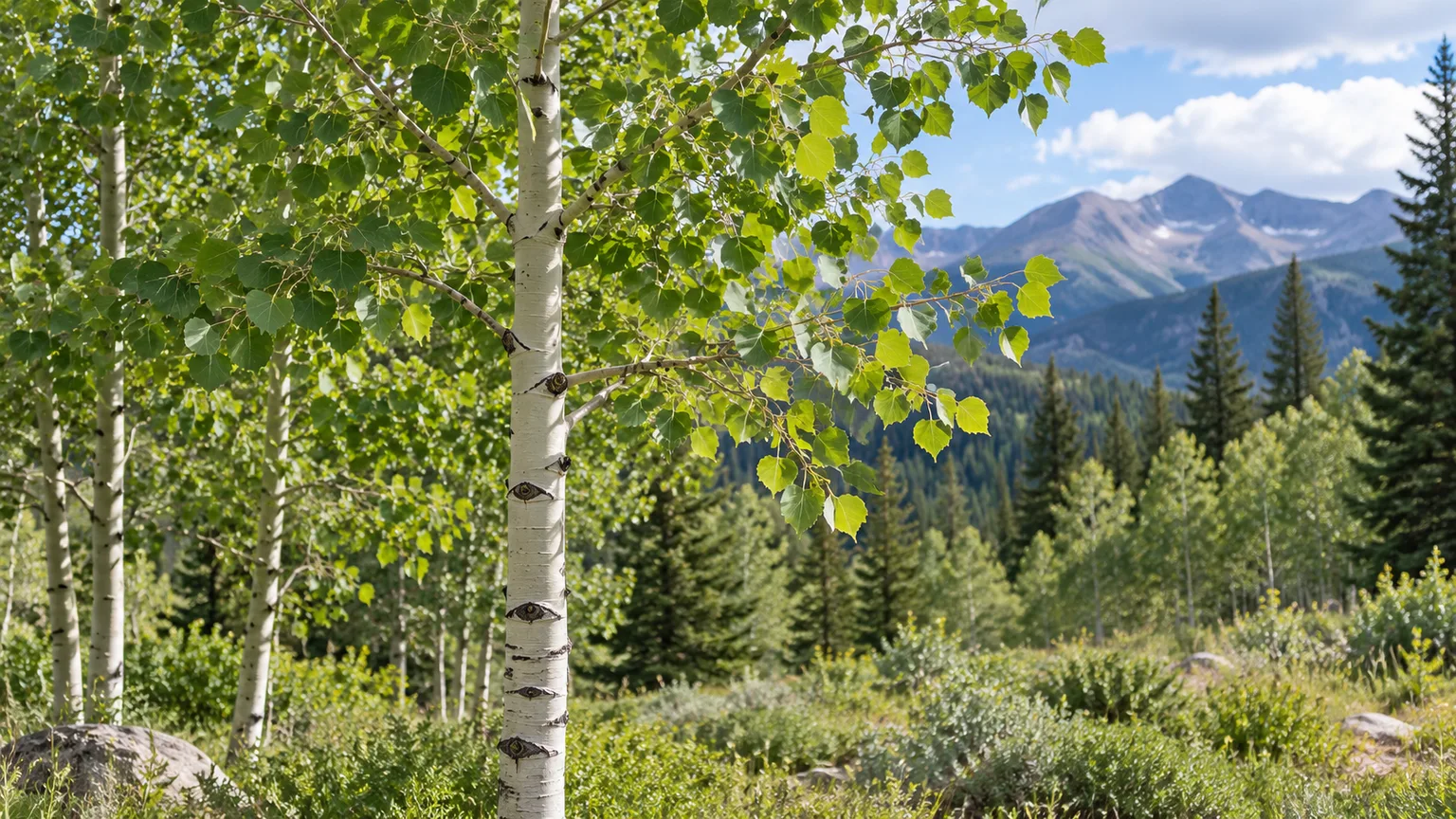
Quaking aspen is famous for leaves that tremble in a breeze. Their flattened leaf stalks let the round leaves flutter, and healthy trees can turn bright yellow in autumn. In cool regions and mountain landscapes, an aspen grove brings movement, light shade, and a strong seasonal display. Utah State University Extension notes that this species often grows in connected root systems and reproduces through root sprouts.
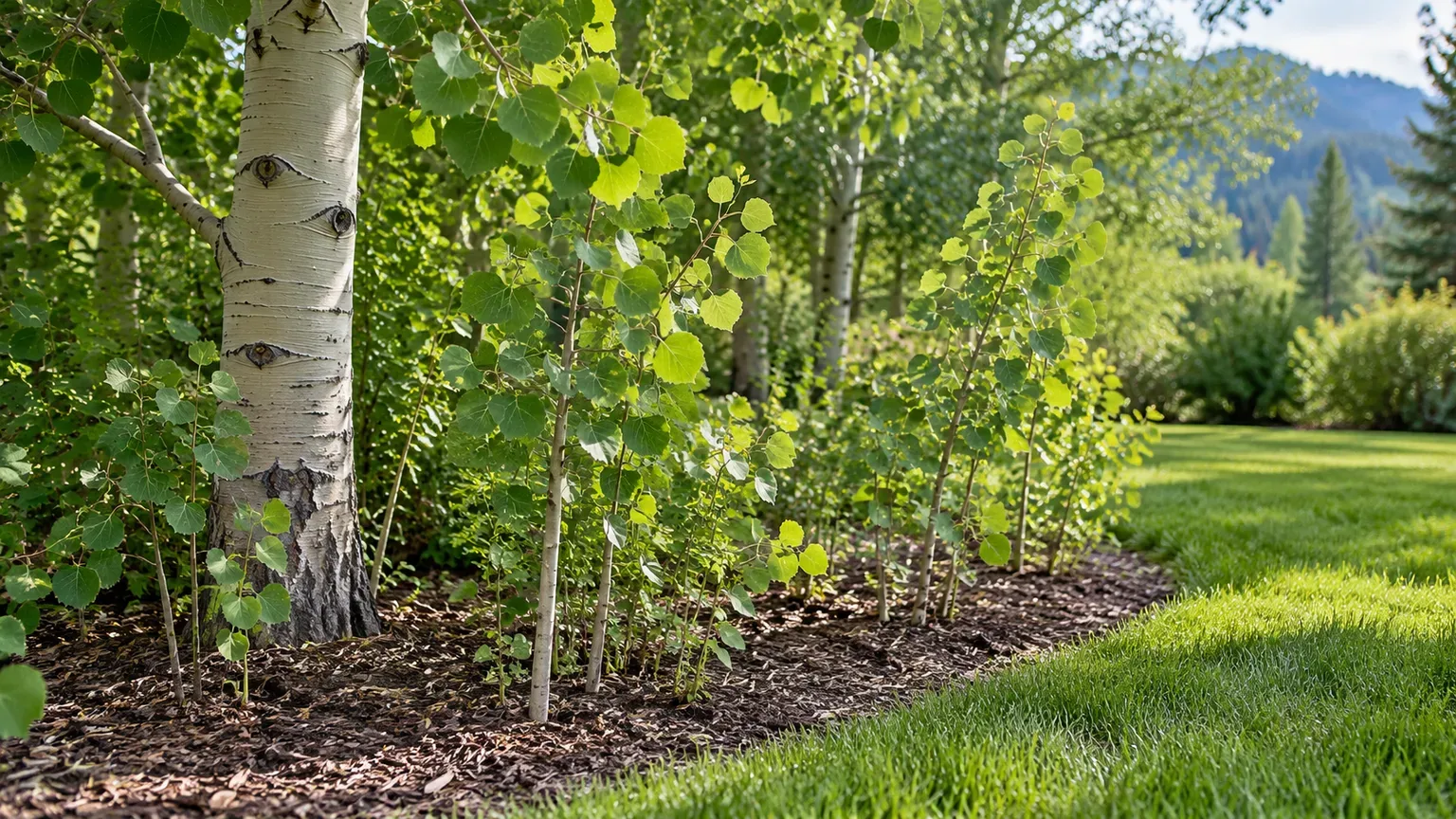
That colony-forming habit is the central trade-off. A row planted as separate saplings may eventually send up shoots outside its original footprint; mowing or removing sprouts takes ongoing attention and will not convert the root system into a compact one. Aspen also tends to perform best where summers are not excessively hot and dry and the soil does not stay parched. Use it when a small grove is part of the design, particularly in a suitable cool, moist region. Skip it if every new trunk would be treated as a weed. The USU Extension identification page has regional profiles and identification notes.
4. Lombardy Poplar (Populus nigra ‘Italica’)
Lombardy poplar is a cultivar of black poplar selected for its striking, upright form. Branches rise close to the trunk, creating the tall, narrow silhouette used in rows, avenues, and windbreaks. It can screen a wide field edge without the broad crown of a typical cottonwood. In spring, this particular cultivar is male, so it produces red catkins rather than female seed capsules and their familiar cottony fluff. Gardeners’ World’s growing guide identifies it as a fast-growing tree that may exceed 40 meters tall and says it is suitable only where there is ample room.
The narrow crown should not be mistaken for a small tree. Its roots and top growth are vigorous, and a mature specimen is unsuitable for many residential gardens, especially near buildings or buried services. Lombardy poplars can also develop problems as they age, so a row may require replacement planning rather than being treated as a permanent screen. NC State Extension’s profile describes the tree as short-lived and notes that Cytospora canker can be fatal. If you need year-round privacy on a typical lot, compare smaller, regionally appropriate screening trees first. Plant Lombardy poplar only after assessing mature height, below-ground infrastructure, and the consequences of eventual removal.
5. White Poplar (Populus alba)
White poplar’s standout feature is the contrast between green upper leaf surfaces and pale, woolly undersides that flash silver when wind turns the leaves. It is a large, fast-growing tree native to Europe and Central Asia and can provide quick shade on a broad site. It tolerates a range of soils and urban conditions, which helped make it a widely planted ornamental tree.
That adaptability comes with a significant regional concern: white poplar has naturalized in parts of North America and can spread through root suckers, forming colonies that compete with other vegetation. NC State Extension’s detailed profile describes its aggressive growth, naturalization, sucker production, and the need to avoid planting close to buildings, driveways, and walks. Before buying one, check current invasive-plant guidance for your state or province. A tree that is legal in one area may be discouraged or restricted elsewhere. If the goal is a silver-leaved accent, compare native trees or shrubs with a less expansive root habit.
6. Willow-Leaved Poplar (Populus angustifolia)
More commonly called narrowleaf or mountain cottonwood, Populus angustifolia has narrow, lance-shaped leaves and a slender crown that can look willow-like. It is native to western North America, especially the Rocky Mountain region, where it grows along streams and sandbars. In that setting, the tree’s roots and foliage are part of a riparian plant community rather than a decorative feature isolated in a lawn.
It is not a drought-tolerant garden tree. Oregon State University’s Landscape Plants profile describes it as a streamside wetland species that can grow about 50 to 65 feet tall and does not tolerate drought. That makes it useful to consider for appropriate restoration, watercourse, or moist open-landscape projects in its native range, but a poor candidate for a dry foundation bed. Its narrow leaves may seem tidy, yet the mature tree remains substantial. Match it to a naturally moist site and confirm regional provenance before planting.
7. Gray Poplar (Populus × canescens)
Gray poplar, also spelled grey poplar, is generally treated as a hybrid between white poplar and European aspen. It can combine pale leaf undersides with the strong growth associated with its parentage, producing a large shade or shelter tree. It may be useful on broad properties where rapid cover or a wind-buffering row is needed and where nearby plants will not be crowded.
The same vigor can make it a poor fit beside a home or in a small lot. Gray poplar produces suckers freely and can reach a very large size. The International Dendrology Society’s account describes its vigor, ability to grow on many soil types, and frequent sucker production; it also notes the hybrid’s relationship to white poplar and aspen. Because hybrid names and identification can be complicated, verify the botanical label and growth form with a knowledgeable nursery. Choose it only when the site can accommodate a broad, spreading tree and ongoing sucker management.
8. Eastern Cottonwood (Populus deltoides)
Eastern cottonwood is a fast-growing native of much of eastern, central, and southwestern North America. Its triangular leaves have coarse teeth and long, flattened stalks; mature trees develop broad, open crowns. In its natural range, it is associated with streambanks, river bottoms, and other moist landscapes. The tree can provide shade, bank habitat, and fast cover where a large native species is appropriate.
Its size and maintenance needs are substantial. Female trees release cottony seeds, the wood can be brittle, and the species produces root sprouts. NC State Extension’s eastern cottonwood profile lists its mature height at roughly 75 to 100 feet, possibly more, and notes its wet-soil tolerance, messiness, brittle wood, and root sprouts. That combination makes it a poor choice beside a small house, driveway, or heavily used patio, but potentially valuable on an expansive floodplain or streamside site. If the fluff is unacceptable, a verified male selection can avoid female seed; it will still be a large tree with the same site demands.
9. Canadian Poplar (Populus × canadensis)
Canadian poplar is not one uniform seed-grown species: the name covers a group of hybrids between eastern cottonwood (P. deltoides) and European black poplar (P. nigra). Different clones combine parental traits in different ways. Some are especially vigorous, and certain named selections have narrower crowns suited to large-scale screens or timber plantings. The key advantage for a buyer is that a named cultivar can offer a more specific habit than the broad label “poplar.”
The risk is buying an unidentified clone based on a generic name. Height, crown shape, seed production, disease susceptibility, and sucker behavior can vary. Trees and Shrubs Online’s hybrid account explains the group’s parentage and variation among cultivars. A nursery should be able to tell you the cultivar name, whether the selection is male or female, expected mature dimensions, and any locally observed disease problems. Use Canadian poplar for a large property, a planned shelter row, or a forestry setting where a specific clone is recommended; for a home yard, do not buy until those details are clear.
10. Fremont Cottonwood (Populus fremontii)
Fremont cottonwood is a western native found along streams and lower-elevation river corridors. Its broad leaves turn gold in fall, and mature trees form a massive crown that gives shade to a riparian landscape. In a natural river corridor or suitable restoration project, it can be a defining native tree rather than simply an ornamental choice. Utah State University Extension’s Fremont cottonwood guide describes its western range, streamside habitat, large landscape form, and preference for abundant water.
This cottonwood needs ample moisture and a large site. The same extension guide flags weak wood or branch structure, which argues against placing a mature tree over a roof, parking area, or frequently used sitting space. The International Dendrology Society describes a broad, massive crown and a California height range around 40 to 90 feet in its Fremont cottonwood profile. Grow it where water, room, and ecological fit make sense; it is rarely a good fit for a small ornamental garden.
Which Poplar Is the Best Fit for a Yard?
For most homeowners, the practical question is not which poplar looks best in a photograph; it is whether the tree’s full-size canopy, roots, and cleanup needs fit the property. Start by ruling out any species that is discouraged locally, then compare mature crown width with the available open space. Consider underground utilities, buildings, paved areas, overhead wires, and where fallen leaves or seeds will collect. A narrow cultivar still needs space for its roots and eventual height.
For a tall screen or windbreak
Lombardy poplar is the obvious silhouette for a tall, columnar screen, but its size rules it out of many home lots. A specific Canadian poplar clone may suit a large shelter row when local experts recommend it, but confirm the cultivar and sex before purchase. Do not plant an arbitrary row close to a house simply because the trees are narrow. Trees used as windbreaks need enough room to mature and should be selected for the local wind, soil, and climate, not just rapid growth.
For a more modest lot, compare a mix of smaller native trees and shrubs with staggered heights. A mixed screen usually takes longer to fill than a line of poplars, but it reduces dependence on one species and can give better seasonal structure. If a poplar is still the right fit, map where the future canopy and roots will be at maturity, not where the nursery container sits now.
For a native riparian or restoration planting
Eastern cottonwood, Fremont cottonwood, or narrowleaf cottonwood may make sense when the site lies within the tree’s native range and has the moisture regime it needs. They are not interchangeable: eastern cottonwood is associated with eastern and central North American waterways, while Fremont cottonwood is a western riparian tree and narrowleaf cottonwood is tied to streams and wetland habitats of the Rocky Mountain region. Select local provenance where available and follow restoration plans for spacing, floodplain conditions, and protection from browsing.
Aspens can also suit a naturalized planting if the goal is a grove that can spread. A lawn, path, or small garden bed is a different context: root sprouts may appear beyond the space set aside for them. For a restoration project, consult a local conservation district, extension office, or native-plant nursery for species and sourcing recommendations. Correct regional fit often matters more than a fast-growing tree’s nominal hardiness zone.
Roots, Suckers, and Where to Plant Poplars
A poplar root system is not a single behavior shared equally by every species. Some poplars and aspens readily send up root suckers, while others are sold as defined cultivars with a more consistent form. A sucker is a new shoot from a root; cutting it at the soil surface may remove the visible shoot without stopping the underground tree from making more. Repeated mowing can keep shoots short in lawn, but it does not eliminate their source.
Roots grow through soil in search of water, air, and nutrients, and their reach is not reliably predicted by a simple distance-from-trunk rule. Roots can take advantage of existing cracks or leaks in hardscape and underground lines; a tree does not need to “seek out” sound pipes for root conflict to occur. White poplar and Lombardy poplar profiles specifically caution against planting close to buildings and buried infrastructure. Before planting a large poplar, learn the mature dimensions, identify nearby utilities, and discuss the layout with a local arborist or extension professional. When the space is constrained, choose a smaller tree suited to the site instead of relying on root barriers or pruning to keep an oversized species compact.
How to Manage Seed Fluff, Pruning, and Maintenance
If cottony seeds are a concern, ask whether the nursery selection is male or female and get the answer in writing on the plant tag or invoice. A male tree produces catkins and pollen but not seed fluff; a female tree can shed fluffy seeds after flowering. Lombardy poplar ‘Italica’ is a male clone, while other species and hybrid groups include both sexes. Avoid guessing from a common name, because a species label alone may not identify sex or cultivar.
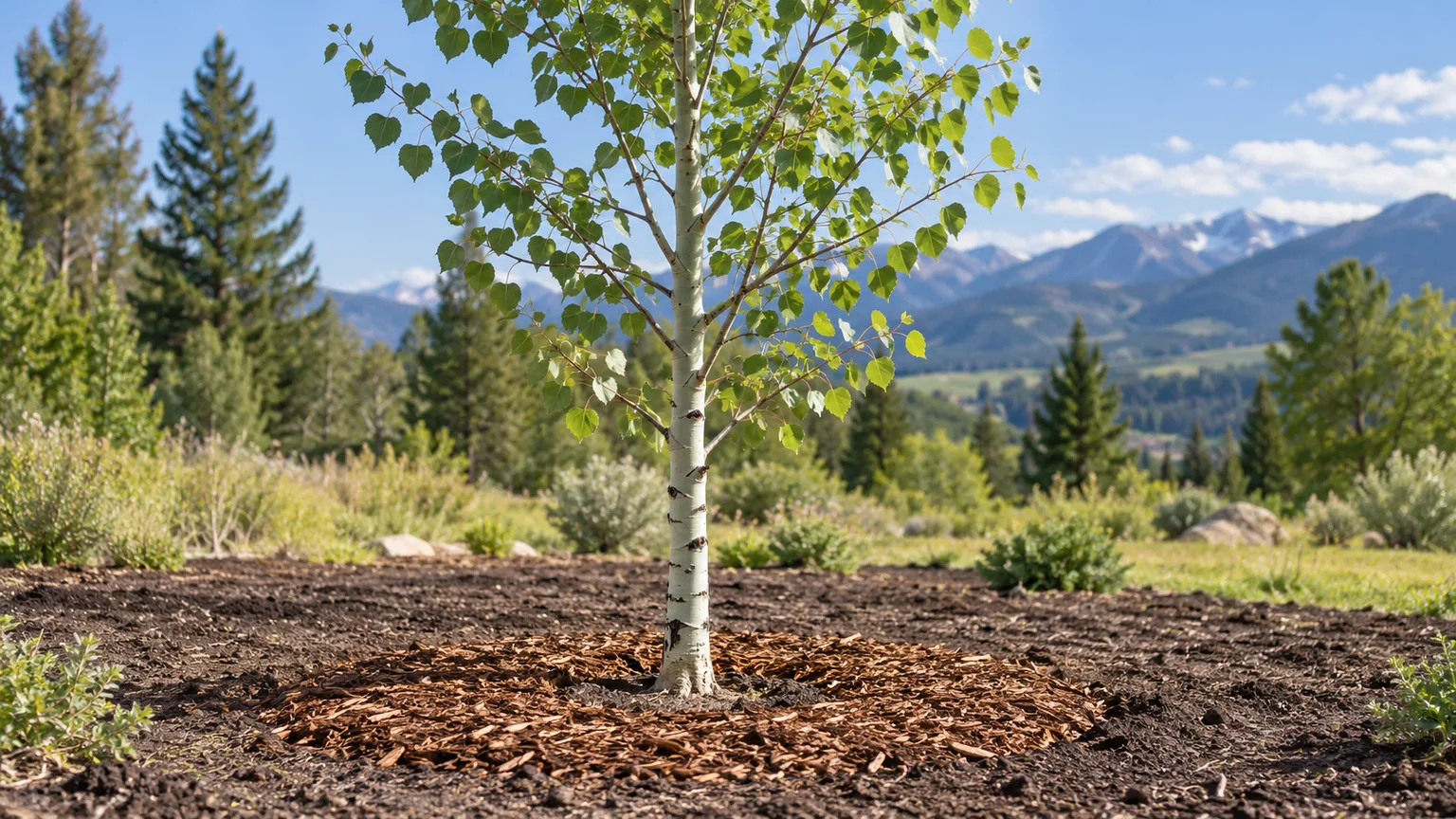
Newly planted trees need attention even when a mature specimen is described as low-maintenance. Water regularly through the first growing season, especially during hot, dry weather, while avoiding chronically saturated soil unless the species is adapted to it. Keep a mulch ring over the root zone, but leave a gap around the trunk and avoid piling mulch against bark. Stake only when needed to stabilize the tree, and remove supports after the tree can stand securely.
Do not use hard topping as a routine way to contain a fast-growing poplar. Large pruning cuts can create weak regrowth and increase future maintenance, while removing major limbs may compromise the tree’s structure. Have a qualified arborist assess hazardous limbs, storm damage, or a mature tree near a building. As the tree grows, monitor for suckers, cankers, dead branches, and seed cleanup; whether these are acceptable depends on the tree’s location and purpose.
Conclusion
Poplars offer fast shade, distinctive fall color, tall screens, and useful native trees for stream corridors. Their trade-offs are just as varied: some form suckering colonies, some produce seed fluff, and many eventually need far more space than a typical planting bed provides. Start with the exact botanical name, confirm the cultivar and sex if relevant, then match the tree to climate, soil moisture, mature crown, and root space. For many yards, the best poplar is no poplar at all; for a broad lot, windbreak, or restoration site, the right species can be a valuable long-term choice.



