Prayer Plant vs Bird's Nest Fern: Which Is Easier?
Is a bird's nest fern easier than a prayer plant? Compare light, water, humidity, soil, recovery, and the best fit for your home.
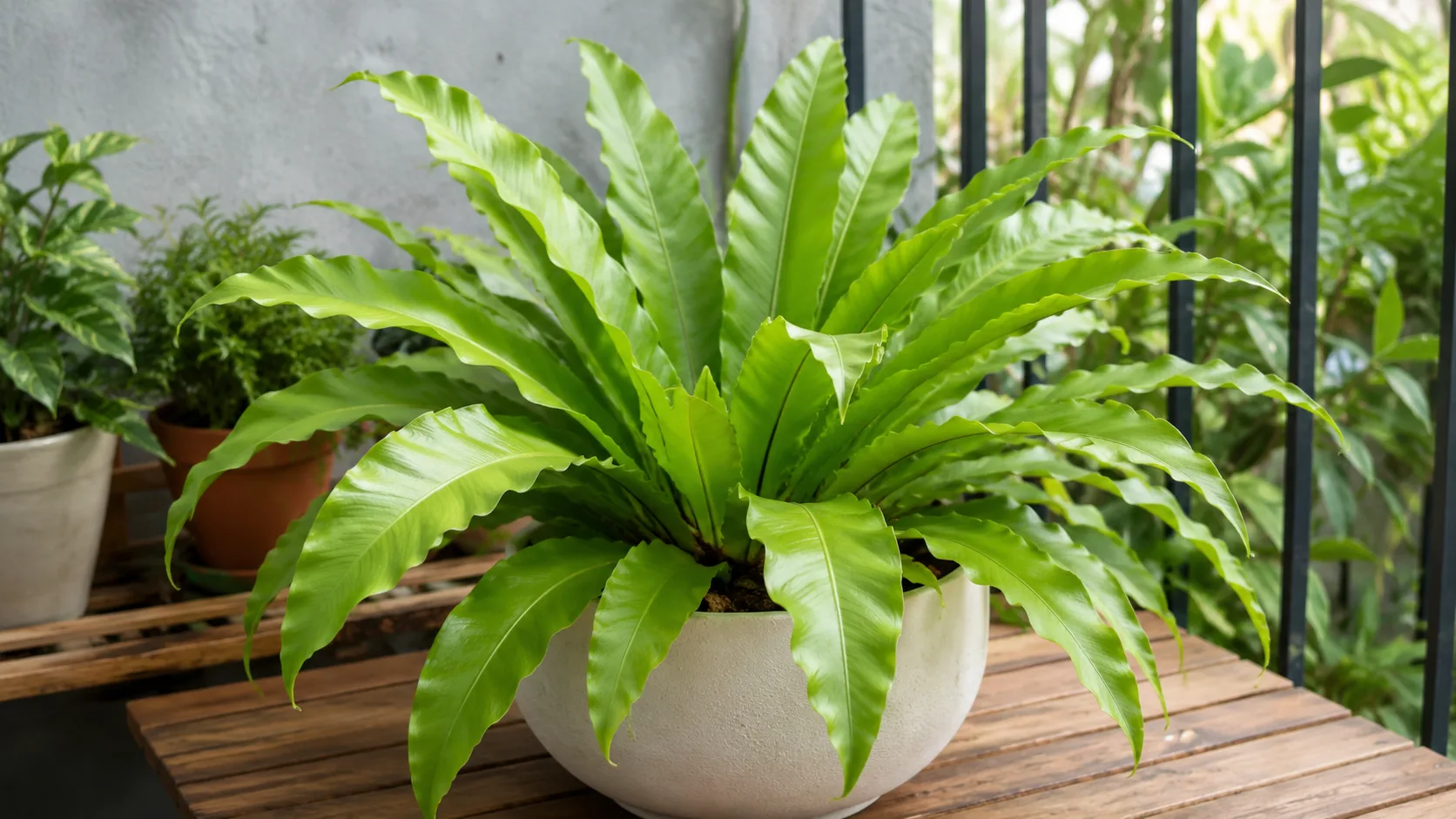
If a prayer plant keeps punishing you for watering late, moving it, or letting winter air dry out the room, a bird’s nest fern may be the better match. The swap is not about finding an indestructible plant. It is about choosing a plant whose warning signs arrive earlier, whose leaves recover more visibly after a missed watering, and whose care rhythm fits the room you actually have.
The honest comparison matters. A bird’s nest fern still wants warmth, humidity, filtered light, and a pot that drains. It is forgiving of an occasional mistake, not a license to keep the soil soggy or place it in a dark corner. If you can offer bright shade and a repeatable moisture check, it is one of the more rewarding ways to get a lush tropical silhouette without managing a highly reactive plant every day.
Quick decision: choose the fern if your room and routine fit
Choose a bird’s nest fern over a prayer plant when your home has a north or east window, a bright bathroom, or a spot several feet back from a brighter window. It is also a strong fit if you water in batches rather than on a strict weekly schedule, because a healthy fern can usually recover from one missed watering better than a thin-leaved prayer plant.
Do not choose it simply because the label says “low light.” A room with no useful daylight, a cold draft, or a pot that stays wet for a week is a poor fern room. In that situation, a ZZ plant or another drought-tolerant option may be more honest. The fern wins when you can provide bright shade, airy moisture, and reasonable humidity—not when you want a plant that can be ignored indefinitely.
Why prayer plants feel fussy even when they are labeled easy
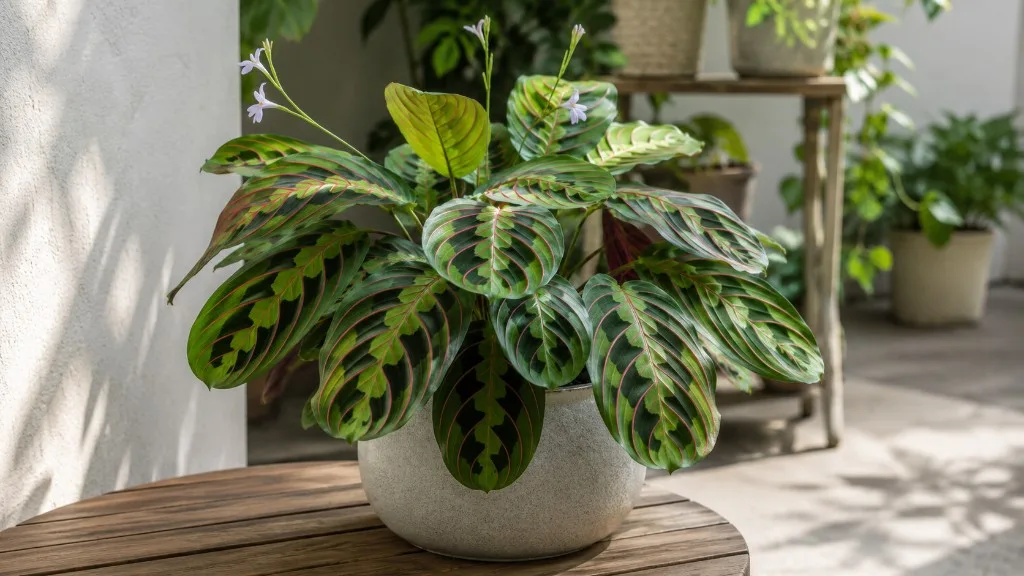
Prayer plants are beautiful, responsive plants, but their strengths create a narrow margin for error. Their patterned leaves show stress quickly when moisture swings, humidity drops, light changes abruptly, or roots sit in a poorly drained mix. The Missouri Botanical Garden describes Maranta leuconeura as a tropical plant that prefers consistently moist soil, bright indoor light without strong direct sun, and added humidity; it also lists root rot, tip browning, and several common sap-feeding pests among its problems. That profile is a useful baseline for the species.
This does not make prayer plants bad plants. It makes them feedback-heavy plants. You often notice a mistake as curled or crispy leaves after the useful correction window has already narrowed, and the same brown edge can point to thirst, dry air, excess light, salt buildup, or root trouble. For a grower who enjoys close observation, that responsiveness is part of the appeal. For someone who wants a calmer plant-care routine, it can feel like a daily performance review.
What the bird’s nest fern changes—and what it does not
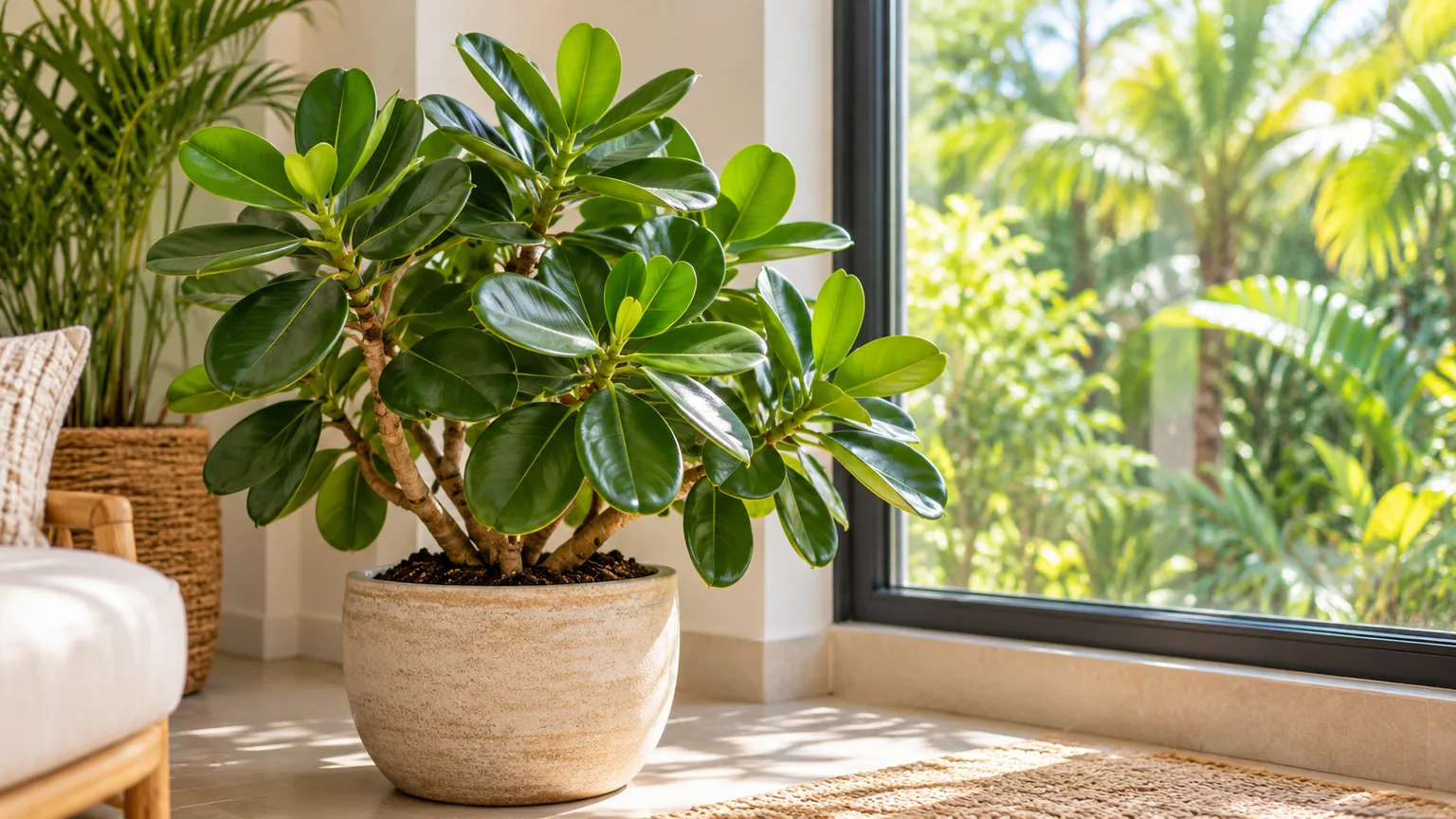
The bird’s nest fern, usually sold under Asplenium names such as A. nidus, replaces patterned, low-growing foliage with a vase-shaped rosette of glossy, strap-like fronds. It grows from a central crown, often has a slower and more deliberate presence, and does not need regular shaping to look full. North Carolina Extension describes it as a tropical epiphyte with bright green fronds, a moisture-loving nature, and a preference for bright light or light shade rather than harsh sun. Its plant profile also notes the importance of warmth, porous soil, and humidity.
The practical difference is recovery. A fern may wilt or develop a few brown edges after a missed watering, yet regain its posture after the root zone is rehydrated. That does not mean old damage disappears, and it does not mean the plant will survive repeated drought. It means the fern gives you a better chance to correct a small mistake before it becomes a total collapse.
Meet the bird’s nest fern before you buy one
This is an epiphytic fern, meaning it naturally grows on trunks, branches, or other supports rather than in deep ground soil. Its rosette catches water and leaf litter in the wild, while its roots need oxygen as well as moisture. That combination explains why a mix can be damp without being dense, and why a pot with no drainage hole is a serious mismatch.
The plant is sold under several related species and cultivars, so the label may say bird’s nest fern even when the exact species differs. The Royal Horticultural Society describes Asplenium nidus as a slow-growing, tender evergreen fern with glossy fronds that can become very large under good conditions. Its profile recommends bright indirect light, a moist-but-not-soggy compost, and restrained feeding. Indoors, expect a substantial rosette rather than a tiny desk plant, and leave room for fronds to arch outward.
The central crown is the feature to protect. New fronds emerge from that nest-like center, and damage there can remove the plant’s ability to replace old foliage. When you shop, reject plants with a collapsed center, widespread wet-looking lesions, or a smell of sour, waterlogged mix. One cosmetic brown edge is less concerning than a crown that has been repeatedly drenched or physically crushed.
Give it the right light without calling darkness “low light”
Place the fern where daylight is bright enough to cast a soft shadow but not so intense that direct midday rays land on the fronds. A north-facing window can work well; an east-facing window is usually easiest; and a bright south- or west-facing window may work several feet back or behind a sheer curtain. The Missouri Botanical Garden lists part shade to full shade outdoors but still recommends bright filtered light indoors, which is the distinction many “low-light” labels lose. Its care notes also caution against direct sun and dense shade.
Avoid placing it directly against a cold window in winter or beside a heating, cooling, or dehumidifying vent. Light and temperature interact: a fern in bright light uses water faster, while a fern in a cool dim corner uses less but may also dry slowly. Move the plant in small increments, then give it two to three weeks before deciding whether the change helped.
Let frond color, texture, and growth report the light level
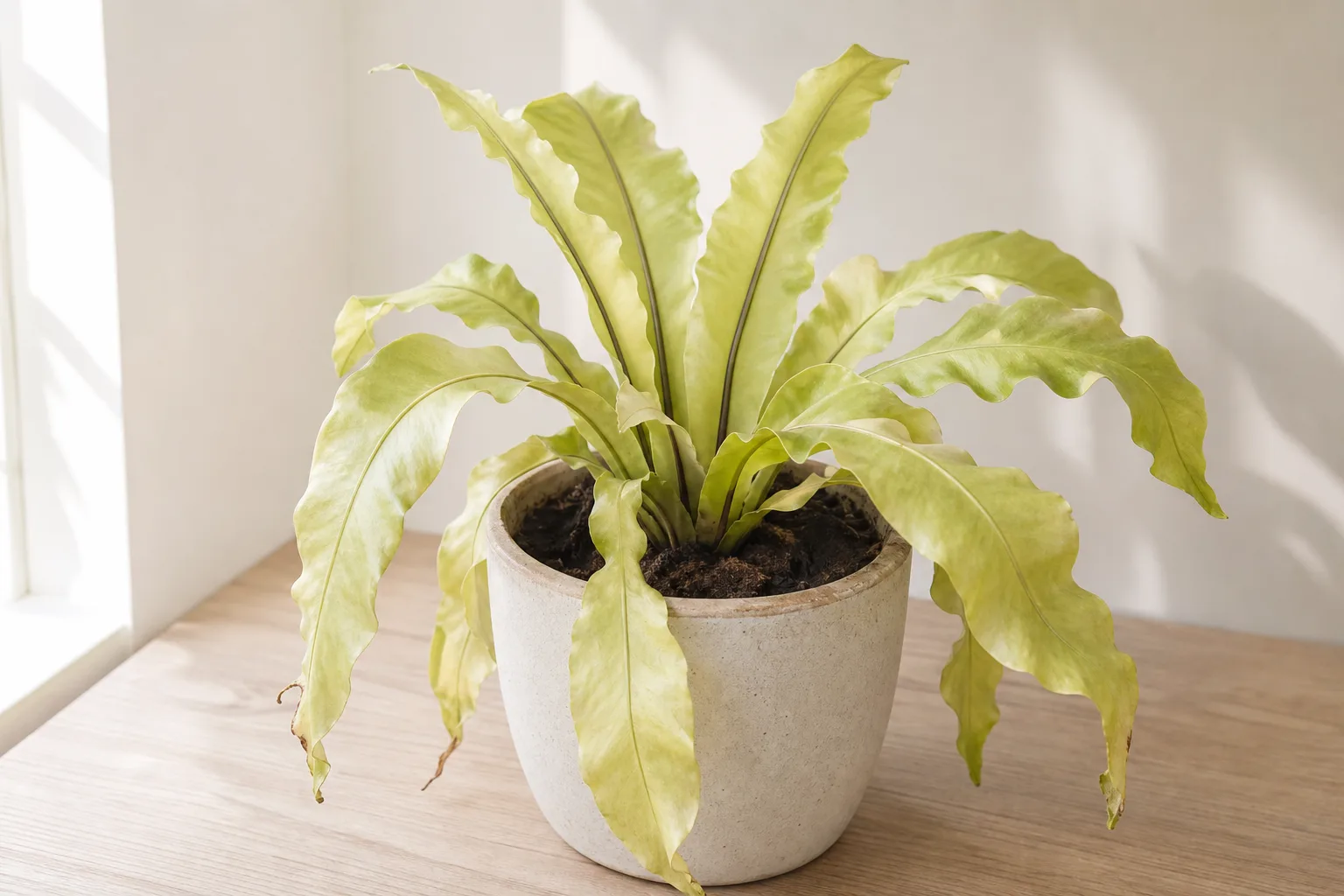
New fronds that emerge pale, scorched, or bleached are receiving too much intensity. A fern that stays deep green but produces no new growth may be too dim, especially if the fronds are unusually flat and the potting mix remains wet for a long time. Slightly more indirect light can improve growth, but direct sun is not the shortcut; it usually creates leaf damage before it creates a stronger plant.
Gardening Know How makes the useful observation that bird’s nest fern fronds can be flatter in lower light and more textured with more light, while excess direct light can yellow and kill them. Use that change in texture as a clue, not a target. A naturally ruffled cultivar should not be forced into a brighter position just to increase crinkle.
Water consistently without creating crown rot
Water when the upper layer of the mix has begun to dry, then soak the root zone thoroughly enough that water exits the drainage holes. Let the pot finish draining before it goes back on its saucer. The exact interval changes with pot size, season, light, mix, and indoor temperature, so “every Sunday” is a reminder at best, not a care rule.
Aim the spout at the soil around the outer edge of the pot, not into the central rosette. Water pooled in the crown can linger between tightly held fronds and encourage bacterial spotting or rot. Both NC State Extension and Epic Gardening emphasize watering around the base rather than overhead for this reason; Epic’s bird’s nest fern guide explains the crown-risk trade-off directly.
Do not confuse a fern that is thirsty with one that is waterlogged. A thirsty plant has a light pot, a dry upper mix, limp or curling fronds, and may improve after a complete soak. A waterlogged plant has wet mix that stays wet, soft or collapsing foliage, a sour smell, or a crown that looks dark and weak. Adding more water to the second plant makes the original problem harder to diagnose.
Use a simple moisture check instead of a calendar
Before watering, use three checks together:
- Push a finger or wooden skewer into the top inch of mix and note whether it is cool and damp or dry and loose.
- Lift the pot and compare its weight with the weight immediately after watering.
- Look at the fronds and crown for a pattern rather than reacting to one old brown tip.
If the mix is still wet several days after watering, increase light gently, improve drainage, or check whether the pot is too large for the root ball. If it dries in a day or two, inspect the plant’s light and airflow before simply watering more often. A stable routine comes from matching the interval to the plant’s drying rate.
Build an airy root zone and stable pot
Use a loose, moisture-retentive but porous mix. A quality indoor mix amended with fine orchid bark, perlite, or another aerating ingredient is more useful than a heavy garden soil. The goal is a root zone that holds enough water for a tropical fern while releasing excess water quickly; the RHS recommends a free-draining, peat-free container mix with added grit for this species. Its cultivation guidance supports an airy rather than compact medium.
Choose a pot with several drainage holes and only a modest amount of extra room around the root ball. A huge decorative pot stays wet longer than the plant can use the water and makes the moisture check misleading. Set the crown at the same depth it had in its nursery pot; burying the center is an easy way to turn normal watering into crown trouble.
Repot when the plant is unstable, the mix has broken down, roots are circling densely, or drainage has slowed—not because the calendar says it is time. Handle the fronds from underneath and support the root ball. They are leathery, but they can still crease and tear when dragged across a shelf or squeezed into a new container.
Balance humidity, temperature, and airflow
Bird’s nest ferns appreciate humid air, but a humid room is not the same as a constantly wet plant. A bathroom with a window, a kitchen corner away from cooking heat, or a plant grouping with gentle air movement can work well. Gardener’s Path suggests about 60 percent relative humidity for the best foliage, while noting that the fern can survive lower humidity with more brown tips. Use a small hygrometer if you are unsure what the room is actually doing.
Keep temperatures steady and protect the fern from drafts. NC State Extension gives an indoor comfort range around 60–70°F, while its broader profile warns that the tropical plant cannot tolerate frost or dry conditions. A brief cool night is not the same as a cold window, and a bathroom that steams for an hour each morning is not automatically humid enough for the rest of the day.
If the air is dry, prioritize a humidifier or a better location over frequent misting. A pebble tray may modestly change the air immediately around the pot, but it cannot compensate for a heater blowing across the leaves or a root system kept wet to imitate humidity. Always keep the pot above the water line and maintain airflow around the foliage.
Fertilize lightly and repot only when needed
Feed during active spring and summer growth with a balanced liquid fertilizer diluted to half strength or weaker. Apply it to moist soil, not dry roots or the fronds, and use it only a few times rather than treating every watering as feeding day. Excess fertilizer is a common source of brown edges, yellowing, and distorted new growth, so a fern that is growing slowly is usually safer with more light or better roots before it receives more nutrients.
The RHS recommends half-strength general liquid fertilizer monthly between May and August, while Epic Gardening advises only two or three light feedings during spring and summer. Those schedules differ in frequency but agree on the important constraint: dilute, seasonal, and conservative. Stop or sharply reduce feeding in the darker, cooler months when growth slows.
Choose a cultivar that matches your space
If you want broad, relatively smooth fronds, look for a standard Asplenium nidus. ‘Crispy Wave’ and ‘Osaka’ offer more rippled or narrow foliage, while ‘Victoria’ is known for long, wavy fronds. Cultivar names are more useful for choosing the look and eventual spread than for promising a different care routine.
Read the mature size on the nursery label and inspect the crown before buying. A compact plant can still become wide as its fronds arch, and a hanging position can expose it to drier air than a shelf. Choose the healthiest crown and the most suitable placement first; a novelty cultivar in the wrong window is not an upgrade.
Troubleshoot brown, yellow, soft, or spotted fronds
Bird’s nest ferns are forgiving enough to recover, but they are not silent. Diagnose the pattern, the newest growth, and the root-zone moisture together. Do not remove every imperfect frond before you know whether the cause is still active.
Brown tips and crispy edges
Start with the simplest checks: dry mix, low humidity, direct sun, a heating vent, or a recent fertilizer application. Trim only the damaged tissue with clean scissors, following the natural curve of the frond rather than cutting healthy green tissue into a sharp block. The trimmed edge will not turn green again, so judge success by whether new damage stops and new fronds emerge cleanly.
If the whole frond is crisp and the pot is very light, water the soil thoroughly and drain it. If only the outer edge is brown while the mix stays wet, do not water again automatically; inspect the roots, pot, and airflow. Brown tips can be a humidity signal, but they can also be a root or salt problem wearing a similar costume.
Yellow or drooping fronds
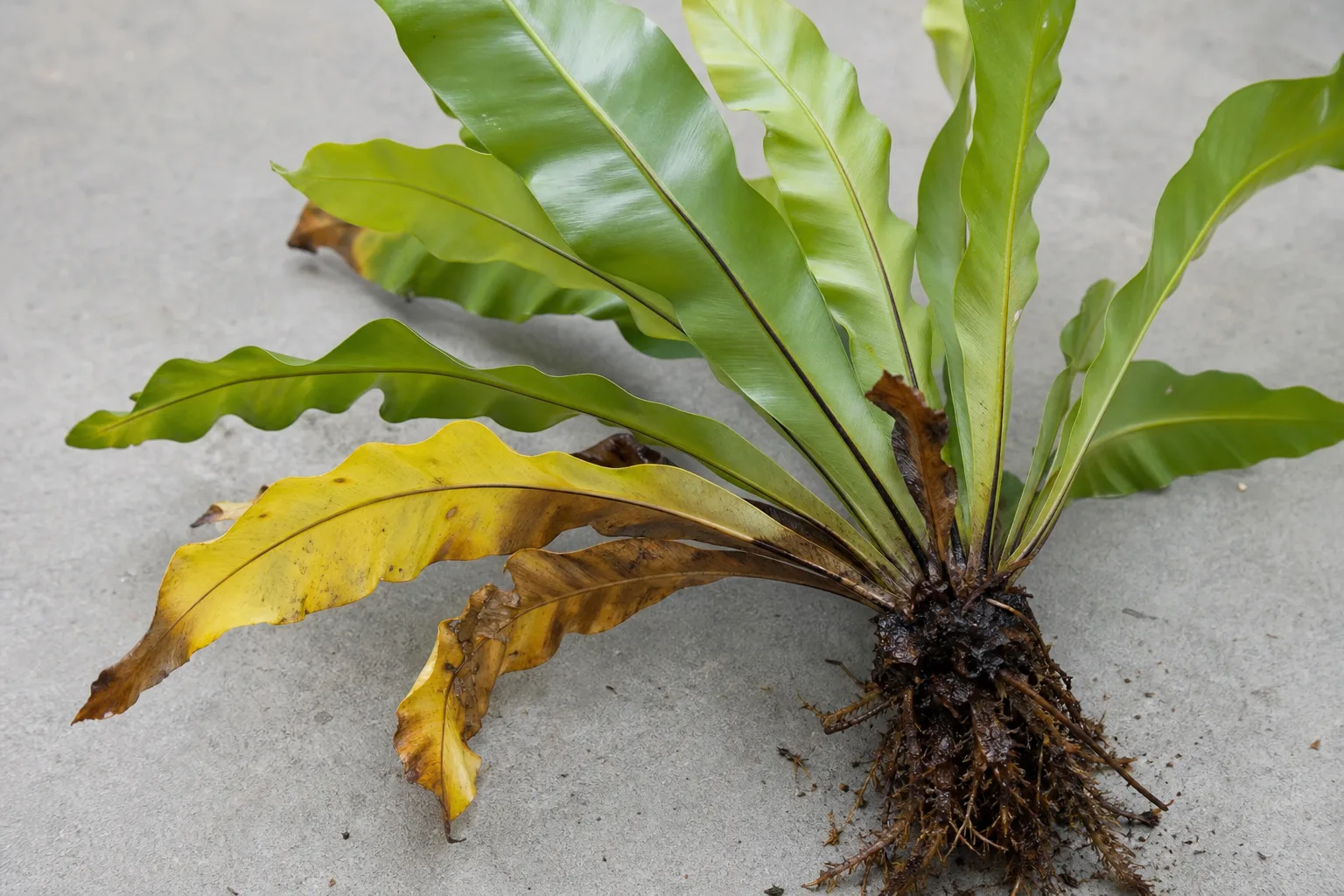
One old outer frond gradually yellowing can be normal replacement. Several yellow fronds, especially with soft stems or persistently wet mix, point more strongly to overwatering or poor drainage. Move the fern away from direct sun if the foliage looks bleached, but do not hide a struggling plant in darkness.
When the pot is dry and the fronds recover after watering, the issue was likely drought stress. When the pot is wet and the plant continues to droop, pause watering and inspect the drainage and roots. A root system damaged by excess water can mimic thirst because it no longer moves water effectively.
Spots, pests, or a damaged center
Small translucent or water-soaked spots that darken and spread deserve more caution than a dry brown edge. Avoid splashing the foliage, isolate the plant from a crowded collection, remove badly damaged fronds, and improve airflow. NC State Extension lists scale, mealybugs, bacterial leaf diseases, and leaf nematodes among possible problems, and also warns that the foliage is fragile and sensitive to chemical insecticides. Use its pest and disease list as a reason to identify the problem before treating.
Inspect the undersides of fronds for scale or mealybugs and check for sticky residue. A damaged or darkening crown is more serious than an isolated pest; stop pouring water into the center and consider repotting only after you have confirmed the root condition. If the crown has collapsed, recovery is unlikely, so buying a healthy replacement may be kinder to your time than repeated rescue attempts.
Compare the fern with other low-light houseplants
The bird’s nest fern is a good replacement for a prayer plant when you want a calm green focal point, have humidity, and can keep a moist mix from becoming stagnant. It is not the best replacement if your priority is colorful patterned foliage, a trailing habit, or near-total drought tolerance.
Use a spider plant if you want arching foliage, plantlets, and a little more tolerance of ordinary household conditions. Choose a ZZ plant if your main mistake is overwatering and the room is dimmer or drier than a fern prefers. A ZZ grows slowly, but its thickened storage organs make it a better fit for long gaps between waterings.
Choose a Boston fern if you want a softer, feathery cascade and are willing to keep the foliage and air consistently moist. Choose a staghorn fern if you enjoy mounted or display-oriented growing and can manage a different watering setup. A heartleaf philodendron is the more practical choice when you want a trailing plant that can accept lower humidity and less frequent attention.
The decision is therefore less about which plant is “easy” in the abstract and more about what kind of failure your home produces. If you forget water but have bright shade and moderate humidity, the bird’s nest fern may be forgiving enough. If your home is dry and you want to water once every few weeks, choose a drought-adapted plant instead.
Conclusion
A prayer plant is not inherently overrated; it is simply a poor match for some homes. Its patterned leaves and nightly movement reward a grower who can keep moisture, humidity, light, and temperature relatively steady. When those conditions are unreliable, the bird’s nest fern offers a better balance of tropical beauty and recoverability, provided you protect its crown and keep its roots airy.
Start with the room, not the plant label. Give the fern bright filtered light, a draining pot, a moist-but-not-soggy mix, moderate humidity, and water directed around the soil. If those conditions fit your routine, Asplenium can be the low-light companion that looks impressive without demanding that every small mistake become a crisis.