Pothos Leaves Turning Yellow: Causes, Signs & Fixes
Pothos leaves turning yellow? Check leaf pattern, soil moisture, drainage, and recent changes before watering, feeding, or repotting; then monitor new growth.
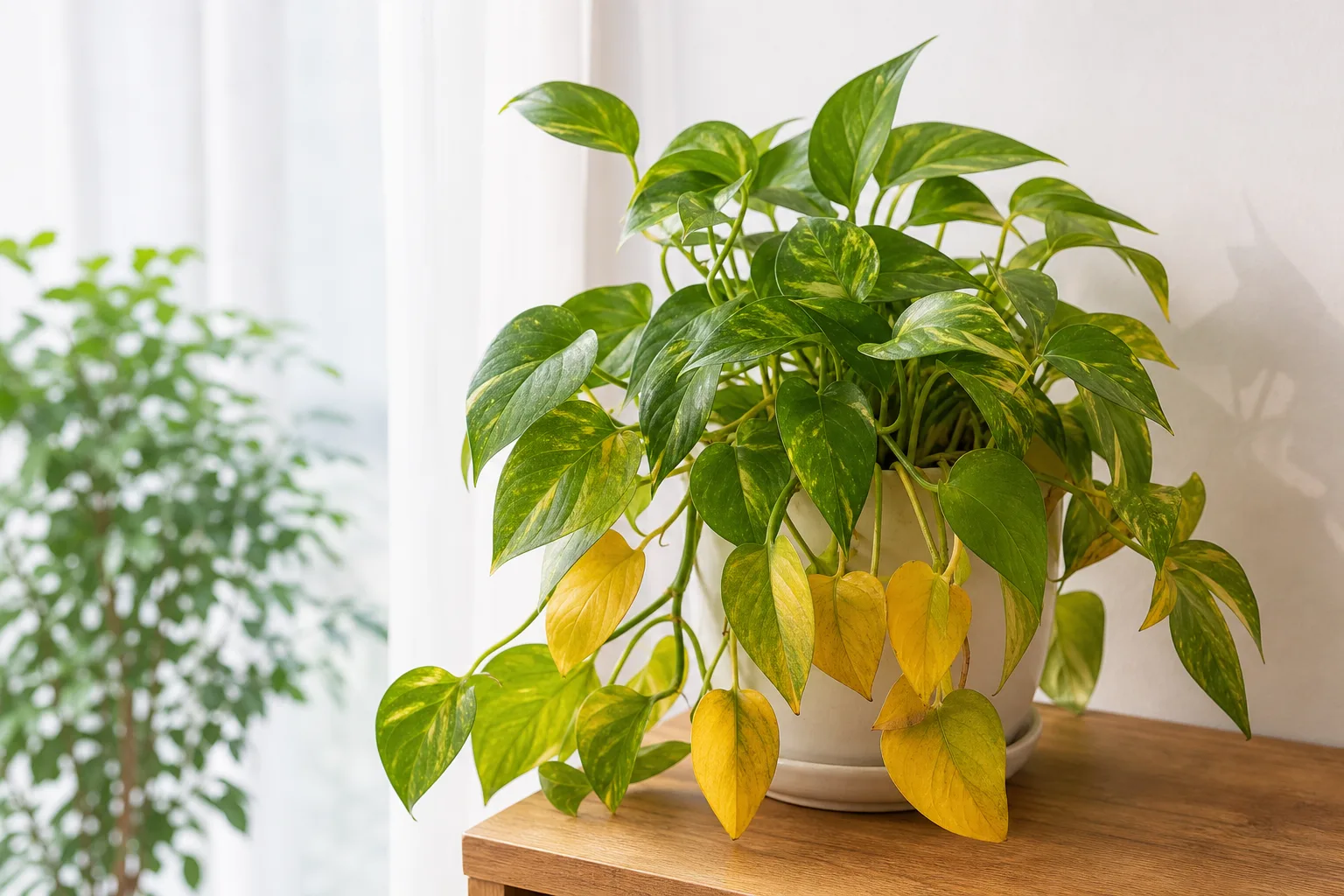
A yellow pothos leaf is a clue, not a diagnosis. One old leaf fading at the base of a vine is often ordinary turnover; several soft leaves yellowing while the pot stays wet point toward a very different problem. Look at the whole pattern before reaching for the watering can, fertilizer, or a new pot.
Pothos, Epipremnum aureum, also comes in cultivars whose normal foliage includes yellow, cream, or chartreuse. If your plant is changing abruptly, compare the affected leaves with healthy leaves of the same variety, feel the potting mix below the surface, and note what changed recently. Those three observations usually narrow the possibilities more safely than any fixed watering schedule.
Read the pattern before changing care
Start with where the yellow leaves are, how quickly they appeared, and what the leaves feel like. A lone older leaf near the soil line that yellows slowly while new growth stays firm is different from several yellow leaves appearing over a week, speckled leaves with fine webbing, or a vine that wilts in wet soil.
| What you see | What it may suggest | Check next |
|---|---|---|
| One older lower leaf fades; the rest of the vine looks healthy | Normal leaf aging | Watch whether the change stays limited to old leaves |
| Several soft yellow leaves and a pot that remains heavy | Excess moisture, poor drainage, or root damage | Feel the mix deeper down; check holes and standing runoff |
| Limp or curling leaves with dry mix and a light pot | Underwatering or a dry root ball | Confirm water reaches the center of the root ball |
| Bleached patches on the window-facing side | Too much direct sun | Consider recent moves and the time of day the sun hits |
| Fine pale stippling, webbing, bumps, or sticky residue | Spider mites, scale, or mealybugs | Inspect leaf undersides, stems, and nodes |
| Repeating golden or chartreuse pattern on otherwise firm leaves | Normal cultivar color | Compare with the plant’s established pattern |
Use the table to choose what to inspect, not to label a disease. Pothos can wilt from damaged roots even when the mix is wet, and leaves may yellow after a sudden move or repot, so color by itself does not tell you whether the plant needs more water.
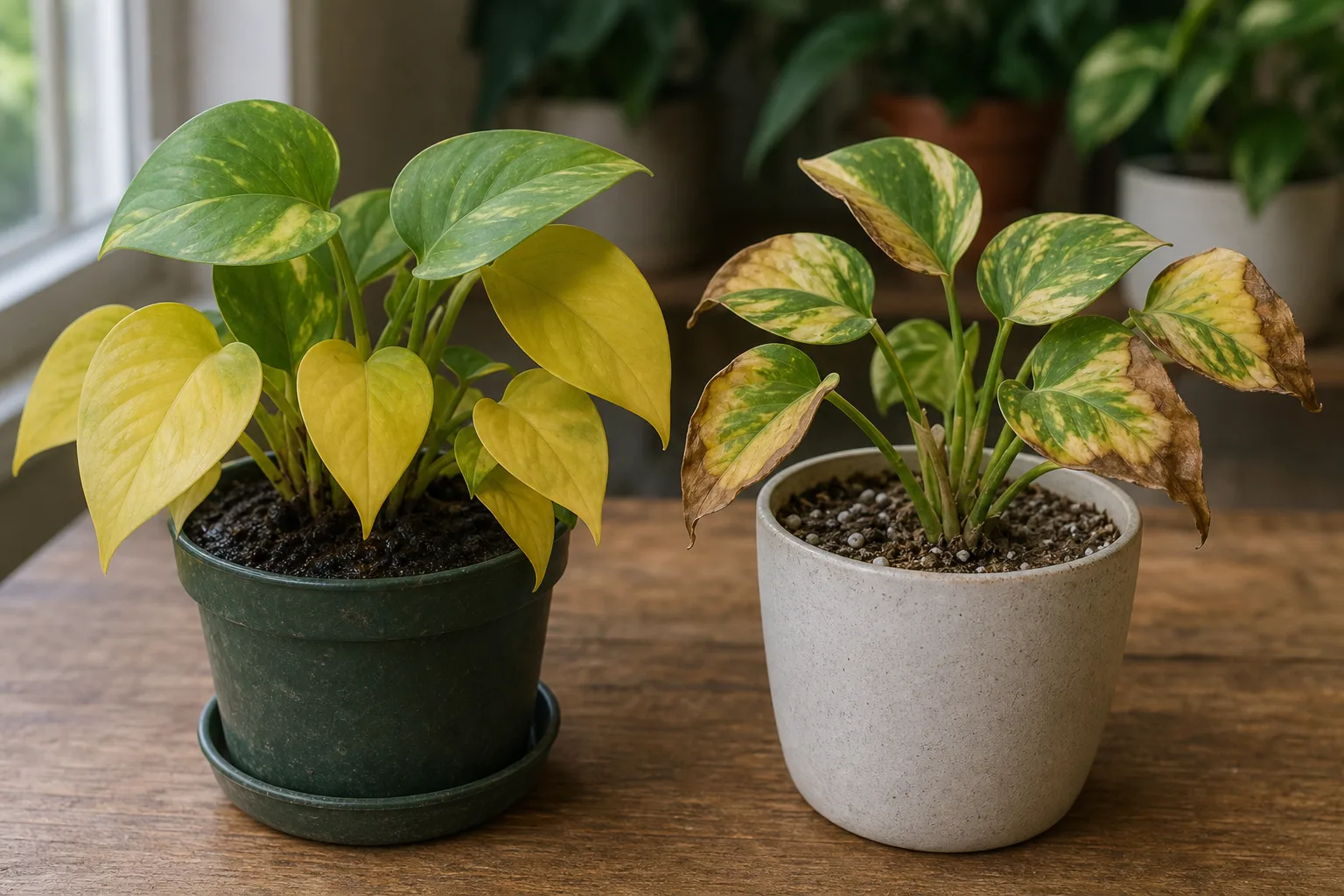
Do this five-minute root-zone check
First, touch the potting mix about two inches below the surface rather than judging by the dry crust at the top. Lift the pot and notice whether it still feels unusually heavy several days after watering or very light because the mix has dried; these quick checks give useful context, though pot size and material affect weight.
Next, make sure the inner pot has open drainage holes and that water is not trapped in a decorative cachepot or saucer. If the plant was watered recently, check whether excess water drained away; a drainage hole cannot help if the runoff sits around the pot or the mix is compacted and slow to dry.
Look at the leaves, stems, and the base of the plant without pulling it out yet. A soft or blackening stem, a sour smell, repeated wilting while the mix is wet, or a steady wave of yellow leaves makes root trouble more plausible; visible pests, sticky residue, and discrete spreading lesions send the investigation in another direction.
Finally, recall recent changes: a move from a bright window, a cold night against glass, a heating or air-conditioning vent, repotting, a missed watering, or a recent fertilizer dose. Write down one likely stressor and change that first; changing light, soil, watering, and fertilizer all at once makes it hard to learn what actually helped.
The most common causes and how to tell them apart
More than one stress can overlap. For instance, a pothos moved from a bright room to a dim corner uses water more slowly; if the old watering routine continues, the mix can stay damp long enough to injure roots. Diagnose the strongest clue first, then reassess new changes rather than trying every possible remedy.
One older leaf turning yellow can be normal
Pothos vines do not keep every leaf forever. An older leaf near the base may gradually yellow and drop as the vine grows, particularly when the rest of the plant remains firm, new leaves look normal, and the change is limited to one or two of the oldest leaves.
This normal pattern is slow and localized. If several leaves yellow together, the yellowing moves into newer growth, or a leaf develops spots, limpness, or pest damage, do not write it off as age. University of Wisconsin–Madison Extension notes that older pothos leaves naturally yellow and fall; the useful distinction is whether healthy growth continues above them (University of Wisconsin–Madison Extension’s pothos guide).
Overwatering leaves roots short of oxygen
“Overwatering” is usually a problem of how long the root zone stays saturated, not simply how many times someone watered. Roots need both water and air; when dense mix, a large pot, poor drainage, or frequent watering keeps the spaces between particles full of water, roots can lose function and the plant may yellow, droop, or shed leaves even though the soil is moist.
The combination is more telling than any single leaf: a pot that stays heavy, mix that remains damp well below the surface, water left in the cachepot, and multiple soft or limp leaves. A sour smell or mushy roots raises concern further, but many pots with a few yellow leaves do not need an emergency root wash.
Pause before watering again if the mix is still wet. Let excess water drain, empty the saucer, and allow the mix to dry partway before checking again; do not leave a severely declining plant in cold, saturated soil for weeks, but do not keep pouring water onto it because the leaves look droopy.
Underwatering and a root ball that stays dry
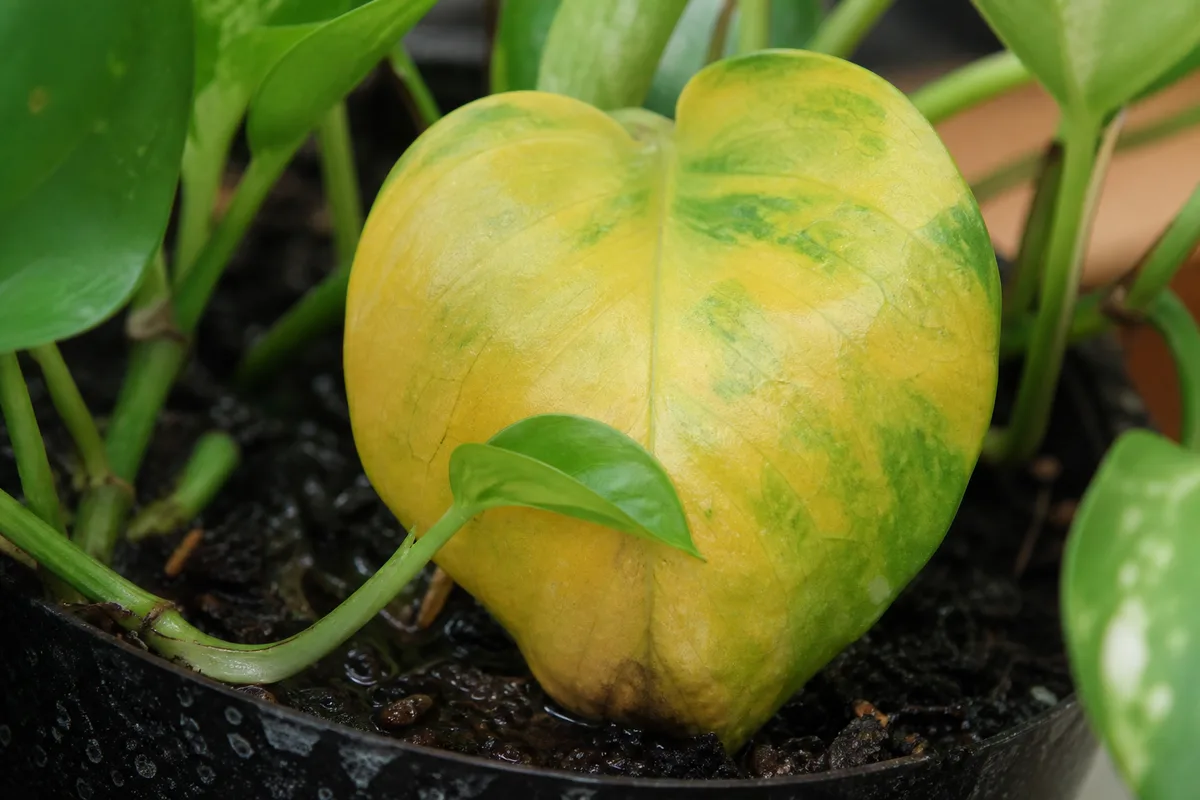
A pothos that has gone too long without water may have a very light pot, dry mix several inches down, curled or limp foliage, and crisp brown edges. If the entire root ball has dried, water may run down the gap between the mix and the pot wall without wetting the roots; water draining quickly is not proof the plant has been watered thoroughly.
Check the center of the root ball with a finger or wooden skewer. If the mix is dry there too, water slowly and evenly until some runs from the drainage holes, then empty the saucer; for a severely dried, water-repellent root ball, a short soak of the nursery pot followed by thorough draining can rewet it, but do not leave the plant standing in water afterward.
If the mix feels damp and the pot is heavy, underwatering is a poor fit even if the plant looks wilted. Water-stressed roots and oxygen-starved roots can produce overlapping leaf symptoms, which is why checking moisture at depth is the safer first step (Gardening Know How’s pothos troubleshooting guide).
Drainage problems that mimic a watering mistake
A pot without drainage holes, a blocked hole, a heavy peat-based mix, or a container much larger than the root mass can all keep the center of the pot wet long after the surface looks dry. A decorative outer pot can hide standing water, and a saucer that is never emptied can hold the roots in runoff.
Fix the setup before inventing a new schedule. Use a container with working drainage and a loose indoor potting mix that retains some moisture but does not become a dense, airless block; do not add a layer of gravel to the bottom as a substitute for a drainage hole. A modestly snug pot is easier to manage than a very large one filled with wet mix around a small root system.
If the pot drains freely and the mix dries at a reasonable pace, leave the roots alone. Repotting a healthy plant simply because one leaf yellowed adds disturbance without correcting a demonstrated problem.
Too much or too little light
Strong direct sun can bleach or scorch pothos leaves, especially after a sudden move closer to hot afternoon sun. The damaged patch is often most obvious on the exposed side; move the plant a little farther from the glass or soften the light with a sheer curtain, then give it time to adjust.
Deep shade can also contribute to yellowing and leaf loss. In low light, growth slows and the mix dries more slowly, so the same watering frequency that worked in a bright room can become excessive; if vines are stretching and leaves are sparse as well, move the plant gradually toward brighter indirect light rather than placing it straight into intense sun.
Change exposure in small steps and consider the season. Winter window light and day length differ from summer conditions, while direct rays through glass can create hot spots; Wisconsin Extension describes filtered light as suitable for pothos and cautions against much direct sunlight (University of Wisconsin–Madison Extension). Horticulturist Justin Hancock also identifies bleached patches as a useful clue for excess sun in an interview-based pothos troubleshooting guide (Martha Stewart).
Cold, drafts, and abrupt changes
Pothos may react to cold glass, a drafty door, or air blowing from a heater or air-conditioning vent. Yellowing or leaf drop after a move, shipping, repotting, or a sudden temperature swing is more plausible when several leaves change around the same time and the soil check does not point strongly toward drought or saturation.
Move the plant to a stable spot with indirect light and keep it away from temperature extremes. Do not respond to a move-related stress by immediately repotting again or adding fertilizer; the plant needs consistent conditions while it produces replacement growth.
Ethylene injury is a real issue described for commercial pothos production, especially around malfunctioning greenhouse heaters, poor ventilation, or shipping conditions. It is not a first-line explanation for a houseplant near an ordinary fruit bowl, so check the root zone and room conditions before suspecting gas exposure (University of Florida IFAS Extension’s pothos disease guide).
Fertilizer buildup and nutrient depletion
Too much fertilizer can leave soluble salts in the potting mix and damage roots or leaf margins. A recent heavy dose, repeated feeding while growth is slow, or a pale crust on the soil or pot rim makes buildup more plausible; stop feeding while the plant is stressed and avoid trying to correct every yellow leaf with a stronger dose.
A genuinely depleted mix is more likely when a plant has been in the same potting medium for years, has weak growth, and has no stronger clues pointing to light, water, roots, or pests. Even then, first stabilize the growing conditions; resume a balanced houseplant fertilizer at the label’s conservative rate during active growth rather than feeding a plant whose roots may be damaged.
Manganese toxicity can cause yellow flecking on pothos, but UF/IFAS discusses it mainly in older commercial stock plants and links it to excessive micronutrient fertilization, very acidic media, or repeated chemical applications. That context matters: do not add lime or apply a fungicide based on a few yellow spots on a home pothos; use fresh mix and seek a reliable diagnosis if the pattern is severe or spreading (UF/IFAS).
Pests or infectious disease
Inspect both sides of leaves, the petioles, and stem joints for fine webbing or moving specks from spider mites, cottony clusters from mealybugs, or fixed bumps from scale. Pests are more likely when yellowing appears as many tiny pale dots or stippling and leaves also look dusty, sticky, or distorted; isolate the plant while you inspect nearby plants.
If you find insects, identify them before choosing a control. Wipe or rinse accessible pests where practical, repeat inspections, and use only a product labeled for the pest and indoor ornamental plants if a treatment is needed; test a small area first and follow the label, especially around children and pets. Do not reach for a broad pesticide just because one leaf is yellow.
Disease is less common than a watering or environment problem in a typical home pothos, but certain patterns deserve attention. UF/IFAS describes Phytophthora root rot in production plants with leaves turning dark brown to black, bacterial wilt with blackened veins and stems, and southern blight with visible white fungal growth at the soil line; these are more specific signs than simple yellowing and its recommendations are written for commercial greenhouse conditions.
Keep suspected plants separate, avoid splashing water between them, and remove fallen debris. If multiple plants decline rapidly, stems blacken, or unusual fungal growth appears, consult a local extension service or plant clinic rather than applying greenhouse fungicide directions to a living-room plant.
Choose the safest fix from what you found
Match the action to the evidence, and make one meaningful change at a time. If the mix is wet, improve drainage and wait before watering; if it is dry through the root ball, rewet it thoroughly; if the exposed leaves are bleached, change the light. When the pattern is only one aging lower leaf, the best response may be to do nothing except remove it once it is fully yellow.
Avoid simultaneous “rescue” treatments. Extra water, fertilizer, repotting, pruning, and spray treatments can stack stress on top of the original problem, while preventing you from learning whether the first adjustment worked.
When to unpot, trim, or repot
Inspect roots when the pot stays wet for an unusually long time and the plant continues to decline, when the mix smells sour, when the stem base softens, or when drainage clearly fails. Slide the root ball out gently and look for texture: healthy roots are firm, while dead or rotting roots may be soft, hollow, dark, or sloughing apart. Root color varies with the mix, so do not diagnose from color alone.
If most roots are firm, return the plant to its pot and correct the moisture or light conditions. If a portion is mushy, use clean scissors to remove only the damaged roots, discard the soggy mix, and repot in a clean container with open drainage and fresh, airy potting mix; do not cut healthy roots merely to make the root ball smaller.
A plant with widespread root loss may not recover, and severe commercial pathogens can require disposal to protect other stock. For a household plant, isolate it and get a diagnosis if decline is rapid or lesions and unusual fungal growth are present instead of assuming every case is a treatable root rot.
What to do when the soil is dry
When the root ball is dry, water the mix evenly until it is moist throughout and excess drains freely. Empty the runoff and do not water again on a calendar date; check the mix as it dries, because pot size, room temperature, light, season, and root density all affect how quickly pothos uses water.
When the soil is wet, hold off until the upper portion has dried and check whether the pot is draining. If the container has no drainage, empty the cachepot immediately and move the plant into a suitable pot when you can do so without leaving it in standing water; for persistently saturated, declining roots, the root inspection criteria above apply.
Do not expect existing yellow leaves to become green once their tissue has lost its color. Remove fully yellow leaves with clean scissors for appearance, but leave partly green leaves if they are not diseased; the plant’s next leaves and the end of the yellowing pattern are better measures of success.
Prevent a repeat without watering by calendar
Set up a routine around the pot, not the week. Check the mix below the surface, water thoroughly when it has partly dried, let the container drain, and discard runoff; in a cooler or dimmer room, that interval can be much longer than in bright, warm conditions. The guidance to let the soil surface dry before watering is consistent with Wisconsin Extension’s pothos care advice (University of Wisconsin–Madison Extension).
Keep the plant in bright, indirect light if possible, and avoid sudden moves into intense sun or near cold drafts. Use a free-draining mix and a pot that is only as large as the root system needs; when repotting, move up gradually rather than surrounding a small root ball with a large reservoir of wet soil.
Feed lightly only while the plant is actively growing and follow the fertilizer label. If you have already fertilized heavily, do not add more nutrients to “green it up”; correct the root-zone problem first and let the plant resume growth before deciding whether it needs feeding.
Make a short note after each watering: date, whether the pot was light or heavy, and how far down the mix had dried. After a few cycles, that record gives you a plant-specific range and helps you notice when a seasonal light change or new pot has altered the drying rate.
Yellow variegation versus unhealthy yellowing
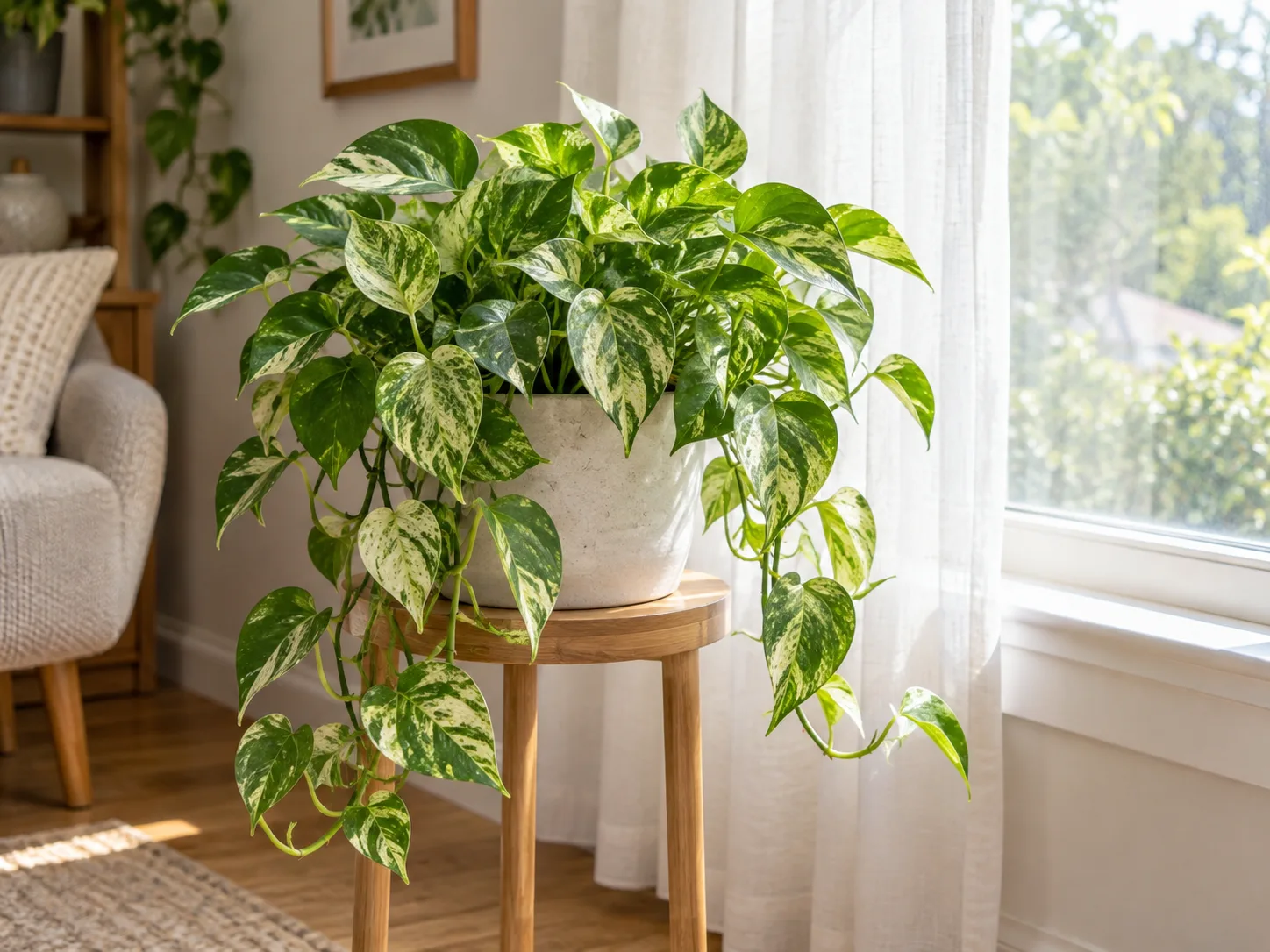
Some pothos are supposed to show yellow. Golden pothos has green leaves patterned with gold or yellow, and Neon pothos is naturally chartreuse; in these plants, compare the color with the cultivar’s usual pattern and with healthy leaves on the same vine before treating it as a symptom. Wisconsin Extension identifies both golden variegation and the solid yellow-green foliage of Neon pothos (University of Wisconsin–Madison Extension).
Natural variegation tends to repeat predictably across leaves and does not usually arrive with limp stems, a foul-smelling pot, sticky residue, or progressive leaf drop. New irregular patches, a sudden all-over fade, or yellowing combined with a change in soil moisture calls for the same diagnostic check as any other pothos.
If you are unsure of the cultivar, compare the newer leaves and the pattern on older healthy sections rather than assuming the plant is sick. A photo taken in similar light every week can help distinguish stable variegation from a spreading change without disturbing the roots.
Conclusion
When pothos leaves turn yellow, check the pattern first, then the soil, pot, and roots. One slow-fading lower leaf may be normal; multiple soft yellow leaves in a wet pot raise concern about excess moisture, while dry mix, a light pot, pests, sun damage, and recent temperature changes point to different first steps.
Change only what the evidence supports and give the plant steady conditions afterward. Healthy new growth and fewer newly yellowing leaves—not the return of color to already yellow tissue—are the signs that your fix is working; for broader care, see the pothos care guide or the houseplant yellow-leaves diagnosis guide.