How to Propagate Peace Lily: Rhizome Division and Water Method
Propagate peace lily the right way with step-by-step rhizome division, water rooting, pot size, aftercare and common mistakes to avoid.
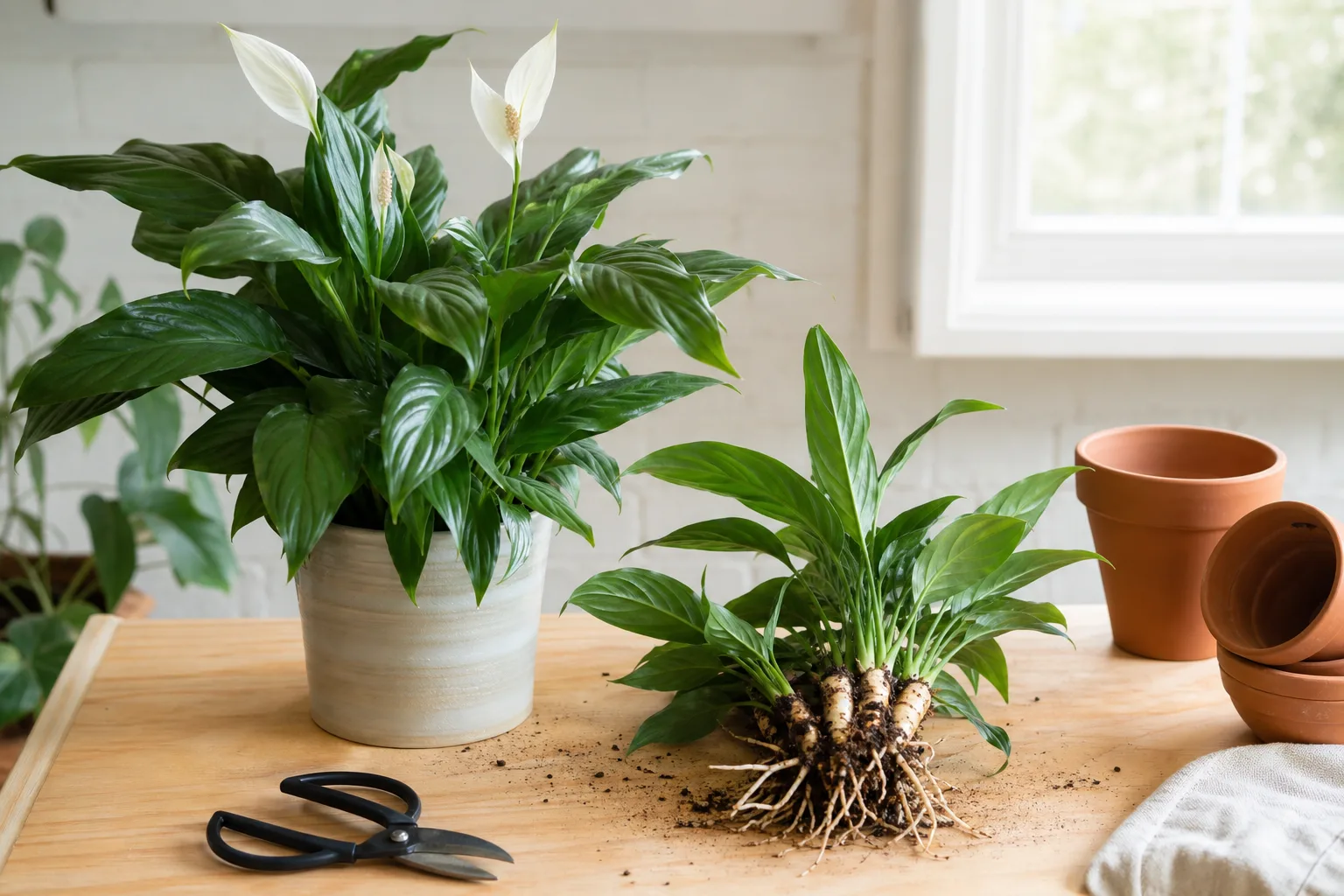
Peace lily propagation is not like propagating pothos or philodendron. You cannot snip a stem, drop it in water, and wait for roots. Peace lilies grow from rhizomes-thick, fleshy underground stems that store energy-and the only reliable way to multiply them is by division: separating a mature plant into smaller rooted sections. This guide covers both soil division and the water method, with step-by-step instructions, pot-sizing rules, aftercare, and the mistakes that cause divisions to collapse.
Can You Propagate a Peace Lily From a Leaf Cutting?
No. The most common disappointment in peace lily propagation is watching a leaf rot in a jar. The visible “stems” on a peace lily are petioles-leaf stalks that lack the nodes or meristem tissue required to generate roots and shoots. A detached leaf has no way to build a new plant, regardless of rooting hormone or water changes. NC State Extension lists division as the recommended propagation strategy for Spathiphyllum because the plant’s growth structure makes cuttings impossible. (NC State Extension)
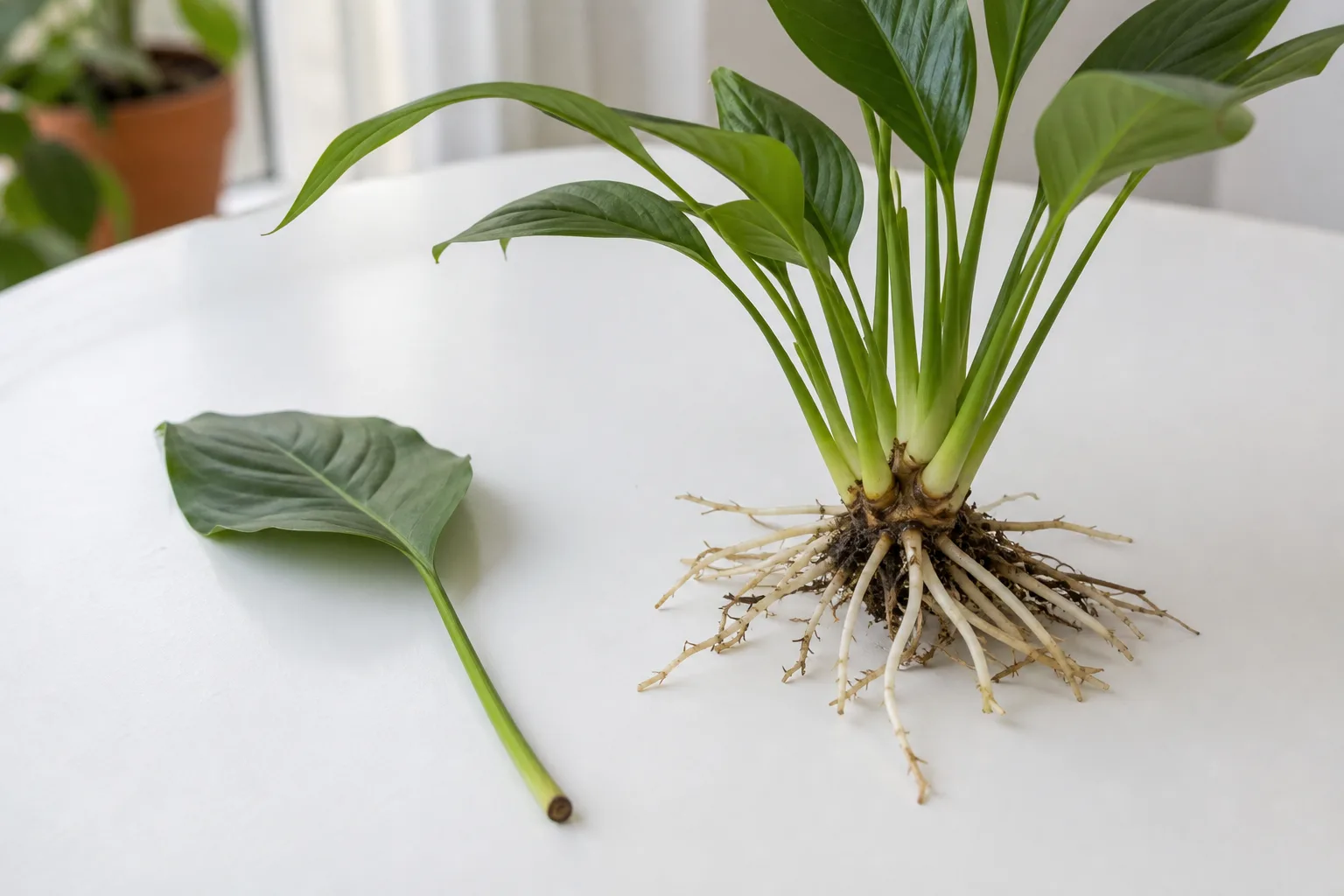
The peace lily’s growth point sits in the crown-the base where leaves emerge from the rhizome at soil level. Each crown has its own root system, and when a plant matures, it naturally produces multiple crowns that can be separated. Propagation means relocating an existing crown with roots, not creating one from scratch. Put the scissors away unless you are pruning dead leaves. For propagation, your hands and a soil knife are the only tools you need.
When to Propagate a Peace Lily
The best time to divide is spring, when the plant is entering active growth and roots can recover quickly. RHS recommends dividing peace lilies in spring after the plant has come out of its slow winter period. (RHS) UF/IFAS also specifies spring division for peace lilies. (UF/IFAS Gardening Solutions)
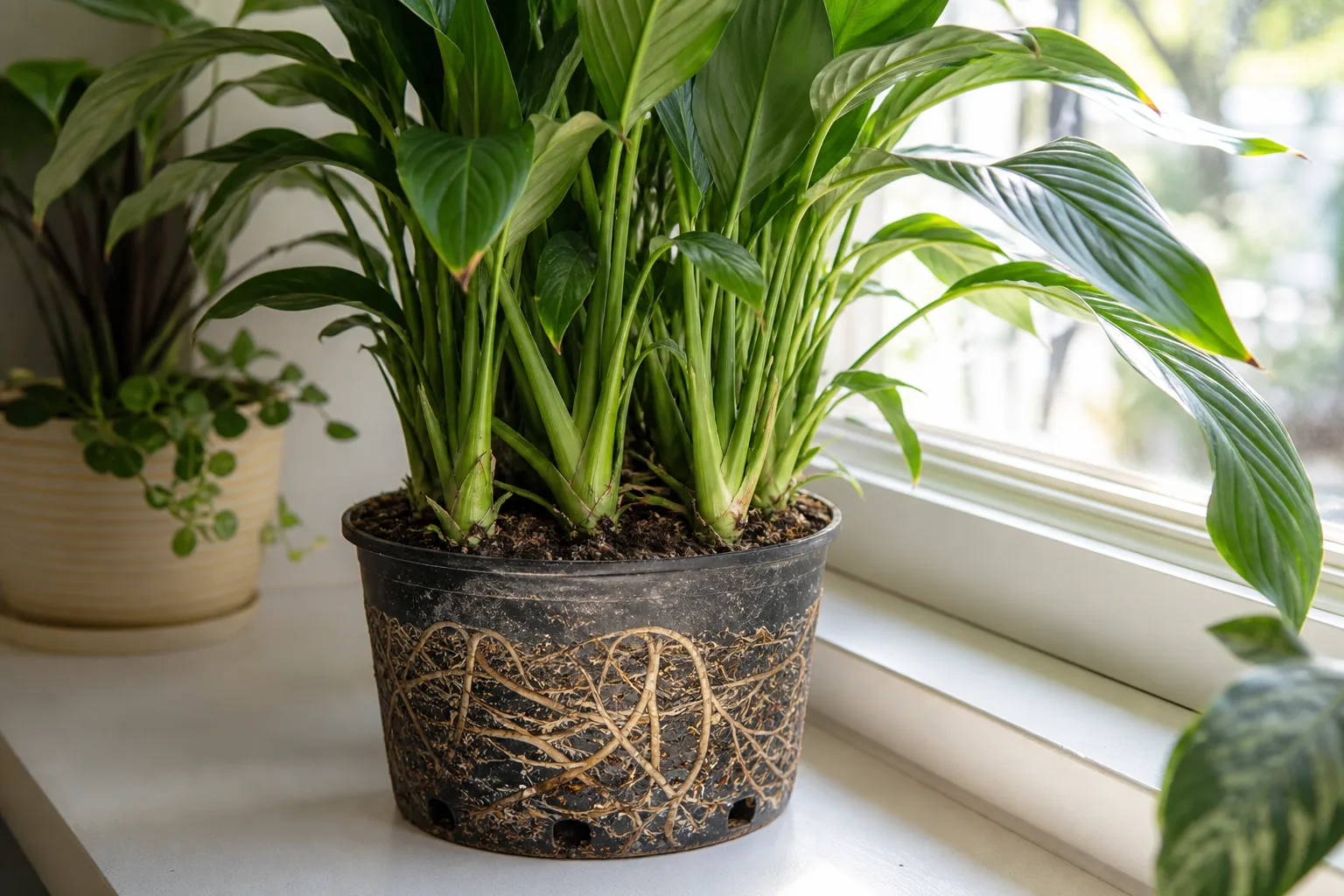
Signs your peace lily is ready to divide:
- Roots are circling the pot or pushing through drainage holes
- The pot dries out within a day or two of watering
- Multiple distinct crowns are visible at the soil surface
- The plant has stopped growing or flowering despite good care
- The container is bulging or misshapen from root pressure
You can divide any time of year if the plant is severely root-bound, but avoid winter division in cold homes. A plant divided in a cool, dim room sits in shock for months because its metabolism is too slow to heal. Wait for consistent warmth and look for fresh, light green leaf tips as your green light.
Prepare the mother plant 24 hours before dividing. Water thoroughly the night before until water runs out the drainage holes. Gardening Know How recommends this because hydrated roots are more flexible and less likely to snap during separation. (Gardening Know How) Dry, brittle roots tear easily, and a dehydrated plant enters division already stressed.
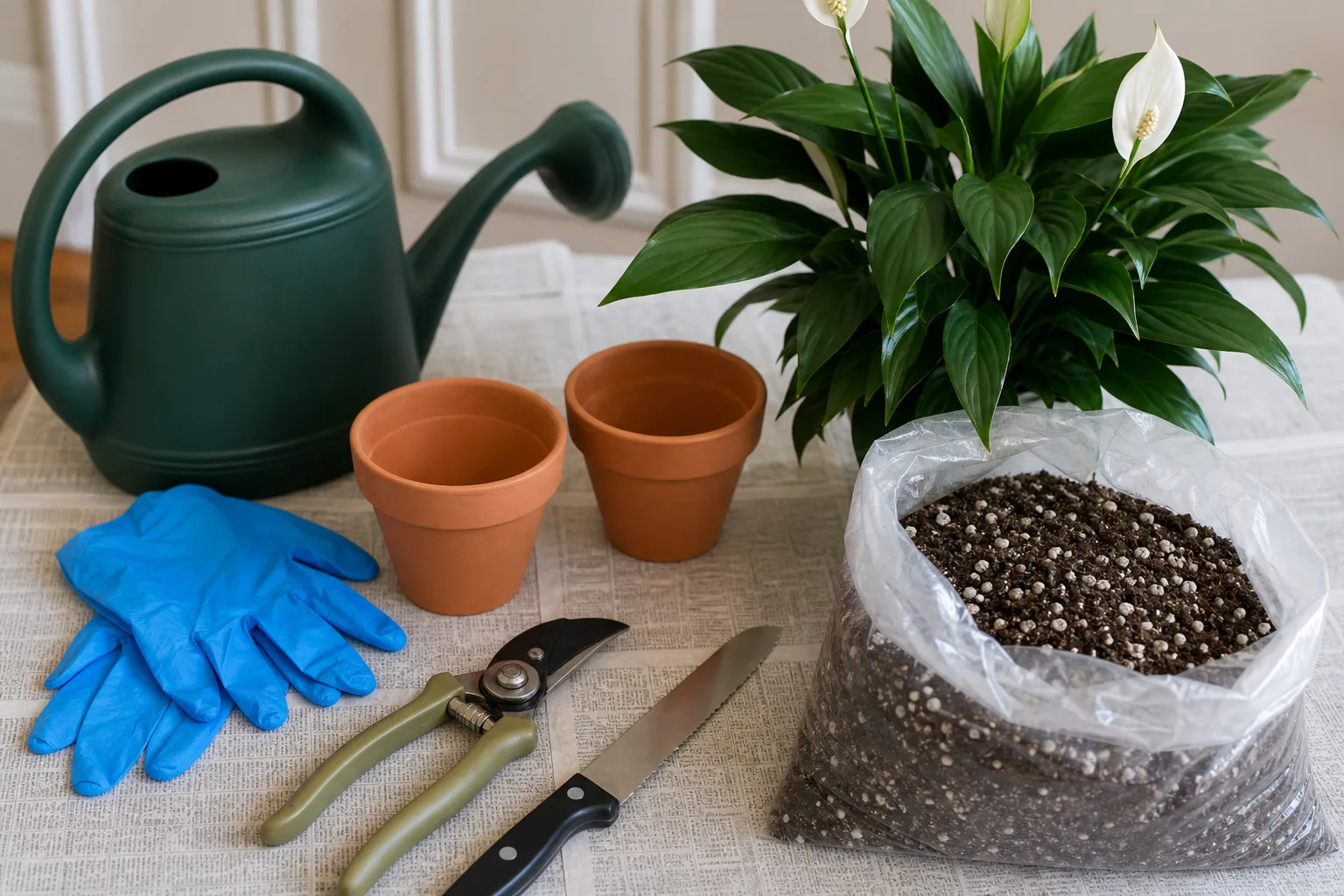
What You Need
- A healthy, mature peace lily with at least two visible crowns
- Sharp, clean shears or a serrated knife-wipe with 70% isopropyl alcohol
- Nitrile gloves-RHS notes peace lily sap can irritate skin (RHS)
- Small pots with drainage holes, only 1-2 inches wider than each root ball
- Well-draining potting mix (quality indoor mix with added perlite for drainage)
- Watering can, newspaper or tarp for the workspace
- Optional: clear glass vessel for water method
How to Propagate Peace Lily by Division (Step by Step)
Division is the most reliable method because each new plant already has roots, leaves, and an established crown. You are not asking the plant to create new structures-you are giving an existing one its own pot.
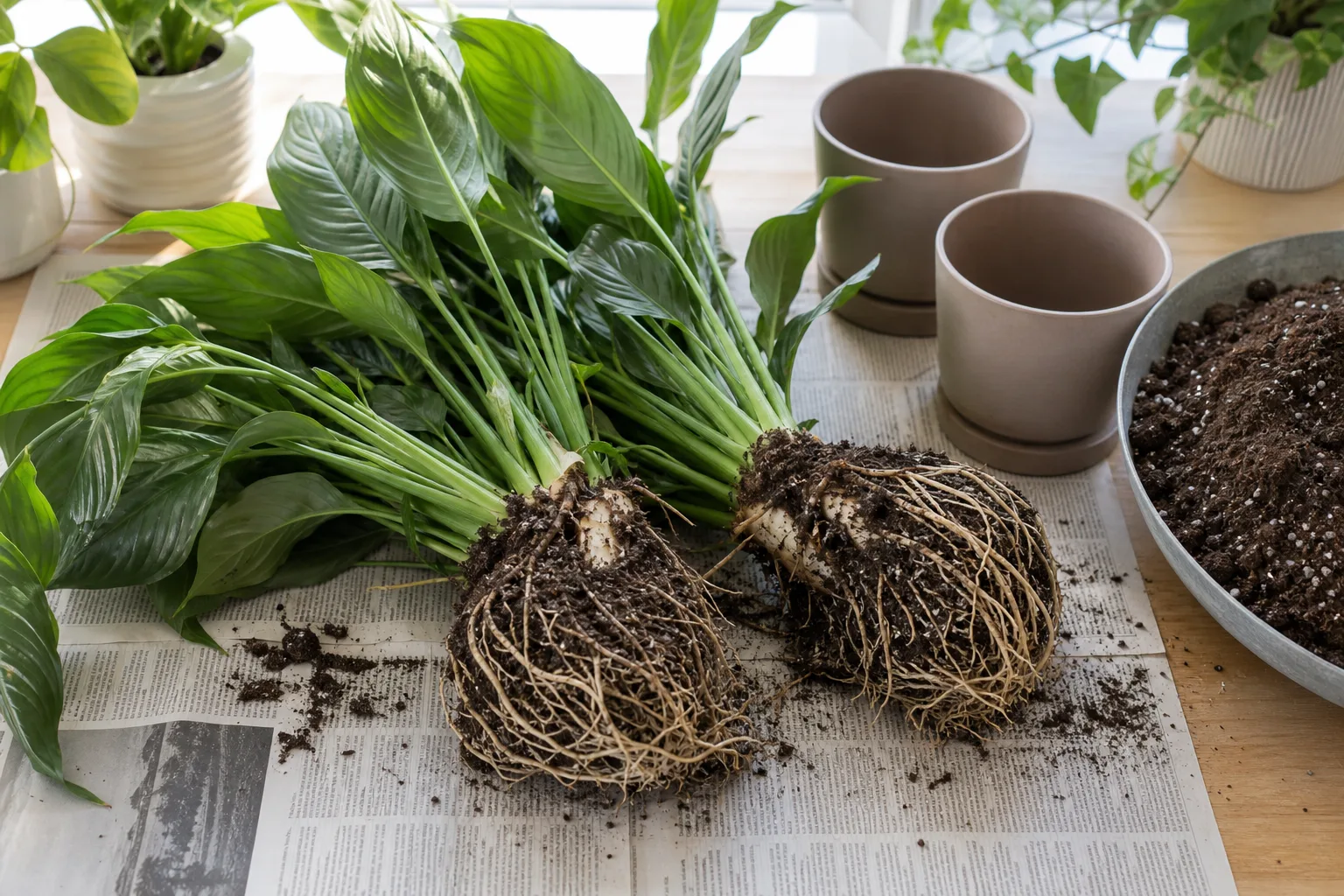
Step 1: Remove the Plant From Its Pot
Turn the pot on its side and tap the rim to loosen the root ball. Slide the plant out by gripping the base of the stems, not the leaves. If the roots are stuck, squeeze the pot sides or run a knife around the inside edge. Do not yank the foliage.
Lay the plant on its side on newspaper or a tarp. You will likely see a dense wall of roots wrapped around the soil mass. That is normal for a plant ready to divide.
Step 2: Expose and Loosen the Root Ball
Shake off excess soil and gently massage the root ball to loosen the outer layer. You will hear some roots snap-fine feeder roots break during any division, and the plant recovers. Your goal is to remove enough old soil to see where individual crowns meet the main rhizome mass. Flower Shop Network recommends laying the plant on its side so you can see both the root system and the foliage attached to it before cutting. (Flower Shop Network)
Trim away any black, mushy, or foul-smelling roots with sterilized shears. Healthy roots are firm and pale to light tan.
Step 3: Separate Natural Crowns
Look for natural divisions where stems emerge from distinct points on the rhizome. Grip two adjacent crowns at their bases and gently wiggle them apart. Often they separate with hand pressure alone. Each division needs:
- At least two or three healthy leaves
- Its own root system attached to its crown
- A piece of the rhizome connecting roots to foliage
If crowns are fused-some mature plants form a single dense mass-use a clean serrated knife to cut through the connecting rhizome tissue. Gardening Know How notes that you should not panic if you cut through some roots; as long as each propagule has healthy roots, it will recover. (Gardening Know How) A serrated bread knife works better than a smooth blade on thick root mats because it cuts through without crushing.
Do not divide too aggressively. Splitting a healthy plant into four or five tiny pieces produces weak divisions that take months to look full. Two or three strong sections are better than several struggling ones.
Step 4: Pot Each Division Correctly
Choose a pot only 1-2 inches wider than the root ball. An oversized pot holds excess wet soil around recovering roots and invites rot. Peace lilies prefer being slightly root-bound, as NC State Extension confirms. (NC State Extension)
Fill the bottom of the pot with well-draining mix, position the division so the crown sits at the same depth it was growing before-not deeper-and backfill around the roots. Press lightly to eliminate air pockets. Water thoroughly until water flows from drainage holes, then let the pot drain completely. Empty the saucer.
Step 5: Manage the Recovery Phase
Place newly potted divisions in bright indirect light away from direct sun, cold drafts, and heat vents. The first week is the most vulnerable period. Expect some drooping-transplant shock is normal because disturbed roots cannot take up water efficiently. Do not compensate by overwatering; soggy soil on damaged roots accelerates rot.
Keep the mix lightly moist but never saturated. RHS guidance on watering peace lilies applies here: let the top few centimeters dry slightly between waterings. (RHS) Do not fertilize for at least four to six weeks. The division needs to repair roots, not push foliage-a nutrient boost on damaged roots burns more than it helps.
Most divisions perk up within a week and show new leaf growth within one to two months under warm, bright conditions. Full recovery and repeat blooming can take several months depending on division size, light, and seasonal timing.
Propagating Peace Lily in Water
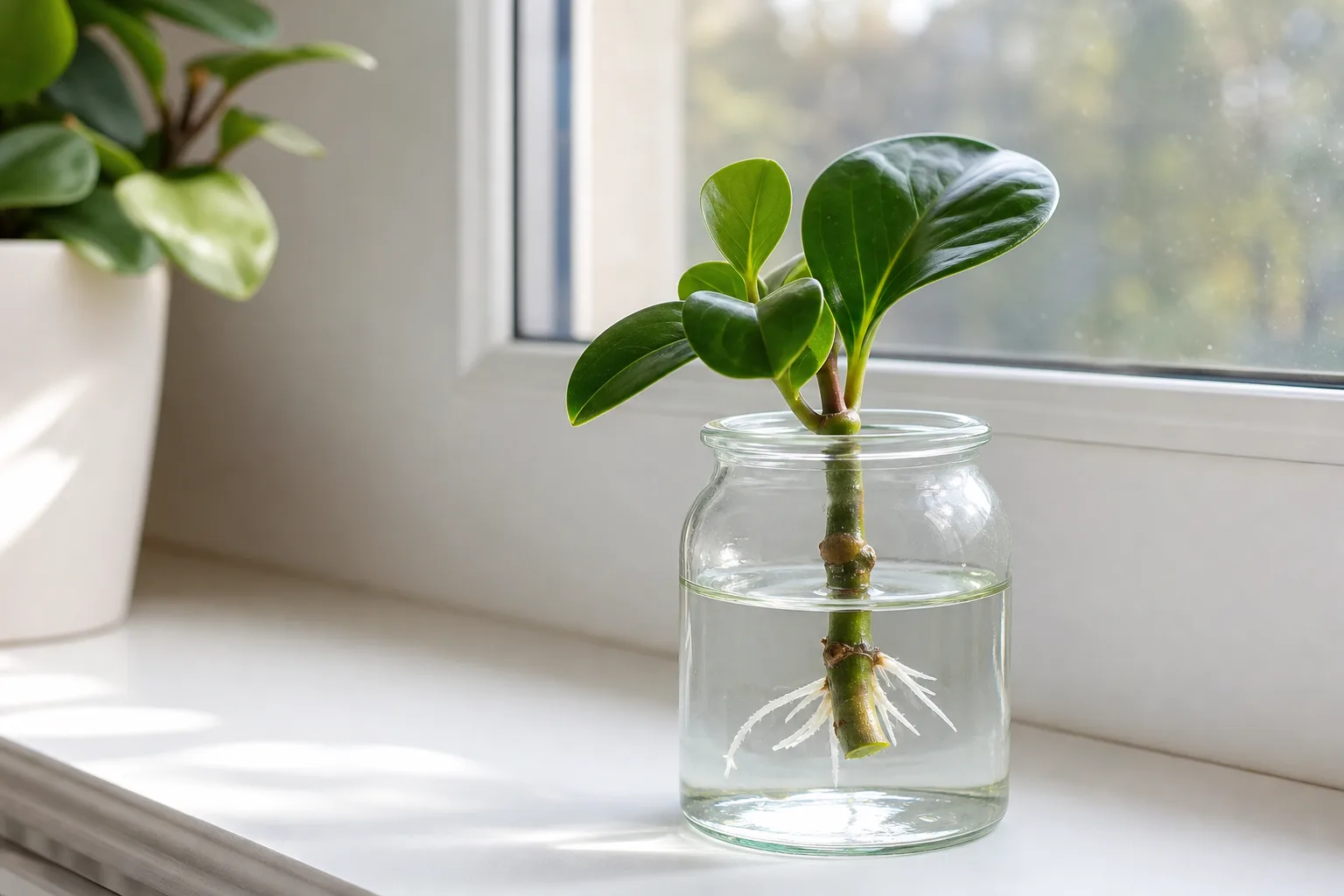
You can root a division in water, but approach it as a temporary stage, not a permanent home. Peace lilies are not aquatic plants-water alone cannot supply the complex nutrients soil provides long-term. The RHS propagation guidance focuses on soil division because that delivers the strongest results. (RHS)
Water propagation works when you want to monitor root health or display a division temporarily before potting into soil.
Step 1: Clean the Roots Thoroughly
After dividing, rinse every speck of soil from the roots under running water. Residual soil introduces bacteria that rot in standing water. You want roots that are fully bare and clean before they enter the vessel.
Step 2: Submerge Only the Roots
Choose a clear container with a narrow neck to support the foliage while roots dangle in water. Submerge only the roots and the base of the crown-leaves and petioles sitting in water will rot. Use filtered or distilled water if possible; RHS advises that fluoride in tap water can damage peace lily foliage. (RHS)
Place the vessel in bright indirect light, not direct sun through glass, which heats the water and encourages algae.
Step 3: Maintain Water Quality
Change the water when it becomes cloudy or at least weekly. Stagnant water depletes oxygen and invites bacterial rot. Roots will gradually transform into finer “water roots” adapted to the submerged environment.
If you keep the division in water for more than a few weeks, add a single drop of diluted liquid fertilizer monthly. Full-strength fertilizer burns unestablished roots. Rinse roots and replace the water if it turns green or develops a film.
Step 4: Move to Soil Before Growth Stalls
Transplant into well-draining potting mix once roots are firm and several centimeters long. Do not leave the division in water indefinitely-water-grown peace lilies are typically smaller with weaker flowering than soil-grown plants. The transition back to soil causes another round of transplant shock, so keep the newly potted plant evenly moist for the first week or two while mix-adapted roots take over.
Can You Grow Peace Lily From Seed?
Peace lilies can technically grow from seed, but for indoor growers it is rarely practical. Seeds require successful flower pollination-something that does not happen reliably indoors without manual intervention. Even when seeds are viable, germination needs constant warmth, high humidity, and steady moisture. Seedlings take months to develop into recognizable plants and are fragile throughout. Division remains the only dependable propagation method for home growers.
Common Mistakes After Division
Overpotting. Moving a small division into a large pot “to give it room” is the fastest way to rot. Excess soil stays wet too long around a small root system. Stick to the one-to-two-inch rule.
Overwatering during recovery. Drooping after division is transplant shock, not thirst. Adding more water to already-moist soil suffocates struggling roots. Wait until the top layer of mix begins to dry before watering again.
Dividing too aggressively. Splitting a plant into too many small pieces produces weak divisions that take months to fill out. Two or three strong sections with multiple leaves each recover faster than five tiny ones.
Skipping tool sterilization. Dirty blades introduce bacteria and fungi into open root wounds. Wipe tools with 70% isopropyl alcohol before cutting.
Fertilizing too soon. Newly divided roots are in repair mode, not growth mode. Fertilizer salts on healing tissue cause brown tips and root burn. Wait four to six weeks, or until you see new leaf growth.
Expecting instant fullness. A divided peace lily looks sparse at first because each section has fewer leaves than the parent. That is normal. The plant directs energy to root establishment first, then foliage. Fullness returns as new leaves emerge over weeks to months.
Peace Lily Care After Propagation
Once the division has settled and new leaves appear, resume standard peace lily care. The Peace Lily care guide covers light, watering, humidity, fertilizing, and troubleshooting in full. In brief:
- Light: Bright indirect light near a window; no direct midday sun on recovering divisions
- Water: Keep mix evenly moist but never soggy; let the top layer dry slightly between waterings
- Humidity: Average indoor humidity is acceptable; increase with a pebble tray or humidifier if tips brown
- Feeding: Begin light fertilizing only after new growth appears, using diluted balanced houseplant fertilizer
- Repotting: Repot only when the division outgrows its current pot, typically every one to three years
Pet and Child Safety
Peace lily is toxic to dogs and cats. The ASPCA lists Spathiphyllum as containing insoluble calcium oxalate crystals, which cause oral irritation, burning of the mouth and tongue, excessive drooling, vomiting, and difficulty swallowing if chewed or ingested. (ASPCA)
RHS advises wearing gloves when handling peace lilies because the sap can irritate skin. (RHS) During division, you are handling exposed roots and rhizome tissue, so gloves protect your skin as well as the plant’s open cuts from hand bacteria.
Keep divisions, tools, trimmed roots, and soil debris out of reach of pets and children. Wash hands thoroughly after handling. If a pet chews any part of the plant and shows symptoms, contact your veterinarian or the ASPCA Animal Poison Control Center at (888) 426-4435 (consultation fee may apply).
Related Guides
- Peace Lily care guide - light, watering, soil, blooms, and troubleshooting
- Repotting houseplants - when to repot, pot sizing, and mix selection
- Root rot in houseplants - identify and treat rot before it spreads
- How to water indoor plants the right way - soil-check habits for divided plants
- Houseplant humidity guide - humidity support during recovery
Conclusion
Peace lily propagation works reliably through division-separate a mature plant’s crowns, ensure each piece has roots and leaves, pot into appropriately sized containers, and provide bright indirect light with restrained watering during recovery. Leaf cuttings do not work because peace lily petioles lack nodes. Spring division gives the fastest recovery, and keeping divisions slightly snug in their pots prevents the rot that oversized containers cause. When the plant outgrows its pot again, you already know the process.