5 Reasons Your Christmas Tree Is Dropping Needles
Christmas tree dropping needles? Use this practical five-cause checklist to test freshness, restore water uptake, choose a better spot, and know when to remove it.
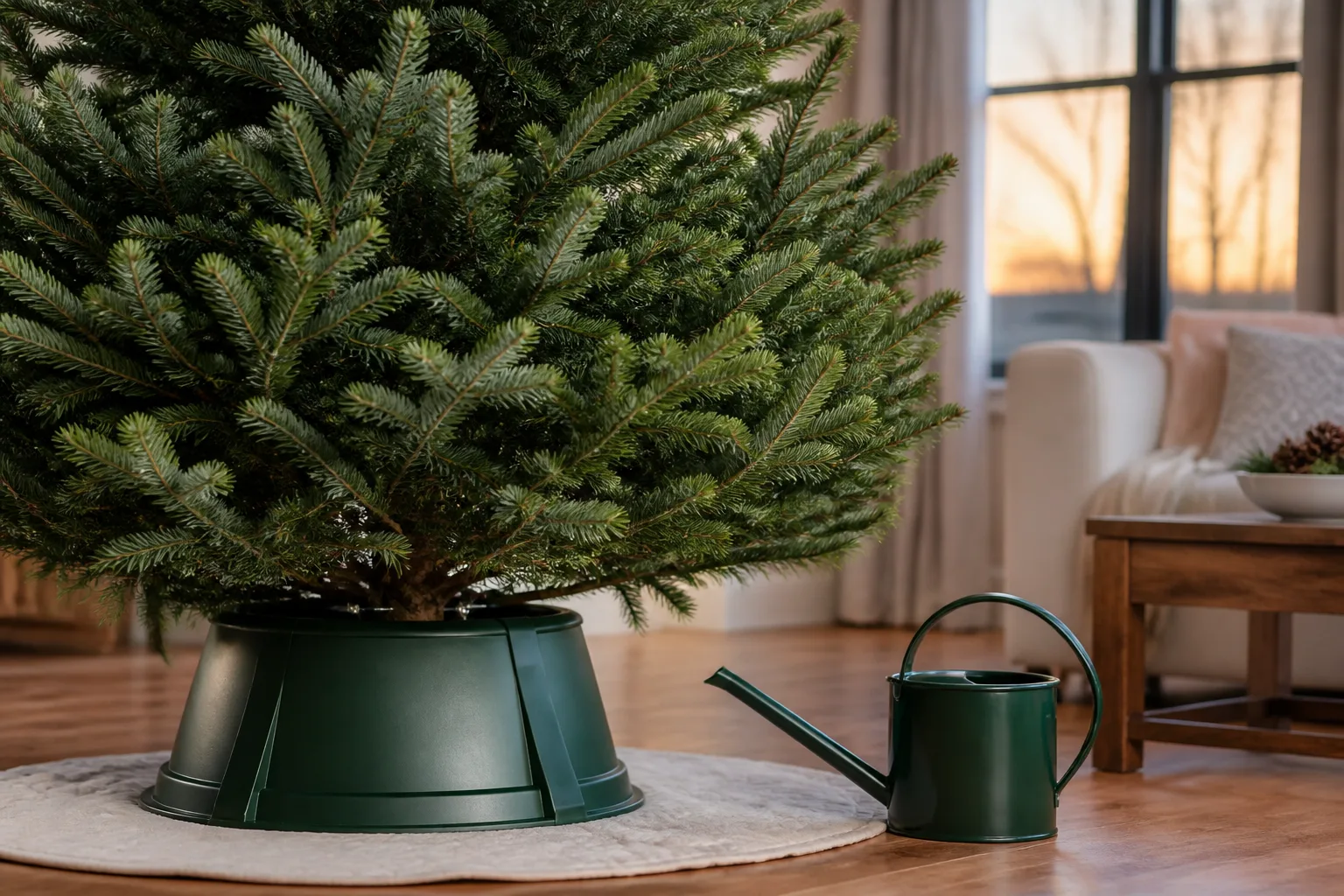
A few needles under a real Christmas tree are normal. A sudden carpet of green needles, brittle branches, or a tree that feels dry only days after setup points to a care problem—or to a tree that was already losing its usable life when you brought it home.
The fastest way to diagnose it is to check the stand, the cut end, the room, and the pattern of shedding in that order. A healthy cut tree can still lose some older interior needles, but it should stay flexible, green on the outside, and in steady contact with water. Here are the five reasons needle drop becomes excessive and the practical fix for each one.
Start With a 60-Second Needle-Drop Check
Before moving ornaments or adding anything to the water, look at four clues:
- Check the reservoir. Is the base of the trunk actually submerged, or is water sitting below it where you cannot see it?
- Bend an outer twig gently. Fresh branches have some flexibility. Dry branches snap or feel stiff and brittle.
- Run your fingers lightly along one branch. A few loose needles are expected; a handful of green needles coming away is not.
- Look at where the needles are falling. Brown needles deep inside the canopy may be older needles. Green needles from the tips and outer branches mean the tree is drying or was already stressed.
If the stand is dry, refill it immediately with plain water and check it again later the same day. If the tree is brittle, no longer drinking, or shedding green needles across the whole canopy, skip household “revival” recipes and plan to remove it safely; a severely dry tree cannot be made fresh again by a topping-up routine.
1. The Tree Was Already Dry When You Bought It
Freshness at purchase sets the ceiling for how long a cut tree can look good indoors. Once a tree has been cut, it is a perishable product: its foliage can remain green for a while even as its internal water reserves decline. Purdue Extension notes that more than half of a freshly cut tree’s weight is water, which is why a tree that spent too long dry, in sun, or in wind may begin shedding soon after setup even when you water it correctly.
This is the reason prevention beats rescue. A stand full of water cannot restore needles that were already brittle, and it cannot undo weeks of drying before the tree reached the lot. If you are still shopping, spend more time testing the tree than comparing its shape.
How to Test a Cut Tree at the Lot
Use several checks rather than relying on one dramatic shake. A fresh tree should have needles that are flexible and firmly attached to the branch. Pull gently along a branch; a few needles may release, but a whole handful is a warning. Shake or bounce the tree lightly and look for an ordinary scattering of old interior needles, not a rain of green needles from the outside.
The bark and branch tips should not look uniformly dull, gray, or shriveled. Small differences among species matter: spruce needles are naturally sharper and stiffer than fir needles, so “soft” is not a universal test. Instead, judge whether the foliage is supple for that species and whether the branch bends before it breaks. Purdue Extension’s guidance on selecting a fresh tree and Country Living’s practical freshness checks both emphasize firm attachment and flexibility rather than an absence of every loose needle.
Transport can also turn a fresh tree into a dry one. Do not leave it exposed on a vehicle for hours if you can avoid it; sun and wind pull moisture from the foliage. If setup must wait, keep the trunk protected and the tree in a cool, shaded, sheltered place. A delay of more than several hours after cutting changes what you need to do at setup.
2. The Trunk Was Not Recut and Water Uptake Stopped
The base of a cut trunk can become coated with resin, dirt, and air-blocked wood as it is handled. That sealed surface makes it harder for water to enter the outer conducting wood. Simply placing a dry-cut trunk into a full stand does not necessarily reopen the water pathway.
The remedy is a fresh, straight cut across the base. NC State Extension recommends removing about half an inch of the trunk, while other extension guidance commonly describes roughly one-half to one inch depending on the situation. The important points are that the cut is clean and perpendicular, the trunk is not whittled into a point, and the tree goes into water promptly.
Do not drill a hole in the base or shave away the trunk’s outer diameter to force it into a small stand. The outer wood is especially important for water uptake, and a stand that does not fit the trunk is the wrong stand. Choose a larger stand instead. If the tree was dry for more than a day or the base has been exposed for an extended period, a new cut may be needed before water uptake resumes.
Reset the Water Supply Without Guessing
If the tree is not yet decorated, have one person hold it securely while another makes the fresh cut with a suitable saw. Place the trunk into the stand immediately; do not make the cut, run errands, and return hours later. Purdue Extension says that if a tree cannot be set up within roughly six to eight hours after a cut, another cut may be needed because the water-conducting cells at the base begin to become blocked.
For a tree already decorated, do not dismantle it alone or drag an unstable tree across a room just to perform a rescue cut. First refill the stand, verify that the trunk base is submerged, and move the tree away from drying heat. If it remains brittle and continues shedding, removal is safer than a risky attempt to re-cut a fully decorated tree.
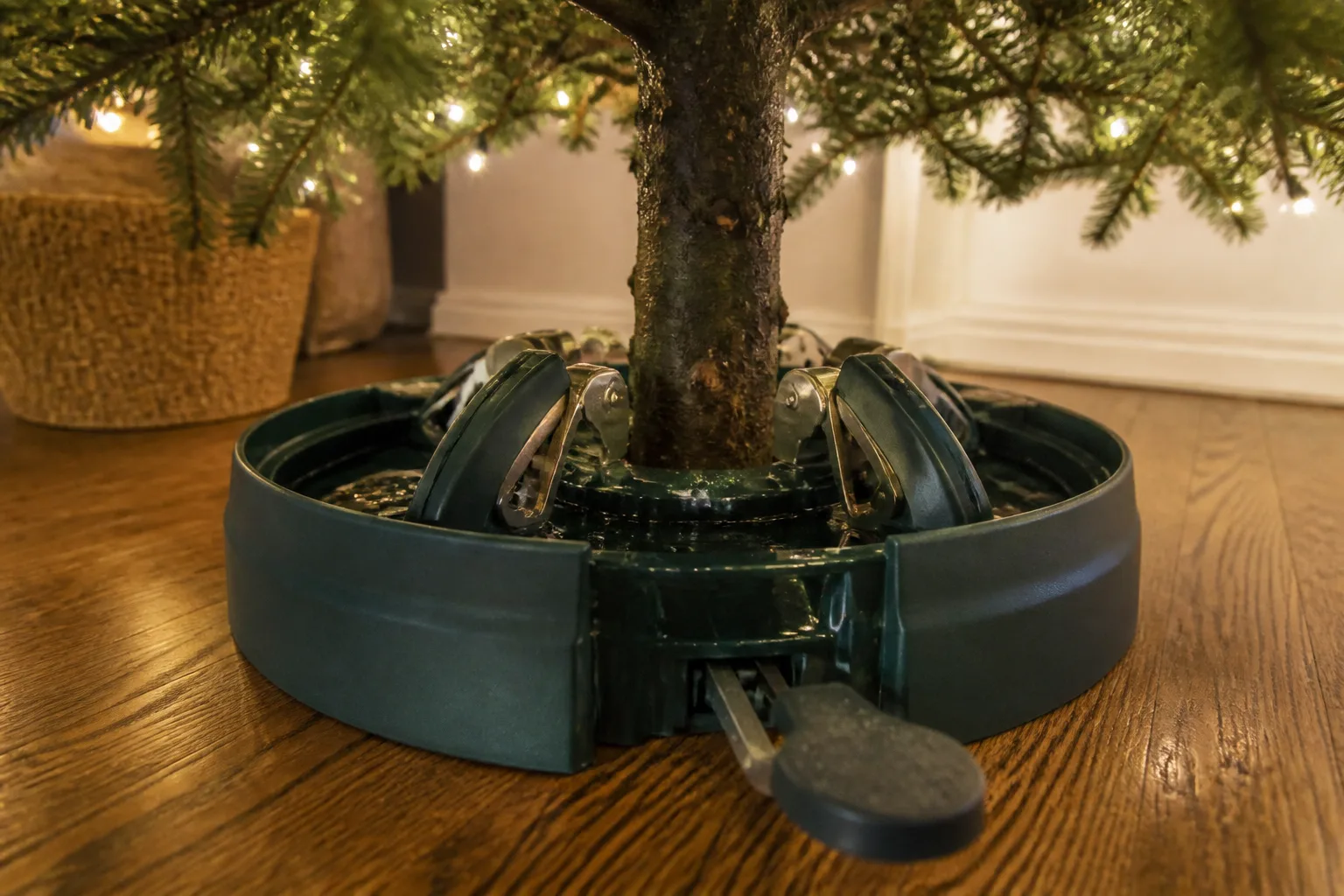
3. The Stand Ran Dry
An empty stand is one of the most common causes of a sudden change in needle drop. A cut tree can use a surprising amount of water during the first several days, and a stand can appear to contain water while the trunk base is actually above the waterline. That is why checking the visible level from across the room is not enough.
Keep the reservoir large enough for the trunk and the tree’s early demand. A useful sizing rule from Purdue Extension and the University of Nevada, Reno Extension is at least one quart of water-holding capacity for each inch of trunk diameter. This is a capacity guideline, not a promise that every tree will consume exactly that amount each day. A wide-trunked tree needs a more generous stand than a small tabletop tree.
For the first week, check the reservoir at least once every morning and again later in the day if the tree is tall, the room is warm, or the level is falling quickly. Add cool, clean water whenever needed so the cut surface never loses contact with water. After the initial high-demand period, the tree may drink more slowly, but daily checks should continue because room temperature and weather can change.
If you discover that the stand was dry only briefly, refill it and monitor the tree. If it was dry long enough for the trunk to seal, water may stop moving even after you refill the stand; that is the point at which a fresh cut may be necessary. NC State’s freshness guidance also stresses that consistent watering matters more than a special irrigation method. The ordinary routine—full water contact and frequent checks—does the important work.
4. Heat, Sun, or Drafts Are Pulling Out Moisture
Even a fresh, well-watered tree dries quickly when it is placed beside a fireplace, radiator, heating vent, sunny window, or drafty exterior door. Warm moving air increases moisture loss from the needles, while direct sun can heat the foliage and trunk. The room may feel comfortable to you but still be a harsh microclimate for a recently cut tree.
Move the tree to the coolest practical part of the room, away from direct heat and strong air movement. Do not put it in a garage or outdoors after it has spent days in a warm room unless you are handling a container-grown tree according to its acclimation needs; a sudden temperature swing can cause another form of stress. For a cut tree, the useful adjustment is a stable, moderate indoor location.
The type of light matters too. Older incandescent strings can add heat directly around needles, especially where a strand is tightly wrapped. LED lights are a better choice for reducing localized warming, but they do not cancel out a dry stand or make it safe to run a tree next to a flame. Inspect the cords, keep connections dry, and follow the light manufacturer’s use instructions.
Choose the Least-Drying Spot
Look for a place with stable room temperature, no fireplace or radiator nearby, no heating vent aimed at the branches, and enough distance from a door that opens repeatedly to cold outdoor air. A bright window is not automatically a problem, but a south- or west-facing window that receives strong afternoon sun can increase drying; filtered daylight or a less exposed wall is kinder.
If the tree is already shedding, relocate it before you start experimenting with additives. RHS guidance on Christmas-tree care specifically warns that radiators and fires cause excessive moisture loss and needle drop. Gardens Illustrated reaches the same practical conclusion: water helps, but a tree placed close to a heater will still dry quickly.

5. Some Needles Are Old and Naturally Shed
Not every fallen needle means the tree is failing. Evergreens replace their oldest needles, and a cut tree may release brown or orange needles that were already lodged in the interior of the canopy before you brought it inside. These older needles tend to be on shaded inner twigs, while the newest exterior growth remains green and firmly attached.
Normal shedding is usually scattered and mostly brown. It may become more noticeable after the tree is moved or shaken because loose interior needles finally fall out. That is a cleanup issue, not necessarily a hydration emergency.
Normal Shedding vs. Dangerous Drying
Use the pattern, color, and feel together:
| What you see | More likely explanation | First response |
|---|---|---|
| A few brown needles from deep inside the canopy | Normal age-related shed | Shake or gently brush the tree outdoors if possible, then monitor the outer growth. |
| Green needles fall in handfuls when a branch is touched | Low freshness or active dehydration | Check the stand, heat, trunk cut, and branch flexibility immediately. |
| Tips and outer branches turn dull, stiff, or brittle | Drying from age, heat, or poor water uptake | Move the tree, restore water contact, and decide whether it is safe to keep. |
| One small area loses needles beside a hot light or vent | Localized heat stress | Switch off the hot light, create distance, and inspect the rest of the tree. |
| Whole branches are dry, break easily, and no water disappears from the stand | The tree may no longer be taking up water | Do not rely on additives; prepare for safe removal. |
The key distinction is that normal shedding leaves the living-looking exterior intact. If the outside of the tree is green and resilient, a little brown material inside is not a reason to panic. If the outside is the part falling apart, assume the tree is drying until you find evidence otherwise.
Does the Tree Species Matter?
Yes, but species is only one part of the outcome. Freshness at purchase, time without water, heat exposure, and stand maintenance can outweigh the name on the tag. Still, some trees are naturally better at holding needles indoors.
RHS compares Norway spruce, Nordmann fir, blue spruce, Korean fir, and Fraser fir. Norway spruce is valued for scent but tends to drop needles more quickly. Nordmann fir, Fraser fir, and Korean fir generally have stronger needle-holding reputations, while blue spruce also holds well but has pricklier needles. Regional species and cultivars vary, so ask the grower how a particular tree behaves in your climate and how long it has been cut.
Species is most useful as a buying decision, not as an excuse to ignore symptoms. A fresh Norway spruce kept cool and continuously watered can outperform a neglected fir that spent days dry beside a heater. Choose the freshest tree available, then match its display length and room conditions to the species’ likely needle retention.
What to Do Today If Needles Are Already Falling
Follow this sequence instead of changing several variables at once:
- Confirm the problem. Check whether the shed is brown and interior or green and exterior. Bend a small outer twig gently.
- Check water contact. Use a flashlight if necessary and make sure the trunk base is actually submerged.
- Refill with plain water. Do not wait for the next scheduled watering, and do not add a kitchen remedy.
- Remove drying stress. Move the tree away from heat, drafts, and strong direct sun; switch to cooler LED lights if needed.
- Review setup history. If the trunk was not recut, the tree sat dry for hours, or the stand ran empty, water uptake may be the central problem.
- Monitor for the next day. A flexible, green tree with steady water use may stabilize. A brittle tree with widespread green-needle loss is unlikely to recover indoors.
This sequence is deliberately conservative. It gives a salvageable tree the essentials—water contact, a fresh-cut decision, and a less drying location—without wasting time on remedies that can damage the tree or create a mess around lights.
What Not to Put in Christmas Tree Water
Plain water is the dependable default. Do not add sugar, soda, bleach, aspirin, fertilizer, vodka, syrup, or homemade preservative mixtures because a recipe sounds traditional or appears in a social-media video. The tree is not a rooted plant that needs feeding through the stand; it needs uninterrupted access to water through the cut trunk.
Country Living summarizes university-backed research on Christmas-tree preservatives and reports that additives do not improve needle retention and may harm the tree. The practical risk is also easy to see: sugary or organic mixtures can make the reservoir sticky, while bleach and other chemicals introduce unnecessary exposure around children, pets, flooring, and electrical cords.
If a product is sold specifically for Christmas trees, follow its label rather than improvising a stronger mixture, but do not assume it can compensate for a dry trunk or an empty stand. Water level, freshness, and placement have a much larger effect on the problem you can actually see.
How to Keep the Tree Safer While It Is Drying
Needle drop is a plant-care warning and a household-safety warning. As a tree loses moisture, branches become more brittle and the margin for error around heat, flames, and electrical equipment becomes smaller; Fort Montgomery Fire District’s Christmas-tree safety guidance notes that a dry tree is more easily ignited. Keep candles, fireplaces, radiators, and portable heaters well away from the tree, and never use an open flame to warm or “rehydrate” it.
Use lights that stay cool, inspect cords before installation, and turn the lights off when you leave home or go to bed. Keep the stand on a stable, level surface where it cannot tip, and clean spilled water before it reaches a cord or outlet. Do not place a humidifier so close that mist wets the branches, ornaments, or electrical connections; increasing room humidity is not a substitute for keeping the trunk submerged.
The safest care plan is simple: fresh tree, fresh cut, full stand, cool placement, and frequent checks. If those conditions are no longer possible, shortening the display is better than trying to force a failing tree through the rest of the season.
When the Tree Is Too Dry to Keep Indoors
Take the tree down when the exterior needles are brittle and release easily, branches snap instead of bend, the tree has widespread dull or brown foliage, or the stand stays full because the trunk is no longer drinking. Do not wait for every needle to fall. A tree that is visibly dry will not become fresh again because you add more water, and moving a heavily decorated, brittle tree can spread needles and break branches.
Unplug and cool the lights before removing ornaments. Use two people for a large tree, protect floors from dry debris, and follow your community’s Christmas-tree collection or recycling rules. A chipped or composted tree can have a useful afterlife, but never burn a freshly discarded Christmas tree in a fireplace; fire-safety guidance specifically advises against putting tree branches or needles in a fireplace or wood stove.
For next year, record what happened while the details are fresh: the species, purchase date, time from cutting to water, stand capacity, room location, and the first day the reservoir ran low. That short record will tell you whether the better fix is a fresher supplier, an earlier stand setup, a larger reservoir, a cooler location, or a species with stronger needle retention.
Conclusion
The five main reasons a Christmas tree drops needles are an already-dry tree, a sealed or uncut trunk, an empty stand, excessive heat or drafts, and normal shedding that is being mistaken for a crisis. Start with the stand and the texture of the outer branches: those two checks usually tell you whether the tree needs water and a cooler location or whether it has reached the end of its indoor life.
The reliable formula is not a secret additive. Buy fresh, make a clean cut, put the tree into water quickly, keep the cut end submerged, check the reservoir frequently, and protect the branches from heat and direct sun. A few brown interior needles are part of the process; widespread green-needle loss and brittle branches are your signal to act.