Should You Mulch Before Winter? Timing and Tips
Should you mulch before winter? Learn when to apply it, which plants benefit, what materials to use, how deep to go, and when to pull it back in spring.
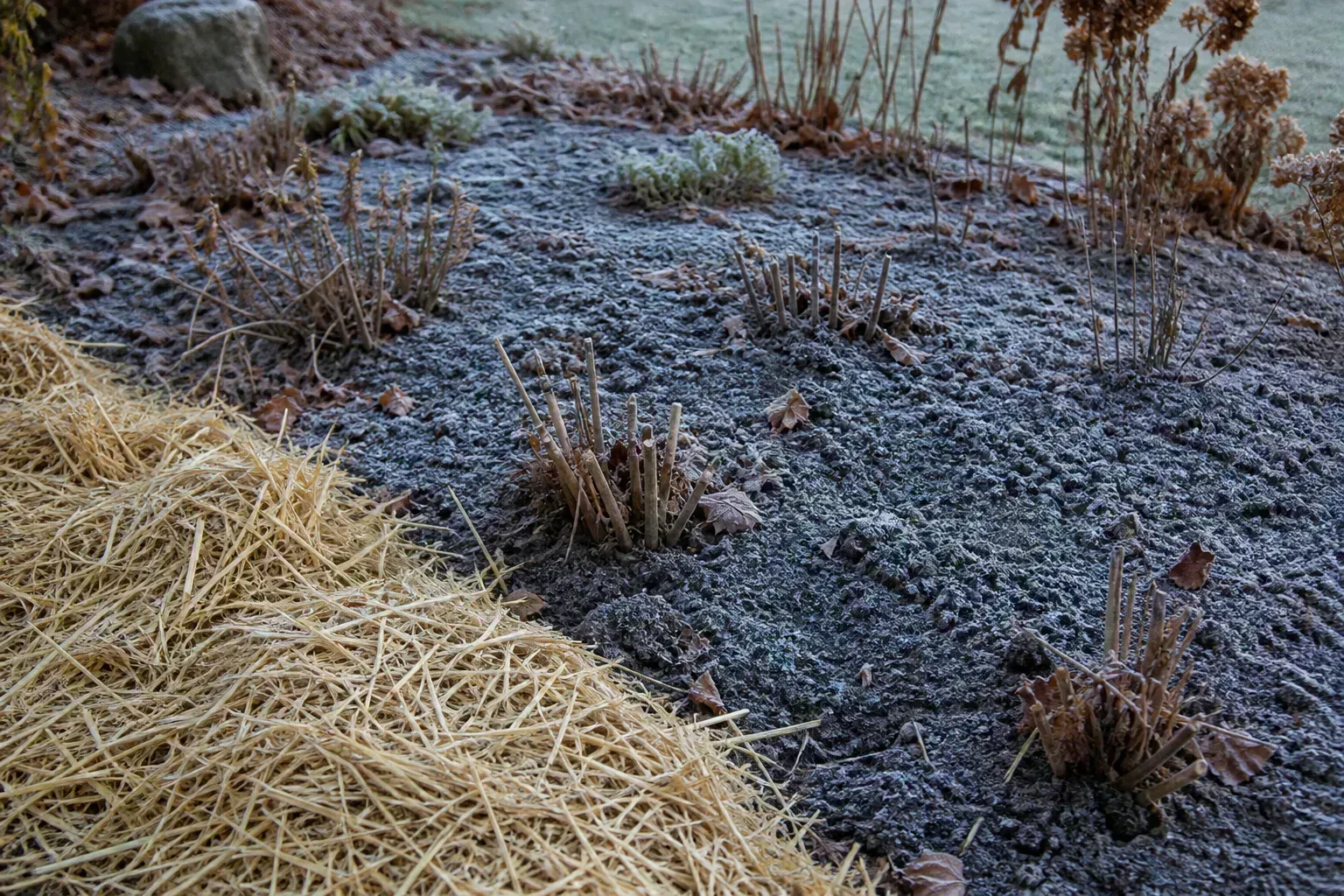
The short answer: yes, but not for every bed
You should mulch before winter when the goal is to protect a vulnerable root zone from repeated freezing and thawing, drying wind, or erosion. The best candidates are shallow-rooted perennials, newly planted trees and shrubs, plants near the edge of their hardiness, and beds where the soil is exposed. The answer changes for plants that demand very sharp drainage, sites that stay wet, and beds where fall mulch would bury seeds you want to germinate in spring.
The timing matters as much as the material. For established perennial beds and most woody plants, wait until the soil is cooling and the plants have gone dormant—often after several hard frosts or a hard freeze—rather than spreading a thick layer while autumn soil is still warm. An early layer can hold warmth and moisture at the crown, encourage premature growth during a warm spell, and create a damp shelter for rot or rodents.
Winter mulch is not a heated blanket. It moderates the rate at which the soil gains and loses heat, conserves some moisture, and reduces the severity of freeze-thaw swings. That steadier root-zone environment is the useful outcome; the mulch does not make a plant hardy in a climate it cannot tolerate.
Why winter mulch helps the root zone
Bare soil is exposed to every temperature change, rainstorm, drying wind, and freeze-thaw cycle. As wet soil freezes, it expands; when it thaws, the surface can settle unevenly. Repeated movement can lift shallow-rooted plants or expose a crown and fine roots to cold, dry air. A porous mulch layer interrupts some of that rapid exchange and helps the soil change temperature more gradually.
Mulch also slows evaporation and cushions the surface from pounding rain. That matters in winter because evergreen leaves and stems can keep losing water while frozen ground limits root uptake. Mulch cannot replace a thorough watering before the ground freezes when the soil is genuinely dry, but it can reduce the speed at which the root zone dries afterward.
Organic mulch has a longer-term benefit too: as it breaks down, it contributes organic matter at the soil surface. That improvement is gradual, so do not treat fresh bark or wood chips as an instant fertilizer. Their immediate winter jobs are insulation, moisture moderation, erosion control, and protection of the soil surface.
Colorado State University Extension lists moisture conservation and moderation of soil-temperature extremes among the main reasons to mulch, while also warning that excessive mulch can reduce oxygen and water available to roots. (Colorado State University Extension)
Who benefits most from a winter layer
Start with plants that have the most to lose from unstable soil conditions. Shallow-rooted perennials and bulbs are vulnerable to heaving because their crowns sit close to the surface. Plants installed late in the season have had less time to establish roots, and plants at the cold edge of their normal hardiness may benefit from extra root-zone buffering even when established neighbors do not need it.
Broadleaf evergreens and fruiting shrubs can also benefit where winter wind and frozen soil make water balance difficult. Their foliage continues to lose moisture, and a mulch layer around—not against—the plant can help the soil hold moisture longer. Newly planted trees and shrubs deserve attention, but the mulch should cover the surrounding root zone while leaving the trunk flare and stem base visible.
The plant’s habitat is a useful clue. Woodland-floor plants often tolerate or appreciate a light layer of leaves because that is close to their natural winter cover. Plants from rocky, open, sharply drained sites may prefer a thinner layer or no winter mulch at the crown. This is not a rule about common names; it is a reminder to match protection to the plant’s moisture needs.
Southern Living Plants specifically highlights shallow-rooted plants, newly planted plants, marginally hardy plants, broadleaf evergreens, and fruiting shrubs as groups that can benefit, while cautioning that winter-wet conditions are a poor fit for several dry-site perennials and herbs. (Southern Living Plants)
Who should skip or modify it
Do not automatically mulch every perennial to the same depth. Lavender, rosemary, sedum, dianthus, many salvias, and other plants that resent winter moisture may decline when a dense, wet layer sits around their crowns. The issue is usually not that mulch is “cold”; it is that the material reduces airflow and slows drying in a place that already drains poorly.
Modify the plan for heavy clay, low spots, shaded beds, and any area that stays saturated after rain. Improve drainage or use a very light, airy layer rather than piling on more insulation. If you are unsure, protect the surrounding soil lightly while keeping the crown and immediate stem base open, then watch how the bed behaves after rain.
Fall mulch can also interfere with natural reseeding. If a bed relies on self-sown annuals or perennials, a thick layer may block the light or physical contact needed for seeds to germinate. Leave those seed-drop zones open, or apply a thin layer only after the seedlings have emerged in spring.
Timing: wait for dormancy, not a calendar date
There is no universal “mulch on November 1” rule. Soil cools at different rates depending on latitude, elevation, exposure, recent weather, and the moisture of the bed. A better cue is a sequence: plants are finished with active growth, nights are regularly cold, the soil is cooling, and the forecast no longer suggests a long warm spell.
The practical distinction is whether you are trying to extend a living crop or protect a dormant plant. A light cover can help some annuals or fall crops through a short cold spell before a hard freeze. Winter protection for established perennials, trees, and shrubs is usually applied later, after dormancy is clear, so the mulch does not hold the soil warm during the hardening-off period.
The Morton Arboretum advises waiting until the soil starts to cool in fall; regular frosts are a better indicator than a single frost because air temperatures can rebound after one cold night. (The Morton Arboretum)
Perennials, trees, and shrubs
For dormant perennial beds, apply mulch after a hard freeze or after several hard frosts have signaled that growth has stopped. If your area has mild, stop-and-start winters, use the plant’s condition and soil temperature rather than waiting for a dramatic freeze that may not arrive. The goal is to protect the plant before repeated freeze-thaw cycles do damage, not to leave the crown exposed until midwinter.
Around trees and shrubs, top up an existing ring only after checking its depth. Winter is not a reason to keep adding layers every time the surface looks thin. Pull old mulch away from the trunk, remove any packed or sour-smelling material, and add enough fresh mulch to restore the correct depth across the root zone.
Newly planted woody plants may need a wider protected area because their roots are still concentrated near the planting hole. Water the root zone if it is dry before the ground freezes, but do not soak a poorly drained planting hole and then seal it under a thick layer. Mulch should support moisture balance, not hide a drainage problem.
Vegetable beds and living crops
An empty vegetable bed can be mulched earlier because there are no tender crowns to bury and no active crop whose harvest you are trying to extend. A layer of leaves, finished compost, or another suitable organic material can reduce erosion, suppress winter weeds, and protect bare soil. If you are using a cover crop, follow that crop’s management plan rather than treating it as an empty bed.
Living vegetables require a different decision. Straw or shredded leaves can help buffer soil around hardy crops and may extend the harvest of some fall plantings, but a heavy, wet material pressed against foliage can create disease and slug problems. Keep mulch off edible leaves, maintain air movement, and use a breathable row cover when the primary need is frost protection above the soil.
Do not assume bark or fresh wood chips are the best choice for every vegetable bed. They are useful surface materials around established woody plants and paths, but a thick layer incorporated into a vegetable bed can complicate spring planting and may temporarily tie up nitrogen as it decomposes. For a fallow bed, choose a material you can move or incorporate appropriately in spring; for a planted bed, keep the layer loose and targeted.
Sow Right Seeds separates the timing for living annuals from dormant perennials: a light layer may be used after a light frost to extend some annual crops, while established perennials are better mulched after a hard freeze. (Sow Right Seeds)
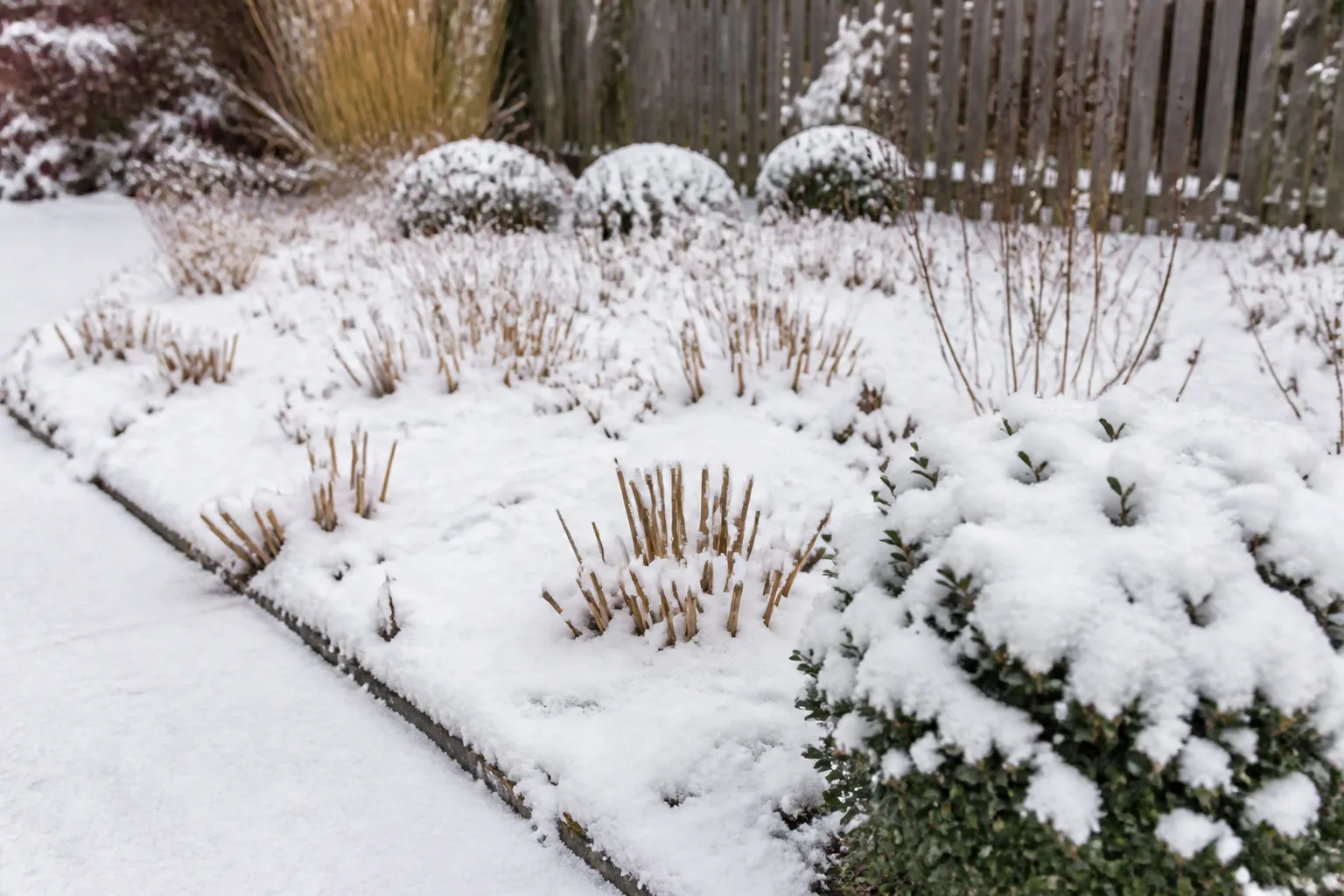
Choose winter mulch by the job
Choose the material based on what the bed needs and what you can manage in spring. A porous organic material is usually more useful for winter protection than a dense, fine layer that mats into a wet blanket. The right choice also depends on wind: lightweight leaves and straw may need a few small branches or a thin stabilizing layer, while large chips may stay put but be harder to move around emerging bulbs.
Shredded leaves and leaf mold
Clean leaves are an economical winter mulch, especially when shredded so they do not form a slick, airless mat. Run a mower over dry leaves, use a shredder, or apply a thin layer and check whether rain has packed it down. Shredded leaves can be left in a woodland-style bed, moved around established plants, or added to a compost system when spring cleanup begins.
Do not use leaves from a diseased plant as a casual blanket for valuable perennials, and do not bury leaves so deeply that crowns disappear. Whole leaves can be useful habitat, but they are more likely to shed water or mat in some beds. If the surface remains wet for days after rain, reduce the depth and improve airflow rather than defending a blanket that is clearly too dense.
Leaf mold and finished compost are more decomposed than fresh leaves or chips. They can improve the soil surface, but they break down faster and may not provide the same loose air spaces as coarse material. Use them as a soil-building layer, not as a universal substitute for a winter blanket.
Straw, pine needles, bark, and wood chips
Straw is light and airy, which makes it useful for tender crowns, strawberries, and some vegetable beds. Buy clean straw rather than hay when possible; hay is more likely to carry viable seed. Because straw settles, inspect the depth after wind and rain, but resist adding more before checking whether the original layer is merely compressed at the surface.
Pine needles are naturally open and resist matting, so they can work well where the plant tolerates them. The idea that pine needles automatically acidify the soil is oversimplified; the finished material is not a fast soil-acidifying treatment. Choose them for texture and availability, and consider the existing soil and plant rather than promising a pH change.
Bark and wood chips last longer and are practical around trees, shrubs, and perennial borders. Medium-textured material is a good compromise: very fine mulch can compact and hold excess moisture, while very coarse chips can float or leave large gaps. Avoid dyed or unknown materials in edible beds, and never use chips from treated lumber.
Rocks are a poor replacement for organic winter mulch when the job is freeze-thaw buffering. Stone can be attractive and durable, but it does not add organic matter and can complicate planting changes. In a sunny location it can also change surface heat and moisture behavior, so choose it for a landscape design purpose rather than assuming “heavier” means “more protective.”
Apply the right depth for each plant group
Depth is measured after the material settles, not by the height of a loose pile as you spread it. For most perennial beds, start around 2 inches and adjust for the material and plant. Shallow crowns may need less; an exposed, vulnerable bed may need a little more airy coverage, but depth is not a substitute for drainage or correct plant placement.
Trees and shrubs generally need more coverage across the root zone than a perennial crown. The Morton Arboretum recommends about 3 to 4 inches for medium- to coarse-textured material under trees and shrubs, while perennial beds need only a couple of inches. (The Morton Arboretum)
Do not bury a newly planted tree’s root flare or cover the entire root ball with a deep mound simply because the tree is new. Colorado State University Extension warns that mulch can divert water away from a newly planted root ball and recommends keeping it away from the trunk while extending the ring over the backfill area and beyond. (Colorado State University Extension)
For a bed with mixed plants, measure the surface in zones. Use the deeper ring around an established shrub, a thinner layer around a dry-site perennial, and a clear collar around every crown. A single depth across a mixed border is convenient, but it is not necessarily correct.
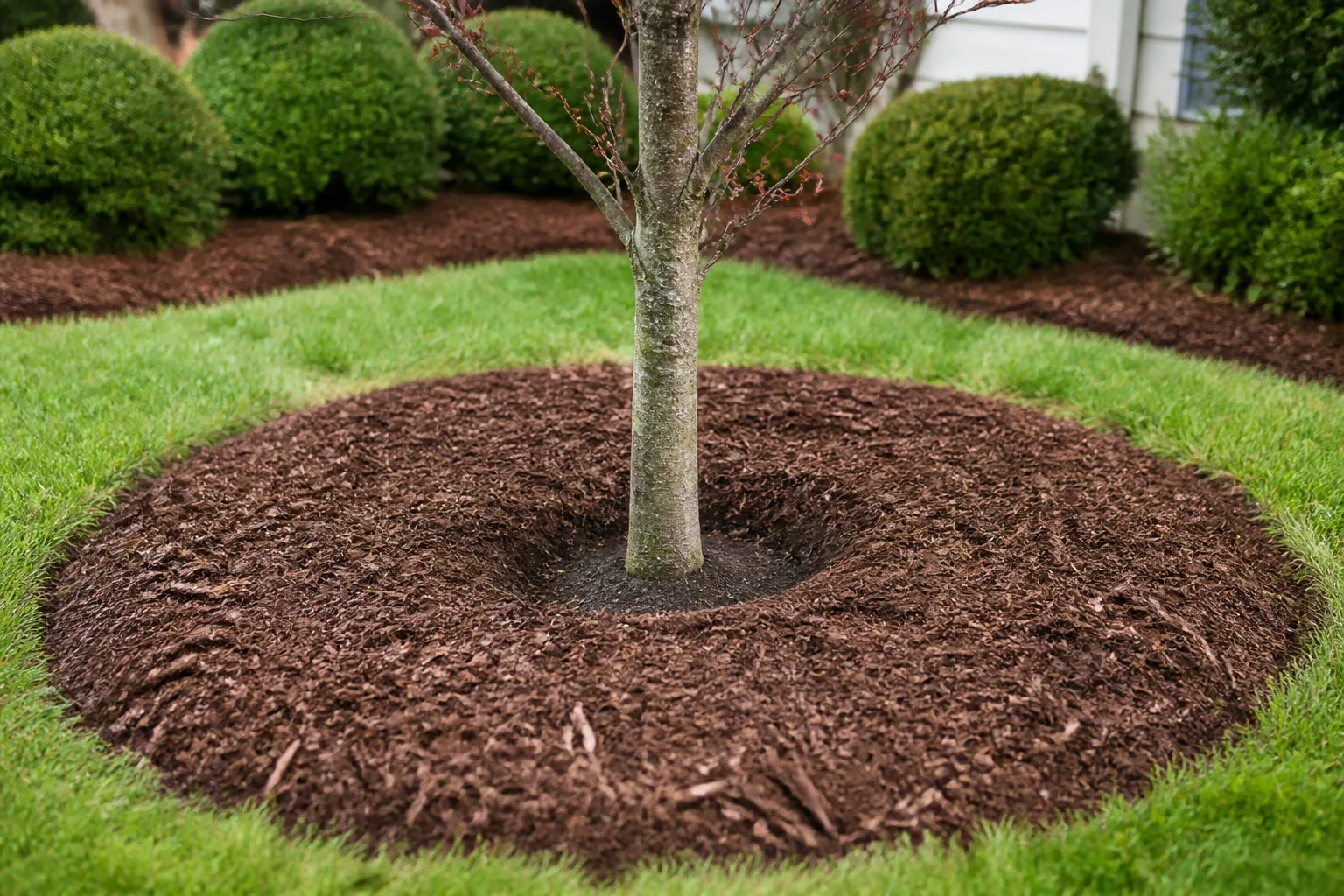
Prevent the common winter-mulching failures
Keep crowns, stems, and trunks clear
The most important placement rule is simple: mulch the soil, not the plant. Leave the crown of a perennial visible enough that you can tell where new growth will emerge. Around shrubs, keep mulch a few inches away from the stems; around tree trunks, maintain a broad donut-shaped gap so the trunk flare stays dry and visible.
Piling mulch against bark creates a persistently moist contact zone. That can encourage decay, insect shelter, and disease, and it can hide structural problems at the base of the tree. The “volcano” shape is not extra winter protection; it is excess material in the one place that needs airflow.
The width of the ring matters too. A narrow collar at the trunk protects little of the active root zone, while a broad, shallow ring under the canopy is usually more useful. Do not dig into surface roots to make a perfect circle; spread mulch over the soil surface and preserve the existing root system.
Start with a clean bed and clean materials
Remove diseased foliage, fallen fruit, weeds carrying seed, and thick mats of dead stems before mulching. Healthy stems can sometimes be left for winter habitat, and some ornamental grasses are better left standing than cut and buried, but diseased debris should not be sealed into a damp layer around living crowns.
Check that the mulch is free of trash, treated wood, invasive weed roots, and persistent seedheads. Grass clippings need special care: a thick, wet pile can mat, heat up, and exclude oxygen. If you use clippings, dry them or mix them sparingly with coarser material.
Mulch is not automatically safe because it is organic. Colorado State University Extension notes that organic mulches can harbor voles and other rodents, lighter materials can blow away, and organic mulch may be a fire concern close to a home in fire-prone areas. (Colorado State University Extension)
Check the bed through winter and remove mulch in spring
Winter mulch is a seasonal layer, not a permanent plant covering. After a major wind or rain event, check whether the material has blown into a crown, exposed the soil around a vulnerable plant, or formed a wet mat. Pull it back from stems immediately if contact develops, and replace only what is needed.
Begin spring cleanup when severe freezes are passing and plants show signs of waking. You do not have to strip every bit away in one dramatic operation. Move the upper layer off crowns and emerging shoots first, leave a thin surface layer where it is still useful, and finish clearing as the soil warms and drainage improves.
Removing slowly helps avoid a sudden temperature swing, but slow removal does not mean leaving a heavy, wet blanket over new growth. If a crown is emerging into the mulch, open a ring around it. If the material smells sour, is visibly moldy, or is trapping moisture against a stem, remove it sooner and improve airflow.
Spring is also the time to measure what actually happened. Did the bed stay too wet? Did straw blow away? Did rodents tunnel through the mulch? Did a plant emerge late or rot at the crown? Use those observations to change the material or depth next fall instead of repeating a blanket prescription.
Troubleshoot the “I already mulched” scenarios
I mulched before the first frost. Do not panic or strip the bed immediately. If the weather turns warm and the plants are still actively growing, thin the layer, uncover crowns, and wait to reapply after dormancy. If the bed is already cold and the layer is loose, monitor it rather than disturbing roots unnecessarily.
I used too much mulch around a tree. Pull the excess away from the trunk and trunk flare first. Then spread the remaining material outward in a shallow ring; if the soil is saturated, do not add more until it drains.
My mulch is wet and smells sour. Remove the compacted material from the crown or stem base, rake the surface gently so air can reach it, and replace it later with a coarser, thinner layer if the site is otherwise suitable. The smell is a warning that the layer is not functioning as a porous surface.
A perennial was lifted by frost. Do not yank it back into place while the soil is frozen. Once the soil is workable and the plant is not actively being heaved, settle the roots back into contact with soil, water if needed, and use a light, airy mulch layer to reduce further movement.
My empty vegetable bed is still bare. You can still protect the surface with shredded leaves, finished compost, a suitable cover crop, or another locally appropriate material if the ground is workable. The benefit now is mainly erosion and moisture management; do not force a deep layer into frozen or saturated soil.
Conclusion
Mulching before winter is usually worthwhile, but the best answer is not “cover everything with three inches.” Protect the plants most exposed to freeze-thaw stress, wait until the soil is cooling and perennial growth is dormant, choose a loose material that suits the site, and measure depth by plant group.
Keep crowns and trunks clear, remove diseased debris first, and treat drainage as a prerequisite rather than something mulch can fix. Check the layer during winter and pull it back as spring growth begins. Done that way, winter mulch becomes a quiet form of risk management: steadier soil, fewer exposed roots, and a cleaner start when the garden wakes.