How to Use a Reel Mower: A Guide to a Clean, Even Cut
Find out how a reel mower works and whether it suits your yard. Set the right cut height, mow cleanly, manage tall grass, and keep the blades adjusted.
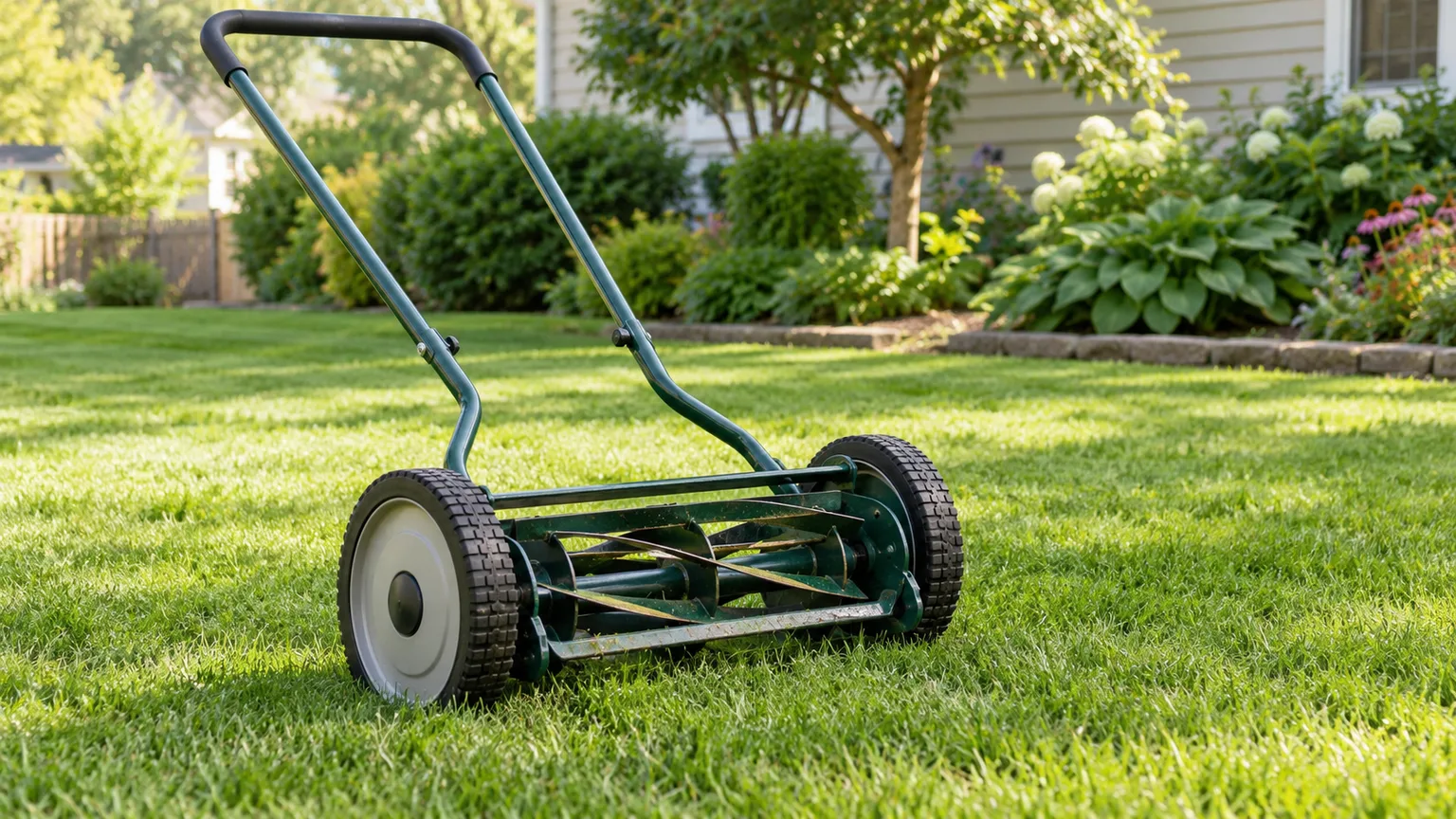
A reel mower is a hand-pushed lawn mower that cuts with a rotating cylinder of blades instead of a powered horizontal blade. Your push turns the wheels, the wheels turn the cylinder, and the blades shear grass against a fixed lower blade. That simple design makes a reel mower quiet and easy to store, but it also means the machine depends on your pace, sharp edges, correct adjustment, and grass that is not too tall or tangled.
For a small, fairly level lawn that you can mow often, a reel mower can give you a satisfying cut without fuel, a battery, or engine maintenance. For a large yard, long grass, heavy twigs, steep slopes, or a schedule that lets the lawn grow for weeks, it can turn a quick chore into a long push. The best way to decide is to match the mower to your grass and routine before you buy or start mowing.
How a Reel Mower Cuts Grass
A reel mower’s blades form a cylinder across the front of the machine. As the wheels roll forward, a gear turns that cylinder toward a stationary blade near the ground, often called the bed knife or cutter bar. Each moving blade passes the stationary edge and pinches grass between them, much like scissors; if the edges are dull or the spacing is wrong, the blades can bend or drag grass instead of cutting it cleanly. Family Handyman describes the reel’s clean cut as scissor-like in its Family Handyman hands-on reel-mower test.
There is no motor to keep the reel spinning when you stop. The blades move only while the mower rolls, so the mower is easiest to push when the grass is short enough to pass through the reel and the cutting parts are clean and correctly set. A month-long backyard test of one reel mower by Family Handyman noted that the first push took the most effort and that the mower then rolled more easily with momentum (Family Handyman’s hands-on reel-mower test). That is useful perspective, but weight, gearing, wheel size, grass, and terrain vary by model and yard.
The reel itself is not automatically “sharper” than a rotary mower. A properly maintained rotary blade also cuts cleanly; the real difference is the cutting geometry and the amount of power available. The reel system is a good fit when the cylinder can keep turning through the grass at a steady pace, while a rotary mower has a powered blade that can keep cutting when growth is denser or the operator moves more slowly.
Reel Mower vs. Rotary Mower
Neither design is best for every lawn. A reel mower rewards frequent, controlled mowing and gives you a quiet manual tool; a rotary mower is more forgiving when the grass gets long, the yard is uneven, or time is limited.
| Consideration | Reel mower | Rotary mower |
|---|---|---|
| Power | Human push turns the wheels and cutting reel | Engine, battery, or cord powers a horizontal blade |
| Best fit | Short, regularly cut grass on a small, fairly level lawn | Taller growth, larger lawns, rougher ground, or less frequent mowing |
| Noise and operation | Quiet, with no engine or battery during use | Louder, with an engine or powered blade to manage |
| Debris | Twigs and thick thatch can stop or jam the reel | Usually handles ordinary lawn debris more readily, though debris can still be hazardous |
| Effort | You provide the forward force and mowing time | Powered cutting reduces pushing effort; self-propelled models reduce it further |
| Clippings | Often discharged behind the reel; catcher availability varies | Bagging, side discharge, or mulching depends on the model |
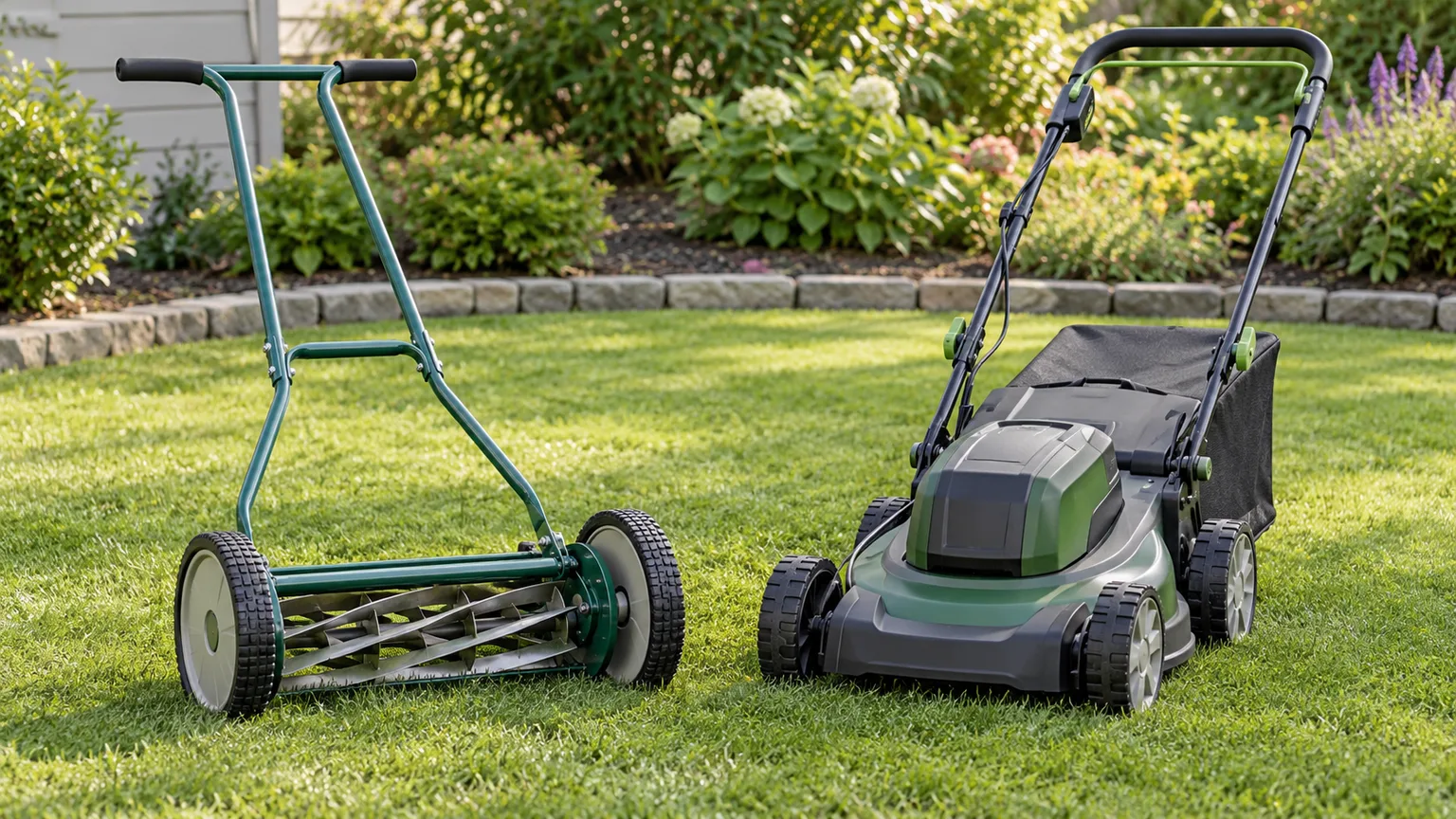
The environmental comparison also depends on the alternative. A manual reel mower has no direct exhaust and uses no electricity while cutting, but that alone does not establish the full life-cycle impact of any mower. If replacing an old machine is your only goal, compare how often you will use it, how long it lasts, and whether a battery model’s convenience would keep the lawn on schedule.
Is a Reel Mower Right for Your Lawn?
Choose a reel mower when your lawn is small enough that you can comfortably walk every pass, mostly level, and easy to keep free of sticks and heavy leaf litter. It is especially convenient where noise matters, where you want a mower that can hang in a shed, or where a powered mower feels excessive for a narrow strip of turf.
The more important question is not simply how many square feet you own; it is whether you can mow often enough that the grass stays within the height range your mower can cut. A reel mower can be lightweight and still take longer because you make more passes, slow down over dense patches, and may need to clear debris by hand. A St. Louis gardener who documented using a reel mower on a large, mixed lawn found that it took substantially longer than the powered push mower and worked best on only part of the yard (her reel-mowing trial account). That account is one yard’s experience, not a universal estimate, but it illustrates why the weekly time budget matters as much as the mower’s price.
Check the Grass, Ground, and Obstacles
Before choosing, walk the lawn and look for four things: turf type, typical grass height between mowings, slopes or holes, and debris. A level patch of cool-season turf kept short is a different job from a dense stand of warm-season grass, an area of sedges and tall seed stalks, or a shaded lawn threaded with roots and fallen twigs. A reel mower may handle several grass types, but the right cylinder, height range, and cutting frequency depend on the model and local conditions.
Also consider the operator. The mower is human-powered, so repeated pushing can be tiring if the lawn is large, the ground is soft, or the route climbs. If you have limited mobility or strength, do not treat a manual mower as an automatic low-effort choice just because it is light; try one on a representative patch, including the slope and corners, before committing to the whole yard.
Choose a Cutting Height Before You Mow
Set the cutting height for the grass you have, not for an abstract idea of a “short lawn.” Grass species, season, shade, drought, and local recommendations change the suitable height. Penn State Extension advises keeping most home lawns at 2 inches or above and setting the mowing interval by growth rate; during spring’s peak growth that can mean more than one cut a week, while drought may pause mowing until growth resumes (Penn State Extension’s seasonal mowing guide). The same extension explains that a higher cut can help dense turf shade weed seedlings and support deeper roots, but its regional summer guidance should not be applied blindly to every species or climate (Penn State Extension’s mowing and weed-pressure guidance).
Use the one-third rule as a useful starting point: do not remove more than roughly one-third of the grass blade in one cut. If your lawn has grown well above the chosen height, lowering the mower all the way and scalping the grass can weaken it and expose soil. Instead, raise the mower for the first pass or use another mower to bring the lawn down gradually, then return to the target height once growth is manageable. Penn State Extension describes the one-third rule as a rule of thumb and also explains why mowing too low can increase weed pressure (mowing and weed pressure).
Adjust both sides of the reel to the same setting so the mower sits level. If you have not used the mower before, begin at a conservative, higher setting, mow a short test strip, and inspect the result before lowering it. A clean test cut is more useful than guessing from the adjustment notch, because deck design and the listed height range vary among models.
Prepare the Lawn and Mower
Mow when the lawn is dry enough to cut cleanly and walk safely. Wet or matted grass can cling to the reel, discharge unevenly, and make the footing slick, especially on a slope. If the lawn is damp with dew or rain, wait until it dries instead of compensating by pushing harder or making repeated passes.
Walk the route first and remove stones, sticks, toys, and branches that could jam the cylinder or be thrown by the mower. Look along edges, under trees, and around beds where debris hides in the grass. Reel mowers are not leaf shredders, and even a small branch can stop the reel or wedge between a blade and the bed knife.
Check that the handle and fasteners are secure, wheels roll freely, the height settings match, and the reel spins without an obstruction. Keep hands away from the cutting edges even when the mower is stopped; the blades are sharp, and the reel can turn if a wheel moves. If the mower is difficult to push while the grass is short, do not force it through the lawn. Stop and check for a jam, tangled grass, wheel trouble, or a blade adjustment problem.
How to Mow With a Reel Mower
Once the lawn and mower are ready, use a steady pace and let the reel do the cutting. The goal is not to sprint across the yard; rushing can make the wheels skid or the mower ride over grass before the cylinder shears it.
- Set the height and test it. Match the two sides, mow a short strip, and check that the cut tips look even. Raise the setting if the mower is scalping or struggling.
- Start on a clear, level edge. Push smoothly until the reel is turning and the mower is moving straight. Avoid starting in long, dense grass where the reel can bind before it gathers momentum.
- Walk at a consistent pace. Keep both hands on the handle and push from a balanced stance. If grass remains, slow down slightly and inspect the cut; do not lean your weight onto the handle to force the blades through a patch.
- Follow a simple pattern. Make parallel passes across the lawn. Keep the wheels on a repeatable path and overlap the previous cut enough to avoid a narrow uncut ribbon between passes.
- Pause before clearing anything. Stop on level ground, keep the mower from rolling, and use the method in the owner’s manual to remove clippings or debris. Do not reach between the reel blades.
- Finish with an inspection. Look for missed strips, clumps, and grass that was pushed over rather than cut. Decide whether a second pass, a higher setting, or a blade adjustment is the right fix.
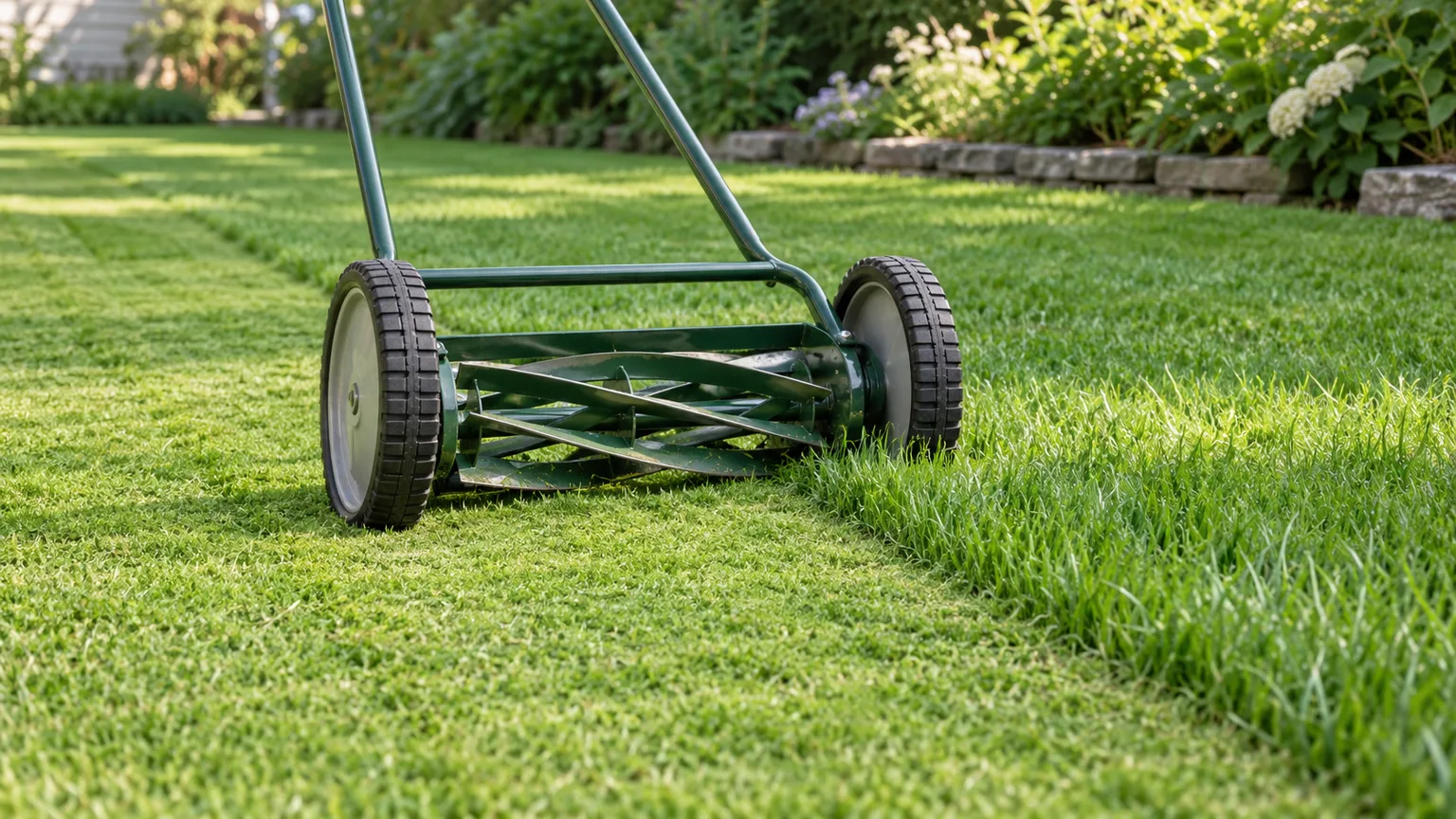
Keep the wheels on the ground rather than pulling the mower backward across the grass. If you need to turn, lift or pivot it according to the manufacturer’s instructions so the reel does not rake or snag turf. A straight, steady path also makes it easier to see if the cut quality changes when the mower hits a thicker or rougher patch.
When to Overlap or Cross-Cut
A slight overlap between passes prevents missed seams, but large overlaps add time and can double-cut areas unnecessarily. Start with a narrow overlap, then adjust it to the mower’s wheel track and cutting width; if an uncut strip remains, the wheel spacing or reel may need attention rather than ever-wider passes.
Cross-cutting means mowing the same lawn in a second direction, such as east to west after a north-to-south pass. It can help when dense or spreading grass lies over instead of standing up, but it also adds time and removes more leaf area. Try it only on a patch that needs it, and avoid repeated close cuts when the turf is stressed by heat, drought, or recent damage. A home gardener who tested a reel mower on mixed turf reported that one zoysia section needed a second-direction pass with that particular mower; treat that as a clue to test your own grass, not as a universal rule for every zoysia lawn.
What to Do With Grass Clippings
Many reel mowers scatter short clippings back onto the lawn, while some models accept a catcher. Returning a light layer of fine clippings can recycle nutrients; Penn State Extension describes grass clippings as a source of nitrogen and other nutrients and notes that sharp blades help avoid damaging turf (mowing practices). The clippings should be short enough to settle into the lawn rather than sitting in wet clumps across the surface.
If the mower leaves long windrows or clumps, the lawn may be too tall, the grass may be wet, or the mower may be cutting poorly. Do not assume that every clipping should stay on the ground. Rake or collect heavy clumps, especially over newly seeded areas or where they would smother the turf, then correct the mowing interval or height before the next cut.
A catcher is useful if you need a tidy finish or want to keep clippings off a path, but bagging means emptying it and removing material that could otherwise remain on the lawn. Check the catcher’s fit and capacity before buying a mower if clipping collection is important to you; not every manual reel model is designed for the same accessories.
When a Reel Mower Struggles
A reel mower struggles when grass is too tall for the cylinder to pull in cleanly, when thick clippings bridge the blades, or when the mower meets sticks and branches. It can also perform poorly on very uneven ground, where the reel rides above low spots and catches high spots. These limits explain why a powered rotary mower is more forgiving after a missed week or when growth is heavy.
Grass type matters, but avoid rules like “reel mowers cannot cut warm-season grass.” A well-maintained mower with the right blade configuration and height can work on some warm-season lawns; dense, low-cut turf may demand a mower designed for that job and more frequent mowing. A published homeowner trial described good results on some cool-season sections but difficulty with quackgrass, sedges, stringy flower stalks, and certain warm-season areas until blade adjustment and mowing frequency improved. Use that as evidence to test a patch and learn your own conditions rather than a promise that one mower will cut every mix.
Stop if the reel jams or begins dragging. Power is not the solution: remove the cause safely, check that the mower is still adjusted correctly, and switch to a rotary or battery mower if the lawn has outgrown the reel mower’s practical range. For slopes, rough ground, and large lots, choose the mower that lets you work with stable footing and a realistic time commitment.
How to Tackle an Overgrown Lawn
If you have skipped several cuts, do not try to make a long reel mower handle the whole problem in one pass. First check the grass height and condition, clear debris, and decide whether the mower’s maximum setting can shorten the lawn without clogging. If the grass is far above that range, use a rotary mower or arrange a first cut with a lawn-care service, then resume reel mowing once the lawn is back to a manageable height.
When the reel can make a clean cut at a high setting, remove only part of the excess growth and leave enough leaf area for the turf to recover. Wait for new growth before lowering the height again, and make the next cut only when the grass has grown enough to justify it. The calendar matters less than growth rate: cool, wet weather may require more frequent mowing than dry weather, while heat or drought is a reason to avoid a severe cut.
After an overgrown recovery cut, remove heavy clumps and inspect the lawn for bare patches, ruts, or weeds hidden beneath tall grass. A reel mower is most effective as a maintenance tool, not as a brush cutter or a rescue mower for neglected turf.
Troubleshoot Skipped Strips and Jams
Use the pattern of the problem to identify the cause. A mower that cuts well in one area but leaves strips only in dense patches may need a slower pace, a higher setting, or another pass after the grass stands upright. A mower that leaves the same strip every time may have an uneven setup, a dull or damaged blade, or an adjustment issue.
- Thin uncut lines between passes: Add a little overlap, check that you are walking straight, and confirm both sides of the mower are set evenly.
- Grass bends over instead of cutting: Check blade sharpness and reel-to-bed-knife contact; the grass may also be wet, too tall, or too dense for one pass.
- The mower stops or becomes hard to push: Stop and look for a twig, long grass, or packed clippings caught in the reel or side plates. Clear it only with the mower stationary and using the manufacturer’s safe procedure.
- The mower cuts low in one wheel track: Recheck the height adjusters, tire or wheel seating, and lawn bumps. Raise the deck if it is scraping soil or scalping high spots.
- A strip persists after overlap and height checks: Consult the manual’s adjustment procedure or a sharpening service rather than filing blades by eye.
The cut itself is a useful diagnostic. Cleanly severed tips suggest that the reel is working; torn, ragged, or uncut tips point toward dull edges, poor adjustment, excessive height, or a pace that does not let the reel turn fast enough. Penn State Extension warns that dull mower blades can damage turf, so recurring poor cuts are a maintenance problem, not just a cosmetic annoyance (mowing guidance).
Clean, Adjust, and Sharpen the Blades
After mowing, brush away dry clippings from the reel, bed knife, wheels, and frame. If the mower needs rinsing, dry it thoroughly afterward so moisture does not sit on exposed metal. Before each use, spin the reel only as the manual directs and listen for scraping, uneven contact, or a point where it binds.
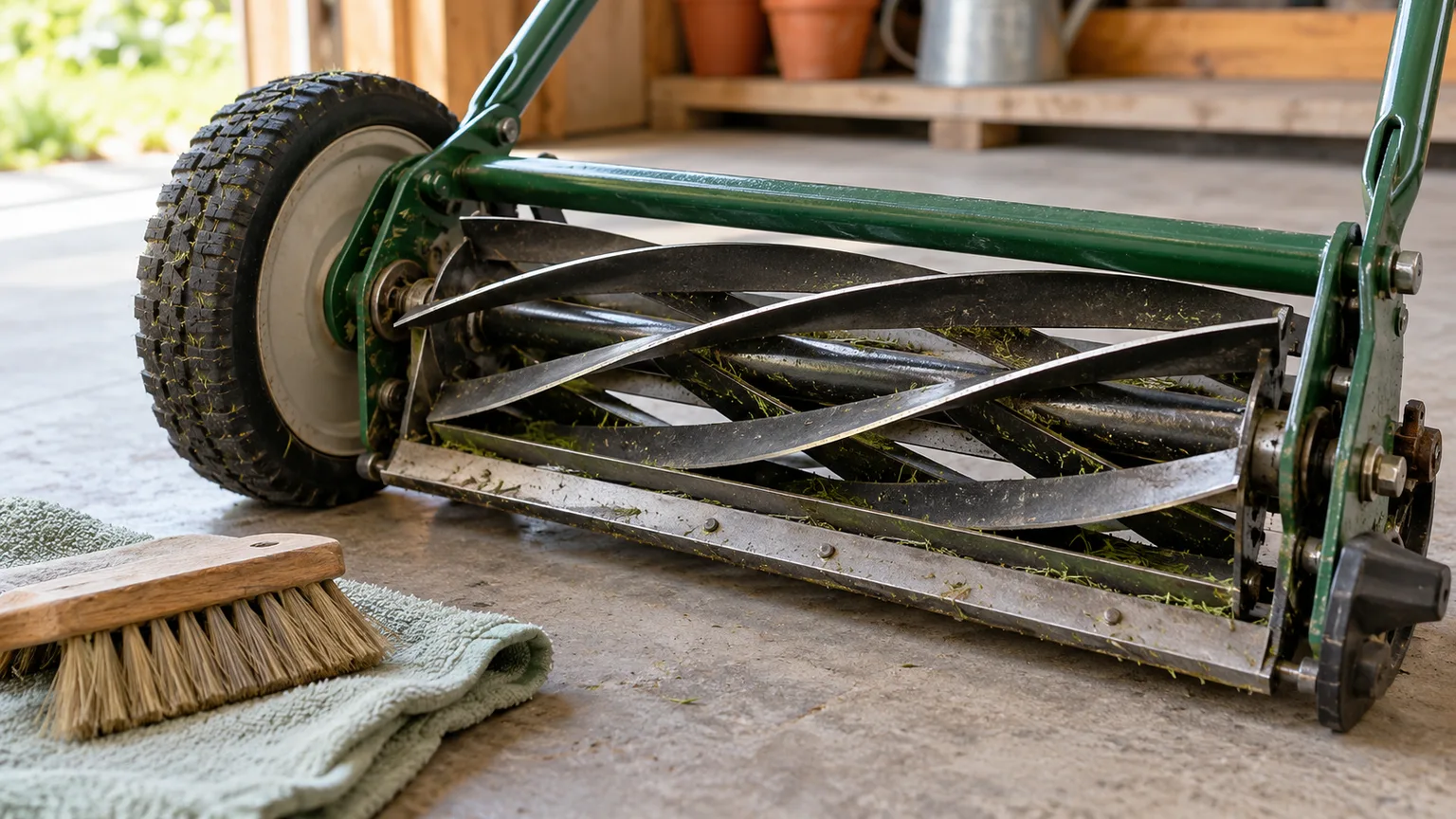
Sharpening and adjustment are separate issues. Sharpening restores the cutting edges; adjustment sets the distance or contact between the reel and the bed knife. A mower can have sharp blades that are adjusted too loosely to shear grass, or blades that scrape continuously because they are set too tightly. Either condition can make pushing harder and produce a poor cut.
Follow the manual for the model’s adjustment and backlapping method. Some mowers accept a backlapping kit that uses abrasive compound while the reel turns backward; others require a different procedure or service. Do not assume a grinding paste, stone, or paper test is suitable for every mower, and do not put fingers near the reel to check sharpness. If the reel has a nick, bent blade, heavy rust, or uneven cutting contact, use a mower repair shop or sharpening service.
There is no dependable universal sharpening date. How often the mower needs attention depends on how much you mow, what the blades hit, storage conditions, and the manufacturer’s instructions. A Family Handyman review suggests checking the manual and gives once or twice a year as a broad guide for its general reel-mower advice, with more frequent work possible when use is heavy (maintenance guidance in Family Handyman’s review). Let the quality of the cut, the feel of the reel, and the manual guide the timing.
Store It Dry and Keep It Ready
Store the mower in a dry shed or garage where the reel will not sit against damp soil or be exposed to weather. Wipe grass residue from the frame, check that the handle fasteners are snug, and keep the mower out of pathways where someone might trip over it or roll it unexpectedly. If you store it for a long period, follow the manual’s advice on lubrication and whether to raise or protect the cutting cylinder.
Before the next mowing, roll the mower briefly on a safe, clear surface and check that it spins freely. A short pre-season inspection can catch rust, loose fasteners, bent parts, or a blade adjustment that drifted during storage. Store any sharpening compound or tool separately and follow its product label rather than leaving abrasive material on the cutting surfaces.
Should You Buy a Reel Mower or Choose Another Type?
Buy a reel mower if a trial cut feels manageable, the grass is usually short, the lawn is clear and fairly even, and the weekly mowing time fits your life. Before choosing a model, check the adjustment range, cutting width, cylinder design, replacement parts, availability of a sharpening kit or service, and whether it can take a catcher if you need one. A wide cutting path covers more area per pass, but a wider mower can be harder to push around narrow beds and corners.
Choose a rotary mower if you routinely miss mowing windows, have tall or dense grass, need to collect leaves, or must cover a broad or uneven lawn quickly. A battery mower can be a middle option when you want no gas engine but need powered cutting; compare battery runtime, charging, weight, and storage with the upkeep of a manual reel. You can also use a reel mower for the small, level parts of the yard and a different mower for rough edges, steep patches, or overgrown sections.
Renting is less useful if local rental options are limited or if the cost and pickup time approach the price of a basic mower. For a one-time test, borrow a reel mower from a neighbor or try a demonstration model on grass like your own. The test answers practical questions that a feature list cannot: does it start cleanly, can you turn it comfortably, does it leave strips, and would you keep up with the schedule?
Conclusion
A reel mower is a manually powered cylinder mower that can be a quiet, straightforward tool for a small lawn that stays short and clear. It works best when the mower is level and adjusted, its blades are clean and sharp, and you mow often enough that the reel can shear the grass without being forced through a thicket.
Walk your lawn, identify the grass and obstacles, and try a short test cut before you make it your only mower. If it is too tiring, too slow, or leaves ragged patches even after you correct the setup, use a powered mower for those conditions and keep the reel mower for the areas where it does its best work.



