How to Remove Cherry Stains From Clothes Safely
Treat cherry stains on cotton, colors, delicates, and old spots without heat-setting the pigment. Learn when to use detergent, oxygen bleach, or a cleaner.
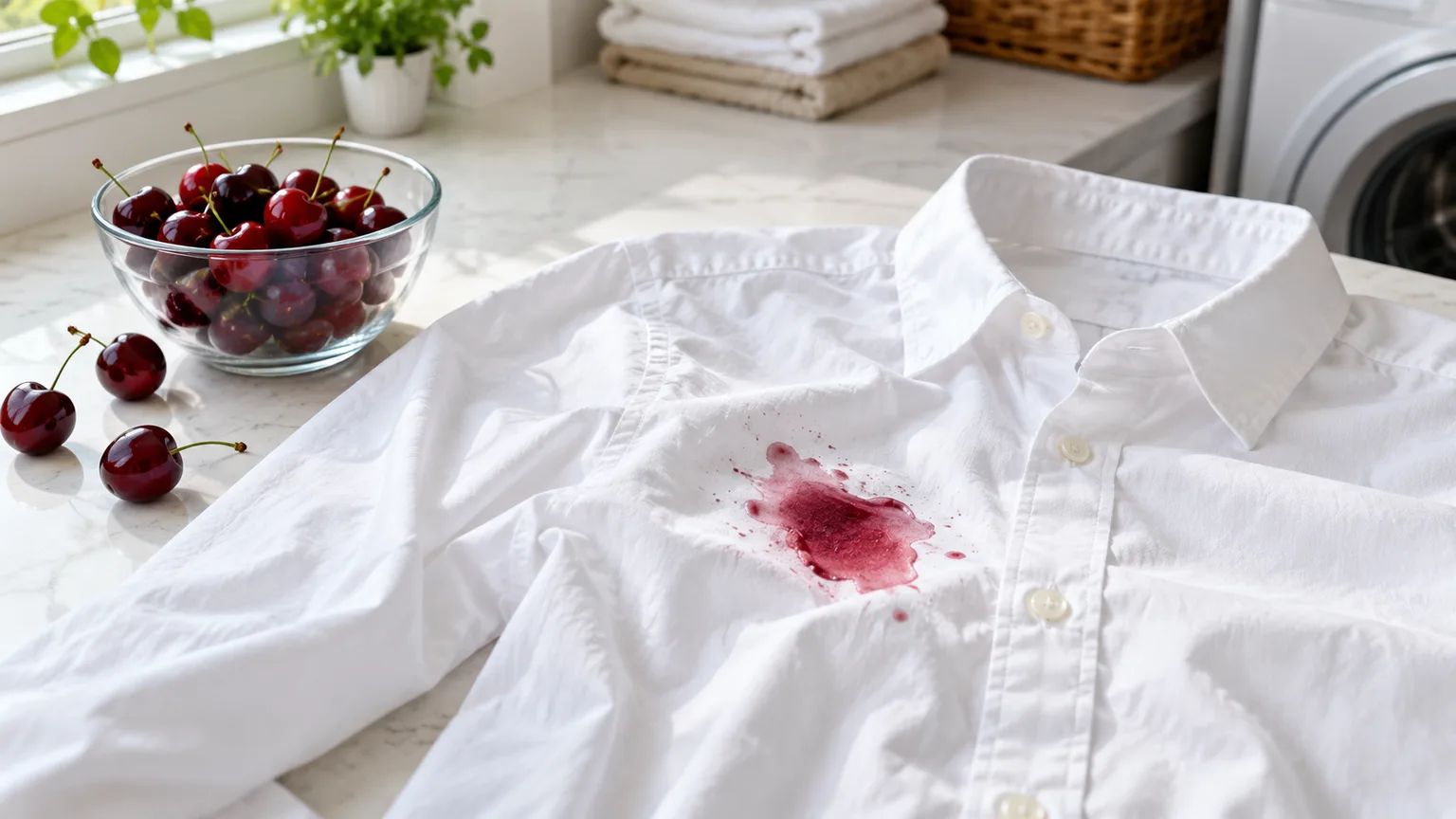
A cherry stain is usually easier to lift before it dries, but fast treatment does not mean scrubbing or pouring several cleaners onto the fabric. Start by lifting away fruit, blotting the liquid, and flushing the spot with cool water from the back of the garment; then choose a pretreatment that the care label allows. Keep the item out of the dryer until you have inspected it in good light.
That sequence works for many washable cottons and synthetics, but a silk blouse, wool sweater, printed garment, and white cotton towel do not have the same tolerance for water and bleach. The steps below separate the low-risk first aid from the stronger treatments, so you can remove as much color as possible without turning a stain problem into fabric damage.
Read the stain before choosing a treatment
“Cherry stain” can mean a fresh crushed fruit, clear juice, syrup from canned cherries, or a vivid maraschino liquid. Fresh juice is mostly a water-based spill with colored plant compounds and dissolved sugars; syrup can leave a more concentrated mark, and some preserved cherries contain added coloring. You do not need to identify the exact pigment to begin, but you should notice what else spilled and whether the garment is washable.
Check the care label before treating the garment. It tells you whether water washing is allowed and sets limits for washing temperature and bleaching; the University of Georgia Cooperative Extension’s textile guidance also advises reading the label and testing a cleaning agent on a hidden area before use. If the label says dry-clean only, stop after gently blotting and take the item to a cleaner rather than trying a sink treatment.
A white cotton T-shirt gives you more options than a dark silk dress, but “white” does not automatically mean “chlorine-bleach safe.” Optical brighteners, elastic fibers, trims, dyes, and finishes can all change how a fabric responds, so let the garment’s label—not the stain color—decide what products are acceptable.
What to do in the first five minutes
Move quickly, but keep the treatment simple. Use a spoon, dull knife, or the edge of a card to lift any cherry flesh or thick syrup without scraping the weave; then blot the liquid with a clean white cloth or paper towel. Press and lift instead of rubbing, and work from the outside of the spot inward so you do not enlarge the pink halo.
If you cannot get to a sink right away, keep blotting with a clean section of cloth. Avoid colored napkins, scented wipes, hand soap, and heat from a hair dryer; each can leave its own residue or spread color. If the spill is on a blouse with a lining, place an absorbent white towel between the layers so the liquid does not transfer to the back panel.
Do not sprinkle salt or baking soda simply because they are nearby. A dry powder can help absorb some liquid in certain spills, but it is not a substitute for flushing a water-based fruit stain and can leave residue trapped in textured fabric. Once you can reach a sink, cool water and the garment label are the useful next steps.
How to remove a fresh cherry stain from washable clothes
Treat the stain before it reaches the washer. A short, controlled sequence helps remove the loose pigment first and gives detergent a better chance to work on the remaining fruit residue.
Blot and flush from the back
Turn the garment inside out and hold the stained area under cool running water, with the reverse side facing the stream. The goal is to push the cherry liquid back out through the fibers instead of driving it farther into the face of the fabric; continue until the water running through the spot looks much clearer. If the garment is too delicate for a strong stream, use a gentle trickle or blot repeatedly with cool water instead.
This cool flush is a first step, not a final wash temperature. Household fabric-care sources such as Martha Stewart’s berry-stain guide also emphasize blotting, rinsing from the reverse, and keeping the garment away from dryer heat while a stain remains. Do not begin with hot water or boiling water: temperature should be chosen later according to the care label, after you have removed as much pigment as possible.
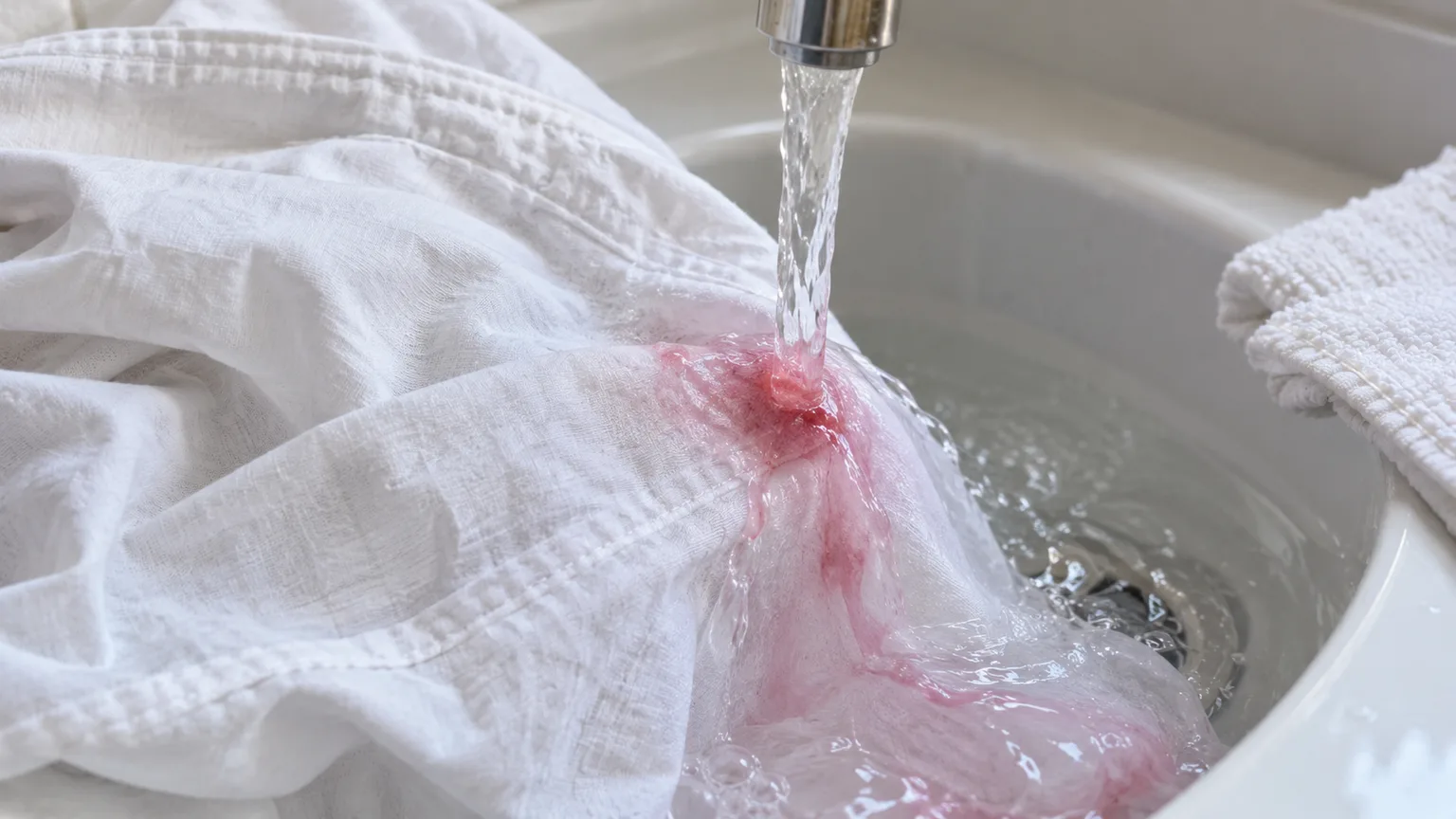
Pretreat, wash, and inspect
Apply a small amount of liquid laundry detergent or a fabric-safe prewash stain remover to the damp spot, following that product’s directions. If the fabric is sturdy cotton or polyester, gently work the product in with your fingertips or a soft brush; avoid vigorous brushing on knits, thin fabric, prints, and seams. Let it sit only for the time stated on the label, and do not let a concentrated treatment dry on the garment.
Wash the item using the temperature and cycle permitted by its care label. A heavy-duty detergent may help with the fruit residue, but more detergent is not automatically more effective: excess product can be difficult to rinse and may leave a dull patch. Clorox’s berry-stain directions illustrate why product instructions matter: their recommendations distinguish color-safe items from garments explicitly labeled safe for chlorine bleach, and they specify how their own products should be used.
Before drying, inspect both sides of the fabric in bright light. If any red, purple, or pink remains, repeat the pretreatment and wash or move to a label-approved oxygen-bleach soak; air-dry the garment while you decide. A stain that looks gone when wet can become easier to see as the fabric dries, so do not treat a quick glance in the washer as proof that it is clear.
How to remove dried or set-in cherry stains
A dry stain is harder because its sugars and color have had time to remain in the fibers, but “dried” does not automatically mean “permanent.” Rehydrate the spot with cool or lukewarm water if the fabric allows it, then use a liquid laundry detergent or a stain remover labeled for that fabric and stain type. Give the product its full directed contact time rather than applying several different cleaners one after another.
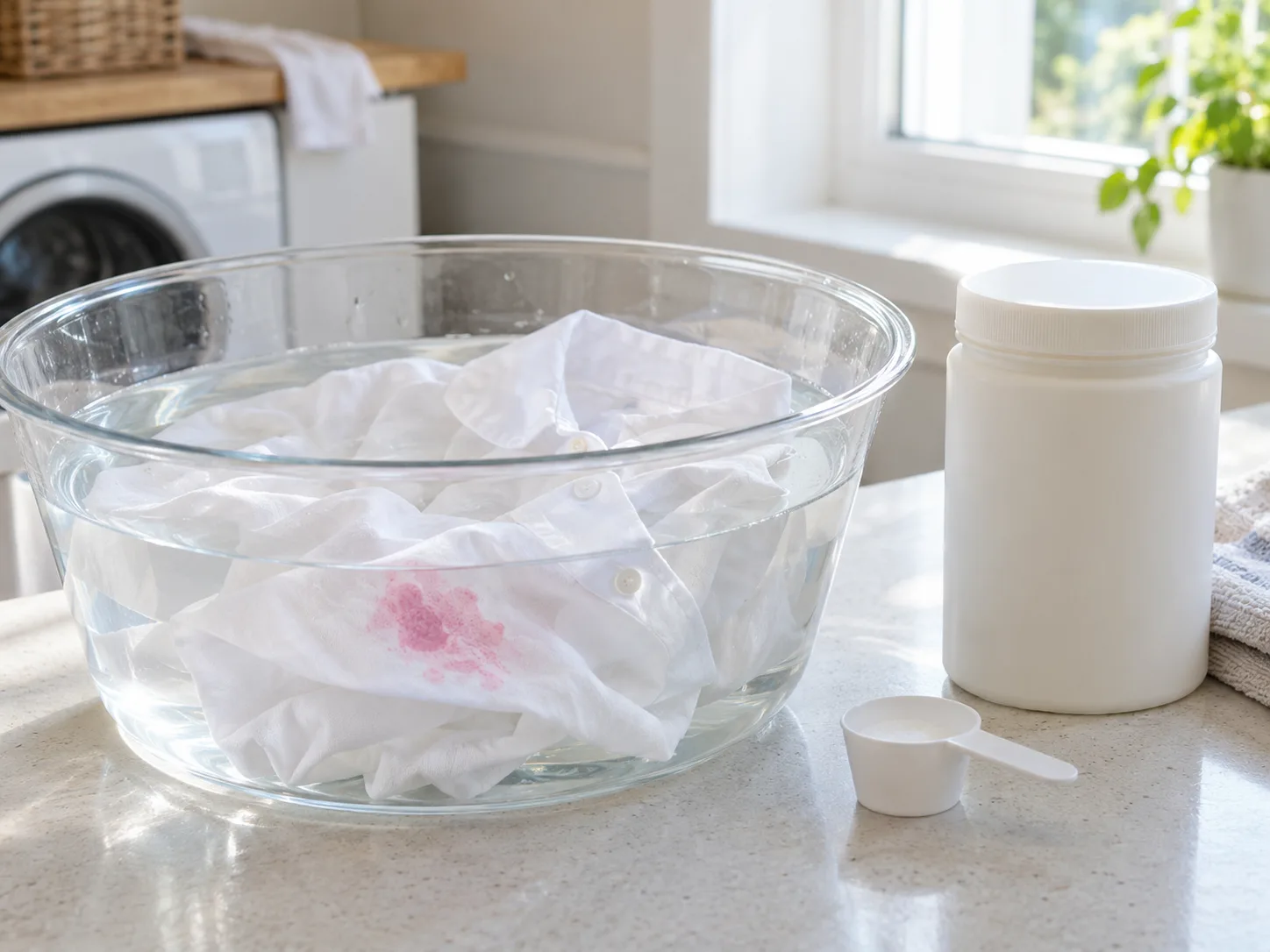
After pretreating, wash at the warmest temperature the garment label permits, not a hotter temperature chosen to force the stain out. Inspect the stain before using a dryer or iron; if the fabric is colorfast and the label allows it, an oxygen-based bleach soak may be the next controlled step. Follow the package’s dilution and timing exactly, and rinse or wash the item as directed afterward.
If the stain has already been through a hot dryer, use the same process once more but set expectations carefully. Heat can make the remaining color much more stubborn, and aggressive scrubbing, undiluted bleach, or longer-than-directed soaking can damage the garment without guaranteeing removal. For an expensive, sentimental, or delicate item, a cleaner is often a better next move than escalating at home.
Choose a treatment by fabric and stain
For ordinary washable clothing, start with detergent and reserve bleaching agents for residue that survives a complete wash. Different products solve different parts of the problem: detergent cleans the washable soil, while an oxygen-based bleach may reduce lingering color on a compatible garment. There is no single safest treatment for every fiber or dye.
Laundry detergent and stain removers
A liquid laundry detergent is a practical first pretreatment because it is designed to be rinsed from clothing and used in a wash cycle. Enzyme formulas can help with food residue, but product formulas vary; follow the label and avoid enzyme products on protein fibers such as silk or wool unless the care label and product instructions specifically permit them. A commercial stain remover is also reasonable when its label lists the garment’s fiber and color as suitable.
Avoid treating “natural” or “gentle” as proof of fabric safety. Vinegar, lemon juice, club soda, and dish soap are common suggestions, but household advice is not a substitute for a garment label or a product test, and acids or surfactants can affect dyes and finishes. The University of Georgia Cooperative Extension’s fruit-stain guidance cautions against using soap on fruit stains and stresses label checks and inconspicuous tests; it also distinguishes fabric treatment from carpet and upholstery care. For washable clothing, use a laundry detergent or labeled prewash product rather than rubbing a bar of hand soap into the mark.
Oxygen bleach and chlorine bleach
Oxygen-based laundry bleach is often the more flexible bleaching option for colored, washable items, but “color-safe” does not mean risk-free on every dye, print, or trim. Test the diluted product on a hidden seam first, wait for it to dry, and compare the area with the untreated fabric. Use it only if the label permits the fiber and color, and do not soak beyond the package’s stated time.
Chlorine bleach is a narrower option, generally limited to white garments whose care labels explicitly allow it. Do not use it on wool, silk, spandex, colored fabric, or any item with a bleach-prohibited symbol; even a small amount can weaken fibers or remove color. Never improvise a stronger mixture or combine bleach with another cleaner. When a product’s instructions and a general online tip disagree, follow the product label and garment label.
Adjust the method for the garment
The same stain-removal sequence needs different pressure and products depending on the fabric. Cotton can usually tolerate more direct flushing than silk, while a dark printed shirt needs a colorfastness check before any bleach-based treatment. If the label is missing or unclear, choose the least aggressive option or ask a professional cleaner.
Cotton, linen, polyester, and blends
Washable cotton and linen are often the easiest garments to treat: blot, flush from the back, pretreat, and wash according to the label. Polyester and other synthetics can also be washable, but dyes, coatings, and stretch fibers may be sensitive to certain bleaches or high heat. For a blend, follow the instructions for the most delicate fiber in the garment rather than the most durable one.
For a white cotton napkin or T-shirt, start with detergent and inspect before using any bleach. If a faint mark remains, test a label-approved oxygen bleach first; use chlorine bleach only if the care label explicitly allows it. For a patterned tablecloth, preserve the print by testing at a seam and skipping bleach if the test transfers color or changes the finish.
Silk, wool, rayon, and embellished fabrics
Silk and wool are protein fibers, and they can shrink, distort, lose color, or develop a texture change when exposed to the wrong detergent or temperature. Rayon can also lose strength when wet, depending on how it is constructed. Avoid enzyme detergent, chlorine bleach, and forceful brushing on these fabrics unless the garment and product labels clearly allow the treatment.
For a washable delicate, blot first and use only the cool-water rinse and detergent specified by its care label. If the stain does not lift quickly, stop rather than cycling through vinegar, peroxide, and stain remover; the Good Housekeeping fabric-specific berry guidance separates its advice for cotton, silk, wool, and upholstery, underscoring that a one-size treatment can be inappropriate. Be especially cautious with beadwork, embroidery, vintage fabric, or garments with glued trim, where water can affect both the cloth and its decoration.
Treat colored clothes without fading them
On a colored shirt, first make sure the dye itself is not already bleeding. Press a damp white cloth against an inconspicuous inside seam; if color transfers, do not use an at-home bleach treatment. Even if the spot test looks fine, apply stain remover for the label’s stated time and inspect the test area after it dries, since some fading is not obvious while wet.
Keep the treatment localized and rinse thoroughly. A large, wet patch can create a tide mark on some fabrics, while concentrated product left in one place can lighten the color unevenly. If you have a color-safe oxygen bleach, use the exact dilution and soak time printed on the package; never substitute a chlorine-bleach dose based on a different product’s directions.
Cherry juice, maraschino cherries, and mixed stains
Fresh whole-cherry juice usually responds best to prompt cool-water flushing. A maraschino cherry or jarred fruit can leave a deeper syrupy mark and may include added coloring, so scrape away the sticky residue, blot, and rinse before you choose a treatment. If the liquid contains food coloring, cream, chocolate, or another ingredient, treat the added component too: a cherry milkshake, for example, is both a fruit-color stain and a protein/fat spill.
Do not assume every red stain is the same. For syrup, a detergent pretreatment helps address the sticky residue before a color treatment; for a pale halo after the sugar is gone, a label-safe oxygen bleach may be more relevant. Check the ingredient label if the stain source is a packaged product, and keep your first treatment conservative until you know whether the garment dye is stable.
What to do if the mark remains after washing
A faint mark after the first wash is a cue to pause and inspect, not to dry the garment and hope for the best. Reapply the same compatible pretreatment, let it work for the directed time, and wash again; repeated gentle cycles are usually safer than one concentrated, improvised chemical treatment. If the remaining color is only visible on white fabric, use an oxygen-based product only when its instructions allow that fiber and garment.
Once the mark disappears, rinse or wash away the treatment and air-dry the item. Check it when fully dry, because moisture changes how light reflects off fabric and can hide a pale residue. If the spot still remains after two careful rounds, the garment’s dye changes, or the fabric begins to feel rough or weak, stop and consult a cleaner rather than layering on more products.
If the stain reached a sofa, rug, or upholstered chair, do not soak it as if it were a shirt. Upholstery has its own cleaning code and can develop rings or backing damage when over-wet; check the manufacturer’s instructions and blot with a clean white cloth only when the fabric permits water. A professional cleaner is safer for code-restricted upholstery or a large spill.
Mistakes that spread or set cherry stains
The most common mistake is rubbing. Friction pushes pigment outward and deeper into the weave, so the stain grows and becomes harder to flush; blotting and reverse-side rinsing keep the work moving out of the fabric. Scraping is useful only for solids, and it should be gentle enough not to snag the threads.
The second mistake is adding heat too early. Hot first rinses, ironing, tumble drying, and even a hot radiator can make the remaining color more difficult to remove. Use cool water first, wash at the label’s permitted setting, and air-dry until you are certain the stain has gone.
Other avoidable errors include using colored towels that transfer dye, mixing cleaning products, leaving stain remover on longer than directed, using chlorine bleach on a colored garment, or treating a dry-clean-only piece as a washable cotton shirt. If one treatment does not work, rinse it out before changing to another product and check that the next product is compatible with the same fiber.
When to call a dry cleaner
Take the garment to a cleaner when the care label prohibits water, when the fiber is silk or wool and the stain is not lifting with a permitted gentle treatment, or when the item is valuable enough that a color change would be costly. Tell the cleaner whether the stain is fresh or old and list everything you have already applied; even a small amount of vinegar, peroxide, or bleach matters when they choose a solvent or test method.
For washable everyday cotton, a home treatment is reasonable if you can follow the label and inspect before drying. For a dry-clean-only jacket, silk scarf, wool coat, beaded top, or vintage linen, professional help can prevent a small red mark from becoming a permanent ring, faded patch, or distorted area. It may not remove every heat-set stain, but it gives the fabric a better chance than repeated guessing.
Conclusion
To remove a cherry stain from clothes, lift solids, blot the liquid, and flush from the reverse with cool water before using detergent. Wash only at a temperature the care label permits, inspect the fabric while it is still damp, and keep it out of the dryer until the stain is gone. That sequence gives a fresh stain the best practical chance without making the treatment more aggressive than the garment can handle.
For a dried stain, repeat a label-safe pretreatment and consider oxygen bleach only after a hidden-area test. Treat colors, delicates, and garments with special finishes cautiously, and call a cleaner when the care label or the value of the item makes experimentation a poor trade. A stain may not always disappear completely, especially after heat exposure, but careful, repeatable steps are safer than rushing to bleach or scrub.



