23 River Rock Landscaping Ideas for Your Garden and Yard
Explore 23 river rock landscaping ideas for paths, borders, beds, and patios, plus stone-size, planting, edging, drainage, and maintenance advice for your yard.
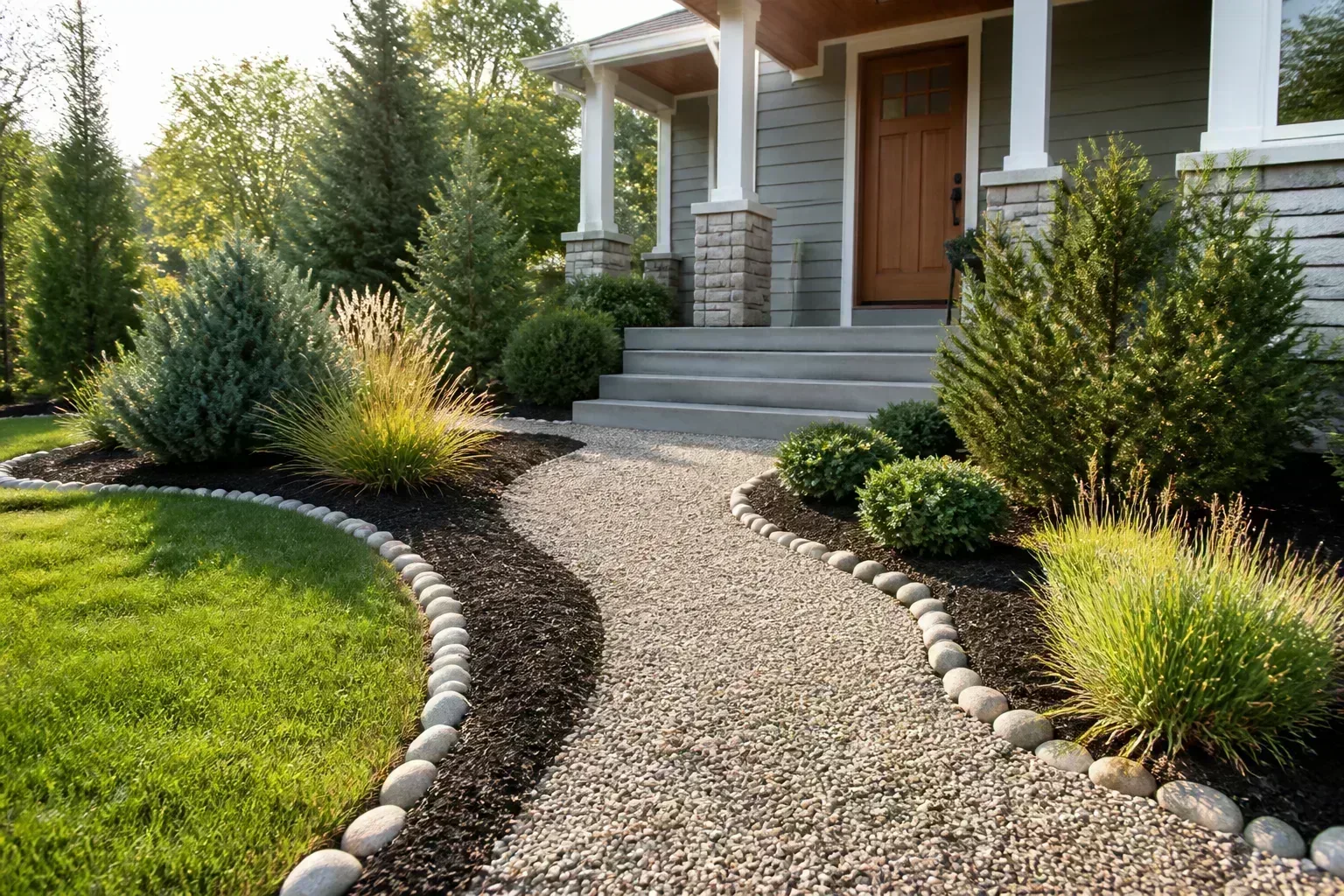
River rock works best when it has a clear job: guide a walk, draw a clean border, frame plants, or give rainwater a visible route. Rounded stones can soften a modern patio or make a dry garden feel natural, but the same smooth shape can roll underfoot, drift downhill, or trap leaves in a bed where you wanted less work.
Use the ideas below as starting points, then match the stone, base, plants, and edging to your site. A decorative rock bed is not automatically a drainage solution, and a layer of large cobbles is not the same thing as a soil-friendly mulch. Those distinctions are what turn an attractive photo into a yard feature you can live with.
Plan the layout before you order stone
Walk the yard and identify the route people use, the places water collects or runs, the plants you want to keep, and the edges that need mowing or trimming. Mark the layout with a hose or garden line and look at it from the house and street before you dig. A few gentle bends usually feel more natural than a narrow, perfectly uniform stripe, while straight bands suit a contemporary design.
Measure each zone separately. A 20-foot path, a small accent bed, and a broad patio apron have different surface needs, so they should not automatically get the same aggregate or depth. Take a stone sample home and look at it dry and wet; color and contrast can change dramatically in shade, bright sun, and after rain.
Match the rock size to its job
“River rock” can describe anything from small rounded pebbles to hand-sized cobbles. Suppliers also use size names differently, so ask for the actual range and whether the material is washed. Small gravel makes a continuous surface; larger stones create accents or edges; a mix of both can look natural if the sizes have a clear hierarchy rather than being stirred together randomly.
Rounded pea gravel shifts more easily than angular crushed stone. It can be pleasant in a light-use garden walk or patio, but it is a poor surface for a rolling cart, wheelchair, stroller, or frequently used entrance unless it is stabilized and well contained. For a dependable walking line, use flat stepping stones or pavers as the firm surface and reserve the loose river rock for the margins.
Draw boundaries before filling the bed
Edging is structural, not just decorative. Without a firm boundary, small stones creep into turf, larger cobbles roll from a slope, and gravel works its way under a gate or onto paving. Choose an edge that suits the architecture: steel or stone for a clean line, brick for a traditional garden, or a shallow trench edge where the lawn is level and the rock is not expected to carry water.
Plan access at the same time. Leave utility covers, irrigation valves, hose connections, cleanouts, and drains visible and reachable. A river-rock strip that hides a valve or blocks a drain may look tidy on installation day and become frustrating the first time you need to repair the system.
23 river rock landscaping ideas by zone
The strongest designs use stone in a few intentional zones rather than covering every planting bed. These 23 ideas range from a simple path border to a dry creek, patio, or compact courtyard; each can be adjusted to a small suburban lot or a larger garden.
Paths and transitions
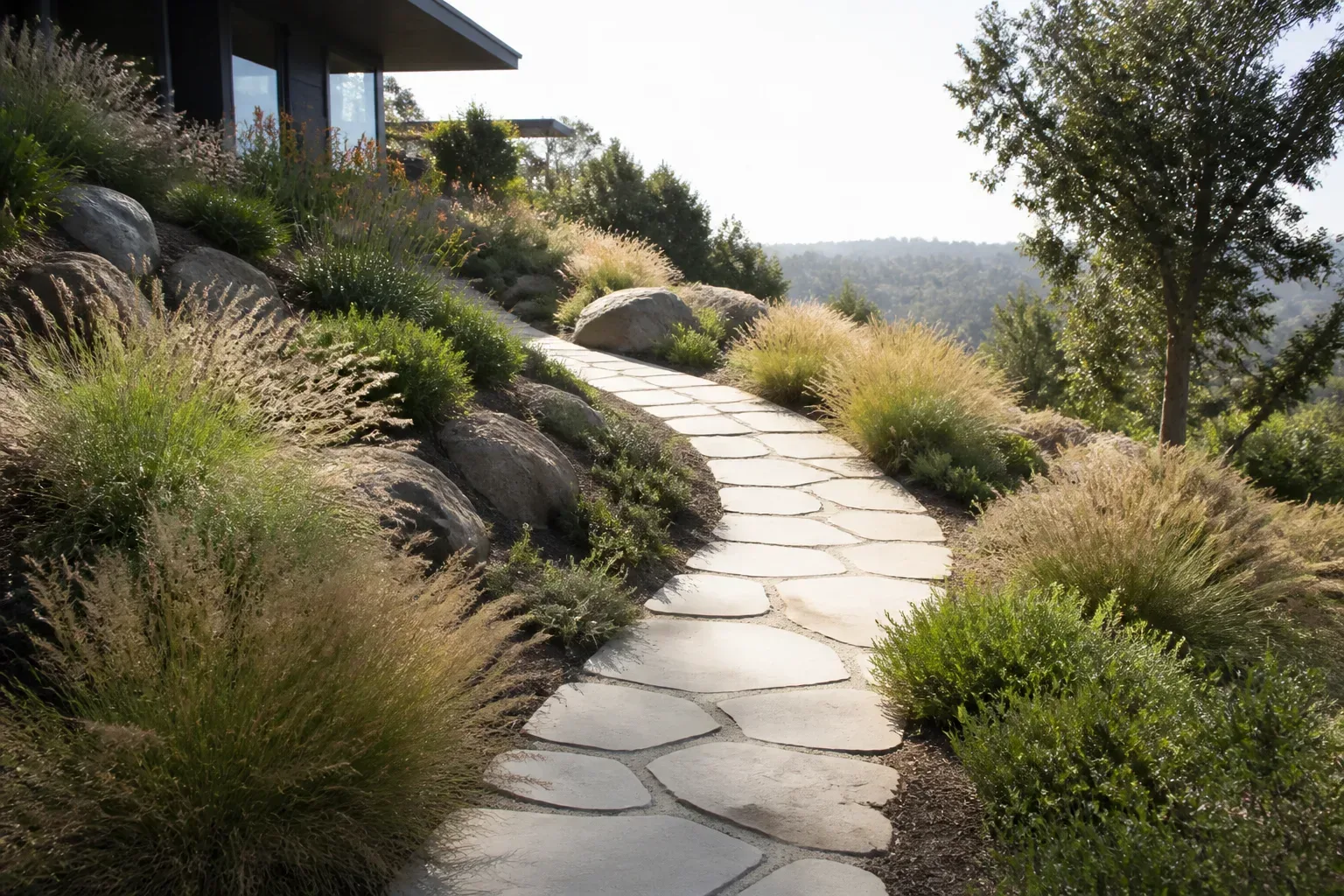
1. A flagstone path with a river-rock seam. Set broad, flat stepping stones into a compacted base and fill the joints with small gravel or river pebbles. Keep the tops of the stones level and stable; loose rounded stone can shift under a foot, so the pavers should carry the step while the river rock softens the edges.
2. A curved garden walk between beds. Use a narrow ribbon of fine stone to connect two destinations, such as a gate and a potting shed, and let the curve respond to the planting rather than forcing a perfect arc. A restrained border of larger cobbles helps define the route, but use an angular, compactable aggregate if the path will carry heavy foot traffic.
3. A crisp border along a front walk. Run a single band of rounded stones beside a paved walkway to link the hardscape to nearby beds. Keep the stone low enough that it does not spill onto the walking surface, and leave a clear, firm path for visitors, deliveries, and anyone using a cane or wheeled aid.
4. A gravel apron at the entrance. A shallow stone apron between a driveway and planting bed can catch windblown debris and give muddy shoes a defined landing zone. Keep it outside the door swing and away from thresholds where small stones can be tracked indoors; larger, flatter cobbles make a cleaner visual edge than a mound of loose pea gravel.
5. Stepping stones through a groundcover bed. Place widely spaced flagstones through low plants, with a narrow river-rock line beside them to highlight the route. This works well where a full-width path would crowd the planting, but select plants that tolerate occasional foot contact and leave enough open soil around each crown for growth.
6. A low-maintenance side-yard passage. A slim strip of gravel can connect the front and back gardens where lawn is difficult to mow. Add a stepping-stone centerline and keep the stone below the siding and vents; first make sure roof runoff drains away from the house instead of turning the passage into a wet channel.
Planted beds and focal stones
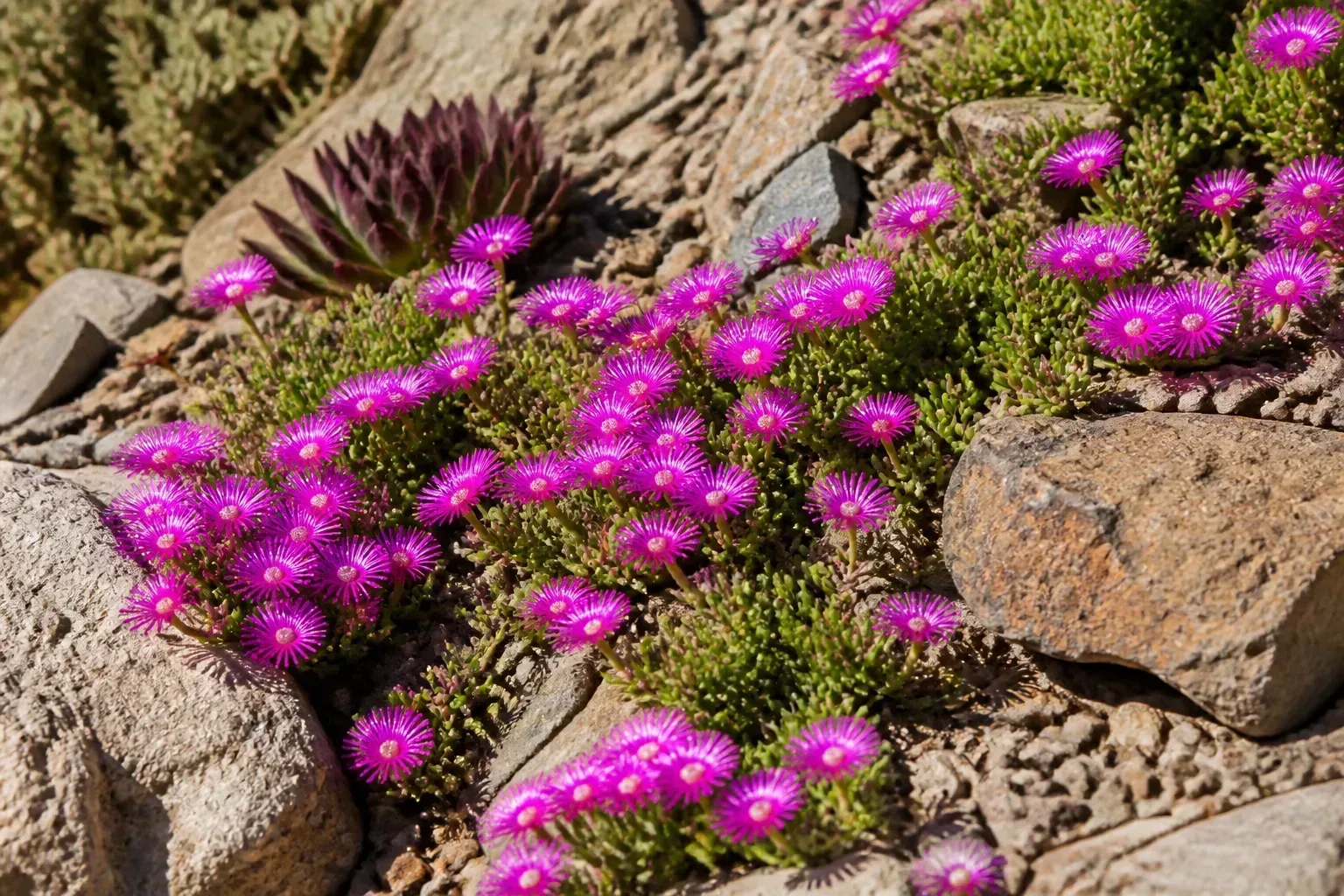
7. A miniature rock garden island. Cluster a few larger stones in a raised or naturally well-drained bed, then tuck compact plants into pockets between them. The rocks make small sunny and shaded faces, so a mix of low perennials can look layered without filling the whole area with gravel. Choose plants for your region and exposure rather than assuming every rock garden needs desert succulents.
8. A crevice garden with deep planting pockets. Stand flat stones on edge or set them close together to create narrow fissures that hold a deeper column of soil. This arrangement can give small, rock-adapted plants a cooler root zone than an exposed, thin layer of surface gravel. The RHS recommends matching rock-garden plants to their growing conditions and drainage; use its rock-gardening guidance as a starting point, then select species suited to your local climate.
9. A boulder anchor in a gravel bed. Set one substantial boulder partly into the ground as the visual anchor, then surround it with smaller river rock and a limited number of plants. Burying a portion makes the stone look settled instead of perched, and it can reduce the chance that it shifts. Use professional help for a boulder too heavy to move and position safely with household tools.
10. A two-tone stone border. Separate a narrow band of dark cobbles from a lighter gravel field with a physical divider. The contrast makes a simple bed look designed, but keep the colors in broad blocks rather than adding many stripes that need exact trimming. Try samples beside the house siding and pavers before ordering in bulk.
11. Ornamental grasses with rounded cobbles. Plant a few clumping grasses in open soil pockets and use river rock as a low-maintenance visual ground layer around them. The upright foliage gives the stone a softer scale, and the seed heads add movement. Leave space for the mature clump and avoid covering its crown; rock cannot replace the plant’s needed soil and water.
12. A tree-ring accent with an open root flare. A wide ring of flat cobbles can mark a tree’s place in a lawn and protect the trunk from mower contact if the stones sit beyond the trunk base. Keep the flare visible and do not pile rock against bark. Penn State Extension’s tree-mulching guidance explains that organic mulch provides soil benefits that inorganic stone does not, so consider mulch beneath a tree canopy and use stone only as a defined outer edge.
Water and drainage features
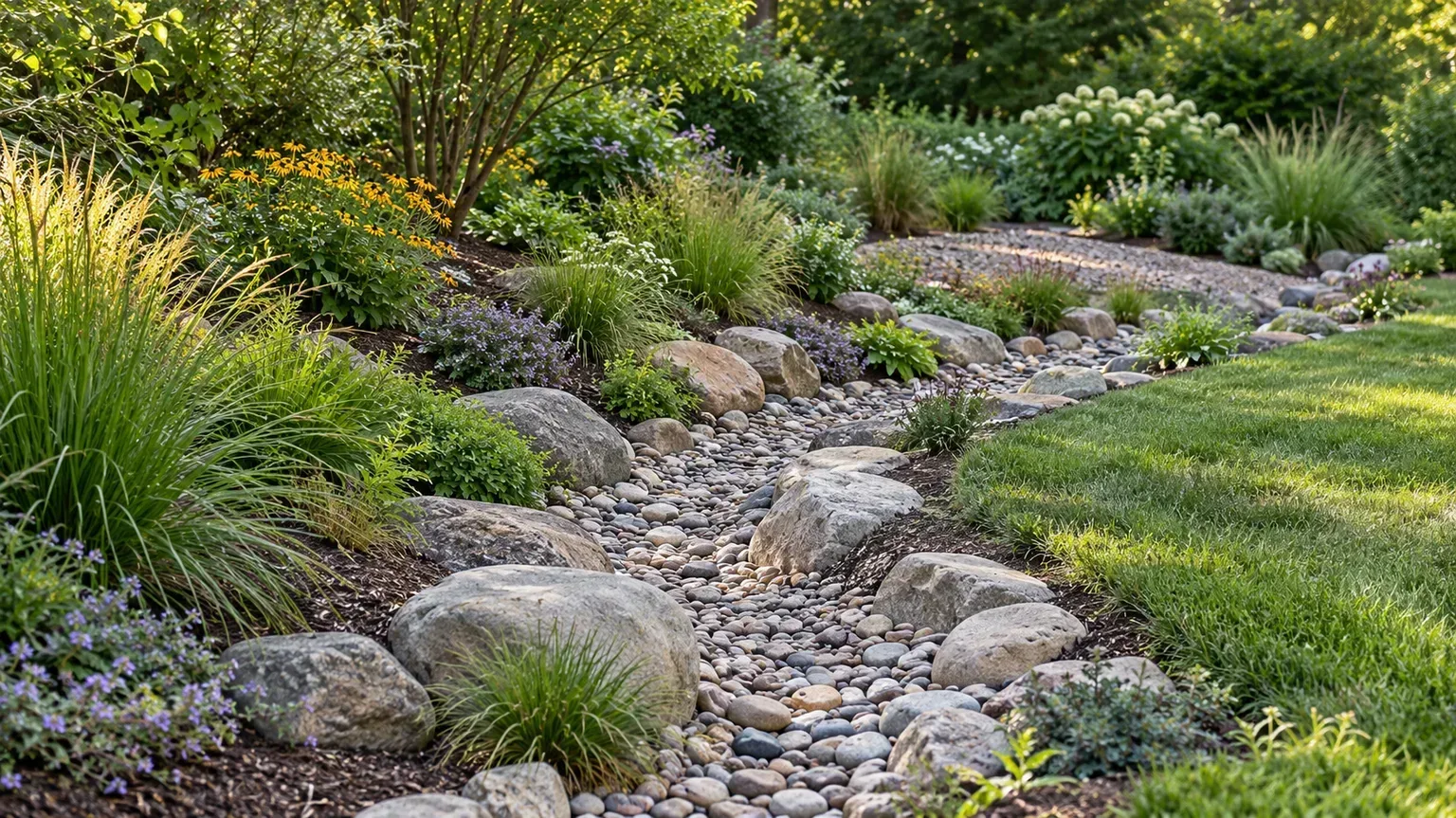
13. A dry creek as a garden focal line. A shallow, meandering bed of mixed gravel and larger river rock can suggest a stream even when it is dry. Vary the width, place larger stones in small clusters, and plant the banks rather than lining the whole feature with identical cobbles. If it is meant to carry runoff, identify a safe endpoint and overflow route before you dig.
14. A downspout splash apron. Use a shallow field of rounded cobbles at the end of a downspout to make the discharge point look deliberate and reduce splash erosion around it. The rock is a surface finish, not a substitute for directing water away from the foundation. Check the outlet during rain and make sure concentrated water has a safe route on your property.
15. A stone inlet to a rain garden. Frame the entry point where a shallow swale reaches a planted basin with larger cobbles that resist displacement. Keep the basin planted and permeable; a thick blanket of rock across the entire garden can make it harder to weed and does not replace a soil and drainage assessment. An overflow should lead somewhere safe and permitted.
16. A planted swale with a cobble center. On a broad, gently sloped part of the yard, a narrow cobble line can mark the low point while grasses and moisture-tolerant plants occupy the sides. Think of the stones as a visual cue and erosion-resistant surface, not a guarantee that the yard will drain. If flow is fast, the slope is steep, or water crosses a property boundary, get a local drainage professional to assess the plan.
17. A pond or recirculating fountain edge. Use smooth washed stones to transition between a small water feature and the surrounding bed, hiding the liner edge where the design allows. Keep access open to the pump and filters, and choose stable stones around steps or seating so no one has to walk across rolling pebbles. Larger river rocks create a more natural rim; fine gravel is easier to clean out of a small basin.
Patios and small courtyards
18. A pea-gravel bistro patio. A compact gravel circle can fit a table and two chairs where a full paved patio would feel oversized. Contain it with firm edging and use a prepared base; if chairs wobble or stones track indoors, place large pavers under the table legs or switch to a more stable surface.
19. A river-rock frame around a paved patio. Keep the patio itself on stable pavers and use a contrasting band of rounded stone around its perimeter. That gives the seating area a finished border without asking loose rock to support furniture. Leave a clean transition at doors and drains, and select a stone color that works with the home’s foundation and paving.
20. A fire-pit gathering zone with stone accents. A broad, level paved circle can hold chairs while a ring of river cobbles frames the outside edge. Do not assume any loose stone layout makes a fire pit safe: follow the appliance manufacturer’s clearance and installation instructions, check local fire rules, and keep combustible furniture and planting at the required distance.
21. A container garden courtyard. Use a stone floor under movable pots to create a tidy outdoor room on a small patio or unused corner. Raise containers slightly if they need drainage holes to remain clear, and leave an accessible route for watering cans. Choose plants for pot conditions rather than expecting the groundcover-like effect of an in-ground bed.
22. A low stone seat with a gravel surround. A broad, stable boulder can serve as a simple garden perch when it is securely set and comfortable at the right height. Surround it with a compact gravel pad and one or two shade or flowering plants to make a resting point in a larger yard. Avoid stacking smaller loose rocks into a seat or wall that can topple.
23. A Japanese-inspired dry garden corner. Create a quiet focal area with a few large stones, restrained plantings, and a carefully raked field of fine angular gravel. Rounded river rock is not ideal for drawing crisp rake lines because it rolls, so use the finer aggregate for the raked surface and reserve smooth river stones for the perimeter or a dry-stream accent.
Choose a stone that fits the design
Color matters, but shape and movement matter more. Rounded river stones feel softer underfoot and suit natural-looking borders, water-feature edges, and dry-stream accents. Angular crushed stone locks together more readily when compacted, making it a stronger choice beneath paths, pavers, and furniture. Fine gravel creates a uniform, detailed surface; larger cobbles read as accents and are easier to see from a distance.
Ask the supplier for a sample and the actual size range. Terms such as pea gravel, river pebble, and small cobble vary by region and seller. For each option, confirm whether it is washed, what it costs by ton or cubic yard, how much area the quoted quantity covers at the proposed depth, and whether delivery can reach the site. Measure the bed length and width, decide the stone layer with the supplier’s coverage information, and order a modest allowance for irregular edges rather than guessing from bag count.
Set color and texture against the house
A monochromatic palette can make a small yard feel calmer, especially beside modern architecture with simple lines. A blend of cream, gray, and muted tan looks more informal and tends to tie plants, pavers, and siding together. Bright white stone creates high contrast but also makes leaf litter, soil spills, and uneven maintenance more visible.
Repeat a stone color already present in the home or hardscape, then use plants to add seasonal color. One dominant stone and one accent tone are often enough. If several textures are used, give each a separate zone and a hard boundary so the yard reads as intentional instead of like leftover materials from unrelated projects.
Choose plants for the rock, not just the look
River rock is not a universal plant mulch. Colorado State University Extension’s discussion of rock mulch notes that its behavior depends on stone size: its research discussion treats gravel smaller than about half an inch differently from larger stones, which may provide visual interest but can inhibit plant growth. That is a Colorado-specific extension discussion, not a universal rule for every soil and climate, but it is a useful reminder that a bed of large cobbles should not be treated like fine gravel or bark.
Match the plants to the exposure, soil, and climate. Rock gardens are a good setting for plants that naturally tolerate well-drained conditions, but they still need root room and establishment water. The RHS guidance describes rock gardens as habitats for alpines and other compact plants suited to rocky conditions; a damp, humid, or heavy-clay site may need a raised bed or a different plant palette instead of a thicker layer of stone.
Place plants first, then arrange the rock around them. Keep crowns, stems, and the root flare clear. Leave enough open soil for watering and future growth, and do not let the stones trap irrigation emitters where you cannot see leaks. A drip line under gravel may work for selected beds, but check that water reaches the root zone instead of running along the surface or disappearing at the edge.
Protect trees and keep irrigation practical
Trees and established shrubs have broad root systems that need air, water, and suitable soil conditions. Penn State Extension recommends organic mulch for trees because it can improve soil structure and fertility; it also warns against deep material piled against a trunk. A full river-rock carpet around a shade tree may look neat, but it can make leaf cleanup harder, expose roots to a different heat pattern, and complicate future planting.
Where rock is appropriate, keep it shallow around plant crowns and use larger stones only as accents. For sun-baked exposures, test how hot the surface becomes during the hottest part of the day and choose plants accordingly. Do not group plants with opposite water needs in one uninterrupted stone bed: drought-adapted succulents and moisture-loving perennials will not share the same irrigation schedule simply because they are separated by gravel.
Install river rock so the layout stays put
The most reliable layouts are prepared from the bottom up. Decide whether the zone is a planted bed, walking surface, patio, or drainage route. Each needs a different base and edging. A decorative bed might need only vegetation removal, smooth grading, and a clear border; a walk or patio usually needs a compacted base; a channel has to follow the site’s runoff and outlet plan.
Before digging in the United States, contact 811 or your state’s utility-location service and wait for the relevant underground lines to be marked. Check local rules before changing grades or sending water toward a street, neighbor, storm drain, wetland, or stream. The drainage advice in Better Homes & Gardens’ dry-creek guide is useful as a layout reference, but a homeowner project still needs a site-appropriate destination and cannot rely on a photo or generic trench depth as a drainage design.
Prepare soil, edge, and build the right base
Remove turf and persistent weeds rather than burying them under stone. Correct shallow dips that collect unwanted water, but do not redirect runoff without checking where it will go. Install the edging before spreading rock, and set it firmly enough that mowing, foot traffic, and rain will not loosen the boundary.
For paths and patios, use a firm, compactable aggregate base suited to the soil and expected traffic, then set pavers or flagstones so they do not rock. Loose rounded stone can finish the edge but should not carry the primary load. In planted beds, do not automatically add plastic or landscape fabric. Colorado State Extension explains that synthetic fabric can clog and interfere with water and air exchange over time; some hardscape assemblies use geotextile separation for a specific structural purpose, but that is different from laying fabric under every ornamental bed as a permanent weed fix.
For a working dry stream, follow a site-specific plan. Garden Therapy’s landscape designer Jan Johnsen describes a curved channel, large bank stones, a gravel interior, and a rounded-stone finish; that is a practical design example, not a universal specification for channel depth, flow, or outlet capacity. Keep plants along the banks and leave the channel clear enough to move water and remove sediment.
Treat slopes and runoff as site-design problems
Rounded rocks can move on slopes. Use them for small, stable accents where they can be partly seated, but do not count on loose cobbles to hold a steep bank or retain soil. A retaining wall, high flow, deep excavation, or active erosion needs a design appropriate to the site and may require a qualified contractor or engineer.
A dry creek can slow or direct some surface runoff only when water enters it, follows a stable route, and ends in an acceptable place. Garden Therapy and Better Homes & Gardens show ways to shape a dry channel, but their DIY examples cannot determine your property’s drainage capacity or local discharge rules. If the area stays wet for days, runoff threatens a foundation, or water will leave your property, diagnose the cause and ask the local stormwater office or a drainage professional before building.
Keep the finished landscape clean and useful
Expect occasional upkeep even when the stone itself does not decompose. Remove leaves before they mat, pull seedlings while small, and rake displaced gravel back from the edges. A low blower setting may clear dry leaves from a wide open bed, but a stiff broom or gloved hand is gentler near small stones and young plants. Avoid directing a powerful blower at loose pea gravel where it can scatter the surface.
Watch the yard after the first few heavy rains and again after winter. Re-seat stones that move, clear sediment from channel inlets, check whether water follows the intended path, and uncover any utility access that has become buried. If weeds keep emerging, identify whether they are growing from soil below or from debris that has accumulated on top; adding a thicker rock layer rarely solves the latter.
The best low-maintenance choice may be a mix: stone for paths, aprons, and accents; organic mulch in beds where soil improvement and tree-root care matter; and living groundcover where bare rock would heat up or look stark. Decide what you want each zone to do before you commit to a whole-yard conversion.
Conclusion
River rock can turn a path edge, dry garden, water feature, or small patio into a distinctive part of the landscape. The design lasts when the stone size matches the job, the boundary is stable, plants have suitable soil and water, and any drainage feature has a safe route and outlet.
Start with one zone, test the stone color at home, and plan the edge before ordering. Use flat pavers for dependable footing, reserve the smoothest cobbles for accents that will stay put, and treat runoff and tree roots as functional concerns rather than afterthoughts. A few well-chosen rock features usually look more intentional and are easier to maintain than an unbroken blanket of stone.



