4 Ways to Reuse Dishwater Around the House
Reuse dishwater for toilet flushing, a pre-soak, outdoor scrubbing, or established ornamentals—with a quick safety screen for soap, grease, and salts.
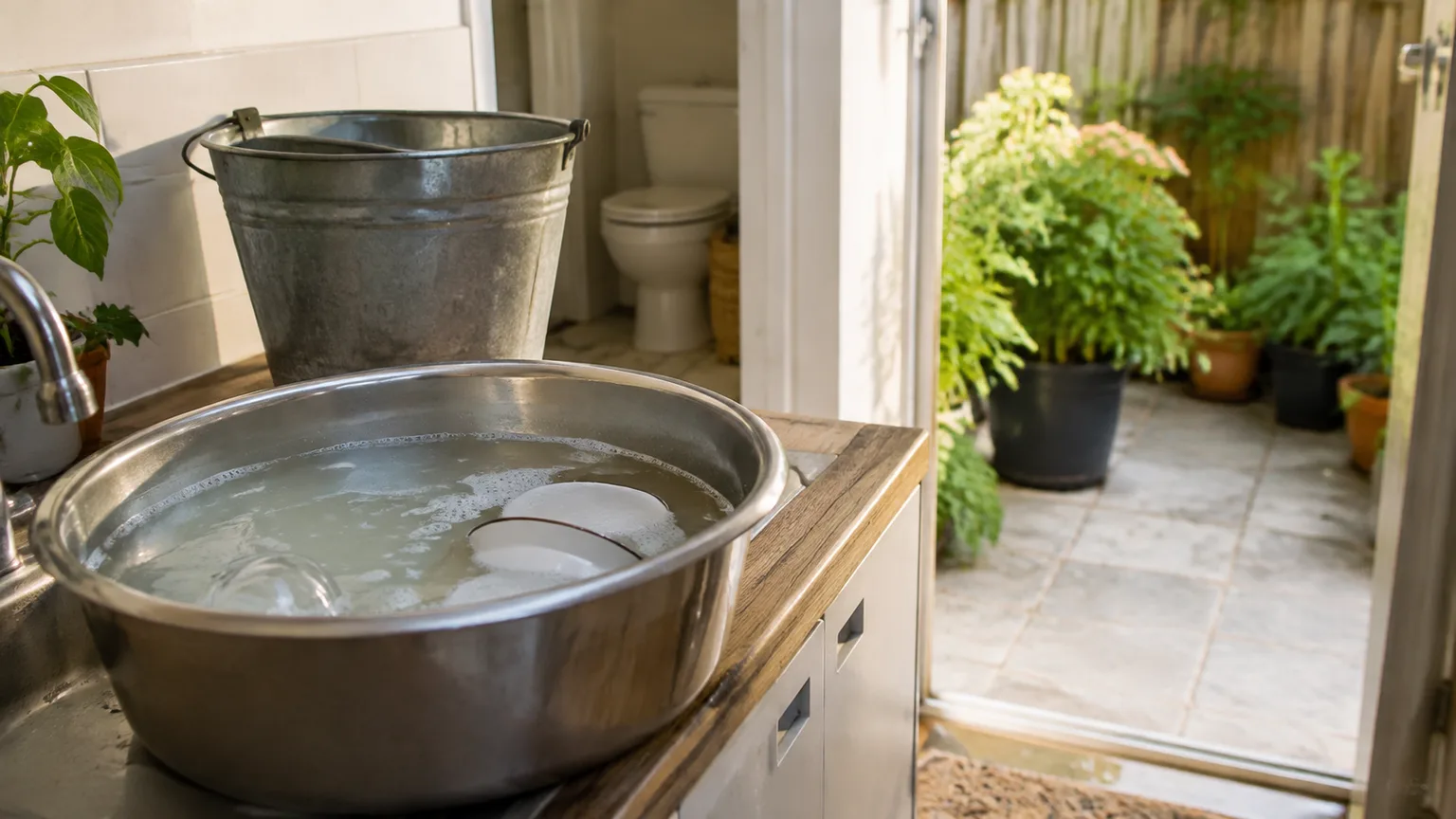
The water left after hand-washing dishes is not automatically trash, but it is not a universal cleaning solution either. A basin of clear rinse water and a sink full of greasy water may both be called dishwater, yet they carry very different risks and belong in different places.
The safest approach is to reuse the least contaminated water for the simplest job, use it promptly, and stop when it contains grease, food particles, disinfectant, or a concentrated detergent. The four practical options below cover toilet flushing, a pre-soak for the next load, outdoor hardscape, and established ornamental plants—with a clear explanation of when the drain is the better destination.
Dishwater Is Not One Thing: Sort It First
Graywater is a broad term for household wastewater that has not come from a toilet, but the exact legal definition varies. Oregon’s Department of Environmental Quality, for example, includes some kitchen-sink water while excluding wastewater from garbage disposals and soiled diapers; other places classify kitchen or dishwasher water differently. Treat that definition as a reminder to check local plumbing, health, and environmental rules before setting up any permanent outdoor reuse system, not as a rule for every home.
The U.S. Environmental Protection Agency’s research on onsite non-potable reuse treats collected household water as a risk-managed resource for uses such as toilet flushing and ornamental irrigation. That is a different standard from casually carrying one fresh bucket of rinse water to the toilet or a flower bed, so an occasional reuse habit should stay small, immediate, and conservative.
Rinse Water vs. Wash Water
Dish-rinse water is the best candidate for reuse. It usually contains mostly water with a small amount of diluted soap, and it may be suitable for the toilet bowl, a pre-soak, or—only when it passes the checks below—an established ornamental planting.
Wash water is a more complicated mixture. It can hold loosened food, fats, cooking oil, proteins, starch, and a much higher detergent load. Use a greasy or visibly dirty basin for the toilet bowl or the first stage of cleaning a compatible outdoor surface; do not splash it onto foliage, garden soil, food-preparation areas, or anything that touches skin and food.
Automatic dishwasher discharge belongs in the skip category for an improvised reuse routine. It may contain concentrated detergent, rinse aid, high heat, food residue, and a volume that is difficult to screen at the sink; moreover, local graywater rules may treat dishwasher water differently from hand-washing water.
The 30-Second Safety Screen
Before carrying a bucket anywhere, look at the water and remember what was washed in it. If it is clear to lightly cloudy, free of floating grease, free of visible food, and made with a small amount of ordinary dish soap, it may be reusable for one of the lower-risk jobs below.
If it contains a greasy sheen, a strong chemical smell, bleach, disinfectant, antibacterial cleaner, oven cleaner, powdered dishwasher detergent, or a large amount of food waste, pour it into the appropriate drain instead. “Plant-based,” “natural,” or “biodegradable” on a label does not prove that a product is safe to apply repeatedly to soil, and “soap” is not the same as plain water.
Never mix leftover dishwater with another cleaner to make it “stronger.” Combining products can create irritating vapors or an unpredictable liquid, and it eliminates the ability to know what you are putting on a surface, into a toilet, or near a plant.
Set Up a Clean, Immediate Reuse Routine
The easiest system is source separation. Put a washable basin in the sink while you hand-wash, scrape plates into the trash or compost first, wipe oily pans with a paper towel or dedicated rag, and keep the cleanest rinse water separate from the heavy wash water. You do not need a permanent pipe network to save a few liters; you need a clean container and a destination chosen before the water starts to smell.
Strain Solids and Remove Grease
For any use other than the toilet, pour the water through a fine-mesh strainer into a clearly designated utility bucket. The strainer catches rice, vegetable pieces, tea leaves, and other solids that would otherwise rot, clog a small watering can, or become food for insects.
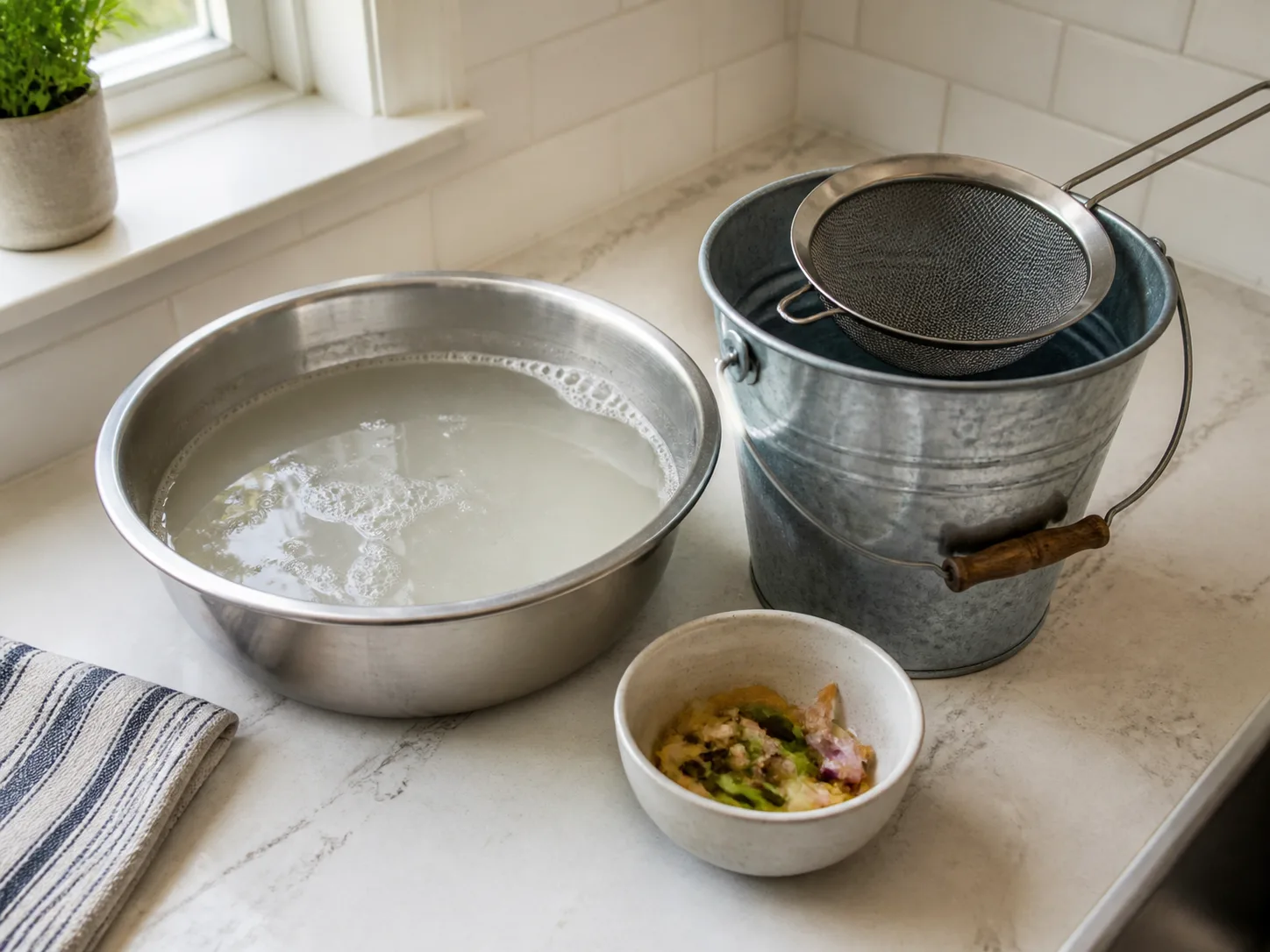
Straining does not make greasy water plant-safe. A filter can remove particles while dissolved detergent, oil film, salts, and food residues remain, so a visibly slick or strongly scented batch still belongs down the drain. If you are uncertain, choose the toilet bowl or discard it; the environmental benefit of reusing a small bucket is not worth damaging a tree bed or spreading contamination across a patio.
Use untreated kitchen graywater the same day. The EPA’s non-potable reuse research focuses on treatment, monitoring, and risk reduction for managed systems, which is a useful distinction: a lidded bucket in a warm utility room is not a treatment plant. Storage can bring odor, microbial growth, and settled organic matter, making the water less pleasant and less predictable.
1. Manually Flush a Toilet
Pouring a bucket of reused water into the toilet bowl is the most forgiving destination when the water is too dirty for plants but not mixed with a hazardous chemical. The added volume and force can move the bowl through its siphon and reduce the need to use a fresh tank flush.
This is a water-conservation use, not a way to sanitize a toilet. Dishwater may leave a film, and the bowl still needs its normal cleaning routine; the point is simply to use non-potable water for a job that ends in the sewer or septic system.
How to Do It Without Filling the Tank
Open the lid and pour the water steadily into the bowl from a manageable height, aiming toward the center rather than the rim. Start with a modest amount so you can see how the toilet responds, and keep the bucket light enough to control; a heavy, sloshing container is a spill risk in a small bathroom.
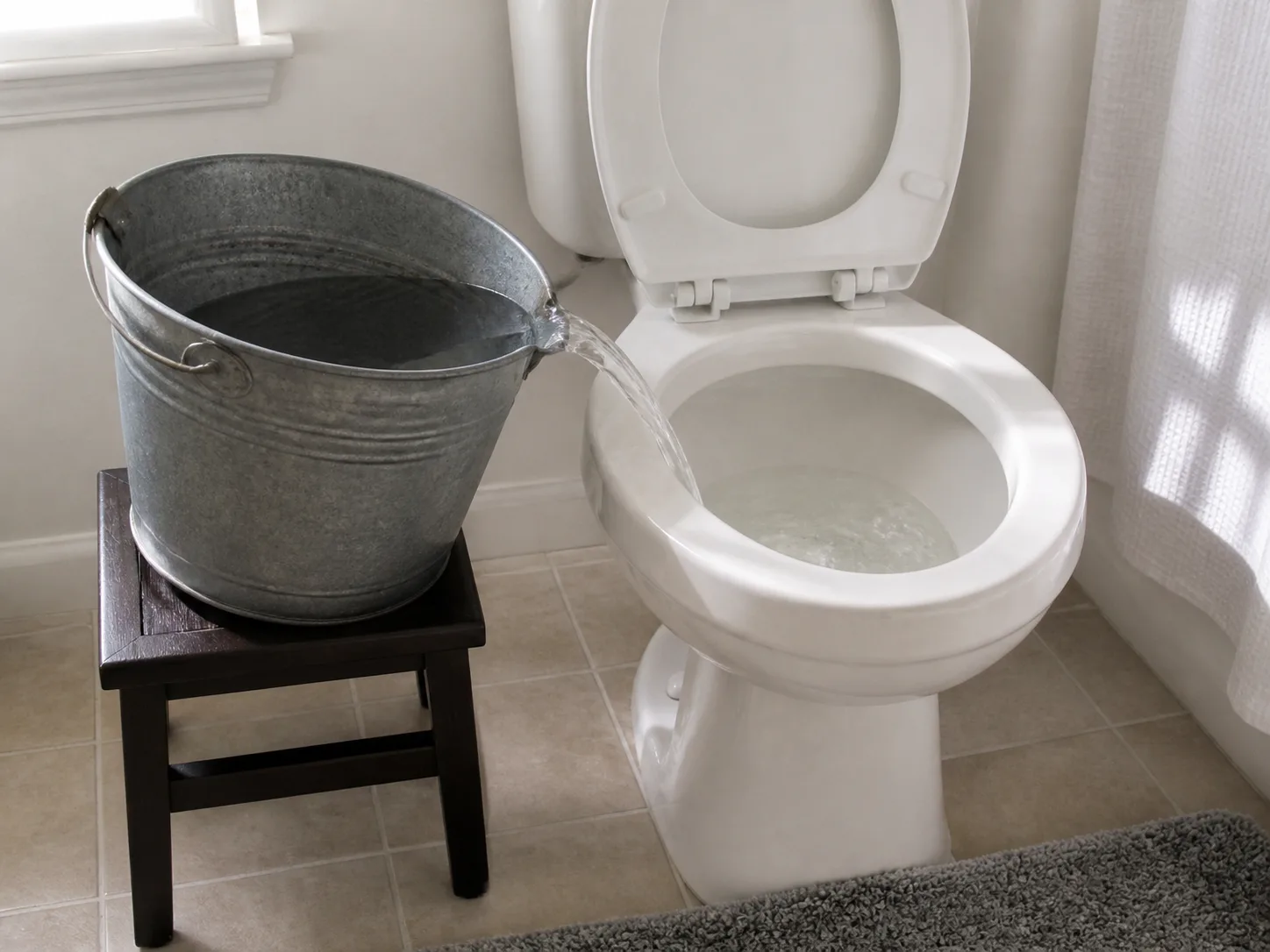
Do not pour dishwater into the toilet tank. The tank contains the fill valve, flapper, seals, and other components designed for clean supply water, and solids or grease can interfere with them. The EPA identifies toilet flushing as a non-potable reuse application, but that does not mean every unfiltered liquid belongs in the tank.
Keep a small strainer nearby if the water has food particles, and stop if the toilet rises instead of clearing. Never use this method for water containing bleach, drain cleaner, ammonia, or another product that could create a dangerous mixture in the plumbing or septic system.
2. Pre-Soak the Next Batch of Dishes
The least controversial reuse is often the one that stays in the sink. Water that has already loosened starch or dried sauce can soften the next load of cookware, plates, or utensils so the final wash needs less scrubbing and less fresh water.
This is especially useful after washing a lightly dirty load and then discovering a baking dish with a dried-on edge. Pour the old water into that dish, let it sit while you finish other chores, and use the softened residue to make the next wash more efficient.
Make the First Wash Do More Work
Use a basin or the item itself rather than spraying the old water around the kitchen. A short soak followed by scraping or brushing keeps food residue contained and reduces droplets on counters, cabinet fronts, and handles.
Once the softened food is removed, wash the item with fresh water and the correct amount of dish detergent, then rinse it with clean potable water. Reused water is a pre-treatment step, not the final rinse for plates, baby items, cutting boards, feeding equipment, or anything else that touches food.
Do not use old dishwater as a soaking bath for hands, produce, pet dishes, toothbrushes, or children’s toys. Even a mild-looking basin may contain bacteria and food allergens from the dishes that came before it.
3. Scrub Outdoor Hardscape
Lightly soapy water can be useful for the first pass on a compatible outdoor surface such as sealed concrete or durable patio pavers. The water pre-wets dust and pollen while the brush provides the real cleaning action, so you can reserve a smaller amount of fresh water for a final rinse.
Start by sweeping away loose grit. Pour or sponge a small amount of dishwater onto one manageable section, scrub with a stiff brush, and collect or direct the dirty water only where your local rules allow it to go. Test an inconspicuous spot first: soap, grease, and food residue can leave a dull film, and porous stone, unsealed concrete, painted surfaces, and delicate masonry may react differently.
Keep Soapy Runoff Where It Belongs
Outdoor does not mean harmless. Do not push dishwater toward a storm drain, pond, stream, wellhead, vegetable bed, or a neighbor’s property, and do not let a greasy bucket soak into bare soil beside the patio. The Oregon DEQ graywater guidance notes that graywater can contain organic matter, suspended solids, and potentially pathogenic microorganisms even when it has not come from a toilet.
Work in a small area so the ground can absorb no runoff at all, or use a method that lets you collect the dirty water for disposal through an approved drain. Keep pets and children away until the surface is rinsed and dry, particularly if the water held food allergens or a stronger detergent.
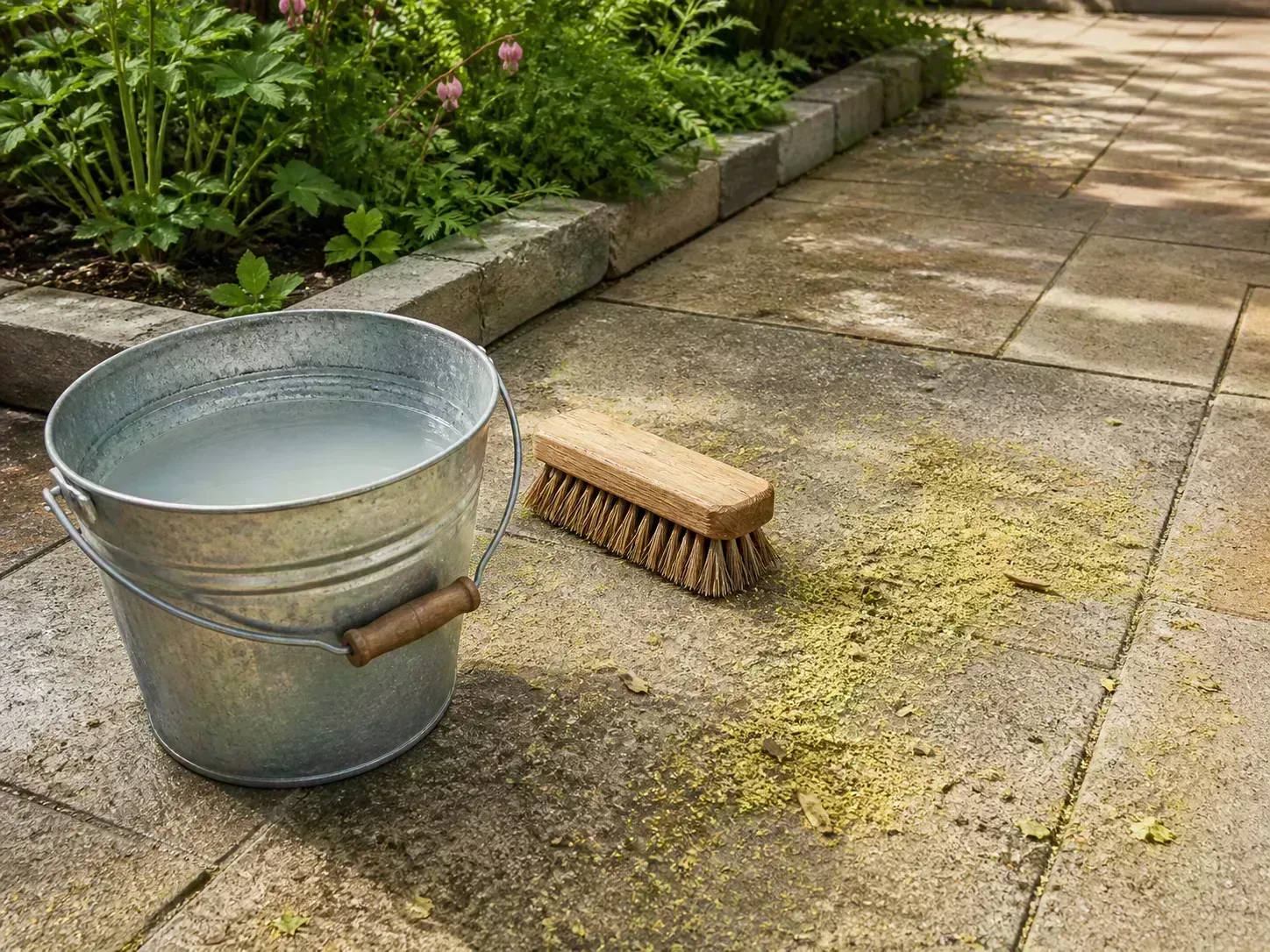
Finish with the smallest practical amount of clean water on a surface that needs it. If you would need to flood the patio to rinse away a greasy film, skip the reuse and use the drain; saving the first bucket while creating a larger polluted runoff problem is not a win.
4. Water Established Ornamental Plants—Only If It Passes the Test
Plant watering is the option that needs the most restraint. Oregon State University’s graywater guidance warns that kitchen water can carry food particles, cooking oil, and cleaning chemicals, while Gardening Know How’s graywater overview explains that sodium, boron, chloride, salts, and pH changes can affect soil and plants over time. Earth911’s graywater explainer likewise describes food, grease, and household-product residues as reasons to treat kitchen water more cautiously than cleaner bathroom sources.
For a casual household reuse habit, limit this use to established, in-ground ornamental plants when the water is nearly clear, low in soap, free of grease and food, and used occasionally. Pour slowly onto the soil or mulch around the root zone; never spray the foliage, flowers, or fruit, and do not leave puddles or allow the water to run beyond the bed.
Which Plants and Situations Are Safer
Choose a mature shrub, hardy perennial, or other landscape plant with a healthy root system and ordinary soil needs. A large in-ground planting has more soil volume to dilute and move small amounts of dissolved material than a tiny pot, seedling cell, or newly transplanted root ball.
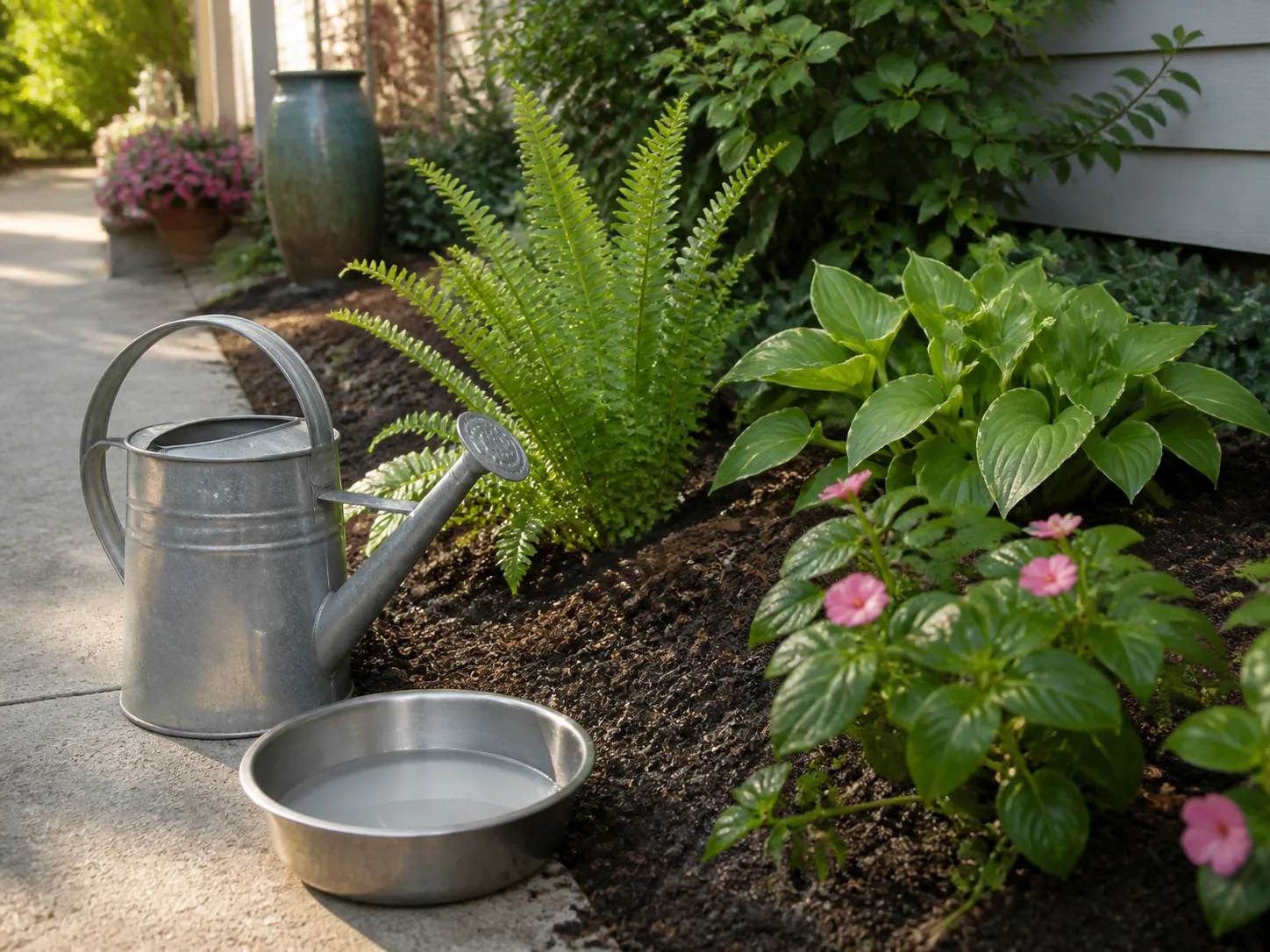
Keep dishwater away from vegetables, herbs, fruit, root crops, and any edible portion of a plant. Even where local rules permit some graywater irrigation, fresh water is the sensible default for food crops because it avoids direct contact with food and limits the accumulation of salts and cleaning residues.
Avoid acid-loving plants, young transplants, container plants, drought-stressed specimens, and plants beside a pond or waterway. Gardening Know How also recommends applying graywater directly to soil or mulch instead of using sprinklers, and monitoring soil pH and salts if reuse is repeated.
Watch the plant and the soil over the next several waterings. A white crust, declining growth, leaf-edge burn, persistent soil odor, or a surface that repels water is a reason to stop and return to fresh water; it is not a signal to add more rinse water or stronger soap.
What Not to Do With Dishwater
Some reuse ideas sound efficient but simply move the contamination to a harder-to-clean place. Keep dishwater away from these destinations:
- Food-contact surfaces: Do not wipe counters, cutting boards, refrigerator handles, plates, or utensils with it. A dirty first pass is not a safe final clean.
- The toilet tank: Pour into the bowl if you choose toilet flushing; do not risk valves and seals with food particles or grease.
- Cars and delicate finishes: Grit can scratch paint, and detergent residue can leave streaks. Use water intended for the vehicle and follow the finish manufacturer’s cleaning directions.
- Edible gardens: Do not water vegetables, herbs, fruit, or root crops with casual kitchen graywater.
- Foliage and indoor pots: Soap and salts can burn leaves or accumulate in a small container. A houseplant’s pot is not a miniature treatment bed.
- Storm drains and natural water: A storm drain is not a disposal shortcut. It can carry soap, grease, food residue, and suspended solids directly into receiving water.
- Storage containers used for drinking water: Keep the bucket, basin, and strainer dedicated to utility work and label them with a non-food marker if other people share the home.
Local rules matter most when you move from a bucket to plumbing, pumps, irrigation lines, or a permanent discharge point. The Oregon DEQ program describes treatment levels, setbacks, access controls, and site-management requirements for regulated graywater systems; your local authority may have different definitions or permits.
A Destination Decision Table
Use the table as a quick decision aid, not as permission to reuse every batch. When the water has more than one warning sign, choose the drain and improve the next wash by scraping plates and separating rinse water earlier.
| Dishwater condition | Best destination | How to use it | Skip |
|---|---|---|---|
| Clear or lightly cloudy rinse water, little soap, no grease | Pre-soak or established in-ground ornamental | Use immediately; pour at the root zone only for plants | Edibles, pots, foliage, seedlings |
| Cloudy wash water with food particles but no harsh cleaner | Toilet bowl or pre-soak | Strain solids; pour into bowl or soak the next dirty item | Counters, plants, food-contact items |
| Lightly soapy water with dust or pollen | Compatible sealed patio or pavers | Sweep first, scrub a small section, control and rinse runoff | Soil, storm drains, porous or delicate finishes |
| Greasy, oily, strongly scented, or chemical-laden water | Approved drain or household wastewater route | Wipe pans before washing next time | Garden beds, patio soil, cars, plants |
| Automatic dishwasher discharge | Drain unless a designed, permitted system says otherwise | Follow appliance and local wastewater guidance | Improvised bucket reuse |
The Common Mistakes That Turn Reuse Into Damage
The first mistake is treating all “graywater” as interchangeable. Water from a shower, laundry load, hand-washing basin, kitchen sink, and dishwasher can have different detergent, grease, pathogen, and salt profiles; the label tells you very little about the actual risk of a particular batch.
The second is assuming that a natural cleaner is automatically plant-safe. A product can be biodegradable and still contain salts or compounds that accumulate in soil, alter pH, or irritate a sensitive plant. Use less product, keep it out of plant water when possible, and reserve graywater irrigation for occasional low-load water rather than making it the only water source.
The third is confusing dilution with treatment. Adding fresh water may reduce concentration, but it does not remove grease, food allergens, or microorganisms, and it can produce a larger volume of runoff. Straining is useful for solids; it is not disinfection.
The fourth is reusing too much water in one spot. Even clean-looking water can create a soggy patch, push material into a drain, or deliver more salt than the soil and plant can tolerate. Small amounts applied where they can be absorbed are easier to control than a full sink dumped in one place.
The fifth is storing water because the next destination is inconvenient. A reusable bucket habit works when the trip is immediate; it becomes a smell and sanitation problem when a warm container sits behind a door for several days. If the toilet is not available, the patio is wet, and no plant passes the screen, use the drain and save water at the source next time.
A Simple Weekly Dishwater Habit
You can capture the benefit without turning the kitchen into a water-reclamation project. Keep one washable utility basin under the sink, scrape food and wipe grease before adding water, and decide at the start of each wash whether the cleanest batch will become a pre-soak, bowl flush, or occasional ornamental watering.
Use a simple order of operations: pre-soak first, toilet second, compatible hardscape third, plants last. That sequence sends the dirtiest water to the most forgiving job and reserves plant soil for the small number of batches that are genuinely low-load.
Rinse the basin and strainer after each use, wash your hands, and keep the utility tools away from food preparation. If your household starts generating more water than you can use immediately, reduce the water used for rinsing, install a proper graywater system only after checking local requirements, or let the excess take its normal wastewater route.
Conclusion: Match the Water to the Job
The useful question is not “Can dishwater be reused?” It is “What is in this batch, and what is the least sensitive job it can do right now?” Clear, lightly soapy rinse water can soften the next load, flush a toilet bowl, or occasionally water an established ornamental in-ground plant; dirtier water is better reserved for the bowl or a carefully controlled outdoor first scrub.
Keep grease, food residue, disinfectants, dishwasher discharge, and strong cleaners out of garden soil and household surfaces. Use graywater immediately, keep it away from edible crops and storm drains, never put it in a toilet tank, and stop when reuse would create a bigger cleanup or environmental problem than the water you saved.