Raindrop Peperomia Care Guide: Light, Watering, Soil and Problems
Learn raindrop peperomia care: bright indirect light, dry-top watering, snug pots, and how to tell edema from root rot — without treating it like a Chinese money plant.
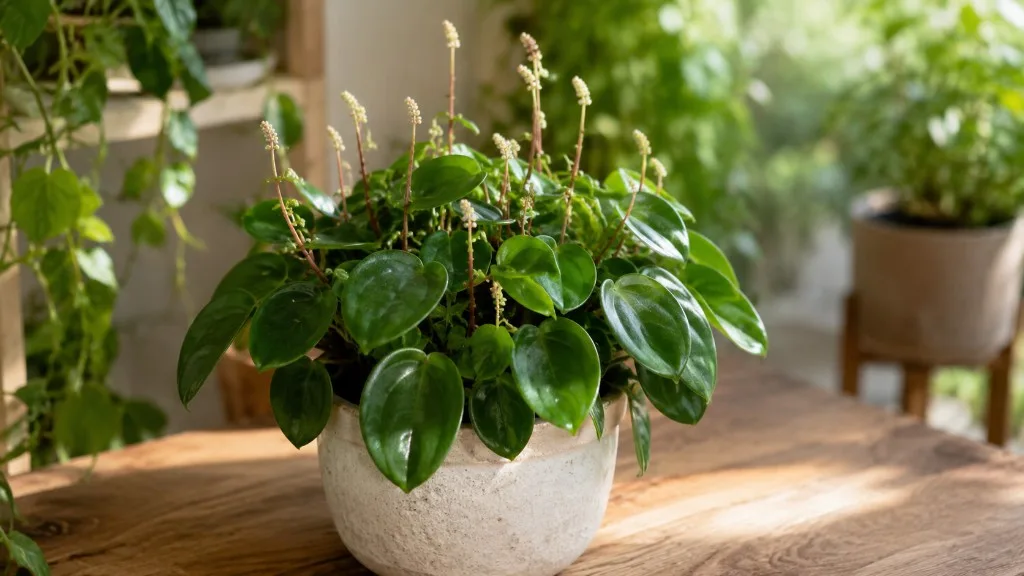
Raindrop peperomia (Peperomia polybotrya) is a compact tropical houseplant grown for thick, glossy, teardrop leaves on short upright stems. It belongs to the pepper family (Piperaceae) and usually stays desk-sized — about 10 to 12 inches tall and wide indoors — rather than trailing like a pothos. The plant’s “easy” reputation is only half true. Thick leaves store water, but the root system is small, so the fastest way to kill it is treating it like a thirsty tropical or copying Chinese money plant watering advice.
If yellow leaves, soft stems, or corky underside bumps already showed up, jump to the edema-versus-rot section below or open the matching problem page from the Raindrop Peperomia hub. This page is the care framework: confirm what you bought, place it, water by dry-top checks, keep the pot snug, then escalate only when a symptom needs depth.
Quick ID: Raindrop Peperomia vs Chinese Money Plant
Buyers and unlabeled shops often mix up raindrop peperomia with Pilea peperomioides (Chinese money plant). Clemson HGIC notes the raindrop plant is often mistaken for pilea, and NC State lists P. polybotrya as often confused with Pilea peperomioides. They look vaguely similar — glossy roundish foliage on compact stems — but they are unrelated families and fail differently when watered the same way.
| Check | Raindrop peperomia (P. polybotrya) | Chinese money plant (Pilea peperomioides) |
|---|---|---|
| Leaf shape | Teardrop / pointed tip; glossy bright green | Round “coin” leaves, often ~4 inches across |
| Petiole attachment | Peltate — petiole meets the leaf underside near center, with a slight surface dimple | Also peltate / center-attached on many plants — do not use attachment alone |
| Habit | Low, erect, bushy canopy | Upright stem with cascading older growth; often produces pups |
| Watering trap | Needs dry-top rhythm; hates wet unused soil | Often kept lightly moist in blogs — that habit overwaters raindrop |
| Family | Piperaceae | Urticaceae |
Confirm the tag or leaf shape before you copy care. If you keep raindrop peperomia’s mix lightly moist at all times — pilea-style advice many posts recycle — you will overwater Peperomia polybotrya in most indoor setups.
Thick Leaves, Small Roots: The Care Keystone
Raindrop peperomia is native to Colombia, Ecuador, and Peru, where it grows as a low upright foliage plant in warm, humid conditions. NC State describes fleshy teardrop leaves that are peltate, greenish-white spike flowers that rarely appear indoors, and a compact habit that matures near one foot tall and wide. Outdoors it fits USDA Zones 10–12; elsewhere it is a year-round indoor plant happiest around 65–75°F (18–24°C).
Those thick leaves are water reservoirs. Firm, cool, glossy foliage usually means usable moisture and decent light. Soft, wrinkled, or limp leaves often mean drought or root damage; translucent, mushy leaves usually mean chronic wetness. Because the canopy stores water, the plant does not collapse as dramatically as a peace lily when dry — which tricks people into watering by calendar while the pot is still heavy underneath.
University of Arkansas Extension explains the genus problem clearly: peperomias adapted to little soil in nature have small root systems and are easily overwatered, especially in winter when growth is slow — keep them in relatively small pots and allow dry-down between drinks.
Cultivars such as ‘Verdant Flame’ add creamy variegation but follow the same care logic. Variegated tissue holds less chlorophyll, so give ‘Verdant Flame’ the brighter end of indirect light before you blame fertilizer for faded cream patches.
Why Calendar Watering Fails This Plant
A Sunday watering habit ignores three variables that change every week: light, pot material, and root-ball size. Bright east light speeds dry-down; a dim north shelf slows it. Terracotta wicks moisture; plastic holds it. A snug 4-inch nursery pot dries faster than a statement ceramic with leftover wet mix around tiny roots. Leaf feel plus a finger check at one to two inches and pot weight beat any memorized interval.
Quick Care Snapshot
For healthy indoor raindrop peperomia, place the plant in bright indirect light, water when the top 1–2 inches of mix feel dry, use an airy, well-draining pot with a drainage hole, and feed lightly only during active growth. Clemson’s genus guidance — bright indirect light, dry out between waterings, well-drained mix, and caution against overwatering — maps cleanly onto this species. NC State adds moist-but-well-drained culture and a clear warning that root rot can result from overwatering.
| Care factor | Baseline target | Deeper guide |
|---|---|---|
| Light | Bright indirect; avoid harsh midday sun | Light guide |
| Water | Top 1–2 in dry, soak, drain | Watering guide |
| Soil | Airy mix with perlite/bark; snug pot | Soil guide |
| Feed | Light fertilizer in spring–summer | Fertilizer guide |
| Pot | Slightly snug; drainage hole required | Repotting guide |
If you are still building general indoor watering judgment, pair this with how to water indoor plants the right way. The soil-check habit transfers directly because calendar watering is the fastest way to drown a small-rooted peperomia in low winter light.
Light for Compact Teardrop Growth
Raindrop peperomia does best in bright indirect light — strong ambient brightness without harsh, unfiltered midday sun for hours. NC State lists outdoor culture as partial shade (roughly 2–6 hours of direct sun only part of the day) and indoor preference as bright, indirect sunlight. Translate that to a spot where you could comfortably read near the plant in daytime without a lamp, with new leaves staying full-size and glossy.

Light drives every other decision. Brighter exposure increases water use and speeds dry-down; dim exposure slows both and raises overwatering risk if you keep a summer schedule. Compact internodes and firm new teardrop leaves mean the placement works. Stretchy stems with smaller new leaves mean you need more light before you reach for fertilizer.
Windows, Direct Sun, and Grow Lights
East-facing windows are the safest default: gentle morning sun, then bright indirect exposure. Bright, unobstructed north windows work when the pot sits close to the glass. South and west windows can work with sheer curtains, blinds, or by placing the plant several feet back so rays never sit on the canopy at solar noon.
Limited direct sun is acceptable when acclimated — especially cool morning exposure. Midday and afternoon beams through south or west glass commonly bleach patches, crisp edges, or warp the sun-facing dome of a teardrop leaf. Clemson notes direct sun can scorch peperomia leaves; move gradually over 7–14 days when shifting from a dim shop shelf to a bright sill.
Raindrop peperomia can survive lower light for months, which is why it sells as an office plant, but survival is not thrift-store-photo growth. Long-term dim conditions produce leggy stems, smaller leaves, duller gloss, and slower dry-down. If your only location is weak, a full-spectrum LED about 12–18 inches above the canopy for 12–14 hours on a timer is a starting heuristic — then watch new leaves for stretch versus bleach and adjust distance. Prefer that over forcing calendar watering in a dark corner. For placement troubleshooting, see the light topic and not enough light.
Watering: Dry-Top Checks (Not Calendars)
Water when the top one to two inches of mix are dry and the pot feels noticeably lighter, then soak thoroughly until a little runoff exits the drainage hole and empty the saucer. Clemson frames peperomia care as letting soil dry between waterings; overwatering is the most common disease pathway and often shows as leaf drop. NC State warns that root rot can result from overwatering and recommends avoiding wet leaves to reduce spotting.
Do not chase a milliliter chart. A four-inch pot and a six-inch pot need different volumes; depth moisture and pot weight tell you when. Partial surface sips keep the top damp while the center stays uneven — then leaves soften, you add another sip, and roots never get a clean wet–dry cycle. Full seasonal detail lives on the watering guide.
Pot Material and Seasonal Timing Examples
In bright, warm active growth, many indoor raindrop plants need water roughly every 7–14 days. In cooler, dimmer months, intervals often stretch to 14–21 days or longer. Those ranges are observations, not schedules.
LeafyPixels editorial care notes (May–June 2026 hub drafting for this species): While writing the watering and repotting topic pages, editorial checks on snug 4-inch plastic nursery pots under bright east-window ambient light typically reached dry-top readiness inside the 7–14 day band once growth was active. Matching plants in unglazed terracotta of the same diameter were often ready about two days sooner in the same room — a pattern we also documented on the watering page. Oversized decorative bowls left with leftover nursery root mass stayed wet past two weeks in similar light and produced soft lower leaves before a downsize. These are single-setup editorial patterns, not universal rules for every apartment.
Winter failures cluster around copying a midsummer Sunday habit while light drops and growth slows. Heating can dry room air without drying soil — lower light reduces transpiration, so the mix stays wet longer even when skin feels dry. Arkansas Extension’s winter overwatering warning for small-rooted peperomias applies directly here.
Edema vs Overwatering vs Root Rot
Use this triage before you pour again or reach for fungicide:
| What you see | Likely issue | First move |
|---|---|---|
| Corky or blistered bumps on leaf undersides; stems still firm; pot often damp | Edema (physiological, not a fungus) | Lengthen dry-down; water in the morning; improve light and airflow — see edema |
| Yellow lower leaves, soft stem at soil line, wilt despite wet mix, sour smell, gnats | Overwatering / root stress | Pause water; empty cachepots; check roots — see overwatering |
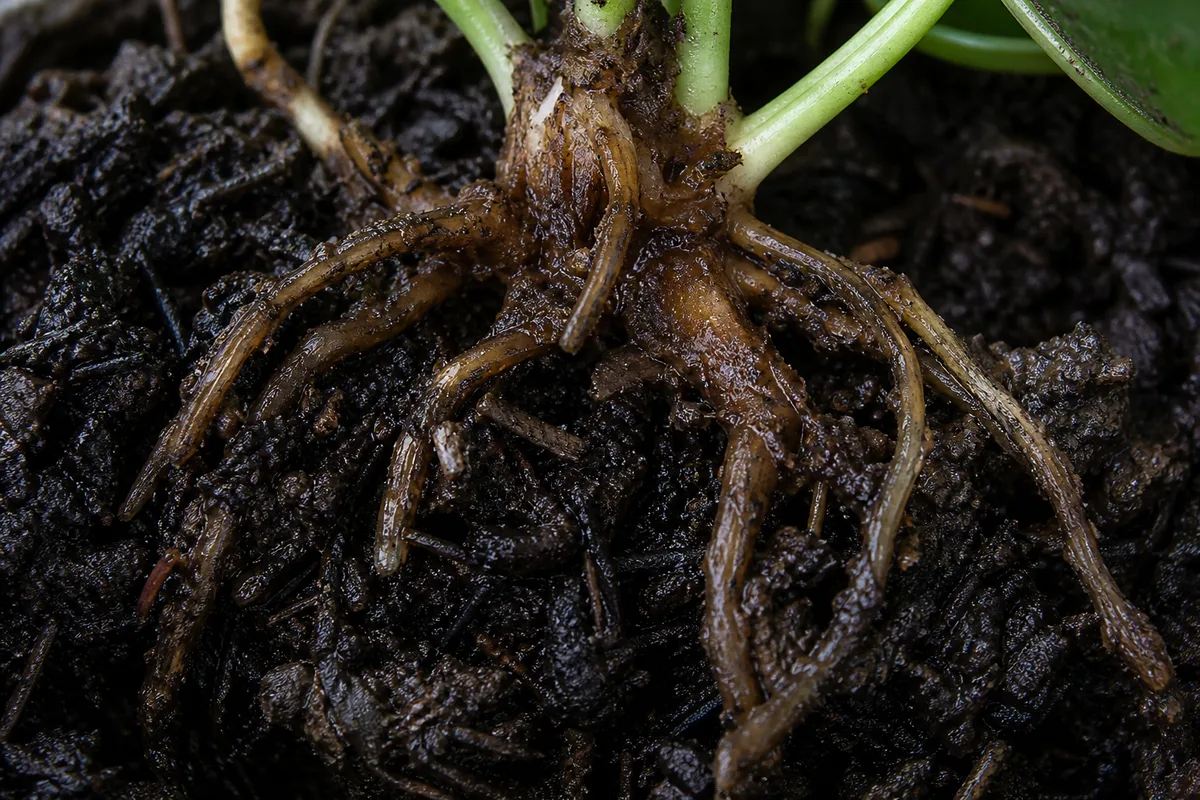
| Mushy brown/black roots, collapsing crown, wet heavy pot | Root rot | Unpot, trim soft tissue, fresh airy mix, snug pot — see root rot |
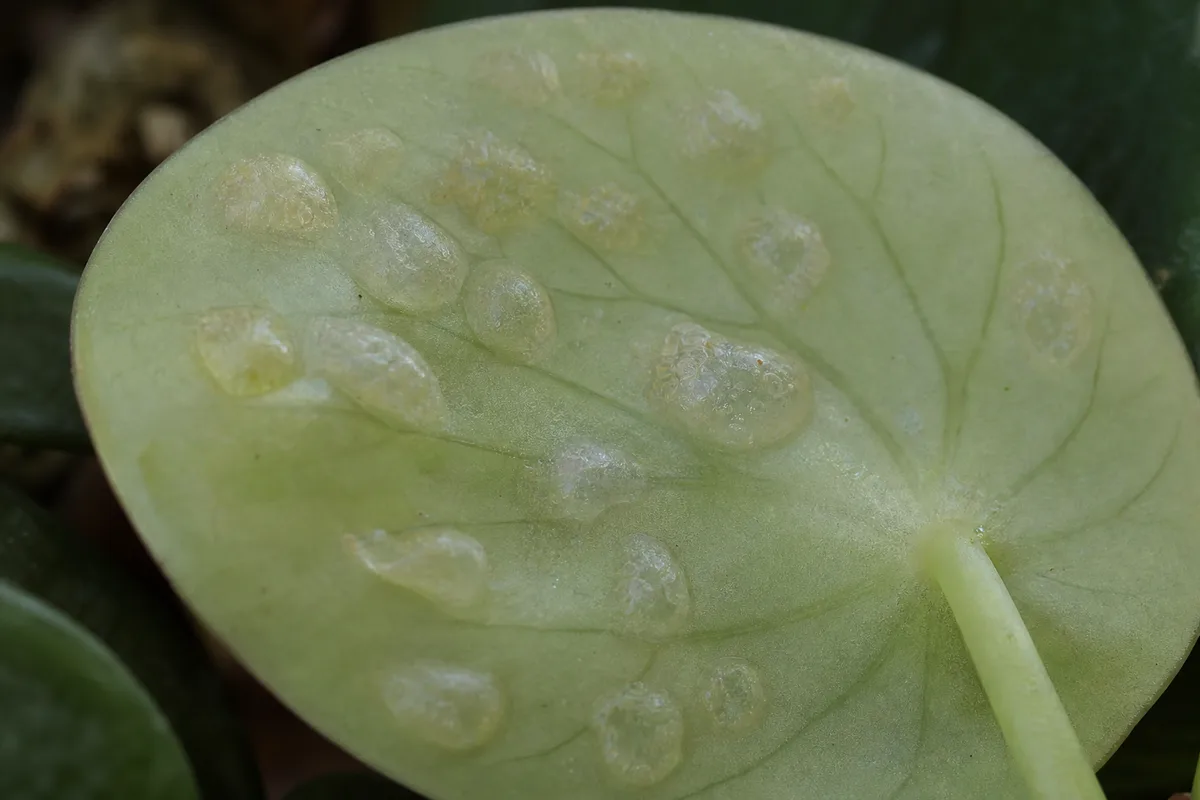
LeafyPixels diagnostic close-up for raindrop peperomia edema: hard, corky underside bumps that do not wipe off. Existing scars stay; correcting moisture and light stops new lesions.
Wisconsin Horticulture describes edema as small translucent, fluid-filled blisters — often on leaf undersides — that can scar corky and tan when tissue ruptures. It happens when roots take up more water than leaves can release, commonly under warm moist soil plus low light, cool air, high humidity, or poor ventilation. Missouri Botanical Garden notes peperomias are particularly sensitive to oedema and that indoor cases peak in late winter during cloudy weather. Clemson’s houseplant disease guide adds that excessive soil moisture and poor lighting with low temperatures predispose plants to oedema, especially on succulent-leaved houseplants.
Fix edema by watering less in cloudy or dim periods, watering in the morning so pots drain before night humidity rises, and improving airflow — not by misting more. Root rot develops when roots sit in waterlogged, low-oxygen mix; Missouri Botanical Garden explains that roots in waterlogged soil may die from lack of oxygen, then decay and cannot supply the plant. Clemson lists root rot from overwatering as the most common peperomia disease. Prevention beats rescue: dry-top checks, chunky mix, drainage holes, and pots sized to the root ball.
Soil, Pot Size, and Drainage
Raindrop peperomia wants moist, well-drained, aerated mix — not swamp and not pure grit. NC State lists good drainage with moist loam and less than 12 inches of planting space; the genus page recommends a moist, well-drained loam-and-sand style blend and notes plants are slow-growing and rarely need frequent repotting. Clemson recommends well-drained houseplant or cactus mix and a pot only slightly larger than the grower’s pot.
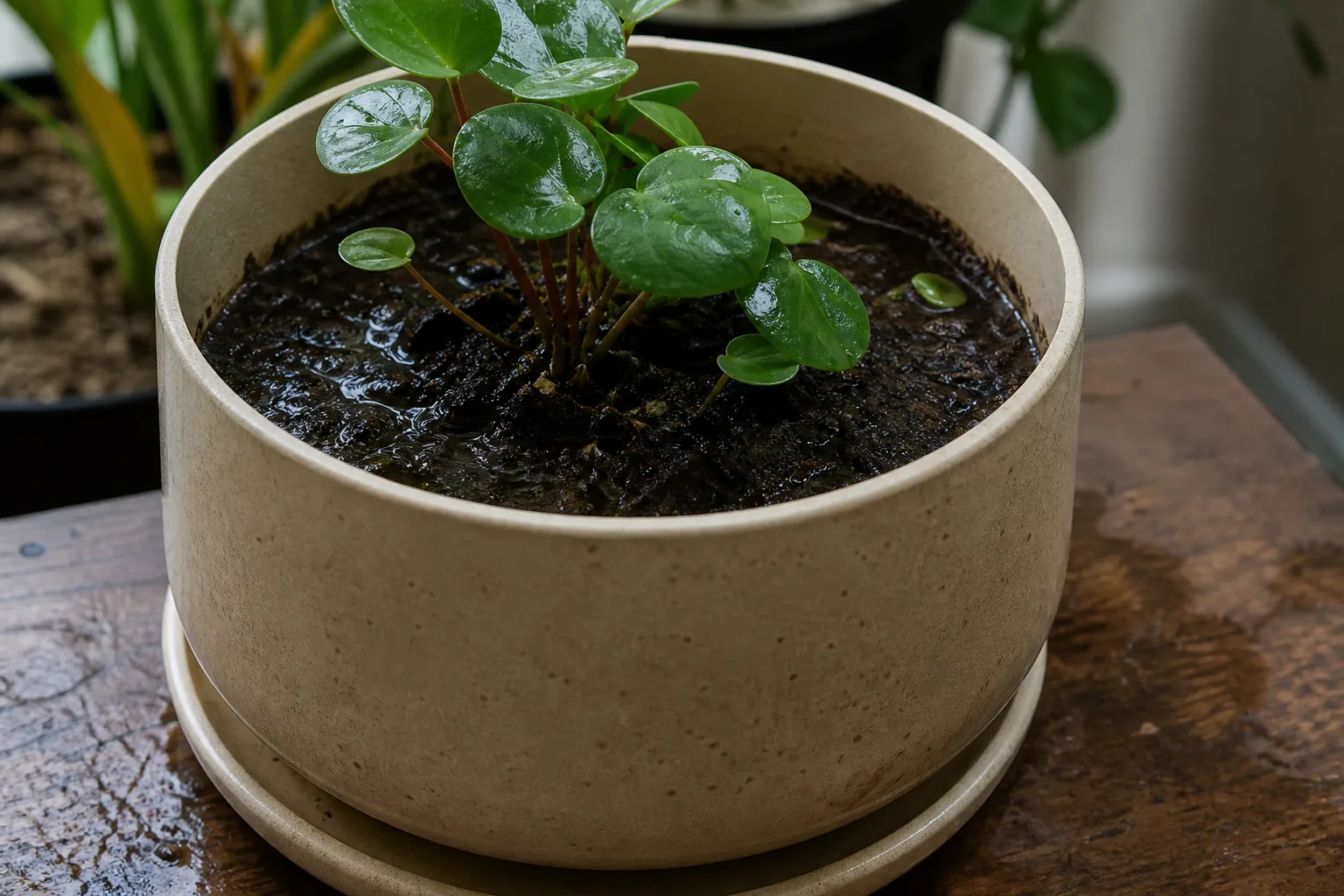
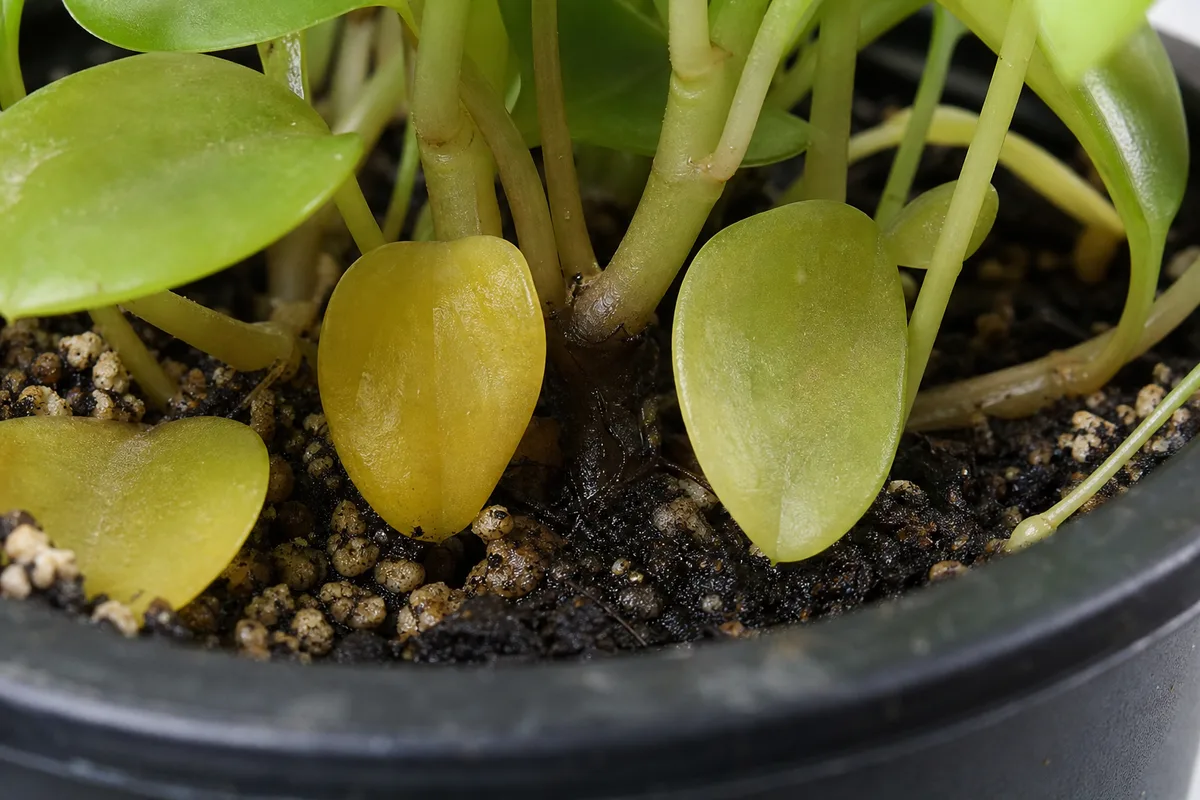
LeafyPixels diagnostic visual for poor potting setup on this species: canopy-looking plant in a container that holds far more wet volume than the fibrous root mass can use.
Airy Mix Recipe and Oversized-Pot Failure
A reliable home blend is roughly two parts quality peat- or coir-based potting mix to one part perlite or pumice, with optional fine orchid bark (about 15–20%) for chunkier structure in humid rooms or plastic pots. African violet mix amended with extra perlite also works. Avoid unamended dense indoor soil and garden dirt in containers.
The hidden failure mode is pot size. Thick leaves look lush, so people upsize into statement ceramics. The unused wet zone around a small fibrous root mass stays anaerobic for days, especially in plastic pots in winter. Match the container to roots, not to wishful canopy size. Move up only about 1–2 inches in diameter when roots truly fill the pot. Always use a drainage hole; decorative cachepots are fine only if you remove the nursery pot to water and never leave standing runoff. Full recipes live on the soil guide.
Temperature, Humidity, and Airflow
Keep raindrop peperomia in stable indoor temperatures around 65–75°F (18–24°C). Protect it from cold drafts, AC blasts, and heaters. Brief warmer spells are fine when moisture and airflow keep pace; sustained cool below about 60°F slows growth and can yellow lower leaves. Clemson advises waiting until nights stay above roughly 60°F before any outdoor summer vacation in deep shade.
Humidity helps but is secondary to light and watering. Average household humidity near 40–50% is usually enough; NC State notes the plant thrives in higher humidity yet tolerates typical homes. Very dry winter air can encourage spider mites on dusty undersides — watch for fine webbing and stippling rather than assuming every speck is edema. Group plants, use a pebble tray with the pot above the water line, or run a small humidifier nearby. Misting raises humidity briefly and can leave wet leaf surfaces that invite spotting when air is stagnant — NC State specifically recommends avoiding wetting leaves.
Good airflow matters as much as a humidity number. Stagnant steamy corners favor fungal issues on thick foliage. An open shelf with gentle room air movement beats a sealed jar for long-term culture.
Fertilizer and Repotting Basics
Feed lightly only when the plant is actively growing — typically spring through summer. Clemson suggests a low-strength liquid fertilizer occasionally during the growing season, or a slow-release granule once per year. Do not fertilize a wet, dark, newly repotted, or stressed plant; fertilizer cannot fix root rot or poor light.
Repot every two to three years, or when roots circle heavily, mix smells sour, water runs straight through without soaking, or growth stalls through an active season. Move up only one pot size in late winter or spring with fresh airy mix. Arkansas Extension guidance for the genus fits here: small pots, dry-down between waterings, and spring timing for pruning or repotting. Details are on the fertilizer and repotting guides.
Propagation Overview (Species Notes)
Raindrop peperomia propagates readily from stem cuttings and, for solid-green plants, leaf cuttings with petiole. NC State lists leaf and stem strategies for the genus; Clemson walks through stem and leaf methods and notes peperomias are easy to propagate. Species tip for solid green: take a healthy leaf with a short petiole attached, root in bright indirect light with warm temperatures, and keep the medium lightly moist — not soggy. Leaving the leaf blade jammed into wet peat without a petiole, or potting a baby into an oversized nursery bowl, is the usual rot path.
This guide does not repeat the full rooting workflow. Use the dedicated raindrop peperomia propagation guide for species steps, and how to propagate peperomia for stem-versus-leaf decisions, water-versus-soil timing, and rot prevention on cuttings.
Common Problems and Where to Go Next
Most raindrop peperomia problems are environmental: too much water for the light level, too little usable light, dense mix, cold drafts, or pests on stressed plants. Diagnose from the roots and pot upward before stacking fertilizer, misting, and repotting in the same week. A single aging lower leaf is normal; a cluster of yellow leaves with wet soil is not.
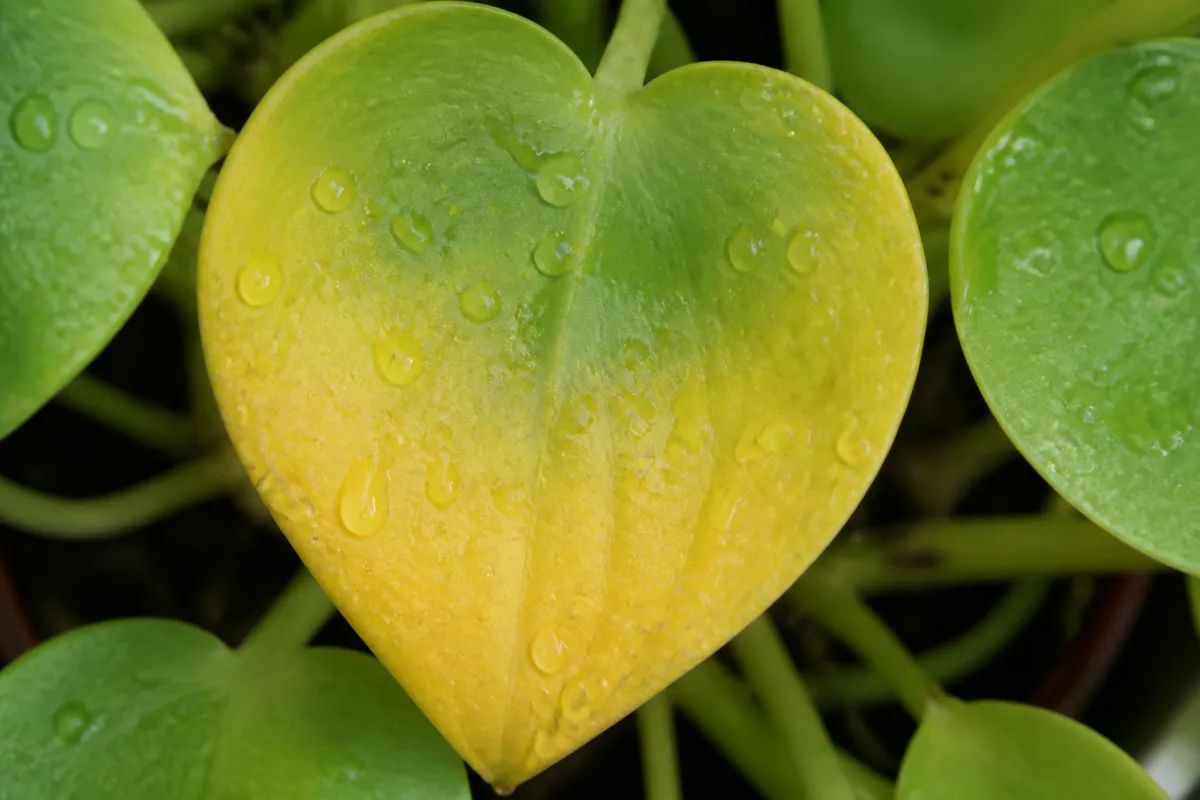
Start with the problems hub when symptoms stack. High-traffic pages include yellow leaves, drooping leaves, brown leaves, leggy growth, and leaf drop.
Monitor for mealybugs, spider mites, fungus gnats, and scale — the pests NC State and Clemson flag for peperomias. Fungus gnats often signal chronically wet mix. Wipe soft-bodied pests with alcohol on a cotton swab, improve dry-down, and isolate heavily infested plants. Leaf spots are reduced by watering the soil, not the foliage, and keeping air moving.
Pet Safety
Most peperomias are considered pet-safer houseplants, and Clemson directs readers to ASPCA plant listings for confirmation. The ASPCA lists multiple Peperomia species, including blunt-leaf peperomia (P. obtusifolia), as non-toxic to cats and dogs. LeafyPixels treats raindrop peperomia as generally pet-safe for cats and dogs on that genus pattern. Non-toxic does not mean chew-proof — large amounts of any plant can still cause mild stomach upset. Keep pots out of reach of heavy chewers, and contact a veterinarian or ASPCA Animal Poison Control at (888) 426-4435 if a pet eats a substantial amount and shows distress.
Related Raindrop Peperomia Guides
If yellow leaves meet a wet pot, open overwatering or root rot next. Corky underside bumps with firm stems point to edema. Use the hub when you need the full topic and problem index.
- Raindrop Peperomia hub — overview, care topics, and problem index
- Watering guide — dry-top checks and seasonal rhythm
- Light guide — windows, scorch, and grow-light setup
- Soil guide — airy mix and pot size
- Propagation guide — stem and leaf cuttings for this species
- How to propagate peperomia — genus-wide methods and aftercare
- How to water indoor plants — general wet–dry rhythm
This Week’s Check Protocol
- Light — Can you read near the plant midday without a lamp? If new leaves are smaller with long gaps, move closer to brightness before fertilizing.
- Depth moisture — Finger-check 1–2 inches. If cool and clinging, wait. If dry and the pot feels light, soak and drain.
- Pot size — Is the container only slightly larger than the root ball? Oversized wet volume is a root problem, not a décor flex.
- Leaf feel and undersides — Firm glossy tops are good. Flip a few leaves: corky bumps suggest edema; soft yellow with a heavy pot suggests wet roots.
- Escalate once — Soft stem + heavy wet pot → root rot. Corky bumps + firm stems → edema.
Conclusion
Raindrop peperomia thrives when you respect the tension built into its anatomy: thick leaves that store water, and small roots that need air. Confirm you do not have a Chinese money plant, give bright indirect light, water only after the top inch or two dries, plant it in an airy mix inside a snug pot with drainage, and separate edema blisters from basal rot before you panic-repot. Run this week’s five-point check, then open the single problem page that matches what you found.