Drooping Leaves on Raindrop Peperomia: Causes, Checks &
Quick answer
Drooping leaves on Raindrop Peperomia usually mean water stress at the roots-either too wet (mushy stem bases) or too dry (light pot). Lift the pot, probe moisture 5–7 cm deep, and pinch stem bases before you water.

Drooping Leaves on Raindrop Peperomia: Causes, Checks & Fixes
This guide covers drooping leaves on Raindrop Peperomia. See also the general Drooping Leaves guide, watering, and light pages for this plant.
Drooping Leaves on Raindrop Peperomia: Causes, Checks & Fixes
Quick answer
One Raindrop Peperomia (Peperomia polybotrya) leaf angling toward a window is normal. Stress droop means multiple glossy teardrop leaves hanging limp with either bone-dry mix or persistently wet soil-not a single petiole reaching for light.
Drooping on this compact upright plant with fleshy, peltate teardrop leaves is a water-movement signal at the roots. Wilted or drooping leaves may indicate soil that is too dry or too wet; rotting roots cannot take up water even when the pot feels heavy. Your first move: lift the pot, probe moisture 5–7 cm deep, and pinch stem bases where petioles attach. Do not water until you know which side of that line you are on. For baseline care rhythm, see the watering guide and Raindrop Peperomia overview.
Drooping vs. wilting on Raindrop Peperomia
These symptoms overlap on peperomias, but they answer different questions-and different fixes.
Drooping is the earlier, softer signal: peltate teardrop leaves and petioles lose stiffness and hang downward from their central attachment point while most upright stems still feel firm. Owners often notice lower leaves first or mistake one window-leaning leaf for whole-plant stress.
Wilting is a deeper collapse-the whole plant looks slack faster, wet-soil cases progress toward yellow lower leaves and soft crown tissue sooner, and recovery takes longer once stems soften at the base. If stems are already mushy where they meet soil or the plant looks collapsed rather than merely hanging, use the wilting guide for systemic uptake failure. Stay on this page when foliage is limp but stems are still green and firm and you need to decide dry versus wet before the problem escalates.
| Symptom | What you see | Stems | Soil | Read next |
|---|---|---|---|---|
| Drooping | Gradual petiole hang; multiple teardrops sag | Usually firm | Dry or wet | This page |
| Wilting | Faster whole-plant slack; tissue feels thinner | May soften at base | Often wet when serious | Wilting |
| Overwatering | Limp leaves on damp mix; may yellow below | Softening crown | Heavy, slow to dry | Overwatering |
| Underwatering | Floppy leaves on light pot | Firm | Dry throughout | Underwatering |
What drooping leaves look like on Raindrop Peperomia
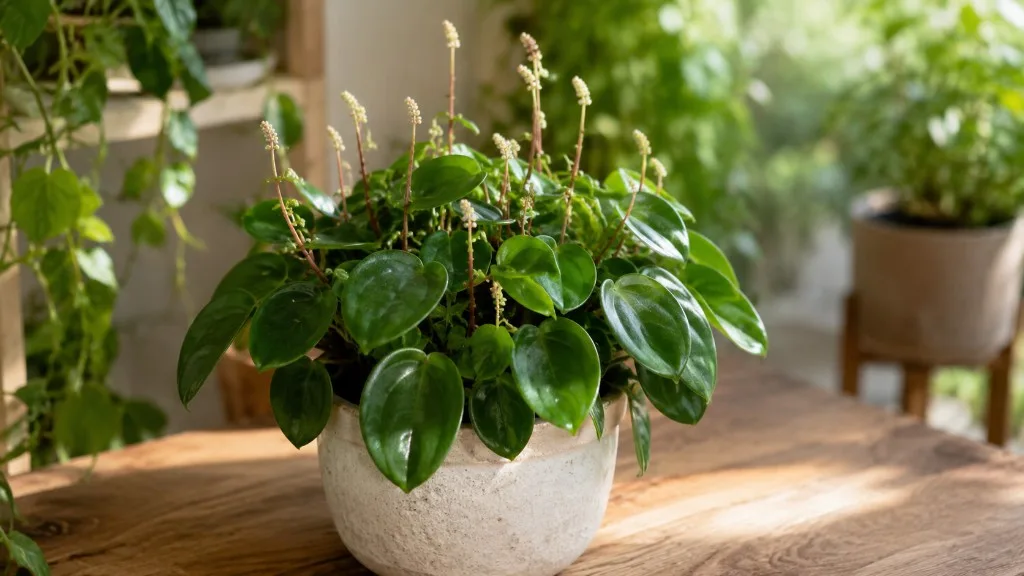
Healthy Raindrop Peperomia holds glossy, bright green teardrop leaves on stiff upright green stems. Each leaf is peltate-the petiole attaches near the center-so stressed leaves often hang from that central point rather than folding flat like a coin-leaf pilea.

Drooping Leaves symptoms on Raindrop Peperomia - compare with healthy tissue on the same plant.
Window lean vs. systemic stress droop
Window lean affects one or two upper leaves angling toward brighter light. Stems stay firm, soil moisture follows your normal dry-down rhythm, and the rest of the teardrops hold their upright posture.
Systemic stress droop hits multiple leaves at once and pairs with either bone-dry mix or persistently wet soil-not just one leaf reaching for a window. If only the oldest bottom leaf droops while the crown stays firm and soil is normal, you may be seeing natural aging rather than a crisis.
Dry droop vs. wet droop vs. environmental droop
Overwatering droop usually starts low. Lower leaves soften first while upper leaves may still look acceptable for a day or two. Petioles go limp and stems feel spongy at the base where they meet soil. The pot stays heavy, and the surface may look damp even though you have not watered recently. Glossy striping dulls as cells lose pressure. Fungus gnats hovering near chronically wet cachepots are an early warning.
Underwatering droop shows the opposite pattern. The pot feels very light. Leaves hang downward but stems often stay firm. Fleshy tissue may feel slightly thinner or less springy when you pinch the teardrop edge. A single thorough soak often perks these leaves within hours.
Low light plus wet soil slows water use indoors. In dim corners the same summer watering rhythm keeps the mix stale through winter-see not enough light when leggy pale growth shares the same spot.
Physical stress adds another lane. Peltate leaves snap easily if handled roughly during watering or rotation. Recent repotting disturbs fine roots and can cause temporary droop until new root tips form. Heat near a south window or a heating vent increases transpiration from small leaves faster than roots can replace it-do not move a wet-drooping plant into direct sun to dry the soil; leaves scorch before roots recover.
Why Raindrop Peperomia gets drooping leaves
Raindrop Peperomia stores water in thick leaves, yet it depends on a small root system that rots quickly when kept too wet. That combination makes drooping ambiguous: the plant can look sturdy until root failure is already advanced.
Overwatering before the soil dries is the most common cause. Raindrop Peperomia needs the mix to dry out between waterings; watering on a calendar without checking dryness suffocates thin roots. Waterlogged roots may die from lack of oxygen even when you meant to help. Oversized decorative pots and cachepots that trap runoff are hidden triggers-the outer container holds water around tiny roots for days while the upright crown still looks full. Full wet-feet branch: overwatering on Raindrop Peperomia.
Underwatering causes droop when the mix has been dry too long. Semi-succulent leaves release stored water, but compact roots cannot rehydrate the whole plant quickly. Hydrophobic dry pockets in old mix make this worse: surface watering runs down the sides while the center stays desert-dry. See underwatering when the pot is light and soil is dry throughout.
Low light pairs with wet-soil droop indoors. Cold drafts near windows or AC vents can also make firm leaves droop temporarily without changing soil moisture.
Dry droop vs. wet droop - quick comparison
| Pattern | Pot weight | Soil at 5–7 cm depth | Leaf texture | Stem bases | First action |
|---|---|---|---|---|---|
| Dry droop | Light | Dry throughout | Thin, less glossy teardrops | Firm | Deep soak → underwatering |
| Wet droop | Heavy | Damp or clinging | Dull, limp on wet mix | Firm or softening | Stop water → overwatering |
| Crown rot droop | Heavy | Wet, may smell sour | Lower yellow + limp | Soft, collapsing | Unpot → root rot |
| Window lean | Normal | Normal dry-down | Plump, one leaf angled | Firm | Rotate pot; no water change |
| Repot shock | Normal | Evenly moist | Mild sag | Firm | Wait 3–5 days; stabilize light |
How to confirm the cause
Work through these checks in order before changing anything:
- Pot weight. Lift the container. Light and dry suggests underwatering; heavy days after the last watering suggests poor drainage, oversized pot, or chronic overwatering.
- Moisture at depth. Insert a finger or chopstick 5–7 cm into the mix-not just the surface. Dry throughout confirms drought. Cool, clinging soil at mid-depth with a heavy pot confirms saturation.
- Stem bases. Gently wiggle stems where they enter the soil. Firm bases point away from rot; soft, collapsing bases with wet soil confirm crown trouble-see root rot before you water again.
- Leaf texture. Plump teardrop leaves that feel thin or less glossy support underwatering. Dull, limp leaves on wet soil support root stress.
- Recent changes. New pot, moved window, repot, or heat wave? Temporary droop from shock improves once conditions stabilize-if roots are still firm.
If drooping persists more than 48 hours after you correct moisture, or wet soil never dries, unpot and inspect roots. Healthy roots are firm and pale; rotted roots are brown, mushy, or smell bad. Brown mushy roots with a sour smell confirm rot; firm white roots with dry mix confirm thirst or hydrophobic soil.
The first fix to try
Stop and diagnose before you water. That single rule prevents the most expensive mistake on Raindrop Peperomia: adding water to a plant that is drooping from root rot.
If the pot is light and the mix is dry throughout, water once thoroughly until water runs from drainage holes, wait a few minutes, and empty every saucer or cachepot. Do not water again until the top half of the mix approaches dry-follow the watering guide dry-down test rather than a fixed calendar. Typical indoor rhythm is often every 10–14 days in active growth under bright indirect light and every 3–4 weeks in winter for plants in typical indoor light-your pot weight is the tiebreaker.
If the pot is heavy and soil stays wet, do not water. Move the plant to brighter indirect light with good airflow so the mix can dry. If stem bases soften or smell sour, unpot, trim mushy roots and soft stems, air-dry 24 hours, and repot into fresh fast-draining mix in the smallest pot that fits trimmed roots.
Step-by-step recovery
Dry droop recovery
Water deeply once, then leave the plant alone. Check perk-up within 6–24 hours-grower-experience timing, not a published species interval. If leaves still hang and soil repels water, bottom-soak the pot in a basin of room-temperature water for 20–30 minutes, then drain fully. Avoid misting as a fix-it does not rehydrate the root zone. Full branch: underwatering on Raindrop Peperomia.
Wet droop recovery
Stop all watering until the top half of the mix dries. Remove standing water from saucers and decorative outer pots. If decline continues, unpot gently, rinse away wet soil, and cut rotted roots back to firm tissue. Repot with well-draining potting mix plus perlite in a pot matched to root size, not leaf spread. Escalation paths: overwatering and root rot. Wait at least a week before the first cautious watering after a root rescue.
Propagate if the crown fails
If stem bases are fully mushy but upper sections still feel firm, take stem cuttings from healthy tissue as backup. Raindrop Peperomia roots readily from cuttings in moist perlite when the parent crown cannot be saved-full step-by-step on the propagation guide.
Recovery timeline
Simple dry droop often improves within hours and looks normal by the next day if roots are healthy. Wet droop with early root damage may take one to three weeks to stabilize once the mix dries and damaged roots are trimmed. Severe crown rot may not recover the original plant-recovery means new cuttings, not old leaves re-firming.
Judge progress by new firm leaves along stems and stable stem bases, not by whether every drooped teardrop rises. Older limp leaves may stay bent; focus on whether collapse stops spreading up the plant.
Lookalike symptoms
Wilting and drooping overlap on Raindrop Peperomia, but wilting often describes sudden limpness across the whole plant, while drooping emphasizes leaves and petioles hanging under their own weight. The diagnostic path is the same: check moisture and stem bases first. Use the wilting guide when collapse is faster or stems soften at the crown.
Yellow leaves frequently accompany wet-soil droop as lower crown leaves fade. Yellowing without droop may mean low light or natural aging of old leaves-widespread yellow plus limp stems on wet soil means root stress.
Leggy growth from dim light produces long thin stems that lean, but leaves stay plump and soil dries on a normal schedule. Brighten light rather than changing water.
Mistakes to avoid
- Watering immediately because glossy leaves look thirsty without checking whether the pot is already heavy and wet.
- Assuming a lush upright plant needs a larger pot-oversized containers prolong wet soil and worsen droop.
- Misting leaves instead of fixing root-zone moisture.
- Fertilizing a drooping plant before moisture and light are corrected.
- Repotting into fresh mix on day one without inspecting roots when soil has been wet for days.
- Handling peltate leaves roughly during inspection-broken petioles mimic stress droop.
- Moving a wet-drooping plant into direct sun to dry the soil-leaves scorch before roots recover.
How to prevent drooping next time
Learn how fast your specific pot dries in your home’s light, not on a generic schedule. Let compost partially dry between waterings, use drainage holes, and avoid leaving the pot standing in water. Match pot size to roots; a compact upright plant in a shallow pot dries faster and is easier to monitor than one buried in a deep cachepot.
Keep bright indirect sunlight so the plant uses water predictably-see the light guide if growth is leggy. In winter, reduce watering when growth slows. When in doubt, err toward dryness-Raindrop Peperomia tolerates a missed drink better than a soggy week.
When to worry
Treat drooping as urgent when wet soil, sour smell, and soft stem bases appear together-crown rot spreads quickly on peperomias with small root systems. Also escalate if droop persists beyond 48 hours after you corrected dry soil with a thorough watering, or if whole sections collapse while the pot remains heavy. Route to root rot when more than half the crown tissue is soft.
Raindrop Peperomia is non-toxic to cats and dogs, but inspect roots gently anyway; broken stems and messy mix create cleanup, not poisoning risk.
Related Raindrop Peperomia guides
- Wilting - deeper collapse and soft crown tissue
- Overwatering - chronic wet feet in oversized pots
- Underwatering - light pot and dry mix throughout
- Root rot - sour smell and mushy stem bases
- Watering - dry-down rhythm and pot-weight checks
- Propagation - stem cuttings when the crown fails
- Overview - baseline light, soil, and care rhythm
How we wrote and verified this guide: Recommendations were checked against NC State Extension, Missouri Botanical Garden, Royal Horticultural Society, Clemson HGIC, Penn State Extension, and ASPCA references cited inline. Author: sai-ananth. Reviewer: LeafyPixels Review Board. Methodology: plant problem guidance is reviewed against botanical references, extension resources, and LeafyPixels plant-care data before publication. Claims validation: claims-validator-v1 pass with inline external links documented below. Last reviewed: 2026-06-17.
Conclusion
Drooping leaves on Raindrop Peperomia almost always trace to water at the roots-too much, too little, or too long in the wrong pot. One leaf angling for light is normal; multiple limp teardrops mean lift, probe, and feel stem bases before you pour. Dry gets one deep drink; wet gets a pause and possibly a root rescue. Firm new teardrop leaves along upright stems tell you the plant is winning; spreading collapse at the crown tells you to act fast or propagate while you still can.