Should You Deadhead Daffodils? What to Cut and Keep
Deadhead faded daffodils by removing the flower and seed capsule, then leave green foliage to recharge the bulb. Timing follows the plant, not a date.
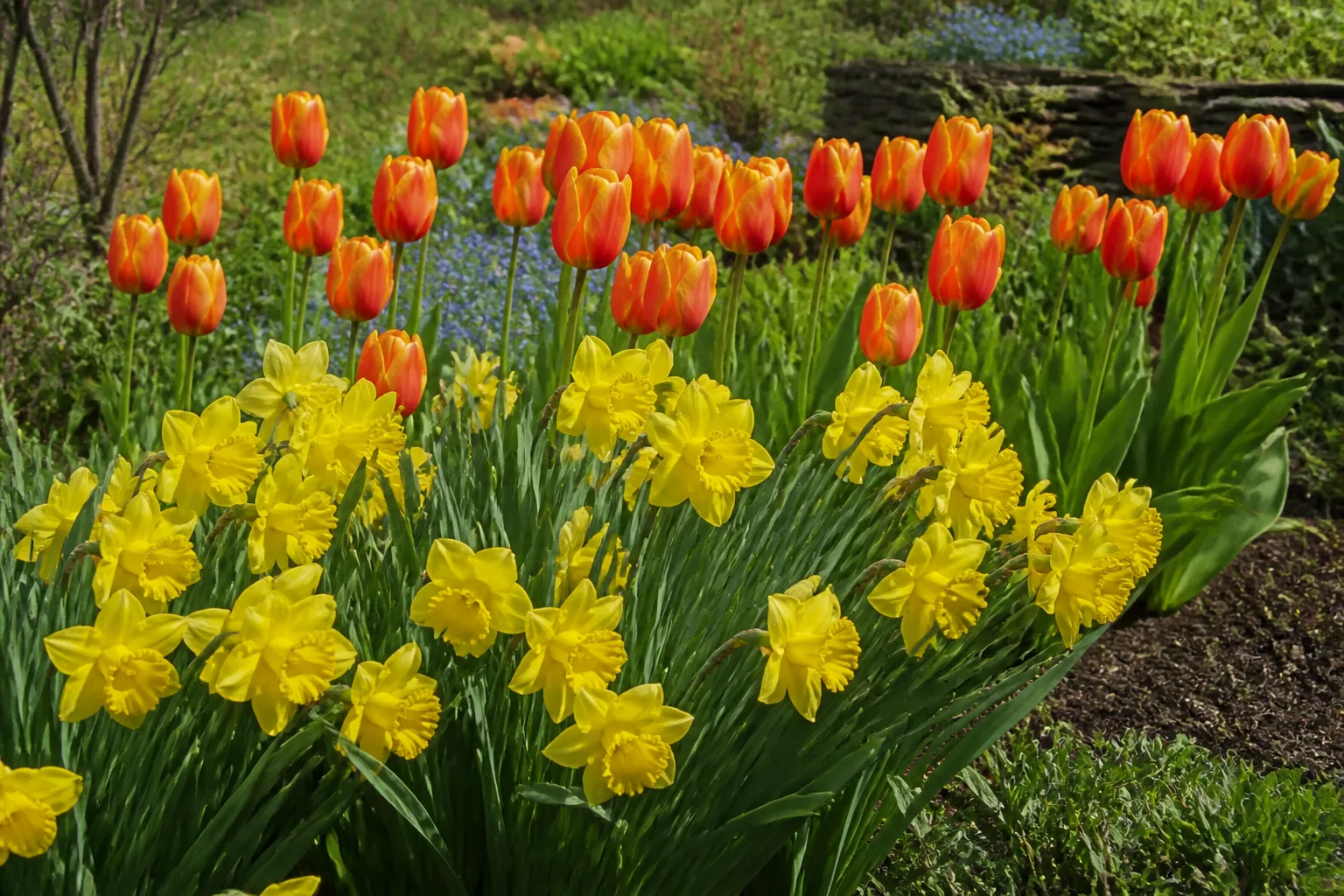
The short answer: remove the spent flower, keep the green leaves
Yes, you can deadhead daffodils after their flowers fade. Remove the shriveled bloom and the small swelling behind it that can develop into a seed capsule; leave the healthy green flower stalk and every green leaf in place. That quick distinction is the heart of daffodil care after flowering: take away the part that might set seed, but preserve the plant’s working foliage.
Deadheading is useful for a tidier bed and can prevent seed production when you do not want seedlings. It is optional, though. Daffodils can return even if you leave a few faded flowers, and snipping them is not a switch that guarantees a bigger display next spring. The Royal Horticultural Society (RHS) recommends removing faded blooms while allowing the foliage to yellow before cutting it down; its guidance is a helpful baseline for both jobs, which happen at different times. RHS daffodil growing guide
What deadheading changes—and what it cannot promise
A daffodil bulb uses the leaves that remain after flowering to make and store carbohydrates for its next growth cycle. If a flower is left to form seed, the plant also invests resources in that reproductive route. Removing the spent flower and its developing ovary avoids that seed investment, but it does not replace the leaves’ work or instantly feed the bulb.
Think of deadheading as a small allocation choice, not a bloom guarantee. The RHS describes faded-flower removal as a way to direct resources back toward the bulb, while horticulturally trained Homes & Gardens editor Ruth Hayes recommends leaving the rest of the stalk to die back naturally. Neither practice can correct bulbs that are crowded, planted poorly, shaded, or repeatedly deprived of foliage. RHS deadheading guidance Homes & Gardens’ daffodil deadheading guide
Deadheading also will not make a daffodil flower again immediately. Some varieties carry several florets on one stem, and unopened buds may still bloom after the first flower fades; that is the variety completing its normal display, not a new flush caused by cutting. Once a bloom is spent, removing it mainly prevents a seed capsule and clears the display.
It also helps to separate the flower’s short life from the bulb’s longer cycle. A daffodil’s next flower is supported by what the bulb can store while the leaves are active, not by keeping this year’s petals attached. Removing a spent bloom is worthwhile when seed formation or appearance matters, but preserving green foliage has a longer window and a more direct role in the plant’s recovery.
What to remove on a daffodil
Focus on the flower head, not the whole plant. A daffodil flower sits above a narrow stalk, with a small ovary at its base. As the petals dry, that ovary can swell into a green seed capsule. The capsule is easy to miss if you only pull off loose petals, so look just behind the flower before making the cut.
Find the flower’s seed capsule
Follow the faded petals down to the short, rounded base directly behind them. Remove that flower and its ovary together; if you use scissors or pruners, a short section of the upper stalk can go with it. Guidance varies slightly on how much upper stalk to take: RHS says to cut or pinch just behind the capsule, while Homes & Gardens describes removing about an inch of stalk with the spent flower and pod. Both approaches preserve the green stem lower down.
Use the smallest clean cut that removes the flower and capsule without nicking nearby leaves or another bud. The important endpoint is not an exact number of millimeters. It is a cleanly removed seed-forming head with most of the green stalk and all the basal foliage still attached.
Leave the green flower stalk and leaf blades
Daffodils have strap-shaped leaves rising from the base, and the green flower stalk is separate from those leaves. Do not cut the stalk flush with the ground after removing one flower. The RHS notes that the remaining green flower stalk also photosynthesizes, so leave it to fade naturally along with the foliage. RHS deadheading guidance
This is where generic “cut off the dead flower” advice can be misread. It means remove the reproductive head, not shear the whole clump. If your daffodils are growing in a lawn or border, keep the leaves and remaining green stems visible and upright rather than bundling them out of sight.
When to deadhead a fading daffodil
Wait until the flower is clearly past its best: petals are limp, papery, browned, or falling, and the bloom no longer looks fresh. You do not need to rush out the first afternoon a petal curls. A few days of delay will not undo the bulb’s future, and checking once or twice during the fading period is enough for most home gardens.
If a flower is still bright and firm, leave it. The remaining buds on a multi-flowered variety may still open, and a flower that is simply wet after rain may recover. Remove a broken or badly damaged head for appearance or to keep it from snagging, but do not mistake temporary droop for a spent bloom.
The practical timing is tied to the flower, not a month on the calendar. Early and late daffodil varieties finish at different points, and the same cultivar can fade at different times in different climates. When the flower has finished, remove the head; then start a much longer wait for the leaves to finish.
How to deadhead daffodils in four careful steps
- Check the whole stem. Look for any unopened buds or fresh flowers before cutting. On a multi-flowered stem, identify which individual blooms have finished.
- Locate the capsule. Trace the fading flower to the small ovary directly behind the petals. If it is beginning to swell, include it in the removed piece.
- Pinch or snip the head. A soft, faded flower can often be pinched off with fingers. For a firmer stem or a larger planting, use clean, sharp scissors or hand pruners and remove the head with only a short length of upper stalk.
- Stop at green growth. Do not cut the remaining stalk or leaves to the soil line. Leave that green tissue in place until it yellows and collapses on its own.
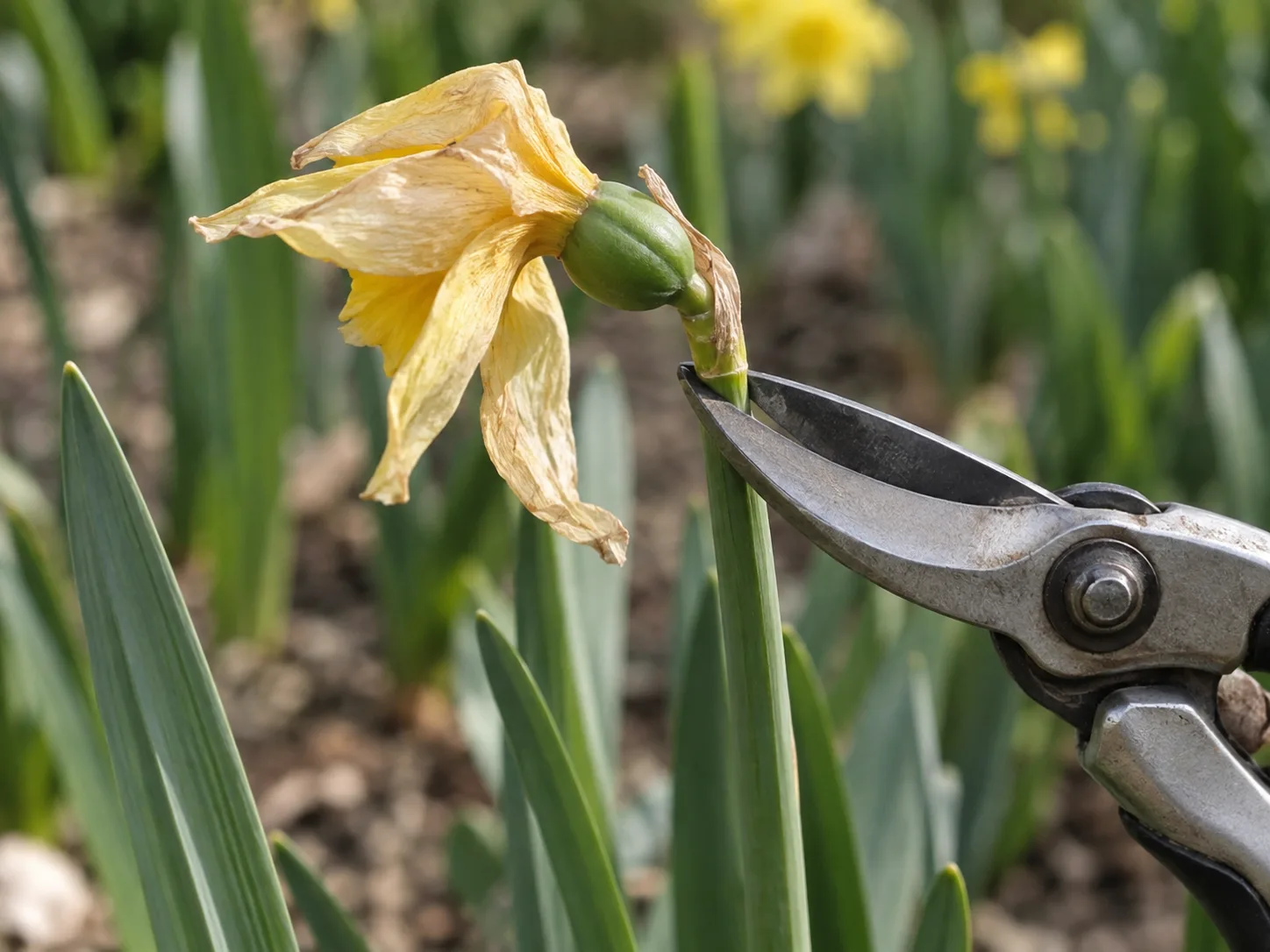
RHS describes pinching or cutting the flower stalk just behind its bulbous seed capsule, while practical garden guidance commonly removes the capsule with a little stalk. The shared instruction is simple: remove the seed-forming part, preserve the living green growth below it. No special deadheading tool is necessary for a small patch; if you use a blade, make a clean cut rather than crushing the stalk.
Handle multi-flowered stems one bloom at a time
Some daffodils carry a cluster of flowers on a single main stalk. Do not cut off the entire cluster while one or more buds remain closed or fresh. Remove each spent flower and its own little capsule at the point where it joins the cluster, taking care not to damage neighboring blooms.
After every flower in that cluster has finished, remove the remaining flower heads and capsules. Keep the lower green stalk and leaves. If separating the individual flowers would require awkward cutting that risks tearing the main stalk, leave the stem intact for a few days and return with clean scissors once the whole display is done.
When to leave a seed pod
Leave selected flowers if you actually want daffodils to set seed. This can make sense in a naturalistic planting where you are encouraging seedlings to spread, or if you are deliberately collecting seed for a breeding or observation project. You do not need to leave every flower: deadhead the tidy border or container and leave a few marked stems in the area where self-seeding is welcome.
Seed is a different propagation route from dividing the bulbs. Seedlings may not match the named parent cultivar, and they take longer to reach flowering size than planting established bulbs or offsets. The RHS explains that bulb cultivars raised from seed may not come true to type and that seed-grown bulbs can take years to mature. If your goal is to expand a particular named daffodil, let its clump form offsets rather than relying on seed. RHS bulb propagation guide
If you are not collecting seed, removing the capsule is a reasonable default, but missing one is not a crisis. A few seed pods do not mean the bulb is lost or that the entire bed will fail next year. The most important after-bloom choice remains preserving enough healthy foliage for the bulb to replenish itself.
Leaving a pod is not the same as dividing a clump. Daffodils also multiply through offsets, which grow beside the original bulb and retain the parent’s characteristics. If you want more of the same named variety, offsets are generally the more predictable route; seed is useful when you are willing to wait and accept variation. The RHS describes both methods, but they serve different goals: seed for experimentation or natural spread, offsets for faithful increase.
Why daffodil leaves must stay after flowering
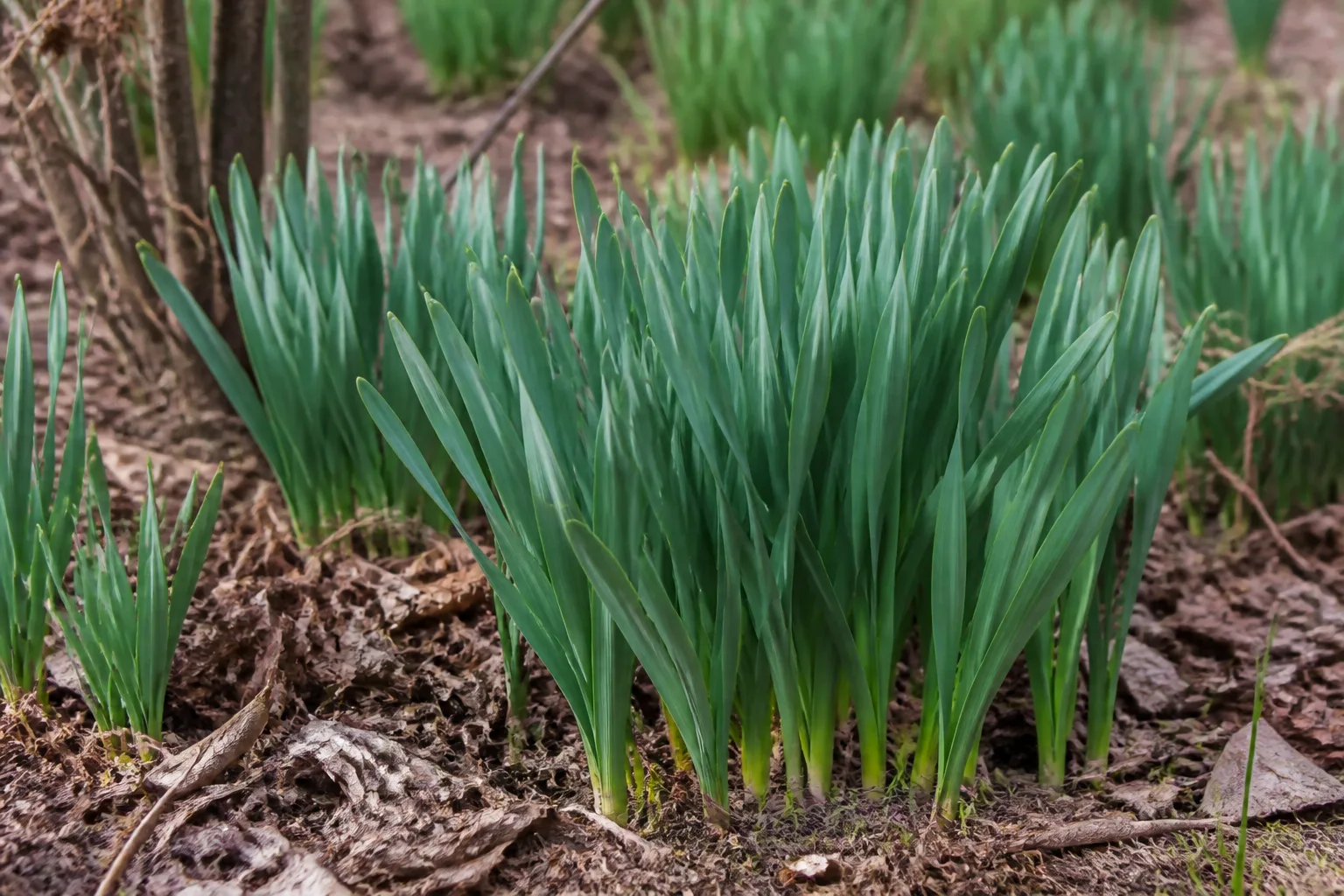
Once the petals are gone, the foliage can look messy, but those leaves are still active. They capture sunlight and make sugars that replenish the bulb and support its next season’s growth. Cutting them while they are green reduces the time the plant has to do that work; it can weaken flowering, especially when the same shortcut is repeated year after year.
Keep the leaves loose and exposed to light. Do not braid, knot, rubber-band, fold, or mow them down just to make the bed look neat. Tying the leaves together does not preserve their function: it shades and bends the blades, reducing their useful surface. The RHS advises waiting for yellow foliage before cutting, and Homes & Gardens similarly says to let it die back naturally. RHS daffodil growing guide Homes & Gardens’ daffodil deadheading guide
Use leaf color, not the calendar, to decide
The six-week estimate is a useful planning note, not a deadline. The RHS says daffodil leaves usually turn yellow about six weeks after flowering finishes, but the visible condition of your own plants should decide the cut. If the blades are still green and upright at six weeks, they are still working; give them more time.
When most of the foliage has turned yellow, softened, and begun to collapse, the bulb has largely finished the season’s above-ground work. You can then remove the old leaves at ground level or let them detach naturally. There is no need to wait for every blade to become brittle if the whole clump has clearly yellowed and is dying back.
When can you cut back daffodil foliage?
Cut foliage only after it has yellowed and begun to die down naturally. The RHS gives roughly six weeks after flowering as a common interval, but the plant’s state is more reliable than counting days from a single bloom. If a patch includes early and late varieties, or blooms over several weeks, individual clumps may be ready at different times.
In a border, cut or gently remove the leaves once they have mostly yellowed and loosened. In a lawn, delay mowing that area until the daffodil leaves have reached the same stage; mowing green leaves to maintain a weekly lawn schedule works against bulb recovery. If you cannot leave the lawn uncut that long, plant future bulbs in a strip, island, or less frequently mown section where the foliage can remain undisturbed.
Do not pull green leaves because a few are bent or unattractive. If a blade has broken, remove only that damaged piece and leave the rest of the clump. One damaged leaf does not call for cutting the entire plant back.
The delay can feel long if the bulbs are planted through turf, so plan for it before the next planting rather than mowing early every spring. A dedicated spring-bulb patch lets you maintain the main lawn while leaving the daffodil leaves alone. In a mixed border, later-emerging plants can soften the view, but position them so they do not smother the daffodil foliage or compete heavily for light.
What changes by region, variety, or growing setup?
There is no reliable universal date for deadheading or cutting leaves. Daffodil varieties flower at different times, and local temperature, sunlight, rainfall, and the conditions in a particular bed affect when flowers fade and foliage yellows. A warm, mild region may see flowers finish earlier than a cold region, while a shaded or crowded planting can behave differently from a sunny, open one nearby.
Use the sequence instead of a date: wait for each flower to fade, remove the flower and capsule, and then wait for the leaves to yellow. A calendar reminder can prompt you to inspect the bed, but it cannot tell you that the foliage is ready. This is especially useful when you garden across several microclimates or have early and late narcissus cultivars mixed together.
Container-grown daffodils need the same foliage rule, with closer attention to moisture. Pots dry more quickly than garden soil, so check them while leaves remain green and water when the compost is drying rather than letting the root zone bake dry. Avoid leaving pots waterlogged. For temporary spring displays, the RHS recommends planting closely spaced bulbs out in the garden after flowering; keep their leaves intact during the transition so they can continue to mature. RHS daffodil growing guide
In containers, feeding guidance is also different from a routine in-ground bed. The RHS recommends a high-potassium liquid feed for bulbs in containers during active growth, starting when shoots appear and stopping as the foliage begins to die down. That is a container-care option, not a treatment that can make a finished flower rebloom or compensate for cutting leaves too early. Use the product’s label rate, and do not apply fertilizer directly against the bulbs.
Care after deadheading: water, feed, and tidy lightly
Once the flowers are gone, the job is mostly to let the green growth finish. In an established outdoor bed, ordinary rainfall may be enough; water during an unusually dry spell if the soil is becoming dry while the leaves remain green. Containers need more frequent checks because their compost loses moisture sooner. As foliage yellows and dies back, the plant’s active growth is ending and watering can taper off.
Deadheading alone is not a reason to add a strong fertilizer or follow a rigid feed schedule. Soil, cultivar, drainage, and whether bulbs are planted in the ground or a container all affect what extra nutrients may help. If a pot has been used for repeated displays or the soil is poor, follow a reputable bulb-care recommendation for that setup and the product label; avoid placing concentrated fertilizer against bulbs.
For a tidier garden, remove only the fading flower heads and let the leaves stand. You can disguise the aging foliage by planning later-emerging perennials nearby, as long as they do not shade or smother the daffodil leaves. Do not cover the clump with a thick layer of mulch or cut surrounding plants so close that you injure the bulb leaves.
If you already cut or tied the foliage
If you cut green leaves once, do not dig up the bulbs or keep trimming what remains. Let any intact leaves continue growing, keep the planting reasonably watered during dry weather, and allow the clump to rest. A single early cut may reduce the bulb’s stored reserves, but it does not prove that the bulbs are dead or that no flowers can return.
If you tied or braided the leaves, loosen them gently. Do not pull hard on foliage that has started to yellow and detach; remove only what comes away easily. If the leaves are still green, spread them back out so they can receive light.
The effect depends on how early and how severely the foliage was removed, the bulb’s condition, and whether this happens repeatedly. Next year may bring fewer or smaller flowers, or the display may look much the same. Resume the natural cycle now: flower heads can be removed when spent, but leave all healthy green growth until it yellows.
If daffodils return with leaves but no flowers
A clump that produces leaves without blooms is often called “blind.” Early cutting or mowing of foliage can contribute, but it is not the only possible cause. The RHS also points gardeners to issues such as overcrowded clumps and growing conditions when investigating daffodil blindness. Do not assume that a missed deadheading session caused the problem; the bulb can survive without that tidy-up.
Start by reviewing last year’s leaf care: were green leaves tied, shaded, or cut back soon after flowering? Then check whether the clump is crowded, whether nearby trees or shrubs now cast more shade, and whether water drains away instead of leaving the bulbs in soggy soil. If a mature clump is congested, lifting and dividing it after the foliage has died back can give bulbs room to grow; replant healthy bulbs at a suitable depth for their size.
Avoid trying to fix a leaf-only display by cutting the current leaves or applying a large dose of fertilizer. Keep the foliage through its natural dieback, correct the site or crowding issue when the bulb is dormant, and assess flowering over the next cycle. RHS guidance on daffodil blindness gives a broader diagnosis when those basic checks do not explain the change. RHS daffodil blindness guidance
If the clump has been in the same place for years, note whether its flowering has declined gradually or stopped after one unusual season. Gradual decline can fit crowding or a changed site; one poor year may reflect weather or a temporary disturbance. Keep a simple note of when leaves were cut and whether the planting was dry, shaded, or disturbed. That history is more useful than automatically blaming one faded flower or buying fertilizer without identifying a cause.
Common deadheading mistakes to avoid
- Cutting the whole stalk at the base: remove the flower and capsule, then preserve most of the green stalk and the leaves.
- Removing only loose petals: check for the swollen ovary behind the bloom if you want to prevent seed from developing.
- Cutting green foliage on a fixed date: use yellowing and natural collapse as the signal, not a date printed on a calendar.
- Tying leaves into knots: leave them spread out so they can capture light.
- Mowing a bulb lawn too soon: wait until the leaves have yellowed, or plan a mowing route that avoids them.
- Treating one missed flower as a disaster: a few seed capsules do not doom a bulb; protect the remaining foliage and carry on.
Clean cuts matter more than elaborate technique. If you only have a few plants, pinching off soft heads is fine; for tougher stalks, use clean, sharp scissors. Work around unopened flowers and avoid cutting into the leaf blades, which are doing the longer-term work after the display ends.
Conclusion
Deadhead daffodils if you want a cleaner display or do not want seed capsules. Wait for each flower to fade, remove the bloom and its small ovary, and leave the green stalk below the cut along with every healthy leaf. If you want seedlings, keep a few selected flowers instead.
The later foliage cut is a separate decision. Let leaves turn yellow and begin to collapse before removing them; six weeks is a rough guide, while color and condition are the dependable cues. That small difference—tidying the spent flower now and preserving the green plant for several more weeks—makes daffodil aftercare both simple and kinder to next season’s bulbs.