How to Remove Coffee Stains From Mugs
Remove coffee stains from mugs with soap, baking soda, vinegar, or denture tablets, plus material-specific warnings and a residue-free rinse.
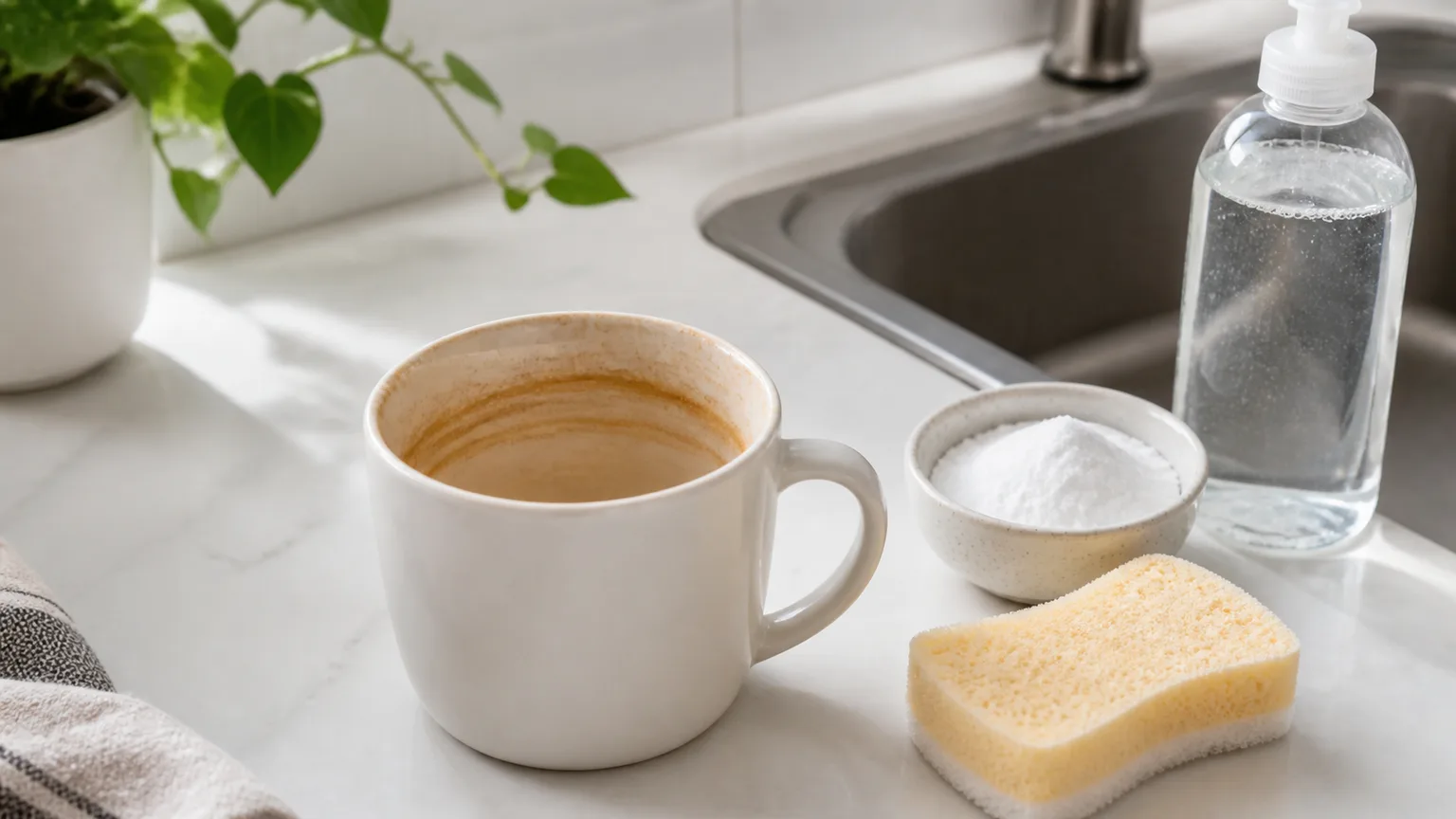
A brown coffee ring usually needs a better sequence, not a stronger cleaner. Start with warm water and dish soap for a fresh film; switch to a small baking soda paste when the color has dried; reserve a soak for stains that have had time to build up.
The mug’s material matters just as much as the stain. A glossy, plain ceramic mug can tolerate gentle polishing, while a hand-painted, metallic, vintage, unglazed, or already-crazed finish needs a much lighter touch. The steps below are arranged from least aggressive to more targeted so you can stop as soon as the ring lifts.
The Fastest Fix for a Fresh Coffee Ring
If you have just finished your coffee, do not let the last drops dry at the bottom. Add a few drops of unscented dish soap, cover the ring with warm water, wait two to five minutes, then wipe with a soft sponge and rinse. This is usually enough for a fresh mark because you are removing the coffee film before it has time to dry and accumulate.
For a ring that has already dried but is only a day or two old, add one teaspoon of baking soda after the soap wash and work it gently with a damp sponge. Use the table below as a quick decision guide rather than jumping straight to peroxide or a harsh scrubber.
| What you see | Start here | Stop or switch when |
|---|---|---|
| Fresh brown liquid film | Warm water plus dish soap | The surface still feels oily after washing |
| Dull ring on plain glazed ceramic | Baking soda and water paste | The glaze feels rough or the mark does not lighten after two gentle passes |
| White haze mixed with the brown stain | Short distilled-white-vinegar soak, then soap | The mug is handmade, unglazed, or the maker says to avoid acids |
| Old ring in a plain, durable mug | Denture tablet soak according to the package | The mug has decoration, cracks, crazing, or an unknown finish |
| Stain inside stainless steel | Soap, soft sponge, or baking soda with a light hand | You are tempted to use steel wool or a scouring powder |
Why Coffee Leaves Brown Rings Behind
Coffee and tea contain tannins, the plant compounds that contribute to their flavor and color. As the beverage evaporates, those colored compounds remain with a thin layer of coffee oils; repeated cycles turn that film into the brown ring you see. Better Homes & Gardens explains that tannins can leave dark stains on dishware, especially when the mark has had time to set.
The ring is often not a single substance. A mug filled with hard water may have mineral haze underneath the coffee pigment, while a sweetened or milky drink may leave a stickier film than black coffee. That is why one method can brighten the color but leave the mug feeling slick, or remove the residue while a pale shadow remains.
A stain on a smooth, intact glaze is usually cosmetic and removable. A stain that sits in scratches, crazing, chips, or porous unglazed clay is a different problem: cleaning can remove residue from the surface, but it cannot rebuild a damaged finish.
Match the Cleaning Method to Your Mug
Plain glazed ceramic and porcelain are the easiest surfaces to clean. They can usually handle dish soap, a soft sponge, and a small amount of baking soda, provided you do not scrub aggressively or keep repeating the same abrasive step.
Stoneware, handmade pottery, and vintage mugs deserve more caution. Read the maker’s care instructions first, especially if the piece is unglazed inside, hand-painted, printed, trimmed with gold or silver, or visibly crazed. Test a method on an inconspicuous area, and choose soaking and gentle wiping over vigorous polishing.
Stainless-steel travel mugs need a soft sponge because their interior or brushed finish can scratch. The lid, sliding seal, and silicone gasket also need to be removed and washed separately; a clean-looking cup can still hold stale coffee in a narrow seam. If the mug is insulated, follow the manufacturer’s instructions before putting it in a dishwasher or filling it with very hot water.
Start With Dish Soap and Warm Water
Dish soap is the right first step because it lifts the oily part of coffee residue while warm water softens what has dried. BHG’s mug-cleaning instructions start with a short soap soak, and Utah State University Extension recommends washing frequently used drinkware in hot, soapy water, rinsing it well, and letting it dry completely.
Use this sequence:
- Add enough warm water to cover the stain and a few drops of unscented dish soap.
- Let the mug sit for two to five minutes. Use longer soaking time only when the mark is dry and the mug is known to tolerate soaking.
- Wipe the inside with a soft sponge or bottle brush. A bottle brush is useful for tall travel mugs because it reaches the bottom without forcing your hand into the opening.
- Wash the rim, handle, outside, lid, and gasket separately rather than assuming the inside is the only dirty area.
- Rinse until there are no bubbles, slick spots, or soap scent, then dry upside down or with a clean towel.
This method is also the best reset after any stronger stain treatment. Cleaners work on a surface; they do not replace the final soap wash and clear-water rinse a drinkware item needs.
The Best All-Purpose Method: Baking Soda Paste
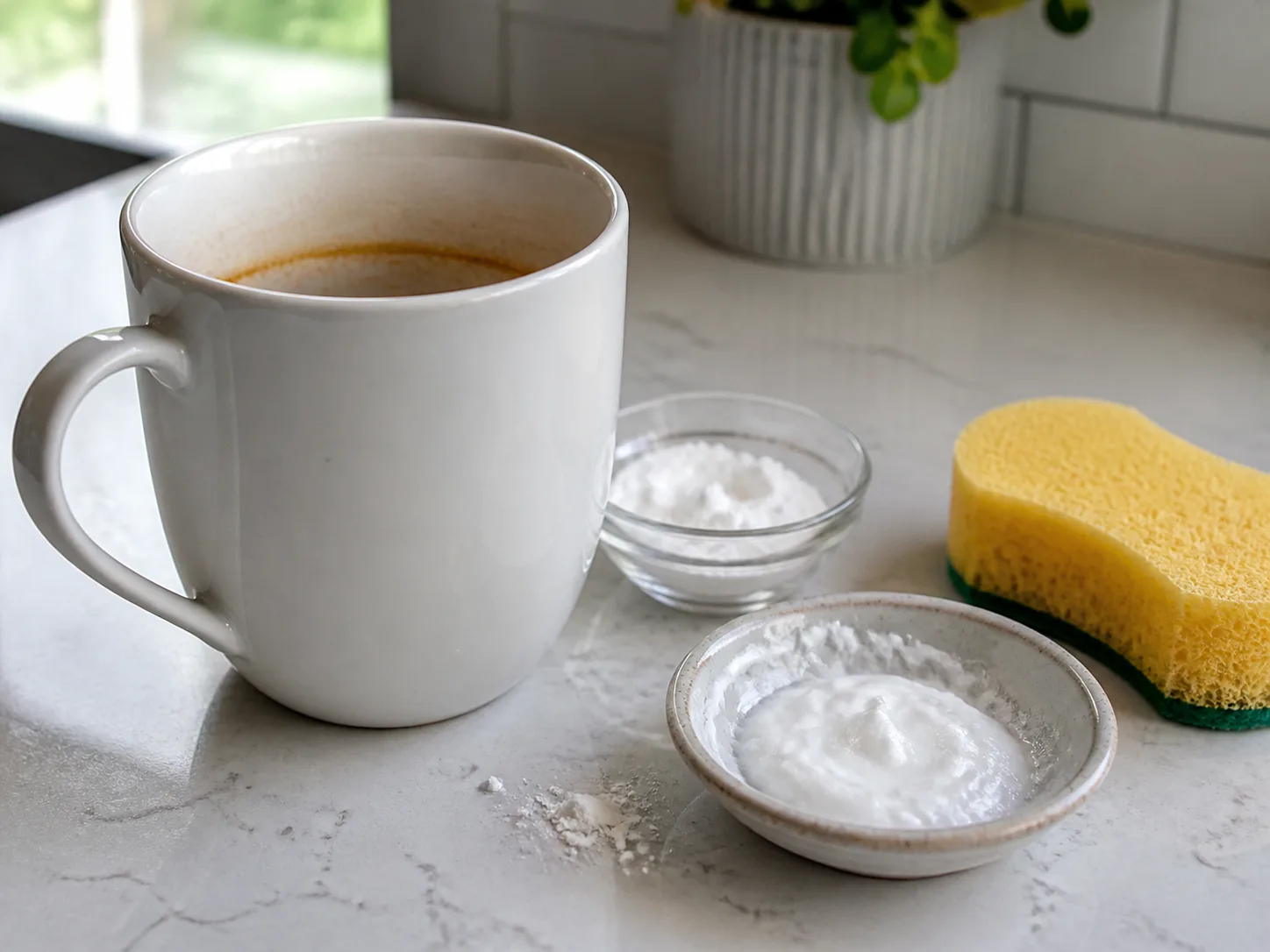
Baking soda is useful when soap removes the oily film but a brown shadow remains. Its advantage here is modest, controlled abrasion: the damp powder helps loosen residue as the sponge moves over it. It is not a disinfectant, so do not use it as a substitute for washing, sanitizing, or a product whose label specifically claims disinfection; Good Housekeeping’s cleaning guidance makes the same distinction.
The most common mistake is using too much powder and pressing too hard. You are trying to polish away a surface film, not sand the mug. A teaspoon is enough for the bottom of most mugs; add water drop by drop until it looks like a soft paste rather than a thin slurry.
How to Use Baking Soda Without Scratching the Glaze
- Rinse the mug so loose coffee residue is gone.
- Sprinkle about one teaspoon of baking soda over the ring.
- Add a few drops of water and mix it in the mug with a damp, soft sponge.
- Spread the paste over the ring and let it sit for about five minutes if the mark is dry.
- Rub in small circles with light pressure for 20 to 30 seconds, then rinse and inspect.
- Wash once with dish soap, rinse again, and dry the mug so you can see whether the shadow is actually gone.
If the ring is fading, repeat once after the first rinse. Two gentle passes are a better limit than an hour of scrubbing. If the sponge catches on the surface, the glaze may be rough or damaged; stop before you turn one stain into a larger worn patch.
When Baking Soda Is Not Enough
Do not immediately pile vinegar, peroxide, and dish soap into the mug. First decide what remains. A chalky white veil suggests mineral buildup, a slick brown film suggests oily residue, and a dark mark trapped in a scratch suggests surface damage. Each calls for a different next step.
For mineral film, use the short vinegar soak below. For a durable, plain mug with a truly set-in organic stain, use a denture tablet. If the mark stays exactly the same after soap, baking soda, and a careful soak, inspect the glaze rather than escalating to harsher abrasives.
Use a Vinegar Soak for Mineral Film
Distilled white vinegar is most useful when coffee staining is mixed with hard-water deposits. The acid can loosen mineral film so the coffee residue on top of it becomes easier to wash away, but it is not a reason to skip soap or to soak every mug overnight.
Fill the mug halfway with distilled white vinegar, add very hot tap water to cover the mark, and let it sit for at least 10 minutes. Then wash with dish soap and a soft sponge, rinse thoroughly, and dry. This sequence follows BHG’s vinegar method for coffee and tea stains while keeping the soak short enough to make the material limitations clear.
Use warm or hot tap water rather than boiling water in a cold mug; sudden temperature changes can stress glass and some ceramics. Do not use vinegar on a mug unless its care instructions allow it, and be especially cautious with unglazed pottery, delicate decoration, or a finish that already shows crazing.
Never mix vinegar with chlorine bleach. Poison Control warns that the combination can release chlorine gas that irritates the eyes and airways. You also do not need the familiar baking-soda fizz: apply vinegar as a soak, rinse it away, and use baking soda separately if the surface still needs gentle polishing.
Use a Denture Tablet for Set-In Stains
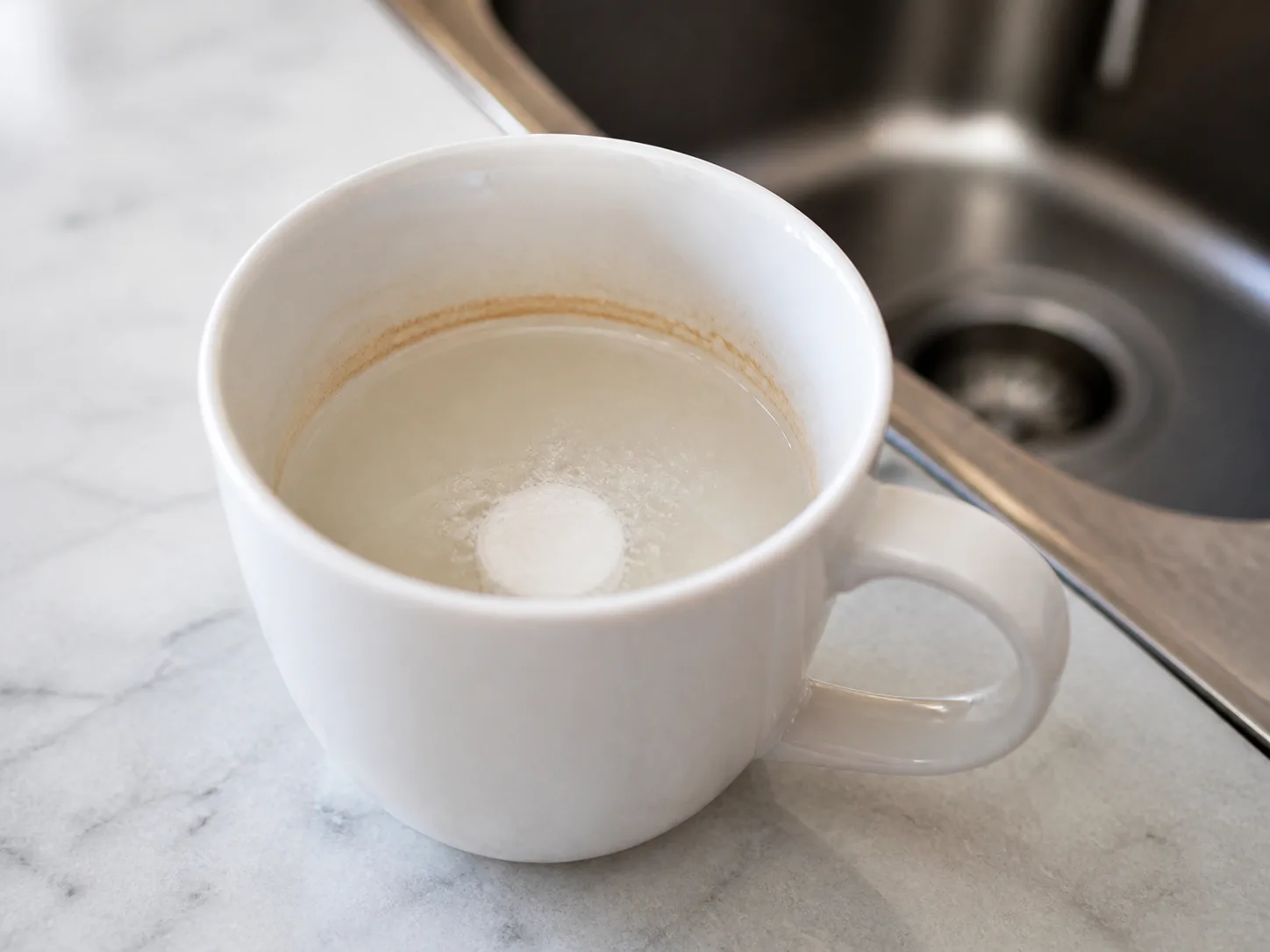
Denture-cleaning tablets are a convenient option for a plain, durable mug with a stubborn ring because their effervescent action works during a soak instead of relying on forceful scrubbing. Tom’s Guide recommends filling a stained mug with warm water, adding a tablet, waiting for it to work, and rinsing with clean water; BHG also recommends following the tablet package instructions and washing the mug afterward.
Use one tablet for a standard mug unless the label says otherwise. Add warm water until the stain is covered, drop in the tablet, and let it fizz for the time listed on the package. A short soak may be enough for a recent ring; an older mark may need longer, but there is no benefit to ignoring a tablet’s directions and leaving the solution in a decorated or fragile mug overnight.
When the soak is finished, pour it out, wash the mug with dish soap, and rinse it several times with clean water. Do not pour tablet solution into a drink, and do not treat the mug as ready just because the brown mark disappeared. The rinse and final wash remove loosened residue and the tablet’s cleaning agents.
For a travel mug, take the lid apart first if the manufacturer allows it. Clean the cup, lid, valve, and gasket according to their individual care instructions; a tablet soak should not be used as a shortcut for cleaning a hidden seal.
Hydrogen Peroxide Is an Optional Last Resort
Hydrogen peroxide is not my first choice for a coffee mug. Soap, baking soda, vinegar, and a denture tablet are easier to match to the stain and generally give you clearer instructions for a food-contact item. If you still choose peroxide for a plain, light-colored mug, use only ordinary household 3% solution and check the mug’s care instructions first.
Poison Control identifies household peroxide as a reactive chemical typically sold at 3% and warns that stronger concentrations can cause burns. Never substitute “food-grade” peroxide, hair developer, or a concentrated product. Keep the original bottle away from children, and do not transfer it into a cup or an unlabelled container.
Cover the stain with a small amount of 3% peroxide for a short, supervised soak, then discard the liquid, wash the mug with dish soap, and rinse repeatedly. Do not use it on a hand-painted, metallic, antique, porous, or unknown finish without the maker’s approval; a bleaching effect can change decoration even if it lifts the brown color.
Do not combine peroxide with vinegar, chlorine bleach, or another cleaner. A chemical supplier’s explanation of the peroxide-and-vinegar reaction notes that the mixture can form peracetic acid, a stronger oxidizer than either household ingredient alone (Alliance Chemical). A mug stain is not worth creating an uncontrolled chemical mixture in a cup, sink, or spray bottle.
How to Clean Stainless-Steel and Travel Mugs
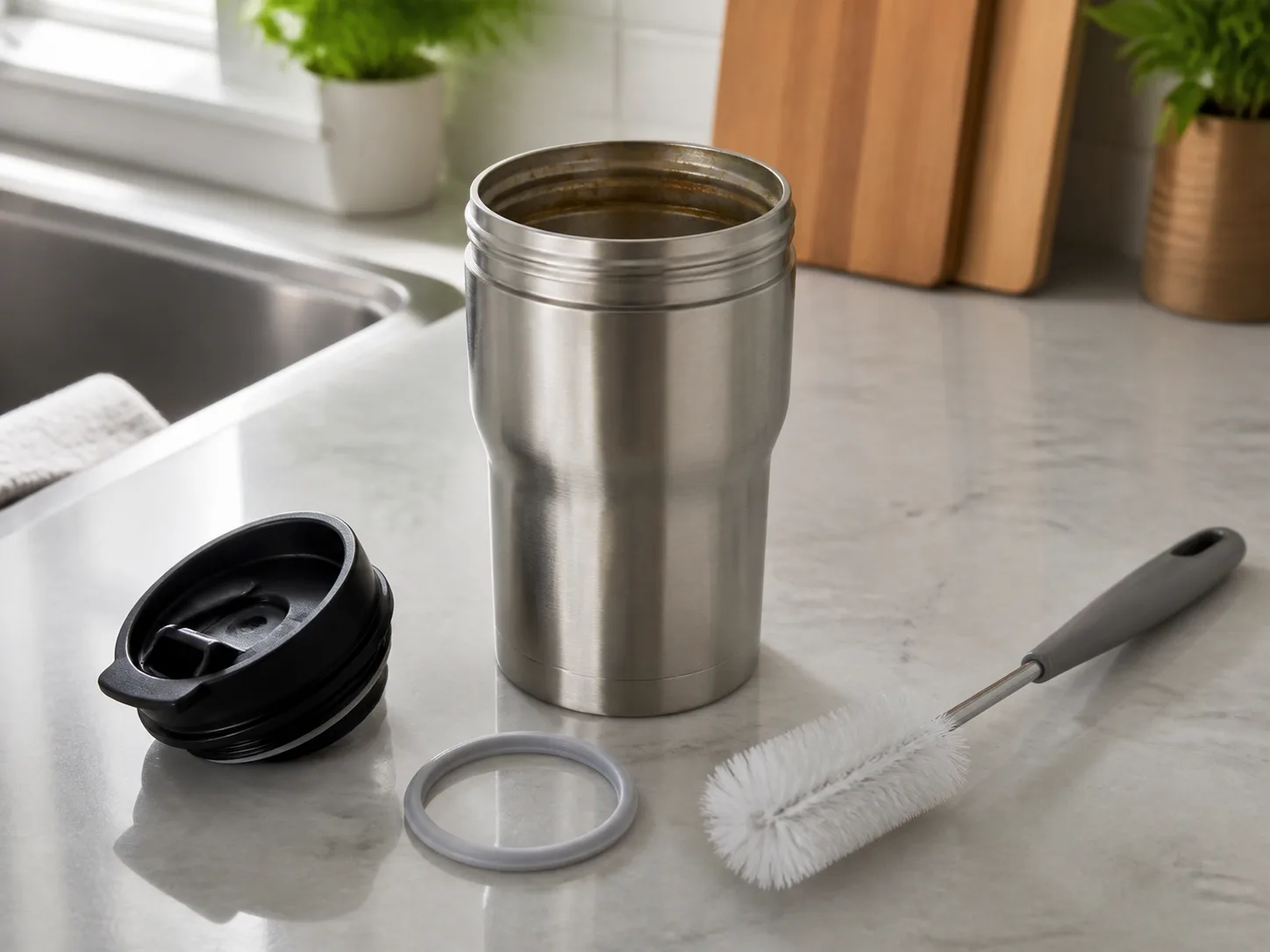
Stainless steel can hold a coffee film even when the inside looks clean, especially around the bottom seam, threads, lid, and gasket. Start with warm water and dish soap, use a soft sponge or bottle brush, and rinse the lid pieces separately. If a brown shadow remains, use a thin baking soda paste with almost no pressure, then rinse and dry.
Avoid steel wool, a stiff metal brush, and aggressive scouring powder. BHG specifically advises a soft sponge for stainless-steel travel mugs because abrasive scrubbers can scratch the surface. Scratches are not just cosmetic: they make the surface harder to wipe smooth the next time residue builds up.
Do not assume every travel mug is dishwasher-safe or designed for boiling water. The insulation, vacuum seal, paint, and lid mechanism can have different limits from the stainless-steel cup itself. When in doubt, hand-wash the body, separate the lid components, and let everything dry fully before reassembly.
What Not to Use on a Coffee Mug
More force can make a mug harder to clean in the future. Skip steel wool, metal utensils, coarse scouring powders, and anything that leaves visible scratches. Also avoid a melamine sponge on glossy glaze, printed artwork, metallic trim, or any finish the manufacturer describes as delicate; its polishing action can remove more than the stain.
Do not use chlorine bleach as a casual coffee-ring shortcut. Bleach has a place in specific, label-directed sanitizing procedures, but a cosmetic brown ring does not justify guessing at concentration or contact time. If disinfection is actually needed because someone in the household is ill, follow the product label and the mug manufacturer’s instructions rather than improvising inside drinkware.
Do not mix cleaners to create more fizz. Baking soda and vinegar neutralize one another quickly, while vinegar and bleach can release irritating gas. Rinse between different methods; the safe escalation path is sequential, not a cocktail of household products.
How to Rinse, Inspect, and Dry the Mug
Rinsing is part of the cleaning method, not a final afterthought. Hold the mug under clean running water, rotate it so the rim and handle are flushed, and rinse the lid and gasket separately. If you used a tablet, peroxide, vinegar, or a large amount of baking soda, wash once more with dish soap before the final clear-water rinse.
Use three checks before the next drink:
- Sight: no brown paste, powder, foam, or cloudy film remains.
- Touch: the inside is smooth rather than gritty, sticky, or slippery.
- Smell: there is no vinegar, detergent, peroxide, or tablet odor.
Dry the mug completely, preferably upside down on a clean rack or towel. USU Extension’s guidance for frequently used drinkware emphasizes rinsing well and allowing the item to dry fully; that simple pause also prevents a damp lid or gasket from trapping stale smells.
When the Brown Ring Will Not Come Off
If the ring survives a soap wash, one baking soda pass, and a material-appropriate soak, stop treating it as a normal stain. Shine a light across the inside of the mug and run a clean fingertip over the mark. If it feels rough, catches a cloth, or follows a web of hairline cracks, the finish may be etched, crazed, or porous.
In that case, harsher scrubbing is unlikely to restore the mug. It may widen scratches or remove decoration while leaving the dark color in the damaged surface. Keep the piece for non-food use if the glaze is chipped or the clay is exposed, or replace it if you cannot clean and inspect it with confidence.
If the surface is smooth but the color remains, repeat the least aggressive method after the mug has dried rather than stacking chemicals. A fresh photograph before and after each attempt can help you see gradual improvement that is hard to notice at the sink.
How to Prevent Coffee Stains From Coming Back
The simplest prevention habit is to rinse the mug as soon as you finish the drink. BHG recommends a quick rinse even when you cannot wash the mug immediately, because removing the last drops prevents them from drying into a concentrated film.
For a mug used several times a day, make the full wash part of the last coffee break rather than leaving a wet cup overnight. Wash with dish soap, reach the bottom with a bottle brush when needed, and leave the mug and lid pieces open to dry. If you use milk or sugar, rinse promptly; sticky residue gives the brown pigment more material to cling to.
Once a week or whenever the inside looks dull, use a quick baking soda refresh on a plain, intact mug. Travel mugs benefit from a separate lid-and-gasket check because hidden coffee residue there can smell long before the stainless-steel body shows a stain.
A Simple 10-Minute Mug Reset Routine
For a small collection of stained mugs, work in a batch but keep the material exceptions separate. Put the plain ceramic mugs in one group, stainless-steel travel mugs and detachable lids in another, and delicate or unknown pieces in a third group for hand-washing only.
- Rinse every mug and discard old coffee residue.
- Start all plain mugs with warm water and dish soap.
- Give the worst plain-glazed ring a teaspoon of baking soda and a five-minute paste.
- Use a short vinegar soak only for a mug with likely mineral haze and a compatible finish.
- Use a denture tablet only when a durable mug still has a set-in ring after washing.
- Wash each item with dish soap after its treatment.
- Rinse until the surface is clear, smooth, and odor-free.
- Dry the bodies, lids, and gaskets completely before putting them away.
This order saves time because it lets the mildest method do the work first. It also gives you a clear stopping point: once the stain has become damage in the finish, no household cleaner can turn it back into new glaze.
Conclusion
To remove coffee stains from mugs fast, start with dish soap and warm water, then use a small baking soda paste for a dried ring. Choose a short vinegar soak for mineral film, a label-directed denture-tablet soak for a stubborn stain on a durable plain mug, and treat 3% hydrogen peroxide as an optional last resort rather than a default.
The safest routine is simple: match the method to the material, use light pressure, never mix reactive cleaners, wash after any soak, rinse until there is no residue or smell, and dry the mug fully. A quick rinse after each coffee keeps the next cleaning session shorter.