Should You Water Your Lawn in Fall?
Should you water your lawn in fall? Learn when to keep watering, how much rain counts, when to taper off, and how to avoid runoff, fungus, and wasted money.
The short answer: water by need, not by season
Watering your lawn in fall is not automatically a waste of money, but running the same summer program is. Established grass may still need supplemental water while it is actively growing or recovering from summer stress. Once rainfall has kept the root zone moist, the turf is slowing down, or the soil has frozen, another sprinkler cycle is paying for water your lawn cannot use well.
The useful question is not “Is it fall?” It is “Is the root zone drying faster than rain is replacing moisture, and is the grass still active?” Check the soil, measure what your sprinklers deliver, and adjust the schedule for grass type, weather, and drainage. This approach can save water without sending a cool-season lawn into winter thirsty or keeping a warm-season lawn wet as it goes dormant.
Why fall watering can be worth the money
Fall is a transition rather than an off switch. In many northern regions, cool-season grasses such as Kentucky bluegrass, tall fescue, fine fescue, and perennial ryegrass do much of their recovery and root growth in the cooler part of the year. In warmer regions, Bermudagrass, zoysiagrass, St. Augustinegrass, and centipedegrass are generally slowing down and preparing for dormancy instead of building a second flush of leafy growth.
Water supports whichever phase your turf is actually in. A lawn that suffered heat, drought, foot traffic, or compacted soil may need moisture to resume growth, develop roots, and use fall fertilizer or seed. A lawn sitting in cool, saturated soil needs air around its roots more than it needs another inch from a sprinkler. University of Minnesota Extension irrigation guidance makes the same economic point in crop settings: delaying irrigation when the soil profile is already wet reduces water costs, nutrient leaching, and root stress.
There is also a practical winter benefit to avoiding extremes. Going into a hard freeze with a dry root zone can leave actively growing turf stressed, while repeatedly saturating a poorly drained lawn can increase disease pressure and leave the surface soft. The goal is not the greenest possible lawn every day in October; it is a sufficiently moist, well-aerated root zone until the turf is no longer using water.
Start with grass type and local climate
The calendar cannot tell you what a mixed lawn is doing underground. Use the grass type as a starting point, then let nighttime temperatures, soil moisture, rainfall, and visible growth move the plan. The University of Idaho Extension notes that lawn water use varies with time of year and weather; a single statewide or nationwide schedule is therefore a poor substitute for observation.
Cool-season lawns recover in fall
Cool-season turf usually has its strongest fall window after the worst summer heat has passed and before growth stops. If the lawn is green, actively producing new blades, and the soil is drying below the surface, deep and infrequent irrigation can support recovery better than daily sprinkles. This is especially relevant after a dry summer when the top may look damp from light rain but the root zone remains dry.
For established cool-season grass, treat about 1 inch of total water per week as a starting benchmark, not a required sprinkler setting. Total means rain plus irrigation. A cool, cloudy week with 0.8 inch of soaking rain may need no supplemental watering; a windy week with barely measurable rain may need a measured irrigation cycle. Reduce the amount as temperatures and growth decline, and stop when the ground is frozen or your local turf has entered dormancy.
Warm-season lawns are tapering toward dormancy
Warm-season grass often needs a more cautious fall taper. It may stay green through early autumn in a warm climate, but its growth and water use decline as nights cool. Texas A&M AgriLife Extension advises watering warm-season turf based on visible wilt as growth is suspended, then stopping when the grass is dormant. That is a better rule than keeping a summer timer active through a cool, damp October.
Do not assume brown color means the lawn needs water. Warm-season grass can be entering normal dormancy, while a genuinely drought-stressed lawn may show folded or wilted blades, dry soil below the surface, and improvement after a thorough soaking. If you are unsure, water one test area and compare it with an unwatered area over several days. If neither changes, investigate compaction, insects, disease, shade, or dead turf rather than increasing irrigation.
How much water does a lawn need in fall?
For established turf that is still growing, roughly 1 inch of total water per week is a useful starting point in many cool-season lawn situations. Some lawns need less in cool, rainy weather; some need more during an unusual warm, dry, windy spell. Soil texture, slope, shade, mowing height, thatch, root depth, and local water restrictions all change how much of that inch is useful.
Think in terms of a weekly water budget. Record rainfall in a simple rain gauge or straight-sided container, then supply only the shortfall after checking the soil. If your yard receives 0.4 inch of rain, the starting irrigation target is not another inch; it is about 0.6 inch, and possibly less if the rain penetrated deeply and the forecast is wet.
Frequency matters because a five-minute sprinkle and a slow soak do different jobs. For established grass, water long enough to moisten the active root zone, then allow the surface to dry somewhat before repeating. If water begins running onto a sidewalk or collecting in low spots before the soil is wet, divide the session into shorter cycles with a pause between them. That is cycle-and-soak, and it often improves the amount that stays in the lawn without increasing the weekly total.
Newly seeded grass is the major exception. Seed needs a consistently moist surface to germinate, while established turf benefits from deeper, less frequent watering. Treating both areas with one timer can waste water on the old lawn and still leave seed unevenly moist.
Measure your sprinkler instead of guessing
Sprinkler run time is not a measurement. Two zones set for 30 minutes can apply very different amounts because of nozzle type, pressure, overlap, slope, wind, and clogged heads. A quick audit turns a vague timer setting into a number you can use.
Run a catch-can test
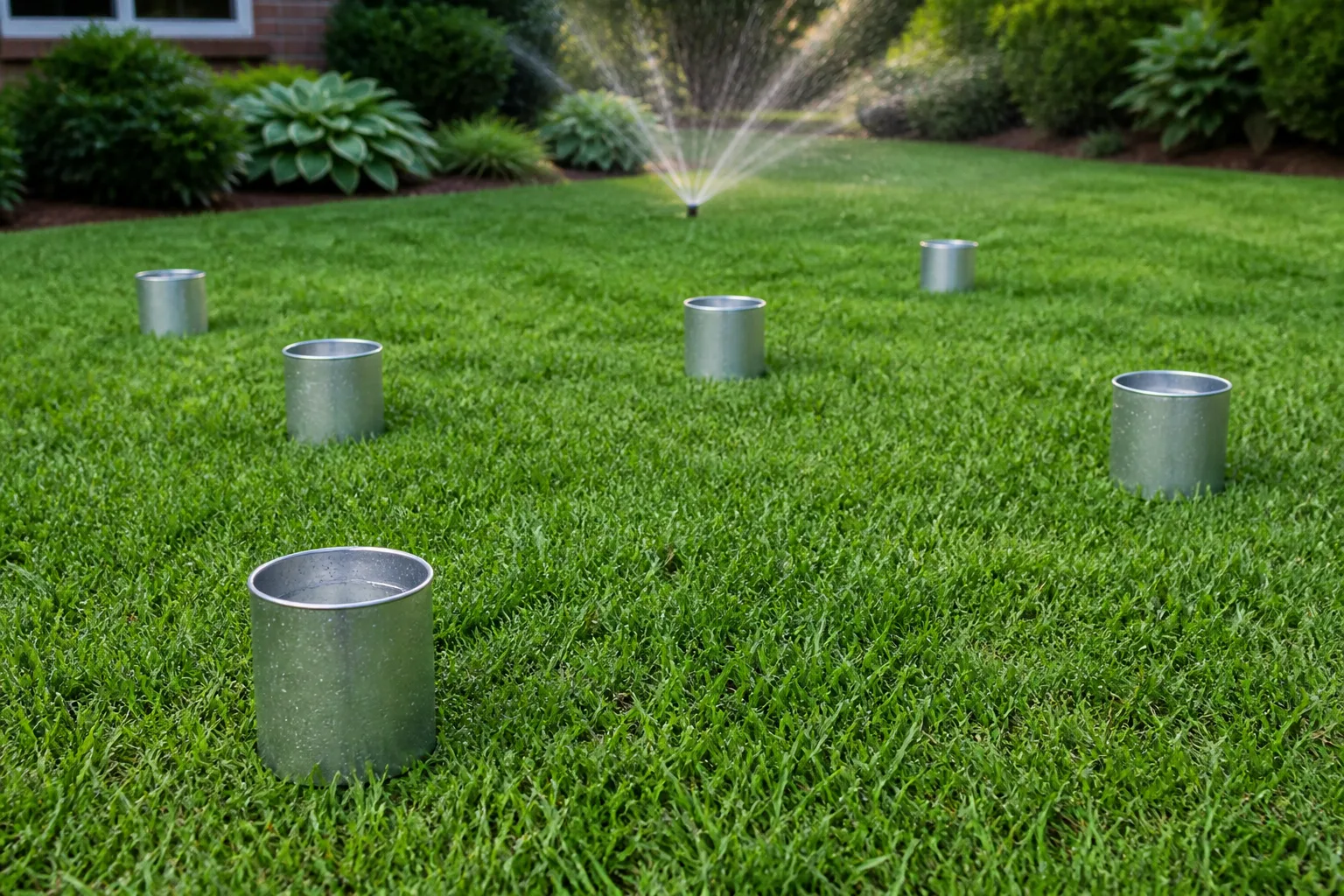
Place several straight-sided cans, tuna tins, or rain gauges throughout one irrigation zone, including near the sprinkler, at the far edge, beside a walkway, and in a spot that always looks dry. Run the zone for 15 minutes, measure the depth in each container, and calculate the average. Multiply the 15-minute depth by four to estimate the hourly application rate, then adjust the runtime until the zone delivers the amount you intend. This catch-can approach is also recommended in Exmark’s lawn-watering guidance because it measures output rather than assuming every sprinkler zone performs alike.
The spread between containers matters as much as the average. If one can is nearly empty while another is overflowing, the lawn is not receiving a uniform application. Clean or replace clogged nozzles, correct tilted heads, and make sure spray patterns do not water pavement. The catch-can method is more useful than simply adding minutes because it exposes coverage problems that a longer run would magnify.
Check soil depth and infiltration
After watering or a soaking rain, push a screwdriver or narrow soil probe into the turf. The exact depth depends on your soil and grass, but the comparison is valuable: a probe that stops at a hard layer suggests compaction or dry soil, while a spongy surface, puddles, or water that sits for hours suggests poor drainage or excessive application. Check a healthy-looking area and a problem area rather than trusting one reading.
You can also lift a small edge of sod or dig a narrow plug with a hand trowel. Look for moisture through the root zone, not just a wet surface. A dry top with moist soil below may not need water; a damp top over dusty, hard soil may need a slower, deeper application or an infiltration fix.
This is where soil type changes the schedule. Sandy soil can drain quickly and may need shorter intervals, while compacted clay may accept water slowly and need cycle-and-soak. Neither condition justifies watering by the clock. The correct response is to match the delivery rate to the soil’s ability to absorb and hold water.
Build a weather-based fall watering schedule
Set a weekly check-in rather than a permanent fall schedule. On the same day each week, look at the forecast, record rainfall, walk the lawn, and test soil in a representative spot. Then choose one of three actions: skip irrigation, run a measured deep cycle, or water only a stressed zone.
Let rain cancel an irrigation cycle
Rain is not automatically equal to useful irrigation. A slow, soaking storm can replenish the root zone, while a short downpour on compacted soil may run off and leave the roots dry. Check the soil after the rain and watch for puddles, rills, or water flowing toward the street. If the soil is moist below the surface, turn off the next automatic cycle.
Add a rain-delay feature to a controller only if you know how it responds to local rain. A controller that guesses from a distant weather station can still water a shaded, wet lawn or skip a sunny, sandy section. A simple rain gauge near the lawn often gives a better first signal than an app’s generalized estimate.
Adjust for dry spells, soil, shade, and slope
During a warm, windy fall spell, inspect more often. Sunny slopes, south-facing edges, newly renovated areas, and turf beneath trees can dry sooner than a flat lawn in open shade. Water the dry section if the rest of the lawn is still moist instead of turning on every zone.
Shaded turf is especially easy to overwater because it loses less to evaporation and may dry slowly after a cool night. Slopes need low-rate applications or several short passes so water can infiltrate instead of moving downhill. Compacted entrances and play areas may need aeration or improved soil structure; more water will not repair a root zone that cannot accept air and moisture.
Choose the best time of day to water
Early morning is usually the safest default for fall irrigation. The air is cooler, wind is often lower, and water has time to move into the soil before the day warms. Morning watering also gives grass blades time to dry, which is useful when cool nights and extended leaf wetness would otherwise favor disease. Hunker’s fall lawn guidance likewise recommends shifting timing and amount around rainfall, local temperatures, and the first frost rather than using one national date.
Late afternoon can work when morning watering is impossible and the lawn will dry before night. Avoid making evening watering the routine in cool, damp weather. The issue is not that every nighttime drop burns or freezes grass; it is that prolonged surface wetness, low evaporation, and already-wet soil increase the chance that you are adding water when the turf cannot use it.
Watering in the middle of a bright, windy day is not automatically harmful, but it can be inefficient. If the only available time is midday, fix the amount with catch cans and watch for mist blowing away or water landing on pavement. Accuracy and soil absorption matter more than chasing a perfect clock time.
Know when to reduce or stop watering
Reduce frequency as fall temperatures cool, rainfall becomes more reliable, and grass growth slows. Do not use a single temperature number as a universal shutoff because climate, grass type, and soil exposure differ. Instead, look for the combination of declining growth, moist soil, repeated cool nights, and approaching frost.
Stop regular irrigation when the ground is frozen, water is sitting on the surface, or warm-season turf has fully entered dormancy. Frozen soil cannot accept water normally, and a dormant lawn is not asking for a summer-style supply. In cold regions, schedule sprinkler winterization before a hard freeze so water trapped in pipes does not damage the system.
The first frost is a useful planning signal, not a magic date. A light frost followed by a warm, actively growing period does not always mean every lawn is finished. Conversely, a damp lawn heading into several freezing nights does not need a last-minute soaking. If the root zone is already moist, the most responsible pre-winter action may be leaving the system off.
New seed and sod need a different rule
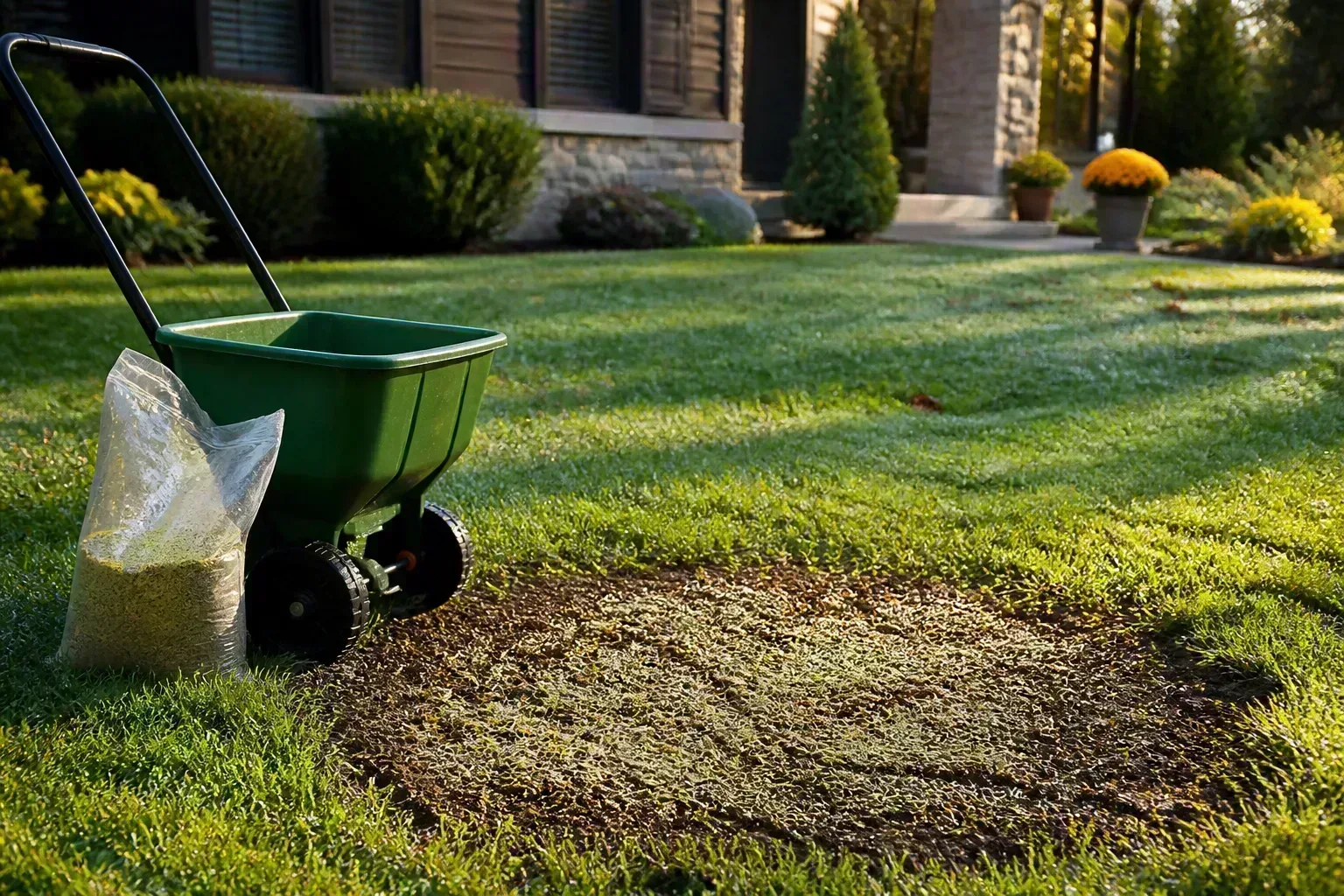
Fall is often a strong time to establish cool-season seed because soil can remain warm while air temperatures moderate. But seed and young seedlings have shallow roots. Keep the seedbed evenly moist with light applications that do not wash seed downhill, create puddles, or seal the soil surface.
Once seedlings emerge and begin forming roots, gradually move toward less frequent, deeper watering. The exact transition depends on weather and seedling development, but a useful visual test is whether the young grass can stay upright and the surface can dry slightly between sessions. Newly laid sod also needs close attention until roots knit into the soil; do not apply the established-lawn rule on day one.
Separate new seed or sod from established turf with independent zones or a hose-end approach. Epic Gardening’s fall watering guidance likewise distinguishes seed, which needs frequent surface moisture during germination, from established turf, which benefits from longer intervals and deeper wetting. If rain supplies the moisture, skip the matching irrigation cycle even for new grass, but inspect for erosion and exposed seed after heavy storms.
Avoid overwatering, runoff, and fall disease
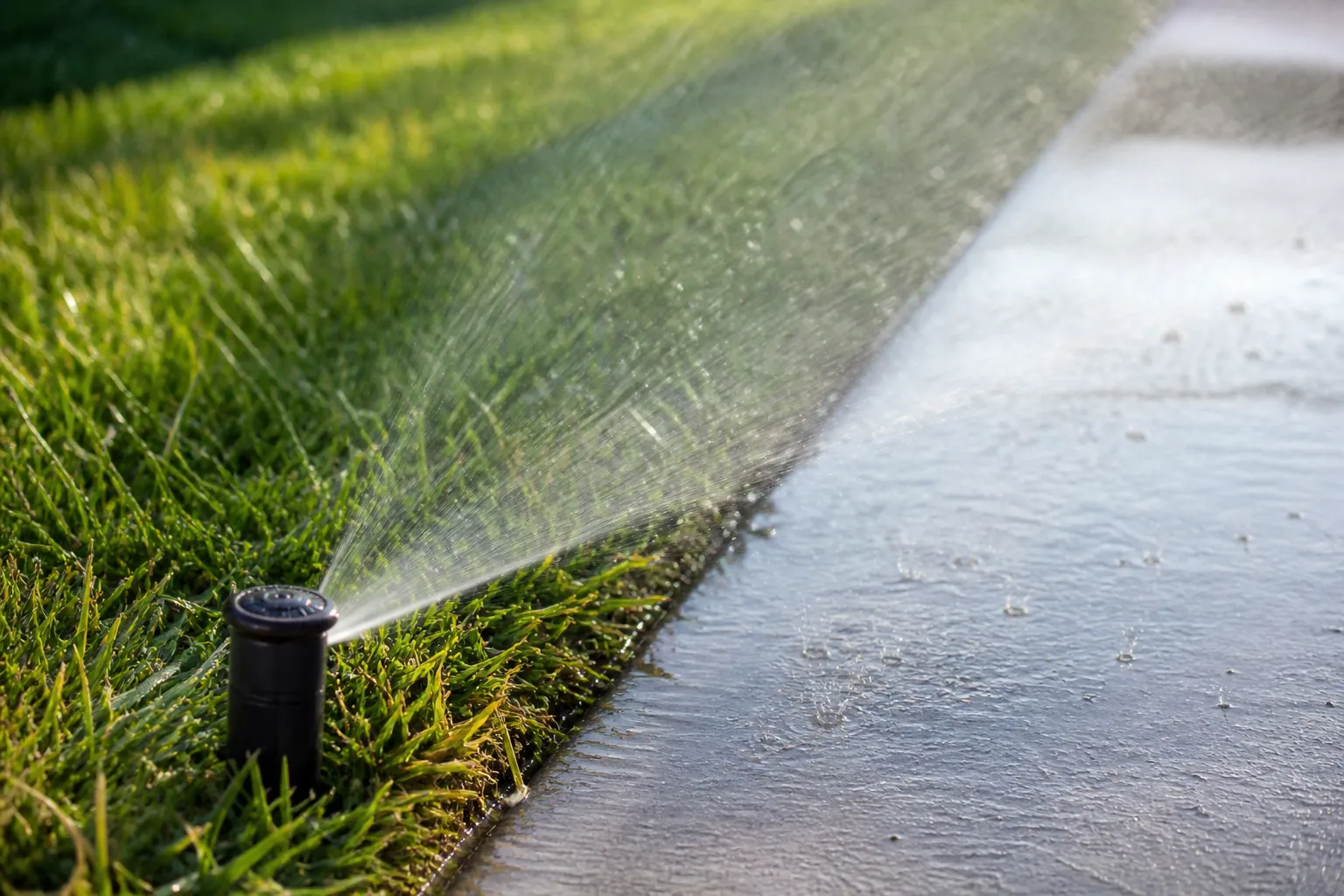
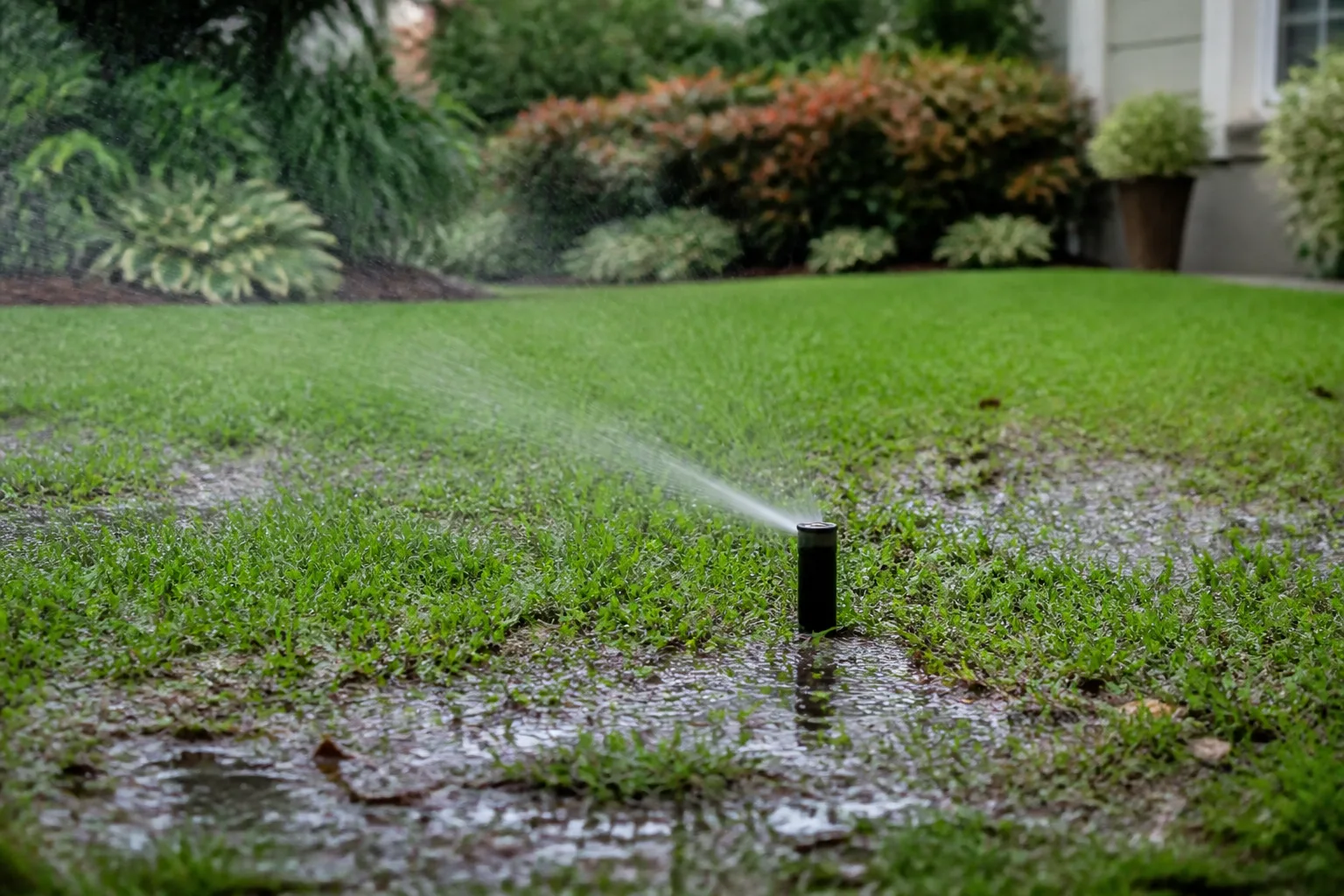
The clearest sign of wasted watering is runoff: water flows across the surface, into a drain, or onto the sidewalk before the soil can absorb it. Spongy turf, footprints that remain pressed into the grass, standing water, yellowing in wet areas, and mushrooms can also point to excessive moisture or poor drainage. None is solved by adding more water.
Pause irrigation after heavy rain and inspect low spots. If a zone always puddles, shorten each cycle and add a pause, clean the heads, and investigate compaction or grading. If water still sits, the problem is drainage rather than a missing timer setting. Keep mower and foot traffic off saturated soil because traffic can compress it further.
Excess moisture can also make disease management harder. Texas A&M AgriLife Extension connects fall disease pressure with conditions such as wet turf, poor drainage, shade, low mowing, and inappropriate late-season nitrogen. Good irrigation is therefore part of a broader stress-reduction plan, not a guarantee that every brown patch will disappear.
Fix a patchy lawn before buying more water
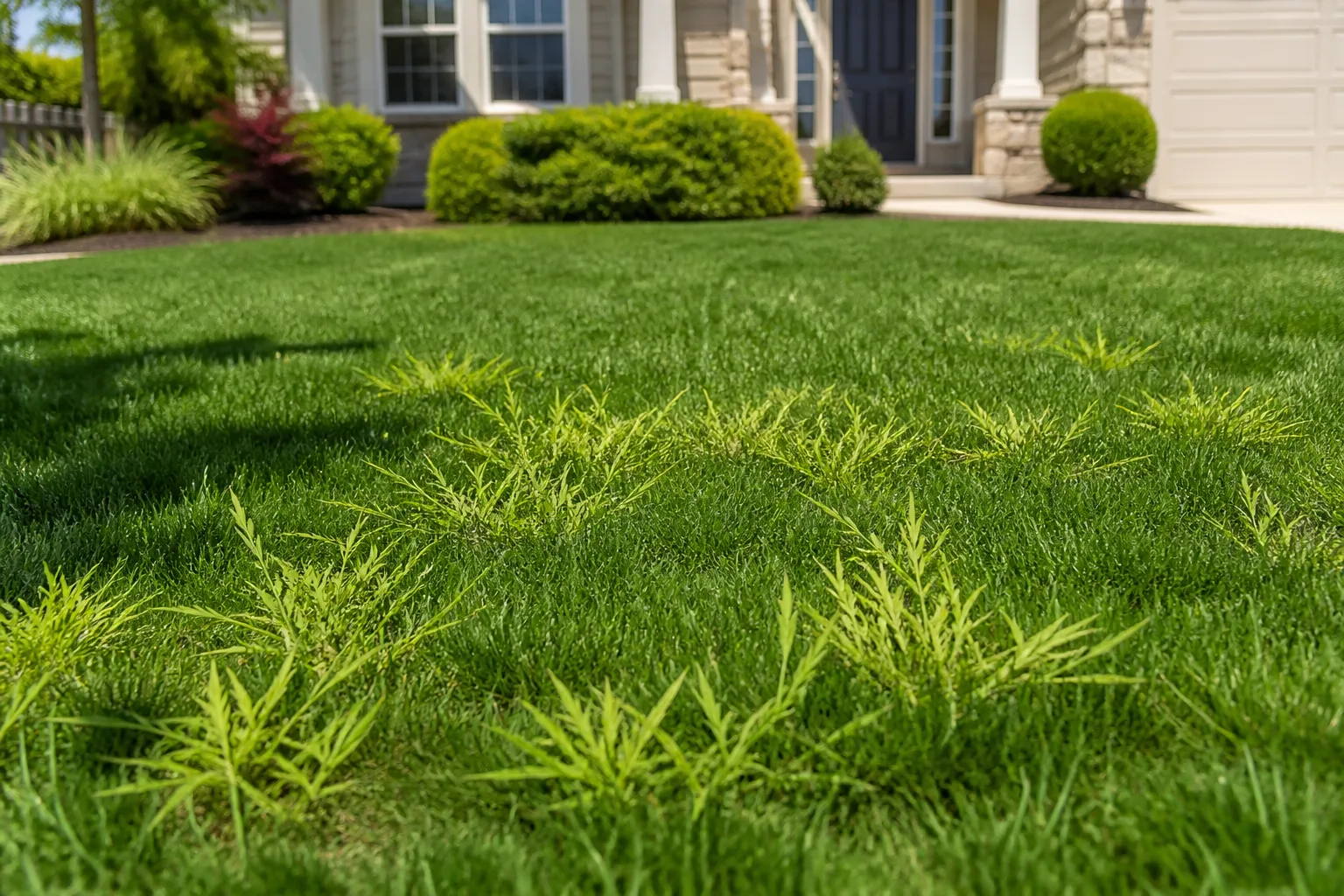
Brown or yellow turf is evidence, not a diagnosis. Water one small patch thoroughly and observe it for several days. If it greens up, drought stress is plausible; if it stays unchanged, check whether the blades are alive at the crown, whether the soil is compacted, and whether the patch follows a sprinkler boundary, dog route, tree root, or drainage line.
A lawn that stays brown after adequate moisture may have dormant warm-season grass, dead turf, insects, fungal disease, scalping, chemical injury, or a root-zone problem. Drought recovery guidance from Virginia Cooperative Extension, referenced in the lawn-care research reviewed for this guide, recommends looking for green tissue at the base of browned blades and new leaves from growing points before assuming a lawn is dead or ready for renovation.
If the soil is dry only in a few areas, repair irrigation coverage first. If the whole lawn is thin after summer, address mowing height, compaction, seed timing, and leaf cover. Giving a failed patch more water is one of the easiest ways to turn an irrigation problem into a disease or runoff problem.
Finish fall with mowing, leaves, and soil care
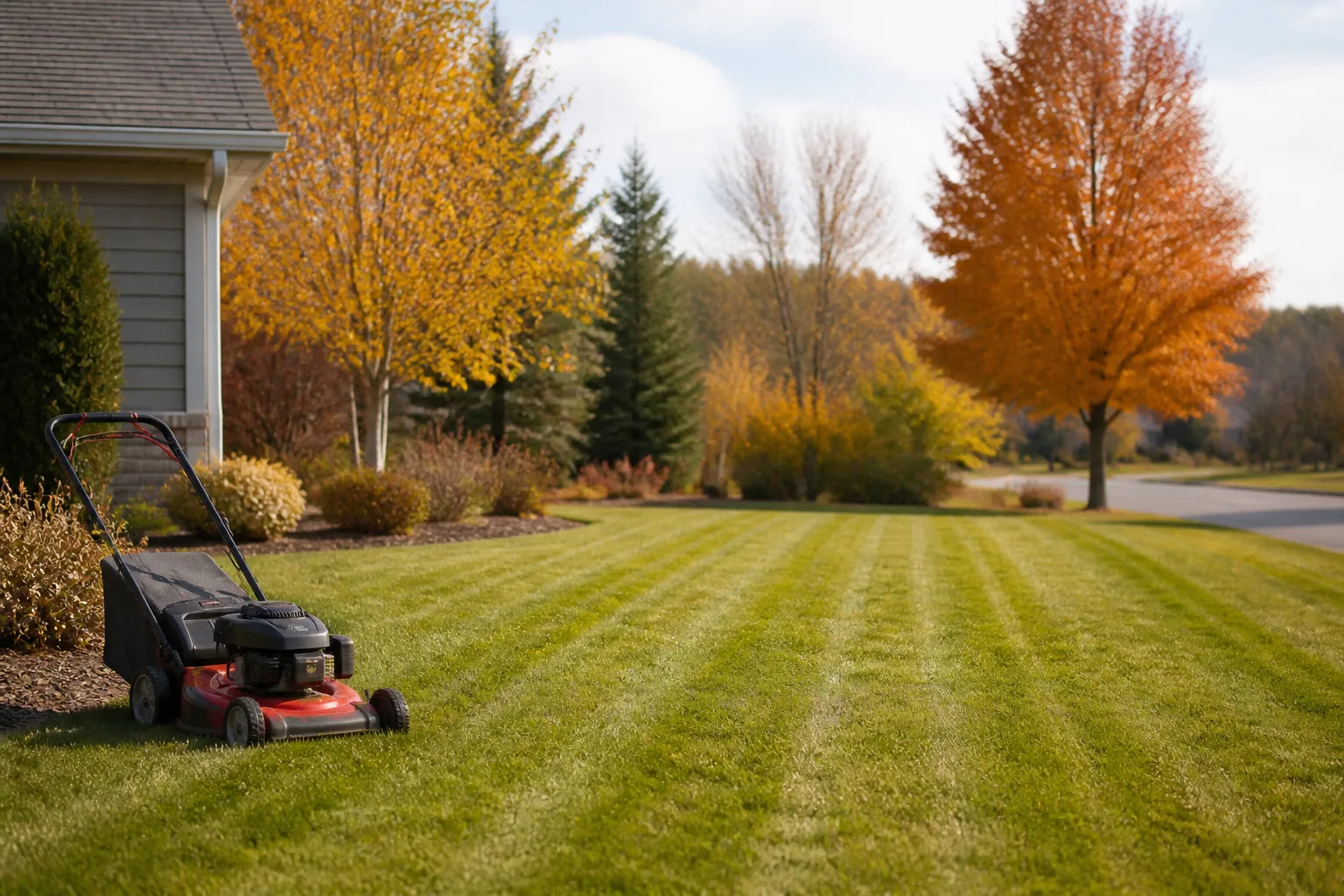
Watering works better when the rest of the fall routine protects the root zone. Keep mowing high enough for the grass type and follow the one-third rule: remove no more than about one-third of the blade height at one cut. As growth slows, mow less often, but do not leave an excessively tall mat going into winter.
Clear thick, wet leaf cover before it smothers the turf. A thin layer of chopped leaves can often be mulched into the lawn if the grass remains visible, but dense mats hold moisture against the canopy and block light. Rake or mulch leaves according to how much the surface can handle, and move heavy piles off shaded or poorly drained areas.
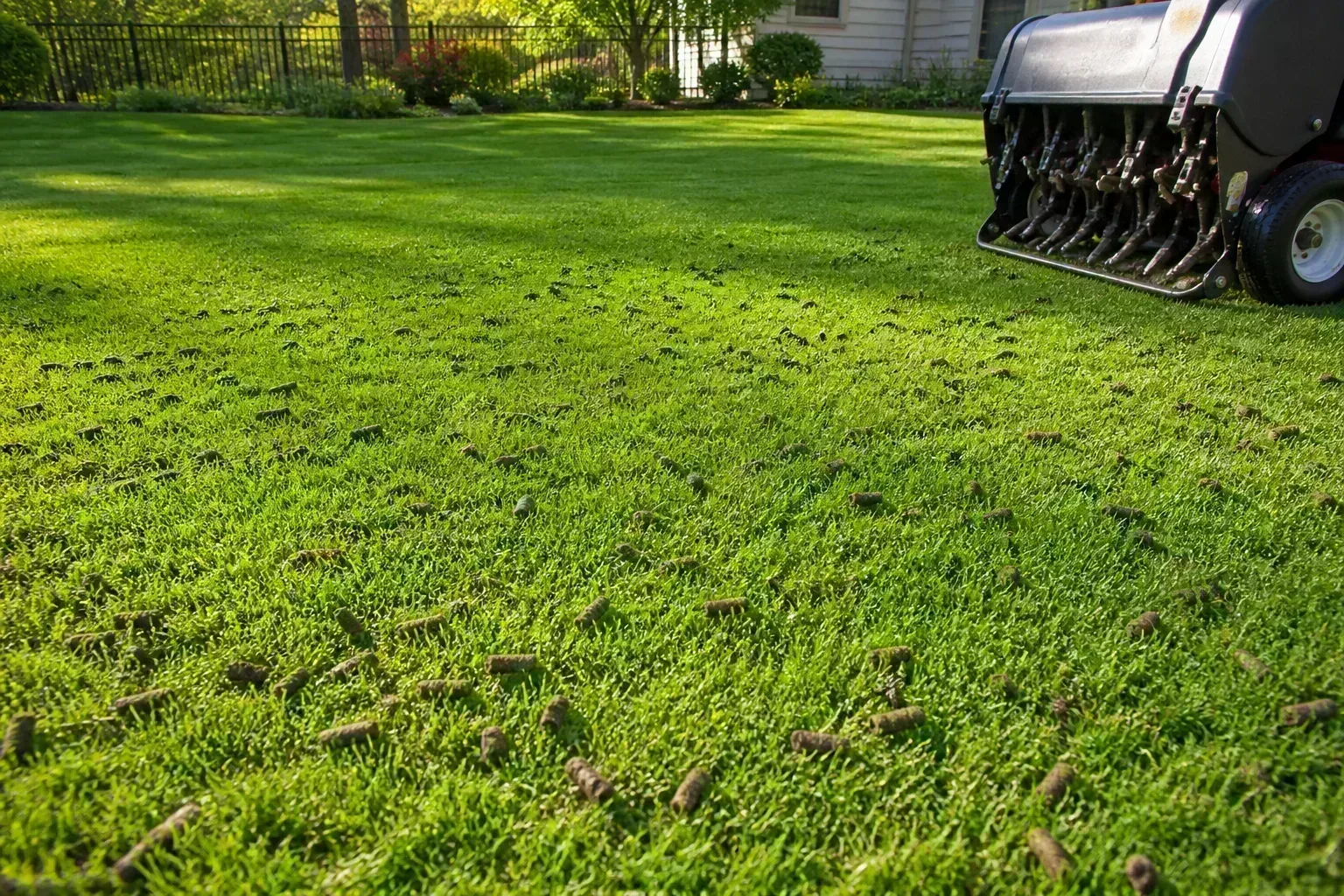
Aerate only when the lawn is actively growing and the soil is workable, not when it is saturated or frozen. Overseed cool-season thin spots during the local establishment window and protect new seed from traffic. Fertilize according to a soil test and grass type; do not use extra nitrogen to force late green growth. Texas A&M AgriLife Extension specifically warns that late, heavy nitrogen can encourage tender growth, weeds, and disease before dormancy.
When a smart controller or lawn pro pays off:
You do not need a smart controller to water well. A rain gauge, catch cans, a screwdriver, and a weekly note on rainfall can produce a more honest schedule than an expensive system that runs unchanged. Fixing misaligned heads and adding rain delay often saves more than upgrading the controller.
Automation becomes useful when the yard has several zones with different sun, soil, or slope conditions, or when you cannot reliably check the lawn. Choose a system that can pause for rain and adjust by weather or soil moisture, then verify its output with catch cans. Automation should carry out a tested plan, not replace the test.
Ask a local lawn professional or cooperative extension office for help when brown patches spread, irrigation coverage is uneven, water restrictions make the decision high-stakes, or the lawn does not respond after the root zone has been rehydrated. A precise diagnosis can cost less than weeks of unnecessary watering, seed, fertilizer, or fungicide.
Conclusion
Watering your lawn in fall is worth the money only when the grass is still using water and the soil actually needs it. Start with your grass type, subtract meaningful rainfall, confirm moisture below the surface, and measure what the sprinklers deliver. Water in the morning when possible, use cycle-and-soak on slow or compacted soil, and keep new seed on its own moisture plan.
As the season advances, taper the schedule instead of following summer settings. Turn irrigation off when soil stays wet, turf is fully dormant, or the ground freezes; then winterize the system before hard freezes. The most efficient fall lawn is not the one that receives the most water—it is the one that receives enough to keep roots healthy, with every unnecessary cycle left off.