Soft White vs. Daylight Bulbs: When to Use Each
Soft white vs daylight bulbs explained in Kelvin, with room-by-room picks, label-reading tips, and when each color temperature actually helps your eyes and plants.
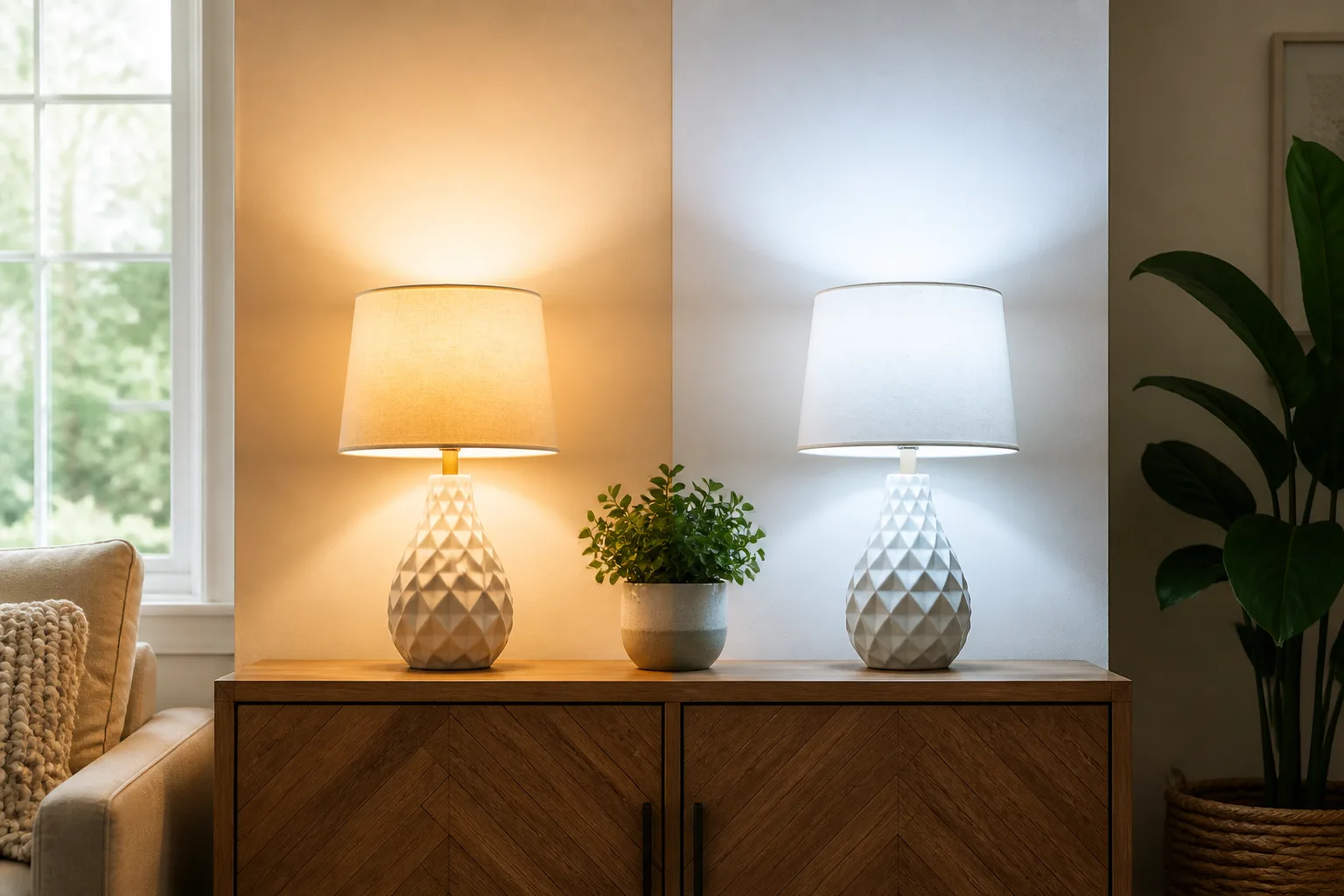
Standing in the bulb aisle, two labels keep showing up: soft white and daylight. They are not brightness levels and they are not brand names. They describe color temperature — how warm (yellow-leaning) or cool (blue-leaning) the light looks — measured in Kelvin (K) on the package.
Soft white bulbs usually fall between 2700K and 3000K. They cast a warm glow most people associate with old incandescent lamps. Daylight bulbs typically sit between 5000K and 6500K, producing a crisp, bluish-white light closer to noon sun. Neither is universally better. The right pick depends on what you do in the room, what time of day you use it, and whether you care about cozy atmosphere or sharp visual detail.
What Color Temperature Actually Measures
Color temperature describes the appearance of white light, not how hot the glass feels. Lower Kelvin numbers look warmer and more amber. Higher numbers look cooler and more blue-white. On household bulbs, the useful range is roughly 2700K to 6500K.
Your brain reads those differences quickly. Warm light signals relaxation — think fireplace or sunset. Cool light signals alertness — think overcast midday sky. That psychological response matters when you are choosing bulbs for a bedroom versus a garage workbench.
Why Kelvin Numbers Beat Marketing Labels
Manufacturers use overlapping words. One brand’s warm white may be another’s soft white. Bright white might mean 3500K or 4000K depending on the line. The marketing name on the front of the box is a hint at best.
Flip the package and find the Kelvin number. A bulb labeled “soft white” at 2700K will look noticeably warmer than one labeled the same at 3000K. If you liked the feel of your last bulb, write down its Kelvin rating before you toss the box. The Lighting Facts program standardizes brightness and color reporting on many LED packages — look for lumens and correlated color temperature together.
Soft White Bulbs Explained
Soft white bulbs produce a warm, yellow-leaning light. They are the default choice for most living spaces because they flatter skin tones, make wood and earth-tone paint look rich, and keep evening rooms from feeling like a hospital corridor.
Typical Kelvin Range and Light Appearance
Most soft white LEDs land at 2700K (very warm, distinctly golden) or 3000K (still warm, slightly cleaner). At 2700K, white walls pick up a cream cast. At 3000K, whites stay a bit truer while the room still feels residential rather than clinical.
Soft white works best where you unwind: bedrooms, living rooms, dining areas, and hallway sconces you use mainly at night. It is also a smart pick over a soaking tub or in a guest room where the goal is comfort, not color-critical tasks.
The trade-off is visibility. Soft white can make detailed work harder — reading small print, matching navy versus black socks, spotting a stain on a dark countertop. That is not a flaw; it is a design choice. Add a brighter task lamp where you need it instead of flooding the whole room with daylight.
Daylight Bulbs Explained
Daylight bulbs mimic the cool, high-contrast feel of midday natural light. They make edges sharper, shadows harder, and colors under the beam feel more “true” relative to outdoor daylight — especially important when you are judging paint, produce, fabric, or makeup.
When the Blue Tone Helps — and When It Does Not
Daylight excels in task zones: kitchen prep areas, home offices, laundry rooms, garages, workshops, and vanity mirrors where you groom in the morning. The cooler spectrum can help you stay alert during focused work, similar to how bright outdoor light keeps your internal clock oriented toward daytime.
The downside shows up after sunset. Cool, blue-enriched light can delay melatonin and make winding down harder if it is your only evening source. Daylight in a bedroom ceiling fixture you use while getting ready for bed is a common regret — not because the bulb is defective, but because the color temperature fights a sleep-friendly environment.
The Naming Mess: Warm White, Soft White, and Bright White
If labels were consistent, this article would be shorter. They are not. Use this practical map:
| Label you see | Typical Kelvin | What it feels like |
|---|---|---|
| Warm white / soft white | 2700K–3000K | Cozy, golden, evening-friendly |
| Bright white / neutral white | 3500K–4100K | Balanced; less yellow, less blue |
| Cool white | 4000K–5000K | Crisp; leaning task-oriented |
| Daylight | 5000K–6500K | Blue-white; high alertness |
Warm white and soft white are often interchangeable on packaging — both mean the warm end of the scale. Bright white is the middle ground when you want visibility without full daylight harshness. If a room serves double duty (family kitchen that is also the homework table), 3500K–4000K bright white overheads plus 2700K pendants over the island is a common winning combo.
Lumens, Watts, and CRI: Three Numbers That Matter More Than the Name
Color temperature is only one line on the box. Three other specs decide whether a bulb actually works:
Lumens measure brightness. When replacing incandescent bulbs, ignore the old “60W equivalent” habit and buy lumens. A comfortable living-room lamp might be 800 lumens (roughly old 60W). A kitchen task area might need 1100+ lumens per fixture depending on ceiling height.
Watts measure energy draw, not color. A 9W LED can match a 60W incandescent in brightness while running far cooler and cheaper over time. The U.S. Department of Energy notes that LEDs use at least 75% less energy than incandescent lighting and last dramatically longer — at any color temperature (DOE LED Lighting). Warmer bulbs do not need higher wattage to “look brighter”; that is a persistent myth worth forgetting.
CRI (color rendering index) measures how accurately colors appear under the light, on a scale up to 100. For bathrooms, closets, and anywhere you judge color, look for CRI 90+. Cheap bargain LEDs sometimes ship at CRI 80 with a greenish or muddy cast that no Kelvin change fully fixes.
Soft White vs Daylight: Side-by-Side Comparison
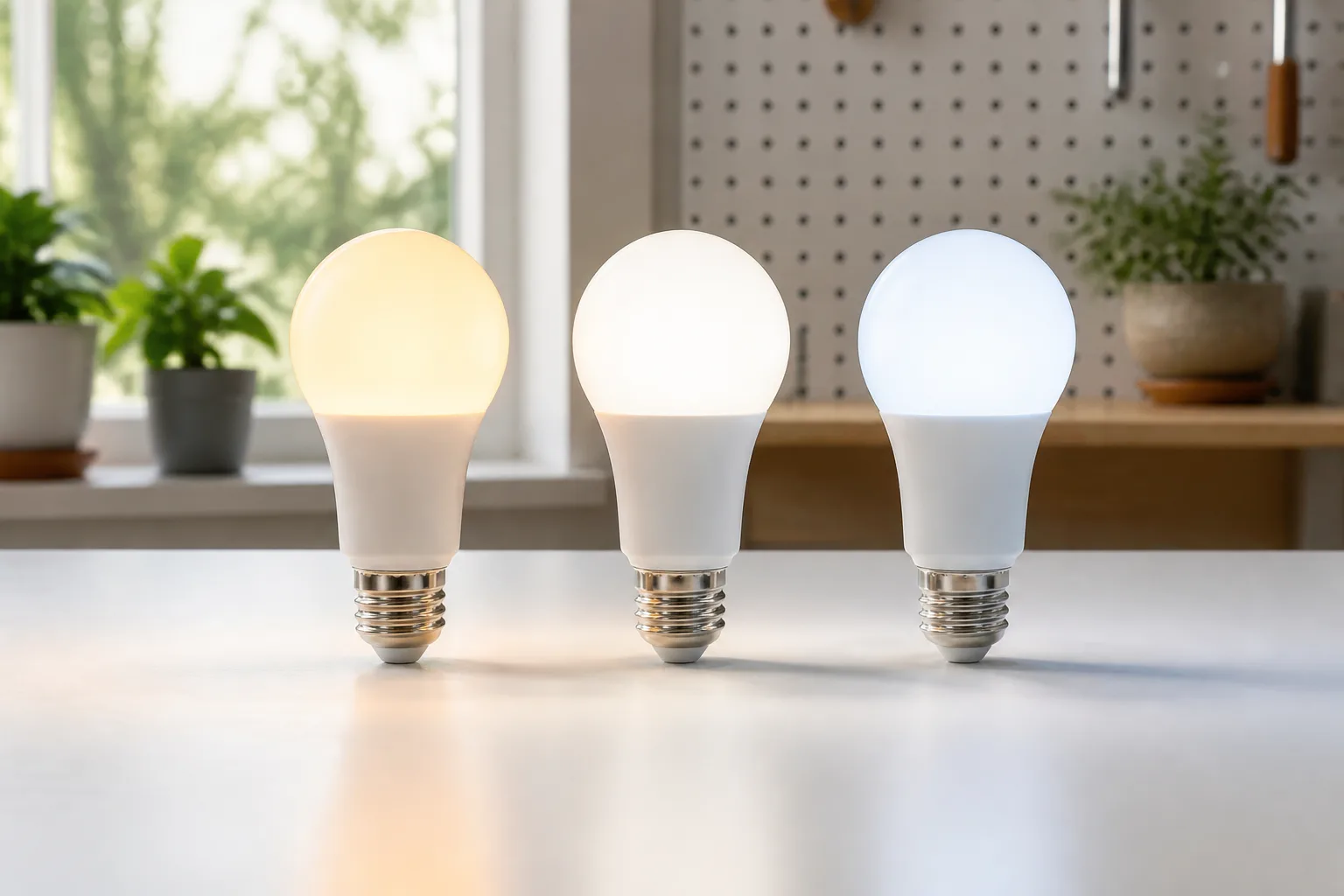
| Factor | Soft white (2700K–3000K) | Daylight (5000K–6500K) |
|---|---|---|
| Appearance | Warm, yellow-leaning | Cool, blue-white |
| Mood | Relaxing, intimate | Alert, energetic |
| Best for | Bedrooms, living rooms, dining | Kitchens, offices, garages, vanities |
| Color accuracy | Adds warmth; shifts whites cream | Truer daylight reference |
| Evening use | Sleep-friendly | Can feel harsh; may affect wind-down |
| With wood & warm paint | Excellent | Can look flat or gray |
| With cool gray & white decor | Can look too yellow | Complements modern palettes |
Neither row “wins.” Match the column to the primary job of the space. A reading nook in a soft white living room still deserves a daylight or 4000K task lamp at the chair — not a brighter soft white ceiling that washes the whole room in cool-by-comparison glare.
Room-by-Room Guide
Bedrooms and Living Spaces
Target 2700K–3000K soft white for ceiling and wall fixtures you use after dinner. Bedside lamps at 2700K keep pre-sleep light gentle. If you read in bed, use a dedicated reading lamp at 3000K–3500K with enough lumens (aim 450–800 at the page) rather than upgrading the whole room to daylight.
Living rooms benefit from the same warm base. Layer in dimmable soft white so movie night does not mean swapping bulbs.
Kitchens, Offices, and Detail Work
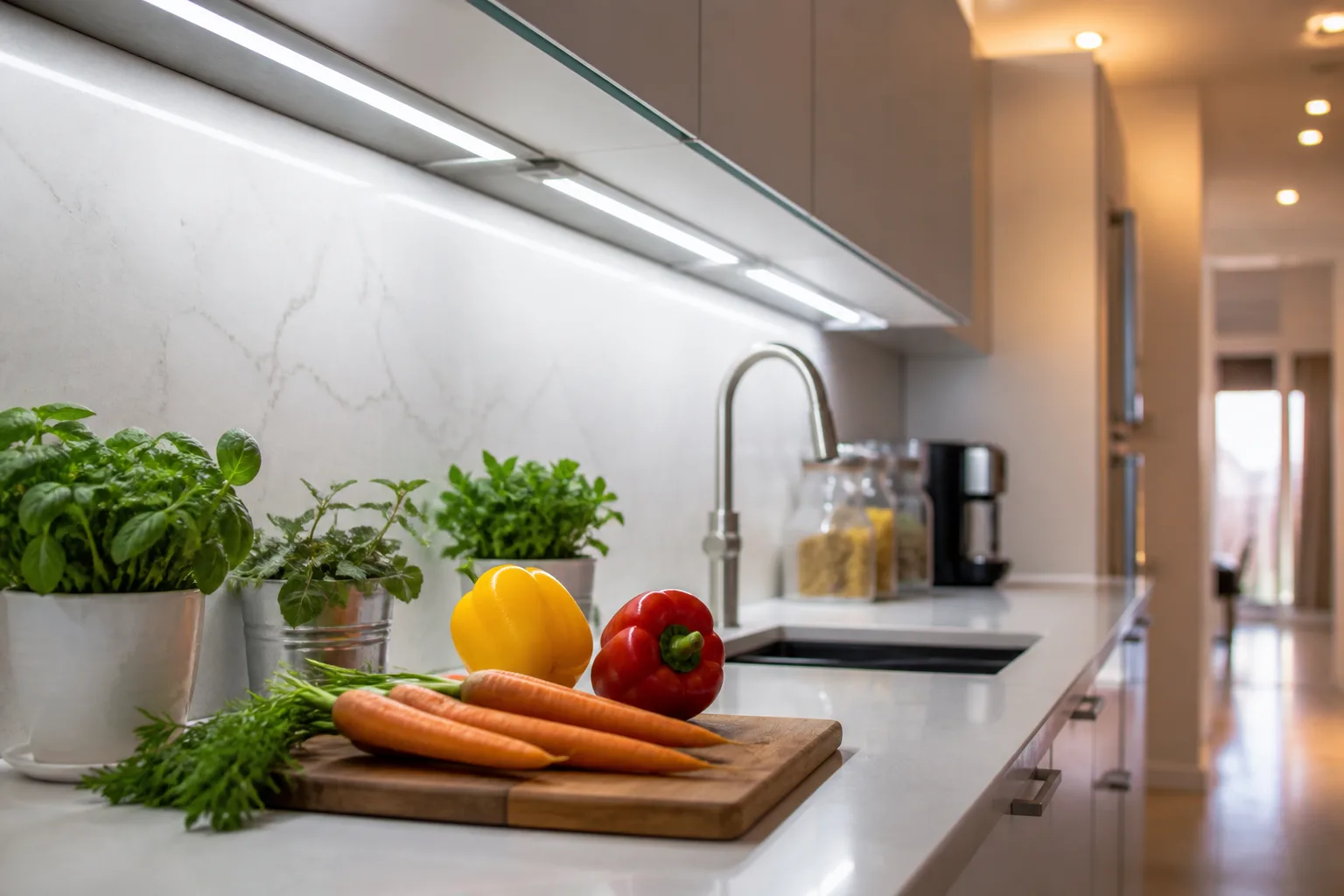
Kitchens: 4000K–5000K over counters and islands where you chop, read labels, and clean. Some cooks prefer 5000K daylight under cabinets for true food color; others find it clinical at 10 p.m. and choose 4000K bright white overhead with 5000K only at the prep zone.
Home offices: 5000K–6500K daylight at the desk reduces eye strain for detail work and screens — but watch glare on monitors. Pair with a softer 3000K ambient lamp behind you so the room does not feel like a single spotlight.
Garages and workshops: 5000K+ daylight is non-negotiable for safety. LEDs reach full brightness instantly in cold garages — a practical advantage over slow-warming fluorescents.
Bathrooms and Vanity Lighting
Split the bathroom by function. Soft white (2700K–3000K) over a tub supports a spa-like soak. Daylight (5000K–6500K) at the vanity gives the color accuracy you want for makeup, shaving, and skincare. If one fixture must do both jobs, 4000K bright white is the compromise — not perfect for either extreme, but acceptable for many households.
Mixing Bulb Types in One Room
Mixing temperatures is not a mistake when it is intentional. Use soft white for ambient layers (ceiling, sconces) and daylight or bright white for task layers (under-cabinet strips, desk lamps, mirror bars). Avoid putting visibly different temperatures in adjacent open fixtures at the same height — the mismatch reads as a mistake, not a design choice.
In open floor plans, keep the public zones consistent (all 3000K living/dining) and let the kitchen run one step cooler (3500K–4000K) if sightlines connect the spaces. A half-step difference blends; a 2700K pendant beside a 6500K recessed can does not.
What Houseplants and Seedlings Need (Different Question Entirely)

Houseplant parents often wonder if swapping to daylight bulbs will “feed” their monstera or snake plant. Color temperature alone does not grow plants. Intensity, duration, and spectrum matter.
A north-facing sill may offer 50–250 foot-candles — survivable for shade-tolerant species but not thriving light for most tropicals (University of Maryland Extension). A soft white table lamp beside the pot adds ambiance to your evening; it rarely adds enough photosynthetically active radiation (PAR) to change growth.
For seed starting and leggy seedlings, dedicated full-spectrum grow lights at roughly 5000K–7000K are the practical target — cool white that encourages vegetative growth (Epic Gardening grow lights guide). Run them 14–16 hours daily, positioned 4–8 inches above foliage, on a timer. That is a different shopping trip than buying a daylight bulb for the kitchen.
If you only need to supplement a dim corner, a daylight LED shop light can help — but measure results by new growth, not Kelvin alone. See our low-light houseplants guide for species that tolerate dim rooms without extra hardware.
Smart Bulbs, Dimmers, and Evening Light
Dimmers let one fixture span moods: bright cool morning, dim warm night. Verify the package says dimmable — many LEDs buzz or flicker on old incandescent dimmers. Smart bulbs can schedule color temperature shifts (cool day / warm evening) without physically swapping lamps.
For sleep hygiene, bias toward 2700K after sunset in rooms where you relax. If you must use cool light late, reduce brightness (lumens) as much as tasks allow. Blackout shades plus warm lamps beat a 6500K ceiling at 11 p.m.
Common Mistakes When Choosing Bulbs
Shopping by name instead of Kelvin. Write down the number that worked last time.
Chasing wattage for warmth. Watts are power draw; lumens are brightness; Kelvin is color. They are independent.
Ignoring CRI in closets and bathrooms. You will wonder why every outfit looks wrong.
Putting daylight everywhere for “maximum natural light.” Natural light changes through the day; your home lighting should too.
Expecting a daylight room bulb to replace a grow light. Plants need intensity and hours, not just a cool color.
Mixing unmatched bulbs in the same visible row. Intentional layering beats accidental contrast.
Conclusion
Soft white (2700K–3000K) is the comfort choice: bedrooms, living rooms, and anywhere you want warmth in the evening. Daylight (5000K–6500K) is the clarity choice: kitchens, offices, garages, and vanity mirrors where detail and color accuracy matter. Read Kelvin, lumens, and CRI on every box — not the friendly name on the front.
Most homes run both temperatures in different rooms, and many rooms benefit from both in different fixtures. Start with the room’s main job, pick a Kelvin target, then layer task lighting where your eyes — or your seedlings — actually need more.



