29 Shade Garden Shrubs for Flowers, Berries, and Privacy
Compare 29 shrubs for shade gardens by light, soil, size, flowers, and evergreen value. Find reliable picks for dry shade, woodland beds, and small yards.
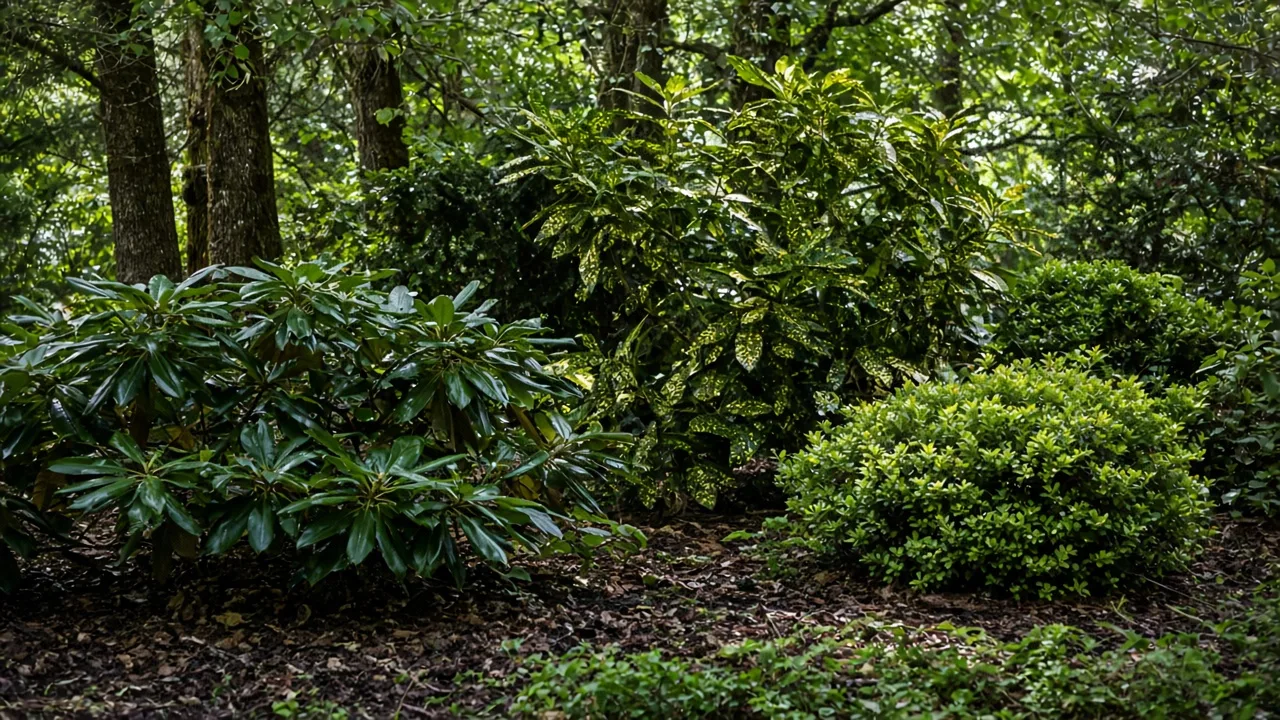
A shady corner can support flowers, fruit, fragrance, and evergreen structure, but “shade” is too broad to use as a plant label by itself. A shrub that grows under a bright deciduous canopy may flower poorly beneath a dense evergreen, while a plant that tolerates low light can still fail because tree roots leave its soil dry.
The list below includes shrubs for full and partial shade, with the differences called out. Start by measuring the light and checking moisture, drainage, acidity, mature size, and local hardiness; then choose a plant for the job you want it to do. Some of the strongest options are native to parts of North America, while others are useful ornamentals that need more care around pets or in certain regions.
Start with the kind of shade you actually have
Look at the site in midsummer, when nearby deciduous trees are fully leafed out. Note how many hours of direct sun reach the ground and when they arrive. The Royal Horticultural Society’s practical guide treats three to six hours of direct sun as partial shade, roughly two to three hours as moderate shade, and less than two hours as deep shade; the light at midday is stronger than morning or late-day sun. These are useful working categories, not a guarantee that two gardens with the same sun-hours will perform identically. RHS shade gardening guidance explains why shade changes with both the object casting it and the time of day.
Next, test the soil with your hand after a normal rain. Under mature trees, a site can be both shaded and dry because the canopy intercepts rainfall and established roots take up water. A shady bed beside a building may also dry out under the eaves, while a low spot beneath deciduous trees may stay moist. The RHS notes that dense shade combined with poor, dry soil limits plant choice; the same shade beside a wall can be less dry if rain reaches it. This is why “shade tolerant” and “drought tolerant” are separate traits.
Finally, decide whether flowers or evergreen foliage matter more. Many shrubs survive low light but set fewer flowers as the shade deepens. If you want a showy display, favor dappled light or a few hours of morning sun; if the spot is truly dim, choose plants for foliage, shape, or winter berries instead. A BHG list of shade shrubs and Savvy Gardening’s flowering-shrub guide both include plants that tolerate shade but explain that performance still depends on the site and species. BHG’s shade-shrub guide and Savvy Gardening’s flowering shrubs for shade are useful cross-checks when comparing plants.
Quick picks by garden problem
Use this table to narrow the list before you shop. “Best for” describes the job a shrub can do; it does not mean that the plant will thrive in every climate or under every tree.
| If your site needs… | Start with… | Check before planting |
|---|---|---|
| Structure in deep shade | Aucuba, yew, sweetbox | Drainage, mature width, and toxicity |
| Spring flowers in dappled light | Camellia, azalea, rhododendron, pieris | Soil acidity and cultivar hardiness |
| Summer color in moist shade | Smooth hydrangea, summersweet, Virginia sweetspire | Mature size and consistent moisture |
| Dry shade beneath trees | Aucuba, yew, Oregon grape holly | Establishment watering and root competition |
| Winter fragrance | Sweetbox or some camellias | Winter hardiness and sheltered exposure |
| Berries and seasonal interest | Viburnum, serviceberry, alpine currant | Pollination, wildlife, and whether fruit is safe around pets |
| A smaller shrub layer | Dwarf fothergilla, compact pieris, dwarf rhododendron | The cultivar’s actual size, not just the species label |
Evergreen shrubs for structure in shade
Evergreens keep a shaded garden from becoming a bare patch in winter. The most shade-tolerant choices often earn their place through foliage and form rather than a heavy flower display. For a mixed planting, put the boldest leaves at the back, repeat smaller mounds along a path, and leave room for the plant’s mature width so shade does not turn into a crowded, damp wall of foliage.
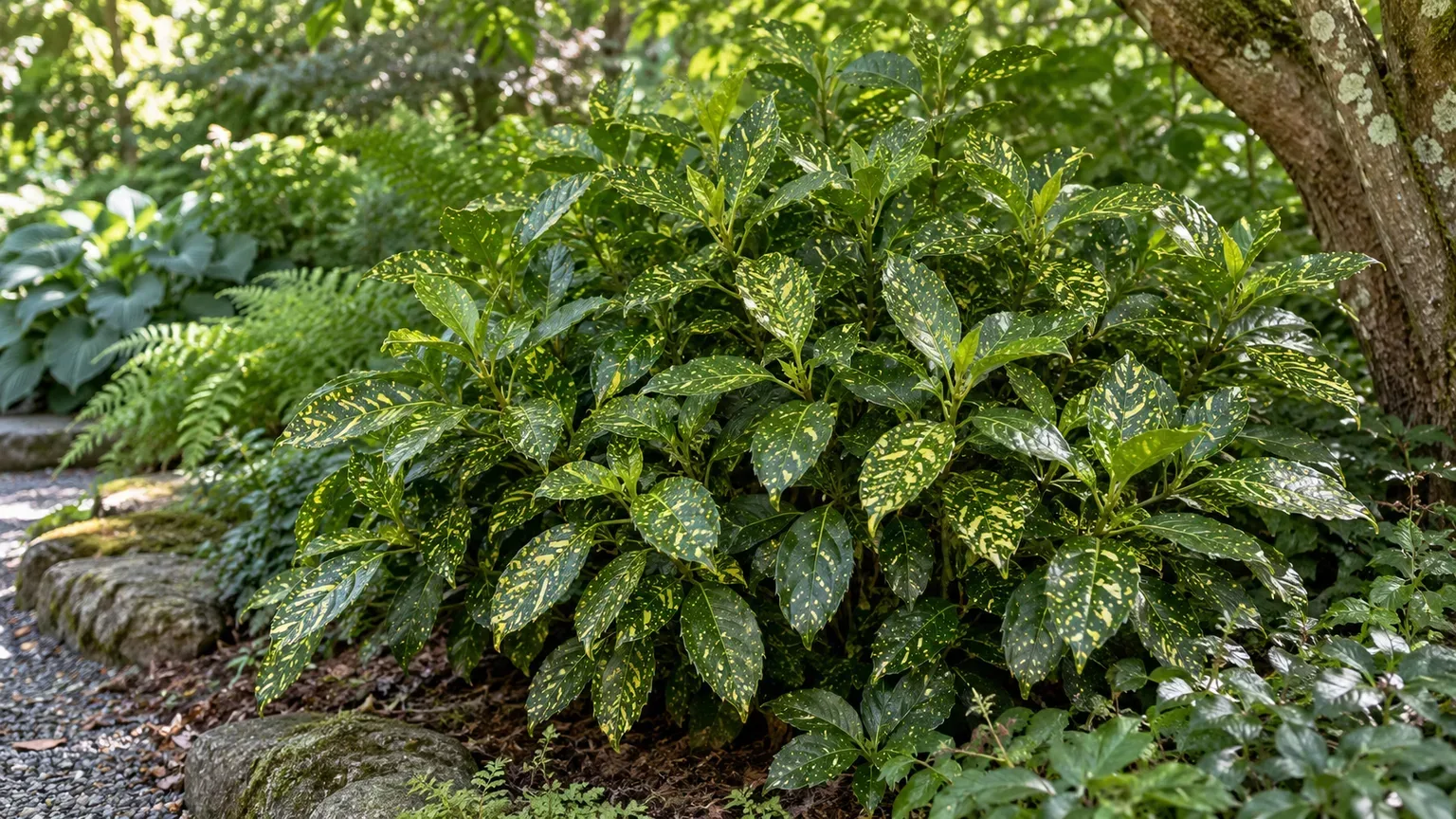
Evergreen foliage for deeper shade and privacy
1. Japanese aucuba (Aucuba japonica). Aucuba is one of the better choices for deep shade, and its yellow-speckled leaves brighten a dark foundation or woodland edge without relying on flowers. It prefers soil that stays evenly moist but drains, and it benefits from protection from drying wind; mature shrubs commonly reach several feet in height and width. Plants are male or female, so a female needs a male nearby to produce red fruit. NC State Extension’s Plant Toolbox rates its poison characteristics as low severity, so keep fruit and leaves away from anyone likely to chew them.
2. Yew (Taxus spp., including hybrid yews). Yews are useful where you want a dense evergreen screen or a clipped shape in a site with partial shade. Cultivars vary enormously in size, so choose one by its mature height and width rather than assuming every yew stays compact; well-drained soil is essential, because soggy roots are a poor match. NC State describes hybrid yew as high-severity poisonous if eaten, so do not use it in a place where children, pets, or livestock can reach the foliage or berries. NC State Extension’s yew profile gives cultivar and site details.
3. Common boxwood (Buxus sempervirens and selected cultivars). Boxwood tolerates partial shade and can hold a neat, evergreen line along a path or foundation. It is a better fit for bright shade than a very dark corner; in too little light, growth can thin and the plant may not make the dense hedge people expect. Select a disease-resistant cultivar suited to your region, check mature width, and avoid waterlogged soil. Use it where clipping is part of the design, not as a way to force a naturally large cultivar into a tiny space.
Evergreen shrubs that also flower
4. Japanese camellia (Camellia japonica). Camellias bring glossy foliage and late-winter or spring flowers to sheltered, bright shade. They prefer acidic, well-drained soil with steady moisture, and hot afternoon sun can scorch leaves or shorten the life of flowers. Cold tolerance varies by cultivar, so choose one rated for your winter and protect it from drying winds. Its slow growth makes it a good specimen near a patio, but it is not a fast screen.
5. Sasanqua camellia (Camellia sasanqua). Sasanquas usually flower earlier than many C. japonica cultivars and can take more sun, making them useful in a bright, partly shaded border or against a protected wall. They still need drainage and a soil pH that suits camellias, and winter hardiness depends on the selection. The RHS lists sasanqua cultivars among shrubs that can be grown in deeper shade, but local nursery labels are the safer guide to cold tolerance. The RHS shade-shrub list includes the cultivar examples and their approximate size.
6. Japanese pieris (Pieris japonica). Pieris offers evergreen leaves, red or bronze new growth, and hanging white flower clusters in spring. It is best in partial or dappled shade with acidic, organic-rich soil that stays moist yet drains well; it is not a reliable choice for alkaline clay or a hot exposed site. Plant it where its mature width fits and avoid pruning away the old stems that carry next season’s flowers. NC State lists Pieris as highly poisonous if eaten, so keep it out of a child- or pet-accessible nibbling zone. NC State Extension’s profile covers its site needs and toxicity.
7. Japanese skimmia (Skimmia japonica). Skimmia is a compact evergreen for cool, sheltered, dappled shade, especially where acidic soil supports other woodland shrubs. Its flowers and fruit add seasonal interest, but many cultivars are male or female, so check the label if berries are the goal and plant compatible sexes close enough to pollinate. Heat, wind, and poor drainage can make it a poor choice outside its preferred climate. Use it as a low anchor near a path rather than expecting it to fill a large screen.
Lower evergreen shrubs for a woodland edge
8. Sweetbox (Sarcococca hookeriana). Sweetbox is worth considering when the darkest part of the garden needs a low evergreen mound and winter scent. Its small pale flowers are easy to miss visually but can be fragrant, so place it where people pass close by. It tolerates shade and competes reasonably well in woodland conditions once established, though dry tree roots still require watering during establishment. Check the specific species and spread before planting; some forms make a useful ground layer, while others become wider than a small border can hold.
9. Leucothoe (Leucothoe fontanesiana and cultivars). Leucothoe brings arching stems, spring flower clusters, and foliage that can bronze or redden in cool weather. It suits acidic to near-neutral soil and light to deep shade, but it wants good drainage and steady moisture rather than a bone-dry root zone. Choose it for a low, flowing edge under taller shrubs, not a sharply clipped hedge. The BHG shade guide places leucothoe in light to deep shade and notes that leaf color changes through the year.
10. Oregon grape holly (Mahonia aquifolium). This evergreen has spiny, holly-like leaflets, bright yellow flower clusters, and blue-black fruit. It suits part shade to dappled shade and can handle a woodland setting, but allow for its eventual spread and check whether it is considered invasive where you live; its regional status differs. In the Pacific Northwest it can be a useful native option, while other regions may prefer a locally native evergreen. Fine Gardening’s regional shrub picks are a reminder to adapt a shade list to climate rather than treating it as a nationwide planting plan. Fine Gardening’s regional shade-shrub collection organizes suggestions by region.
Flowering shrubs for spring and summer color
Most flowering shrubs below will perform best in bright shade, dappled light, or morning sun followed by afternoon shade. If the site receives almost no direct light, expect fewer flowers and choose for foliage or form as well. Confirm the exact cultivar before buying: the same broad shrub group may contain plants with different mature sizes, bloom times, and cold tolerance.
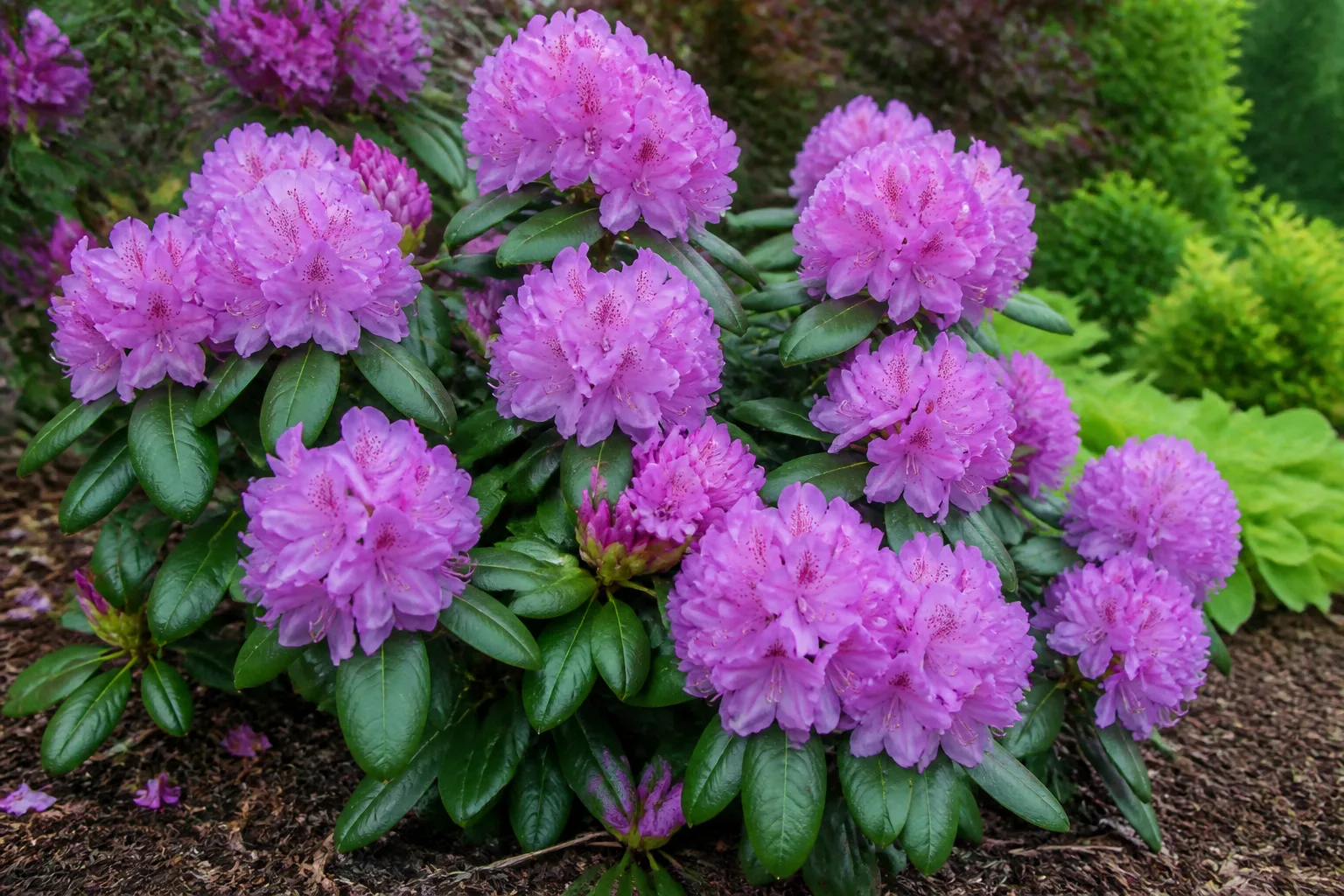
Acid-loving shrubs for bright or dappled shade
11. Azaleas (Rhododendron species and hybrids). Azaleas give a dense spring display and range from compact evergreen types to larger deciduous shrubs. Most want acidic, well-drained soil, even moisture, and protection from hard afternoon sun; a few hours of morning light usually improves flowering. Choose a cultivar for your region and size, and do not bury the shallow root flare under mulch. Azaleas belong to the genus Rhododendron, so distinguish them by their generally smaller habit rather than assuming different soil requirements.
12. Rhododendrons (Rhododendron species and hybrids). Rhododendrons are strong choices for dappled woodland light, where their evergreen leaves and large flower clusters can fill a back border. They need acidic, moist but well-drained soil; compacted clay, deep dry shade, or hot reflected sun can cause trouble. Their shallow roots make a broad mulch layer helpful, but keep mulch off the stems. NC State recommends dappled shade and acidic soil for the group and notes that its poison characteristics require caution. See NC State Extension’s rhododendron profile.
13. Mountain laurel (Kalmia latifolia). This broadleaf evergreen has glossy foliage and spring flower clusters that look especially at home with azaleas and rhododendrons. Give it acidic, well-drained soil and partial shade; intense sun can stress it, while deep, dry shade may cut bloom. Mature plants can become broad, so avoid squeezing one into a narrow foundation strip. Mountain laurel is poisonous if eaten, making it a poor choice around grazing animals or curious pets unless it can be kept out of reach.
14. Carol Mackie daphne (Daphne × burkwoodii ‘Carol Mackie’). This compact, variegated shrub earns attention for its cream-edged leaves and fragrant spring flowers, but it is not a carefree shrub for every shade bed. Give it part shade, drainage, and a settled planting spot; it dislikes root disturbance and heavy wet soil. Use a nursery-grown plant and avoid moving it once established. Daphne can be toxic, so check the exact species and plant parts before adding it where children or pets may chew.
Three hydrangeas, three different shade jobs
15. Bigleaf hydrangea (Hydrangea macrophylla). Bigleaf hydrangea is a useful choice for a sheltered border with morning sun or bright shade, where its broad leaves and large flower heads get some protection from hot afternoon light. The shrub needs consistent moisture and good drainage; severe shade can reduce blooms. In some cultivars, flower color depends on soil pH and available aluminum, but white varieties do not change color in the same way. UGA Cooperative Extension explains that pH affects color and that aluminum availability can matter for H. macrophylla. Test soil before trying to change flower color. UGA Extension’s hydrangea guidance explains the limits of color changes.
16. Oakleaf hydrangea (Hydrangea quercifolia). Oakleaf hydrangea is a four-season shrub for light or dappled shade: summer flower panicles, large leaves that color in fall, and peeling bark for winter. It is native to the southeastern United States and can tolerate somewhat drier soil than many hydrangeas once established, but it still appreciates moisture during dry spells. Give it room to broaden and check the cultivar’s final height; its open habit is part of its charm, not a sign that it needs shearing.
17. Smooth hydrangea (Hydrangea arborescens). Smooth hydrangea is one of the most dependable choices for part shade when you want summer flowers. It blooms on new growth, so spring pruning is less likely to remove the season’s flower buds than it would on bigleaf hydrangea; use a light hand unless a hard reset is needed. It needs regular moisture and room for its natural rounded shape. Compact cultivars can fit smaller beds, but confirm mature spread and stem strength before choosing a large-flowered form.
More flowering shrubs for shade
18. Witch hazel (Hamamelis species). Witch hazel adds a different season to the shade garden: fragrant ribbon-like flowers in autumn or winter, depending on the species. It is a large shrub or small tree, so place it where its open framework can be seen and where it has room to widen. Moist, well-drained soil and light shade suit it; flowering is usually better with more light. Choose the species for your local climate and bloom season rather than relying on the common name alone.
19. Japanese kerria (Kerria japonica). Kerria makes bright yellow spring flowers and vivid green stems visible in a shady corner where many shrubs disappear into the background. It tolerates a range of soil moisture and can bloom in dense shade, though flower quantity may improve with more light. Its suckering growth can form a loose colony, so plant it where spreading is welcome or remove unwanted shoots while small. Savvy Gardening highlights kerria as a strong shade bloomer and recommends thinning older stems after flowering.
20. Tree peony (Paeonia suffruticosa and hybrids). Tree peonies are woody shrubs with large, dramatic spring flowers, and they benefit from protection from the hottest sun. Give them fertile, well-drained soil and a spot that is not constantly disturbed; their flowers can be short-lived after rain or wind. They tolerate partial shade better than a dark, root-filled site, where flowering may be sparse. Treat the plant as a specimen that deserves space rather than as a hedge or a shrub to prune into a tight ball.
Woodland shrubs for berries, pollinators, and fall color
A shade garden can offer more than flowers. Native or regionally appropriate shrubs can provide fruit for wildlife, shelter, bark, and leaf color, while giving structure to the edge of a woodland bed. “Native” is local: a plant native to one state or region may be introduced elsewhere, so check your local extension or native-plant society before buying large quantities.
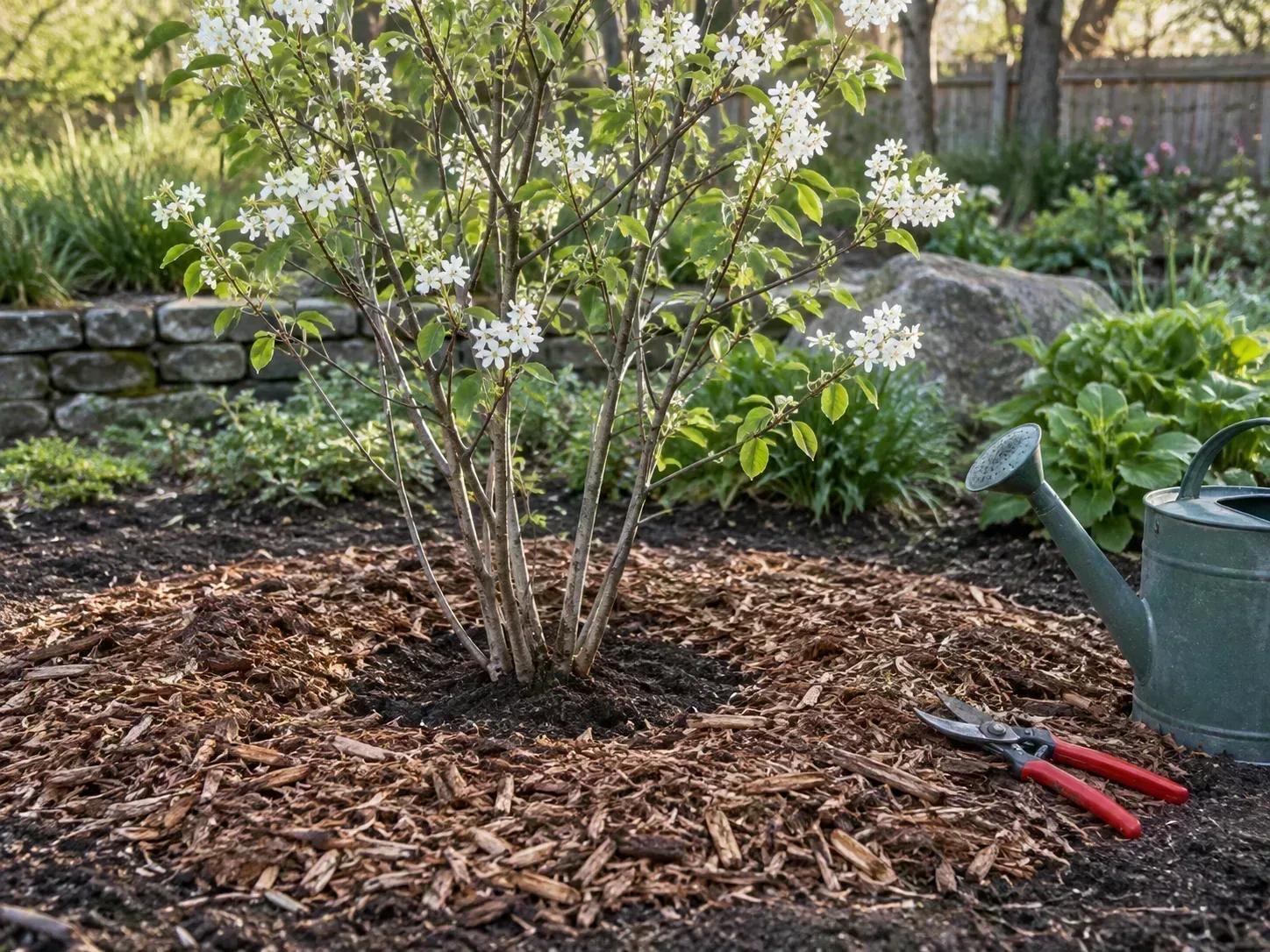
Shrubs for fruit, structure, and seasonal change
21. Viburnums (Viburnum species). Viburnum is a broad group rather than a single-size shrub. Some species tolerate partial shade and bring spring flowers, fall color, and berries; others need more sun or grow too large for a compact bed. Check the exact species for mature size, fruiting, and whether it needs a pollination partner. A native viburnum suited to your region can be a better wildlife planting than a generic cultivar. The BHG shade guide notes the variety in size and seasonal interest across the group, so shop by species rather than by the name “viburnum” alone.
22. Serviceberry (Amelanchier species). Serviceberries are often multi-stemmed shrubs or small trees, with early white flowers, edible berries, and strong fall color. They are best for the edge of shade rather than the darkest point under a dense canopy; more light generally supports better flowering and fruiting. Mature height depends on species and cultivar, and some send up suckers. Use one where a small tree shape is acceptable and where spring flowers and wildlife value matter more than a tightly controlled hedge.
23. Alpine currant (Ribes alpinum). Alpine currant is a compact, cold-hardy shrub that can form a low hedge or mass in partial shade. It is dioecious, so fruit production depends on having male and female plants; the female fruit is not a food crop for people. Choose a shade-suited cultivar because not every currant tolerates the same light. It is useful when you need a restrained green outline more than a showy bloom, and it responds to renewal pruning if an older hedge becomes straggly.
24. Dwarf fothergilla (Fothergilla gardenii). Fothergilla combines small fragrant spring flowers with blue-green leaves and red, orange, or yellow fall color. It flowers more freely in sun, but tolerates partial shade and is a good fit for an acid, moist, well-drained woodland border. The dwarf species is much easier to place than larger fothergillas, though it still needs space to mature. Use it where you want seasonal change in a low shrub instead of a year-round evergreen screen.
Reliable choices for moist or mixed woodland shade
25. Virginia sweetspire (Itea virginica). This native eastern North American shrub is a strong choice for partial shade and consistently moist soil. Its arching flower spikes appear in summer, then the leaves turn red or purple in fall; some cultivars keep color well into cooler weather. It can spread by suckers, which is useful on a bank or woodland edge but less welcome in a narrow bed. Use it where seasonal color and pollinator visits are more important than a rigid outline.
26. Summersweet (Clethra alnifolia). Summersweet fills a late-summer gap with fragrant flower spikes and fall leaf color. It handles partial shade and moist soil better than many flowering shrubs, making it a good candidate for a rain-fed low area that is not permanently waterlogged. The plant can spread into a colony, so leave room or choose a more compact cultivar. It may need supplemental water while establishing, even though it is a good long-term choice for a moist site.
27. Northern bush honeysuckle (Diervilla lonicera). Unlike invasive vining honeysuckles, this small North American native is a shrub with yellow flowers and a useful low, spreading habit. It tolerates partial shade, dry or average soil, and can work on a woodland edge where other flowering plants struggle. The flower display is modest rather than showy, but the shrub’s adaptability and fall color make it valuable in a low-maintenance planting. Check local native status and cultivar size before using it as a ground-level mass.
28. Red buckeye (Aesculus pavia). Red buckeye grows as a large shrub or small understory tree and produces striking red flower clusters in spring. It suits partial shade and woodland conditions, but its mature size and broad habit need room; it is not a small foundation plant. Seeds and other plant parts can be poisonous, so avoid it where livestock, children, or pets may eat fallen material. Use it as a focal plant in a spacious native-style garden, not as a barrier hedge.
29. Sweetshrub or Carolina allspice (Calycanthus floridus). Sweetshrub has aromatic leaves and unusual reddish-brown flowers that can perfume a spring garden. It tolerates partial shade and grows well in ordinary, well-drained soil; flowering is generally stronger with more sun. Its loose, multi-stemmed shape suits an informal border or woodland edge. Give it space and prune only to maintain a natural form, because tight clipping removes the character that makes the shrub interesting.
Match the shrub to dry shade, wet shade, and soil
For dry shade under mature trees, start with a shrub that tolerates the combination of reduced light and root competition, such as aucuba, yew, or a regionally suitable Oregon grape holly. Even a tolerant plant needs water while it establishes. Savvy Gardening’s practical advice on dry-shade planting stresses matching plants to the site and continuing to water new plants rather than treating “drought tolerant” as “never water.” Its dry-shade guide also points out that shade near trees and shade beneath eaves can have different causes and moisture patterns.
For moist shade, consider summersweet, Virginia sweetspire, smooth hydrangea, or oakleaf hydrangea. If water sits for days after rain, first solve the drainage problem or choose plants adapted to wet conditions; most of the shrubs in this list prefer moist soil that still drains. A plant that enjoys humidity is not automatically tolerant of roots standing in saturated soil.
Check pH before planting acid-loving shrubs such as azaleas, rhododendrons, mountain laurel, pieris, leucothoe, and camellias. If the soil is alkaline, repeatedly adding an untested acidifying product is a poor substitute for choosing a suitable plant. Either test and amend according to a local soil recommendation, or select a shrub that fits the existing soil. Make the same check for salt, wind exposure, heat, deer browsing, and regional hardiness when those factors affect your site.
Size is another filter that saves time. A plant label may show a range because cultivar and climate change mature dimensions; use the larger expected width when spacing shrubs. For a narrow bed, choose a genuinely compact cultivar rather than promising yourself that regular shearing will keep a large shrub small. For a privacy screen, plan the full spacing first so each plant can mature without being crowded into the neighbor’s branches.
Plant under trees without fighting the roots
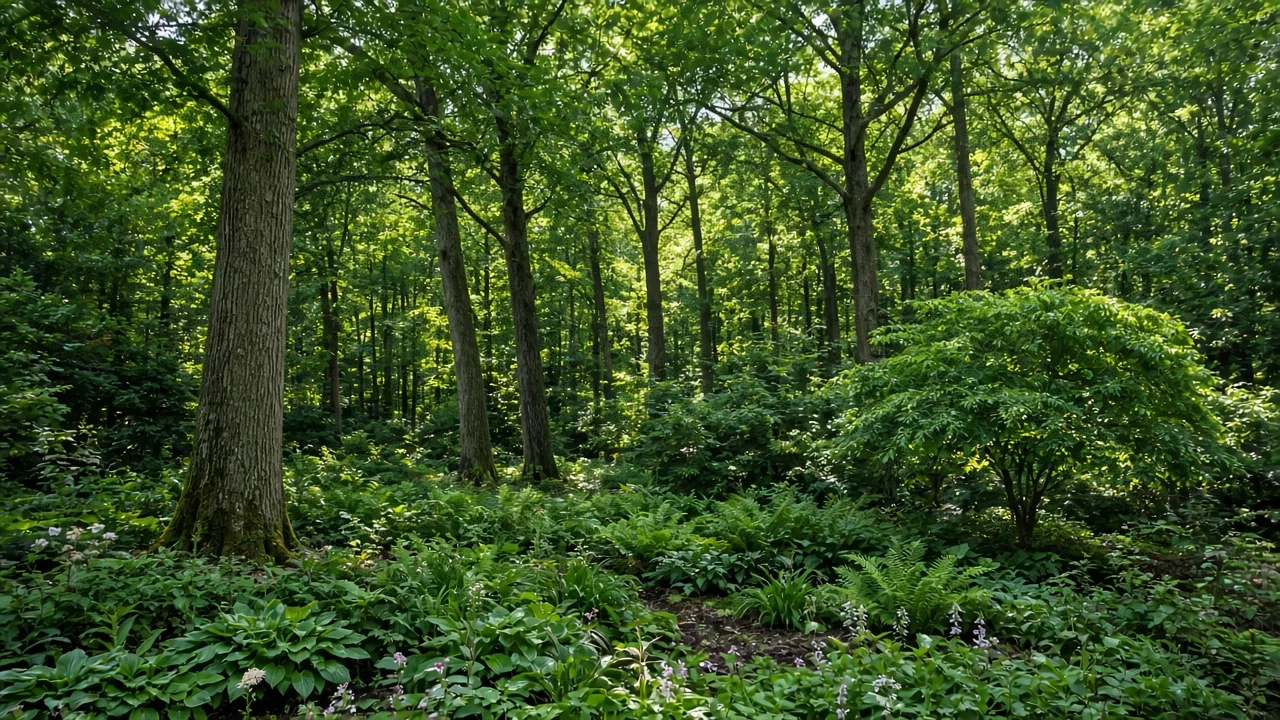
Shade beneath a tree is often a competition problem as much as a light problem. The Royal Horticultural Society notes that tree shade is commonly associated with dry soil because of root action, while building shade does not create the same root competition. Avoid digging a continuous trench or rototilling around established roots. Instead, look for natural pockets of soil between major roots and plant a few smaller shrubs there; if a root blocks the planting hole, shift the shrub rather than cutting a major root to make it fit.
At planting, widen the hole rather than making it deeper than the root ball, set the shrub at its nursery depth, and water the root zone thoroughly. Spread a light layer of organic mulch over the soil to slow evaporation, but leave space around stems and the tree trunk. Do not pile new soil or a thick raised bed over the tree’s root zone; that can bury roots that need air. If the site is too dry to establish a shrub, use a soaker hose or hand-water deeply and less often, then adjust after monitoring the root ball.
Give new shrubs regular attention through their first growing season and into dry spells while roots spread. Check soil several inches down instead of watering by calendar alone. This practical step is easy to skip when the surface looks shaded and cool, but a tree can draw moisture from the same ground. When conditions remain too competitive, move the shrub to the woodland edge, where it can receive more light and less root pressure.
Prune for the right season, not just a tidy shape
Prune by flowering time and the age of the wood that carries buds. Spring-flowering shrubs such as many azaleas, rhododendrons, and camellias set buds before winter, so pruning immediately after bloom is safer than cutting them back in fall or winter. Shrubs that flower on new growth, such as smooth hydrangea, are more flexible, but still do not need annual hard pruning. Kerria is commonly thinned after flowering to remove older stems and maintain an open shape.
For evergreens, use light corrective pruning rather than frequent shearing unless the plant is meant to be a hedge. Cut out dead or crossing branches, preserve the plant’s natural outline, and make sure enough light reaches the center. A shrub that becomes thin and leggy may be in too much shade; pruning cannot replace the light it needs. If a tree canopy is the reason the site is dim, do not remove large limbs just to suit a shrub without first considering the tree’s health and consulting a qualified arborist when needed.
Check safety and local planting rules
Several useful shade shrubs are poisonous if eaten. NC State’s Plant Toolbox flags Japanese yew and Japanese pieris as high-severity poisonous plants and also identifies poison characteristics for aucuba and rhododendron. That does not mean every exposure has the same effect, but it is a reason to check the exact species and plant parts before planting around pets, young children, or grazing animals. Keep clippings, berries, and seeds away from animals that browse. For a pet that chews plants, ask a veterinarian about safer alternatives rather than relying on a common name or a broad internet list. NC State’s yew, pieris, aucuba, and rhododendron profiles, pieris, aucuba, and rhododendron provide species-specific cautions.
Shade tolerance alone does not make a shrub a good landscape choice. Heavenly bamboo (Nandina domestica) is sometimes marketed for shade, but NC State describes it as invasive in North Carolina and poisonous if ingested, and recommends alternatives. Avoid it where it is invasive or where fruiting plants create a safety concern; check your state invasive-plant list before purchasing any shrub that spreads readily. NC State Extension’s Nandina profile explains its regional concerns and suggests alternatives.
Conclusion
The best shrub for a shady garden is the one that fits the light, soil, moisture, mature space, and local climate you actually have. Use aucuba, yew, sweetbox, or another proven foliage shrub for darker shade; choose camellias, hydrangeas, azaleas, or other bloomers when the site gets brighter dappled light; and use woodland natives such as sweetspire, summersweet, and serviceberry where they suit your region.
Before buying, record the site’s sun pattern, check drainage and pH, measure the available width, and verify the cultivar’s hardiness and safety. That short check will narrow a 29-plant list to a few shrubs that can settle in and look good for years.