How to Grow and Care for Lunaria (Silver Dollar Plant)
Grow silver dollar plant in the right light and soil, then learn when to sow, harvest, dry, and save Lunaria seeds without losing control of self-sowing.
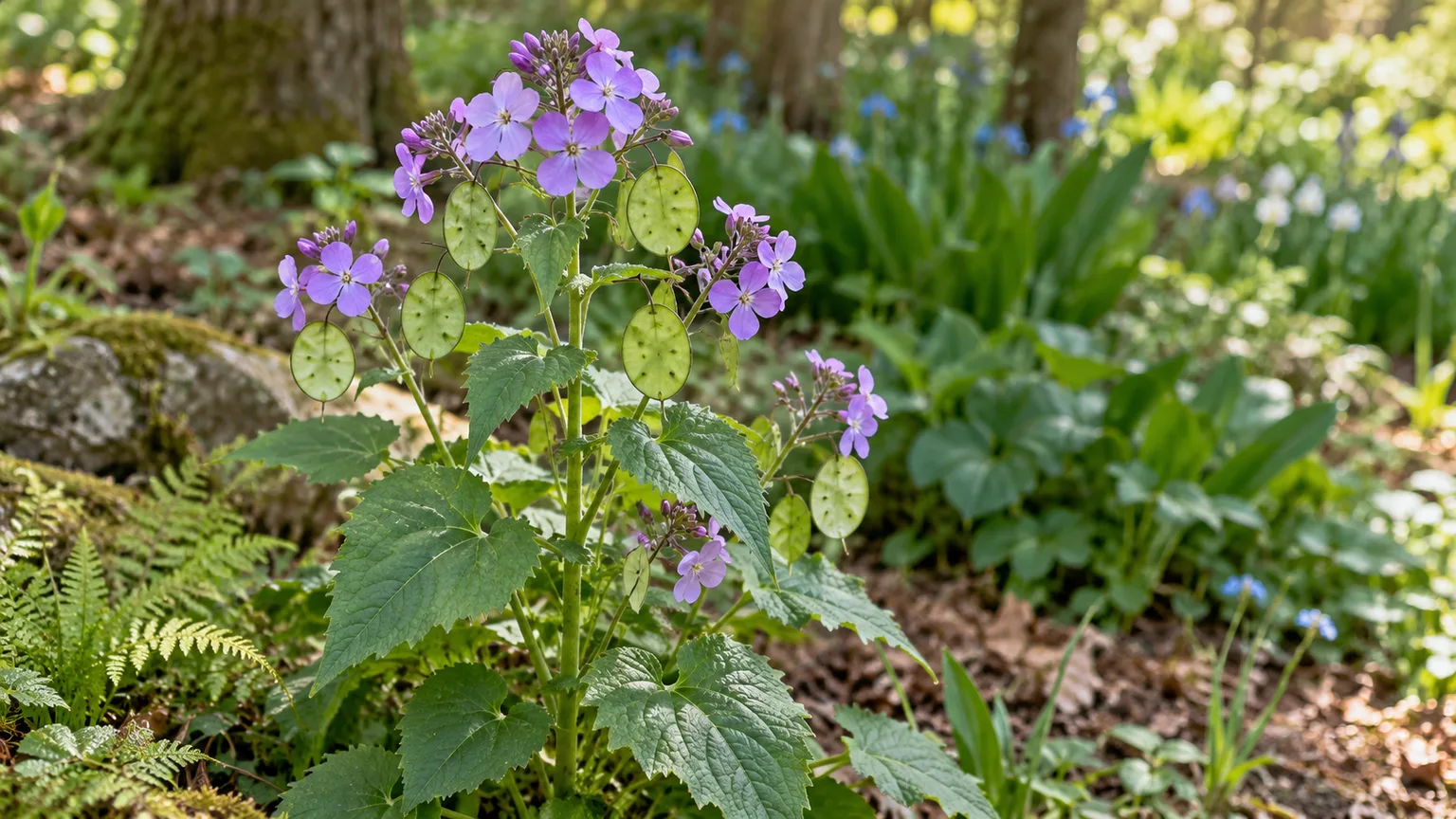
The silver dollar plant, Lunaria annua, is an outdoor biennial prized for two different displays: clusters of pink, purple, or white flowers in spring, then flat, papery seed pods that turn translucent as they dry. The trick is planning for its life cycle. A seedling usually spends its first growing season building a leafy rosette, flowers the next spring, and dies after setting seed—unless it has already scattered enough seed to start the next generation.
Despite its botanical name, Lunaria annua is not reliably a one-season annual. And “money plant” can refer to unrelated species, including a succulent jade plant. This guide is about Lunaria annua, also called honesty, annual honesty, moonwort, or silver dollar plant. It is grown outdoors, where its seedheads can be harvested, left for winter structure, or removed to limit volunteers.
| Care point | What to provide |
|---|---|
| Life cycle | Usually a biennial: foliage first, flowers and pods the following year |
| Light | Full sun to partial shade; afternoon shade helps in hot climates |
| Soil | Fertile, moisture-retentive but well-drained soil |
| Water | Keep seedlings evenly moist; water established plants during extended dry spells |
| Height | Commonly about 2–3 feet (0.6–0.9 m), depending on cultivar and conditions |
| Sowing | Often early summer in temperate climates; adjust to local frost and heat patterns |
| Spacing | About 12–18 inches (30–45 cm) for air flow and room to branch |
| Main upkeep | Thin or remove seedlings, decide which pods to save, and avoid disturbing mature taproots |
What Lunaria Is—and What It Isn’t
Lunaria annua belongs to the mustard family, Brassicaceae. It forms coarse, toothed, heart-shaped leaves close to the ground in its first season, then sends up branching flower stems that commonly reach 2–3 feet tall. The four-petaled flowers are usually purple or pink, though white-flowered forms are grown too. North Carolina State Extension describes the plant as an annual or biennial, while Clemson Extension explains the familiar biennial pattern: a first-year leafy plant followed by a second-year flower stalk and seed pods. (North Carolina State Extension; Clemson Cooperative Extension)
The plant’s lasting ornament is its fruit, a flat, rounded silicle. As the outer walls dry and detach, a thin central partition remains; that translucent membrane catches light like a pale coin. The pods appear after flowering and develop over summer. Their appearance is the reason the plant is also called money plant, honesty, penny flower, or silver dollar plant. The Royal Horticultural Society lists it as a hardy annual or biennial and places its flowers in late spring and early summer, followed by flat, silvery pods. (RHS)
Why “annual” does not tell the whole story
The species name annua means “annual,” but gardeners usually grow L. annua as a biennial. Timing and climate can blur that schedule: an early sowing may bloom the following season, and fall-sown plants in mild-winter regions may flower the next spring. What matters for planning is the sequence, not the label: seed germinates, the plant establishes a rosette, flowering stems rise after a period of growth and seasonal cues, then the plant sets seed and senesces.
If you sow only once, you may see flowers and pods in one year but none the next. To create an annual display, sow a small new batch each year or allow some plants to self-sow. Clemson Extension recommends saving seed and sowing again in late summer when you want flowers every year rather than relying on a single age cohort. The trade-off is space: overlapping generations create continuity but also more seedlings to manage.
How to recognize the real silver dollar plant
Common names are messy. Lunaria annua is not a succulent, although “silver dollar plant” and “money plant” can also be applied to jade relatives such as Crassula arborescens or Crassula ovata. Those are fleshy-leaved succulents grown as indoor or frost-sensitive container plants; Lunaria has thin, toothed leaves, spring flowers, and coin-shaped fruits. North Carolina State Extension lists several unrelated plants under “money plant,” so check the botanical name on a seed packet or nursery label before choosing its care instructions. (North Carolina State Extension)
It can also be confused with dame’s rocket (Hesperis matronalis), another spring-flowering member of Brassicaceae. Clemson Extension points to the seed pods as a practical clue: Lunaria develops broad, flat, round pods, while dame’s rocket has longer, slender pods. If a plant has escaped beyond the garden, identify it before collecting seed or moving it; similar flowers are not enough to confirm the species.
Choose a Garden Site Before You Sow
Choose the location before sowing because established Lunaria develops a taproot and does not appreciate being shifted. It suits a cottage border, a lightly shaded woodland edge, or a cutting garden where its spring flowers and later seedheads have room to show. It can also fill a gap between spring bulbs and summer perennials, but let the mature plant’s height and self-seeding habit inform placement. Put it toward the middle or back of a border rather than where you need a precisely edged, tidy row.
The ideal site receives sun for part of the day and has soil that stays lightly moist without becoming soggy. The RHS recommends full sun or partial shade and moist but well-drained soil; Clemson describes fertile, well-drained woodland soil and dappled light as a successful combination. In practice, think “bright shade or gentle sun” if summers are hot, and more direct sun where summers are mild. (RHS; Clemson Cooperative Extension)
Light: sun for flowers, partial shade for comfort
Lunaria tolerates full sun to partial shade. In cooler climates, a sunny or lightly shaded bed helps seedlings grow stocky and supports flowering. In hot-summer regions, give it morning sun and shade during the hottest afternoon hours. The plant is not a deep-shade solution: too little light can make stems lean and reduce flowering, while a hot, exposed, drought-prone site can stress young rosettes before they establish.
Watch the spot for a full day before planting. A border that looks bright at noon may sit beneath dense tree shade for most of the morning and afternoon. If the only available location is heavily shaded, try a small sowing first rather than committing a large patch; the plant may make foliage but fail to produce the showy stems and pods you want.
Soil and drainage: steady moisture without stagnant roots
Use garden soil that holds some moisture but drains after rain. Incorporate a modest amount of compost if the soil is very poor or compacted, and loosen the upper layer so seeds can make contact with the soil. Avoid planting in a basin where water stands or in a spot that remains sticky and saturated for days. If a plant wilts while the soil is still moist, inspect the roots and consider disease rather than adding more water; leaf symptoms alone are not enough to identify the cause.
You do not need a special potting mix for an in-ground bed. A normal loam is fine; sandy soil benefits from added organic matter, while heavy clay may need a raised bed or a different site rather than repeated amendment in one small hole. Keep thick mulch away from the seedbed until seedlings are up, because a heavy blanket can block small seedlings and make it harder to see what is emerging.
Plant Silver Dollar Seeds in the Season That Fits Your Climate
Seeds are the easiest way to grow silver dollar plant. In temperate gardens, sow in early summer so seedlings can form a sturdy rosette before winter and flower the following spring. Gardeners’ World recommends early-summer sowing for flowers the next spring; GrowVeg gives a slightly later late-summer schedule for its North American guide and notes that seeds may germinate in roughly 7–10 days under suitable conditions. Those calendars are not contradictory so much as climate-dependent: use your local frost dates and the seed packet to choose a window that lets seedlings establish before harsh weather or extreme heat. (BBC Gardeners’ World; GrowVeg)
In warm-winter climates, autumn sowing can work well; North Carolina State Extension notes that fall-sown seed in warmer zones can flower the following spring. In colder areas, sow in spring or early summer while there is enough growing time for a rosette to develop. Do not expect a newly germinated seedling to produce the full silver-pod display immediately. That delay is the normal life cycle, not a sign that the seed packet was mislabeled.
Direct sowing versus starting seeds in pots
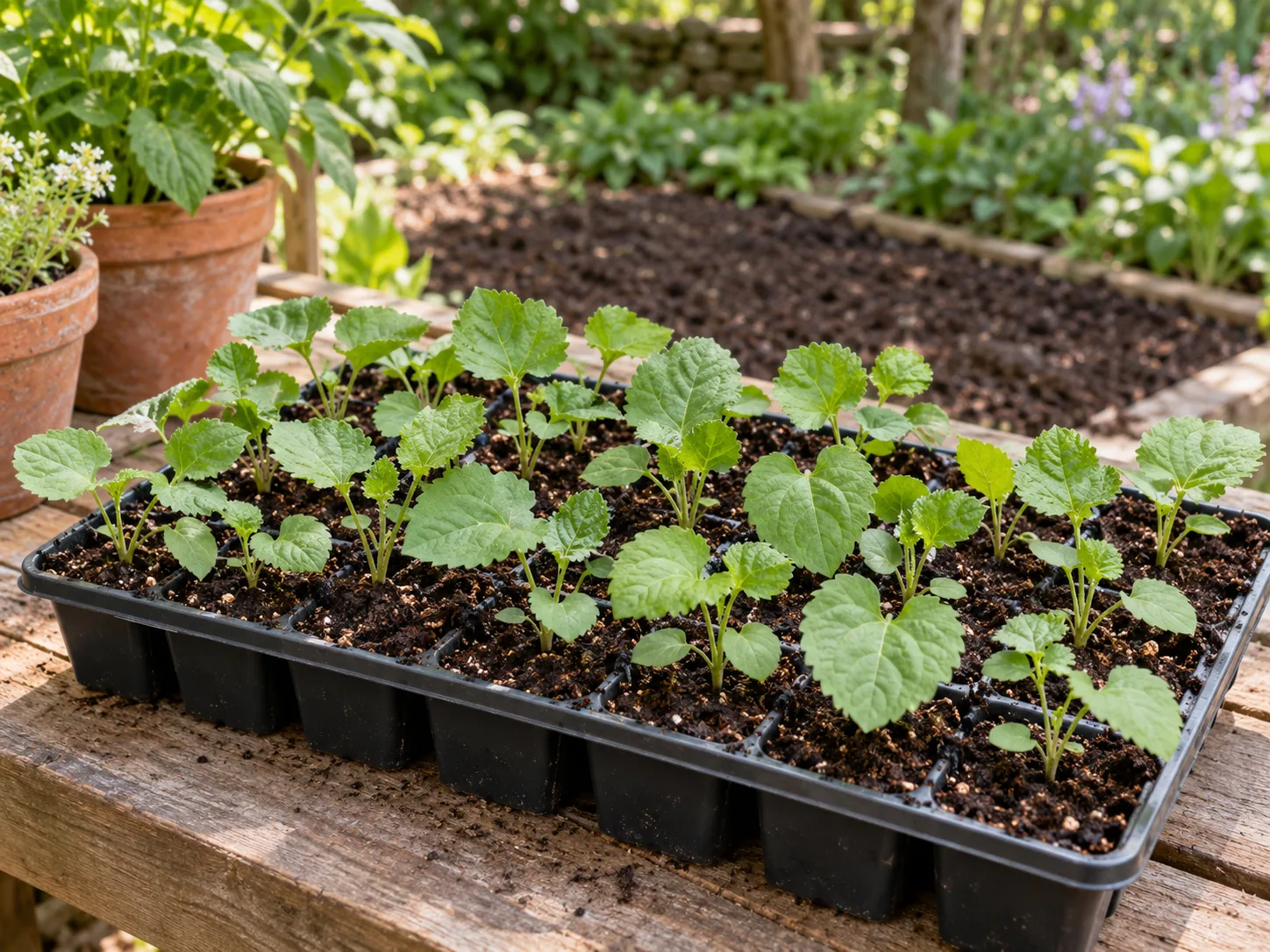
Direct sowing is the simplest method when you already know where the plants can stay. Clear weeds, rake the surface smooth, sow seeds according to packet spacing, and cover them lightly with soil. Keep the surface evenly moist through germination; a fine spray or gentle watering avoids washing seeds into a clump. When seedlings have several true leaves, thin crowded groups rather than allowing them to compete. Thin on a damp day and remove the extras at soil level if tugging would disturb the roots of the plants you are keeping.
Starting in a seed tray is useful when you need to protect a small sowing from birds, weeds, or an exposed bed. Sow in individual cells or small pots to reduce root disturbance, then plant out when seedlings are still young and manageable. Gardeners’ World specifically advises transplanting honesty while young because its taproot makes larger plants harder to establish after moving. Avoid holding seedlings in small pots until they are root-bound; they may survive transplanting but can stall or wilt while rebuilding disturbed roots. (BBC Gardeners’ World)
Spacing and moving young seedlings
Allow about 12–18 inches (30–45 cm) between plants as a practical starting range. Closer spacing creates a fuller patch, but crowded stems have less air movement and can be harder to inspect or harvest. Wider spacing makes each plant easier to enjoy as a specimen and gives seed pods room to dry without leaning into neighbors. Follow the mature-width information on the specific variety when it is available; cultivars may differ in size.
If seedlings appear somewhere inconvenient, move them while small, ideally when soil is moist and before the taproot becomes long. Take as much root as possible, replant at the same depth, and water gently. Once the plant has a substantial rosette, moving it becomes a gamble. It is often easier to remove that seedling and sow fresh seed in the chosen place than to dig it up and try to preserve a long, easily damaged root.
Care for Lunaria Through Its Two-Year Cycle
Lunaria is generally a low-maintenance flower once established. The most useful care is consistent moisture while seedlings develop, modest cleanup, and a decision about what to do with the pods. The plant is not a true perennial that keeps the same crown indefinitely: after it flowers and sets seed, the parent usually dies. The next generation is the “returning” plant.
Keep the first-year rosette visible enough to weed around, but avoid digging close to it. In year two, stems may rise quickly in spring, flower for a few weeks, and then transition into green pods. Clemson Extension describes flowering for roughly two to three weeks in its South Carolina climate; timing can shift with region, exposure, and weather. Keep a few stems if you want seeds and dried arrangements, and remove the rest before seeds mature if you want fewer volunteers. (Clemson Cooperative Extension)
Water and feed according to conditions
Water new seedlings when the top layer of soil starts to dry. The goal is an even supply during establishment, not constantly wet soil. Once plants are rooted into the bed, rainfall may be enough in a temperate, moderately moist garden; irrigate during a prolonged dry spell, especially if plants are in sun or sandy soil. A weekly amount cannot account for your soil, rainfall, or season, so check the soil before watering rather than following a fixed schedule.
Fertilizer is usually unnecessary when the bed is reasonably fertile. Gardeners’ World calls honesty a low-maintenance plant that does not require feeding, while Clemson recommends a light spring application of slow-release or organic fertilizer after growth begins. A sensible middle course is to skip routine feeding in good soil and use a light, balanced application only if the bed is depleted or growth is clearly weak for reasons other than shade, drought, waterlogging, or normal first-year rosette growth. Avoid pushing lush, soft growth with repeated nitrogen; it does not make the plant bloom sooner.
Deadheading depends on your goal. If you want a second-year plant to make pods, do not remove every flower stalk as soon as blossoms fade. If your priority is preventing seedlings, cut stems after flowering and before mature pods split. You can make both choices on one plant: keep a few lower or back stems for pods, then remove the rest. No pruning technique can make a biennial parent live indefinitely after it sets seed.
Keep Self-Seeding Inside Your Plan
Lunaria self-sows readily, which can be a benefit in a cottage or woodland-style border and a nuisance in a tightly managed bed. The important distinction is between a plant that volunteers in a maintained garden and a plant that is spreading into natural areas. North Carolina State Extension notes that it can be weedy and reports invasive concerns; the U.S. Invasive Plant Atlas shows listings in particular jurisdictions rather than establishing a uniform national rule. Check your state, county, or local invasive-plant list before buying seed, especially near woodland, parks, or other natural habitats. (North Carolina State Extension; Invasive Plant Atlas of the United States)
If it is appropriate to grow where you live, containment is straightforward. Remove pods while they are still closed and before they dry enough to release seed; bag them rather than leaving cut seedheads on the soil. Pull unwanted seedlings when small, preferably after rain when the ground releases roots easily. Check the bed again the following spring, because seeds that fell before you began cutting may still germinate. If the plant has naturalized in your region, choose a locally native alternative for a wild or pollinator planting instead of relying on repeated cleanup.
There is a real trade-off: leaving every seedhead gives the most winter display and the easiest self-sown renewal, but it also gives the plant maximum opportunity to spread. Collecting a few pods for seed and removing the rest is a practical compromise. You can also sow a controlled number into a designated patch each year, which preserves the staggered bloom cycle without letting the entire garden decide where Lunaria belongs.
Harvest Lunaria Pods for Arrangements or Seed
The right harvest time depends on whether you want decorative stems or viable seed. For arrangements, watch the green pods as they begin to lose their color and the outer walls start to dry; cut before they split and scatter seed. Choose a dry day and use clean snips. Clemson Extension advises tying the stems in small bunches and hanging them upside down for two to four weeks, then gently rubbing away the brown outer layers to expose the translucent central membranes. (Clemson Cooperative Extension)
Do not strip the membranes while they are damp or force them when they are brittle. Let the bunch hang in a dry, ventilated place out of direct sun; a crowded humid closet can encourage mildew, and harsh sun can fade the natural color. Once dry, hold a stem over a paper sheet or open bag and rub the pod walls gently with your fingers. The thin silvery partitions remain on the branching stem, while any loose seeds can be caught for sowing.
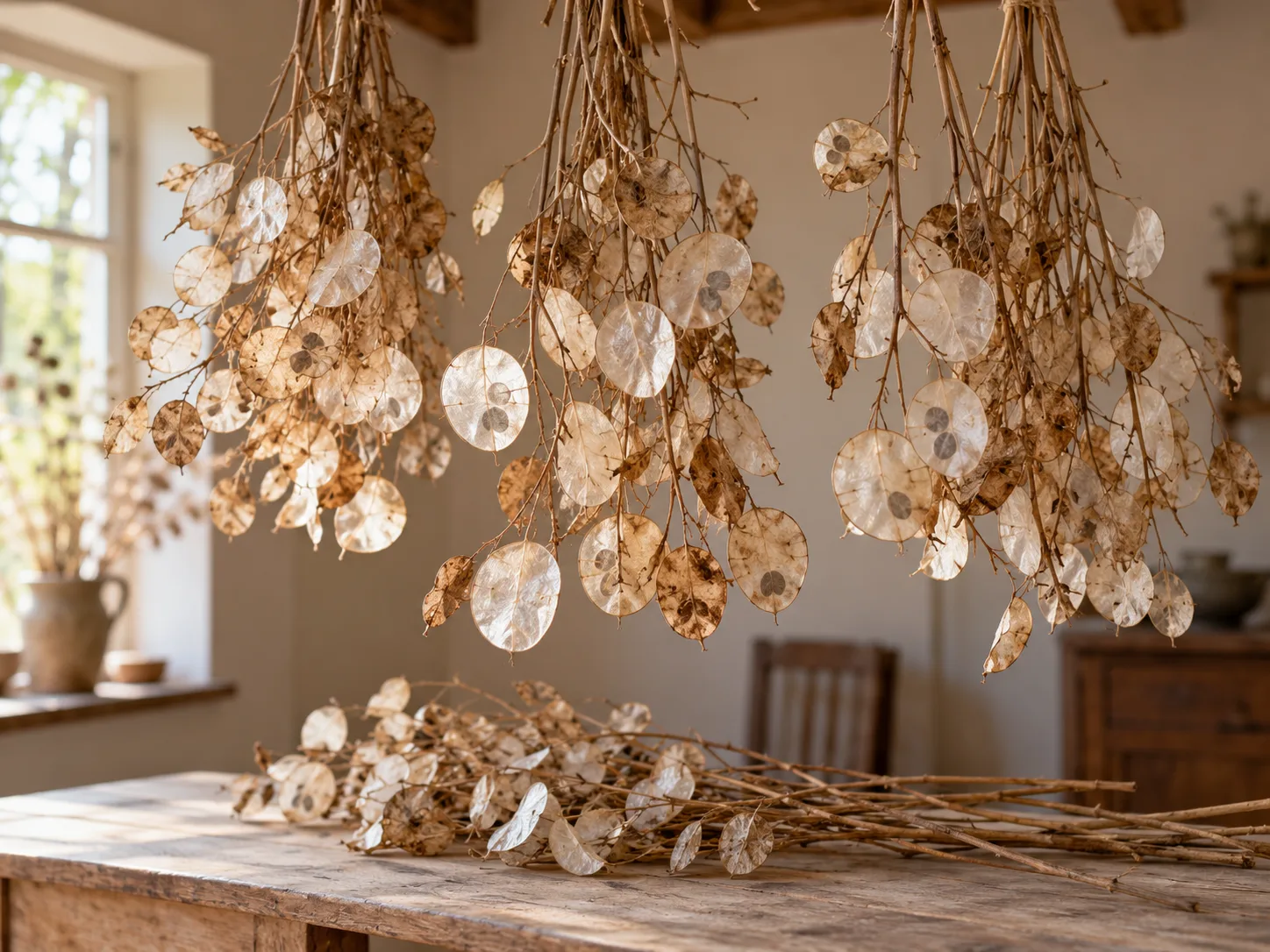
For seed, leave selected pods on the plant longer than you would for a clean arrangement. Harvest when the pods have dried and the seeds inside are dark and mature, but before they open widely. Place the stems in a paper bag as you cut them so loose seeds do not spill along the way. Remove the seeds, finish drying them indoors on paper if needed, and store them in a labeled paper envelope in a cool, dry place. Mark the year and flower color if it matters to you; seed-grown plants can vary, particularly if several forms are growing nearby.
If you want both seed and display stems, label or mark a few plants in advance. Harvesting the entire patch early gives attractive arrangements but little seed; waiting until every pod has opened can leave you with a bare-looking display and volunteer plants in places you did not choose. A small planned harvest solves both problems.
Grow Lunaria in a Container
You can grow Lunaria in a pot, but it behaves more like an outdoor biennial than a permanent patio specimen. Choose a deep, wide container with several drainage holes, and sow directly into it or transplant seedlings while young. A shallow decorative pot is a poor fit for the plant’s taproot and mature height. Keep the pot outdoors in sun or partial shade, and rotate it if stems lean toward the light.
Use a quality potting mix that holds some moisture but drains freely. Containers dry faster than garden beds, so check the mix during warm or windy weather and water when the upper layer is dry. Do not let the pot stand in a saucer full of water. In cold regions, roots in containers experience more temperature fluctuation than roots in the ground; place the pot in a sheltered spot for winter and follow local advice for overwintering biennials.
Container growing makes seed control easier because you can remove pods and volunteers promptly, but it does not eliminate the risk of seed escaping. Keep the pot away from cracks, nearby wild areas, and beds where seedlings would be unwelcome. Once the parent flowers and sets seed, plan to start a new plant rather than expecting the same crown to persist year after year.
Troubleshoot Yellow Leaves, Wilting, and Sparse Flowers
Begin with the plant’s age and the soil. Lower leaves may yellow as the plant moves from rosette growth into flowering, and a second-year parent naturally declines after setting seed. By contrast, a first-year plant that wilts while the soil is wet needs a root-zone check, not more water. A plant in deep shade may stay leafy but flower sparsely; a seedling that was sown too late may simply need another season.
Check the root zone before applying fertilizer or a pesticide. If it is dry, water slowly and recheck after the moisture has reached the root ball. If it is waterlogged, pause irrigation and improve drainage. If symptoms persist, compare the leaves, stems, and roots with local extension guidance; yellowing alone is too general to diagnose a disease.
Separate normal aging from pests and disease
Clubroot is a soilborne disease that can affect plants in the mustard family. Suspect it when a wilted or yellow plant has enlarged, distorted roots rather than assuming the leaves alone identify the problem. If roots are swollen or club-shaped, remove the affected plant and avoid moving its soil to another bed; ask your local extension office to confirm the diagnosis and recommend site-specific management. Gardeners’ World also identifies clubroot as a potential problem for honesty. (BBC Gardeners’ World)
Aphids may cluster on tender stems or undersides of leaves. Inspect before treating: a small colony can often be dislodged with a firm stream of water or removed by hand, while widespread damage deserves a closer look at nearby plants and growing conditions. North Carolina State Extension notes aphids, leaf spot, and stem canker as possibilities but reports no serious insect or disease problems overall. Remove badly affected leaves, keep crowded plants from staying wet, and use any pesticide only if the product is labeled for that plant and pest and is appropriate for pollinators in your area. (North Carolina State Extension)
If flowers are absent, review the calendar before changing the care. A fresh seedling normally does not flower in its first year; dense shade, late sowing, root disturbance, or a very dry establishment period can also delay or weaken flowering. When the rosette looks healthy, leave it in place and give it time. When the root system is diseased or the plant has completed its seed-setting cycle, replacing it with a fresh, locally appropriate sowing is the realistic solution.
Conclusion
Grow silver dollar plant for its full sequence: a low first-year rosette, a spring flush of flowers, and the translucent pods that follow. Give seedlings a bright site with moist, well-drained soil, sow them early enough to establish, and avoid moving large plants once their taproots develop. Those choices do more for reliable flowering than heavy feeding or a rigid watering calendar.
Before pods mature, decide how much you want to save, dry, leave for winter, or remove. That one decision determines whether Lunaria becomes a controlled cut-flower patch or a self-seeding feature that wanders through the garden. Check local invasive guidance first, then enjoy the plant where it is a responsible fit.



