How to Grow and Care for Senecio Succulents
Grow Senecio succulents indoors or outdoors with species-specific advice on bright light, drying soil, gritty potting mix, propagation, pruning, and common problems.
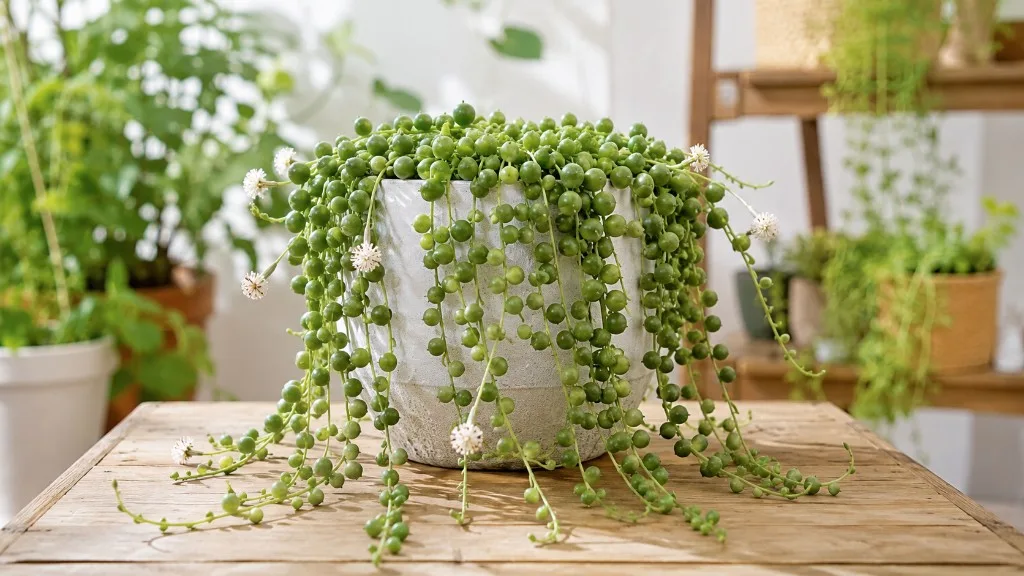
Succulent plants sold as Senecio are not one uniform houseplant. Some trail from hanging baskets, some grow upright, and some spread outdoors as blue-gray groundcovers; even their preferred season of active growth can differ. Start with the botanical name and leaf shape on the plant tag, then choose light, watering, and winter protection for that plant rather than following a schedule meant for a different Senecio.
The best baseline is simple: give the plant strong light, a coarse potting mix, and a container with an open drainage hole. Water thoroughly when the mix has dried substantially, then let excess water escape. The details below show how to adapt that baseline for string of pearls, string of bananas, blue chalksticks, and other succulent forms.
Identify the succulent you have before choosing a routine
The name Senecio is used in horticulture for a large and varied group. It includes flowering annuals, foliage plants, vines, and succulents, so a general genus description cannot give every one the same water, soil, or seasonal schedule. Even the names on succulent labels can shift: North Carolina State Extension lists string of pearls as Curio rowleyanus and records Senecio rowleyanus as an older name, while many retailers still use Senecio. The broad range of plants grouped under the old name is also apparent in Harvest to Table’s genus overview.
Use the plant’s shape to narrow the care group. Rounded or banana-shaped leaves on flexible, cascading stems usually signal a trailing form grown in a pot or basket. Upright columns, flattened paddles, or short blue fingers point to plants that can stand more upright or spread across a warm, dry bed. Save the tag or take a photo of it: a searchable botanical name is more dependable than a common name such as “chalk sticks,” which can refer to more than one plant.
Trailing bead-leaved types
String of pearls, Curio rowleyanus (formerly Senecio rowleyanus), has small spherical leaves with a narrow translucent stripe. String of bananas, Curio radicans (formerly Senecio radicans), has curved, banana-shaped leaves and roots readily along its stems. Both make useful hanging or raised-container plants, but the second is often quicker to grow and easier to trim back. North Carolina State Extension’s string-of-pearls profile and string-of-bananas profile describe their leaf differences, light needs, drainage, and frost sensitivity.
These delicate-looking vines still need light across the whole crown, not just at the tips. A plant with long bare gaps between leaves is usually reaching for more light, while a dense cascade can shade its own center. Rotate the pot gradually and trim the longest stems if the crown is thinning.
Upright and clumping types
The cocoon plant, often sold as Senecio haworthii, has soft-looking silver leaves held close to upright stems. The propeller plant, Senecio crassissimus, has flattened leaves arranged along sturdy stems. Their compact habit suits a shelf, sunny windowsill, or sheltered succulent bed better than a high hanging basket. Buy by the exact name where possible; “Senecio” alone does not tell you the mature shape or cold tolerance.
Keep the crown open enough for air and light to reach the lower stems. Crowded leaves that remain damp after watering are harder to inspect and may hide pests. If a plant becomes top-heavy, pruning the longest healthy stem and rooting the cutting is usually less stressful than forcing the plant into a much larger pot.
Blue chalksticks and spreading forms
Blue chalksticks are blue-gray, pencil-shaped succulents used as edging or groundcover in mild climates. Nursery labels may use Senecio mandraliscae or other close names, so check the tag before relying on a hardiness-zone number. Gardenia’s blue chalksticks profile describes an outdoor form suited to sandy, well-drained soil and sun or light shade, and notes a summer-dormant, winter-growing pattern. That seasonal rhythm is a useful warning against treating every succulent sold as Senecio as a summer grower.
Give the plant bright light without rushing it into hot sun
Most of these succulents need bright light to keep stems compact and foliage close together. Indoors, place trailing kinds close to a bright window where they receive several hours of strong ambient or filtered light. A bright east window often gives gentle morning sun; a west or south window can work if leaves are protected from sudden, intense heat through glass. If the plant stretches, loses color, or has long bare spaces, increase light gradually before changing its water routine.
Outdoor blue chalksticks generally tolerate more direct sun than a string of bananas or pearls grown in a pot. Even a sun-tolerant plant can scorch if it moves suddenly from a dim shop or indoor shelf to afternoon sun. Acclimate it over a week or two: begin in bright shade, add short periods of gentle morning sun, and extend exposure only if leaves remain firm and unmarked. In very hot climates, light afternoon shade protects both foliage and roots in a container.
An inexpensive grow light can help when a room is bright to people but dim to a succulent. Position it above the plant and follow the maker’s distance guidance, then watch new growth over several weeks. A lamp cannot compensate for a pot that stays wet, and a timer cannot replace adjusting the setup as daylight changes through the seasons.
Judge the change by the shape of new growth, not by whether older stretched stems become shorter. Existing gaps do not close by themselves, but fresh leaves should emerge closer together when light improves. Give the plant several weeks to respond before making another large change; repeated moves between deep shade and direct sun create stress without giving you a clear read on what helped.
Use a gritty mix and a pot that drains completely
Roots need air between waterings. Use a commercial cactus and succulent mix, then amend it with coarse perlite or pumice if it remains dense or takes too long to dry indoors. The goal is not to make the pot shed every drop instantly; it is to keep the root zone open enough that a thorough watering drains freely and the mix does not stay soggy for days. A practical test is to wet a handful of mix, let it drain, and check that it loosens rather than setting into a compact muddy clump.
Choose a pot with an unobstructed hole at the bottom. Unglazed terracotta can help a cool or humid room dry more evenly, while plastic or glazed pots hold moisture longer. Neither material is automatically right or wrong; adjust watering to the dry-down you observe. A decorative cachepot is fine if you remove the nursery pot to water and pour out any water that collects inside it.
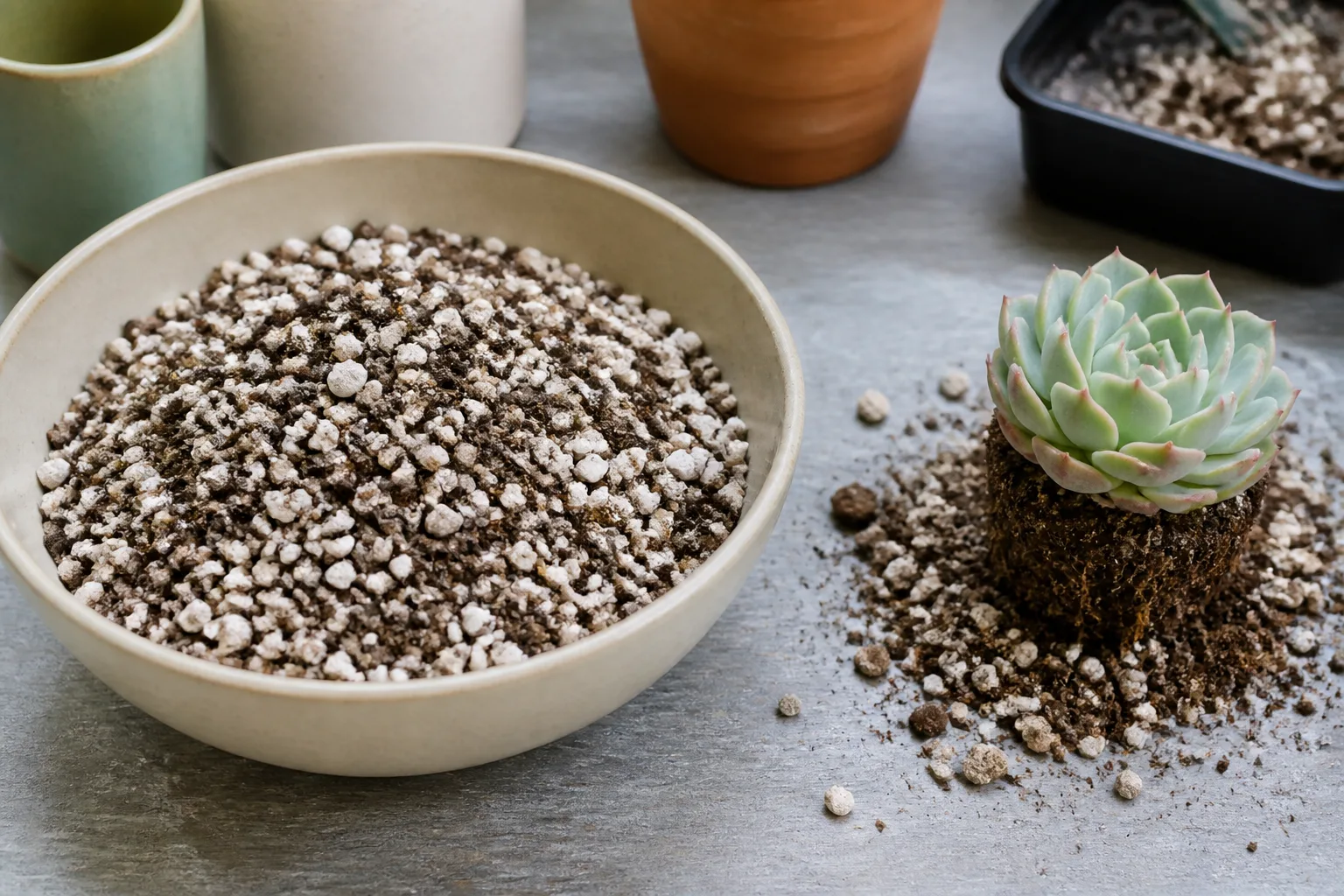
Do not place a layer of gravel at the bottom and assume it fixes poor drainage. Water still perches where fine soil meets coarse stones, and the roots above can remain wet. Use a freely draining mix throughout the pot and keep the drainage opening clear instead.
Surface decorations can also slow your moisture checks. A thick layer of glued stones, moss, or decorative glass hides the mix and can keep the crown damp. If you like a top dressing, use a thin, loose mineral layer and leave an open ring around the stems so you can inspect the soil and see where water runs.
Water by checking the root zone, not by calendar
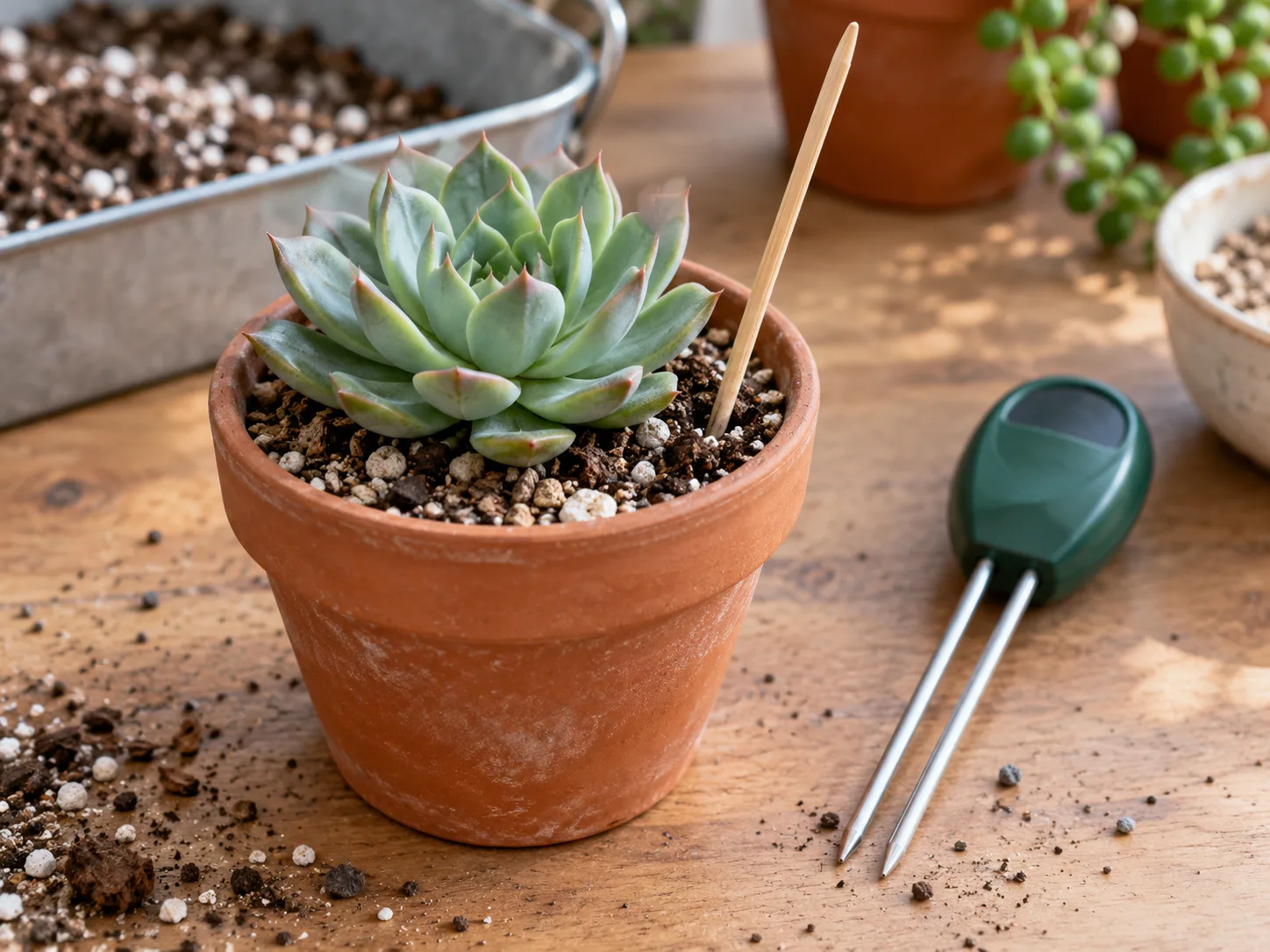
Watering frequency changes with light, room temperature, pot size, airflow, and season. A small string-of-pearls pot in a warm bright room may dry much sooner than a large blue chalksticks container outdoors in cool weather. Instead of watering every Sunday, check the mix below the surface with a finger or wooden skewer. For a trailing Curio, let the upper part of the mix dry and wait until most of the root zone is dry before watering again; do not leave it bone-dry for long stretches while it is actively growing.
When it is time to water, soak the mix evenly until water runs from the drainage hole. Let the pot drain fully and empty its saucer. A light splash on the surface can leave the lower root ball dry while keeping the top layer damp, which gives an unreliable signal at the next check. For a large hanging basket, water slowly in two passes if the first stream runs down the sides without soaking the mix.
The surface can look dry while the center of a deep pot is still moist, so check more than one spot near the edge of the root ball. A wooden skewer inserted partway into the mix should come out mostly clean and dry before the next watering; if it is cool, dark, or coated with damp soil, wait and check again later. Lifting the pot helps too: once you learn the weight after watering and after dry-down, the difference is easy to feel. These checks are more reliable than a moisture meter used in coarse, rocky media, where the probe may give uneven readings.
Reduce watering when growth slows, temperatures drop, or the plant enters a dry resting season. Do not stop automatically in winter, though: a warm, brightly lit indoor plant may continue growing, while a blue chalksticks plant may follow a different seasonal cycle. The condition of the potting mix and the plant’s growth are better guides than the month on the calendar.
Match feeding and temperature to the active season
These plants are adapted to lean conditions, so fertilizer should support growth rather than push it. If a plant is making healthy new stems in bright light, use a balanced fertilizer formulated for succulents at the low end of its label rate, during the active growth period only. Do not feed a dry, stressed, freshly repotted, dormant, or rotting plant. Soft, elongated growth is more often a light problem than a signal that the plant needs extra fertilizer.
Keep tender trailing types away from cold drafts and frost. A sheltered patio may still become colder than a wall-protected spot, and a wet root ball makes a cold night harder to tolerate. Use the exact species label for outdoor hardiness; a general zone range for “Senecio” is not reliable because the name covers different plants. Move container-grown kinds indoors before the first frost forecast for your location, and inspect for pests before placing them near other houseplants.
Choose between indoor and outdoor growing
Set up an indoor display
Inside, give the pot the brightest practical position and enough space for trailing stems to hang without resting on damp soil or a crowded shelf. Keep the foliage clear of heaters, cold windows, and frequent splashes from a kitchen sink. If the room is dim, a grow light is a more dependable correction than watering more often or fertilizing harder. Rotate the container now and then so the plant does not lean toward the glass.
Hanging baskets look natural for string of pearls and string of bananas, but they can be difficult to water evenly. A removable plastic liner pot with drain holes lets you lower the plant into a sink, water the whole root ball, and return it once drainage stops. Use a stable hook and keep stems out of the reach of pets that may pull or chew on them.
Plant outdoors only where the species can stay warm and dry
In a frost-free climate, spreading blue chalksticks can fill a sunny, well-drained bed or edge a dry garden. Set plants where rainwater does not collect around their crowns, and space them according to the mature width on the label so air can move between clumps. In heavy or rainy regions, grow them in raised containers or keep them portable rather than gambling on winter wetness and cold together.
Outdoor hardiness figures describe a range, not a promise for every garden corner. Cold air pools at low points, containers chill faster than garden soil, and a wet winter can damage roots even where temperatures are usually mild. If a plant is valuable or newly established, try it in a pot for a season before committing it to a permanent bed; you can then learn how it responds to local sun, rain, and cold snaps.
Trailing kinds can spend warm months on a patio in bright shade or gentle morning sun, then come indoors before cold nights. Give them a transition period both ways: a plant accustomed to indoor light can sunburn outside, and a plant from outdoors may need a few days in a bright, protected spot before it adjusts to a room. Outdoor success depends on the named species and the site, not on the fact that a plant is a succulent.
Prune and propagate to renew trailing stems
Prune to remove dead or damaged growth, control length, or encourage branching. Use clean, sharp scissors and cut just above a healthy node. If the center is bare, do not keep shortening only the ends; redirect light to the crown and place a few healthy cuttings back onto the surface so new stems can root and fill open patches. The best time is when the plant is actively growing and can recover, rather than during a resting period or immediately after a stressful move.
Root stem cuttings at their nodes
Choose a firm, healthy stem section with at least one or two nodes, where leaves join the stem. Let the cut end dry until it is no longer wet, then lay the piece on a barely moist, coarse propagation mix and pin one or more nodes against the surface. For long vines, a loop of stem can touch several points in the pot; those nodes can root and make a fuller top. Keep the setup warm and bright but out of harsh direct sun.
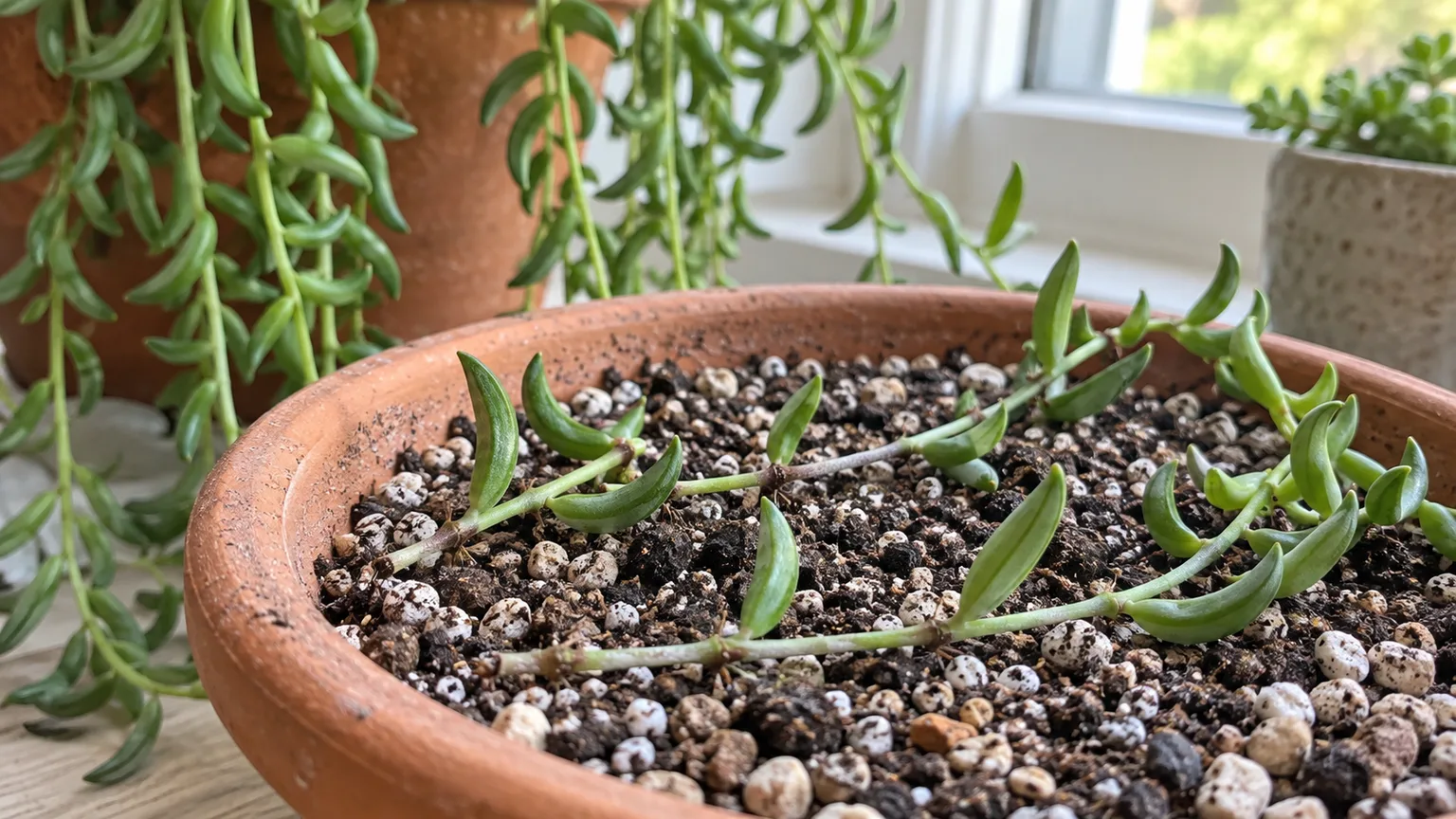
Check for roots after a few weeks by giving the stem a gentle tug rather than pulling it up every day. Keep the mix just lightly moist while roots establish, then shift to the normal soak-and-dry approach. Rooting hormone is optional, not a substitute for a node, good light, or a mix that does not stay wet. Detached leaves may shrivel before they form a new plant, so a stem cutting is the more dependable method for these trailing types.
Repot when roots and mix give a reason
Repot when roots crowd the drainage hole, the root ball has filled the container, or the mix has broken down and no longer drains and dries predictably. Choose a pot only slightly wider than the root mass. A much larger container holds a greater volume of wet soil around a small root system, which can increase the time the plant stays damp and make watering harder to judge.
Remove loose, exhausted mix without tearing healthy roots. If roots are black, soft, or smell sour, trim only the damaged tissue with a clean tool and let cuts dry before planting into fresh dry mix. Wait a few days before watering after a root disturbance, then resume only when the new mix and plant condition call for it. A cramped-looking cascade does not always need a bigger pot; these plants often look fuller after a few rooted cuttings are added to the same container.
Repotting is not a routine annual chore. If the plant is healthy, the mix drains well, and roots are not crowding the container, leaving it undisturbed avoids breaking fine roots that are already working. When you do repot, keep the plant at the same soil depth; burying trailing stems or holding the crown below the surface creates extra damp contact where rot can start.
Diagnose weak stems, shriveled leaves, and rot
Do not diagnose by one leaf. Wrinkled pearls, limp banana leaves, or dropped segments can follow prolonged dryness, but roots damaged by wet soil may also fail to supply water and produce similar aboveground symptoms. Check the mix first. If it is bone-dry and the roots remain firm, water thoroughly and watch new growth. If it is wet, cool, or sour-smelling, unpot and inspect roots before adding more water.
Long spaces between leaves, small new leaves, or a plant leaning strongly toward a window point toward insufficient light. Increase brightness gradually and leave the watering interval alone until the mix tells you it needs water. Pale tan patches on the side facing a new window or afternoon sun suggest scorch; move the plant to bright shade while damaged tissue remains, and reintroduce sun in short steps. Yellowing may come from overly wet soil, pests, or aging leaves, so inspect both the root ball and the stems before choosing a fix.
Soft, dark stems at the soil line and roots that pull apart easily are stronger evidence of rot than a few wrinkled leaves. Remove the affected material, save firm stem tips if possible, and restart those cuttings in fresh, dry, open mix. If the plant is badly compromised, repeatedly watering it in the old saturated pot rarely repairs the root system.
Watch for pests and keep plants away from pets and children
Mealybugs and scale can hide where leaves meet stems or inside a dense cascade; aphids may gather on tender new growth. Inspect the crown, pot rim, hanging stems, and the underside of leaves when you bring a plant home and whenever growth looks sticky or distorted. Isolate a plant with pests, remove heavily infested pieces, and identify the insect before choosing a treatment. If you use a pesticide or soap, follow the product label and test a small area first because succulent leaves can be sensitive to sprays.
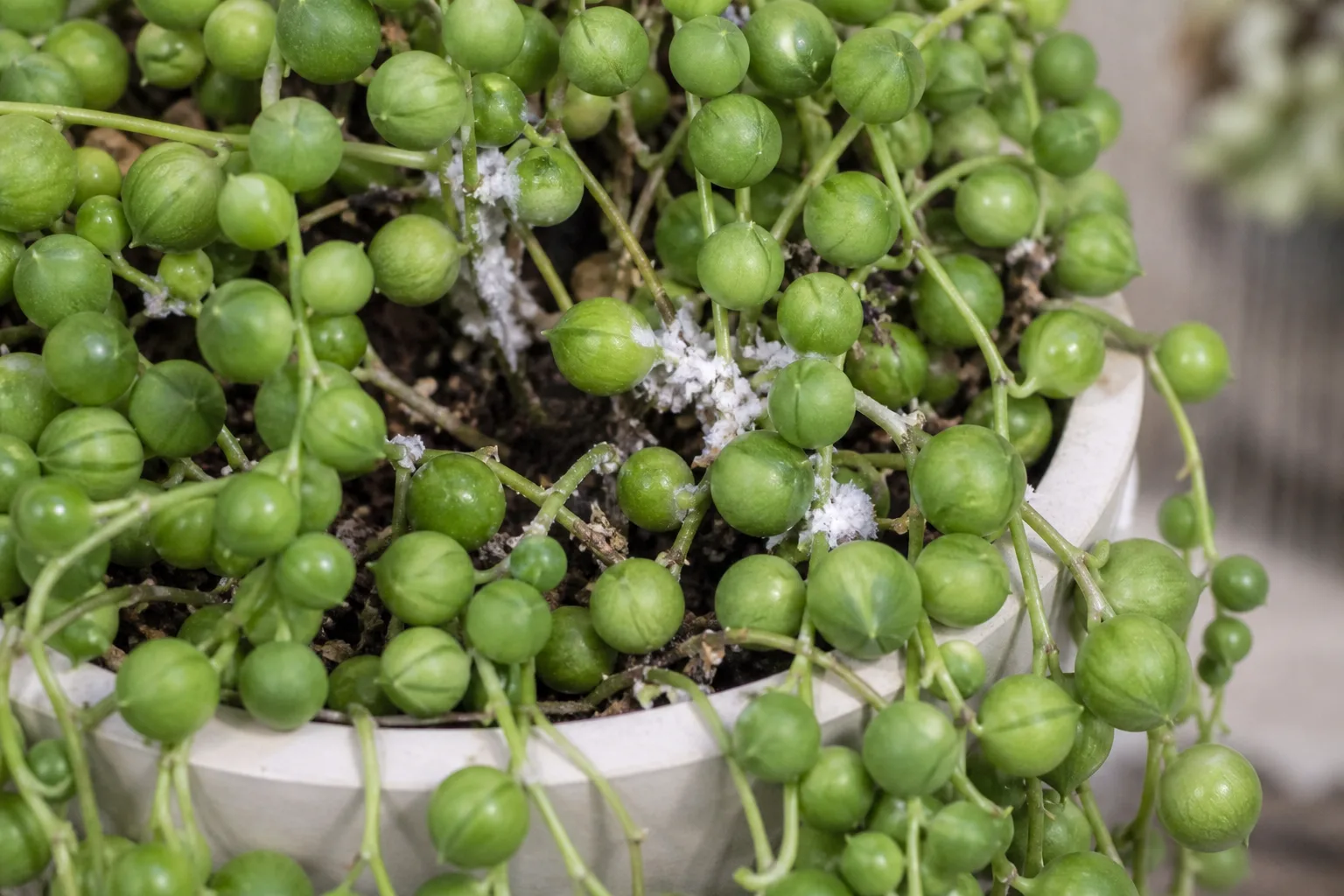
Check any treated plant again after several days because one cleaning may not remove every egg or insect tucked into the vine. Wash hands and disinfect scissors after pruning an infested plant, and do not compost heavily affected cuttings. If the problem is spreading despite isolation and careful treatment, ask a local extension office to identify the pest and recommend a product labeled for that plant and use site.
Safety depends on the species, so do not assume that every plant called Senecio has the same toxicity profile. North Carolina State Extension describes both string of pearls and string of bananas as plants with low-severity poison characteristics, and advises preventing ingestion. Keep those plants and fallen leaves out of reach of pets and young children; use gloves if sap irritates your skin. If a person or animal chews a plant, identify the botanical name and contact a qualified poison-control or veterinary professional for advice rather than waiting for symptoms or trying a home remedy.
Conclusion
Healthy Senecio succulents are easier to care for when the name on the tag and the plant’s growth habit guide the routine. Trail a pearl- or banana-leaved type from a bright spot, use a draining pot and gritty mix, and water after checking the root zone. Give upright and blue chalk forms the light, seasonal timing, and outdoor protection suited to their exact species. When a plant declines, inspect the mix and roots before changing several conditions at once; when it grows well, trim and root cuttings to renew it instead of forcing an old stem to last forever.



