How to Grow and Care for 'Silver Mound' Artemisia Plants
Grow Silver Mound Artemisia in sun and sharp drainage. Learn how to water, prune, divide, and diagnose a mound that opens or turns yellow through the season.
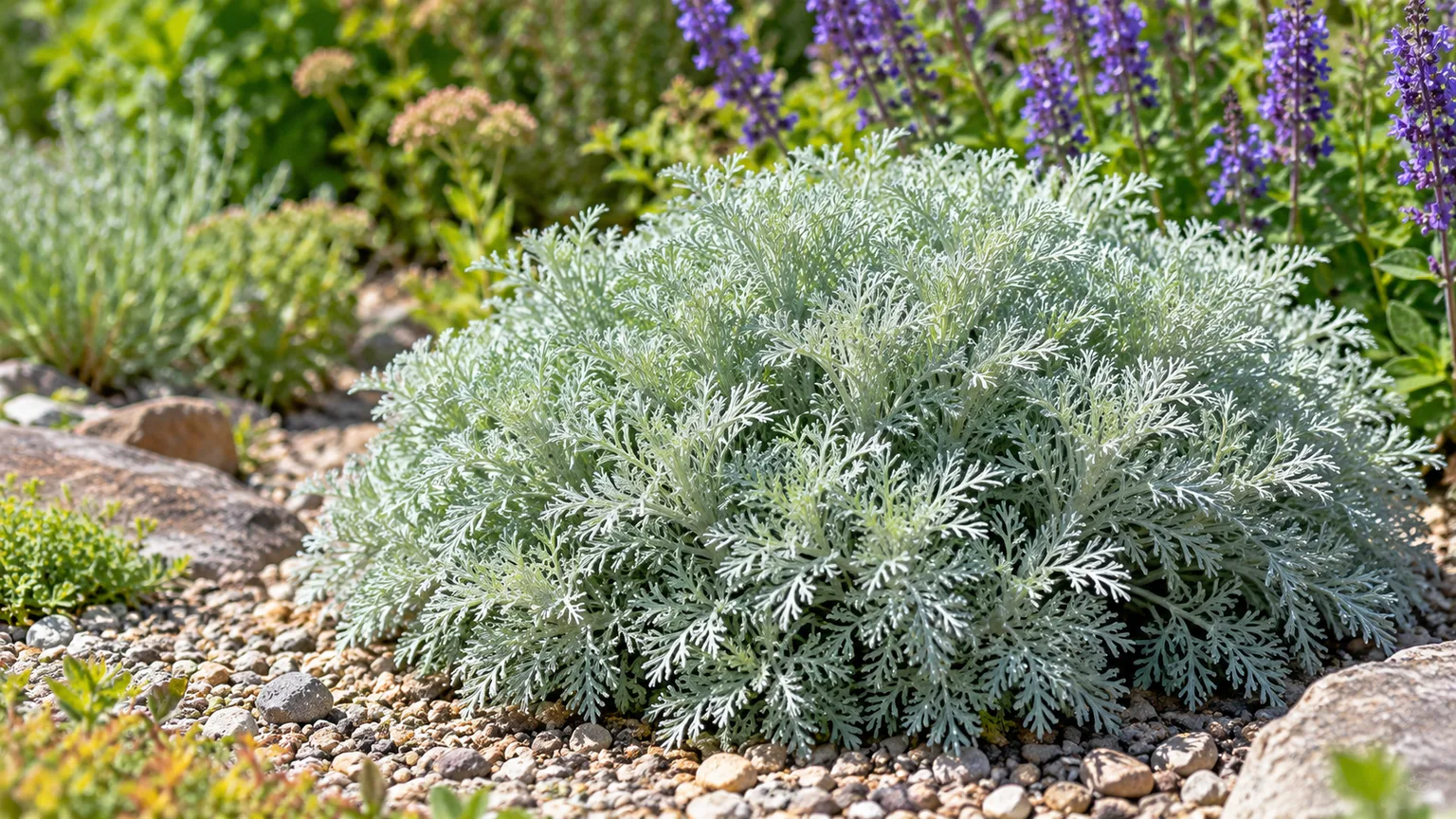
‘Silver Mound’ artemisia (Artemisia schmidtiana ‘Silver Mound’) is a low, rounded perennial grown for its soft, finely divided silver-gray leaves. Give it sunlight and a root zone that drains quickly; the most common way to lose the mound is to keep its crown cool and wet in rich soil. If the center starts to open, check the site and the plant’s age before reaching for fertilizer or a hose.
| Care point | Practical target |
|---|---|
| Light | Full sun; some light afternoon relief can help in very hot locations |
| Soil | Average to lean and freely draining; avoid a persistently wet crown |
| Water | Water through establishment, then only when the root zone has dried |
| Mature form | Usually a low mound about 6 to 12 inches tall and 12 to 18 inches wide; local conditions affect size |
| Hardiness | Listings vary, commonly around USDA Zones 3 to 8; wet winters and humid summers matter too |
| Maintenance | Light spring cleanup, optional shaping before bloom, division only when the mound declines |
’Silver Mound’ Artemisia at a glance
This cultivar is a herbaceous perennial with a compact, spreading, mound-forming habit. The RHS describes it as a low-growing plant that can reach about 30 centimeters in height, with silvery, finely divided foliage and occasional pale yellow summer flower clusters; Red Butte Garden lists a mature size near 1 foot high by 1.5 feet wide. Use those figures as planning ranges, not a guarantee: light, climate, soil, and the plant sold under a cultivar name can all affect its final form. (RHS; Red Butte Garden)
Despite the common name wormwood, this is primarily an ornamental foliage plant, not a culinary herb. Its value is in the cool-toned texture it brings to the front of a border, gravel bed, path edge, rock garden, or outdoor pot. The RHS lists it for edging, ground cover, rock gardens, and containers, but its mound is better treated as a repeating accent than as a fast, weed-smothering carpet.
Choose a site that suits its climate
Start with the conditions in your yard rather than the plant tag alone. A site with long afternoon sun, open air movement, and water that drains away is a better bet than a sheltered pocket where rain lingers. In humid regions, an airy position and dry crown help reduce the pressure from damp-related decline; if the only available bed stays wet, choose another plant instead of trying to correct the problem by watering less after the roots have already rotted.
Hardiness references do not line up perfectly. Iowa State Extension lists the plant as hardy in Zones 3 to 7, while Red Butte Garden includes Zones 3 through 8; the RHS uses its own UK rating system rather than USDA zones. These differences are a reason to check a local nursery or extension recommendation, especially if your winters are wet or your summers are hot and humid. A zone describes winter low temperatures, not every condition that determines whether a clump stays attractive. (Iowa State University Extension and Outreach; Red Butte Garden)
Sun: full light keeps growth compact
Choose full sun when you want the strongest silver color and the tightest mound. The RHS recommends a full-sun position, and Iowa State Extension specifically recommends full sun to reduce the plant’s tendency to open in the middle. In partial shade the foliage may look greener, and longer, softer growth is more likely to separate under its own weight.
In a very hot inland garden, light afternoon shade can reduce heat stress, but it is a trade-off rather than an ideal requirement. Give the plant morning sun and leave space around it for airflow; do not place it under a dense canopy and expect feeding to restore a compact form. If it is already stretched in shade, moving it during cool weather may solve the cause more effectively than repeated pruning.
Heat, humidity, and winter survival
‘Silver Mound’ handles dry warmth better than a site with warm, wet soil and stagnant air. Extension guidance for artemisias broadly warns that excess humidity can bring foliage disease, while the species-specific advice from Iowa State links a hollowing mound with overly moist, fertile soil. This does not mean every humid-climate plant will fail, but it does mean drainage and air movement deserve more attention there than an extra watering schedule.
Winter protection is mainly about the crown’s moisture, not wrapping the foliage. If your soil is well drained, the plant can remain in place through winter; in a wet bed, repeated freeze-thaw cycles around saturated roots can be more damaging than cold alone. Avoid piling dense, wet mulch over the crown. In a pot, move the container to a sheltered outdoor location where rain can drain rather than bringing it into a warm room.
Give it sharp drainage, not rich soil
The RHS lists chalk, loam, and sand as suitable soil types and specifies well-drained conditions. Iowa State Extension notes that ‘Silver Mound’ can open in the middle where soil is too fertile and moist. The practical target is ordinary or lean soil that drains after rain; the plant does not need a custom fertilizer-rich planting pocket to settle in. (RHS; Iowa State University Extension and Outreach)
Test a potential planting spot after a substantial rain. If water still sits at the surface the next day, or the soil around the root zone remains sticky and saturated, raise the bed, plant on a broad low mound, or choose a better-drained location. A small hole filled with loose soil inside dense clay can hold water like a basin, so improving the whole planting area or using a raised bed is usually more reliable than amending only the hole.
Do not bury the crown under compost or a thick layer of bark mulch. If the surrounding bed needs organic matter for other plants, keep the amendment modest around this one and leave the point where leaves emerge open to air. A thin gravel mulch can suit a dry border and helps keep the foliage from resting on soggy soil, but it cannot compensate for a site with a high water table or poor drainage.
Plant carefully and space for mature width
Spring is a straightforward planting time because roots can establish before a hot summer; early fall can also work where the ground stays workable and winter drainage is good. Set the plant at the same depth it grew in its nursery pot. The base of the leafy mound should sit at soil level, not below it, and the root ball should be surrounded by soil that drains rather than a shallow puddle-shaped pocket.
Water the root ball before planting if it is dry, tease out only tightly circling roots, and backfill without packing the soil hard around the crown. Water thoroughly once to settle the root zone. Then check how quickly the ground dries before deciding whether another watering is needed. Do not add gravel or stones to the bottom of a planting hole as a substitute for drainage; the whole root zone has to shed water.
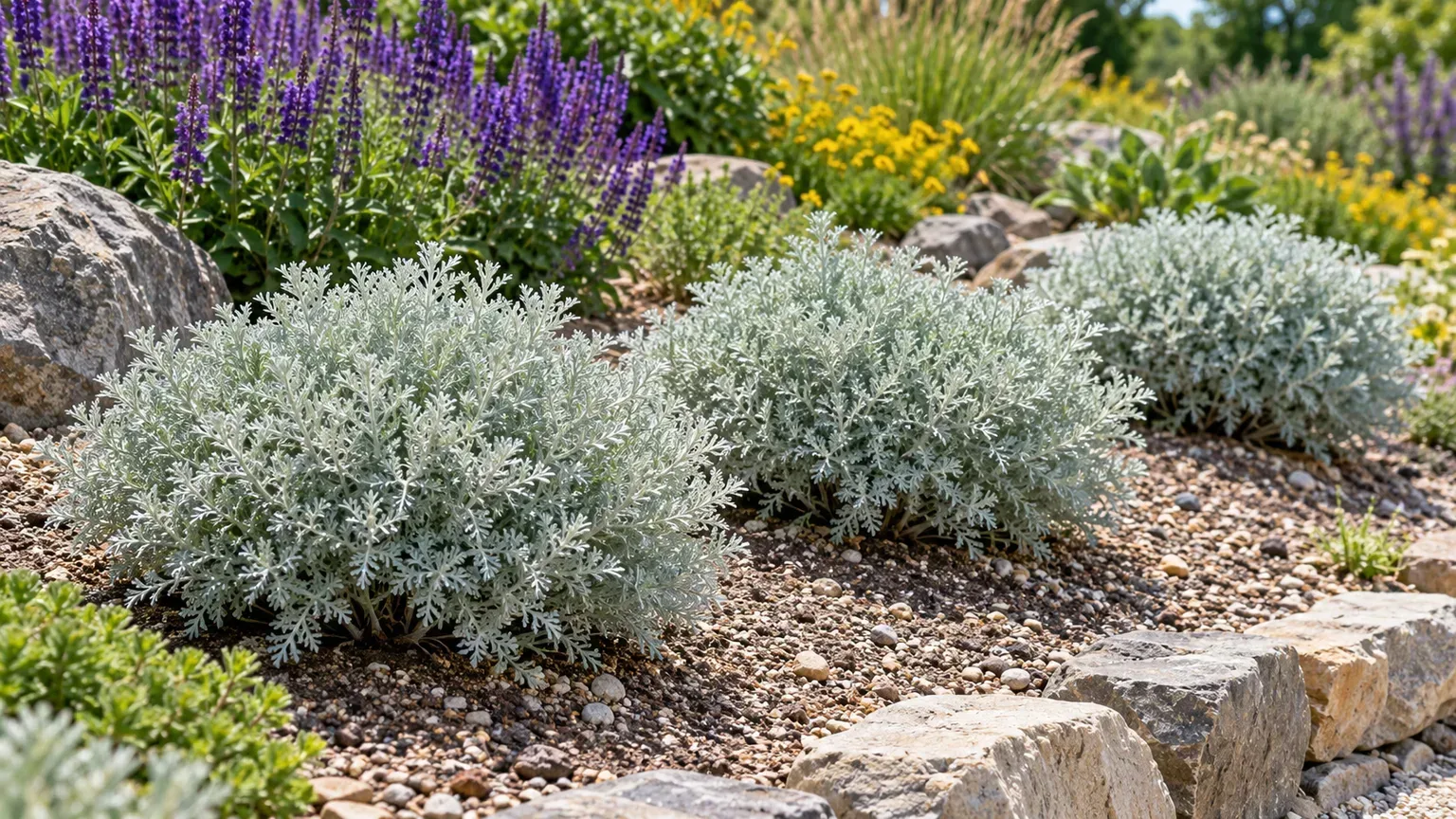
Space plants according to whether you want distinct cushions or a continuous edge. Leave roughly 15 to 18 inches between centers for separate mounds, adjusting to the mature width shown on the plant label. Closer spacing fills a border sooner but makes airflow and individual shape less visible; widely spaced plants take longer to meet, so keep the gaps weeded rather than expecting this cultivar to close them quickly.
The RHS describes the plant as rhizomatous, while garden profiles commonly emphasize its compact mound. That combination is a reminder to watch the plant in your own conditions: some outward spread is possible, but it is not a substitute for a rapidly spreading ground cover. Remove a section that strays into a path or neighboring plant when the soil is soft, and leave enough room for air around the foliage.
Water new plants differently from established ones
A newly planted clump needs steady moisture while roots extend into the surrounding soil. For the first several weeks, check the root ball and nearby ground every few days during dry or warm weather. If the soil is dry below the surface, water slowly at the base; if it is still cool and damp, wait. This check is more useful than a fixed weekly interval because sandy beds, clay, rainfall, and exposure dry at very different rates.
After the plant is established and has resumed active growth, reduce supplemental watering. Water during a prolonged dry spell if the root zone has dried several inches down, then let excess water drain away. Briefly limp leaves on a hot afternoon may recover after temperatures fall; do not water automatically when the soil is already moist. A soft, yellowing mound in wet soil is more likely to need drier conditions and improved airflow than another drink.
Potted plants dry faster than in-ground plants, so inspect the mix more often. Water until it drains through the holes, empty any saucer, and wait until the upper part of the mix dries before watering again. In winter, container roots may stay wet for longer even when the foliage is not growing, so reduce watering in response to cooler temperatures and slower drying.
Grow it in a container with a winter plan
‘Silver Mound’ can work in a pot for a patio, step, or sunny terrace, and the RHS lists patio and container use among its recommended garden settings. Choose a stable container with unobstructed drainage holes and enough room for the root ball plus modest growth. A very large pot is not automatically better: excess wet potting mix around a small root system can take longer to dry.
Use a free-draining outdoor potting mix, ideally one formulated for container perennials, and keep the crown at the surface. A gritty amendment can improve structure, but do not rely on a thin gravel layer at the bottom of the pot. The container needs actual drainage holes, and water should be able to escape freely after each soaking. Keep it in full sun with air around the foliage rather than wedging it into a damp, shaded corner.
Container roots experience more temperature swings than roots in the ground. In a cold-winter area, group pots against a sheltered wall or move them to a protected unheated spot after growth slows; do not keep the plant warm indoors. In a wet-winter climate, shelter it from repeated rain while allowing air circulation and occasional watering if the mix dries. Check the root ball before spring growth begins and repot only when roots have filled the container or the mix has broken down.
Skip routine fertilizer
Routine fertilizer is usually unnecessary in a garden bed that supports normal growth. Iowa State Extension recommends not fertilizing ‘Silver Mound’, and its discussion of the open-center problem points to soils that are too fertile and moist. A plant with thin growth is not automatically hungry; first check whether it is shaded, crowded, saturated, or simply old enough to need division. (Iowa State University Extension and Outreach)
If a soil test identifies a deficiency or surrounding plants show a broader nutrient problem, correct it according to the test rather than guessing with repeated feeding. Keep any amendment light and away from the crown. Strong growth is not always better growth for a compact foliage perennial: lush stems can lose the rounded shape that makes the plant useful.
Prune for shape without cutting into old wood
Pruning should preserve the living crown while removing winter-damaged or wayward growth. The RHS recommends a light spring cut to maintain shape and warns against cutting into old woody stems that lack buds. Garden Design’s broader artemisia guidance describes a possible early- to midsummer trim to reduce flopping; for ‘Silver Mound’, use that as a light, timely shaping option rather than an instruction to shear hard every year. (RHS; Garden Design)
Use a light spring cleanup and optional summer trim
In early spring, remove dead leaves and any stems that are clearly winter damaged. Use clean shears and stop where you can still see live buds or green growth. If the mound is healthy, a comb-through with gloved fingers may be enough. Avoid cutting the whole plant to bare old wood, because dormant-looking woody stems may not produce new leaves from deep cuts.
If the mound begins to loosen before it flowers, a light trim around the outside can restore its outline. Iowa State recommends trimming before flowering to reduce center opening; Gardening Know How describes a midsummer trim around the appearance of the inconspicuous flowers. These are not reasons to remove half the plant on a fixed date. In a hot climate, trim earlier while the plant is actively growing; in a cooler garden, watch its shape and bloom timing instead of following a calendar copied from another region. (Iowa State University Extension and Outreach; Gardening Know How)
Flowers are small and not the plant’s main display. Clip them if you prefer a foliage-only cushion or want to limit seedlings, or leave them if you like the subtle summer texture. Removing flower stalks will not solve a wet crown, shade, or age-related center die-out.
Divide a hollow or crowded mound only when needed
Use the condition of the plant to decide whether to divide it. A healthy, full mound does not need to be lifted just because two or three years have passed. Gardening Know How suggests division every two to three years as a maintenance approach, but the RHS also lists several propagation methods without prescribing a fixed interval. In a dry site, a clump may remain attractive longer; in a fertile or damp site, it may open sooner. (Gardening Know How; RHS)
Divide when the center has died back or become hollow while firm, leafy growth remains around the edge. Early spring, as new shoots show, is a useful time because the divisions have a full growing season to root. Water the plant the day before if the soil is dry, then lift it with a spade. Separate the healthy outer sections with a sharp knife or spade and discard any dead, mushy, or woody center that has no viable shoots.
Replant the sections at the same depth, space them so air can move between mounds, and water them in. Keep the soil lightly moist as new roots establish, then return to the plant’s drier routine. If every section is weak or the crown is soft throughout, dividing may only spread a failing plant; improve the site or replace it with a plant better suited to the conditions.
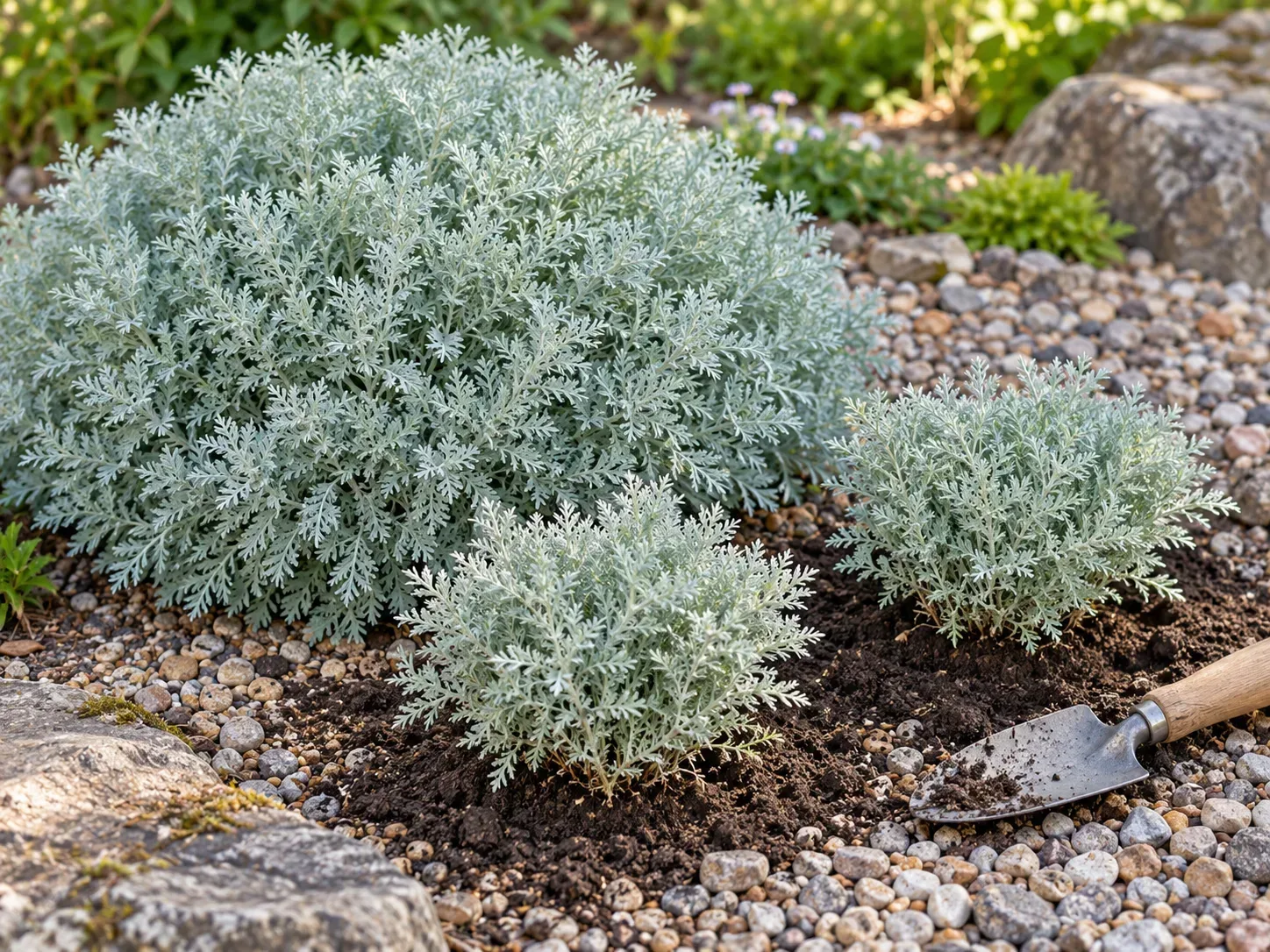
The RHS also lists softwood and semi-hardwood cuttings as propagation options. For most home gardeners, division is easier to assess because each piece visibly carries leaves and roots. Seed is less predictable for a named cultivar: a seedling can differ from the parent, so use division or rooted cuttings when you want to preserve the plant’s particular foliage and habit.
Troubleshoot an open center
An open, brown center is the signature complaint with this plant, but it can have more than one cause. Iowa State Extension associates it with soil that is too fertile and moist and recommends full sun and no fertilizer. Garden Design’s general artemisia advice also points to excess moisture and low air movement as conditions behind weak or floppy growth. Start with the site, not a fertilizer bottle. (Iowa State University Extension and Outreach; Garden Design)
Check in this order:
- Is the root zone wet? If it stays damp after rain, stop supplemental watering and address drainage.
- Is the plant shaded or crowded? Move it or thin nearby plants if it receives too little direct light or no airflow.
- Has it been fertilized heavily? Stop routine feeding and allow the plant to resume slower, firmer growth.
- Is the center old and dead while the outer ring is healthy? Divide in spring and replant healthy sections.
- Is the whole crown soft, blackened, or collapsing? Suspect rot rather than a simple shape problem; remove affected tissue and consider replacing the plant after fixing the site.
If the mound is only slightly loose, trim the outer growth lightly before bloom and watch for new shoots. If a wide hole persists, repeated shearing can leave the clump smaller without correcting its age or wet soil. Division or relocation is more effective when the plant’s structure, not just the surface outline, has failed.
Troubleshoot yellow, wilted, or mushy growth
Yellow leaves can follow several stresses, so read the soil before changing care. A few older leaves browning at the base are different from widespread yellowing across a soft, collapsing mound. When the soil is dry several inches down and the plant is newly planted, a slow watering may help; when the soil is wet, more water is the wrong response.
If the crown feels firm and only one side looks tired, check whether a nearby plant, wall, or roofline is changing its light or water exposure. If the whole plant is limp while soil remains saturated, pause watering and improve drainage. Yellowing with a mushy crown or sour-smelling soil suggests root or crown rot; the plant may not recover once the crown is extensively damaged.
If leaves turn brown after winter, wait until spring growth clarifies which tissue is dead. The RHS notes that heavy, poorly drained soil can cause dieback, so do not assume every brown patch is ordinary cold damage. Remove dead foliage carefully, keep mulch off the crown, and assess whether the bed stays wet through winter before repeating the same planting in the same place. (RHS)
Manage flowers, pests, and plant safety
When planted in sun and well-drained soil, ‘Silver Mound’ is generally low-maintenance. The RHS describes it as generally pest-free but notes possible susceptibility to honey fungus; Iowa State says artemisias tend to have few insect and disease problems when cultural conditions are right, while humid conditions may contribute to rust in the genus. Inspect plants before treating them: do not apply an insecticide to a yellowing mound unless you have identified an insect problem. (RHS; Iowa State University Extension and Outreach)
The gray foliage and small flower clusters are not a reason to use this ornamental as food or tea. North Carolina State Extension includes A. schmidtiana ‘Nana’ among artemisias and explains that compounds and potential toxicity vary across the genus; its genus-level listing warns about ingestion of large quantities. That is not a cultivar-specific dose estimate, so keep children and pets from chewing the plant and seek veterinary or poison-control advice after a meaningful ingestion. (North Carolina State Extension Plant Toolbox)
Use silver foliage where it adds contrast
The plant’s fine texture is most effective when it has room to read as a rounded form. Place it at the front of a sunny perennial border, repeat it along a path, or use one clump to soften the edge of a rock garden. Its cool silver tones can separate purple, blue, burgundy, or yellow flowers that might otherwise blur together. A neighboring plant should share the same preference for sun and drainage; pairing it with a moisture-loving perennial often makes one of them unhappy.
For a low-water composition, combine it with other plants suited to dry conditions and leave air around each mound. For a container, it can act as a compact foliage anchor beside a taller bloom and a trailing plant, provided the entire pot has adequate drainage. In a formal edging, repeat plants at consistent intervals and accept a little seasonal variation rather than clipping every mound into an identical ball.
Do not choose ‘Silver Mound’ as a substitute for lawn, a dense weed barrier, or a tall screen. The individual clumps stay low, grow at a moderate pace, and need some cleanup as they age. If you need immediate coverage, pair it with an appropriate ground cover rather than crowding Silver Mound and creating the damp, shaded conditions that make its shape worse.
Follow a simple seasonal care schedule
Spring: Remove winter-damaged leaves without cutting into old wood. Divide only if the center is hollow or the mound has become crowded. Plant new specimens once the ground is workable, keeping the crown at soil level.
Early summer: Check new plants for dry root balls and water them deeply when needed. Once established, inspect the soil before watering. If the mound begins to open, trim lightly before flowering and reassess sun, moisture, and fertility.
Late summer and fall: Leave the plant mostly alone as it slows down. Remove flower stalks if you do not want seedlings, but avoid heavy late pruning that may leave tender growth before cold weather. Keep fallen leaves from matting over the crown.
Winter: Keep the crown free of soggy mulch and standing water. In containers, shelter the pot from prolonged rain and severe exposure while leaving the plant outdoors and dormant. Do not keep watering by a summer schedule.
Decide whether Silver Mound fits your garden
This plant is a strong fit if your site is sunny, drains well, and needs a low silver accent that can handle dry spells after establishment. It is a weaker fit in a boggy border, dense shade, heavy clay that remains wet, or a humid summer climate where you need perfect foliage without periodic renewal. Those are site limits, not failures of effort.
Before buying, check the nursery label for the botanical name and cultivar. The RHS uses Artemisia schmidtiana ‘Silver Mound’, while Iowa State also groups ‘Nana’ with Silver Mound; plant labels and regional sources can vary. Check the expected spread, winter rating, and local summer performance, then allow enough width between the plant and its neighbors. If it repeatedly opens despite improved drainage, a more climate-adapted silver-foliage perennial may be a better long-term choice.
Conclusion
Grow ‘Silver Mound’ artemisia in full sun and soil that drains freely, water it more closely while it establishes than after it matures, and skip routine fertilizer. Keep the crown uncovered, prune lightly while there is live growth, and divide only when the center hollows or the plant loses its form.
When the mound declines, diagnose the conditions before making a cut: wet soil, shade, heat, and age call for different responses. If drainage and airflow are poor, relocation or replacement may be the honest fix. In the right site, this low perennial earns its place through the soft silver texture it keeps around the edge of the garden.



