How to Grow and Care for Skeleton Flower Successfully
Grow skeleton flower successfully with a cool woodland site, humus-rich soil, careful watering, a seasonal care plan, and patient propagation advice.
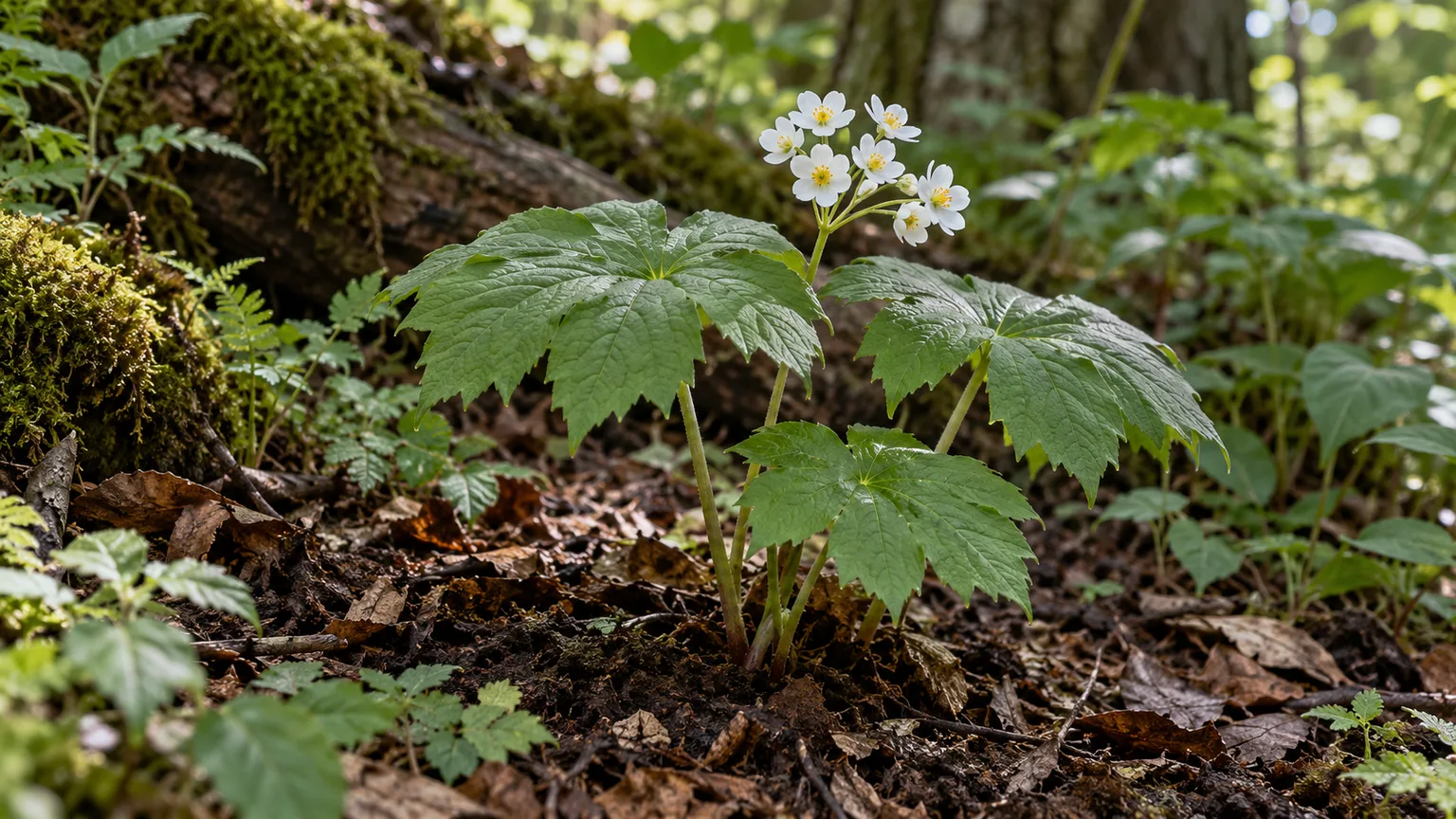
Skeleton flower, or Diphylleia grayi, is a woodland perennial for gardeners who can offer cool shade and soil that stays evenly moist without sitting in water. Give it those conditions and its umbrella-shaped leaves can form a slow-spreading groundcover; in late spring or early summer, its small white flowers may turn translucent after prolonged rain. The plant is not a good match for a hot, exposed border or a dry spot beneath thirsty tree roots.
The most useful decision happens before planting: check whether your site stays cool in summer, holds organic matter, drains after rain, and remains reachable for watering. If one of those conditions is missing, change the site or choose a different shade perennial rather than trying to compensate with frequent fertilizer or daily sprinkling.
| At a glance | What to plan for |
|---|---|
| Botanical name | Diphylleia grayi |
| Growth habit | Deciduous, rhizomatous woodland perennial |
| Mature size | Often listed around 12–18 inches tall and 2–3 feet wide |
| Light | Dappled shade to full shade; protect from hot afternoon sun |
| Soil | Humus-rich, evenly moist, and freely drained |
| Best start | Nursery-grown plant or division; seed is slower and less reliable |
| Seasonal cycle | Active growth in spring and summer, then natural winter dormancy |
Start with the right plant name
Use Diphylleia grayi when ordering. “Skeleton flower” is a common name applied to more than one plant, and the word can also appear in listings for unrelated plants such as skeleton weed. Michigan State University Extension specifically advises buyers to check the botanical name because common names can conceal a different species with very different behavior (Ask Extension).
The genus includes other umbrella-leaved plants, but they are not interchangeable with D. grayi. The RHS profile lists D. grayi as a correctly named species native to Japan; a field profile from Hokkaido University records it from Hokkaido, Honshu, and Sakhalin and describes its woodland habitat and broad rhizomes (RHS, Hokkaido University). D. sinensis is the related Chinese species, while D. cymosa is the North American species sometimes called American umbrella-leaf, as botanist Tsubasa Toji summarizes in a field note on the genus (Toji, Frontiers in Ecology and the Environment). Their shared genus does not mean every plant sold under an “umbrella leaf” label has the same range or garden performance.
Ask a nursery whether a plant is container-grown or bare-root, how recently it was divided, and whether it has completed dormancy. A small, well-rooted nursery start is a more dependable purchase than a packet of unlabeled seed promising instant colonies. Avoid collecting plants from the wild; buy cultivated stock and let a young clump establish before you divide it.
Is skeleton flower a fit for your garden?
This plant suits a woodland edge, a cool north-facing bed, or the shaded side of a building where the soil is rich and irrigation can reach the roots. It is less suitable for dry shade under a mature maple, hot southern exposures, windy openings, and places where water stands after storms. A USDA hardiness-zone number alone cannot describe the summer conditions it needs: a site may have cold enough winters yet still be too hot and dry in July.
Commercial horticulture references commonly list a broad range near Zones 4–9, but that range should be treated as a screening guide rather than a guarantee. Better Homes & Gardens emphasizes cool to cold winters and mild summers, and Homes & Gardens experts likewise stress shaded, consistently moist, well-drained conditions (BHG, Homes & Gardens). In a warm region, a protected site with a cool root zone may help, but it cannot erase prolonged heat or a dry summer. If your garden routinely bakes in the afternoon, choose a plant adapted to that climate instead.
The attraction is not only the flowers. The large, deeply lobed leaves add a bold, umbrella-like texture after flowering, and the plant dies back naturally for winter. It spreads by underground rhizomes, but the process is gradual; plan for a small colony over time rather than a fast groundcover that fills a bed in one season.
Choose a cool, protected woodland site
Look for dappled shade under a deciduous canopy or bright shade beside a wall, fence, or larger shrub. Gentle morning light can be tolerated in a cool climate, but hot afternoon sun can overheat the leaves and dry the soil quickly. A little protection from wind also helps reduce moisture loss from the broad foliage.
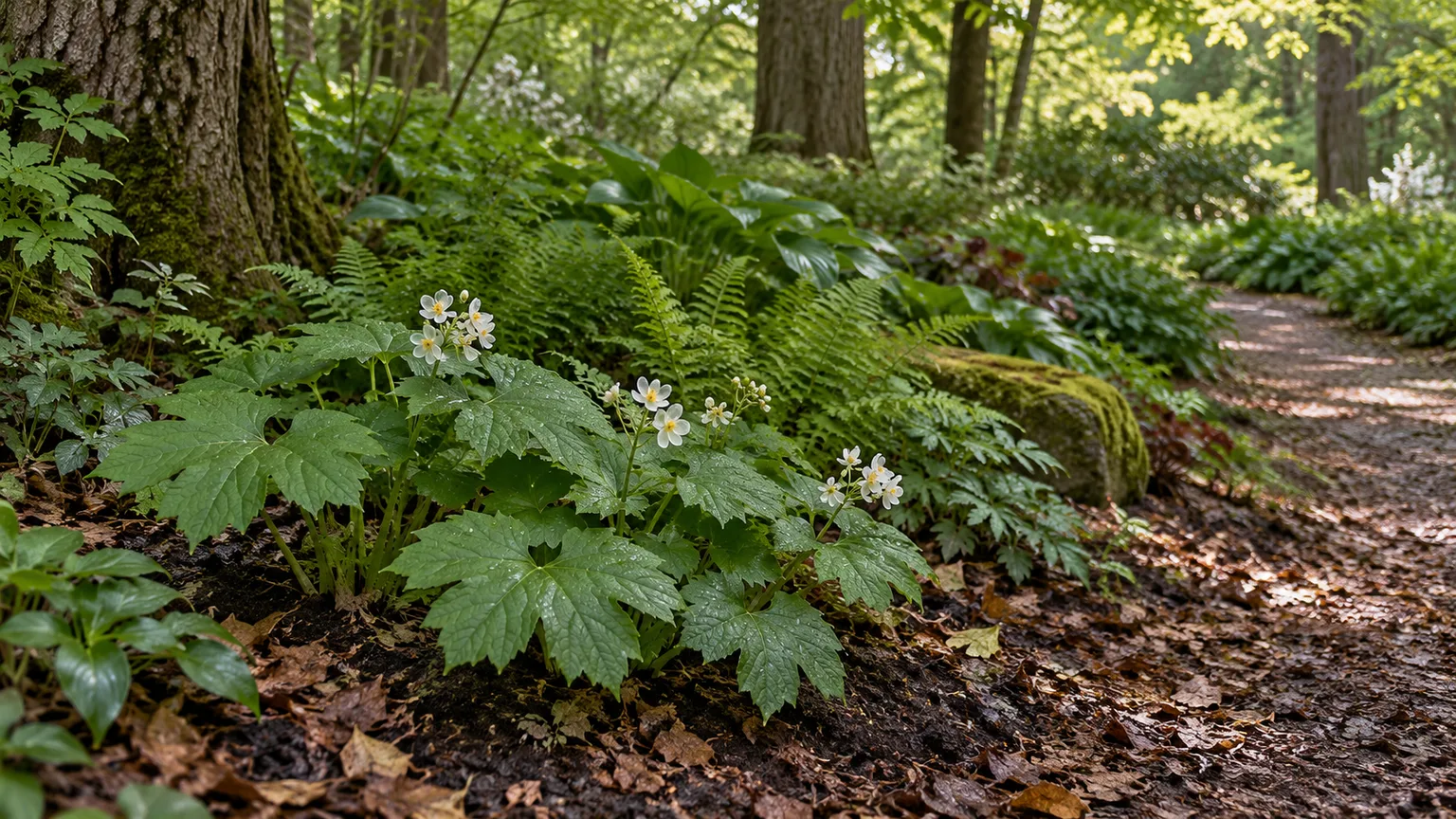
Under trees, inspect the soil before choosing the exact planting pocket. Tree roots may intercept rainfall and irrigation before it reaches a shallow-rooted perennial. After a dry week, push a finger or trowel into the soil a few inches away from the trunk: if the surface looks shaded but the root zone is dusty, the spot is not reliably moist enough without a dedicated soaker line or hand-watering access. Do not dig aggressively through large woody roots to make a planting hole.
Give the plant a place where you can see it and reach it. A low position near a path makes the leaves and flowers easier to notice, and it makes summer moisture checks less likely to be forgotten. Avoid a low pocket that collects runoff; “woodland” means damp forest-floor conditions, not a permanently flooded hollow.
Build soil that holds moisture and drains
Skeleton flower needs the middle ground between a dry, fast-draining mix and saturated soil. The root zone should feel cool and slightly damp beneath the surface, while excess water can move away after heavy rain. A loam rich in leaf mold, mature compost, or other decomposed organic matter helps retain moisture and supports the forest-floor structure described in horticultural growing guides.
Before planting, loosen and amend a broad area rather than creating a small pocket of rich potting mix inside dense soil. A sharply different pocket can hold water like a basin or dry at a different rate from its surroundings. Work in a modest layer of finished compost or leaf mold across the bed, and keep fresh amendments from piling against the crown. A soil test is useful if you suspect an extreme pH or nutrient problem; there is no need to chase a precise pH number when the plant is growing well.
If water remains in the bed long after a storm, improve the site before planting. A slightly raised woodland bed can increase drainage while retaining organic matter. Do not fill the bottom of a planting hole with gravel; it does not correct a poorly drained soil profile and can leave roots in a water-holding pocket. In sandy soil, organic mulch and regular checks matter more because the root zone may dry quickly.
Use shredded leaves or leaf mold as a light surface mulch. It moderates soil temperature and slows evaporation without requiring a thick, airless blanket. Keep the material loose around the crown, and replenish it as it breaks down rather than burying the plant in a mound every spring.
Plant nursery stock without burying the crown
Spring is a practical planting time because the plant can establish before winter; in a mild climate, early fall can also work while the soil is still warm enough for roots to settle. Better Homes & Gardens recommends planting nursery stock in spring after the frost risk has passed. If you are choosing between a dry late-summer period and a reliably cool, moist window, prioritize the window when you can keep the root ball evenly damp.
Water the nursery pot before planting. Dig a hole wider than the root ball but no deeper, loosen circling roots gently, and position the crown at the same level it sat in the container. Backfill with the amended native soil, firm it lightly to remove large air gaps, and water slowly so the root ball and surrounding soil make contact. If planting bare-root material, spread the roots outward without sharply bending them and follow the supplier’s instructions for crown depth.
Allow roughly 18–24 inches between starts if you want a connected patch over time; exact spacing depends on the size of the nursery plant and how quickly you want the bed to close. Do not crowd young divisions against large hostas or shrubs that will compete for water. Finish with a thin leaf-mold layer and mark the location so you do not disturb the dormant crown later.
Water slowly and judge the soil, not the calendar
Consistent moisture matters most during establishment and dry weather, but a fixed schedule is a poor substitute for checking the soil. Water newly planted skeleton flower deeply enough to moisten the root ball and nearby soil, then check again before watering. If the surface is dry but the soil below remains cool and slightly damp, wait; if the root zone is drying several inches down, water slowly at the base.
A soaker hose or drip line is useful beneath trees because it puts water near the perennial instead of wetting a wide area where tree roots can take it first. Apply water in a slow pass, pause, and repeat if the soil sheds water or the root ball is dry. During prolonged summer heat, check more often, especially in the first year. A shaded plant can still wilt when its roots are competing with a canopy for limited moisture.
Do not keep the crown wet all day or water automatically every morning. Yellowing leaves, a soft crown, or a sour smell around persistently wet soil point toward poor drainage or overwatering, not a need for more water. In winter, natural rainfall is usually enough for an in-ground dormant plant; containers need occasional checks so the root ball does not become bone-dry while avoiding standing water.
Feed lightly and let the plant go dormant
A surface dressing of mature compost or leaf mold in spring is usually the simplest feeding plan. The decomposing material improves the soil gradually and returns organic matter without forcing a flush of weak foliage. Better Homes & Gardens and Homes & Gardens both describe light feeding or compost as sufficient when the site and soil are suitable (BHG, Homes & Gardens).
Use a balanced fertilizer only if a soil test or a clear pattern of weak growth suggests a nutrient shortage. Follow the product label for application and dosage; more fertilizer will not repair hot exposure, drought, saturated soil, or a buried crown. Avoid feeding late in the season, when the plant is preparing to die back.
Skeleton flower is deciduous. Let the leaves yellow and collapse on their own after the growing season, then remove mushy or diseased debris if present. Healthy fallen leaves can remain as a light woodland mulch. Do not cut down green foliage just because flowering has finished; it is still storing energy in the rhizome for next year.
Know why the flowers turn clear in rain
The white petals are not changing pigment like a chameleon. In dry conditions, tiny air spaces in the petal scatter light and make the flower appear white. When water occupies those spaces, the difference in how light passes through the tissue is reduced, so the petals transmit more light and look translucent. A peer-reviewed field note describes skeleton flower petals becoming glass-like after prolonged light rain and remaining clear while they dry, rather than changing instantly at the first raindrop (Toji, Frontiers in Ecology and the Environment).
That means you should not keep the plant wet to force the effect. A short shower may not make every flower look transparent, and splashing a bloom with a hose is not a substitute for the natural wetting and drying cycle. The delicate flowers are most interesting when observed outdoors after rain, but the plant should be grown for its woodland foliage and seasonal character as well as this brief display.
The bloom window is short and varies with climate. In its native range, Hokkaido University’s field profile records flowering around June and July; in a garden, local spring temperatures and the plant’s maturity can shift the calendar. If a nursery plant does not bloom in its first season, that alone does not mean it is failing.
Follow a simple seasonal care calendar
Skeleton flower asks for less intervention once its site is right. Use the season to check the root zone, protect the crown, and avoid disturbing a plant that has naturally gone dormant.
| Season | What to do |
|---|---|
| Early spring | Watch for new shoots, renew a thin layer of leaf mold, and plant or divide only when the soil is workable. |
| Late spring to early summer | Keep the root zone evenly moist; note flowering and check that afternoon sun is not scorching the leaves. |
| Midsummer | Check soil beneath tree canopies during dry spells and water slowly if the root zone is drying. |
| Fall | Sow fresh seed outdoors if using natural winter stratification; let foliage die back naturally. |
| Winter | Leave the in-ground crown undisturbed; protect container roots from extreme exposure while maintaining drainage. |
Do not rake away every leaf from the bed. A thin layer of clean leaves mimics the organic cover of a woodland floor, while a thick wet mat over the crown can trap moisture and hide emerging shoots. Keep the plant identifiable with a marker so spring cleanup does not mistake its young shoots for weeds.
Troubleshoot stress before changing the soil
Start with the recent weather and the root zone. The most common causes of decline are too much direct heat, inconsistent moisture, or soil that stays saturated. Make one change at a time and watch new growth; old damaged leaves will not become healthy again.
Leaves scorch, wilt, or brown at the edges
Check the plant at the hottest part of the day. If the soil is dry several inches down, water deeply and add a light leaf-mold mulch. If the soil is already moist, look for sun exposure, hot reflected light from masonry, or wind. Move a potted plant into brighter shade; for an established in-ground plant, temporary shade cloth or a nearby taller plant can reduce stress while you decide whether transplanting is warranted.
If wilting continues when the soil is damp, inspect the crown and drainage rather than adding more water. Broad leaves can droop during heat even when soil is moist, so judge recovery in the cooler evening and check whether new leaves are forming normally.
Growth collapses or the crown turns soft
Persistent sogginess can deprive roots of oxygen and encourage decay. Stop automatic watering, clear clogged mulch from the crown, and confirm that runoff has an outlet. If the bed remains wet after ordinary rain, relocate the plant during a cool period or build a better-drained raised bed before replanting.
Remove only clearly rotten tissue with a clean tool; do not divide a weak plant as a rescue experiment. When moving it, preserve as much healthy root and crown as possible, replant at the original depth, and keep the soil slightly moist while it re-establishes. A plant that has lost all firm crown tissue may not recover.
A mature plant makes few flowers
First confirm the plant is mature and settled. Newly planted or recently divided clumps can focus on root growth before they flower. Then check whether the site receives too much shade to support vigorous growth, whether leaves are being cut back early, and whether the root zone dries under trees. Adjust moisture and light before reaching for fertilizer.
Also confirm that the plant is D. grayi and not a related species with a different appearance or flowering window. If healthy leaves return year after year but flowers remain sparse, give the clump another season under steady moisture before dividing or transplanting it.
Divide a healthy clump only when needed
Division is the quickest way to make another plant, but it interrupts a slow-growing perennial. Wait until the clump is well established and large enough to spare a section; do not divide a small nursery start simply because you want more plants. Early spring, as shoots emerge and the soil is workable, is a practical time to lift and replant.
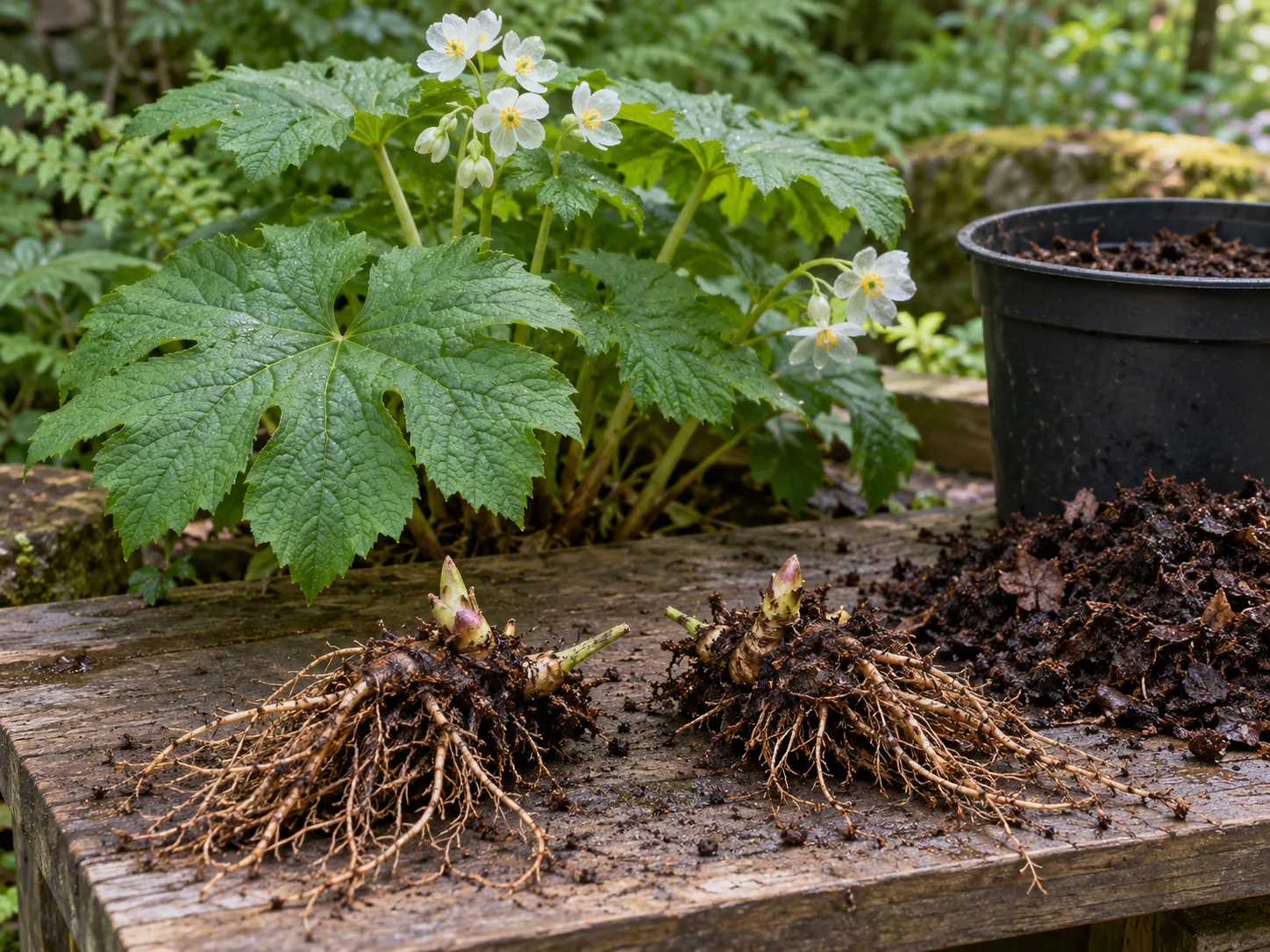
Water the clump the day before if the soil is dry. Use a fork to loosen soil around the outer edge, lift only as much of the rhizome as necessary, and keep the crown and fine roots intact. With a clean sharp knife, separate sections so each has a firm crown bud and a reasonable amount of roots; a long bare rhizome piece without a viable crown is unlikely to establish well.
Replant divisions immediately at the previous crown depth, water them in, and shade them from strong wind while they recover. Keep the soil evenly moist—not waterlogged—through the first growing season. Expect establishment rather than instant flowering; if a division wilts temporarily, check soil moisture and exposure before feeding it.
Start skeleton flower from seed with patience
Seed is an option when nursery stock is unavailable, but germination is slow and unreliable. Michigan State University Extension’s Ask Extension response recommends confirming the seed’s botanical identity, sowing outdoors in fall to let winter weather break dormancy, or refrigerating seed for two to three months before indoor sowing. It notes that poor germination is normal and advises sowing several times more seed than the number of plants you hope to raise (Ask Extension).
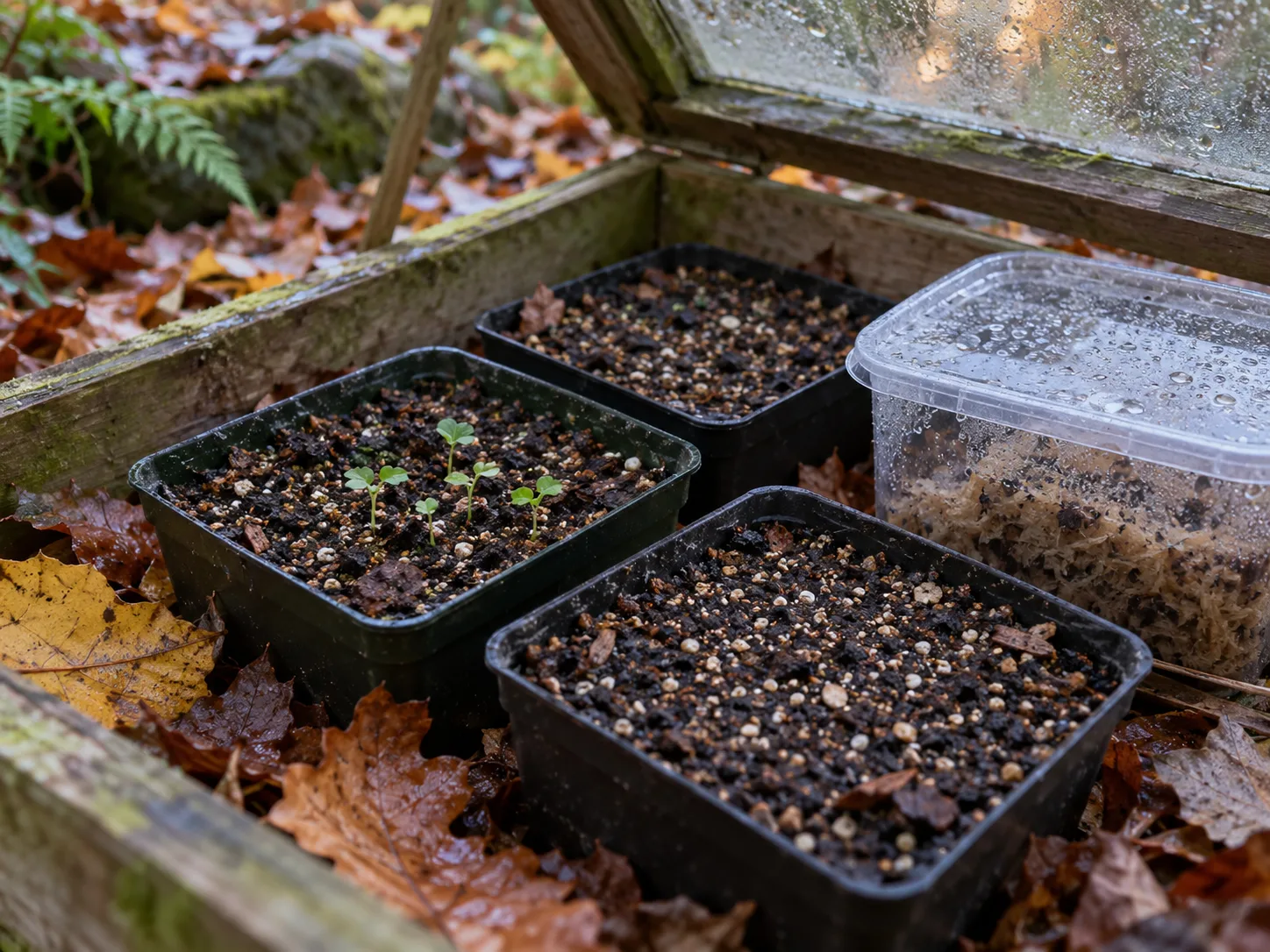
For indoor sowing, use a clean pot or tray with drainage and a moisture-retentive seed mix. Keep the seed damp, not submerged, during stratification; label the container with the plant name and date so it does not get discarded. After the cold period, sow according to the seed supplier’s directions; the Extension response specifies about one-quarter inch deep and roughly six weeks before the local last frost for its indoor method. Keep the medium evenly moist and out of harsh direct sun.
For outdoor sowing, choose a protected shaded bed or pot that will not dry out, flood, or be disturbed during winter. Mark the spot clearly and protect it from animals and spring cleanup. A plant-propagation database describes germination as potentially taking a year or more, so a seedling may take multiple seasons to reach transplantable size and longer to flower than a nursery-grown division; treat that as a patient project, not a firm deadline (Plants for a Future).
Do not assume every online listing is viable because the packet shows a transparent flower photo. Ask whether the seed is fresh, correctly identified, and treated for dormancy. If you only have a few seeds and want a reliable garden display, buy a rooted plant instead.
Grow it in a container if the site needs control
A container can help when garden soil drains poorly or when you need to move the plant away from afternoon heat. Choose a pot with several drainage holes and enough width for the rhizome to spread. Use a moisture-retentive, airy mix with organic matter rather than dense garden soil alone, and place the pot in outdoor shade. Better Homes & Gardens also notes that container culture is possible if the plant still receives its outdoor seasonal dormancy (BHG).
Containers dry faster than woodland beds, especially under a tree canopy or in wind. Check the mix with a finger, water thoroughly when the root zone begins to dry, and empty any saucer that holds runoff. Do not keep the pot indoors as a year-round houseplant; the plant is deciduous and needs a natural seasonal rest. In winter, protect the container from repeated freeze-thaw exposure and severe drying while preserving drainage.
Repot only when the root system fills the container or the mix has broken down. The plant’s slow growth makes frequent pot changes unnecessary, and unnecessary handling can damage the crown. If a container is too small to hold moisture through summer, shift up one pot size in spring rather than jumping to an oversized tub that stays wet.
Design a small woodland colony
Skeleton flower reads best as a repeating foliage plant rather than a single specimen stranded in a sunny border. Plant a few starts in a loose drift near a path, where their broad leaves can contrast with fine-textured ferns, sedges, or other shade plants. Leave breathing room around each crown so leaves can unfold and so you can inspect soil moisture.
Choose companions with compatible moisture needs. Ferns and other woodland perennials can work when they do not overwhelm the planting, but avoid pairing skeleton flower with aggressive spreaders or large, thirsty plants in the same small root zone. A low layer of leaf mold and a canopy that lets in filtered light help the bed feel cohesive without forcing the skeleton flower to compete for every drop of water.
Treat this as a long-term planting. D. grayi expands gradually, and a colony is a result of good conditions over multiple seasons, not an immediate groundcover effect. Start with a manageable number of correctly labeled nursery plants, keep notes on when leaves emerge and bloom, and expand only after the first group proves it can handle the site.
Conclusion: match the habitat before you buy
The reliable route to skeleton flower care is to recreate a cool woodland root zone: dappled shade, organic soil that drains, and steady moisture through active growth. Protect it from hot afternoon exposure, account for tree-root competition, let it die back naturally, and resist overfeeding or frequent division.
Buy a correctly named nursery plant if you want the clearest path to establishment. Choose seed when you are willing to stratify it and wait through uncertain germination. If your site is hot, dry, or waterlogged and cannot be improved, select another shade plant; no watering schedule can make an unsuitable microclimate behave like a mountain woodland.



