27 Small Backyard Ideas to Transform Your Outdoor Space
Make a compact yard feel bigger with 27 small backyard ideas for layout, planting, seating, privacy, lighting, and low-cost upgrades you can use.
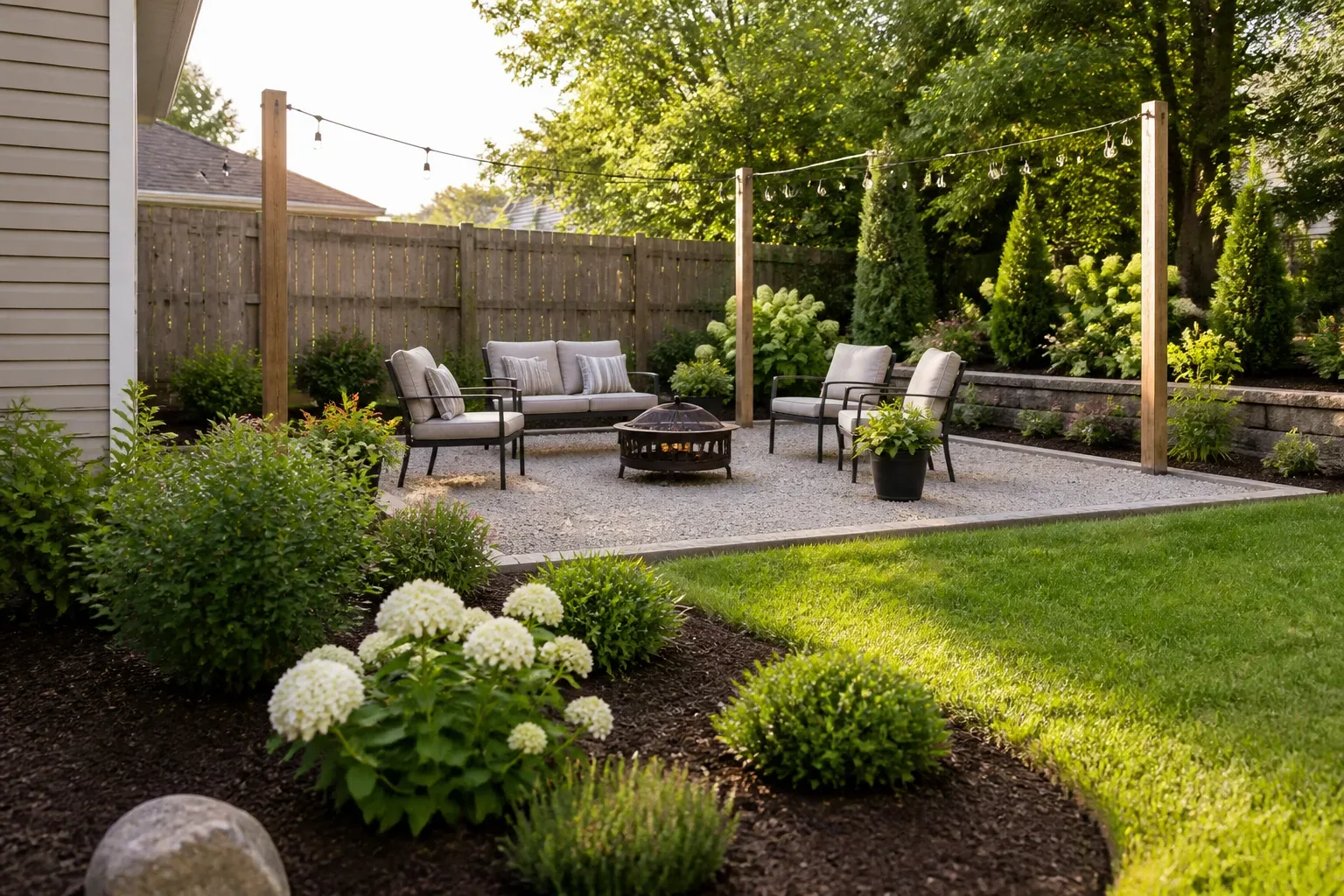
A small backyard becomes frustrating when every object competes for the same patch of floor. It becomes generous when the layout gives each square foot a job: a clear route through the space, a comfortable place to sit, a planting layer that uses height, and enough open ground to keep the yard from feeling stuffed.
The most useful small backyard ideas are not the flashiest ones. They are the changes that solve a real constraint—too much sun, no privacy, muddy access to the shed, nowhere to eat, or a love of gardening with no room for another bed. Use the audit below to choose ideas that fit your site, climate, budget, and willingness to maintain them.
Audit the Yard Before You Add Anything
Measure usable space, sun, and access
Measure the space you can actually use, not just the property boundary. Note the width of the route from the house to the gate or shed, the door swing, steps, hose reach, and any place a chair must be pulled out. A beautiful bistro set is still a poor choice if it narrows the only path to 24 inches and makes carrying a watering can awkward.
Watch the yard at breakfast, midday, and late afternoon. Mark full sun, bright shade, reflected heat from walls, and the spots that stay damp after rain. The Royal Horticultural Society’s small-space planting guidance makes the same practical point in a different way: containers, shelves, railings, and walls expand the growing area only when plants are matched to the light and exposure they actually receive (RHS planting design for small spaces).
Check mature dimensions before planting or screening. A shrub that looks perfectly scaled in a nursery pot can cover a path, press against a fence, or shade a vegetable bed in a few seasons. In a tight yard, maintenance access is part of the measurement: leave room to prune, paint, clean leaves from drains, and repair a fence without stepping on your plants.
Pick one primary job and one supporting job
Choose the activity you want the yard to make easier. It might be morning coffee, weeknight dinners, growing herbs, giving children a safe play patch, or creating a quiet green view from the kitchen. Then choose one supporting job, such as privacy, wildlife, or storage. Trying to make a 300-square-foot yard serve as a dining room, pool deck, vegetable farm, play area, and lounge at the same time usually produces narrow paths and furniture that is used for storage.
Define two or three zones with changes in surface, height, or furniture—not with a wall around every function. A small gravel pad can be the lounge, a narrow bed along the fence can be the garden, and a stepping-stone route can connect the back door to the shed. This is zoning: assigning space before decorating it.
Make a Small Backyard Feel Larger
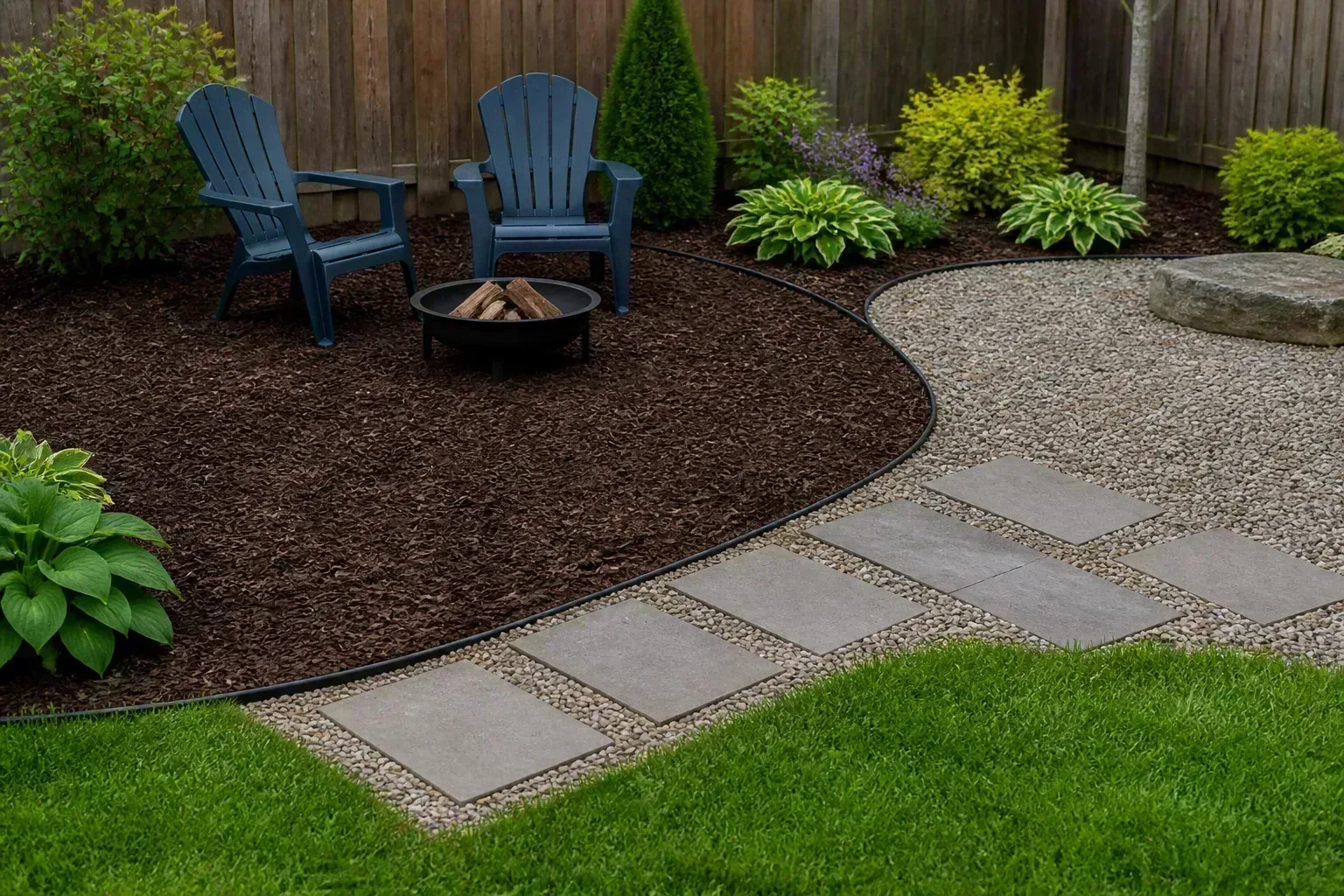
Ideas 1–4: Lead the Eye with Paths, Repetition, and Height
1. Run a path toward a destination. A path feels more valuable when it ends at something worth seeing—a bench, a tree in a pot, a gate, a fountain, or a brightly painted shed door. Keep the material consistent and let the route reveal the yard in stages. A path that simply cuts the lawn in half can make a small space feel divided; a path that frames a destination gives it depth.
2. Use a diagonal only when it improves circulation. A diagonal line can make a rectangular yard feel less boxy, but do not bend a path just for visual effect. Test the route with a garden hose or spare boards first. If the diagonal sends people through a planting bed or makes a wheelbarrow turn awkwardly, a straight path with a strong view is the better design.
3. Repeat one plant, pot finish, or hardscape material. Repetition makes a compact yard read as one composition rather than a collection of leftovers. Repeat a foliage color along the fence, use the same gravel in the seating and path zones, or place three similar containers at different heights. Limit the number of major materials; every new surface adds a visual seam and eventually another maintenance task.
4. Add height at the perimeter, not in the middle. A trellis, narrow evergreen, arbor, tall grass, or wall-mounted planter draws the eye upward while keeping the center open. Put the tallest element where it will not block the main route or cast unwanted shade on sun-loving crops. Height works best as a frame; a tall object dropped in the middle can make the yard feel smaller.
Use one visual trick at a time. Mirrors can brighten a shaded corner, but outdoor mirrors need secure mounting, weather-resistant construction, and a placement that will not send concentrated reflected sunlight onto dry plants or siding. A borrowed view through an open gate or clipped hedge is often more convincing and needs less cleaning.
The RHS has shown that small show gardens can still contain distinct planting, seating, and privacy ideas; one of its back-to-back examples was only 6 by 4 metres. The lesson is not to copy a show garden wholesale. It is to edit the palette, repeat a few strong forms, and let a small number of features carry the design (RHS small garden design examples).
Add More Garden Without Losing Floor Space
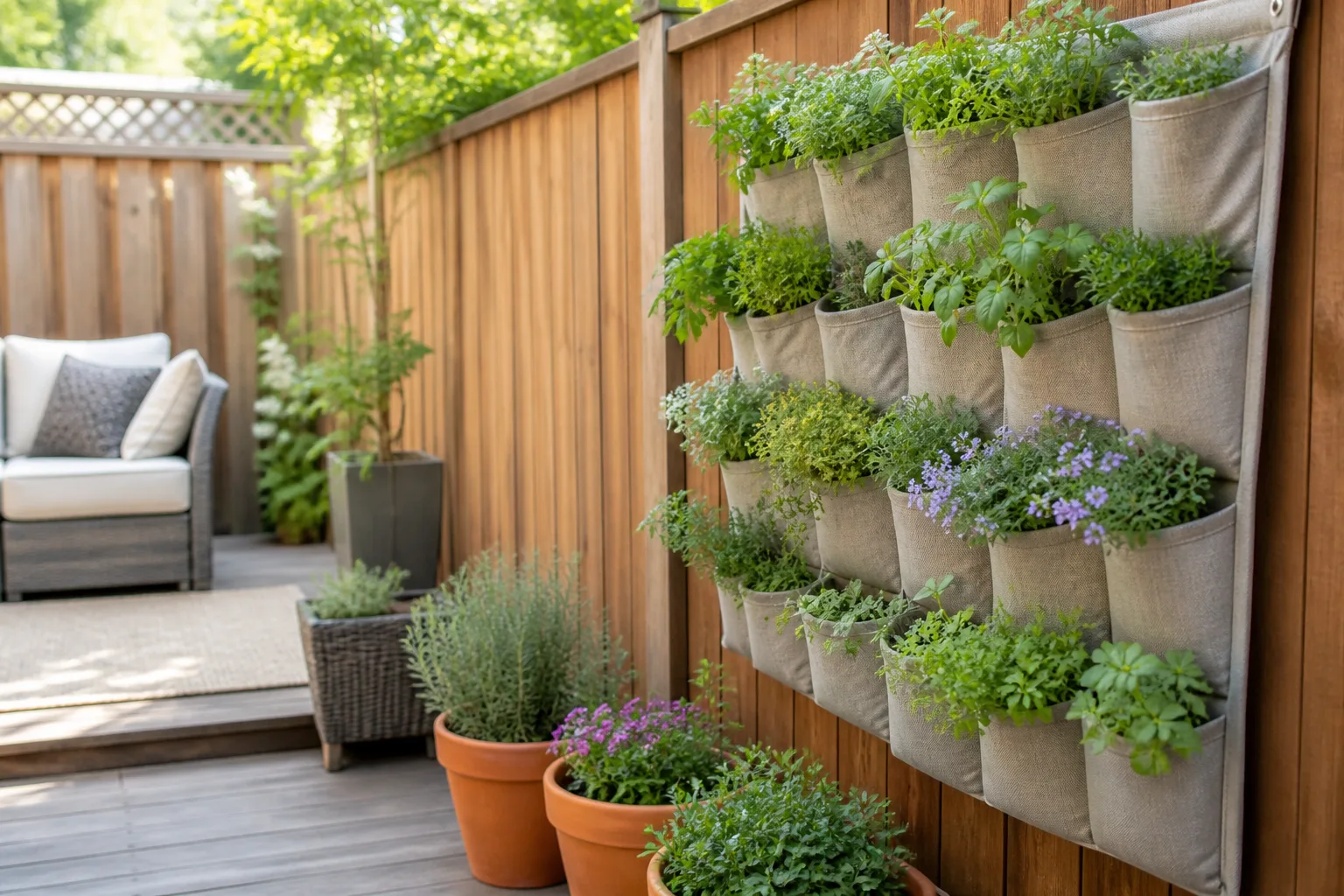
Ideas 5–9: Plant the Edges, Climb, and Raise the Harvest
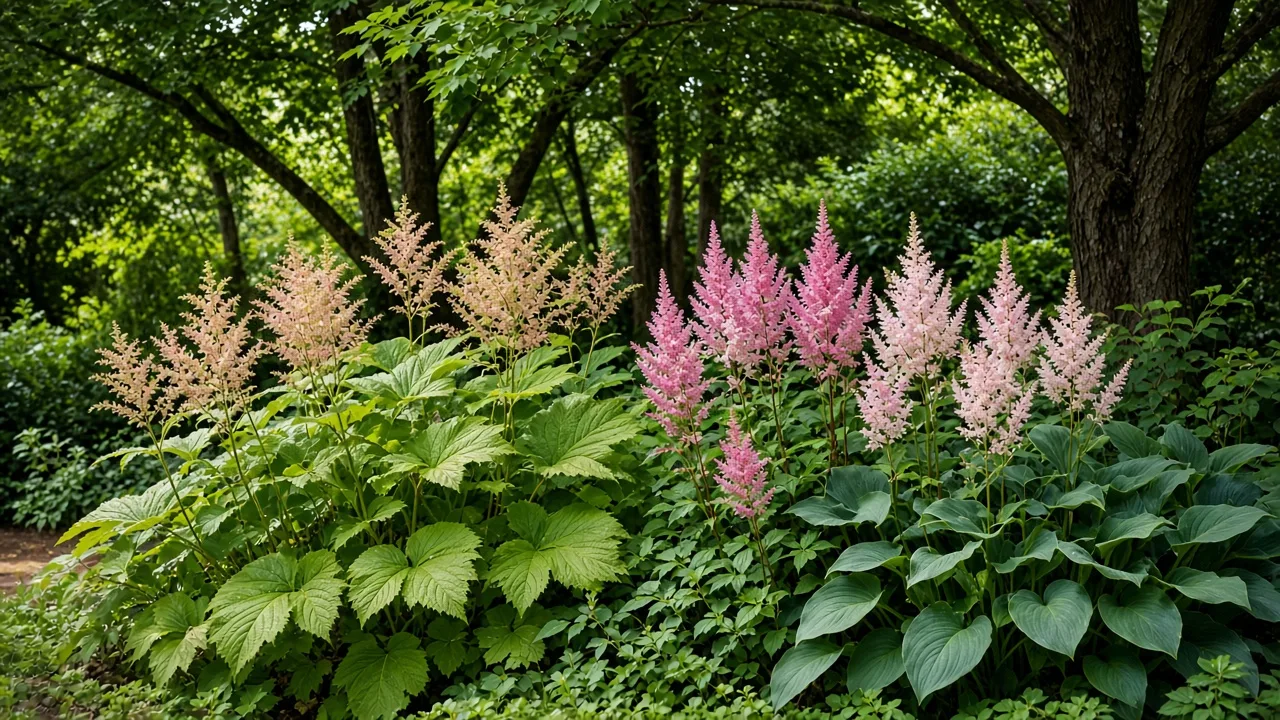
5. Turn the perimeter into a layered border. Plant the fence line in tiers: lower groundcover or herbs at the front, medium perennials or shrubs in the middle, and one restrained vertical layer behind. Keep the deepest part of the bed where it will not steal the turning space around a chair. Layering creates lushness without scattering pots across the lawn.
6. Grow a vertical herb or flower garden. A trellis, pocket planter, wall grid, or sturdy shelf can hold herbs, compact greens, and trailing flowers. Fasten it to a sound wall or independent frame, protect the wall from trapped moisture, and place it where watering is easy. Vertical gardens dry faster than ground beds because they have less soil volume and more exposed surface; group them near a hose and choose plants with similar water needs.
7. Build one narrow raised bed instead of several small ones. A raised bed gives you a defined root zone and makes a productive garden easier to reach. UNH Extension identifies raised beds as a useful option for small-space gardening when the site has enough sun; that condition matters more than the bed’s appearance (UNH Extension on raised beds for small-space gardening). Do not put a bed where it blocks a gate, covers a drain, or receives only reflected afternoon heat.
Make the bed narrow enough to reach its center without climbing into it. If you can access it from both sides, a roughly 3- to 4-foot width is a practical starting point; against a wall, go narrower. Use a bottom barrier only when a specific pest or structural problem calls for it, and never assume a barrier fixes poor drainage. The bed still needs a level base, an appropriate soil mix, and a plan for watering.
8. Use a narrow trellis for climbers, not a wide shrub. Climbers can provide flowers, edible crops, or screening while using a thin vertical plane. Choose a plant that suits your climate and the structure’s strength. A vigorous vine can pull on a lightweight trellis, escape into neighboring trees, or demand more pruning than a small yard allows, so check mature spread before planting.
9. Mix edible and ornamental plants in one productive border. A few culinary herbs, compact vegetables, and edible flowers can sit beside ornamental grasses or perennials. Put the crops you harvest most often closest to the door, and use taller plants at the back so they do not shade everything else. This makes the garden useful rather than merely full.
Ideas 10–13: Use Containers, Screens, and All-Season Structure
10. Group movable containers by sun exposure. Containers let you change the layout, protect tender plants, and use patios where there is no planting soil. Group pots that need similar light and water, put the largest at the back, and leave a clear gap for the hose and broom. A cluster works harder visually than isolated pots spread around the yard.
Container gardening is flexible, but it is not maintenance-free. Small pots dry quickly, dark containers can heat up in strong sun, and large wet pots become difficult or unsafe to move. Epic Gardening’s practical small-home advice is useful here: grow herbs you will actually use, match the crop to the light available, and choose containers that can be handled in the space you have (Epic Gardening small-home garden guidance).
11. Create privacy with a permeable screen. A trellis, slatted panel, hedge, or row of containers can block an uncomfortable sightline without sealing the yard from air and daylight. Screen only the view that bothers you; enclosing every side can make a small space dark and airless. Check the mature height of plants and keep access to the fence for repairs.
12. Give one plant the role of focal point. A small tree, sculptural shrub, bold container, or clump of ornamental grass can anchor the yard. Pick a subject with a mature size that fits the view from the house and a form that holds interest beyond one bloom period. One focal point is usually more effective than five competing “statement” plants.
13. Reserve a year-round corner. Evergreen foliage, persistent stems, bark, seedheads, or a weathered structure can keep the yard from disappearing after the main flowering season. The RHS specifically highlights evergreens, grasses, raised beds, and small greenhouses as ways to make a compact garden useful and interesting across seasons. In warmer climates, year-round interest may be foliage and shade; in cold climates, it may be structure that survives dormancy.
Before buying a plant, check hardiness, mature width, sun, water, and whether it spreads aggressively in your area. The “right plant” is the one that remains proportional and manageable where you live, not the one that looks best in a photo from another climate.
Build a Comfortable Outdoor Room
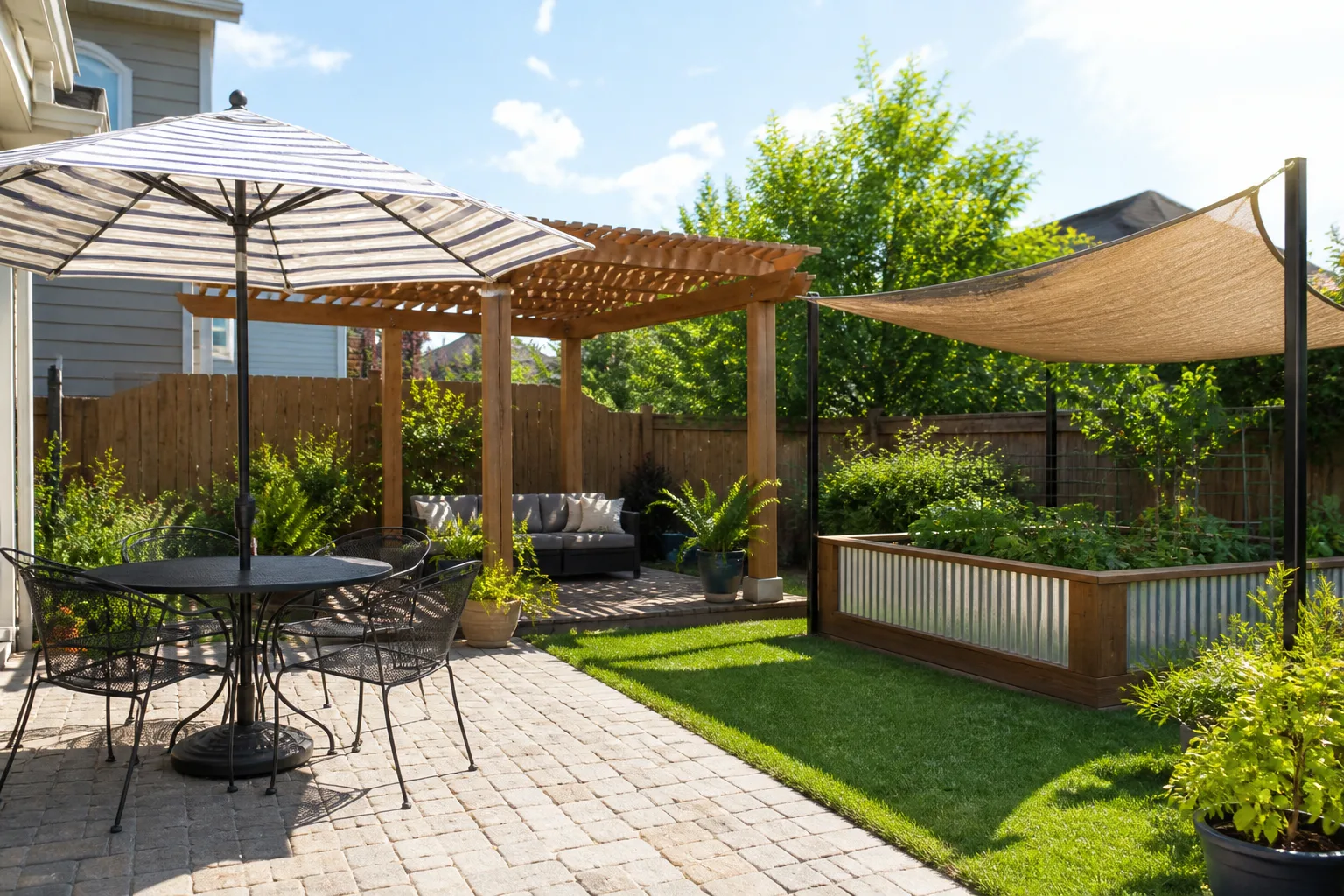
Ideas 14–18: Seats, Tables, Hammocks, Pergolas, and Curtains
14. Design the seating zone around the view. Face chairs toward the garden, a fire feature, or the best evening light rather than automatically lining them against the wall. Leave enough room to pull a chair out and walk behind it. If the primary job is conversation, a small pair of chairs may work better than a deep sofa that consumes the entire pad.
15. Choose folding or nesting furniture. A folding bistro table, stackable chairs, or nesting side tables give a compact backyard more than one configuration. Keep the storage location in mind before buying. Furniture that has to live outdoors in a wet corner will age faster than furniture with a dry, ventilated place to go.
16. Build a bench along the boundary. A bench against a fence or retaining wall can seat several people without the visual bulk of multiple chairs. Add a cushion only if you can store it dry, and slope or gap the seat so water does not sit on the wood. A bench also creates a useful edge for a narrow planting bed behind it.
17. Use a hammock or hanging chair only where the structure is real. A hammock can turn an unused strip into a destination, but two decorative fence posts are not automatically safe anchor points. Use healthy, appropriately spaced trees with protective straps or a stand rated for the load. For a hanging chair, verify that the pergola or beam is engineered for the attachment and movement.
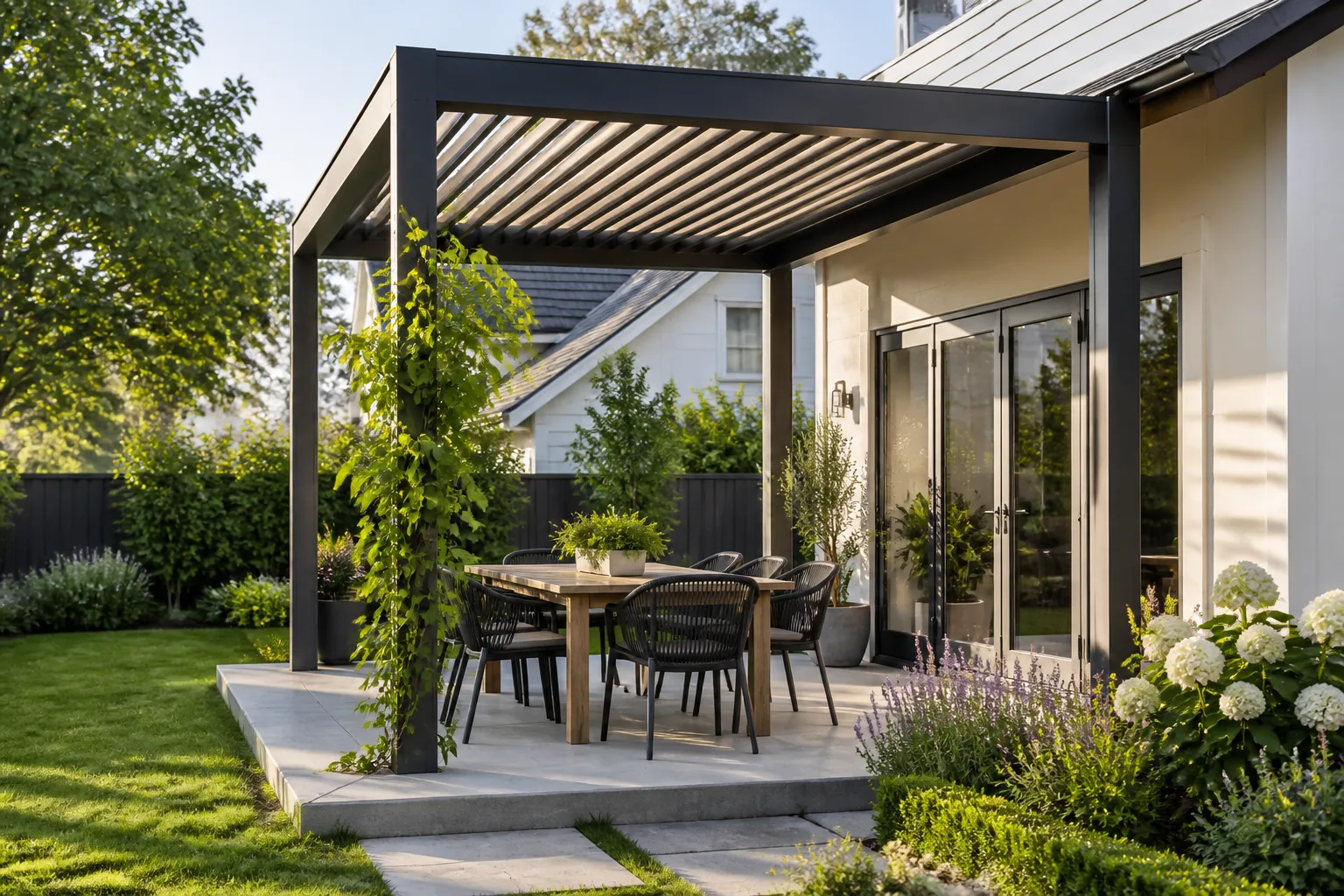
18. Put shade over the activity, not over the whole yard. An umbrella, shade sail, pergola, or curtain panel can make a small dining or reading zone usable at the hottest time of day. Start by tracking the sun angle; a roof that shades noon may leave late-afternoon seats exposed. Permanent structures need sound footings and local approval where applicable, while movable shade needs a wind plan.
Lifestyle garden coverage often begins with the simple idea of creating a place to sit and then works outward to privacy, dining, planting, and shade. That sequence is sensible: decide what the space must support before choosing how it should look (Southern Living small backyard ideas).
Ideas 19–21: Light, Fire, and Water, with Safety First
19. Hang warm outdoor-rated lights on the perimeter. String lights across a fence or between properly anchored posts can extend the useful evening hours without filling the floor. Use outdoor-rated products, protect connections from weather, and plug into a GFCI-protected outlet. Add low path or step lighting separately; a pretty glowing canopy does not show a trip hazard.
20. Create a small fire feature with a clear safety envelope. A portable fire bowl or compact fire pit can anchor a conversation zone, but the installation needs noncombustible ground, adequate clearance from structures and plants, and a way to extinguish and store fuel safely. Check local rules, wind conditions, and restrictions before buying. Do not place fire under a low pergola, beneath dry branches, or where smoke blows into a neighbor’s windows.
21. Add the sound of water without building a pond. A small recirculating fountain, wall spout, or sealed basin can give a courtyard a focal point and gentle sound. Place it where you can refill and clean it, and manage standing water so it does not become a mosquito problem. In a yard with young children or pets, choose a shallow, stable design or skip open water altogether.
After-dark features should be selected for the way the yard is used, not added as a glowing layer everywhere. One lighted path, one illuminated tree, or one fountain near a seat is enough to create a destination. More fixtures mean more cords, bulbs, cleaning, and glare.
Make Small Hardscape Work Harder
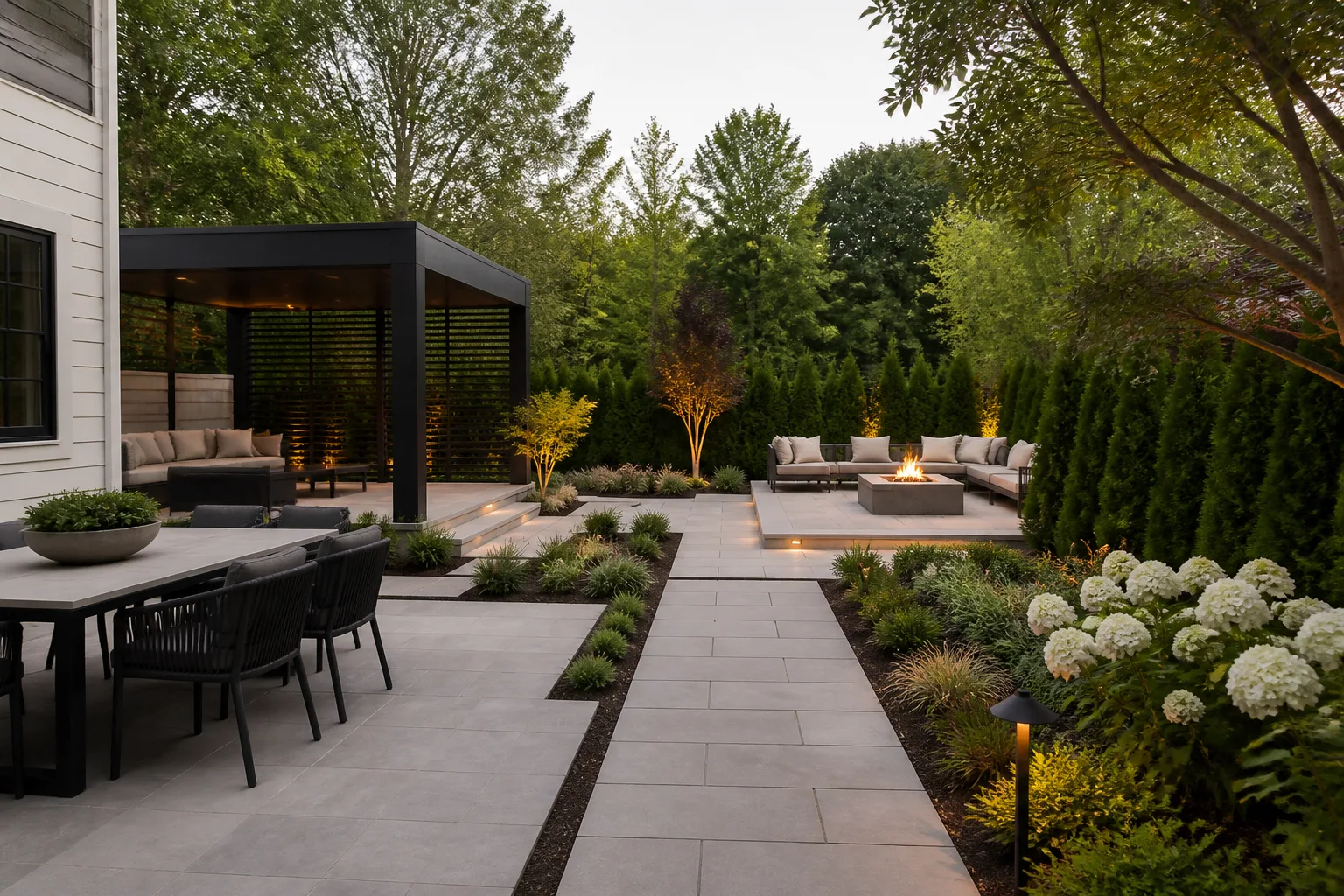
Ideas 22–24: Gravel, Pavers, and a Painted Surface
22. Use a compact gravel patio. Pea gravel is often a forgiving way to define a small lounge or dining zone and can be easier to phase than a poured slab. Remove grass, address drainage, compact the base, add appropriate edging, and use a stable layer deep enough for the local soil and traffic. Gravel shifts under narrow chair legs and may be uncomfortable for bare feet, so pair it with flat pavers where people walk or sit.
23. Lay stepping stones through an existing lawn or border. A short route can solve muddy traffic without paving the entire yard. Set stones level with the surrounding grade so they do not become trip points, and place them along the route people naturally take. If the route is used for a wheelbarrow, stroller, or heavy pot, choose a continuous surface instead.
24. Paint one tired surface. A back door, fence panel, bench, or shed can become the focal point for less money and less construction than a new structure. Clean and dry the surface, use a coating designed for the material and exterior exposure, and test a sample in the actual light. Do not paint over rot, damp wood, flaking rust, or a surface that needs to breathe.
Hardscape is not only decoration. It controls where chairs stand, where water travels, and how easily a person can reach the garden. Keep a generous open center when the yard is very small; a little unused space is what makes the other zones usable.
Ideas 25–27: A Potting Nook, Mini Greenhouse, or Wildlife Feature
25. Fold a potting station into a wall or fence. A narrow bench with hooks, a shelf for hand tools, and a lidded bin for soil can replace a freestanding shed. Keep potting mix dry, store sharp tools securely, and make sure the bench does not narrow the main route. A wall-mounted station is especially useful when the yard’s best growing light is near the back door.
26. Use a mini greenhouse only if you have a seasonal plan. A small greenhouse or cold frame can extend sowing and protect tender plants, but it still needs ventilation, watering, and a stable level base. In a hot climate, a glass box in full afternoon sun may become a plant oven; in a cold climate, it may need anchoring against wind and insulation during freezes. Choose the smallest structure that solves a real propagation or overwintering need.
27. Add one wildlife feature with a clear purpose. A birdhouse, birdbath, shallow pollinator water station, or nectar-rich planting can make a compact yard feel alive. Put it where you can clean and refill it, keep it away from an obvious predator ambush point, and select plants that support local wildlife rather than chasing a generic “pollinator” look. A birdbath that is never cleaned is not a useful feature, and a feeder placed beside a window may create more mess than enjoyment.
Small gardens do not need every feature at once. A potting nook supports the gardening job, a mini greenhouse supports propagation, and a wildlife feature supports observation. Choose the one that reinforces your primary use instead of letting a novelty structure take the last open patch.
Match the Idea to Your Budget and Maintenance Tolerance
Start with the cheapest intervention that tests the idea. Mark a proposed patio with rope, move existing chairs into position, hang a sheet where a screen would go, or group your current pots before buying new ones. If the temporary version blocks a path or receives the wrong light, you have learned something without paying for materials.
For a very low budget, rearrange containers, paint one focal surface, add a few level stepping stones, define a small mulch or gravel pad, and use existing trees or fences for shade and privacy. For a moderate budget, choose one anchor project—one raised bed, one pergola bay, one compact patio, or one trellis—and finish it before adding accessories. A larger budget can improve drainage, build permanent hardscape, or add electrical and structural work, but those projects deserve a site plan and professional input where code or load is involved.
Maintenance is the hidden price of a small backyard idea. A dense planting may look lush but require constant trimming; a gravel path needs raking and edging; a vertical garden needs frequent watering; an outdoor rug needs drying and storage; and a fountain needs cleaning. Choose the level of work you will still enjoy in the hottest, busiest, or wettest month—not only the level you imagine on installation day.
A low-cost weekend sequence
Use this order for one focused refresh:
- Audit: mark the primary job, sun, drainage, access, and one irritating failure.
- Test: place furniture, pots, rope, or cardboard to mock the new zone.
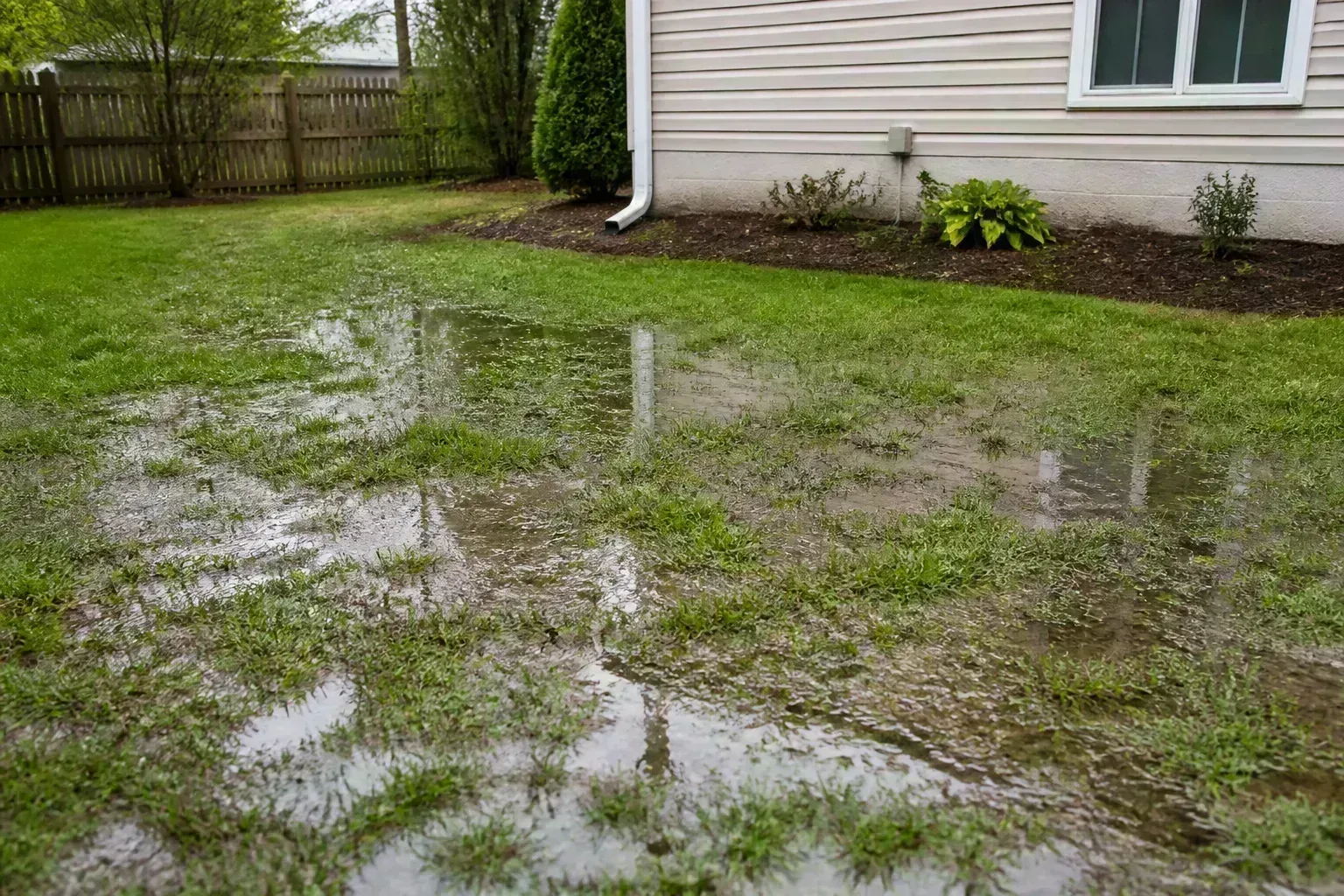
- Fix the ground: solve standing water, level the route, and protect access before styling.
- Build the anchor: install the gravel pad, raised bed, trellis, bench, or shade element.
- Add planting: use a limited palette matched to the light and mature size.
- Finish for use: add one light layer, a dry storage solution, and only the decor that supports the activity.
Stop when the space works. An open chair path, a plant you can reach, and a dry place to set down a drink are more valuable than one more decorative object. If the first zone succeeds, repeat its materials or planting rhythm in the next zone rather than starting a completely different style.
Conclusion
The best small backyard ideas make the yard easier to use before they make it more photogenic. Begin with dimensions, sun, drainage, access, and the activity you want to support. Then choose one visual strategy—such as a destination path, repeated planting, or perimeter height—and one practical upgrade, such as a defined seating pad, raised bed, trellis, or shade structure.
You do not need to fill every inch. Leave enough open ground for people to move, plants to be reached, and the yard to breathe. A compact space with a clear route, a comfortable seat, useful planting, and a realistic maintenance plan will feel larger and give you more pleasure than a crowded collection of features.