Stand-Up Weed Puller: Does It Really Remove the Root?
Learn how a stand-up weed puller works, when damp soil helps, which weeds it suits, and why dandelions can still regrow after a careless pull.
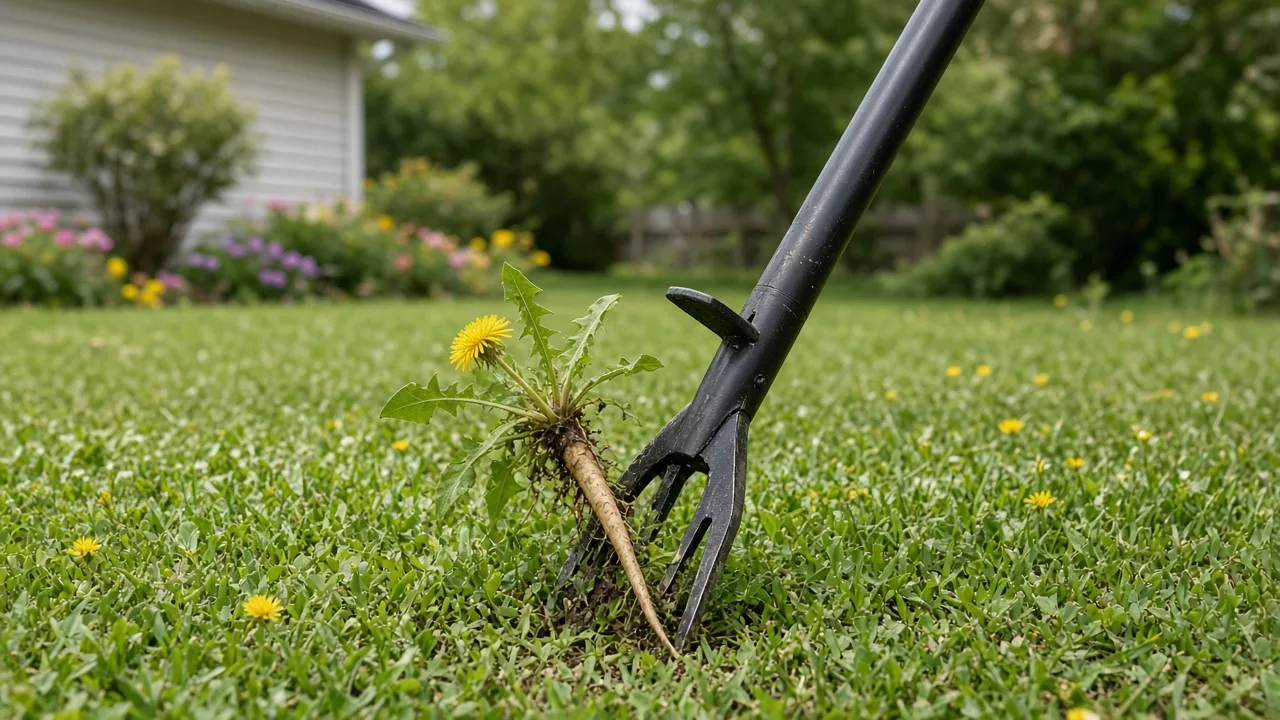
If bending, kneeling, and digging at ground level are the part of weeding you dread, a stand-up weed puller can be a genuinely useful change of method. Its long handle lets you position a claw over a weed, drive it into the soil with your foot, and use the handle as a lever while keeping your torso upright.
The important qualification is that this is a root-removal tool, not a magic weed eraser. It is at its best on isolated, upright weeds with a central crown or taproot, especially in a lawn or open bed. It is a poor match for a mat of runners, a woody stem, a dense planting where every puncture matters, or a crack too narrow for the head. Knowing that boundary is what makes the tool feel efficient instead of frustrating.
The short answer: it solves the posture problem first
A stand-up weeder earns its place when the job is repetitive but the weeds are individual. You can move down a lawn, line, or young bed, center the claw, press with a foot, tilt the shaft, and eject the weed without stopping to squat for every plant. That reduces the number of deep bends and kneeling transitions, which is the main practical benefit.
It does not make the work effortless in every soil. You still need enough downward force to enter the ground and enough control to lift the root without tearing out a plug of turf. Think of it as transferring work from your back and knees to your legs, hands, and the tool’s leverage. That is a meaningful improvement, but it is not a guarantee of pain relief or a substitute for taking breaks.
What the tool actually does at ground level
Most stand-up claw weeders use several pointed tines that surround or grip the weed near the crown. On a typical Saker-style model, the product description lists a long handle, four claws, a foot-assisted insertion step, and a release action for dropping the extracted weed; the maker also describes a detachable, three-section version around 46 inches long (Saker product description). Those are design features, not a promise that every weed will come out whole.
The mechanism works in four stages. The tines enter close to the center of the plant, the foot helps push them below the crown, the shaft tilts to pry the plant upward, and the release lets you clear the head. The lever matters because a small rotation at the handle can lift a root ball that would be awkward to pinch and pull by hand.
Why root contact matters for dandelions
Common dandelion (Taraxacum officinale) is a good test case because it grows from a basal rosette and a persistent taproot rather than from a tall stem that mowing can remove. UC IPM reports that established roots are commonly found in the upper 6 to 18 inches of soil and that even a root section about an inch long can produce new growth (UC IPM’s dandelion guide). That is why a clean-looking break at the soil line may only be a temporary win.
The stand-up puller improves your odds by gripping below the leaf crown instead of relying on the foliage. Still, the head can only lift what it has engaged. If the soil is hard, the plant is mature, or the claw is placed off-center, the taproot may snap. Inspect what comes out. A pale, tapered root attached to the crown is a better result than a handful of leaves and a disturbed surface.
Identify the weed and the surface before you pull
Start with the site, not the tool. A solitary dandelion in turf, a small plant in loose mulch, and grass threaded through a flagstone joint may all look like “a weed,” but they need different motions and different levels of soil disturbance.
Annual seedlings with shallow roots are usually easy to lift when small. Taprooted plants such as dandelions and plantains need a centered, deeper engagement. Creeping weeds with runners or rhizomes can fragment when pulled, leaving pieces behind. A woody seedling may need loppers or a digging tool, while a plant you cannot confidently identify should not be yanked blindly if it could irritate skin or be protected in your area.
The surface changes the decision too. Open lawn gives the claws room to work but demands turf repair. A flower bed gives you more forgiving soil but less room around desirable roots. Pavers and narrow joints may not accept a wide claw head at all; a slim gouger or knife is often more precise. Decide whether your goal is to remove one whole plant, disturb as little soil as possible, or clear a long seam quickly.
Prepare the soil for a clean extraction
The best starting condition is moist, workable soil, not saturated mud. Water the target area or wait until a moderate rain has softened the root zone, then give the surface enough time to drain. In damp soil, the tines enter more easily and the root is less likely to shear at the crown. In waterlogged ground, however, the tool can make a larger sloppy hole and the surrounding turf or bed soil may smear and compact when stepped on.
Dry, baked soil is the most common reason a stand-up weed puller feels weak. Do not compensate by stomping harder. That can bend a shaft, skid the foot, or create an oversized divot while leaving the root in place. Moisten the zone, test one plant, and stop if the claw still cannot enter without excessive force. The right amount of water is the amount that changes the soil from resistant to friable.
Clear stones, sticks, irrigation heads, and edging hardware from the immediate area. In a planted bed, hold back loose mulch so you can see the crown. If the weed is flowering or carrying a white seed head, remove it carefully before disturbing it; dandelion seeds are windborne and can travel far, so extraction is only one part of reducing future seedlings.
How to use a stand-up weed puller correctly
Use a deliberate sequence rather than attacking each plant with a hard jab:
- Center the head. Place the claw around the crown, not at the end of a leaf or several inches beside the plant. On a rosette, aim for the point where the leaves meet.
- Stand squarely. Put your feet on stable ground and keep the shaft close enough that your elbows remain slightly bent. Keep your free foot away from the claw’s path.
- Press down with control. Use the foot pedal or foot brace if the tool has one. Push steadily until the tines have passed the crown; do not jump on the head.
- Tilt to lever. Pull the handle toward you or to the side in one smooth movement. A small rocking motion can loosen the root, but repeated violent twisting makes a bigger hole and increases the chance of a broken root.
- Lift and inspect. Raise the weed, look for the crown and attached root, then use the release trigger or shake the head over a bucket. If only foliage came free, treat the attempt as incomplete and re-center the claw while the hole is open.
A claw-style stand-up weeder works best when its head is centered over the plant crown before the foot-assisted lift.
Do not drag the tool sideways through the lawn between plants. Lift it clear, move to the next target, and keep the tines away from sprinkler lines and shallow roots. That slower rhythm is usually faster overall than repairing a series of unnecessary tears.
Where a stand-up puller earns its keep
The strongest use case is a lawn with scattered broadleaf weeds. You can work methodically across a manageable area, remove visible rosettes before they set seed, and leave the grass itself mostly undisturbed if the head is correctly placed. It is also useful along fence lines, in open soil between young plants, and in beds with enough spacing to see each target.
Dandelions are an especially logical target because they are conspicuous, usually isolated, and undesirable in many turf situations. But the goal should be population reduction, not the promise of permanent eradication. UC IPM notes that hand-pulling or hoeing is most successful in home lawns and small gardens when repeated, and recommends digging solitary plants out before they produce seed, followed by monitoring for several months (UC IPM on dandelion management).
Penn State Extension describes dandelion as a perennial weed of lawns and ornamental beds and notes that late summer or early fall is the strongest timing for chemical control of perennial broadleaf weeds (Penn State Extension’s dandelion guidance). Even when you prefer mechanical removal, that seasonal context is useful: do not mistake a flush of spring flowers for a reason to force a claw through drought-hardened turf. Work when the soil is workable and keep returning to isolated plants.
The tool also makes sense for gardeners who have postponed weeding because getting down to the soil is the real barrier. A quick pass after rain can remove the most obvious plants before they become large. That is a better routine than waiting for a whole bed to become a tangled removal project.
A complete extraction includes the crown and as much of the central root as the soil and tool can release; a torn leaf rosette is not proof that the weed is gone.
Where it struggles, especially around pavers and plants
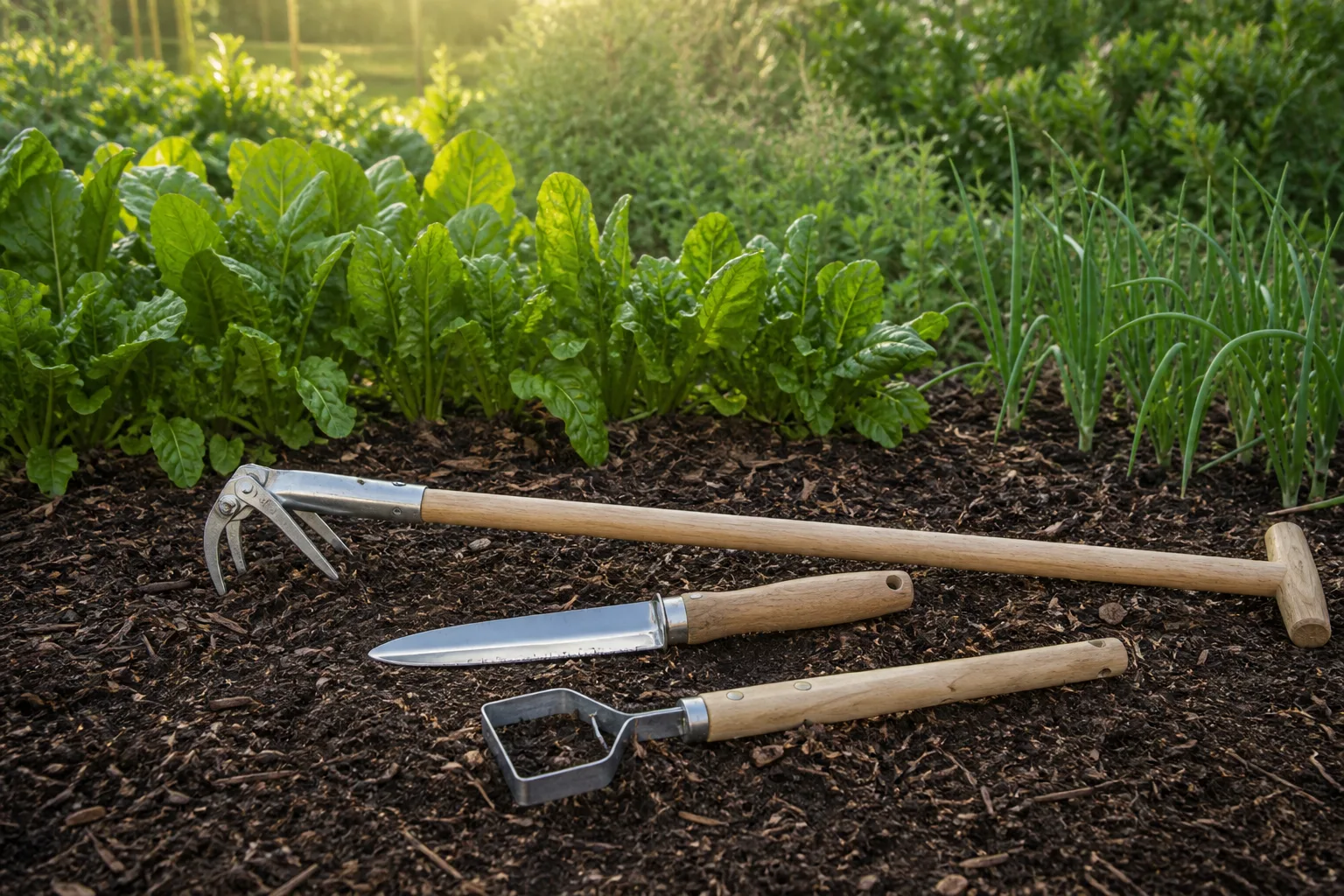
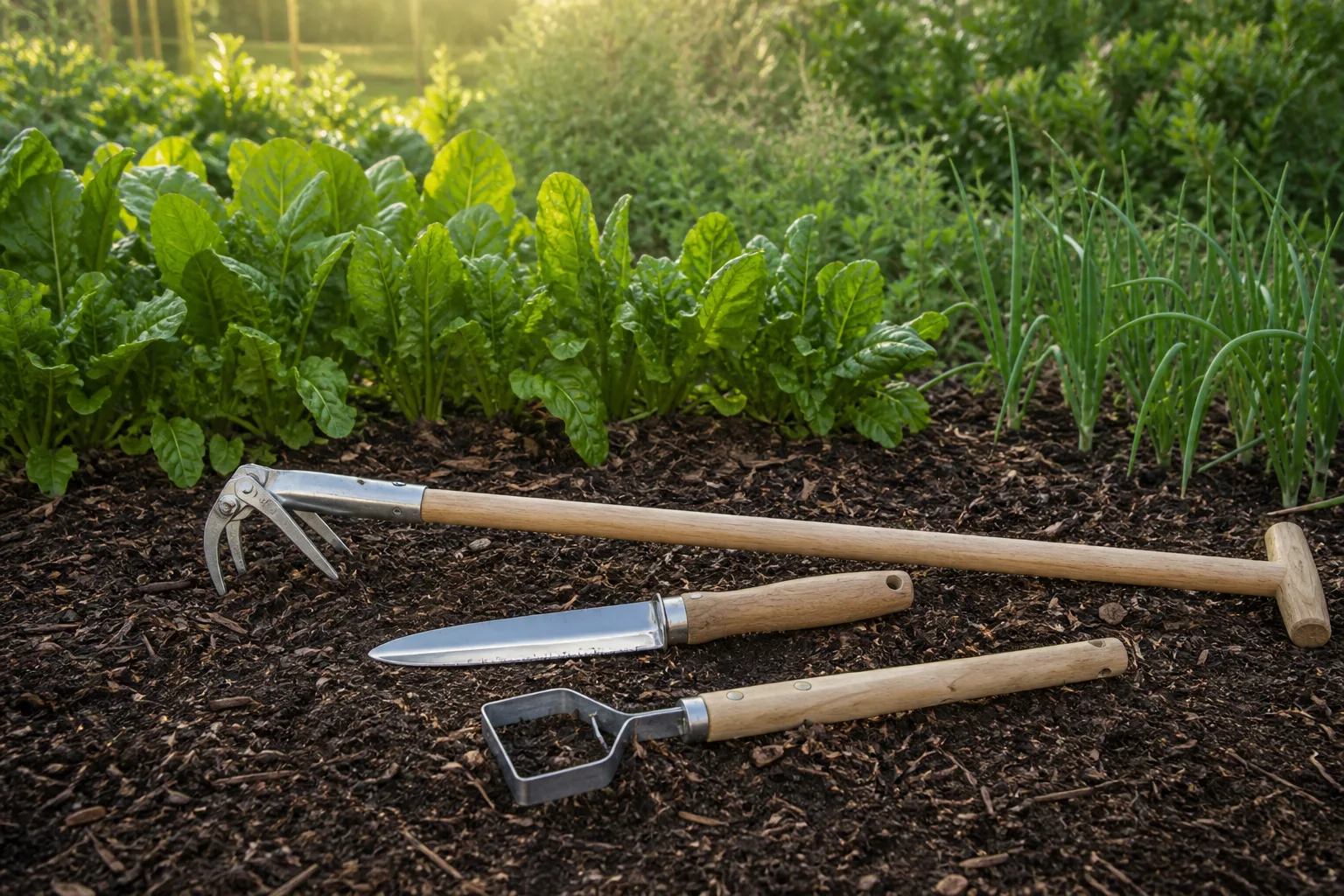
A broad claw head is a poor choice for very narrow paving joints. The tines may not fit, and levering against the edge of a stone can chip a joint, loosen the paver, or simply leave the root intact. BBC Gardeners’ World Magazine distinguishes between wide-area weeders and slim L-shaped knives or gougers made for cracks; its guide notes that an inverted-V gouger is useful for hooking long taproots in lawns, borders, and patios (BBC Gardeners’ World patio weeder guide).
Use a narrow weeding knife or joint scraper when the plant is between slabs. Fine Gardening’s practical tool coverage also points to a slim wire hook for cracks, rock gardens, and creeping weeds where a large head would be clumsy (Fine Gardening’s weeding-tool guide). The stand-up puller can still help on the open soil beside the path, but it should not be forced into a space it was not designed to reach.
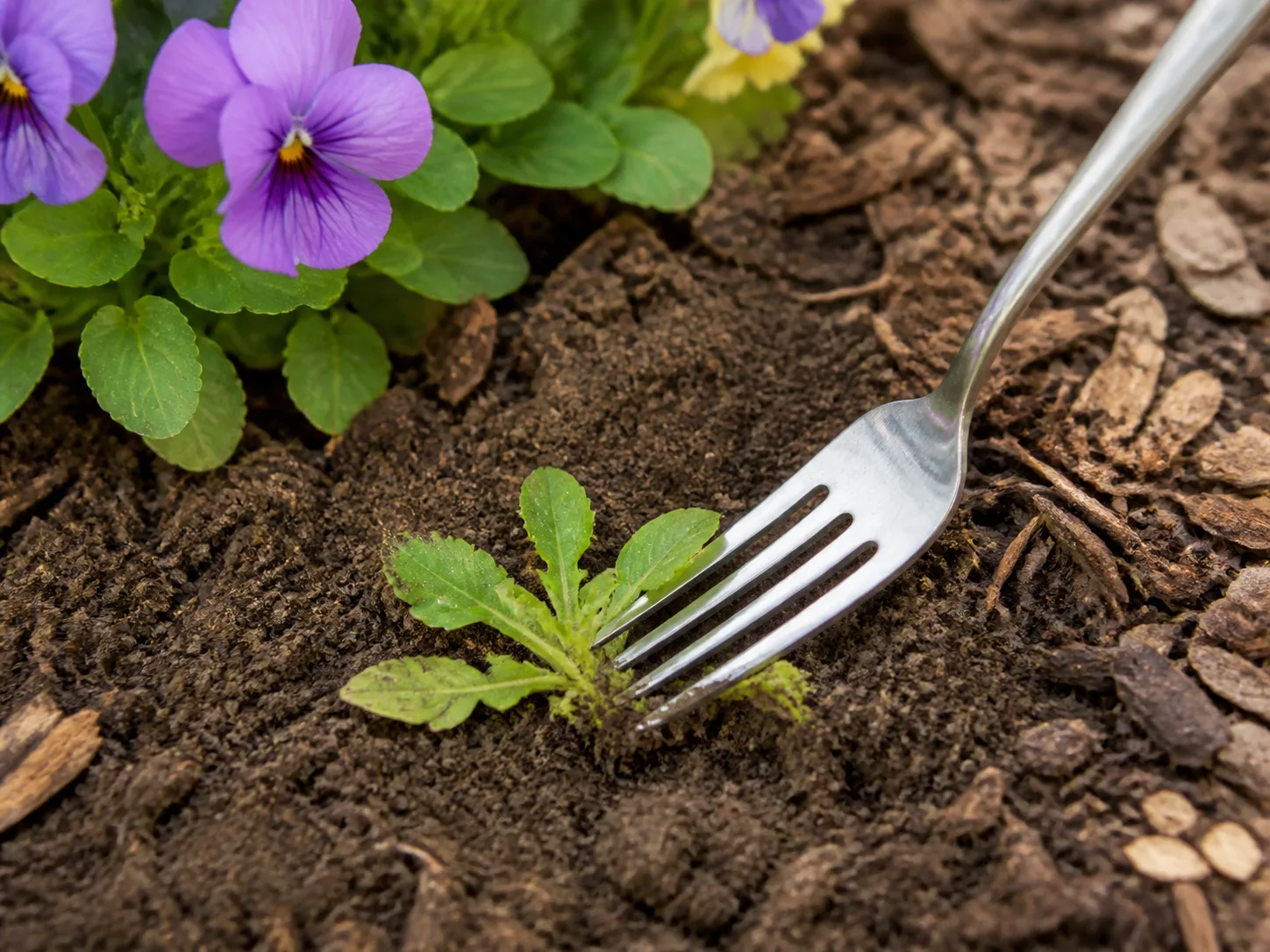
It is equally risky in a densely planted border. A claw that enters near a desirable perennial can sever fine roots or pull up a neighboring crown. In that setting, kneeling with a hand fork may feel less convenient, but the smaller tool gives you the visibility and precision the stand-up design lacks.
Paving joints call for a slim, precise tool; a wide stand-up claw is better reserved for open soil and isolated plants.
How to protect turf from a claw puller
The aim in a lawn is not merely to remove the weed; it is to leave the grass able to close the hole. Follow three rules:
- Center the claw on the weed’s crown so you do not punch a second hole while searching for the root.
- Lift a small plug only when necessary; do not widen the opening by rocking the shaft through a large arc.
- Press the surrounding turf back into place and brush a little soil or fine compost into a deep divot.
Work when the grass is firm enough to stand on without making footprints. Avoid a saturated lawn, especially if the soil is clay-heavy. After a large removal, scatter compatible grass seed only if the opening is truly bare and the season suits your grass type; a seed-filled hole will not solve a broader problem caused by shade, compaction, poor drainage, or thin turf.
The best long-term defense is a dense, vigorous lawn rather than endless individual pulls. UC IPM explains that healthy turf shades the soil surface and competes with new dandelion seedlings. In practice, that means treating the hole you create and the lawn conditions that made the open space available.
The honest limits and common failure modes
The tool can fail in predictable ways. If the root breaks, the plant may resprout. If the weed is a runner or rhizome former, pulling one crown may scatter or leave sections that start elsewhere. If the soil is compacted, the claw may stop above the root. If the weed is growing beside an ornamental, the “successful” lift may damage the plant you meant to keep.
The response should match the failure. Re-moisten and retry a single taprooted weed rather than attacking it with more force. Switch to a narrow fork or knife when you need to chase a root down beside a desirable plant. For a spreading patch, stop treating every crown as an isolated problem and consider mulch, denser planting, mowing adjustments, or a site-specific integrated weed-management plan.
Do not assume a chemical-free tool is risk-free. Sharp tines can puncture footwear, a loose shaft can twist, and soil can hide glass, wire, or stinging insects. Wear closed-toe shoes, keep both hands on the handle during the lever motion, and inspect the head after hitting an obstacle. If you later use an herbicide on turf or beds, follow the product label for the site, rate, weather, and re-entry requirements; the manual tool does not change those rules.
Stand-up puller versus other weeding tools
No single weeder wins every site. Choose by the weed’s growth habit and by how much soil disturbance you can tolerate.
| Tool | Best fit | Main advantage | Main trade-off |
|---|---|---|---|
| Stand-up claw puller | Isolated rosettes and taprooted weeds in open soil | Removes weeds while standing and uses leverage | Needs room around the crown; can leave a large hole |
| Dandelion knife or weed gouger | One taproot in turf, a bed edge, or a paving joint | Precise root chasing | Requires bending or kneeling and more hand control |
| Hand fork | Weeds beside desirable plants or in loose beds | Visibility and selective digging | Slow for a large lawn |
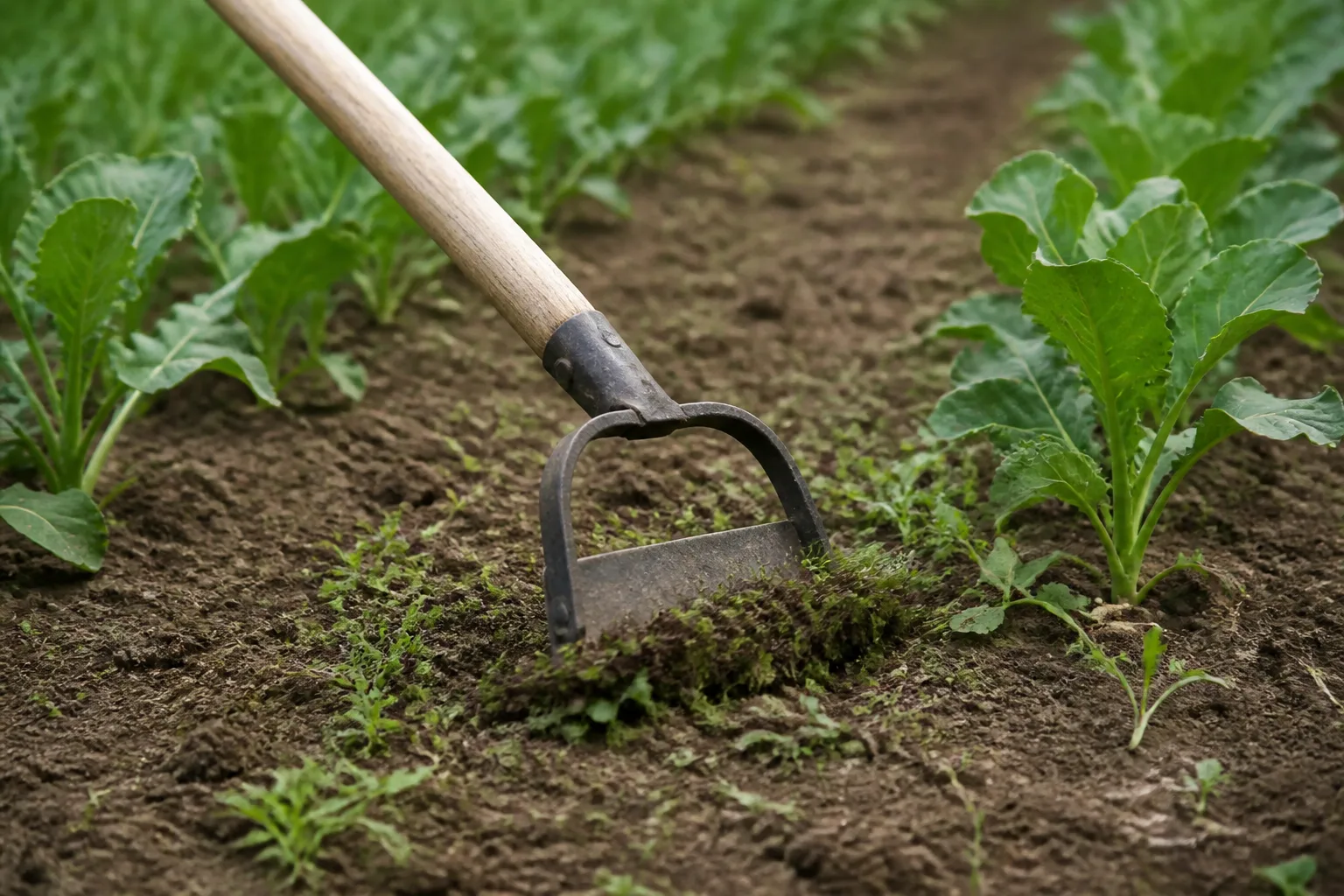
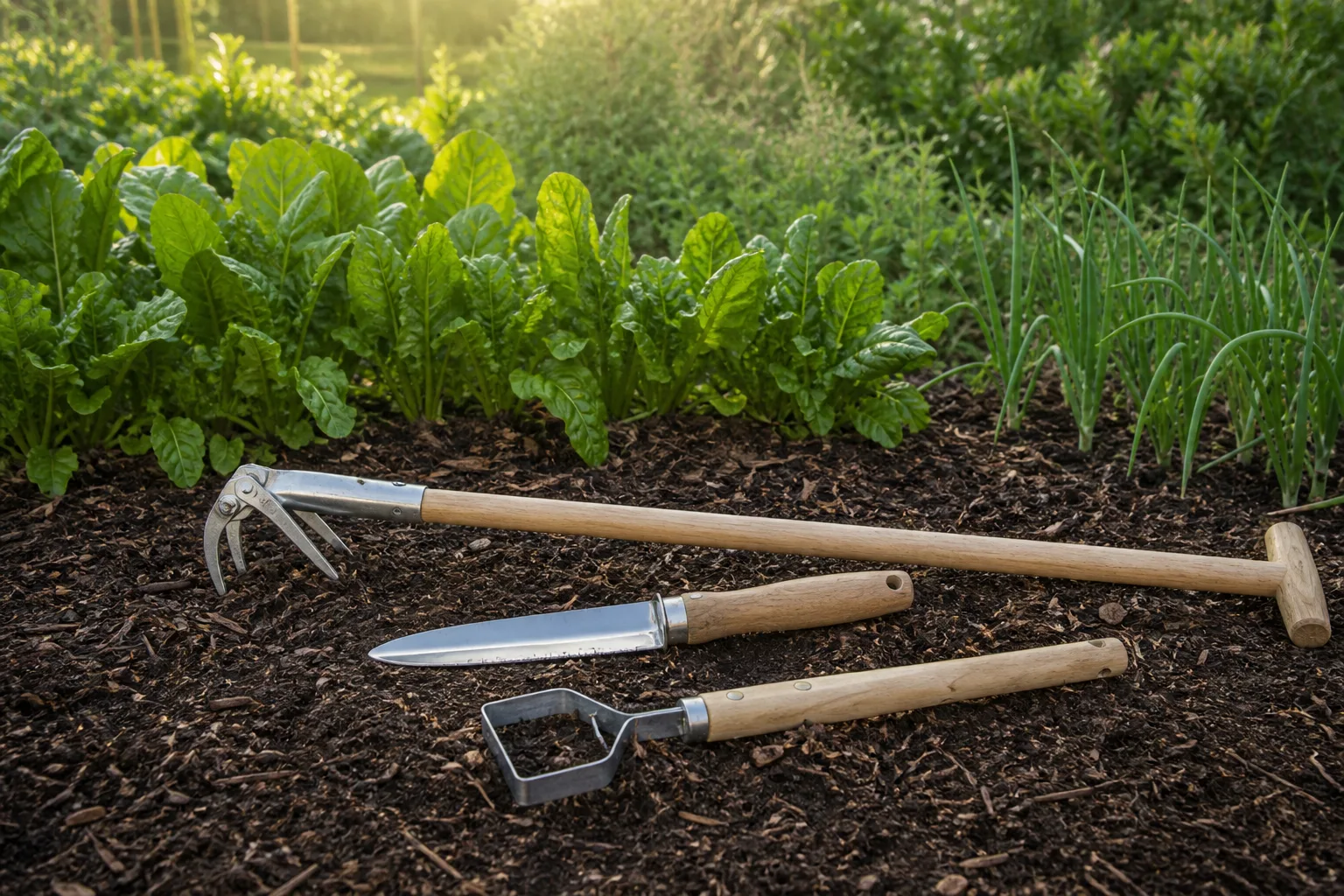
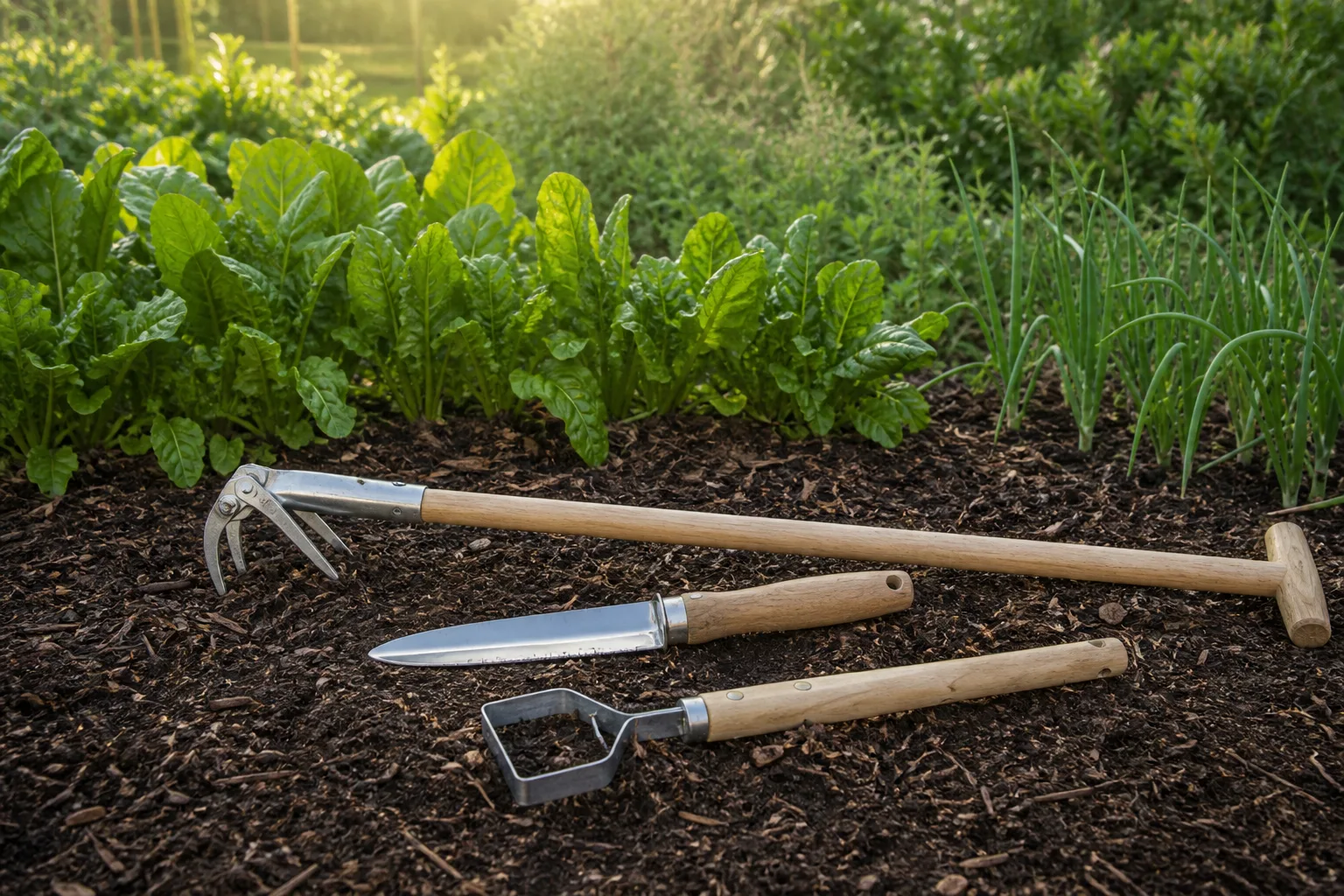
| Scuffle or stirrup hoe | Tiny annual seedlings in rows and open beds | Fast surface-level passes | Usually cuts rather than extracts deep roots |
| Mulch and dense planting | Repeated seedlings in beds | Prevents light and space from favoring new weeds | Needs maintenance and does not remove established plants |
A scuffle hoe is a better match for shallow annual seedlings in open beds; it is not a replacement for extracting a mature taproot.
The comparison explains why a stand-up puller can be worth buying without being the only weeder in your shed. Use the claw for the individual deep-rooted targets, the hoe for a careful surface pass, and a knife or fork where precision matters more than posture.
Ergonomics without the overpromising
The long shaft changes the joint angles of the task, which is valuable if kneeling is difficult or if repeated forward flexion is the main reason you stop weeding. The foot brace also lets your leg supply downward force instead of asking your hands to push a short tool into hard soil.
It can still tire your wrists, shoulders, and grip, especially when the soil resists or the shaft is too long for your height. Keep the tool close to your body, use a smooth lever motion, alternate hands when the design allows it, and limit a first session to a small patch. Stop if the tool repeatedly binds; forcing it is a technique problem or a soil problem, not a test of determination.
A good posture benefit is simple to verify: you can finish a reasonable patch with fewer bends and without twisting into the lawn. Claims that a tool eliminates back pain are much harder to justify and depend on the person’s condition, technique, and workload. Treat “stand up” as a useful feature, not a medical promise.
What to check before buying a Saker-style tool
Look past the number of claws. A useful stand-up weed puller should have a head that fits the weeds you actually see, a handle length that lets you work without hunching, and a foot brace that feels stable under your shoe. Check that the shaft sections lock tightly and that the release action can be operated without an awkward reach.
Also check the boring details that determine whether the tool survives a season: head material, shaft joins, replacement availability, storage length, return terms, and whether the product photos show the actual model rather than a generic lookalike. Product listings and prices change, so verify the current specification at the time of purchase. A detachable handle is convenient for a small shed, but each joint is another place to inspect if the head begins to wobble.
For a small yard with a few dandelions, a simple dandelion knife may be cheaper and more precise. The stand-up design becomes more compelling when the same targets recur across enough lawn or bed area that avoiding constant kneeling changes whether you will actually do the work.
Aftercare, disposal, and follow-up
Drop pulled weeds into a bucket as you go, especially if they are flowering or carrying seed. Do not leave mature seed heads on the lawn where wind or foot traffic can spread them. If you are unsure whether your home compost reaches temperatures that destroy seeds or persistent root fragments, keep seeded weeds and troublesome perennial roots out of the finished compost stream.
Close each hole before moving on. Press a small turf plug back into place, rake loose mulch around a bed opening without burying plant crowns, and sweep soil out of paving joints. Rinse soil from the tool head, dry it, and check that the claws and release mechanism move freely. A clean, dry head is easier to inspect for bends and less likely to drag disease-contaminated soil between areas.
Return to the same patch after a couple of weeks and again after the next flush of growth. UC IPM specifically recommends monitoring for months after digging out dandelions because missed root tissue or new windblown seedlings can make a completed-looking job look unfinished. Follow-up is not evidence that the tool failed; it is part of managing a perennial weed in a living landscape.
A simple ten-minute weeding routine
Make the tool useful by giving it a small recurring job. First, walk the lawn or bed and mark only the weeds you can identify. Next, remove seed heads or flowers, then work from the easiest moist-soil targets to the more stubborn ones while your technique is fresh.
For each plant, center, press, tilt, inspect, and close the hole before taking the next step. Put broken roots and seeded plants in the bucket, not on the ground. Finish by checking the area from standing height; the goal is a clean, stable surface, not a collection of oversized divots.
If the same spot produces weeds repeatedly, record the pattern. A shaded, thin lawn may need density and mowing changes. A bed with exposed soil may need a maintained mulch layer. A paver joint may need its material repaired after the weed is removed. The stand-up puller handles the visible plant; the routine helps prevent the next one.
Conclusion
A stand-up weed puller is worth it when your main obstacle is getting down to the ground and your targets are individual, rooted weeds in open soil. Its foot-assisted claw and long handle can make dandelion removal and routine lawn cleanup faster, while the release mechanism keeps you from repeatedly reaching down to clear the head.
Use it with realistic expectations. Work in moist but not muddy soil, center the tines over the crown, inspect what comes out, protect turf, and switch tools for narrow joints, crowded beds, runners, rhizomes, or roots that need precise digging. The durable solution is a combination of timely extraction, follow-up, and a healthier surface that gives new weeds fewer opportunities to establish.



