Noticed Sticky Plant Leaves? This Often-Missed Pest Could Be the Reason
Sticky plant leaves usually mean honeydew from aphids, scale, mealybugs, or whiteflies. Learn how to identify the pest and treat it safely.
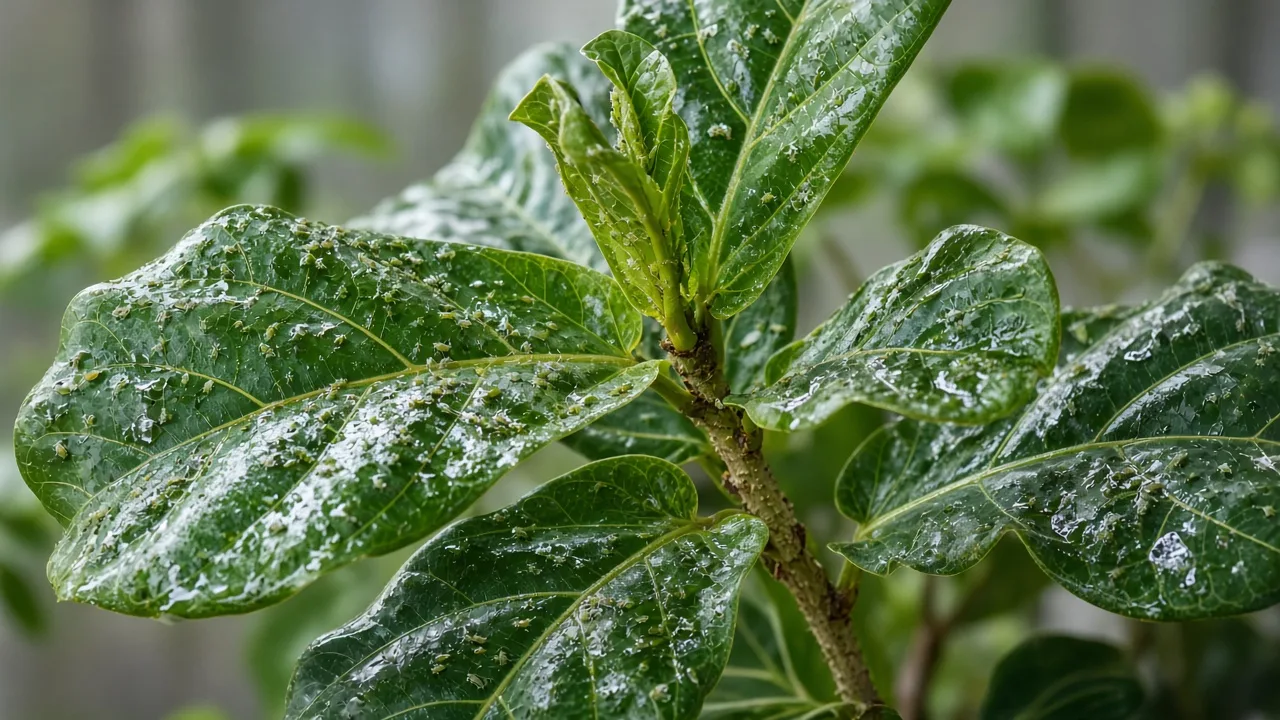
Sticky leaves are usually a pest clue, not a strange form of plant sap. The tacky film is most often honeydew, a sugary waste produced by sap-feeding insects such as aphids, soft scale, mealybugs, and whiteflies. The residue may land on lower leaves, a plant stand, a windowsill, or the floor before you ever see the insect that made it. (Royal Horticultural Society)
The pest that is easiest to miss is often soft scale: small brown, tan, or gray bumps that settle on stems and leaf veins and look like part of the plant. If you find sticky leaves plus immobile bumps, start there—but do not treat by guesswork. The same residue can come from several pests, and a product that reaches aphids may miss adult scale hidden under a protective covering.
The short answer: sticky leaves usually mean honeydew
When a leaf feels tacky and looks unusually glossy, inspect the plant for a sap-feeding insect. These pests use piercing mouthparts to take in more watery plant sap than they can digest; the excess sugar-rich fluid leaves the insect as honeydew. It is not usually the damaging part by itself, but it tells you that feeding is happening somewhere nearby. (Iowa State University Extension)
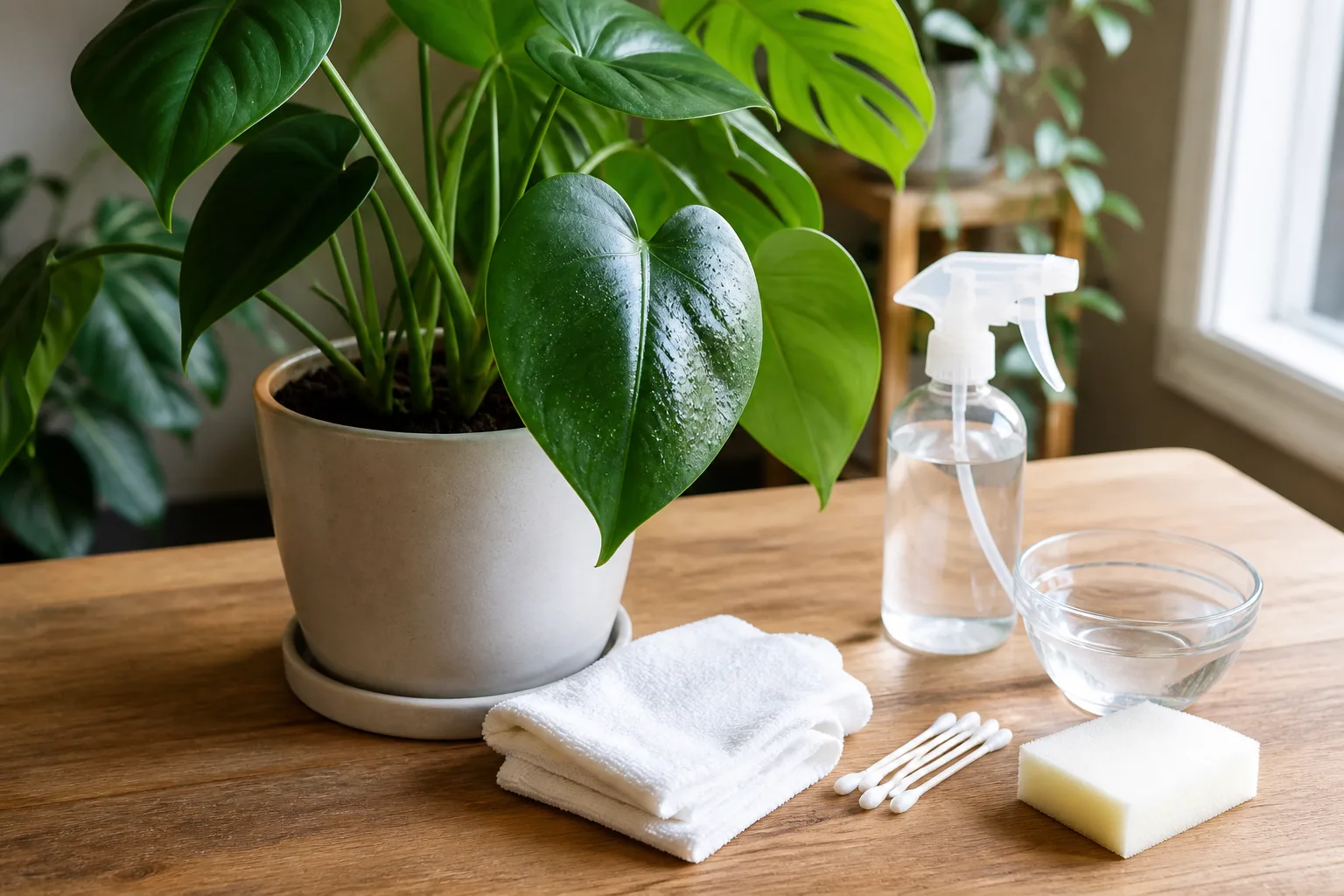
Use this order of operations:
- Isolate the plant so crawlers, winged aphids, or whiteflies cannot move to neighboring plants.
- Find the insect, checking leaf undersides, midribs, stems, new growth, and leaf axils rather than only the top of the leaf.
- Remove the residue and visible pests with water, a soft cloth, a cotton swab, or pruning, depending on the plant and pest.
- Choose a labeled houseplant treatment that can reach the life stage you found.
- Repeat on schedule and judge success by live pests and clean new growth, not by whether old brown bumps disappear.
Cleaning the leaf before you diagnose it can hide useful clues, so photograph or inspect the plant first. After that, removing honeydew is worthwhile because the sugar film catches dust and can support a black surface growth called sooty mold.
Why soft scale is the pest people miss
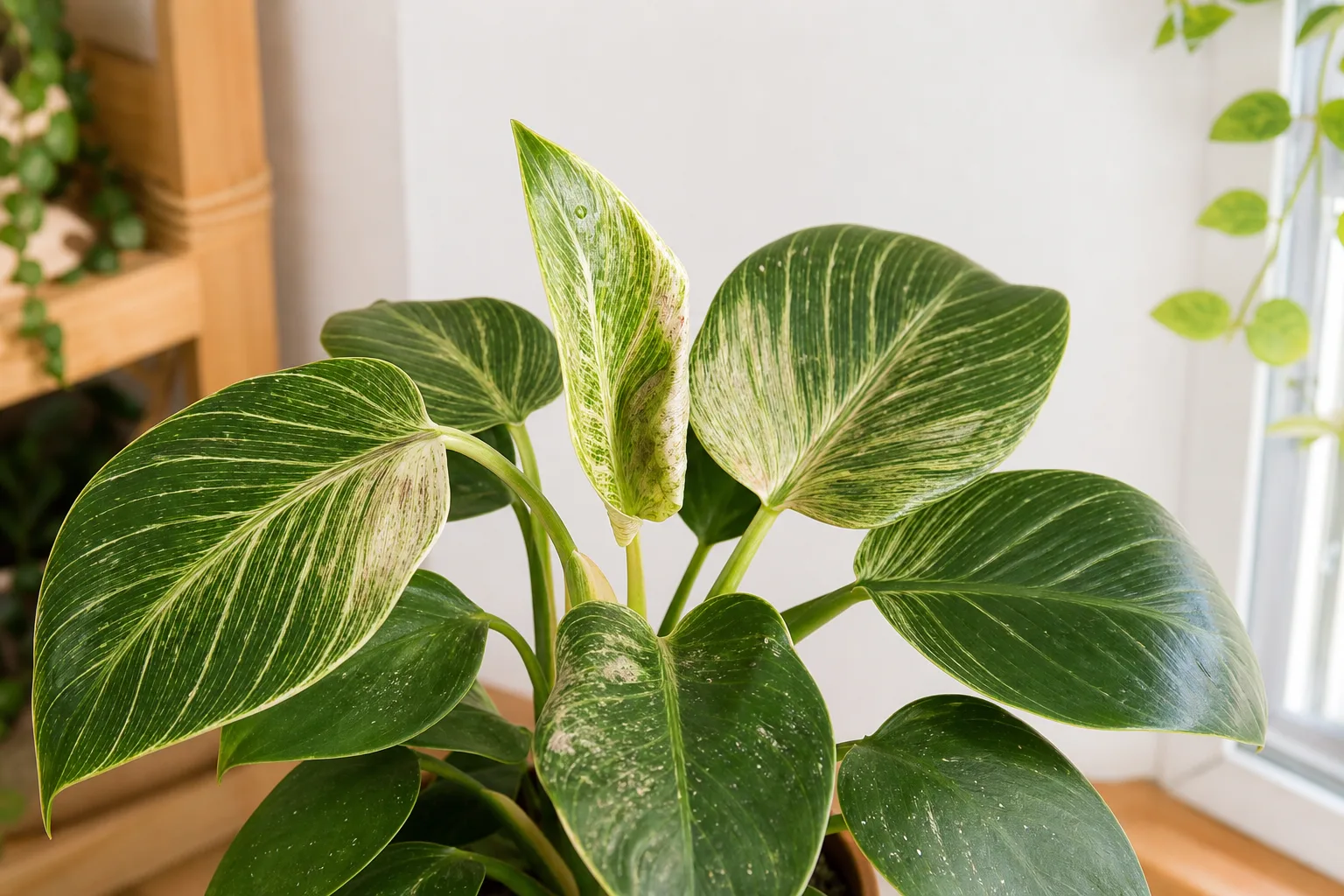
Scale insects do not look like the quick-moving bugs most people imagine. Once settled, adult females can stay fixed to stems, petioles, midribs, or the undersides of leaves. Their small shells may look like raised freckles, bits of potting mix, or natural bark texture, especially on a rubber plant, ficus, citrus, dracaena, schefflera, or philodendron.
The sticky-leaf connection is strongest with soft scale. Soft scales feed on sap and excrete honeydew; armored scales have a harder detachable cover and generally do not create the same sticky coating. That distinction matters because the presence or absence of honeydew helps narrow the diagnosis, while the cover changes how well contact products can reach the insect. (Fine Gardening)
Scale can also be missed because dead insects often remain attached. A bump that does not move is not automatically alive, and scraping every remaining shell away is not the only measure of success. After treatment, look for fewer live crawlers, no new clusters, and healthy new growth that stays free of scale.
What honeydew and sooty mold tell you
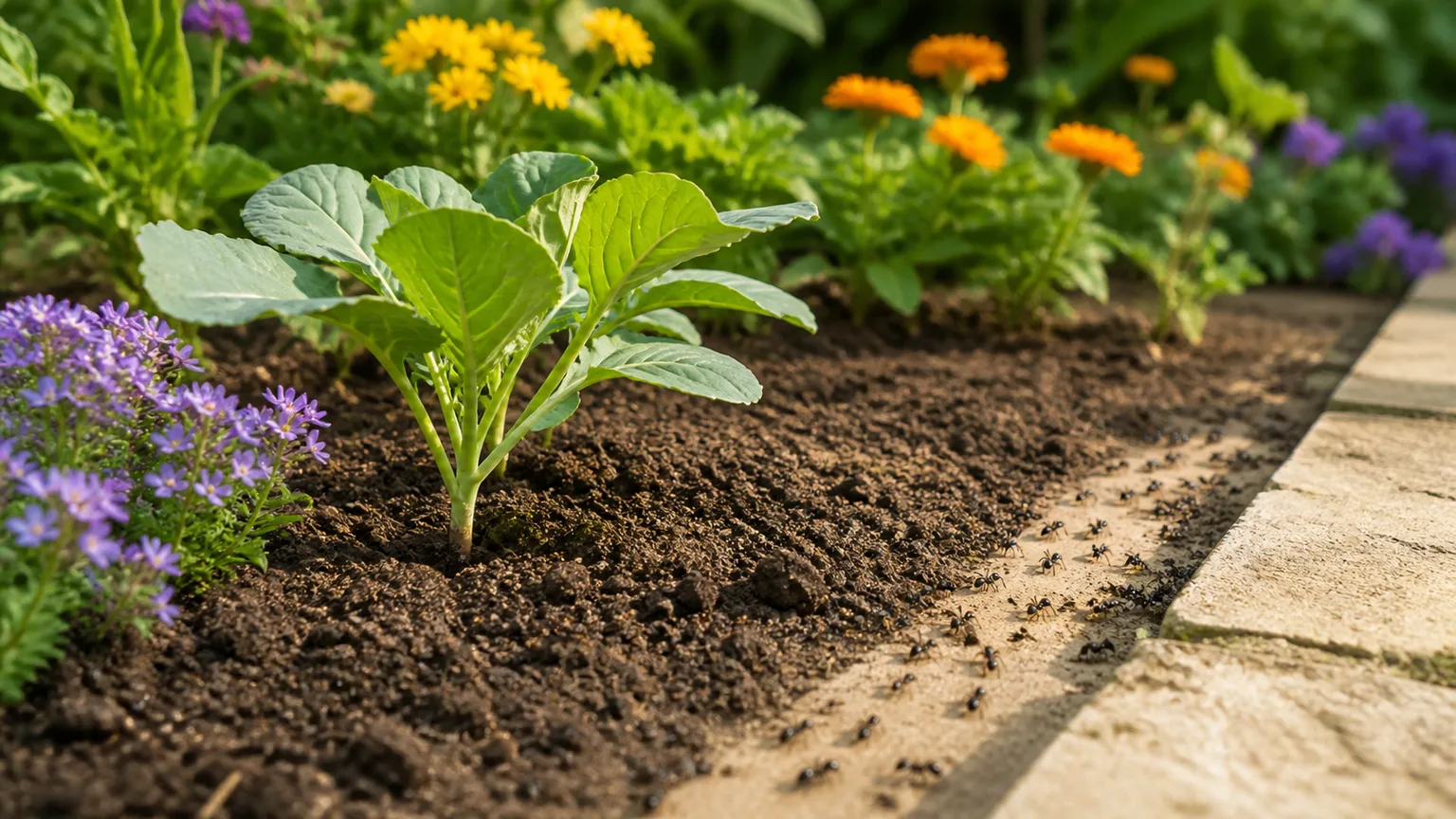
Honeydew is clear or amber, shiny, and sticky. It may form droplets on a leaf, a film on a stem, or a drip pattern on the surface beneath the plant. Ants may visit outdoor plants or indoor collections where they can reach the residue, because honeydew is a food source. Ant activity is not proof of the pest’s identity, but it is a useful reason to inspect more closely.
Sooty mold is the black or brown, powdery-looking coating that can grow on honeydew. It does not infect the leaf tissue; it grows on the sugary surface. A light coating is mostly cosmetic, but a heavy layer can shade the leaf and reduce photosynthesis, so it can slow growth when the underlying pest problem is allowed to continue. (UC Statewide IPM Program)
Do not start by scrubbing every black mark until the insects are gone. You can wash the mold off with water and a gentle, plant-safe cleaner after reducing the honeydew source, but new mold will appear if live scale, aphids, mealybugs, or whiteflies keep feeding.
A five-minute inspection that finds hidden pests
Give the plant bright indirect light, a phone flashlight, and—if you have one—a magnifying glass. Inspect the pot rim, saucer, stake, and the shelf below the plant as well as the foliage. Sticky droplets can travel, and a neighboring plant may be the real source.
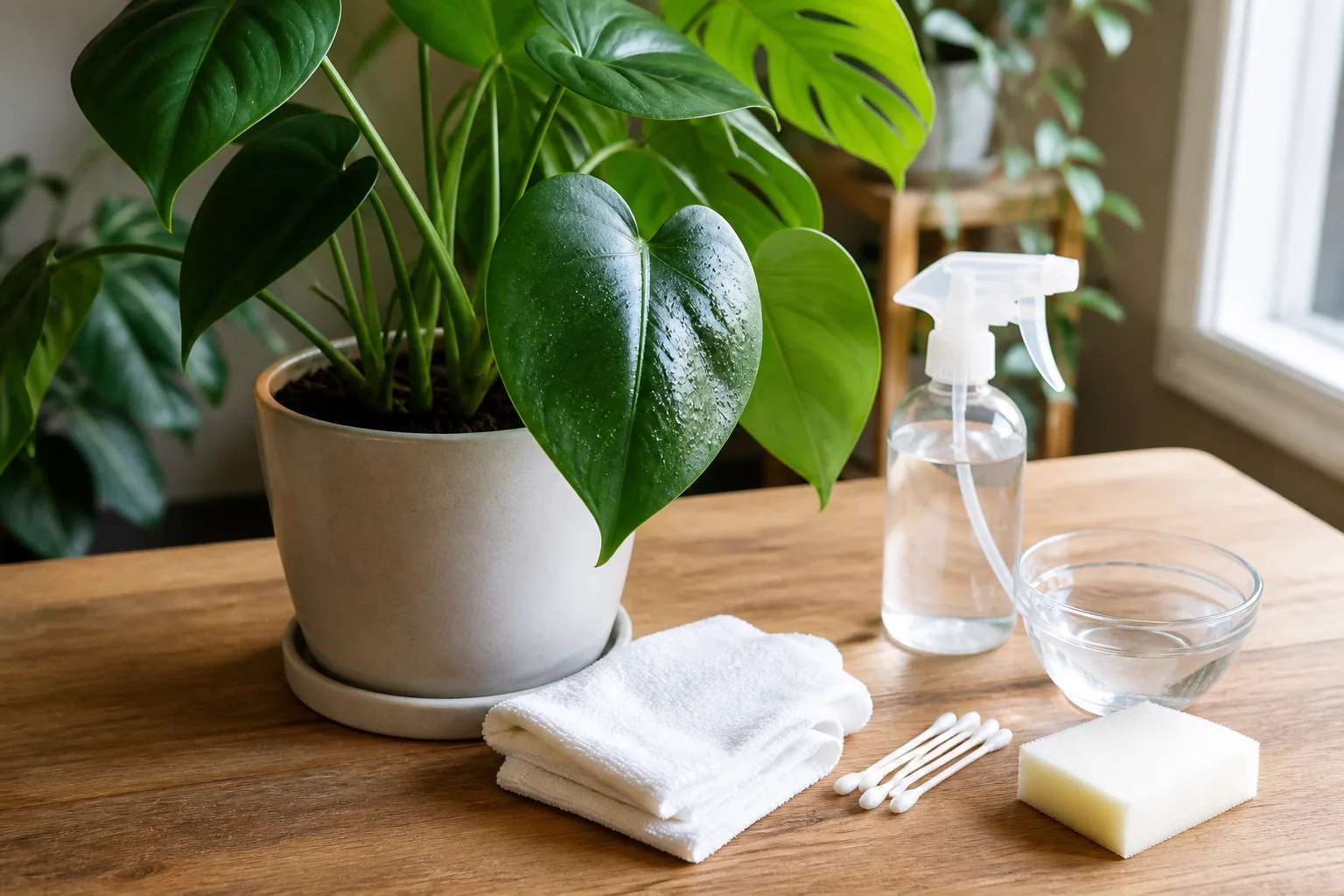
Check the undersides, midribs, and leaf axils
Start with the newest growth, then work down the plant. Look at the central vein and smaller veins on the underside of each leaf, the point where a leaf stalk joins the stem, and every crease where two plant parts touch. Aphids favor tender tips and buds, scale often lines stems or midribs, and mealybugs hide in protected joints and crowns. The RHS notes that these insects can occupy relatively inaccessible sites, which is why a top-of-leaf glance is not enough. (Royal Horticultural Society)
Use a cotton swab or a fingernail only as a diagnostic tool at first. If a bump wipes away as a smear, it may be residue; if it lifts as a shell and leaves a small mark, it may be scale; if a cottony tuft separates into white wax and a soft insect, suspect mealybugs. Do not press hard enough to tear a leaf or scrape healthy bark.
Use a white-paper test for tiny movers
Hold a sheet of white paper under a leaf and tap the leaf gently. Tiny insects that fall or crawl across the paper are easier to see than insects against green foliage. Aphids may move slowly, while whiteflies may flutter up in a small cloud when the plant is disturbed. Yellow sticky cards placed near the foliage can help monitor flying adults, but they do not replace inspection or eliminate the immature insects still attached to the plant. (Colorado State University Extension)
Look for feeding damage as a second clue. Curling or distorted new growth points toward aphids; silvery scarring and black specks suggest thrips; fine webbing and pale stippling suggest spider mites. Those lookalikes change the treatment plan because spider mites do not produce honeydew, even though their damage may appear on a plant that also has a sticky residue from another pest.
Match the visual clue to the likely pest
| What you see | Most likely pest | Where to look | What the clue means |
|---|---|---|---|
| Soft green, black, yellow, or pink insects in a cluster | Aphids | New shoots, buds, and leaf undersides | Honeydew and curled or distorted new growth are common |
| White cottony tufts or waxy filaments | Mealybugs | Leaf axils, stem joints, crowns, and pot rims | Honeydew may be present; hidden colonies are common |
| Brown, tan, gray, or amber bumps that stay still | Soft scale or armored scale | Stems, petioles, and midribs | Honeydew points more toward soft scale; armored scale may not make leaves sticky |
| Tiny white adults that flutter when disturbed | Whiteflies | Leaf undersides and nearby foliage | Nymphs remain attached while adults move; honeydew and sooty mold can follow |
| Silvery streaks plus black specks | Thrips | Young leaves, flowers, and leaf undersides | Feeding damage, not honeydew, is the main clue |
| Fine webbing and pale stippling | Spider mites | Leaf undersides and leaf edges | Mites do not make honeydew; dryness and heat can favor them |
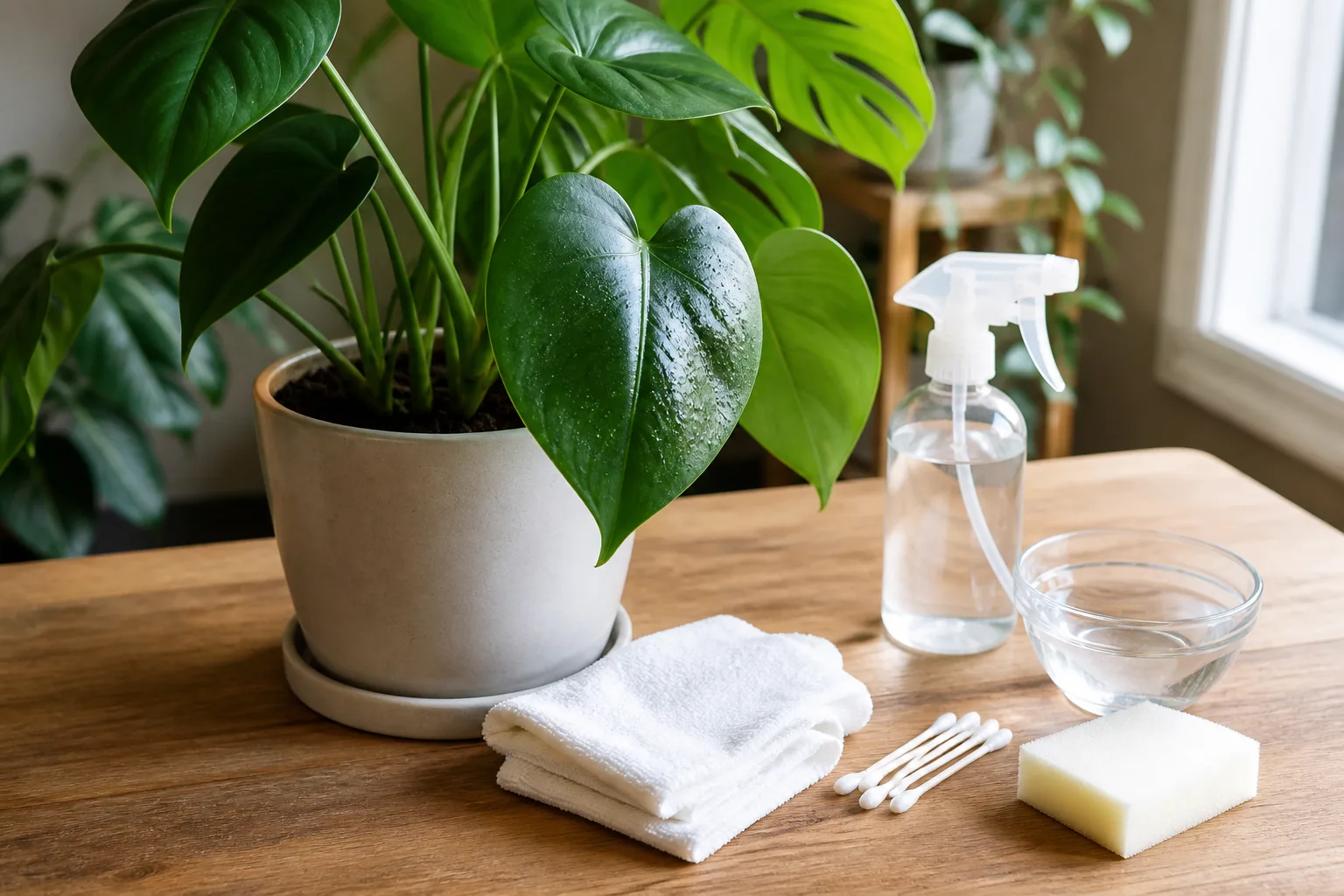 |
Aphids: clusters on tender growth
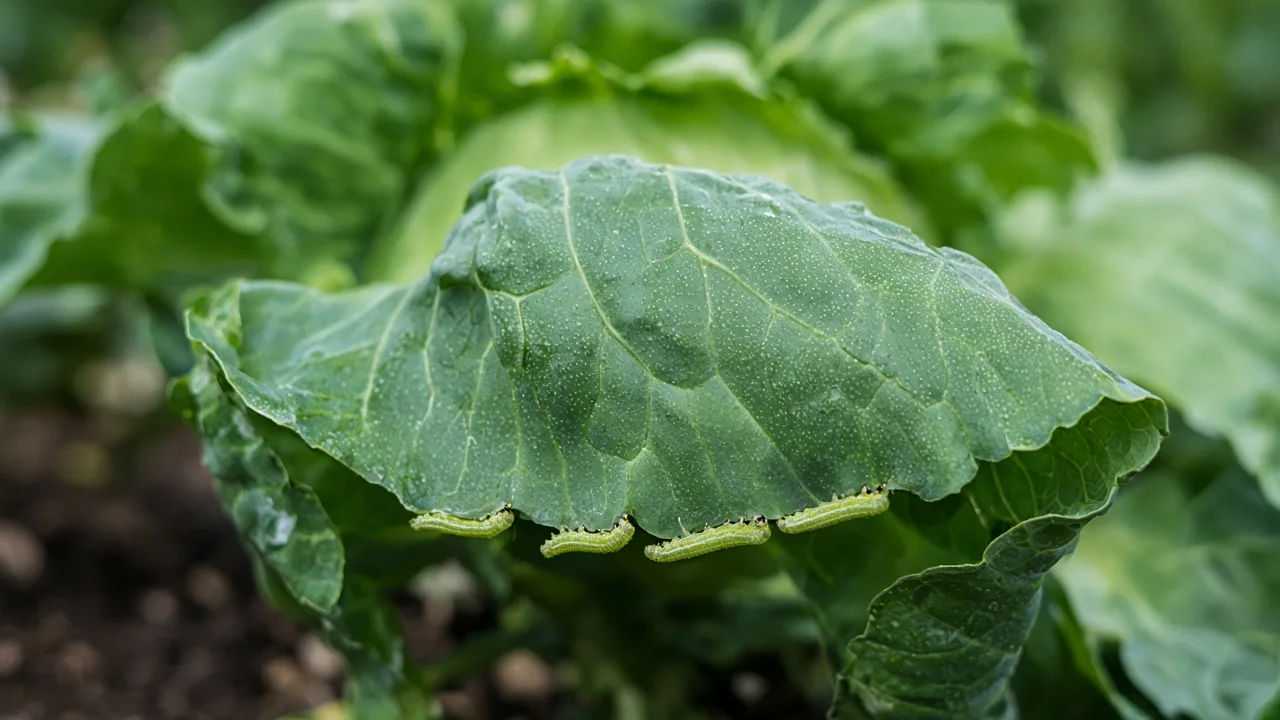
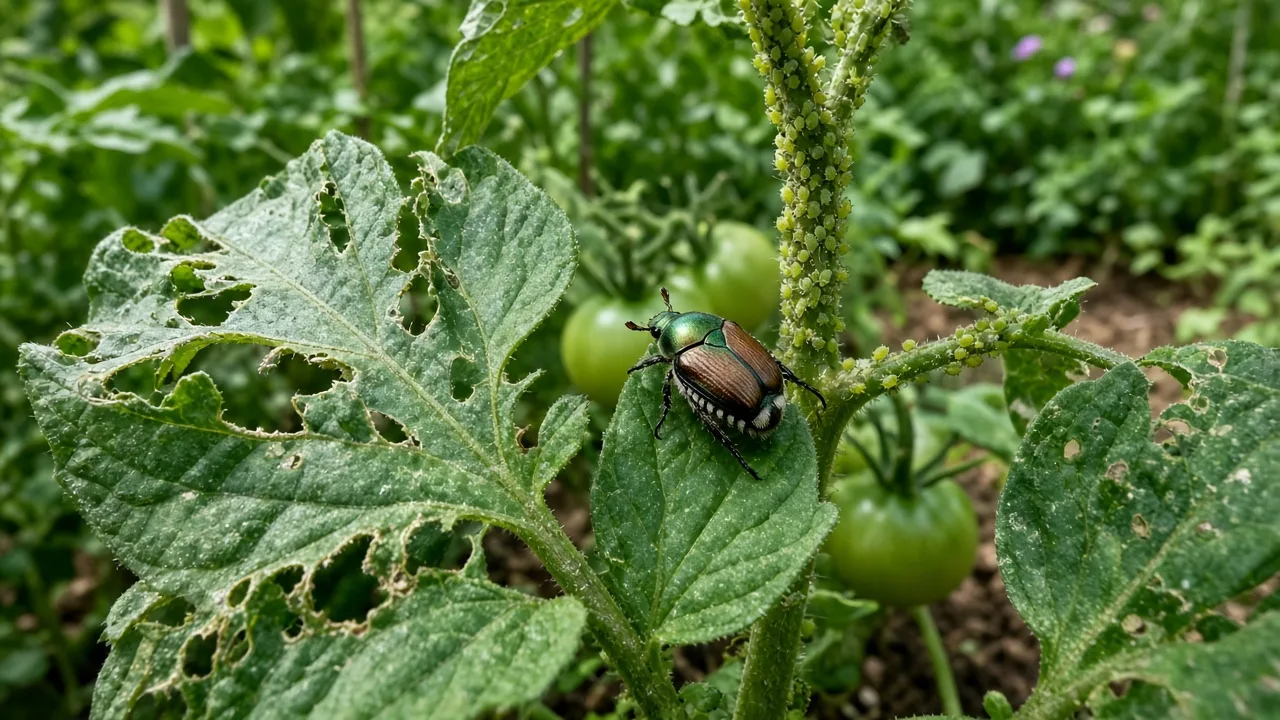
Aphids are soft-bodied, pear-shaped insects that gather around new leaves, flower buds, and shoot tips. They can be green, black, yellow, brown, pink, or gray, so color alone is not a reliable identification. Their colonies often include adults, tiny nymphs, shed white skins, and honeydew all at once.
They can build quickly indoors because warm rooms offer shelter and few predators. Rinsing a sturdy plant can remove many aphids, but curled leaves protect insects from water and contact sprays. Pruning a badly curled tip may be more effective than repeatedly wetting an unreachable colony.
Mealybugs: cottony wax in crevices
Mealybugs look like little pieces of white cotton, especially where a leaf joins a stem. Pull the wax apart gently with a swab and you may see a soft oval insect beneath it. UC IPM identifies honeydew, wax, black sooty mold, and ants as signs that mealybugs may be present, and notes that they often hide in crowns, branch crotches, and other protected locations. (UC Statewide IPM Program)
Small colonies can be removed by hand or with a cotton swab, but a heavy infestation may extend below the canopy or into the root zone. For manual cleanup, BBC Gardeners’ World also recommends wiping mealybugs from foliage and brushing visible scale from the plant; treat that as physical removal, not a substitute for a labeled pesticide when one is needed. (BBC Gardeners’ World Magazine) Rinsing helps with exposed insects, while a labeled soap or oil works best on stages it actually wets. Because adult mealybugs are waxy and hidden, a single spray is rarely a complete solution.
Soft scale: brown bumps that do not move
Soft scale is the leading suspect when leaves are glossy and sticky but you cannot find obvious crawling insects. Check the stem first, then the midribs and petioles. A settled scale may be round, oval, tan, brown, gray, or amber; it can look smooth and shell-like or slightly cottony depending on the species.
Use a fingernail or the edge of a blunt tool to test one bump. If it lifts easily and you see a soft body underneath, you have found a live or recently dead scale. If only an empty shell remains, keep inspecting for crawlers and new bumps before deciding that treatment failed. Young crawlers are the most exposed stage, which is why repeat timing matters more than a single heavy application.
Whiteflies, thrips, and spider mites: lookalikes
Whiteflies are tiny, pale insects that flutter from the plant when disturbed. Their immature stages stay on the undersides of leaves, while adults can move between nearby plants. Honeydew and sooty mold may accompany an infestation, but a white cloud of adults is the faster clue.
Thrips are slender and often hide in young leaves or flowers. Look for silver or bronze scarring and tiny dark specks rather than a sugary film. Spider mites are even smaller; fine webbing, pale stippling, and a dusty or bronzed leaf surface are more characteristic than stickiness. If you see sticky leaves plus webbing, keep searching for a honeydew-producing pest instead of assuming the webbing explains everything.
What to do today: isolate, rinse, and clean
Move the plant away from every other plant before you start treatment. Set it where leaves will not touch neighboring foliage, and clean your hands, pruners, flashlight, and any shared tools after handling it. This step is more important than choosing a product immediately: winged aphids and whiteflies can move, and crawlers can travel short distances across leaves, pot rims, stakes, or shelves.
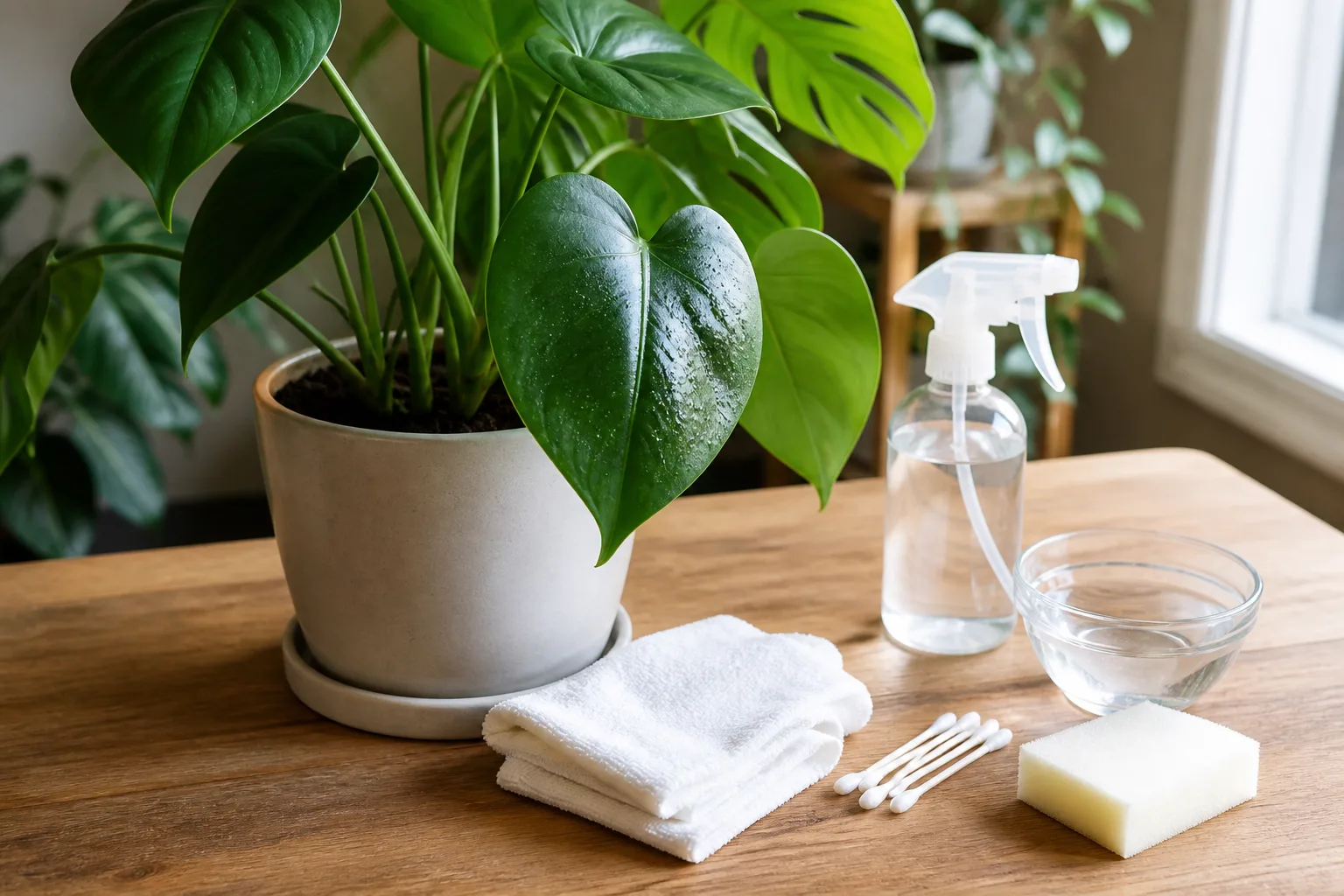
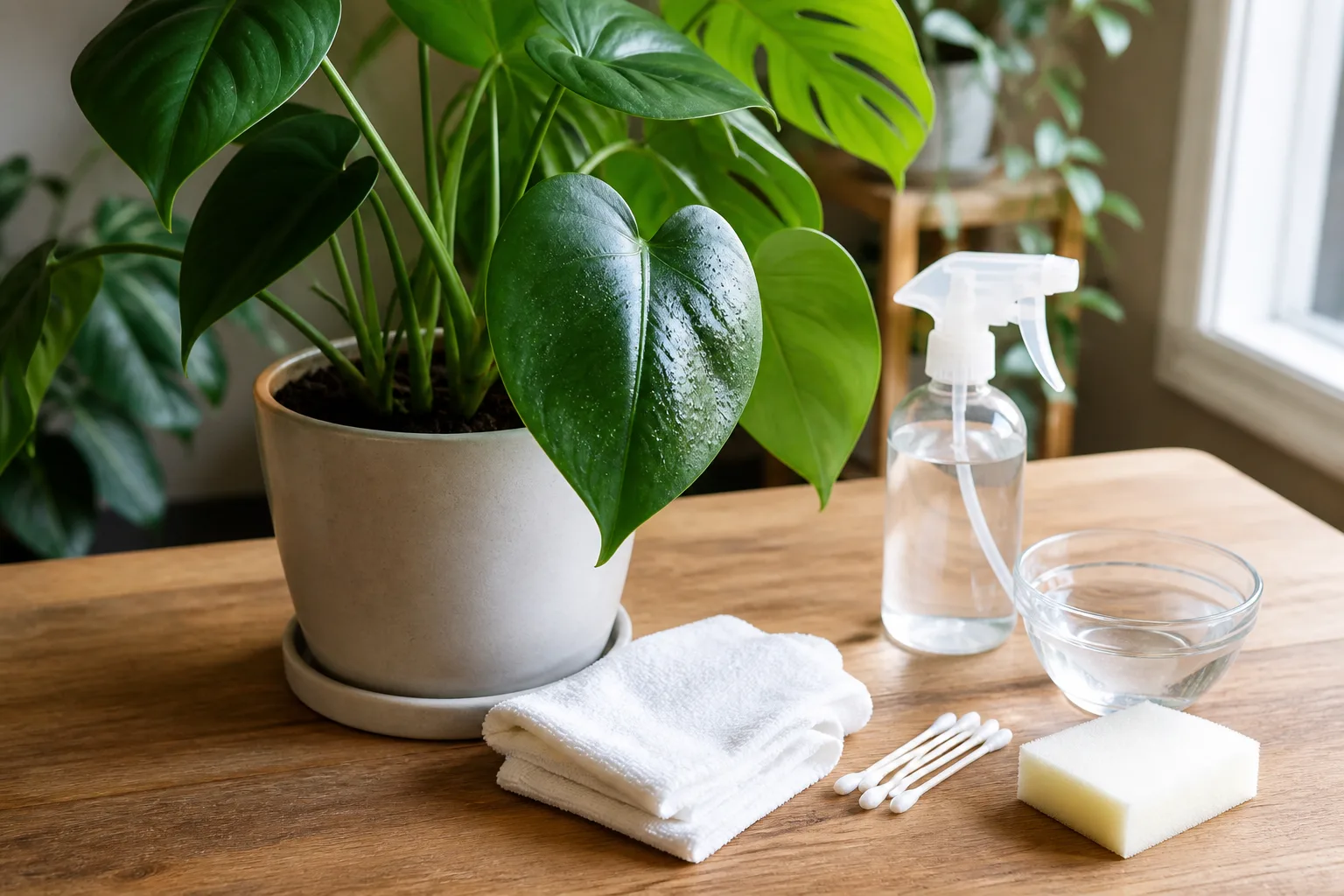
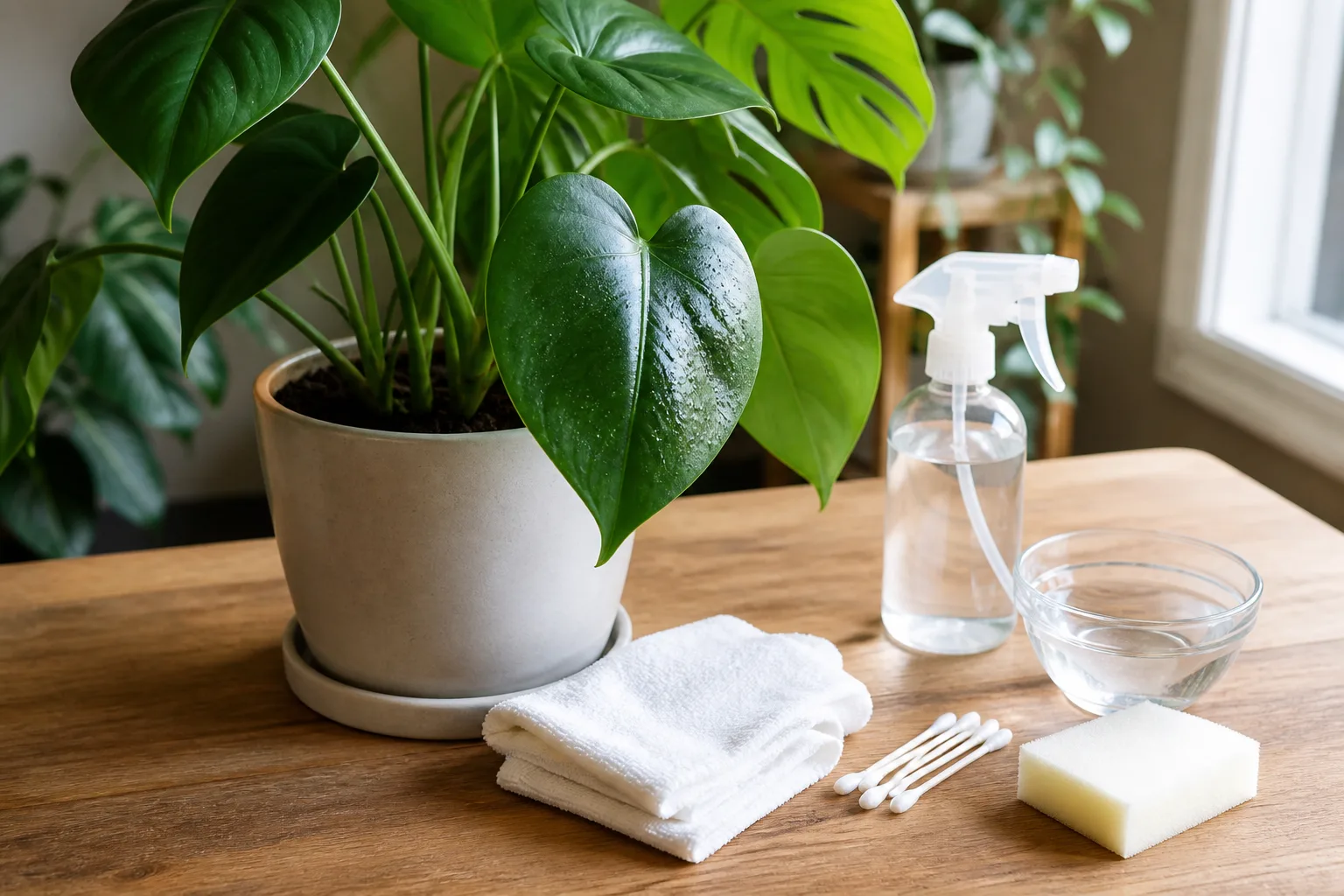
A low-risk first response: isolate the plant, rinse accessible pests, and keep cleaning materials ready for a repeat inspection.
For a sturdy plant, rinse the foliage in a sink or shower with room-temperature water. Aim at leaf undersides, stems, petiole joints, and shoot tips, but keep the stream gentle enough that it does not snap leaves or wash potting mix out of the container. For a delicate plant, use a damp soft cloth or cotton swab instead of a forceful spray.
Wipe the honeydew from leaves and nearby surfaces after you record what you saw. Use plain water or a product labeled for plant use; do not turn household dish detergent into an improvised pesticide. Removing the film makes later inspections easier, but cleaning alone will not kill hidden scale or insects inside curled growth.
Choose a treatment that matches the pest
Treatment works best as a sequence: physical removal first, a correctly labeled contact product second, and repeat inspection throughout. The goal is not to make the strongest possible spray. It is to get enough coverage on the right life stage without stressing the plant.
Contact products only work where they land
Labeled insecticidal soaps and horticultural oils can suppress many exposed soft-bodied pests and young scale crawlers. They do not travel through the leaf to find insects hidden in a tight axil, and they do not leave a dependable residual film after drying. Colorado State University Extension describes insecticidal soap as a contact treatment that must thoroughly wet the target, including protected sites on leaf undersides. (Colorado State University Extension)
Apply only a product labeled for your plant and pest. Wet the upper and lower leaf surfaces, stems, and joints according to the label, but do not keep adding spray because a leaf looks shiny. A heavy coating can increase the risk of damage without improving coverage.
Do not substitute a kitchen dish-soap recipe just because the plant is indoors. Household detergents are not formulated, tested, or labeled as plant pesticides and can burn foliage, strip protective leaf surfaces, or leave an inconsistent concentration. Even a labeled product can injure sensitive foliage, so test one inconspicuous area and wait a day or two before treating the whole plant. (Colorado State University Extension)
When rubbing alcohol is appropriate
Isopropyl alcohol is most useful as a spot treatment for a small number of visible mealybugs or scale. Dab the insect directly with a cotton swab rather than misting the entire plant. UC IPM allows a 70% or weaker solution for small mealybug infestations, but it also recommends a test on a small plant area first because leaf burn is possible. (UC Statewide IPM Program)
Alcohol is a poor choice for a large, delicate, fuzzy, or thin-leaved plant because coverage becomes uneven and the risk of spotting rises. It also has no useful residual action: it kills what it touches, not eggs or insects that emerge later. Work in ventilation, keep the liquid away from flames, and treat the product—not the plant—as the chemical hazard that deserves the most caution.
When to prune, repot, or discard
Prune leaves or shoots that are dead, heavily curled, or so densely colonized that no treatment can reach the insects inside. Use clean pruners, bag the debris, and do not compost visibly infested material indoors. Pruning is especially helpful when aphids are sealed in distorted tips or when sooty mold covers foliage that is already failing.
Repotting is not an automatic cure for sticky leaves. It can help when you suspect root mealybugs, when the pot or stake is visibly contaminated, or when old soil is holding pests—but it will not remove scale on stems or aphids on new growth. Wash the container and saucer, inspect the root ball only when there is a clear reason, and avoid repotting a drought-stressed plant just to make the problem feel more decisive.
Discarding can be the most responsible option when an inexpensive plant is covered across multiple stems, the infestation rebounds after several careful cycles, or keeping it puts a valuable collection at risk. RHS guidance also recognizes that replacing heavily affected plants can be simpler than trying to eliminate scale or mealybugs indefinitely. (Royal Horticultural Society)
How to repeat treatment without harming the plant
Contact products work on exposed insects on the day of application, while eggs, protected adults, and hidden crawlers may survive. That is why repeating at the interval on the product label is more useful than applying one unusually concentrated treatment. For many houseplant contact products, a four- to seven-day interval is used for repeat coverage, but the label on the product in your hand controls the legal rate and timing. (Colorado State University Extension)
Use a simple log with four columns: date, pest stage seen, product or physical method used, and what you find at the next inspection. Recheck the plant two or three days after cleaning, then again before the next permitted application. If live insects are declining and new leaves are clean, stay consistent. If the population is unchanged, reassess coverage and identification before escalating.
The plant may remain sticky for a while after the insects are gone because old honeydew and sooty mold do not disappear instantly. Likewise, dead scale shells can remain attached. The best progress markers are fewer live insects, no fresh honeydew on new leaves or the shelf, fewer cast skins or crawlers, and a new flush of growth that stays clean.
Immobile brown bumps along veins and petioles are a classic scale clue; sticky residue makes soft scale more likely than armored scale.
If the leaves are sensitive, rotate methods rather than stacking products. For example, remove visible scale and rinse first, then use a labeled soap only after a spot test. Do not spray a wilted plant, spray in hot direct sun, or combine soap, oil, alcohol, and other pesticides in the same session unless the label explicitly permits it.
Prevent sticky leaves from returning
The most effective prevention is a repeatable inspection habit. Check new purchases before they join the collection, and keep them separate long enough to notice crawlers, cottony wax, or a new sheen on the leaves. Plants that spent summer outdoors also deserve a close inspection before they return indoors.
Keep some space between pots so leaves and stems do not form a bridge. Wipe dust from broad leaves, remove dead plant debris, and look at undersides during routine watering instead of waiting for a leaf to yellow. Good light, appropriate watering, and steady growth do not make a plant immune, but they make stress symptoms easier to distinguish from pest damage.
Avoid pushing a recovering plant with heavy nitrogen fertilizer. Excessively tender new growth can be especially attractive to sap-feeding pests, while overfertilizing adds salt stress that can make a plant less tolerant of treatment. Give the plant enough light to rebuild healthy growth, but do not move a fragile, recently treated plant abruptly into intense sun.
Use yellow sticky traps as monitoring tools for flying aphids, whiteflies, and some other adults, not as a complete treatment. Inspect neighboring plants whenever one plant has honeydew, and wipe the shelf or windowsill so you do not mistake old residue for a new outbreak. If ants are repeatedly visiting an outdoor plant, look for a honeydew-producing insect and address the ants’ access as well as the plant pest; ants may protect those insects from predators. (UC Statewide IPM Program)
Conclusion
Sticky plant leaves are a useful early warning. In most cases, honeydew from a sap-feeding pest is the explanation, and soft scale deserves special attention when the insects look like motionless brown bumps along stems or veins.
Start with isolation and a careful inspection. Rinse or wipe what you can reach, identify the pest before choosing a product, use only labeled plant treatments, spot-test sensitive foliage, and repeat on the permitted schedule. Clean the old honeydew after the source is under control, then judge recovery by live-pest counts and clean new growth—not by a few old shells or stains that take time to fade.