DIY Stink Bug Traps: 4 Easy Setups
Catch stink bugs without crushing them. Compare a soapy pan, capture cup, bottle funnel, and sticky monitor, plus safer cleanup and prevention steps.
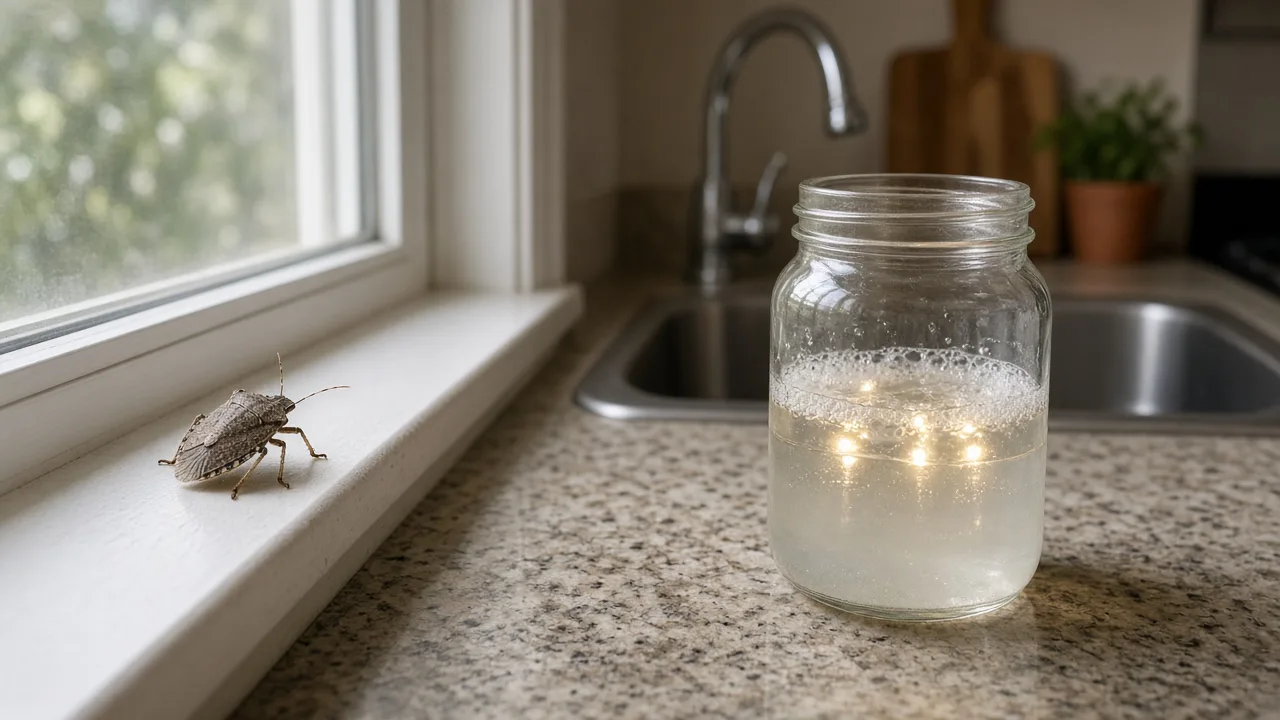
If you want one homemade stink bug trap to try first, use a shallow aluminum pan filled with water and a little dish detergent, illuminated by a lamp in an otherwise dark room. It works by combining the insect’s attraction to light with water that is difficult to escape once the soap breaks the surface tension. A Virginia Tech comparison reported that this pan-and-lamp design caught far more stink bugs than the other homemade designs tested, but it is not equally useful in every season.
That last point matters. A trap can remove wandering adults, but it cannot seal the crack they used, clear a wall void, or protect a tomato plant outdoors. The practical plan is to choose a trap for the problem in front of you, remove the catch without crushing it, and then fix the entry or garden conditions that keep producing new sightings. The National Pesticide Information Center’s stink bug guidance also emphasizes identification, quick removal, exclusion, and caution with indoor pesticides.
The quick answer: start with the light-and-soapy-pan trap
Choose the illuminated soapy pan when several stink bugs are appearing in one dark room, especially during spring and early summer when adults are active and responding to light. Choose the capture cup when you have one bug on a curtain or wall and want it gone immediately. Use a bottle funnel only as a contained experiment, and use a sticky card mainly to learn whether a quiet room still has activity.
Here is the honest ranking:
| Method | Best use | Main limitation |
|---|---|---|
| Light plus soapy pan | Multiple indoor bugs in the active season | Needs a dark room and is weaker for fall overwintering bugs |
| Jar-and-card cup | One or two visible bugs | You must guide each bug into it |
| Cool-light bottle funnel | A contained backup setup | Harder to build and less well supported than the pan |
| Sticky card plus lamp | Monitoring a room or catching a few wanderers | Winged bugs may not land, and the card is messy to handle |
None of these is a whole-house treatment. If you are seeing bugs every day, treat the number of catches as evidence that an entry route or overwintering pocket still needs attention, not as a reason to keep adding traps forever.
Confirm what you are catching before you build a trap
“Stink bug” is a common name used for multiple shield-shaped true bugs. Some are native garden insects, and a brown, shield-shaped visitor is not automatically the invasive brown marmorated stink bug. Identification matters most outdoors, where indiscriminate trapping or spraying can remove insects that are not causing the damage you are seeing.

The signs that point to a brown marmorated stink bug
An adult brown marmorated stink bug is roughly two-thirds of an inch long, broad and shield-shaped, with pale bands on the antennae and alternating light and dark markings along the rear edge of the wings. Its scientific name is Halyomorpha halys. The Penn State Extension identification guide describes those bands and the coppery or bluish punctures on the head and upper body that help separate it from lookalikes.
On plants, look for more than a single adult. Eggs are pale and laid in clusters on the underside of leaves; nymphs are smaller, darker, and often gather near fresh feeding sites. Feeding on fruit can leave sunken or discolored areas, while apples may develop the distorted “cat-facing” appearance described by Penn State Extension. If your insect is long and narrow rather than shield-shaped, or if the damage does not line up with piercing-sucking feeding, take a clear photo and ask a local Extension office before choosing a control.
Indoors, the urgency is lower. These bugs do not establish a breeding colony in the house or damage the structure, but they can gather in wall voids and emerge around windows, lights, baseboards, or trim. They also release a strong defensive odor if squeezed. That is why the goal of a trap is controlled capture, not a frantic swat.
Trap 1: an illuminated soapy roasting pan
This is the best first DIY option when you need to catch several indoor stink bugs without spraying the room. The method is simple, inexpensive, and supported by the most useful comparison available for homemade designs: a Virginia Tech study described by WVTF’s report on the trap found the pan-and-lamp setup substantially outperformed the other models tested.

Build the pan trap safely
Use a shallow foil roasting pan or another wide, stable container, a desk lamp that can illuminate the pan from the side, water, and a small amount of ordinary dish detergent. The reported study used about half a gallon of water in a recycled aluminum pan and a little detergent; the exact brand is less important than making the surface slippery and difficult for a bug to leave.
- Set the pan on a level, hard surface where it cannot be kicked or tipped.
- Add enough water to make a broad, visible landing area without filling the pan to the rim.
- Add a small squeeze of dish detergent and gently mix it through the water. You do not need a thick layer of foam.
- Put the lamp beside the pan so the light falls across the water. Keep the electrical cord and lamp base well away from the liquid.
- Turn off other lights in the room. If you use a timer, check that the lamp is stable and rated for unattended operation.
- In the morning, cover or move the pan carefully, remove the insects, and refresh the solution before the next use.
The light is the lure; the soapy water is the containment step. A dry pan under a lamp may attract a bug but gives it a chance to climb or fly away. A large pan also gives the insect a better chance of encountering the water than a narrow bowl does.
Improve the catch rate without creating a hazard
Make the room genuinely dark except for the trap. Close curtains, turn off screens and night-lights, and place the pan near the window or wall where you have already seen activity, but not directly against a curtain or stack of fabric. Do not put the lamp above the water, balance it on the pan, or use a hot bulb inside a plastic enclosure.
Timing is the most important limitation. NPIC notes that stink bugs emerge in spring and early summer, and the Virginia Tech reporting describes light attraction as strongest during the lengthening-day period associated with outdoor activity and mating. If your problem is a fall invasion of adults seeking shelter, a pan can still catch some wanderers, but it may perform poorly; vacuuming and sealing the entry points are usually more useful.
Keep the setup inaccessible to toddlers, pets, and anyone who might pull on the cord. The mixture is not a pesticide, but it is still a spill and ingestion hazard. Never leave an unstable lamp or an open water container in a walkway.
Trap 2: a jar-and-card capture cup
The simplest trap is not really a lure. It is a small capture station that lets you remove a single bug without touching it or crushing it. This is the right choice for the stink bug on the bedroom wall, the window screen, or the curtain that you noticed before bed.
Set up a no-squish capture station
Use a wide-mouth jar, a clean food can with a smooth rim, or a plastic container with a lid. Add an inch or two of water and a few drops of dish detergent. Keep a stiff postcard, scrap of junk mail, or thin piece of cardboard beside it. The card is the important tool: it lets you guide the bug into the container without pinching its body.
Approach slowly. Place the container just below the bug, then slide the card behind or beneath it so the insect steps or falls inside. Put the lid on before carrying the container to an outdoor trash receptacle, or use the soapy water as the final disposal step according to your local waste rules. If you intend to release a live bug instead, take it well away from doors and windows; do not set it on the nearest porch rail where it can return.
This method is less efficient than the pan for a room with many bugs, but it works in any season and does not require a light. It is also easier to keep away from cords and curtains. The limitation is labor: every bug still has to be found and guided into the cup.
Do not add bleach, ammonia, essential oils, or household cleaners to the water. A small amount of dish detergent is enough for a capture cup; mixing cleaners creates risks without making the trap more reliable. Label the container if children or guests might mistake it for a drinking cup.
Trap 3: a cool-light bottle funnel
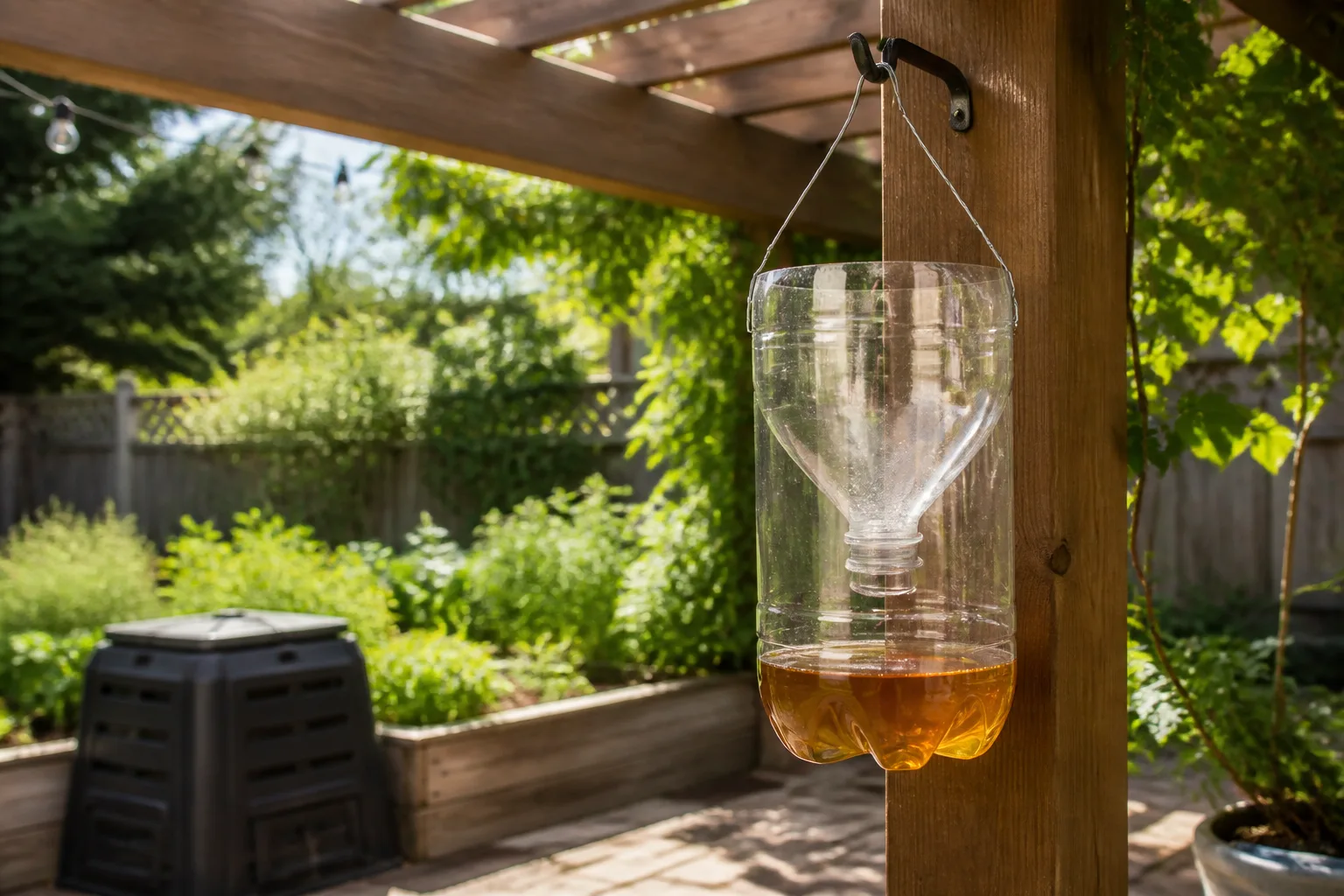
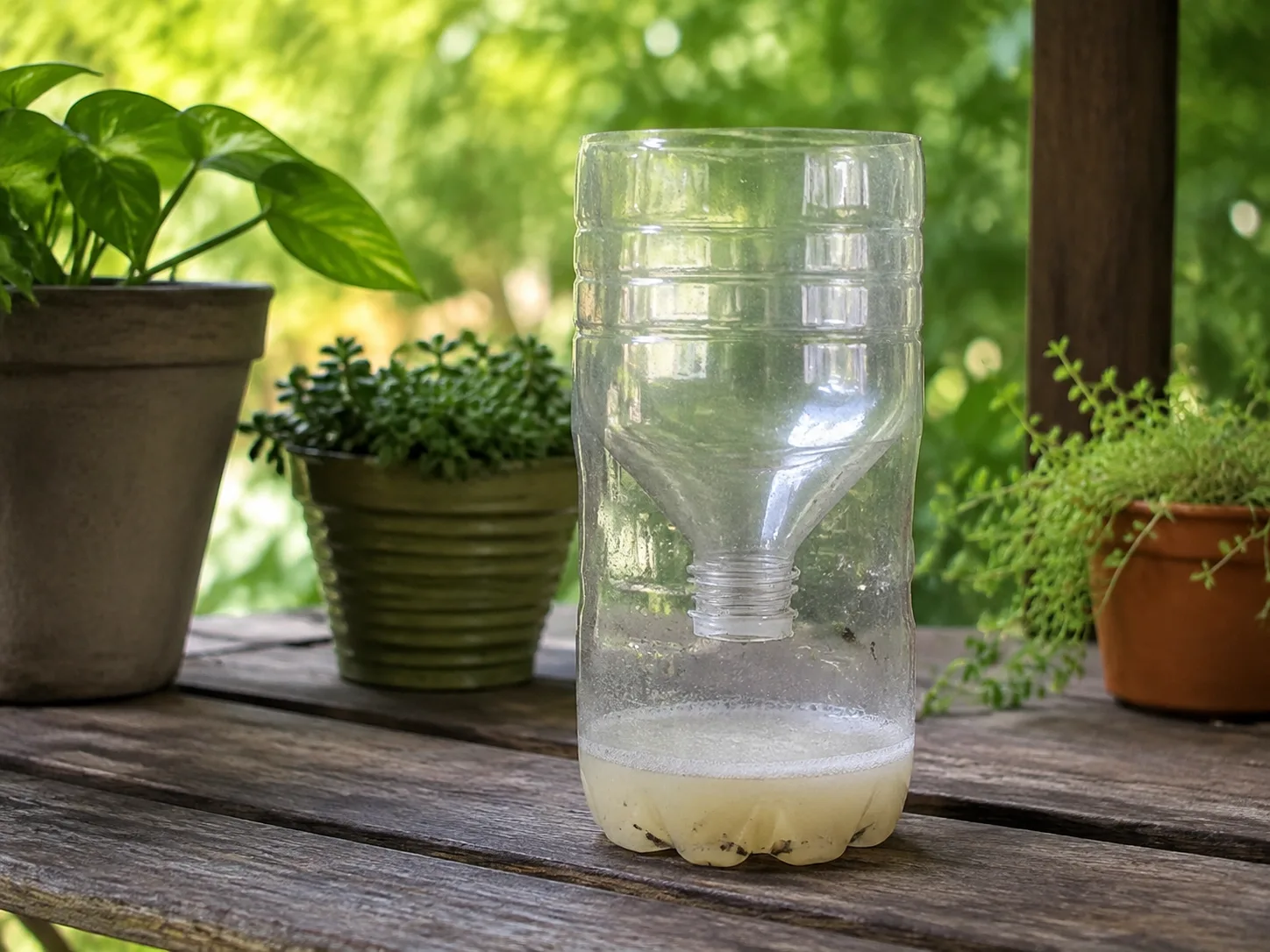
A bottle trap can be made from a clear plastic drink bottle, a pair of scissors, tape, and a small battery-powered LED light. It is useful when you want a narrow, enclosed container, but it should be treated as a backup design rather than a proven replacement for the pan. A bottle has less landing area, more escape routes, and more opportunities for a badly cut edge or a poorly secured light.
Treat the bottle as a backup, not a cure
Cut the upper part of the bottle away and invert it into the lower section to form a funnel. Secure the edges so there are no sharp points. Put the battery LED behind or inside the lower section only if the light stays cool, the battery compartment remains dry, and the design cannot tip. You can darken the outside of the lower bottle to reduce competing light, but never use wet paint near the water or put a hot lamp inside plastic.
Use the trap in a dark room with the bottle placed where stink bugs already appear. Do not add sugary bait: stink bugs are plant-feeding insects, and a sweet liquid can create a different pest problem without improving the lure. If you add a little soapy water at the bottom, leave enough empty space that trapped insects are not pushed back toward the funnel.
Test the bottle for one night while you are awake or nearby. If insects are landing on the outside, escaping through the funnel, or ignoring the light, retire the design instead of making it larger or more complicated. The value of this setup is containment and experimentation, not a promise that a plastic bottle will solve an infestation.
Trap 4: a lamp-lit sticky monitoring card
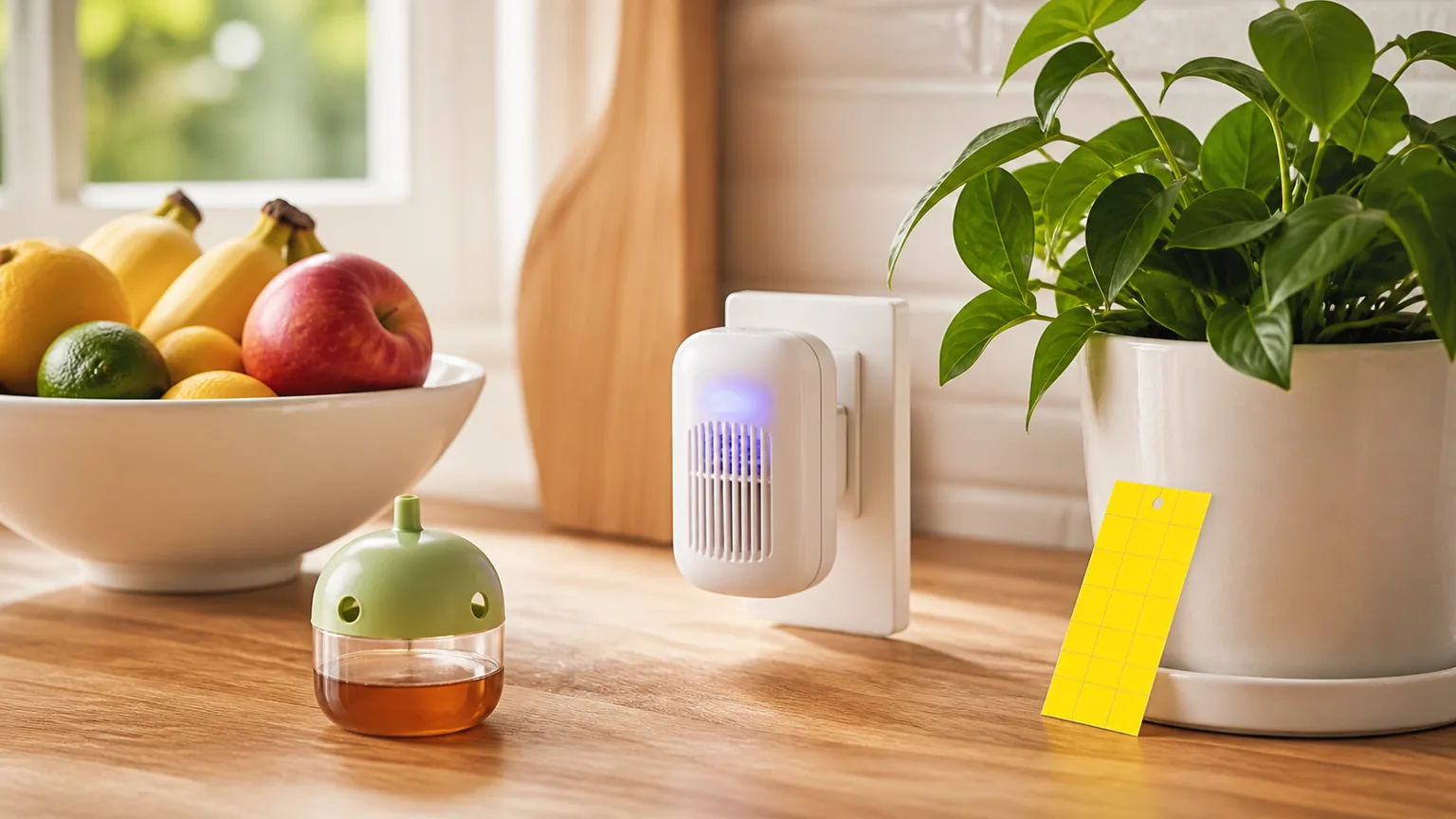
Sticky cards can catch some stink bugs, but they are a weaker control method because a large, winged insect may walk around the adhesive or land somewhere else. They are most useful as a monitor: a way to learn whether bugs are still using a room, window, or doorway after you have removed the obvious adults.
Use sticky cards for activity checks
Cover a small piece of stiff cardboard with a commercial insect sticky card or a sheet of double-sided adhesive. Place it near a window, door, or light source where you have seen activity, and put a lamp a short distance away so the card is visible but the bulb cannot heat or melt the adhesive. Check it daily and replace it when dusty, full, or no longer tacky.
Do not stick homemade adhesive directly to painted walls, finished trim, fabric, or a pet’s reach. A free-standing card inside a shallow box is easier to remove and less likely to create a mess. Keep it away from children and animals; the adhesive can catch fur, feathers, or fingers as readily as it catches an insect.
If the card catches nothing, that does not prove the room is bug-free. It may mean the bugs are not landing, the light is competing with a window or television, or the insects have settled in a void rather than crossing the floor. For that reason, use the card to guide your next inspection, not to decide that the entry problem is solved.
When a vacuum is better than any DIY trap
For a few bugs already inside, a vacuum is often the fastest and least frustrating option. Use a handheld or spare vacuum with a hose, approach without crushing the insect against the wall, and empty the bag or canister promptly. Penn State Extension warns that a vacuum can acquire the odor of stink bugs for a while, so a garage vacuum or a disposable bag is preferable when available.
If you use a bagless machine, take it outdoors before opening the canister. Seal the collected insects in an outdoor trash bag or container rather than leaving them in a warm utility closet where they can crawl out. Do not rely on a vacuum to remove bugs from a wall void; it is a removal tool for accessible adults, not a substitute for sealing the route they use.
Vacuuming also beats a trap when the timing is wrong for light attraction. A fall group emerging around a window may ignore the pan but still be easy to remove one by one. If you are seeing dozens every day, vacuum the visible bugs, then move immediately to the exclusion steps below.
Stop the next wave with exclusion
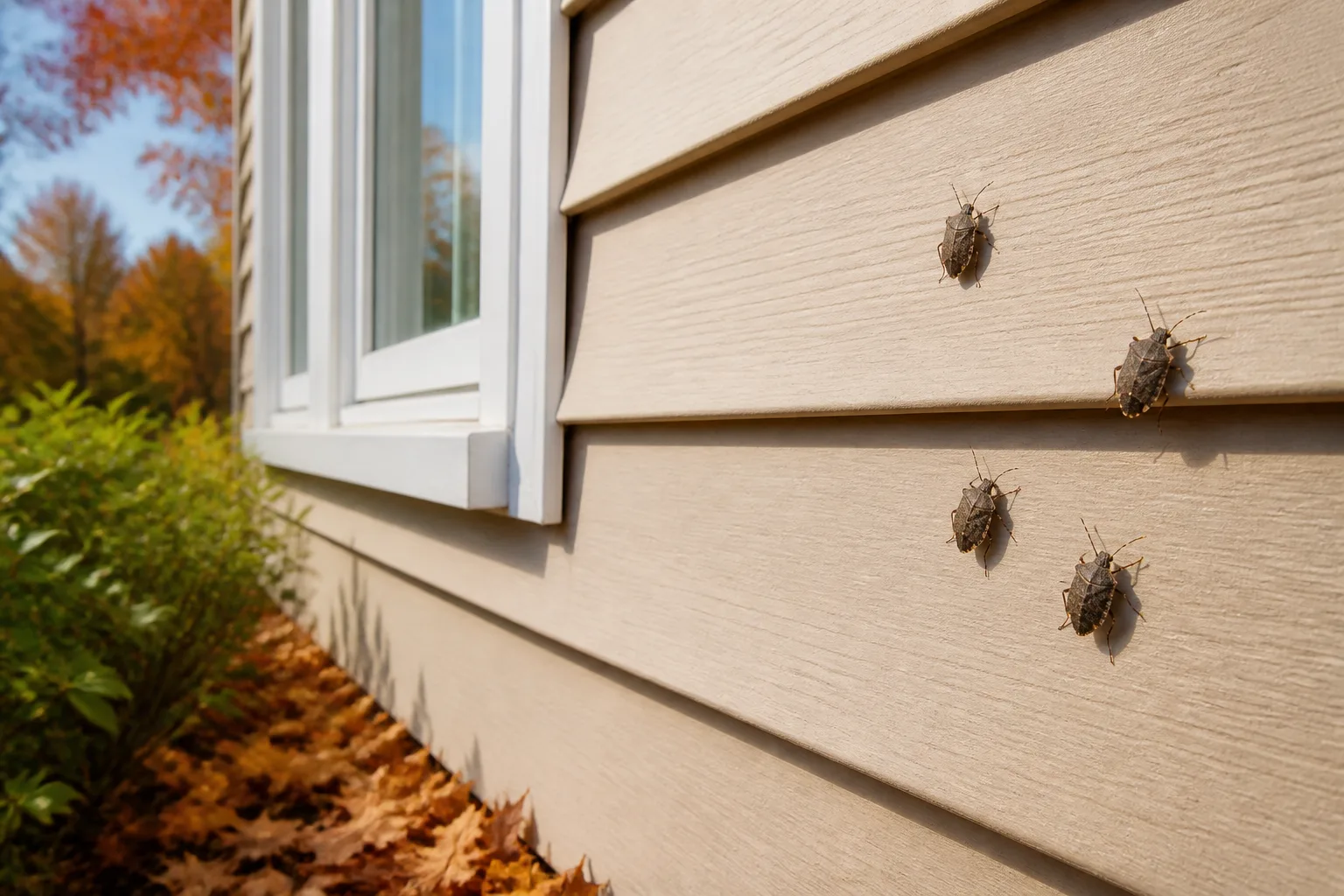
Traps reduce the number you see. Mechanical exclusion reduces the number that can enter. Before the next cold-weather movement, inspect window and door frames, torn screens, siding joints, utility penetrations, exhaust-fan openings, attic vents, fascia, chimney edges, and cracks near the foundation.
Use an appropriate exterior sealant for the joint and repair screens rather than blocking ventilation openings with improvised material. Pay special attention to sunny walls and the warm side of the building, where adults may gather before looking for a protected overwintering site. The Rutgers New Jersey Agricultural Experiment Station’s BMSB guidance points homeowners toward exclusion as the practical first line of defense.
Do the inspection before the fall congregation, not after the first cold night sends insects toward the house. Once adults are inside wall voids, indoor foggers and crack sprays do not solve the long-term problem; new insects can continue to emerge after the room is aired out. Penn State Extension specifically describes indoor insecticide use as a poor long-term solution and recommends sealing and physical removal instead.
Outdoor perimeter treatments are a separate decision. If you consider one, use a licensed professional where required and follow the product label; do not improvise an indoor pesticide treatment because a homemade trap caught a lot of bugs.
Garden infestations need different tools
An indoor light trap will not protect the beans, tomatoes, peppers, corn, apples, peaches, or other plants where stink bugs feed. In the garden, begin with observation: turn over leaves, look for egg clusters, inspect developing fruit, and note whether the damage is expanding or isolated.
For a small planting, handpick adults and nymphs into a container of soapy water. Remove egg-bearing leaves when practical, and use a lightweight row cover over crops during the vulnerable vegetative stage; remove or open it when flowers need pollination. Harvest ripe fruit promptly and clear fallen or damaged fruit so the bed does not become a quiet feeding area.
The Farmers’ Almanac guide to stink bug control is useful for this practical seasonal distinction: plant feeding tends to be a summer concern, while fall adults are looking for shelter. Treat companion planting, garlic, mint, and other scent-based suggestions as optional experiments, not as a reliable substitute for scouting and physical barriers. There is no homemade indoor trap that can intercept every adult moving through a large garden.
If you are growing food, do not spray a dish-soap mixture, essential oil, or other homemade recipe on edible leaves simply because it sounds mild. Leaf burn, residue, pollinator exposure, and harvest restrictions still matter. Use only a product labeled for the crop and pest, and follow the label exactly; for uncertain cases, send photos or a specimen to your local Extension office.
Common mistakes that make traps look ineffective
The most common mistake is expecting one trap to work in every season. A light-and-pan trap is a reasonable spring or early-summer experiment, while fall bugs are often better handled with vacuuming and sealing. If you switch from one season to the other without changing the strategy, you may conclude that the pan “stopped working” when the insects’ behavior changed instead.
Another mistake is giving the trap too much competing light. A bright window, television, porch light, or uncovered hallway can draw the insects away from the pan. Make the trap the clearest light source in the room, but never create a fire or shock risk to do it.
Too much detergent is not an upgrade. A slick surface is enough; excessive foam makes the container harder to inspect and can increase the chance of a spill. Refresh the water when it is dirty, and do not leave a shallow open container where a child or pet can reach it.
Finally, do not confuse catching bugs with finding the cause. A rising catch count is useful information: inspect the nearby window, door, vent, or wall seam. If the capture station is full every morning, spend the next hour on exclusion rather than building a fifth trap.
When to stop experimenting and ask for help
Ask for help when you cannot identify the insect, when the plant damage is severe or spreading, or when bugs are entering from inaccessible wall, attic, or ceiling spaces. A county Cooperative Extension office can often help distinguish brown marmorated stink bugs from native stink bugs and lookalikes, then point you toward region-specific garden thresholds and control options.
Consider a licensed pest professional when exclusion is difficult, the infestation is persistent, or the structure has many openings that you cannot safely reach. A professional should explain where the insects are entering, what exterior timing is appropriate, and what the product label requires around children, pets, food, and windows. Be cautious of anyone promising that an indoor spray or a single trap will eradicate every stink bug permanently.
Conclusion
For a homemade setup that has the best support, start with the illuminated soapy roasting pan in a dark room during the season when stink bugs are actively responding to light. Use a jar-and-card cup for individual bugs, a cool-light bottle only as a cautious backup, and a sticky card mainly to monitor activity rather than to promise control.
Then do the work that traps cannot do: vacuum accessible adults without crushing them, seal gaps around screens and trim before the fall movement, and scout garden plants separately from the house. The most effective stink bug plan is not the most elaborate trap; it is the smallest safe intervention that matches the insect’s season, location, and route into your home.



