Common Tansy: Identification and Safe Removal Guide
Identify common tansy by its fernlike leaves and yellow buttons, then learn when to dig, how to bag seed heads, and how to check safely for regrowth.
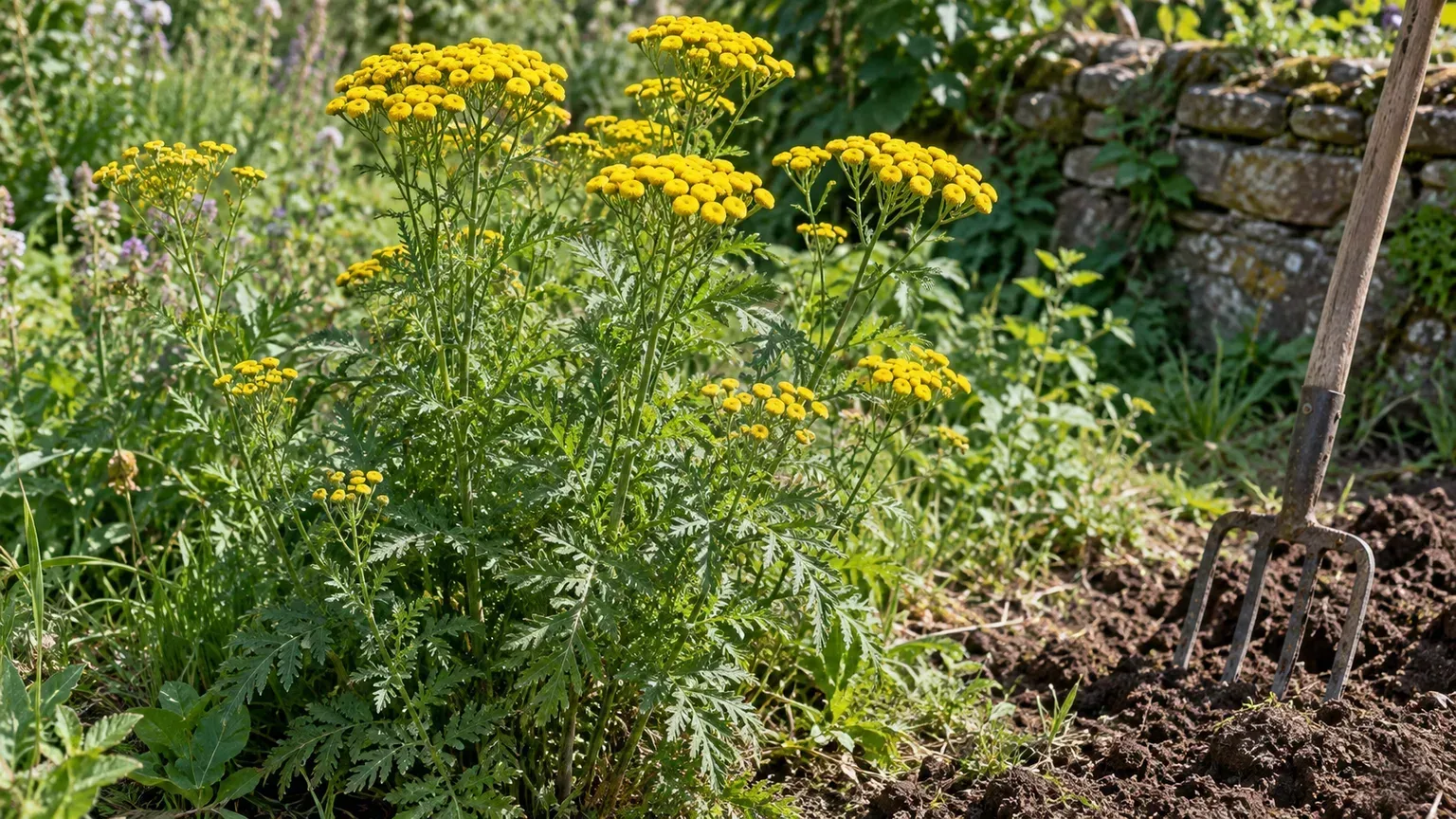
Common tansy (Tanacetum vulgare) is an introduced perennial weed with fern-like leaves and small yellow button flowers that have no daisy petals. A few plants can be dug out if you remove the connected roots and rhizomes; a large stand needs repeated seed prevention, follow-up, and sometimes a locally approved control plan. Wear gloves and long sleeves before handling it: extension sources report skin irritation and toxicity if the plant is eaten. (NC State Extension; Montana State University Extension)
The first step is confirming the plant. Common tansy is often confused with tansy ragwort and other yellow-flowered weeds, and the removal timing changes if the heads already carry mature seed. Once you have a confident identification, match the method to the patch: hand-dig isolated plants, prevent seed from spreading across larger areas, and plan to revisit the site rather than expecting one cut to solve it.
How to recognize common tansy
Common tansy is a clump-forming herbaceous perennial. It often grows around 1 to 5 feet tall, with several upright stems, but height varies with light, soil, and competition. It commonly appears in disturbed ground, roadsides, pastures, stream edges, and ditches, so a plant at a field or garden boundary deserves a closer look. (NC State Extension; Washington State Noxious Weed Control Board)
Leaves, stems, and scent
Look for alternate leaves arranged one at a time up the stem. Each leaf is deeply divided into narrow, toothed segments, giving it a feathery or fern-like outline; the upper leaves are usually smaller than the lower ones. Stems may be green above and reddish-brown toward the base, and mature plants can branch near the top. (Washington State Noxious Weed Control Board)
The foliage has a strong, camphor-like aroma when crushed. Treat scent as a supporting clue, not a test: you do not need to crush an unknown plant to identify it, especially because common tansy can irritate skin. If you already have gloves on and are comparing confirmed specimens, the smell can help distinguish it from some look-alikes, but flower structure and leaf shape are safer first checks. (NC State Extension)
Button flowers and seed heads
Common tansy produces many small, golden-yellow flowerheads in dense, flat-topped clusters. Each head is roughly a quarter to half an inch across and looks like a button because it is made of disk florets without the long ray petals people associate with a daisy. Bloom often runs from midsummer into early fall, with local timing shifting by climate. (NC State Extension; Washington State Noxious Weed Control Board)
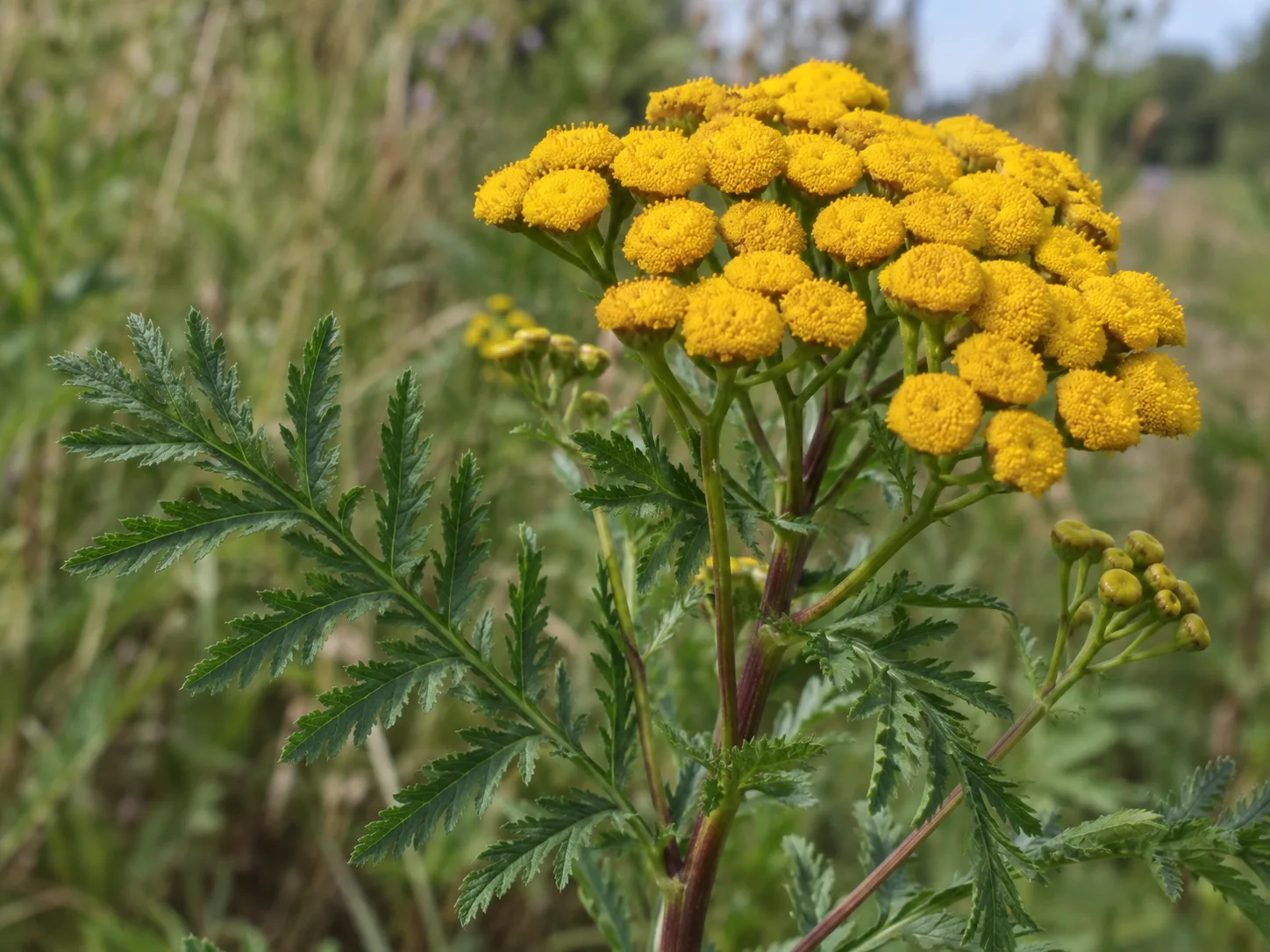
After flowering, the heads dry and develop small seeds. The plant spreads both by seed and by creeping underground rhizomes, so a patch can expand sideways even when you do not see many seedlings. The yellow buttons are useful for identification, but they are also a cue to check for developing seed before moving or cutting the plant.
Common tansy vs. tansy ragwort
The easiest field distinction is the flowerhead: common tansy has compact yellow buttons with no ray petals; tansy ragwort has daisy-like heads with visible yellow rays. Common tansy’s leaves are finely divided and fern-like, while tansy ragwort has a different, more irregularly lobed leaf shape. Both can occur as invasive weeds, so do not treat a plant as harmless just because it is not common tansy. (Washington State Noxious Weed Control Board; King County)
Common St. Johnswort is another yellow-flowered look-alike. Its individual flowers have five petals, rather than the petal-free disk heads of common tansy. If the plant is not in bloom or you cannot confidently distinguish it, photograph the whole plant, leaves, stem, and flower cluster and ask your county weed coordinator or local extension office before removing it. Do not handle an uncertain plant bare-handed or use smell as your only identification method. (Washington State Noxious Weed Control Board)
Is common tansy invasive or regulated where you live?
Common tansy is non-native in North America and can form dense patches that displace other plants and reduce forage and wildlife habitat. Its rhizomes help it spread underground, while its flowers produce seeds that can move with wind, water, animals, or equipment. Those traits make it more than a cosmetic garden weed, especially beside pasture, open land, or waterways. (Montana State University Extension; Washington State Noxious Weed Control Board)
“Noxious weed” does not automatically mean the same legal duty in every county. Washington’s Noxious Weed Control Board lists common tansy as a Class B weed, while King County describes it as a non-regulated Class B there: property owners are not required to control it in that county, although control is encouraged. That local example shows why a state category alone may not tell you what you must do on your property. (Washington State Noxious Weed Control Board; King County)
Before planting, transporting, selling, or disposing of tansy, check the current state and county weed list for your address. Rules can differ between neighboring jurisdictions and can change; your county weed board or cooperative extension office is the right place to confirm whether a plant is regulated and which disposal route applies. Avoid moving it to a new site even where control is voluntary.
It also helps to separate three labels. Invasive describes ecological behavior, noxious usually refers to a plant on an official weed list, and regulated describes a rule that applies in a specific jurisdiction. A plant can be invasive in a region without every property owner being under a legal removal order; a listed weed may have different duties in different counties. Confirm the current local rule before you treat a neighboring patch, move soil, or hire someone to spray.
Is common tansy toxic?
Yes. NC State Extension identifies common tansy as a high-severity poisonous plant and notes that it contains thujone, which can cause contact dermatitis and serious effects if consumed in excess. Montana State Extension also describes toxicity to people and livestock if enough is eaten. Do not use common tansy in food, tea, home remedies, animal feed, or homemade pest repellents. (NC State Extension; Montana State University Extension)
For removal, wear gloves and long sleeves and keep plant sap off your skin. Keep children, pets, and livestock from chewing or handling the plant, and wash exposed skin and tools after the job. If a person has eaten any part, call U.S. Poison Control at 1-800-222-1222; if an animal has eaten it, contact a veterinarian promptly rather than waiting for symptoms. Save a clear photo of the plant for identification. (NC State Extension; Montana State University Extension)
Before removal: protect yourself and prepare the site
Choose a dry, calm work window, especially if you will cut or mow a stand. Wear sturdy gloves, long sleeves, long pants, and closed shoes; eye protection is sensible if you are using powered equipment or working where stems can spring back. Keep children and animals away, and avoid touching your face while handling the plant. The protective clothing is not overkill: NC State Extension specifically warns about contact dermatitis. (NC State Extension)
Gather a hand fork or digging fork, a tarp or bucket for roots, and a sturdy bag for flowering or seed-bearing stems. If the soil is dry and hard, wait for rain or water the area the day before digging; damp soil releases roots more cleanly. Mark the patch edge before you start and note nearby ornamentals, water, and access paths so you can avoid damaging desirable plants or carrying seed into clean parts of the yard.
If you are dealing with a mixed planting, take a photo and decide which plants you want to keep before you loosen soil. Common tansy can weave rhizomes through the roots of border plants, so a hurried deep cut may solve the visible weed while injuring the plants that are meant to stay. Work from a clear edge in small sections, and stop if you can no longer tell which roots belong to which plant.
If flowerheads are already open or drying, handle them before the rest of the plant: gently contain the heads in a bag or cut the stems directly into one. This reduces the chance that brushing through the patch scatters seed. Do not shake or drag seed-bearing stems across the lawn, and do not start with a mower once seeds are loose.
Choose a method by patch size
The goal changes with the infestation. For one or two plants, remove the root system and check the spot again. For a broad patch, it may be more realistic to prevent seed production and repeatedly weaken regrowth while you restore the site. King County recommends a long-term approach, starting in lightly infested areas and monitoring for resprouts rather than treating a single visit as eradication. (King County)
Small patches: dig out the roots
Work when soil is moist but not waterlogged. Set the fork a short distance from the stems and loosen the soil around the crown; avoid chopping directly through the plant’s base. Ease the root mass upward, then follow any pale horizontal rhizomes you can see and lift them rather than snapping them into pieces. Perennial weeds can regrow from root sections, so a fork and patient loosening usually give you a better chance of removing roots intact than chopping with a spade. (King County; RHS)
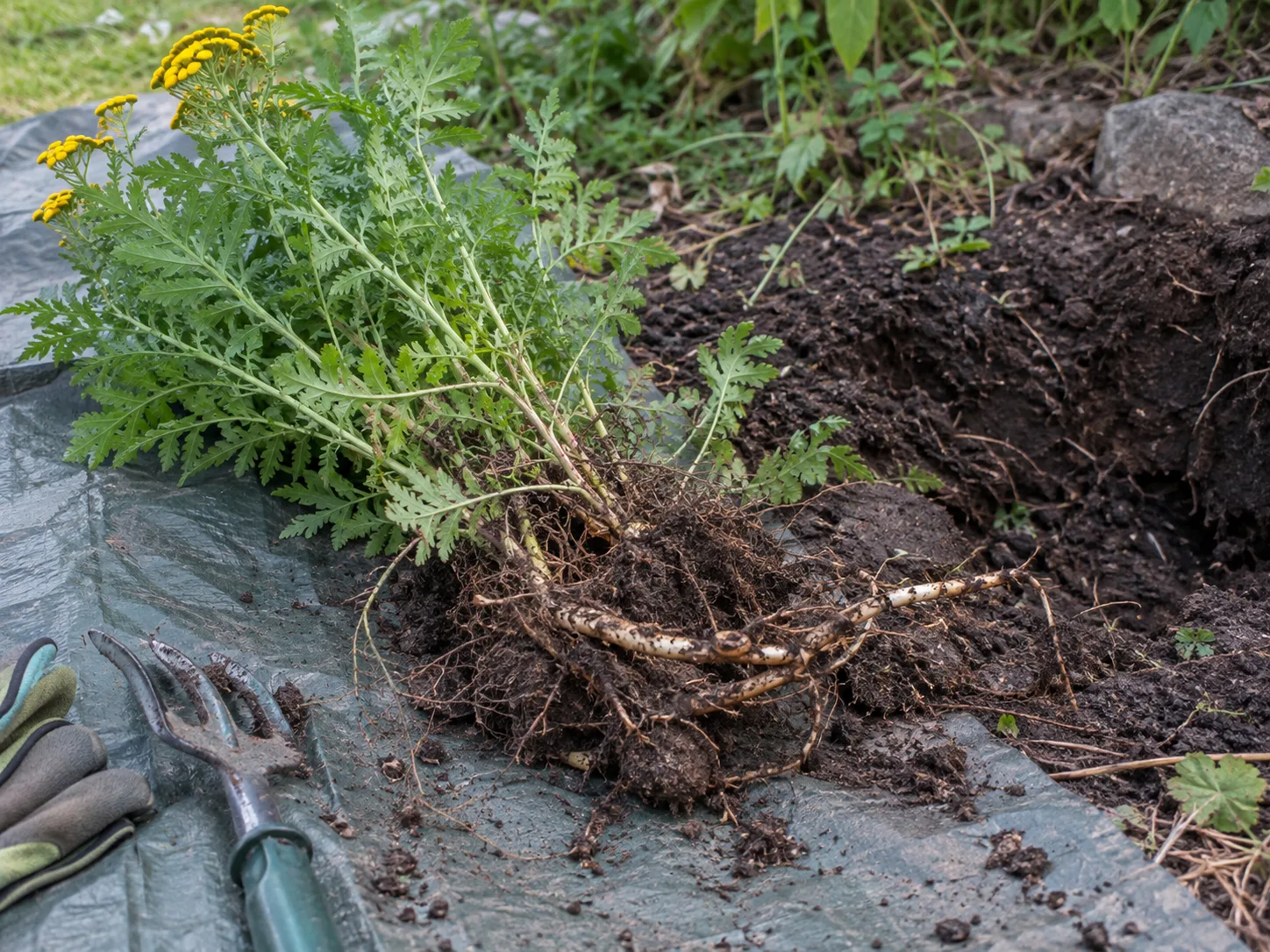
Place the plant and roots on the tarp, gently separate the soil, and inspect the hole and surrounding soil for fragments. Do not aggressively shake the plant over the bed: that can drop soil and small pieces back where they may root. If the tansy is threaded through the roots of a valuable perennial, dig carefully around that plant or consider cutting the tansy repeatedly at the soil line rather than destroying the wanted plant to extract every last root in one pass.
Once the plant is out, firm the soil and cover bare ground with mulch or replant it with suitable, locally recommended vegetation. That will not kill a missed rhizome, but it reduces open space where seedlings can establish and makes new shoots easier to spot. Return after several weeks and pull any shoots while they are small; one missed fragment is a reason to continue monitoring, not evidence that the first removal was pointless.
For example, with two flowering stems in a border, first bag the heads, then dig one plant at a time while keeping the fork outside nearby perennial crowns. If you find the tansy rhizomes crossing the border, trace and remove what you can without tearing apart the wanted plant; then mark that spot and check it frequently. A second careful pass is usually better than turning the whole bed over and scattering root pieces.
Larger stands: stop seed and weaken regrowth
For a patch too large to dig at once, begin at its edges and work inward. The edge is where you can often remove small satellites with less disturbance, and treating those first helps prevent the occupied area from expanding while you make a longer plan for the dense center. Bag flowering or seed-bearing stems before cutting the rest of the stand.
Make a simple repeat schedule instead of relying on memory: record the first cut or removal date, then walk the same boundary every few weeks during active growth. If you find new shoots, cut or dig them before they flower and note where they appeared. That record shows whether the patch is shrinking, holding steady, or spreading beyond the original line, which helps you decide when a local specialist should review the site.
Repeated mowing or cutting before flowering can reduce seed production, but one mowing does not kill established common tansy. A single cut may simply remove the tops while the rhizomes send up new shoots. Washington and Montana weed guidance both describe mowing as a way to limit flowering or seed set, not as a one-time cure; schedule repeat inspections and cuts before new plants flower. (Washington State Noxious Weed Control Board; Montana State University Extension)
Avoid mowing after seed has matured unless you can first contain and remove the seedheads. Clean soil and plant debris from mower decks, forks, boots, and vehicle tires before moving to an uninfested area. If the patch is along a stream, in pasture, or too extensive for repeated manual work, ask a local weed coordinator or extension specialist for an integrated plan; the best method depends on the site and what grows around it.
When to remove common tansy
For hand digging, spring is a practical time to remove small plants, when new growth is visible and the soil is often easier to work. For seed prevention, remove or cut flowering stems before seedheads mature. Those are related but different goals: spring digging targets the root system, while pre-seed cutting limits next year’s seedlings. King County identifies spring as its best time for manual control and advises continued monitoring for resprouts. (King County)
Do not let a calendar override what you see. If the plant has already flowered, act carefully and bag heads before they dry and scatter; if seed is already present, keep disturbance low and follow local disposal guidance. Recheck the patch during the growing season and again the following spring, because underground rhizomes and missed seedlings can show up after the visible tops are gone.
Use two cues when deciding what to do today: whether the seedheads are still closed, and whether the soil will release the roots without breaking them apart. If the heads are closed and soil is workable, dig a small plant now rather than waiting for a particular month. If the heads are drying but the ground is hard, contain and remove the tops first, then return when the soil is moist enough to lift roots carefully.
How to dispose of stems, seed heads, and roots
Keep flowering and seed-bearing material out of a home compost pile. Put it in a sealed bag and use the disposal route your local weed program or waste authority specifies; some places direct noxious-weed material to household trash or a designated transfer station, while yard-waste rules differ. King County advises against backyard composting of seeds and recommends discarding root wads so they cannot re-root. (King County)
For non-flowering foliage, do not assume the same rule applies everywhere. King County allows non-flowering foliage to be composted but says roots should be discarded; another county may set stricter requirements. When the plant is flowering, seeding, or legally regulated, confirm the rule before using a municipal green-waste bin. Never dump tansy in a ditch, roadside, stream bank, park, or other uninfested area.
Brush soil and plant fragments off tools, footwear, clothing, and equipment before leaving the patch, then wash up and launder work clothes. Cleaning is a small step that prevents you from carrying seed or root pieces to another bed or property. Store bagged material where children and animals cannot reach it until disposal.
Why mowing, tilling, and composting can fail
Cutting the tops once removes flowers but leaves the perennial root system in place. That can be useful as a timed seed-prevention step, but it is not the same as eliminating a patch. If you choose mowing, repeat it before flowering and treat new shoots as part of the same job. (Washington State Noxious Weed Control Board; Gardening Know How)
Rototilling or chopping through a patch can make the work look faster while distributing root fragments through more soil. RHS guidance for perennial weeds recommends loosening and lifting roots rather than chopping them into pieces; that principle matters here because common tansy spreads by rhizomes and root fragments. Work with a fork when you can, and bag any roots you cannot confidently remove from the bed. (RHS; NC State Extension)
Home compost is also a poor place for seedheads or live roots. A pile may not heat every part enough to prevent seeds or roots from surviving, and material can be spread again when compost is used. Follow the stricter local instruction when you are uncertain; the cost of bagging and checking is lower than reseeding a cleared bed.
How to keep common tansy from returning
Treat follow-up as part of removal. Walk the site every few weeks during the growing season and after mowing, rain, or soil work; remove new seedlings while they are small and dig resprouts before they flower. Keep a quick map or phone photo of the original patch so you can check its edges and spots where roots were disturbed.
Revegetate bare soil with plants suited to your region and site, and use mulch in maintained garden beds. A healthy, covered planting reduces the open ground tansy can occupy, though it is not a substitute for pulling new shoots. If the site is pasture or natural area, choose restoration species with local extension or conservation guidance rather than sowing a generic wildflower mix. (King County; RHS)
Continue monitoring over multiple growing seasons. King County recommends at least four years of monitoring after its herbicide treatment guidance; that is a useful reminder that perennial weed control is measured by repeated checks, not by how clean the bed looks the day you dig. Your local program may recommend a different schedule for manual removal or a different habitat. (King County)
When buying replacement plants, verify the botanical name rather than relying on a nursery tag that says only “tansy.” Cultivars may differ in leaf color or size, but the name Tanacetum vulgare still identifies common tansy; check the local weed list before introducing it. If a bed is near an infestation, inspect new plants and root balls for hitchhiking weed material, then keep the ground covered so new seedlings are easy to spot.
When to call a local weed-control professional
Ask for help when the patch is large, repeatedly returning, mixed through valuable plantings, or close to water, grazing animals, or public land. A county weed coordinator can confirm the identification and local rules, and can point you toward control methods that fit the vegetation and site. For a small garden clump, that call may simply confirm that careful hand-digging is enough; for a field-scale stand, it can prevent a costly trial-and-error cycle.
Herbicide may be part of some integrated programs, but there is no universal product or rate that is safe for every yard. Product labels, approved sites, nearby plants, water, grazing restrictions, and local rules all matter. If chemical treatment is recommended, follow the current label exactly and ask the local specialist whether a licensed applicator is appropriate; do not spray a broad-spectrum product over a mixed garden or beside water based on generic advice. (King County; Montana State University Extension)
Conclusion
Common tansy is easiest to recognize by its feathery divided leaves and flat clusters of yellow buttons without daisy-like petals. Protect your skin, check local weed rules, and remove small plants by loosening and lifting the roots; where the patch is larger, cut before seed matures, clean equipment, dispose of seedheads and roots correctly, and return to check for regrowth.
Do not expect one mowing or one digging session to guarantee control. A careful first pass followed by repeated checks is safer for nearby plants and more effective at stopping a perennial weed that spreads both underground and by seed.



