29 Flowering Trees for Every Yard and Bloom Season
Compare 29 flowering trees by mature size, bloom season, climate, and cleanup so you can choose a tree that fits your yard long after the flowers fade.
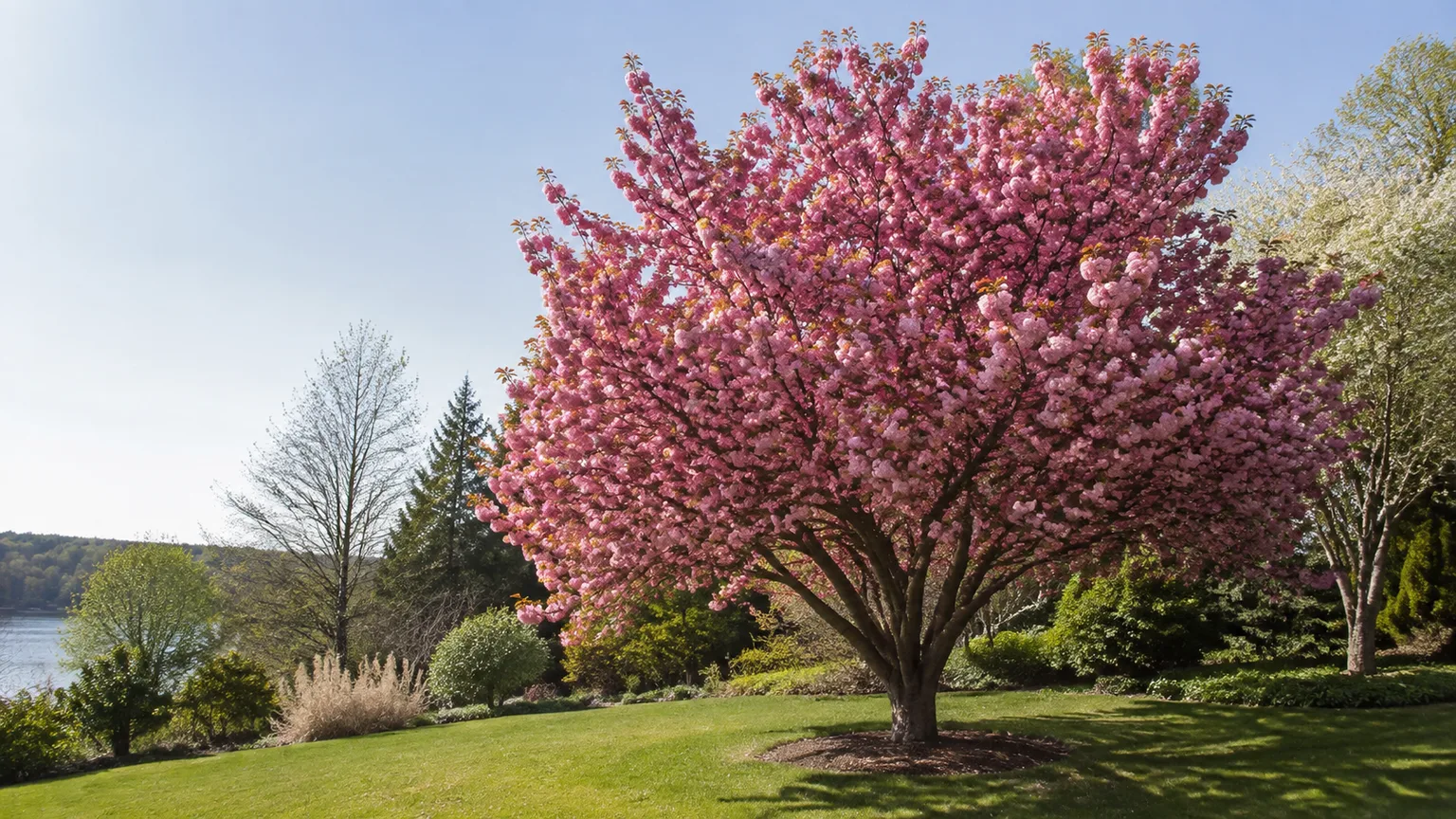
A flowering tree can transform a yard for a few weeks each year, but the tree itself will occupy that spot through every season. Choose by the bloom photo alone and you may end up with a canopy over a roof, fruit on a walkway, a tree that struggles in your climate, or a spring display that lasts only until the next cold night. A better choice balances the flowers with mature size, local growing conditions, year-round character, and the cleanup you are willing to handle.
The 29 trees below range from compact understory specimens to large canopy trees and warm-climate specialists. Their sizes and USDA zone ranges are approximate: cultivar, pruning, soil, exposure, and regional climate can shift a tree’s eventual dimensions and performance. Treat the descriptions as a shortlist, then confirm a named cultivar with a local nursery or extension service before you buy.
How to choose a flowering tree that fits your yard
Start with mature height and spread
Measure the planting site before browsing, including the room above and around it. A tree that reaches 25 feet tall may spread just as far, and a broad crown can conflict with a roof, overhead wires, a driveway, or a neighbor’s light even when the trunk looks far enough away on planting day. Check both mature width and height on the nursery tag, then leave space for the canopy to grow without annual cutting.
Root and utility conflicts deserve the same attention as the visible crown. Keep large trees away from foundations, septic systems, and buried lines; ask your utility locator and local arborist when the site is tight. The Better Homes & Gardens tree-planting guide emphasizes matching planting distance to the tree’s eventual size, rather than squeezing a mature tree into a small gap.
Decide what kind of flower show you want
Spring-flowering cherries, magnolias, redbuds, and dogwoods can make a dramatic display, but most ornamental trees flower in a concentrated flush rather than continuously. If flowers are the only feature you value, your yard may look ordinary for most of the year. Look for a second season of interest—fall color or berries, winter bark or branching, evergreen leaves, or summer flowers—so the tree still earns its space after the petals drop.
Think about where the tree sits in relation to patios and windows. Fragrant magnolias or lilacs can be wonderful near a seating area, while falling petals and berries may become a chore over a pool, entry path, or parked car. A fruiting pear or crabapple adds food and wildlife value, but fruit can soften on the ground; a sterile ornamental cherry avoids substantial edible fruit but still sheds petals and leaves.
Check climate and local tree lists
Use a hardiness zone as an initial winter-survival screen, not as a complete climate profile. A tree can be zone-hardy yet struggle with humid summers, drought, poor drainage, early warm spells followed by frost, or scorching reflected heat. Bloom timing also shifts with latitude and the weather in a particular year, so “March” in one region may mean April or May elsewhere.
Native trees such as flowering dogwood, redbud, fringe tree, and serviceberry are worth considering where they suit the site; locally native species can support regional insects and wildlife. Native does not mean indestructible, however: flowering dogwood is naturally an understory tree and can struggle in exposed, polluted urban sites. Conversely, a nonnative ornamental can fit a garden responsibly when it is not invasive in that region and its size and maintenance needs make sense.
29 flowering trees for every landscape
Small trees and understory choices
These are the first group to consider for a courtyard, front lawn, woodland edge, or smaller lot. “Small” still means planning for a mature crown; several choices can become wide multistem trees or shrubs unless you select a tree-form specimen.
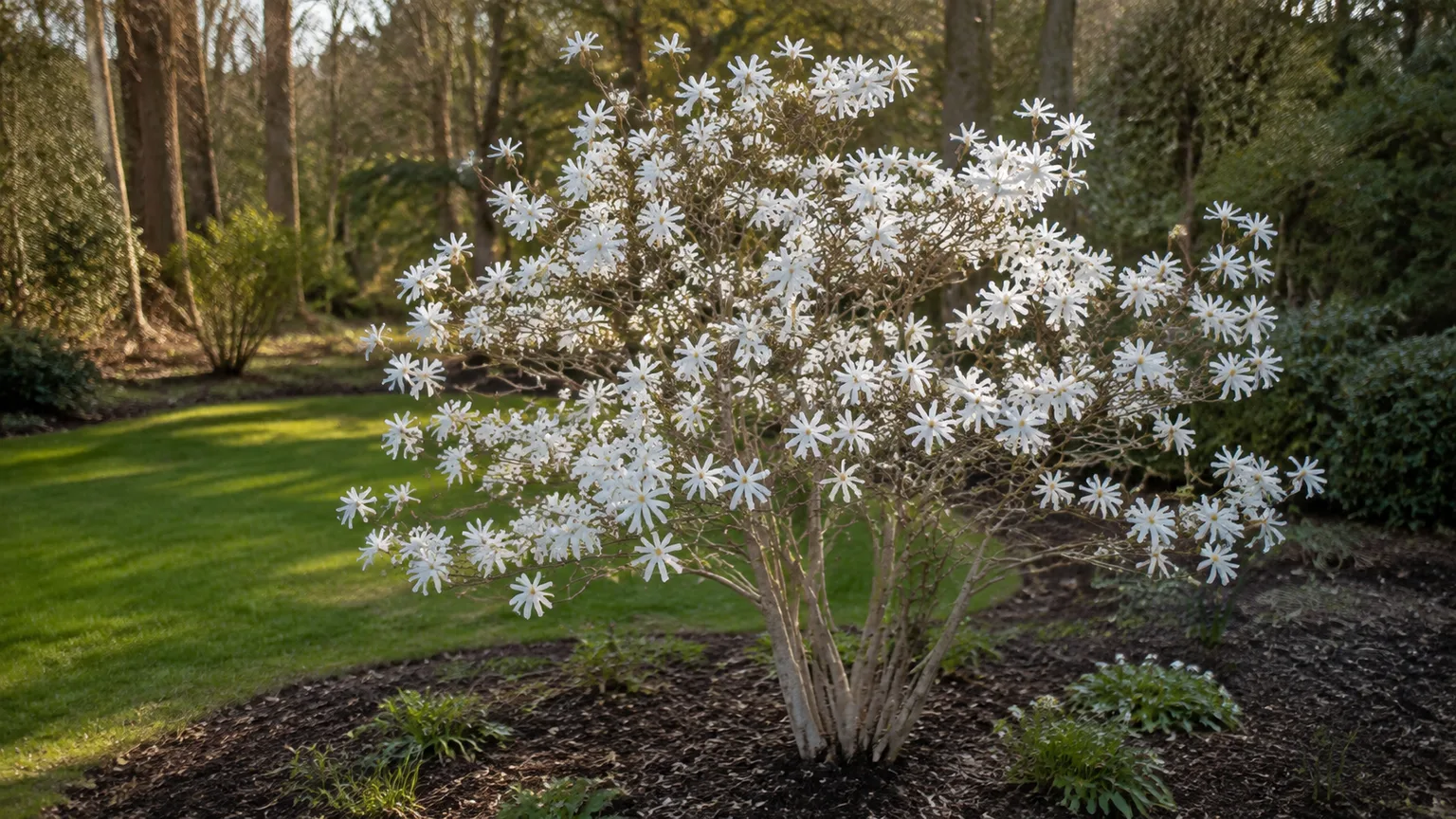
1. Star magnolia (Magnolia stellata) — compact, early flowers. This slow-growing magnolia typically reaches about 10 to 20 feet tall and 10 to 15 feet wide, with fragrant white or pale pink star-shaped flowers before the leaves appear. It can be a multistem shrub or a small tree, so check the nursery form if you want a clear trunk. It suits a sheltered, sunny to partly shaded site; an early warm spell can open buds before a late frost, which may brown that season’s flowers.
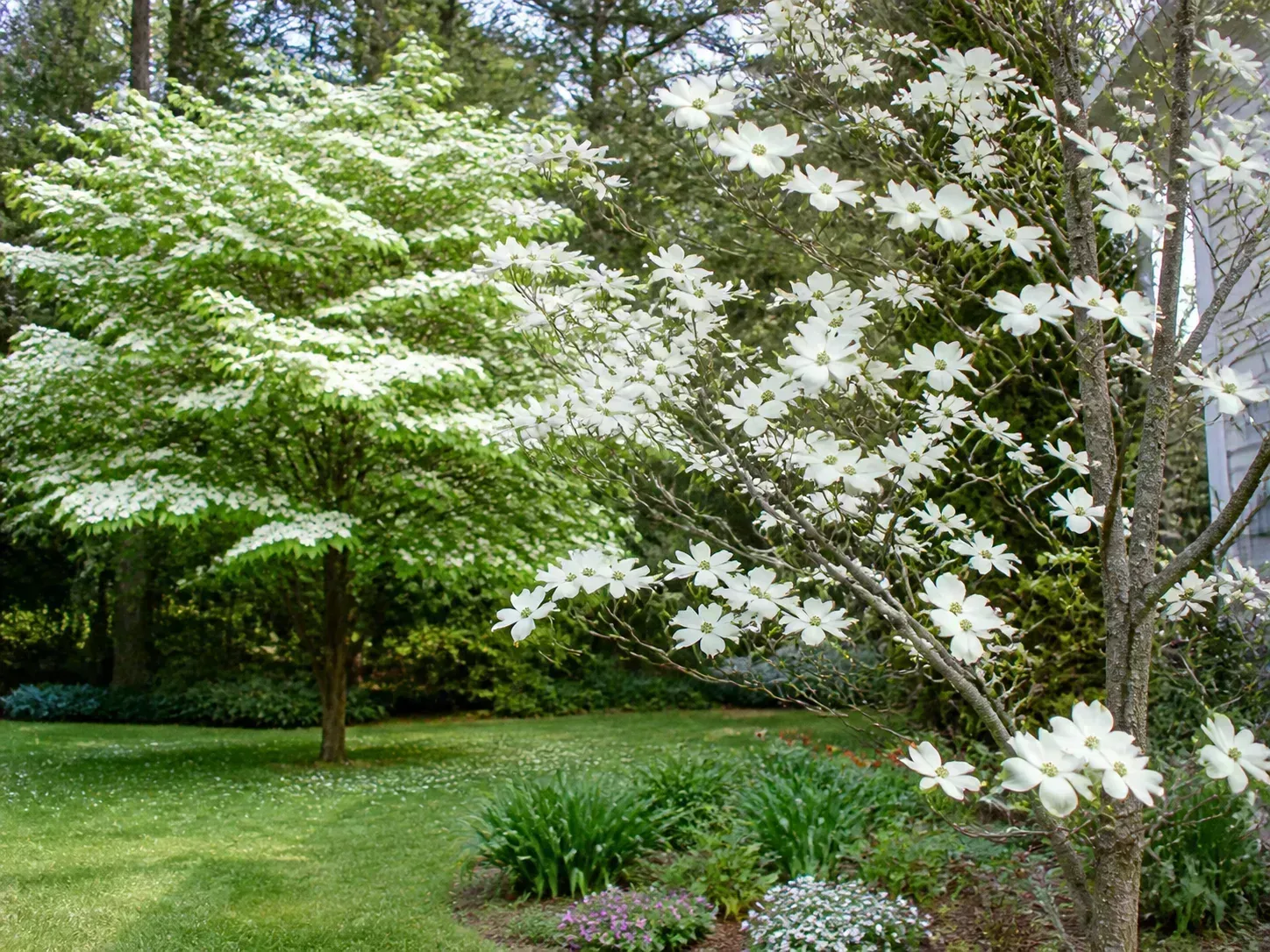
2. Flowering dogwood (Cornus florida) — native spring display and wildlife value. This eastern North American understory tree usually grows about 15 to 25 feet tall and wide, with white or pink bracts, red fall fruit, and reddish-purple autumn foliage. Its conspicuous “petals” are actually bracts surrounding the small true flowers, a distinction confirmed by NC State Extension. Give it moist, well-drained soil and relief from harsh afternoon sun where summers are hot; it is less forgiving of urban stress and some disease pressures than a generic list suggests.
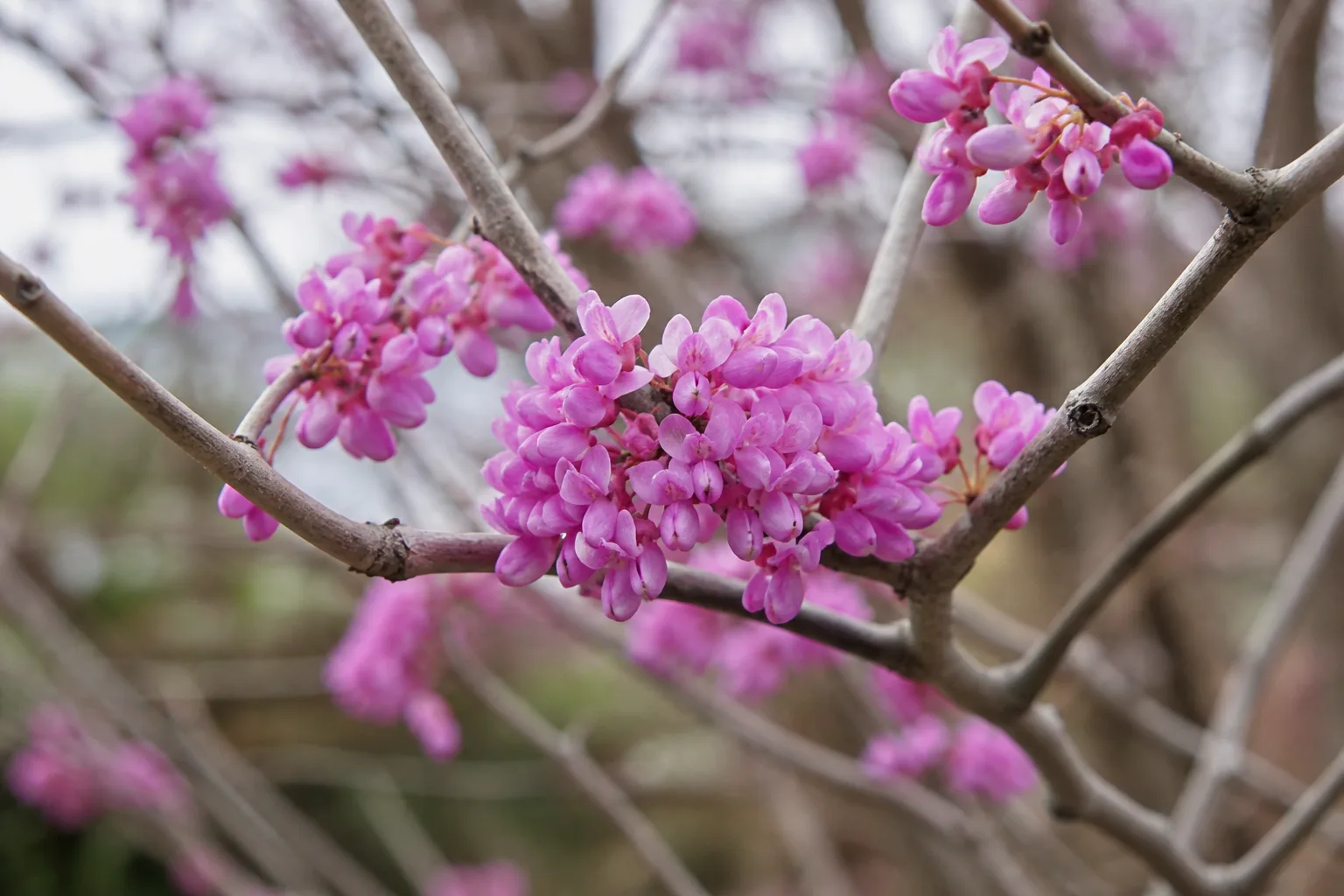
3. Eastern redbud (Cercis canadensis) — a small native tree for early color. Rose-pink to purple flowers line bare branches in early spring, followed by heart-shaped leaves and yellow fall color. Expect roughly 20 to 30 feet of height and a canopy that can spread 25 feet or more; it does best with sun to light shade and soil that drains well. NC State Extension describes it as a native flowering tree with pollinator and wildlife value, but wet soil and severe heat can stress it.
4. White eastern redbud — a pale-flowered redbud selection. White-flowering forms keep the familiar branching, heart-shaped leaves, and early bloom of eastern redbud while giving the yard a quieter palette. Mature dimensions and hardiness depend on the exact cultivar, so buy a named, locally proven selection instead of relying on a generic “white redbud” label. It is a color choice within the redbud group, not a different landscape job: allow the same broad canopy and avoid waterlogged ground.
5. ‘Oklahoma’ redbud (Cercis ‘Oklahoma’) — saturated pink with glossy leaves. This redbud selection is prized for deep rosy flowers and polished-looking foliage, often growing around 20 to 30 feet tall and wide. Nurseries may label its botanical identity differently, so keep the cultivar name on the plant tag and verify the recommended hardiness range for your region. Like other redbuds, it is a good small-lawn or woodland-edge specimen, not a narrow columnar tree.
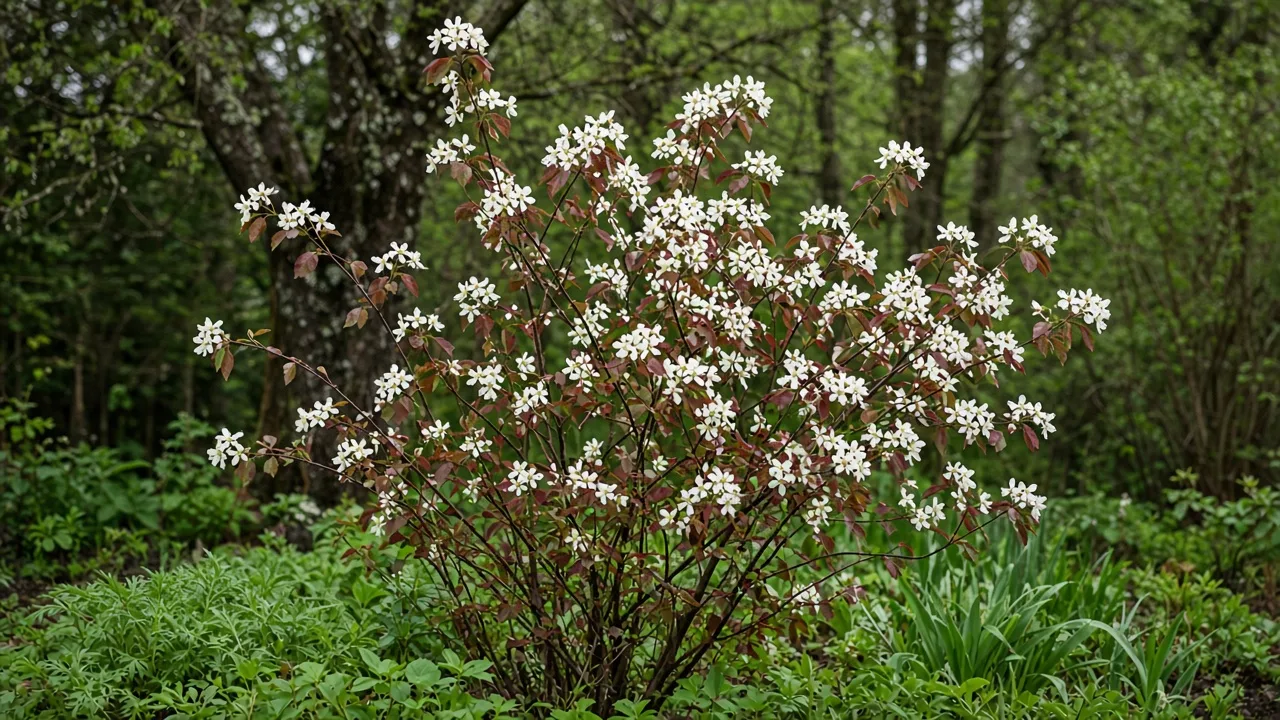
6. Juneberry or snowy mespilus (Amelanchier × lamarckii) — flowers, fruit, and fall color. This small multistem tree or large shrub carries white, starry flowers in spring, followed by edible purple berries and red-orange fall color. It generally reaches about 15 to 25 feet; birds may harvest much of the fruit before you do, but a tree over a patio can still leave litter. If local ecology is a priority, ask for a serviceberry species native to your area; the genus includes several North American choices with similar ornamental appeal.
7. American fringe tree (Chionanthus virginicus) — airy white flowers. In late spring, fragrant white flowers hang in fine, fringe-like clusters above broad leaves; female trees can also produce dark blue fruits when pollinated. The species often stays around 12 to 20 feet tall and wide, making it an appealing specimen for a partly shaded border. Its bloom is lighter and more delicate than a magnolia’s, so place it where the branching and flowers can be seen against a darker background.
8. Japanese snowbell (Styrax japonicus) — dangling bells for a sheltered garden. Small white, often fragrant bell-shaped flowers hang beneath the branches in late spring or early summer, giving this 20- to 30-foot tree a graceful, close-up display. It prefers evenly moist, well-drained soil and protection from the strongest afternoon sun in hot locations. The flowers are subtle from a distance, so choose this tree for a garden path or courtyard where you can appreciate them at eye level.
9. Carolina silverbell (Halesia carolina) — a woodland-edge native. Pendant white bells appear in spring, followed by distinctive four-winged seed capsules; a mature tree may reach 20 to 40 feet. Plant it in moist, acidic, well-drained soil with sun or dappled shade, especially where a larger forest canopy already softens the setting. It is a better fit for an informal native planting than a hot, dry strip beside pavement.
10. Red buckeye (Aesculus pavia) — red spring flowers for a small garden. This southeastern native is usually a small tree or large shrub, roughly 15 to 20 feet tall, with upright clusters of tubular red flowers that attract hummingbirds. It can be grown in part shade and is useful at a woodland edge, but the leaves may drop early in a hot or dry summer. Large seed capsules add another season of texture after the flowers fade.
11. Flowering almond (Prunus triloba ‘Multiplex’) — an early pink cloud. This 10- to 15-foot plant is often grown as a multistem shrub or trained small tree, with double pink flowers on bare branches. It is among the more cold-tolerant spring blossom choices, but it is not a long-season shade tree and can be vulnerable to the same general disease and pest pressures that affect ornamental Prunus. Use it where an early spring accent matters more than a durable canopy.
12. Hawthorn (Crataegus spp.) — late spring flowers and fruit for birds. Hawthorns vary widely, from compact cultivars to trees around 30 feet or taller, with white or pink flowers followed by small fruit. They extend the spring bloom sequence beyond magnolias and early cherries, and the fruits can feed birds later in the year. Many species carry stout thorns, and some are susceptible to rust or leaf diseases, so choose a thornless or disease-resistant cultivar when walkways and maintenance access are priorities; our hawthorn growing guide covers its broader care needs.
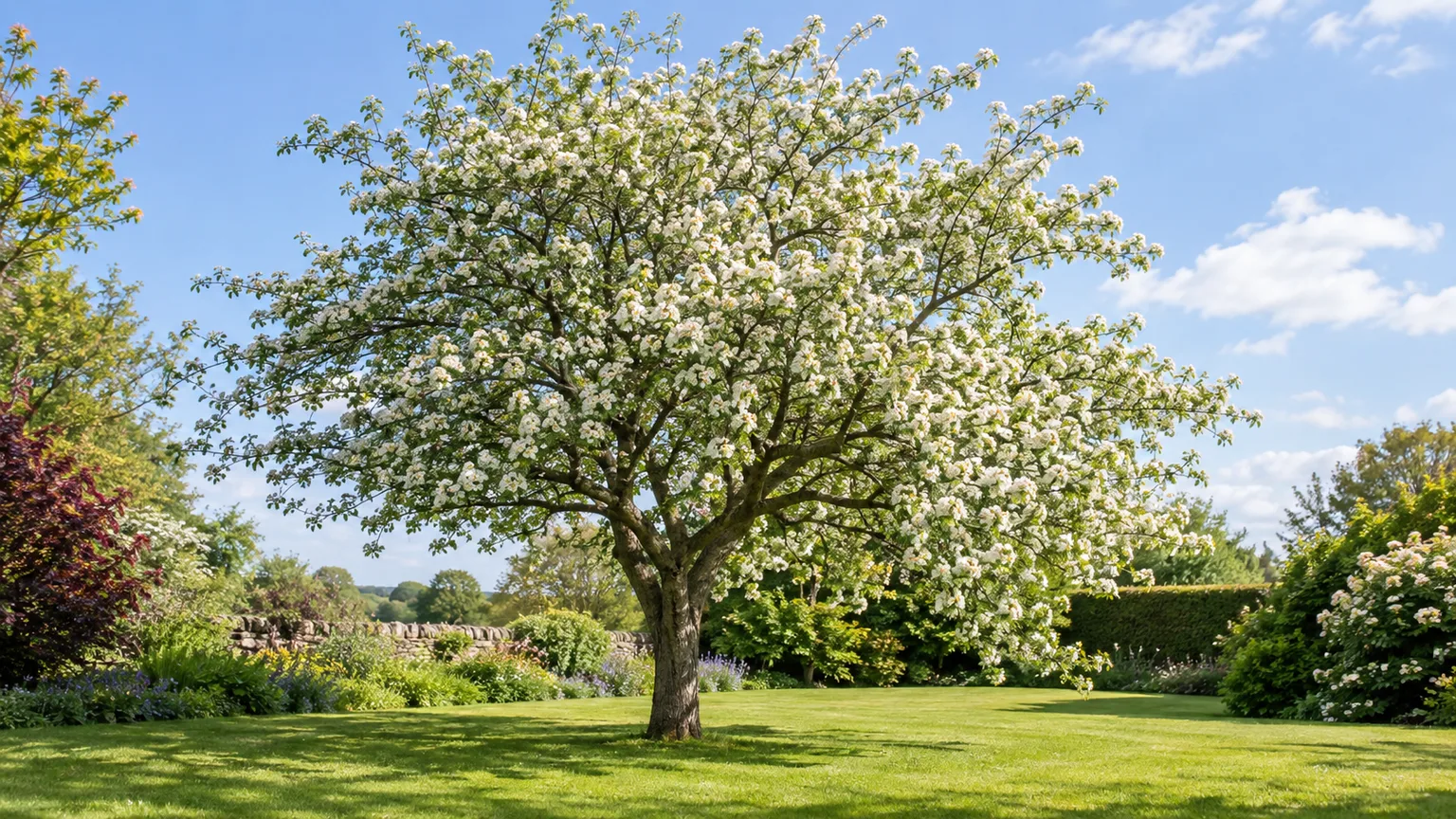
13. Japanese stewartia (Stewartia pseudocamellia) — summer blooms plus winter bark. Camellia-like white flowers with orange centers arrive in summer, later than most spring-flowering trees, while mottled, exfoliating bark supplies a second season of interest. Depending on cultivar and conditions, it may reach 20 to 40 feet and is generally slow to establish. Give it acidic, evenly moist soil and some protection from hot afternoon sun; it rewards patient gardeners more than people seeking a fast, low-cost screen.
Spring canopy trees for a big display
The next choices can fill a lawn or make an avenue, but their floral impact often comes with a broad canopy and a short, petal-heavy season. Before buying, compare the listed mature spread with the actual planting footprint, not just the height.
14. Yoshino cherry (Prunus × yedoensis) — clouds of pale blossoms. This classic flowering cherry commonly reaches about 30 feet tall with a broad, spreading crown; fragrant white-to-blush flowers open in early to mid-spring. Plant it in full sun and well-drained soil where it can be viewed from a distance, such as a lawn edge or open front yard. Petals fall quickly after bloom and the tree needs room around paths, roofs, and power lines.
15. Weeping cherry (Prunus pendula selections) — cascading branches. Several cultivars have arching branches that create a strong focal point, often at 15 to 25 feet tall and wide. Their pink or white flowers are beautiful near a pond or lawn but less suited to a tight walkway, where low branches can obstruct passage. Ask whether the plant is grafted and inspect the graft union; pruning should preserve the natural cascade rather than force the tree into a shape it cannot hold.
16. Kwanzan cherry (Prunus serrulata ‘Kwanzan’ or ‘Kanzan’) — double pink flowers. This upright ornamental cherry typically reaches about 20 to 30 feet and produces dense, ruffled pink blossoms after earlier cherries have begun to fade. It suits full sun and well-drained soil and can work in a street-tree planting if local conditions are right. The double blooms create visual volume but also drop in a noticeable carpet, so avoid placing the tree above a frequently used deck or a small pond.
17. Higan cherry (Prunus × subhirtella) — a slightly later, light pink bloom. Higan cherry is a variable hybrid group, often around 20 to 30 feet tall, with pink or white flowers and attractive fall foliage. Some selections flower before leaves emerge; others may bloom again sporadically in mild autumn weather. Buy a named cultivar so you know the habit and expected size, and treat it like other ornamental cherries: full sun, good drainage, adequate airflow, and room for petal cleanup.
18. Saucer magnolia (Magnolia × soulangeana) — large tulip-shaped flowers. Its pink, white, or purple blooms can be spectacular on a 20- to 30-foot small tree, often opening before the leaves. That early timing is the tradeoff: a late freeze can ruin an individual bloom season without harming the established tree. Choose a site with morning sun, some protection from winter-warming southern exposures in frost-prone regions, and enough room for its naturally broad shape. For smaller magnolia options, compare the cultivars in our magnolia guide.
19. ‘Yellow Bird’ magnolia (Magnolia ‘Yellow Bird’) — late spring yellow flowers. This hybrid magnolia produces tulip-shaped yellow blooms in late spring, often after foliage has started to emerge; that later timing can reduce, but does not eliminate, the risk from spring frost. Expect a medium tree, with size varying by cultivar and climate—often roughly 20 to 40 feet tall. It gives a less common flower color than the pink-and-white magnolia group and needs the same well-drained soil and wide planting space.
20. Southern magnolia (Magnolia grandiflora) — evergreen structure and fragrant blooms. This large evergreen tree pairs glossy leaves with fragrant creamy-white flowers and can eventually reach 60 to 80 feet or more in a favorable climate. The leaves, seed cones, and large petals drop over time, so it is not a tidy foundation shrub despite its polished appearance. If the site is small, look for a genuinely compact cultivar rather than planting a full-size tree and planning to top it later.
21. Kousa dogwood (Cornus kousa) — later dogwood bloom and showy fruit. Kousa dogwood generally grows about 15 to 30 feet tall and wide, flowering after its leaves appear in late spring or early summer. The showy white parts are also bracts around tiny true flowers, and the reddish fruit can add late-season interest. Its later flowering stretches the display after flowering dogwood, while its fruit may create some cleanup underfoot; pick a spot with moisture and good drainage.
22. Flowering crabapple (Malus spp. and cultivars) — spring flowers plus persistent fruit. Crabapples range from compact weepers to upright trees around 15 to 25 feet, with white, pink, or red flowers and small fruit that may persist into winter. Their performance depends heavily on cultivar: ask for resistance to locally common diseases such as apple scab, cedar-apple rust, and fire blight, and check whether fruit tends to drop or hang. A disease-resistant selection is more useful than an unspecified “crabapple”; see our guide to disease-resistant trees for a low-maintenance yard.
23. European pear (Pyrus communis) — blossoms with an edible harvest. Pear trees typically grow 30 to 40 feet tall, with white spring flowers followed by fruit and fall foliage. For a reliable harvest, many pears need a compatible pollinating variety nearby, and fruit production adds pruning, pest monitoring, and ground cleanup. Choose a named cultivar suited to your region and avoid planting a pear solely for ornamental bloom if you do not want fruit.
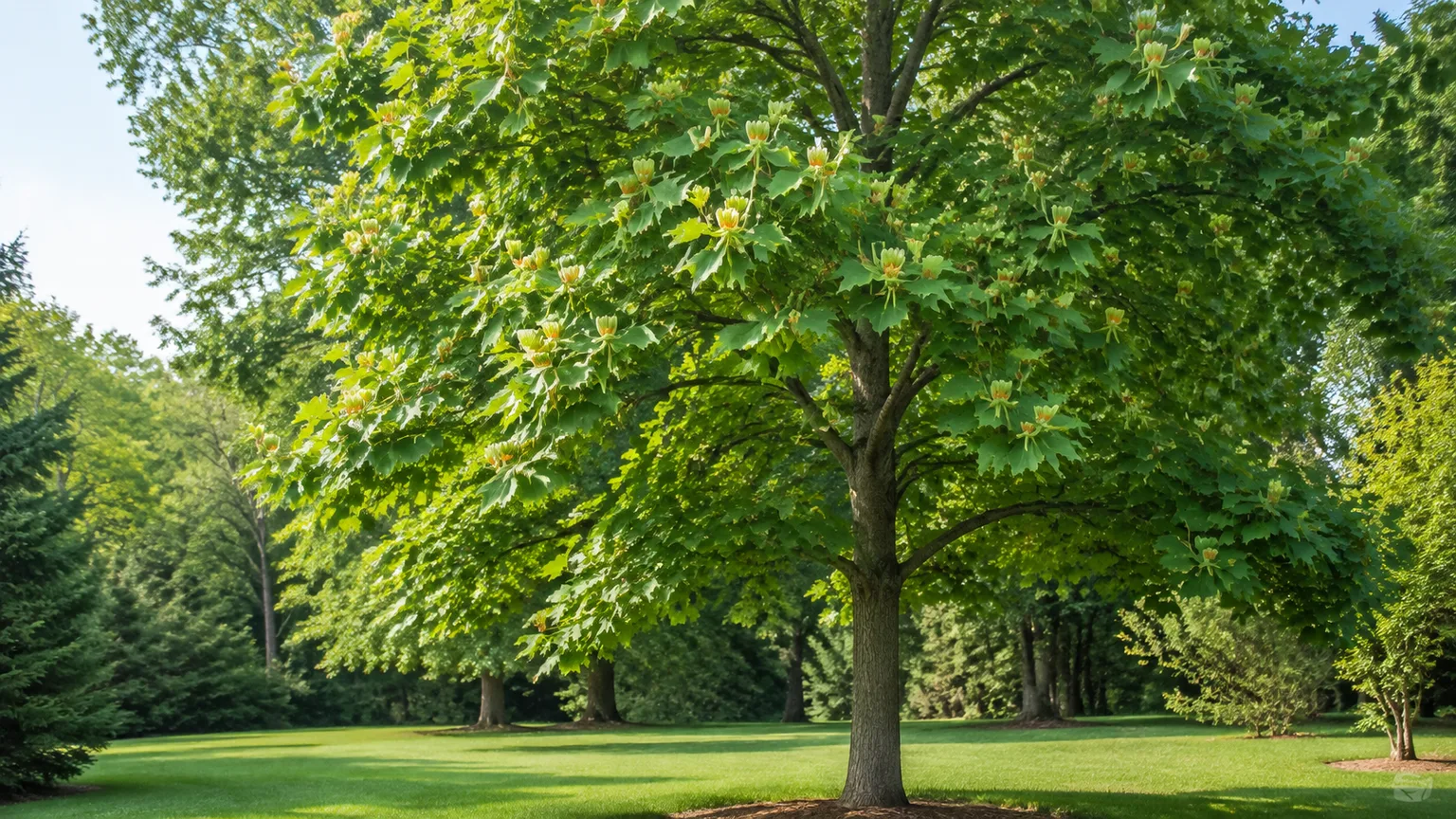
24. Tulip tree (Liriodendron tulipifera) — a large native canopy tree. Tulip-shaped yellow-green flowers with orange markings appear high in the canopy, often when the tree is already tall enough that the display is easy to miss from below. This eastern North American tree can reach 70 to 130 feet, with a broad crown, so it belongs on a large property rather than in a small front yard. Choose it for shade, fall color, and native canopy structure, with flowers as a bonus rather than the main reason to plant it.
Summer bloomers and warm-climate specialties
These options add color after the main spring flush, but they need especially careful climate and site matching. A warm-climate tree that excels in a dry region can be a poor choice in a cool or humid one, and a tree native elsewhere may be invasive where it is introduced.
25. Golden chain (Laburnum anagyroides) — hanging yellow flower clusters. In a cool, moderate climate, its pendulous golden racemes can make a striking late-spring display on a small tree around 15 to 25 feet tall. It dislikes hot, humid summers, requires excellent drainage, and is a serious safety concern: NC State Extension warns that all parts are poisonous, with the seeds and seedpods especially hazardous. Do not plant it where children, dogs, or other animals may chew seedpods, and choose a safer flowering tree if you cannot control access.
26. Japanese tree lilac (Syringa reticulata) — creamy blooms in early summer. This 20- to 30-foot tree bears large clusters of creamy white flowers after the common spring lilac season, extending the fragrance calendar into early summer. It prefers full sun and well-drained soil, and its bark and tidy upright habit provide structure after bloom. Give it space from walkways where spent flower clusters may fall, and verify local hardiness before buying a cultivar.
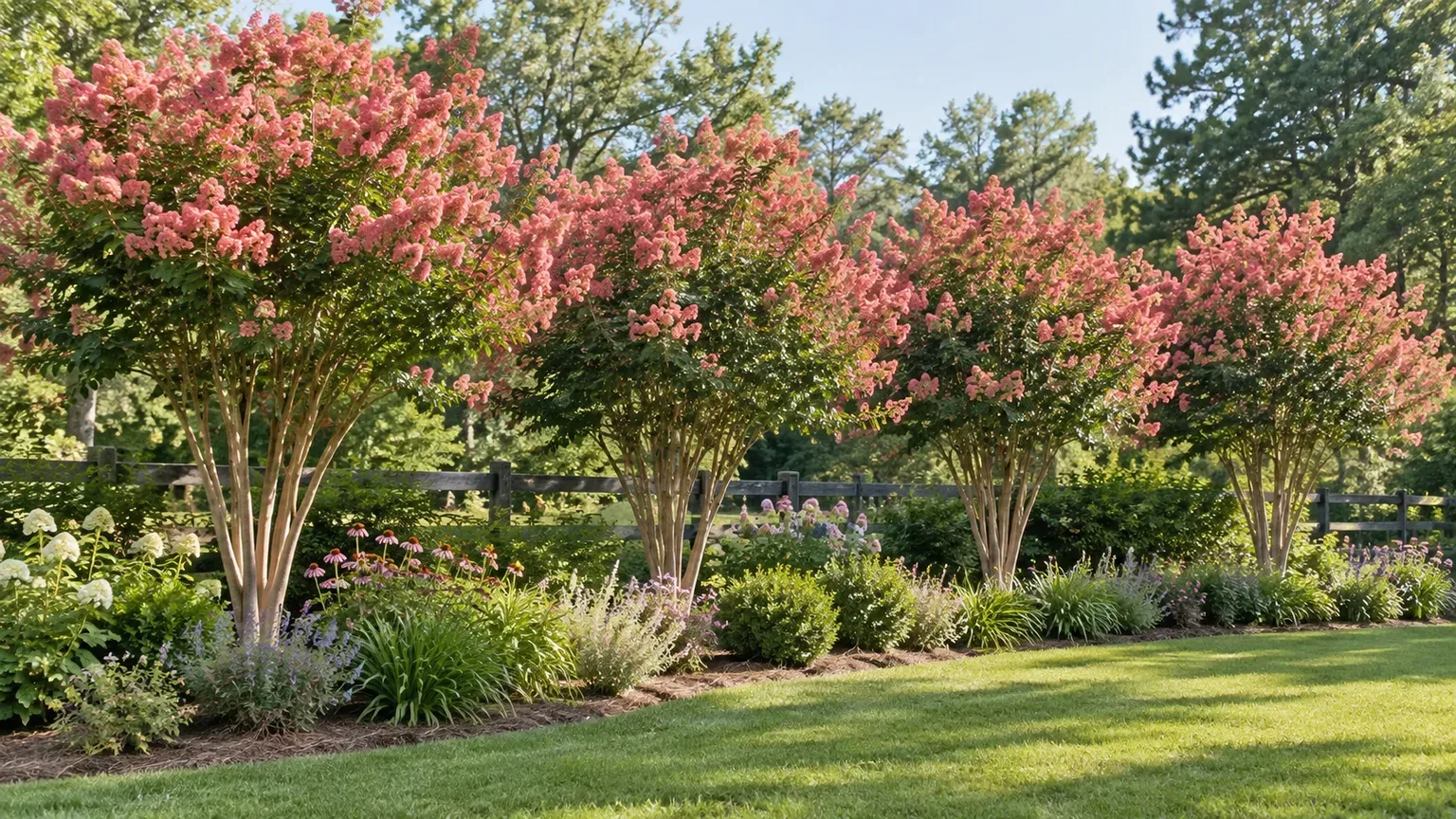
27. Crape myrtle (Lagerstroemia indica) — a long summer color window. Depending on cultivar, this small-to-medium tree may flower from midsummer toward fall, with colors from white and pink to red or purple; dwarf cultivars are available for small gardens. It needs sun and warmth for its best bloom, and a cultivar at the edge of its hardiness range may die back in a severe winter. Match plant size to the site and prune selectively; severe annual topping is not necessary to make crape myrtle flower.
28. Jerusalem thorn (Parkinsonia aculeata) — yellow flowers for hot, dry sites. This open-canopied desert tree carries delicate foliage and yellow flowers and can suit a water-wise landscape in warm regions where it is locally appropriate. Its thorny branches make it a poor fit beside sidewalks, play areas, or narrow paths, and its loose, filtered shade differs from the deep canopy of a large shade tree. Check local planting guidance for both climate fit and any restrictions before purchasing.
29. Silver wattle (Acacia dealbata) — a very regional, not universal, choice. This fast-growing evergreen or semievergreen tree has silvery foliage and fluffy yellow flowers, but it is tender to hard frost and can spread by seed and root shoots in favorable mild climates. In California, the California Invasive Plant Council gives it a moderate invasive-plant rating and notes its spread into coastal and riparian habitats. Only consider it where regional authorities do not flag it and where you can manage seedlings and suckers; a locally native spring-flowering tree is a safer default for many yards.
Stretch color across the bloom calendar
Planting several trees that bloom at the same time creates one impressive peak, then a long quiet stretch. To keep seasonal color moving, combine an early tree such as star magnolia or redbud with a mid-spring cherry or saucer magnolia, then use a later option such as Japanese snowbell, Japanese tree lilac, Japanese stewartia, or crape myrtle. Exact dates depend on local weather, and an unusually warm spring can compress the sequence.
Use evergreen foliage or fall color to support the design after blossoms fade. Southern magnolia holds its leaves year-round in suitable climates; flowering dogwood, redbud, serviceberry, crabapple, and many cherries can add fall color or fruit. That mix gives the yard more than a succession of short-lived flower shows. The horticultural selection guidance from Southern Living likewise weighs mature size, native value, and year-round features alongside bloom.
For a small garden, one compact tree with two or three seasons of interest can outperform a row of trees chosen only for flowers. A redbud can offer bare-branch bloom, heart-shaped summer leaves, and fall color; a serviceberry can add flowers, fruit, and autumn foliage. If you have more room, spread the trees across different sightlines so that each specimen has enough light and the mature crowns do not merge into an overcrowded canopy.
Plant a flowering tree for strong establishment
Prepare a site with room for roots and canopy
Mark the full canopy width before you dig, then call the utility-locating service to identify buried lines. Check overhead wires and the distance to driveways, roofs, paths, and neighboring property. A tree that will need repeated crown reduction to stay in its assigned spot is the wrong cultivar for that spot.
Plant when the soil is workable and temperatures are moderate; fall is often suitable in regions with long, mild autumns, while spring may be safer where winter arrives early. Dig a hole about two to three times the root ball’s width but no deeper than needed to keep the root flare at or just above the surrounding grade. Backfill with the soil removed from the hole unless a soil test or local expert identifies a specific correction; rich amendments in the hole can discourage roots from moving into surrounding soil.
Water and mulch while roots establish
Water thoroughly after planting, then keep the root ball and nearby soil consistently moist while new roots grow. Do not turn that into a fixed weekly amount without checking rainfall, soil type, and heat: sandy soil dries faster than clay, and a small container-grown root ball can dry while the larger surrounding bed stays damp. Reduce watering gradually as the tree establishes, but continue checking through dry spells in its first growing seasons.
Apply a few inches of mulch in a broad ring to conserve moisture and reduce lawn competition, leaving a clear gap around the trunk. Avoid piling mulch against bark, burying the root flare, or tying the tree tightly to permanent stakes. Unless a branch is broken or damaged, give the young tree time to establish before routine pruning; BHG’s planting guidance also advises limiting early pruning and watering directly after planting.
Avoid planting problems before they start
Weigh fruit, thorns, toxicity, and regional spread
Decide where the tree’s flowers, fruit, and leaves will fall. A fruit-bearing pear or crabapple can be a better wildlife tree than a sterile ornamental, but it may not belong over a paved seating area. A weeping cherry’s low branches can be a problem near a path, hawthorn thorns need separation from foot traffic, and seedpods from golden chain can be dangerous if children or pets can reach them.
Do not choose a species just because it appears in a broad list of flowering trees. Verify whether it is hardy in your locality, whether it is invasive or restricted, and whether common diseases make it a poor fit for your region. In mild California areas, for example, silver wattle’s ornamental flowers do not outweigh the local spread concerns noted by Cal-IPC. If a tree has a known safety or spread issue and your yard cannot contain it, choose another option rather than hoping maintenance will erase the risk.
Also skip the impulse to “fix” a too-large tree through topping or aggressive annual pruning. Removing a large share of the crown can leave weak regrowth and an awkward form, while cutting spring bloomers at the wrong time can remove next year’s flower buds. Select a cultivar that fits the site from the start, and prune with the tree’s natural form and flowering schedule in mind.
Conclusion
The best flowering tree is the one whose mature form, bloom season, and care needs fit the actual yard. Start with spread and climate, then decide whether you value early spring color, a summer bloom, wildlife fruit, evergreen leaves, or a smaller tree that can be enjoyed up close. Verify the named cultivar locally, plant it at the right depth, and give it room and water to establish; those choices will matter long after the flowers have fallen.