How to Get Rid of Grease Ants (Thief Ants)
Learn how to get rid of grease ants by confirming the species, cleaning trails, choosing a labeled bait they accept, and preventing another kitchen visit.
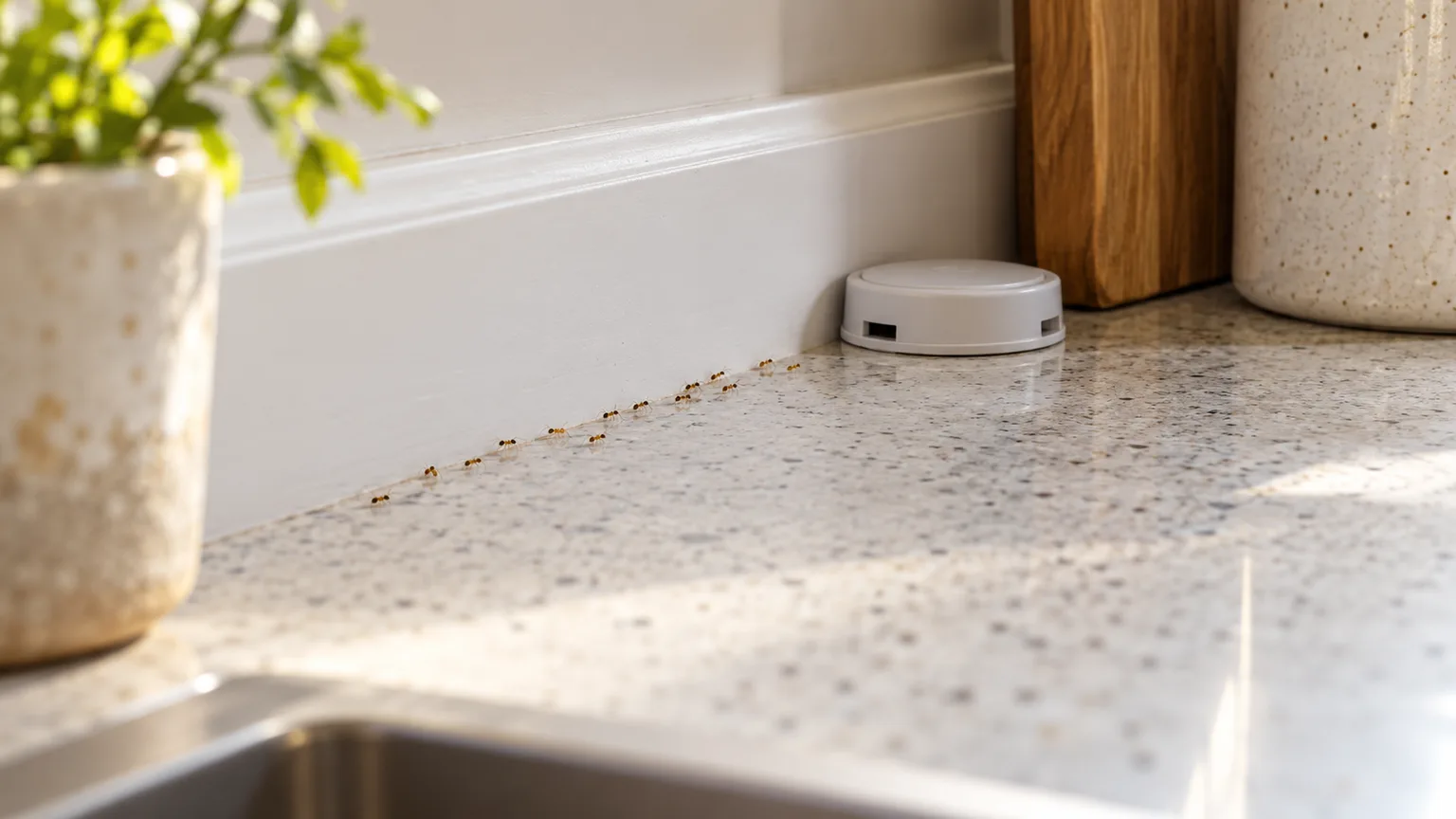
Grease ants, also called thief ants, are extremely small ants that may forage in kitchens for fats, proteins, sweets, and other food. The most reliable way to control a confirmed indoor trail is to remove competing food, trace where workers travel, and use a slow-acting ant bait that is labeled for the location and that the ants accept. A spray can kill the workers you see without reaching the nest, while a bait they carry home has a chance to affect more of the colony.
Start with identification because tiny yellow ants are not automatically thief ants. Pharaoh ants can look similar, and other household ants may be so small that a quick glance is misleading. Penn State Extension describes thief ants as about 1.5 millimeters long, yellowish or tan, with a small two-segment antenna club; it recommends baits intended for protein- or fat-loving ants and emphasizes following pesticide-label directions. Its guide also notes that thief ants can be attracted to sweets, so the common name is a clue, not a guarantee about what a colony will eat. Penn State Extension’s thief-ant guide
The fastest safe plan for grease ants
For a few ants on a counter, you do not need to begin with a room-wide pesticide treatment. Put away exposed food, clean grease and crumbs, wipe the trail with soapy water, then watch where new workers enter and where they head. A photo of one ant beside a ruler or coin can help an extension office or pest professional check whether the species is actually Solenopsis molesta.
If the trail returns, place a ready-to-use bait near the route only when its label allows the intended indoor or outdoor location. Choose a bait labeled for the relevant ants and the food type the workers are taking; keep the bait inaccessible to children and pets, and do not add cooking oil, peanut butter, or other ingredients to a commercial product. Leave workers a clear path to the station and give a colony bait time to work before deciding it failed. UC IPM’s ant-management guide explains why bait type, placement, competing food, and slow action matter.
How to recognize a grease ant
A thief ant worker is roughly 1/16 inch long, pale yellow to light brown, and small enough to pass through gaps that a larger ant cannot use. Under magnification, the antennae have ten segments ending in a two-segment club, the waist has two small nodes, and the eyes are very small. These traits are useful for an identification key, but they can be hard to see in a moving ant on a kitchen surface.
A single clue is not enough. Color shifts with light and camera exposure, and several small species share the same indoor spaces. Even the fact that ants are eating oily food does not prove they are thief ants: other ants also forage for fats, proteins, and sweets. UC IPM recommends using a species key for household ants when the distinction affects control; its comparison table includes thief ants, pharaoh ants, pavement ants, and odorous house ants. UC IPM’s household ant identification and management page
Features that help confirm a thief ant
The combination of traits is more helpful than any one trait: an unusually tiny, pale worker; a two-segment antenna club; two nodes at the waist; and a very small eye. Penn State gives the worker length as about 1/16 inch, while the University of Michigan’s Animal Diversity Web lists workers in the same approximate millimeter range. Both descriptions support the idea that these ants are genuinely minute, not just young versions of a larger ant. Animal Diversity Web’s species account for Solenopsis molesta
If you can, take a sharp close-up from the side and above rather than crushing the specimen. Keep the photo, date, and room where you saw the ants; note whether they were near a fatty food, sweet spill, pet dish, plumbing line, or exterior crack. When exact identification matters, an extension entomologist or an experienced pest professional can examine features too small to judge reliably from an ordinary phone photo.
Tiny lookalikes that need a closer check
Pharaoh ants are a particularly easy mix-up because their workers can also be about 1/16 inch and yellow to honey-colored. Both species may use concealed indoor spaces, and both can accept protein or sweet foods, so a food test alone is not a dependable species diagnosis. The antenna club and other body features are better viewed under magnification or with a regional ant-identification key.
| Ant you may be seeing | Useful first clue | Why not to guess from one clue |
|---|---|---|
| Thief (grease) ant | Very small, pale yellow or tan; often associated with protein or greasy food | Some colonies also take sweets; close relatives and lookalikes are tiny too |
| Pharaoh ant | Also very small and yellow to orange; commonly nests in warm protected indoor spaces | Similar size and color; a bait response does not confirm the species |
| Odorous house ant | Usually darker brown to black and larger than a thief ant | Color and odor are still imperfect field clues |
| Pavement ant | Typically darker and noticeably larger; often associated with cracks outdoors | A trail near a floor or foundation does not establish that it is a pavement ant |
Penn State and UC IPM both describe the difficulty of confusing thief ants with other tiny indoor ants. If a colony is spread across rooms, if you see winged ants, or if repeated treatments have failed, identification matters more than trying another random product. UC IPM’s comparison of common household ants is a useful starting point, but a photo-based guess may still be inconclusive.
Why thief ants show up indoors
A worker is usually exploring for food, water, or shelter; it does not tell you exactly where the colony is. Thief ants can nest outside in soil or under objects, and they can also use small protected spaces in buildings. A trail may run through a foundation crack, along a pipe, behind a baseboard, or under a floor before it reaches a food source.
The name “thief ant” comes from the species’ tendency to nest in or near other ant colonies and steal brood or food. The University of Michigan’s Animal Diversity Web describes their underground tunnels and opportunistic diet, which can include animal fat, meat, dairy, bread, seeds, insects, and sweets. Colony size and queen number are not simple homeowner diagnostic tools: sources describe variation, and a hidden colony may connect to more than one foraging route. Animal Diversity Web’s thief-ant account
Grease residue is an invitation, but it is not the only one. Pet food, a sticky spot beneath a recycling bin, a leaking faucet, a damp sponge, crumbs under an appliance, or an opened snack packet can sustain a trail. The ants may be more noticeable during hot or dry weather because conditions outdoors can change where they forage, but the indoor food source is still worth removing whatever the season.
What to do during the first day
The first goal is to stop feeding the trail while preserving enough of it to find the route. Put uncovered food away, clear dishes, and take a photo before cleaning the exact path. Then inspect the likely source and both directions of travel; if you immediately spray or wipe every ant, you may lose the best clue about where they are coming from.
Remove food, water, and scent trails
Store pantry food in sealed containers and clean greasy residue from counters, cabinet edges, the range, and the floor beside appliances. Empty and rinse recycling that held food or sweet drinks, clean the trash-can rim and lid, and do not leave pet food sitting out longer than needed for a meal. Check under the sink for a leak and replace a sponge or cloth that is holding food residue.
Once you have noted the route, wipe it with ordinary soapy water and a clean cloth, then rinse food-contact surfaces as appropriate for the cleaner you used. The goal is to remove food and the scent trail, not to make a homemade pesticide. UC IPM describes sponging or mopping ants with soapy water as a way to remove foragers and scent trails; it is a cleanup step, not proof the colony is gone. UC IPM’s ant guidance
Follow the route before wiping it away
Watch the ants when activity is visible and follow the line both ways. Indoors, check the back edge of a counter, cabinet seams, baseboards, plumbing penetrations, the dishwasher, and the gap behind the range; outdoors, look for a crack or covered soil nest near the foundation. A small flashlight can help you see where the trail disappears, but do not open electrical outlets, dismantle appliances, or pull apart a wall to chase a tiny ant.
Make a short note of the entry point and the strongest food source. If the route starts at a pipe or a damp cabinet, correct the leak or moisture issue as well as the food attraction. If you find a trail disappearing into a wall, do not seal that exact opening before you know whether ants are still using it for a bait route; first place an appropriate bait where the label permits, then seal the confirmed exterior gap after activity subsides.
Choose a bait the ants will actually take
Ant bait works only if foragers accept it and carry it back. A bait combines an attractant with a slow-acting active ingredient; workers feed on it or share it with nestmates before the toxicant affects them. A contact insecticide acts on exposed ants more quickly, so it may remove visible workers while leaving the queen and brood untouched.
Select a ready-made ant bait whose label lists the intended site and use. If the product is for outdoor use only, do not bring it inside; if the label limits it to indoor cracks or a bait station, do not apply it across a countertop. Penn State Extension advises choosing bait intended for protein- or fat-loving ants, while UC IPM notes that thief ants and pharaoh ants often prefer protein or greasy baits but that food preferences vary by species and can change with competing food. The label and the ants’ actual response should guide the choice, not a recipe copied from another ant problem.
Treat food preference as a field test
Do not assume a colony will reject every sweet bait. Penn State notes that thief ants have a strong protein preference but also may be attracted to sweets; UC IPM similarly explains that bait attractants work differently across ant species. If workers walk past one labeled bait, they may be taking another food source, the formulation may not match their current preference, or the ants may not be the species you expected.
The safe way to compare is to use separate, ready-to-use products only when each product label allows its placement. Observe which one workers visit, and remove competing food first. Never pour a commercial bait into grease, peanut butter, sugar water, or another bait; adding ingredients can alter the product and may violate its label. A homemade mixture also gives you no reliable way to know the final active-ingredient concentration or how much bait a child or pet could contact.
Place and monitor bait safely
Set the bait beside an active trail or close to the suspected entry, but outside food-preparation areas and where a child or pet cannot reach it. Use the station, gel, or placement pattern exactly as directed. Keep the path open so workers can reach the bait; do not wipe or spray directly over the route while they are feeding.
Check the bait at the interval stated on its label. Replace it if it is empty, dried out, contaminated, or no longer being taken, but do not keep adding product beyond the label’s limits. UC IPM notes that ants can lose interest when bait dries or becomes unattractive, and that colony control is not immediate. Penn State says thief-ant control may take two weeks or longer; more broadly, UC IPM reports that visible reductions can take several days and complete control may take longer. Treat these as expectations, not a guaranteed deadline for every home or formulation. Penn State Extension and UC IPM describe these delays.
Why spraying the trail is usually the wrong first move
A spray can kill the workers visible on a counter, but it cannot reliably reach a nest hidden in a wall or under a floor. If you spray where workers are carrying bait, you may kill them before they return to the colony or contaminate the route so they avoid the bait. UC IPM therefore emphasizes sanitation, exclusion, and baiting when needed rather than routine indoor sprays.
Avoid foggers, broad perimeter treatments, and “stronger” doses as a shortcut for a tiny kitchen trail. They can expose people, pets, beneficial insects, and the environment without solving the nest. Do not mix pesticides, use a product on an unlisted surface, or assume that a botanical label makes a pesticide harmless: NPIC notes that pyrethrins are insect-toxic pesticides and stresses following the exact product label, including exposure and first-aid directions. Pyrethrins can also be highly toxic to bees and aquatic life. NPIC’s pyrethrin fact sheet
If you have already sprayed, stop adding products and read the label for cleanup, ventilation, and re-entry directions. Keep children and pets away for as long as the label says, and do not place bait onto a recently treated surface unless the labels and a qualified professional say it is appropriate. If pesticide contacts food, utensils, or a surface where food is prepared, follow the product label’s cleanup instructions before using the area again.
When an outdoor nest needs attention
An outdoor ant colony away from the house usually does not need treatment. Ants contribute to the food web and can prey on other insects; UC IPM and Gardening Know How both point out that garden ants are not automatically plant pests. The presence of ants in soil or around flowers alone is not a reason to apply insecticide. Gardening Know How’s overview of ants in gardens
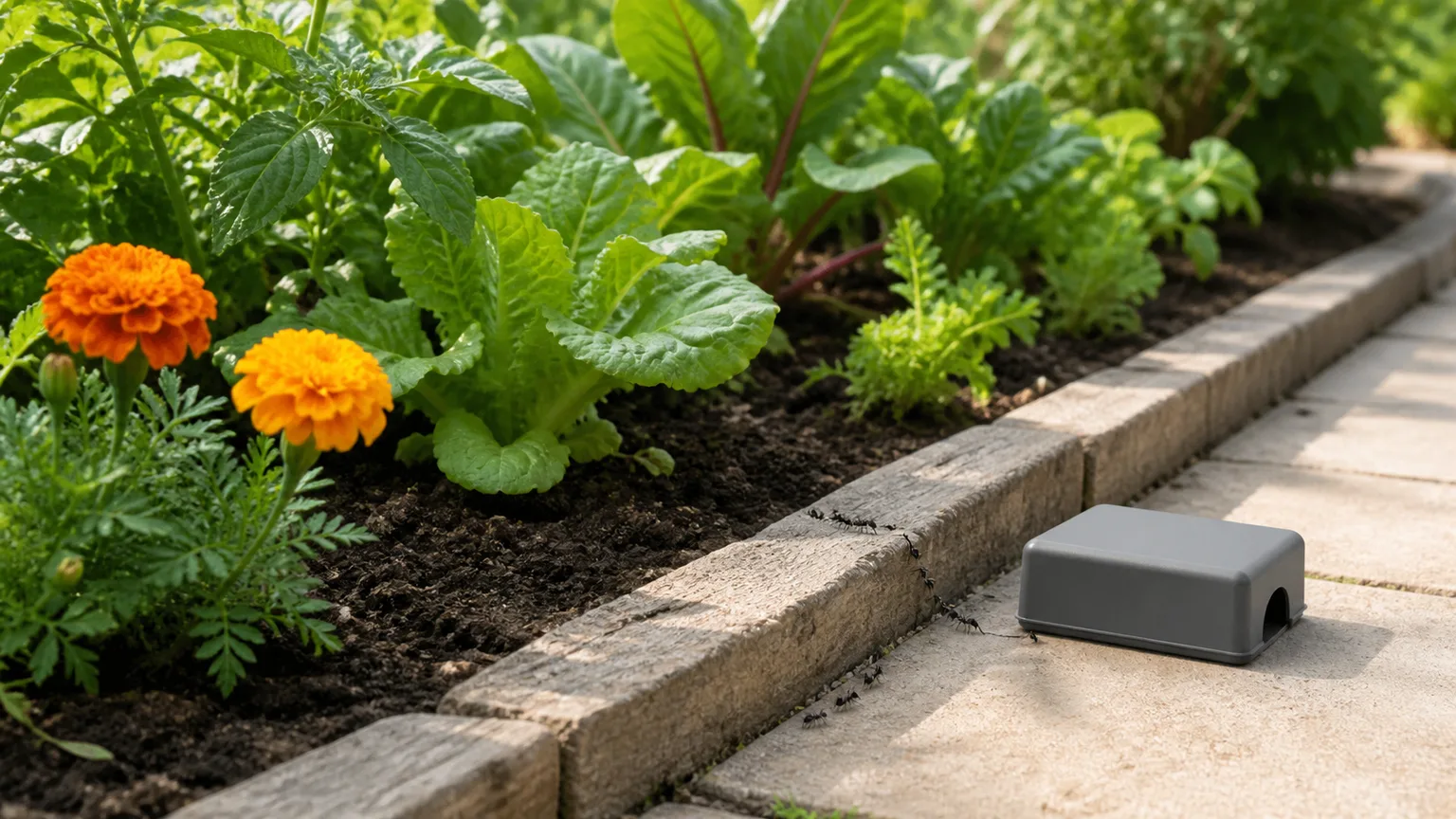
Consider targeted action only when the trail repeatedly enters the home, the nest is immediately beside a door or foundation opening, or an experienced identifier confirms a specific indoor problem. If you choose a product, its label must explicitly allow outdoor use at that site and the way you plan to place it. Keep bait stations inaccessible to children, pets, wildlife, and runoff; do not broadcast granules or spray flowering plants to reach a few ants. A pest professional can help distinguish an outdoor foraging trail from a nest established inside a wall.
Keep another trail from forming
Prevention is mostly about removing dependable food and closing the route. Wipe grease from the range and splashback, sweep under appliances, rinse jars and cans before recycling, and clean the trash container before residue builds up. Put sugary, fatty, and protein-rich foods in sealed containers rather than thin bags, and wash the outside of jars if food has leaked onto them.
Fix drips under sinks and around appliances; a water source can keep a trail active even after the counter is clean. Store pet food in a sealed bin, pick up spills, and wash feeding dishes regularly. Outside, remove decaying wood and debris that are directly against the foundation and keep vegetation from touching the house where practical, but do not try to sterilize the whole yard.
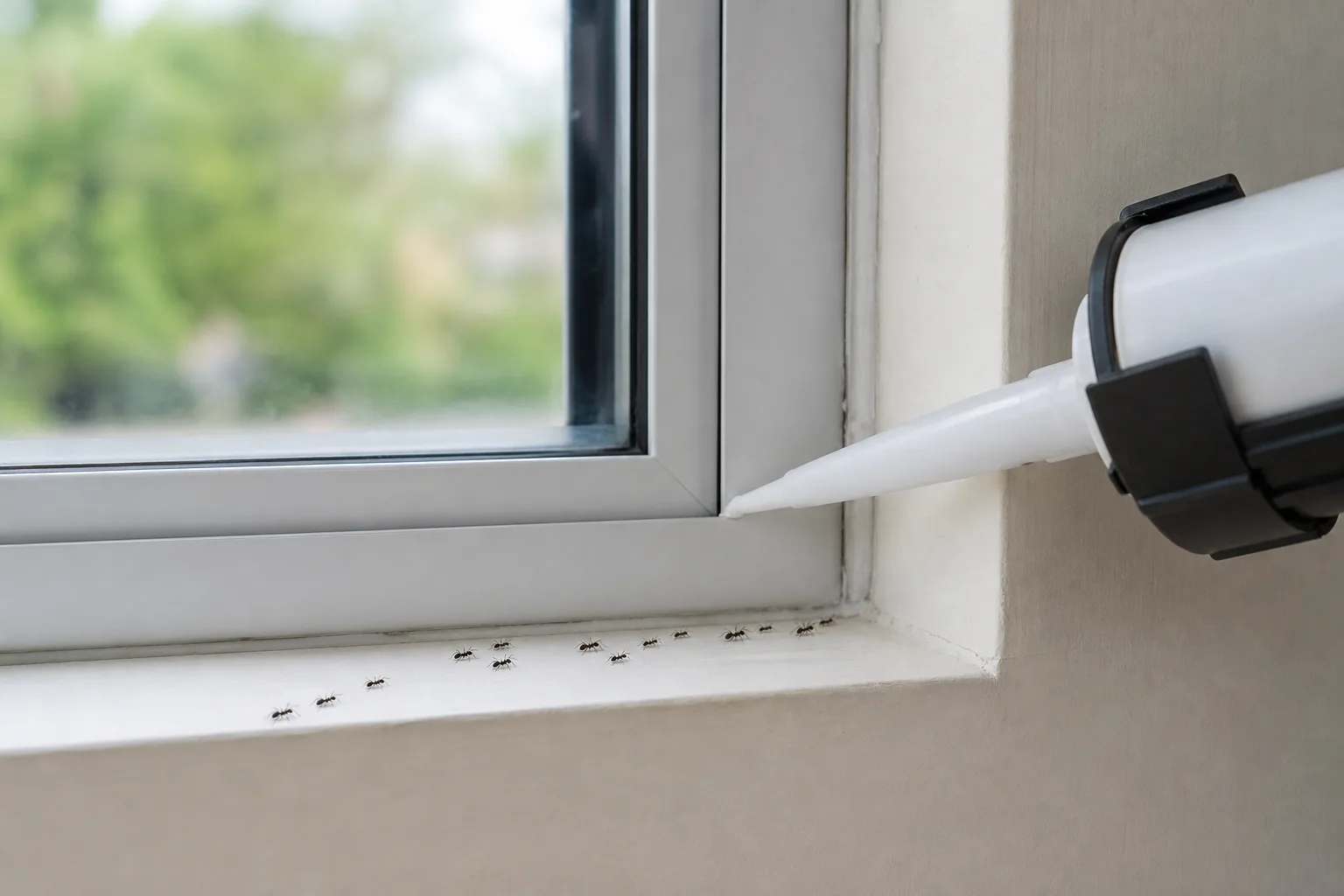
After ant activity has stopped, seal the confirmed gap with an appropriate caulk or repair material. Small openings around pipes, trim, window frames, and foundation seams can admit tiny workers. Sealing every visible crack before tracing the route can simply make ants use another route, so pair exclusion with cleanup and monitoring rather than relying on caulk alone. UC IPM’s ant-management guidance
Food safety after ants cross a counter
Treat ants on a food-contact surface as a sanitation problem, not a reason to panic. Discard uncovered food that ants have walked over, wash the surface with an appropriate cleaner, and wash utensils or dishes before use. Do not spray pesticide over a counter, cutting board, plate, or food package; pesticide labels specify where a product may be used and how to clean treated areas.
A peer-reviewed study of two other ant species collected in domestic kitchens in Mauritius found that ants could carry microbes and transfer E. coli to food surfaces. That study did not examine thief ants, and it cannot tell you the chance that a particular ant in your home will cause illness. It supports a sensible hygiene rule—keep ants away from exposed food and clean contacted surfaces—without turning every sighting into a medical emergency. The AIMS Microbiology study on ants as potential foodborne-pathogen vectors
Troubleshoot a bait that is not working
Bait failure usually has a diagnosable cause. Before buying another product, ask whether the ants were identified, whether they are reaching the station, whether food residue is competing with it, and whether the bait is still fresh and being taken. Change one condition at a time so you can see whether the adjustment helped.
| What you notice | Likely reason | What to do next |
|---|---|---|
| Workers ignore the bait | Wrong food attractant, stale bait, competing food, poor placement, or a different ant | Clean competing food, check the label and freshness, reposition within label directions, or try a separate labeled formulation |
| More workers gather at first | The trail has recruited workers to a food source | Leave the station in place, keep the route free of sprays, and monitor according to the label |
| Activity drops, then returns | The colony may not be controlled, another entry route is active, or there is another nest | Recheck both ends of the trail and the building perimeter; continue label-compliant baiting or seek identification |
| Ants appear in several rooms | There may be multiple routes or a nest within the structure | Stop spraying, record the locations, and arrange professional inspection if the pattern persists |
| No clear improvement after two weeks | Misidentification, inaccessible nest, poor bait acceptance, or repeated food/water sources | Reassess the species and site; contact a pest professional rather than increasing the dose |
Change one condition at a time
If the ants do not visit the bait, first move it closer to the trail while staying within the product’s allowed placement. Remove nearby food residue and check whether the product has dried, leaked, or been disturbed. If workers still refuse it, use a separate ready-to-use bait with a different labeled attractant, not a modified mixture.
If ants feed but the trail remains unchanged for longer than the label or extension guidance suggests, check whether the bait is being refreshed correctly and whether workers can carry it away. A route may lead to an inaccessible nest, or what looked like one line may involve more than one colony. Do not combine bait with a contact spray to “speed it up”; get a species identification or professional assessment instead.
When to call a pest professional
Get help if you repeatedly find trails after careful sanitation and label-compliant baiting, cannot keep bait away from a child or pet, see ants emerging from several wall or floor locations, or cannot tell whether the tiny ants are thief ants, pharaoh ants, or another species. A professional trained in integrated pest management can inspect the entry route and choose a treatment that fits the species and building, rather than relying on a routine spray around every room.
Ask what ant they identified, whether the colony appears to be indoors or outside, which product and active ingredient they plan to use, and exactly where it will be applied. Ask for the product label, any required re-entry interval, and instructions for keeping children and pets away. If the plan includes an indoor spray or an exterior perimeter treatment, ask why baiting, sanitation, and exclusion are not sufficient for the specific situation. A careful provider should be able to explain the trade-off without promising that one visit will eliminate every ant.
Conclusion
To get rid of grease ants, first confirm that the tiny pale ants are likely thief ants, remove the food and water attracting them, and trace the route before cleaning it. If ants keep returning, use a ready-to-use bait labeled for the site and the type of ant, observe what workers accept, and give a slow-acting product time to work. Keep pesticides off food surfaces, never alter or mix a bait, and get professional identification when a small trail becomes a persistent indoor colony problem.



