12 Types of Magnolia Trees and Shrubs
Compare 12 magnolia trees and shrubs by size, flower timing, hardiness, soil, and care so you can choose the right one for your garden.
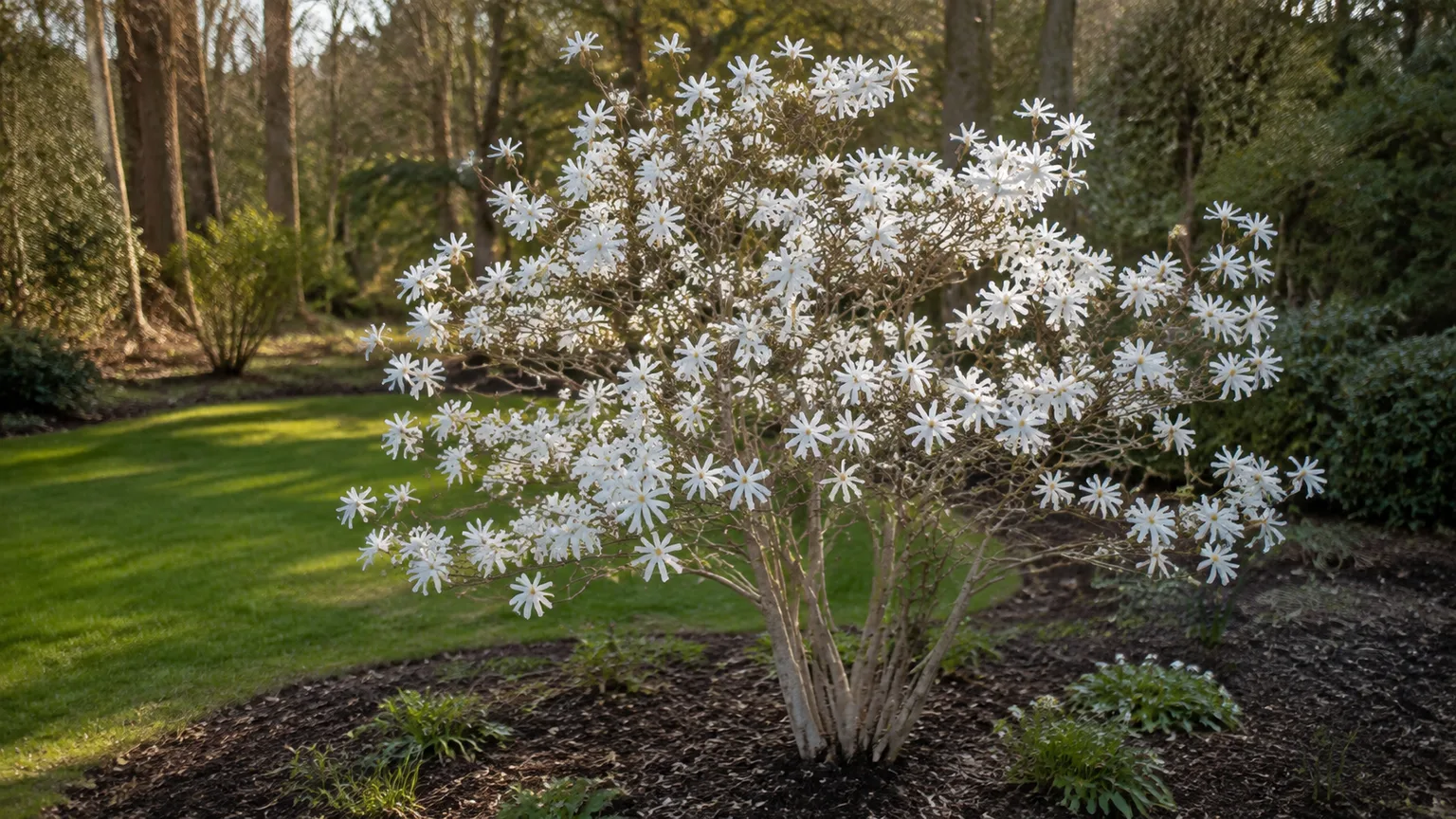
Magnolias are often sold by their flowers, but the better buying question is what job must this plant do in your garden? A magnolia may be a 10-foot shrub for a small border, a 20-foot spring specimen, a wet-soil tree, or an evergreen that eventually needs more room than the house. The right choice depends on mature size, bloom timing, foliage, soil, and winter exposure—not just flower color.
This guide compares 12 magnolia trees and shrubs, including familiar hybrids and less common species. Dimensions and hardiness ranges are useful starting points, not guarantees: cultivar, rootstock, local climate, soil, and pruning can all change the result. If you are buying from a nursery, keep the botanical name and the plant’s expected mature spread, not only its label photograph.
How to choose a magnolia before you fall for the flowers
Start with five measurements and observations: the space’s width, the available light, the soil’s drainage and pH, the date of your last spring frost, and whether you want leaves in winter. A plant that looks compact in a one-gallon pot can still become a broad tree. The Royal Horticultural Society’s magnolia growing guide makes the same central point: magnolias range from compact shrubs to large trees, so selection should begin with the site.
Next, decide whether you want an early spring display or a longer-season plant. Star, saucer, lily, Loebner, and Kobus magnolias generally flower before or around leaf emergence, which creates a dramatic branch-and-bloom show but exposes the buds to late freezes. Sweetbay and southern magnolias flower later, while cucumber, umbrella, and some other species bring foliage, fruit, or summer interest even when their flowers are subtler.
Finally, decide how much maintenance you are willing to accept. Magnolias are usually low-maintenance after establishment, but they dislike being planted too deeply, allowed to dry repeatedly, or cut back hard. A large evergreen magnolia also drops old leaves over time, and deciduous species drop flowers, leaves, and sometimes seed pods; “mess-free magnolia” is not a realistic category, only a matter of where the debris lands.
At-a-glance comparison of 12 magnolias
The table is a shortlist, not a substitute for the nursery’s cultivar information. Flowering dates shift with climate, and a named cultivar may stay smaller, bloom later, or tolerate colder conditions than the species.
| Magnolia | Mature size, approximately | Flowers and season | Best fit | Main caution |
|---|---|---|---|---|
| Southern (M. grandiflora) | 60–80 ft tall | Large fragrant white flowers, late spring into summer | Large evergreen specimen or screen | Too large for most small yards; leaf and fruit drop |
| Sweetbay (M. virginiana) | 10–35 ft | Fragrant white flowers, late spring to summer | Moist soil, native-style planting, lighter evergreen effect | Evergreen in warm areas but deciduous in colder ones |
| Saucer (M. × soulangeana) | 20–25 ft | Pink, purple, or white goblets, early spring | Classic lawn or border specimen | Early flowers can brown in frost; wide spread |
| Star (M. stellata) | 10–20 ft | White or pale pink star flowers, late winter to early spring | Small gardens and large containers | Early buds are frost-sensitive |
| Anise (M. salicifolia) | Up to 30 ft | White strap-like flowers, spring | Narrow-leaved texture and yellow fall color | Less common; verify the plant identity and size |
| Bigleaf (M. macrophylla) | 30–40 ft, sometimes larger | White flowers with purple bases, late spring | Foliage drama and a spacious woodland garden | Huge leaves and a broad footprint |
| Ashe’s (M. ashei) | Up to 30 ft | Large white flowers after leaves emerge | Shrub or small tree in a warm climate | Availability and form vary; protect from harsh exposure |
| Cucumber (M. acuminata) | 60–80 ft | Greenish tulip flowers, spring | Cold-hardy shade or specimen tree | Very large; flowers are less showy than other types |
| Lily (M. liliiflora) | 8–12 ft | Reddish-purple or pink lily-shaped flowers, spring | Compact shrub or small tree | Needs a suitable warm climate and shelter |
| Kobus (M. kobus) | 25–50 ft, sometimes larger | Fragrant white flowers, early spring | Hardy specimen and multi-trunk form | Slow-growing and ultimately larger than it first appears |
| Loebner (M. × loebneri) | 20–30 ft, cultivar-dependent | Fragrant white or pink star flowers, spring | Reliable hybrid for a medium garden | Spread and bloom timing vary by cultivar |
| Umbrella (M. tripetala) | 15–30 ft | Creamy flowers after leaves emerge, late spring | Dappled shade and woodland character | Large leaves can look untidy in wind and drought |
Southern and sweetbay magnolias for evergreen structure
Southern magnolia
Southern magnolia, Magnolia grandiflora, is the iconic evergreen magnolia: glossy, leathery leaves, a strong upright-to-broad habit, and huge creamy white flowers with a powerful fragrance. The Missouri Botanical Garden lists the species at roughly 60 to 80 feet tall and 30 to 50 feet wide, with a typical hardiness range of Zones 7 to 9; its Plant Finder profile also notes the need for moist, organically rich, well-drained soil and room to expand.
Choose it when you have a genuinely large open site, want year-round foliage, or need a broad specimen or screen. Do not choose the straight species for a narrow foundation bed simply because a young tree looks manageable. Compact selections such as ‘Little Gem,’ ‘Teddy Bear,’ or ‘Kay Parris’ can change the scale, but they still need a long-term width check; a “dwarf” magnolia is often only dwarf compared with the species.
Southern magnolia handles some alkaline or chalky soils better than many deciduous magnolias, but that does not make it a dry-soil tree. Young plants need steady moisture, and exposed sites can cause leaf scorch or uneven growth. A warm wall or protected southern exposure can help in marginal climates, but the wall also increases drying, so check the root zone rather than assuming rainfall is enough.
Sweetbay magnolia
Sweetbay, Magnolia virginiana, is a more flexible choice when you want fragrance without the scale of a southern magnolia. In cooler regions it may grow as a deciduous, multi-stemmed shrub or small tree; in warmer regions it can remain evergreen. The leaves are glossy on top with silvery undersides, and the flowers are white, fragrant, and generally later than the earliest spring magnolias.
Its strongest practical advantage is tolerance for moist soil. That does not mean it belongs in stagnant water or a site with no oxygen around the roots, but it is a better candidate for a damp low spot than a saucer magnolia. Use it near a rain garden edge, pond margin, or moist woodland border where its variable evergreen behavior is acceptable.
Spring-flowering magnolias for smaller and medium gardens
Saucer, star, lily, and Loebner magnolias
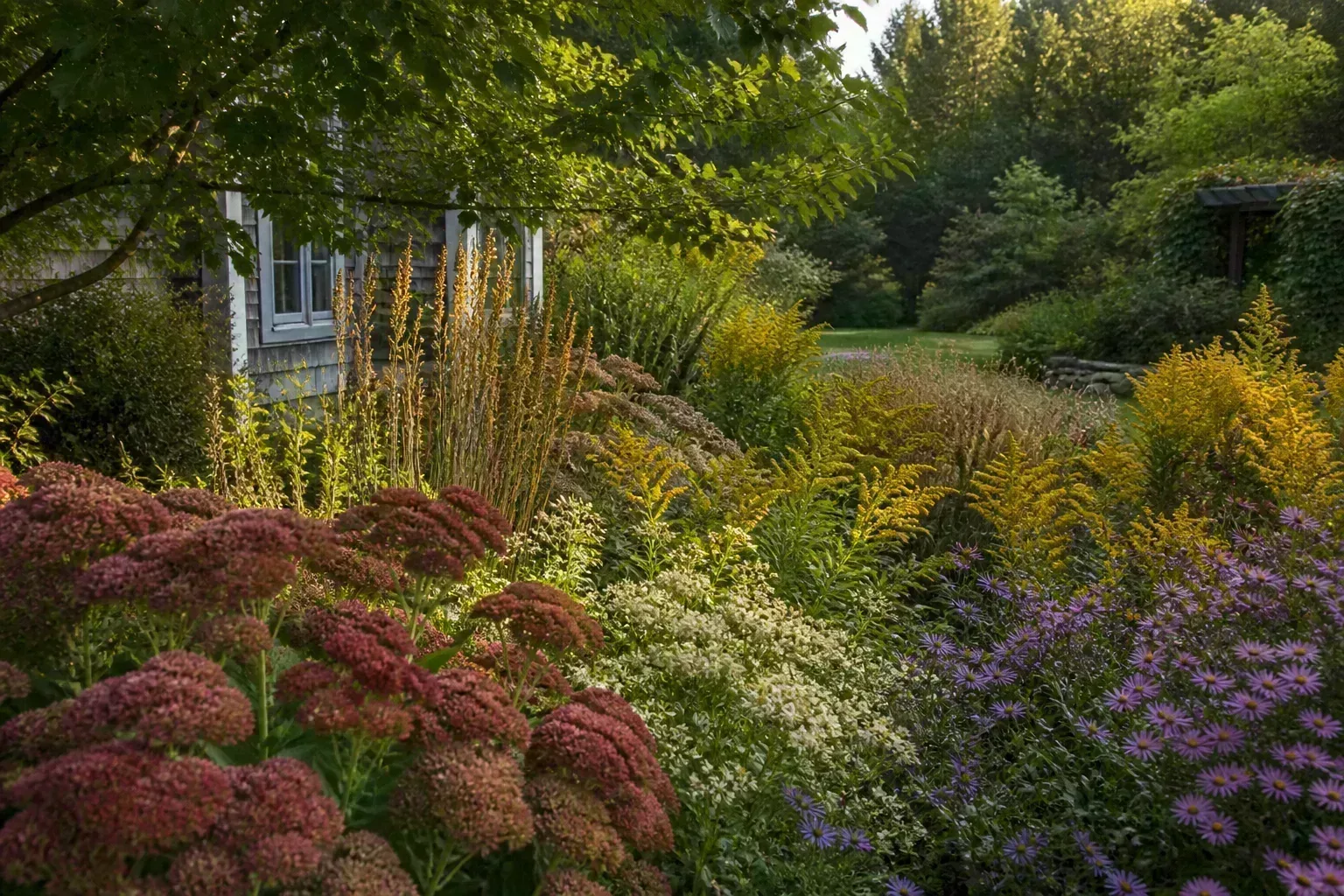
Saucer magnolia, Magnolia × soulangeana, is the classic hybrid with large goblet-shaped flowers shaded from white to pink, purple, or deep rose. It can be trained as a single-trunk small tree, but it often develops as a wide, multi-stemmed shrub. Give it a generous lawn or border position, because the eventual spread is usually more important than the height listed on a small plant tag.
Star magnolia, Magnolia stellata, is one of the most useful choices for a small yard. It commonly stays in the small-tree or large-shrub range, and its narrow petals create a starburst effect before the leaves appear. The Missouri Botanical Garden observes that star magnolia can open very early in spring, which is exactly why its buds are vulnerable when a warm spell is followed by a freeze. Plant it in a sheltered spot, or accept that some years will be foliage years rather than perfect bloom years.
Star magnolia is also among the better magnolias for a large container, provided the container is heavy, drains freely, and the plant is watered consistently. Container roots experience colder and hotter temperature swings than roots in the ground, so a potted magnolia is not automatically easier. Choose a compact cultivar and plan to refresh the root zone or eventually plant it out.
Lily magnolia, Magnolia liliiflora, is a compact shrub or small tree with reddish-purple to pink, lily-like flowers. It is useful when the goal is strong color in a smaller landscape rather than a giant white bloom. Its smaller mature footprint also makes it easier to place near a patio, but it still needs shelter from severe wind and a soil that does not swing between drought and saturation.
Loebner magnolia, Magnolia × loebneri, combines the star magnolia and Kobus magnolia lineages. It is often a manageable small tree with fragrant, star-shaped flowers in white or soft pink. This is a good middle-ground plant for gardeners who want more presence than a star magnolia but less long-term bulk than a saucer or cucumber magnolia. Named cultivars differ, so compare the mature spread and bloom date rather than assuming every Loebner magnolia is identical.
For a frost-prone garden, these early bloomers need the most careful siting. A south-facing wall that warms buds early can increase the display in a mild climate but increase frost risk in a cold pocket. A gently sloping, sheltered site that drains cold air is usually safer than a low spot, and a later-flowering cultivar may be a smarter purchase than trying to protect an oversized tree every spring.
Native and unusual magnolias for foliage, shade, and fruit
Cucumber, bigleaf, Ashe’s, umbrella, anise, and Kobus magnolias
Cucumber magnolia, Magnolia acuminata, is a large deciduous tree with a reputation for cold hardiness. Its greenish-yellow, tulip-shaped flowers are modest compared with saucer magnolia, but the tree makes up for that with size, foliage, and cucumber-like fruits that mature to a red color. It suits a spacious woodland or park-like property, not a small urban courtyard.
Bigleaf magnolia, Magnolia macrophylla, earns its name with leaves that can approach three feet long. The flowers are white with purple at the petal bases, and the foliage makes a stronger statement than the bloom alone. Site it where the scale feels intentional and where wind will not shred the leaves; a bigleaf magnolia beside a narrow path can quickly feel oversized even if the trunk remains relatively slim.
Ashe’s magnolia, Magnolia ashei, is a Florida native often grown as a large shrub or small tree. It has very large leaves and large white flowers that appear after the foliage emerges, which gives it a different visual rhythm from the bare-branch bloomers. It is an intriguing choice for a warm, sheltered garden, but availability is more limited and the mature form depends heavily on site and pruning.
Umbrella magnolia, Magnolia tripetala, has huge leaves that cluster toward branch ends and create the umbrella effect behind its common name. It is a good candidate for dappled shade or a woodland edge, especially where the gardener wants a native-looking tree with architectural foliage. The flowers appear after leaves emerge and may not smell as sweet as the flowers of southern or sweetbay magnolias, so buy it for the whole plant rather than fragrance alone.
Anise magnolia, Magnolia salicifolia, has narrower, willow-like leaves and white flowers with strap-shaped petals. It brings a lighter texture than the broad-leaved magnolias and can show pleasing yellow fall color. It is worth considering where leaf shape matters as much as flower size, but confirm the seller’s mature dimensions because named selections can vary.
Kobus magnolia, Magnolia kobus, is a Japanese and Korean species with fragrant white flowers, dark foliage, and a tendency to form several trunks. It can be trained to a central leader when young, but its natural multi-stem habit can be attractive in a spacious border. It is slow to mature, which can make it seem like a safe small-tree purchase; use the eventual height and spread when deciding its position.
The Missouri Botanical Garden’s magnolia collection notes illustrate how bloom seasons can be staged: star magnolias may begin the show in March, saucer and other spring types dominate later, and sweetbay and southern magnolias carry flowers into late spring or summer. A mixed planting can extend the season, but only if each tree has enough room and the site matches its moisture needs.
Match a magnolia to your climate and soil
Hardiness zone is a filter, not a guarantee. A plant can be rated for your zone and still fail in an exposed yard, a frost pocket, a wind tunnel, or a container that freezes from every side. Early flowers are especially vulnerable: the tree may survive the winter while the buds are blackened by one late freeze.
For cold or frost-prone areas, favor later-flowering cultivars, sheltered positions, and magnolias known for reliable performance in your region. Horticulture’s report on newer magnolias describes breeding work aimed at later bloom, better cold hardiness, varied flower colors, and smaller evergreen forms. That is useful context when a nursery offers a named hybrid: newer cultivars may solve a size or frost problem that the straight species cannot.
For soil, aim for moisture without stagnation. Many magnolias prefer fertile, moist, well-drained soil that is slightly acidic to neutral, but the genus is not uniform. The RHS lists several exceptions that cope with alkaline or chalky conditions, including star, Loebner, Kobus, and some evergreen species. If your soil is strongly alkaline, choosing a tolerant magnolia is usually more reliable than trying to permanently force a large planting hole into a different pH.
Wet soil also needs a distinction. A sweetbay or some evergreen magnolias may tolerate a moist site, but a heavy, waterlogged soil that stays airless around roots can still cause decline. Test drainage by observing the site after rain, improve the planting area only if the improvement is realistic, and choose a species suited to the existing conditions rather than assuming compost will solve a saturated yard.
Where to plant a magnolia
Most magnolias perform best in full sun to light shade, with protection from strong wind. Light shade can extend flower life and reduce stress in hot climates, but deep shade often means fewer flowers and weaker growth. The later-flowering species and those with large leaves can be useful in a woodland edge, while the earliest bloomers need enough light to build flower buds and a site that does not collect freezing air.
Measure the mature spread from the trunk to paths, walls, driveways, overhead wires, and neighboring plants. Shallow, fleshy magnolia roots are easily damaged by digging and competition, so avoid placing a new tree where future utility work or annual bed turnover will disturb the root zone. If you plant in a lawn, keep a broad, grass-free circle while the tree establishes; grass can intercept water before it reaches young roots.
Against a wall, an evergreen magnolia can gain warmth and shelter, but the wall can also create a dry pocket. Leave room for air movement, provide support only when the tree needs it, and check the soil with your hand or a probe during dry weather. A good location reduces the need for pruning, watering, frost protection, and rescue work later.
How to plant a magnolia without damaging its roots
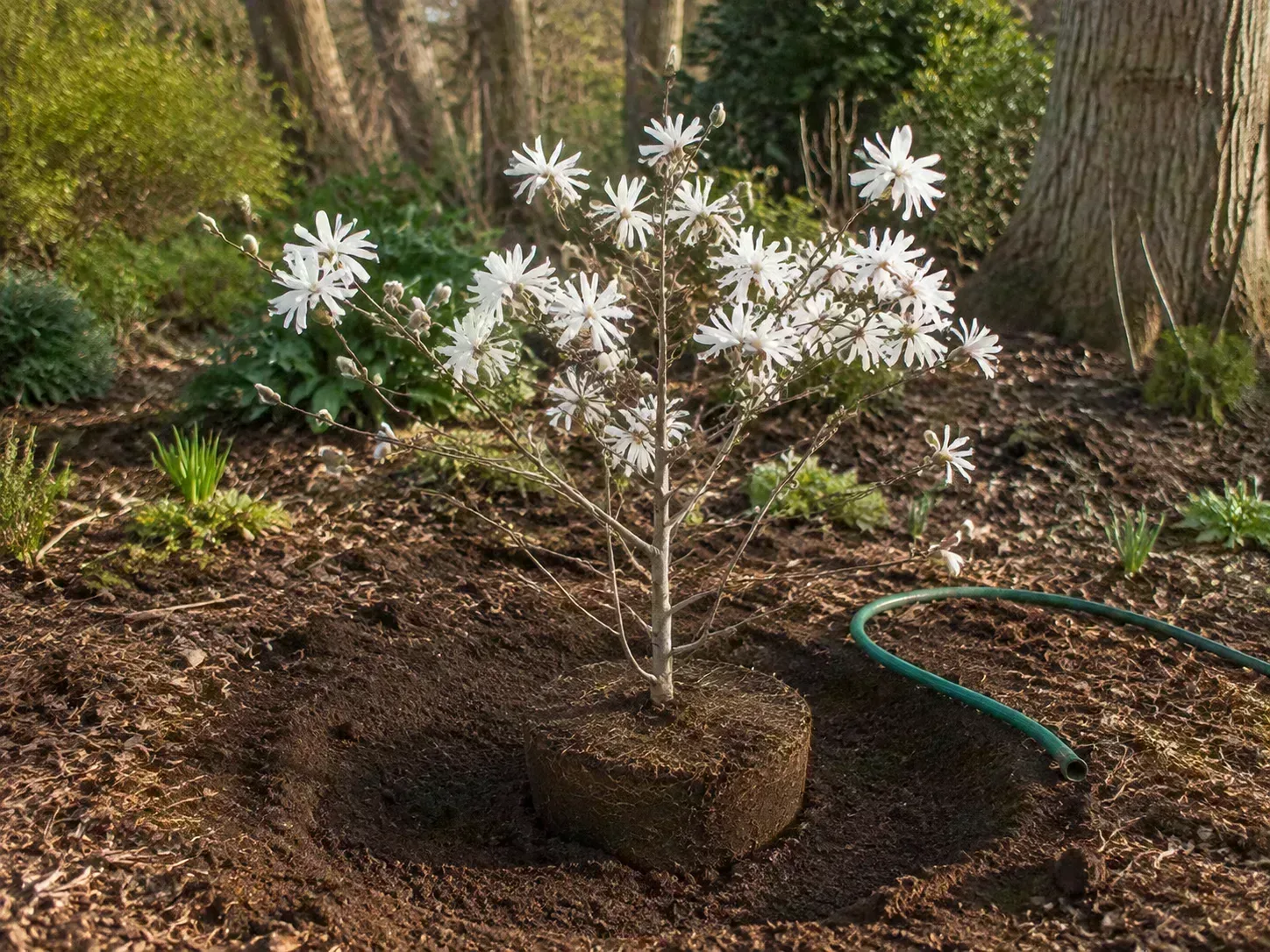
Plant during a mild dormant window—often autumn through spring—when the ground is workable and not frozen. Container-grown plants can be planted at other times in some climates, but summer planting increases watering demands. The BBC Gardeners’ World magnolia guide emphasizes planting at the same depth as the container and handling magnolia roots gently.
- Water the plant in its pot before planting so the root ball is evenly moist.
- Dig a hole no deeper than the root ball and at least twice as wide. The goal is loose soil around the sides, not a deep bowl that settles the tree below grade.
- Slide the plant out carefully. Do not tease, slice, or rake fleshy roots unless the root ball is severely circling and the nursery guidance specifically supports correction.
- Set the top of the root ball level with the surrounding soil. If the tree is grafted, keep the graft union above the soil line.
- Backfill with the excavated soil, firming lightly so there are no large air pockets. Avoid burying the trunk flare.
- Water slowly and deeply, then add a 2- to 3-inch layer of organic mulch over the root zone. Keep mulch several inches away from the trunk.
Stake only when wind or a loose root ball makes movement a problem. A tree that can flex slightly often develops a stronger trunk than one held rigidly, but a newly planted large evergreen may need support in an exposed site. Recheck ties before they constrict the bark.
Watering, mulch, and feeding
Young magnolias need consistent moisture while roots move into surrounding soil. Water the root zone deeply when the surface begins to dry, then adjust for soil, rainfall, season, and plant size. A fixed schedule such as “twice a week forever” is less useful than checking soil moisture at several inches below the surface and learning how quickly that site drains.
Containers dry faster than in-ground trees and can need frequent summer checks. Water until it drains from the pot, empty any saucer that holds standing water, and do not let a container magnolia alternate between bone-dry soil and a saturated root ball. Mulch reduces evaporation, but it cannot compensate for a pot that is too small or has blocked drainage.
Mulch the root zone with composted bark, leaf mold, or another stable organic material. Keep the mulch away from the trunk so bark stays dry and visible. A thick mulch volcano can trap moisture against the stem and conceal rodents or decay; a broad, thin layer is safer.
Feed sparingly. Newly planted magnolias may benefit from an annual, label-rate fertilizer while they establish, and a container plant has fewer nutrient reserves than a tree in the ground. Established magnolias in reasonably fertile soil often do not need routine feeding. If the leaves are pale or growth is weak, test the soil and inspect drainage before reaching for high-nitrogen fertilizer; a pH or root problem will not be repaired by more feed.
Pruning without losing next year’s flowers
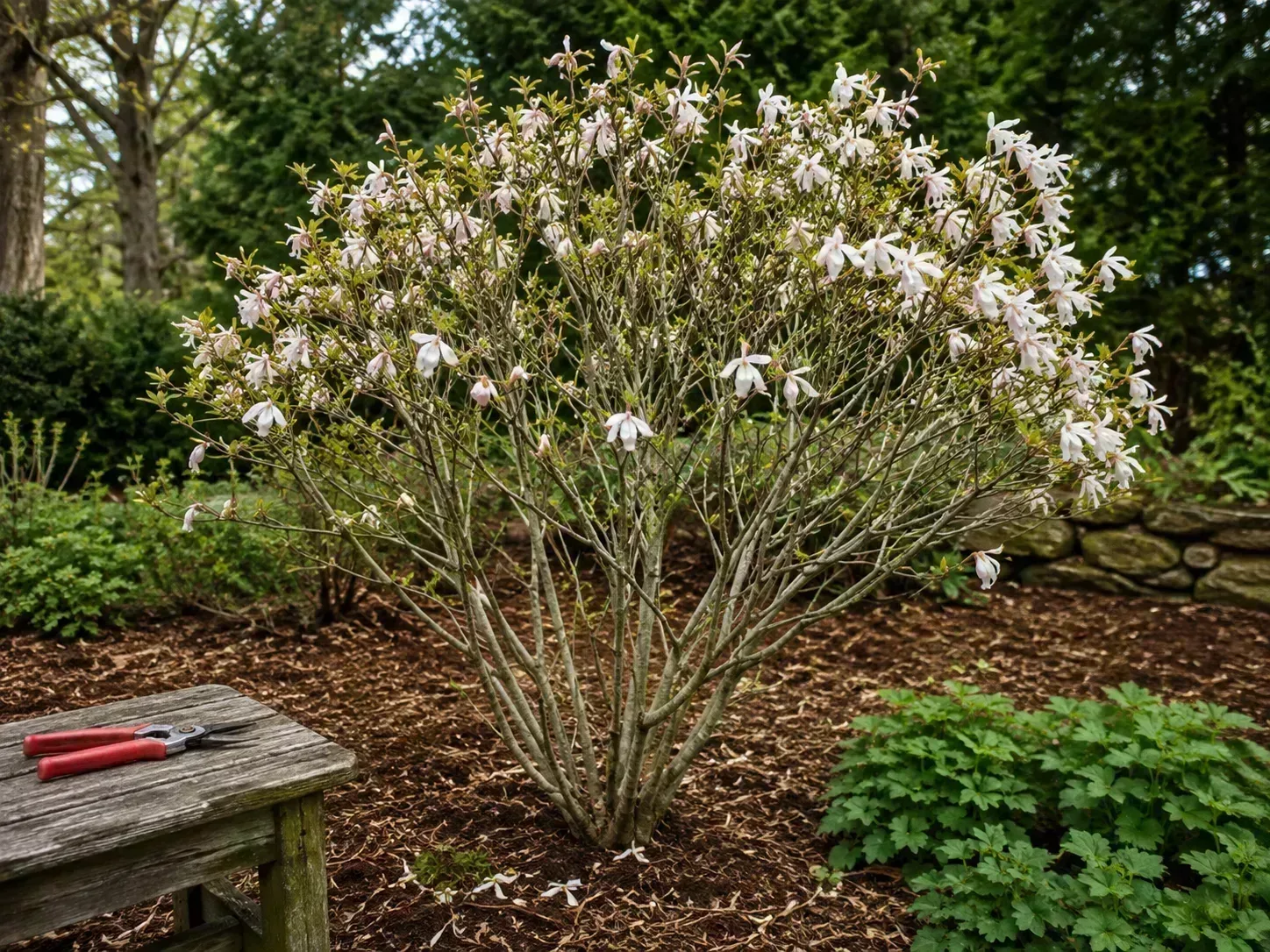
Magnolias generally need less pruning than gardeners expect. Remove dead, damaged, diseased, or crossing wood, and shape young trees only when there is a clear structural reason. If the plant is the wrong size for the site, repeated hard pruning is a poor substitute for choosing a better cultivar.
For most spring-flowering deciduous magnolias, light shaping immediately after flowering is a practical household rule because it gives the plant time to heal and reduces the chance of removing next year’s buds. Larger structural reductions should be staged over several years. The RHS recommends more specific timing by growth habit, including mid-summer to early autumn for many deciduous pruning jobs and spring for free-standing evergreen trees, so check the cultivar and local advice before making a major cut.
Do not top a magnolia to control height. Topping creates weak regrowth, ruins the natural form, and can expose large wounds to decay. Instead, remove a whole branch back to a suitable fork or shorten a young shoot to a well-placed side branch. Clean, correctly placed cuts and a light hand are more valuable than a dramatic one-day renovation.
Common magnolia problems and what they mean
No flowers. A young magnolia may need several years to settle before flowering. If an established tree has leaves but no buds, check light, summer moisture, frost exposure, and pruning history in that order. Heavy pruning can remove the flower wood; shade or drought can reduce bud formation; and an early bloom can be lost to a freeze even when the tree itself looks healthy.
Black or brown flowers and buds. Frost is the first suspect when damage appears suddenly after a warm spell. Do not cut the entire tree or fertilize in response. Wait for new growth, then remove only dead material once the extent of injury is clear.
Yellow mature leaves. Young magnolia leaves can emerge pale, but persistent yellowing on mature foliage can point to drought, poor roots, or high soil pH. Check moisture at depth, inspect drainage, and test soil before adding acidifying products. A magnolia planted in alkaline soil may need a more suitable species or cultivar rather than repeated amendments.
Brown or curling leaves. Drought, hot reflected surfaces, wind, and root damage can all reduce water delivery to foliage. Water deeply only when the root zone is actually dry, and consider whether roots were damaged by construction, lawn competition, or planting too deeply. A wet root ball with wilted leaves is not a signal to add more water.
Seasonal leaf drop on an evergreen. Southern and sweetbay magnolias still shed older leaves. A noticeable flush of leaf fall can be normal if new growth looks healthy, but widespread drop with bare twigs, sour soil, or a soft trunk base deserves a root and drainage inspection. The RHS lists drought, alkalinity, frost, and fungal root problems among the conditions that can affect magnolia appearance.
Fungal decline or dieback. Persistent waterlogging increases the risk of root and crown problems, while large branch fungi can indicate advanced decay. Remove obvious dead wood when safe, correct the site problem if possible, and call a qualified arborist for a large tree with significant dieback, trunk cavities, or hanging branches. Do not assume a pesticide will repair compromised roots or decayed structural wood.
Conclusion
The best magnolia is the one whose mature size, bloom timing, soil tolerance, and winter behavior match your site. Choose star, lily, or a compact Loebner cultivar for a smaller garden; use saucer or Kobus magnolia when you have room for a spring specimen; consider sweetbay for moist soil; and reserve southern, cucumber, bigleaf, and umbrella magnolias for landscapes that can carry their eventual scale.
Plant at the correct depth, protect the shallow root zone, keep moisture steady without creating a swamp, and prune lightly. Once the selection is right, magnolias are not demanding plants—they simply make the consequences of a poor site visible. A few minutes spent checking mature spread, frost exposure, and drainage before planting can turn a beautiful nursery purchase into a long-lived garden anchor.