How to Grow and Care for Voodoo Lily
Grow voodoo lily successfully with the right planting depth, shade, moisture, winter storage, bloom expectations, and troubleshooting for yellow leaves or rot.
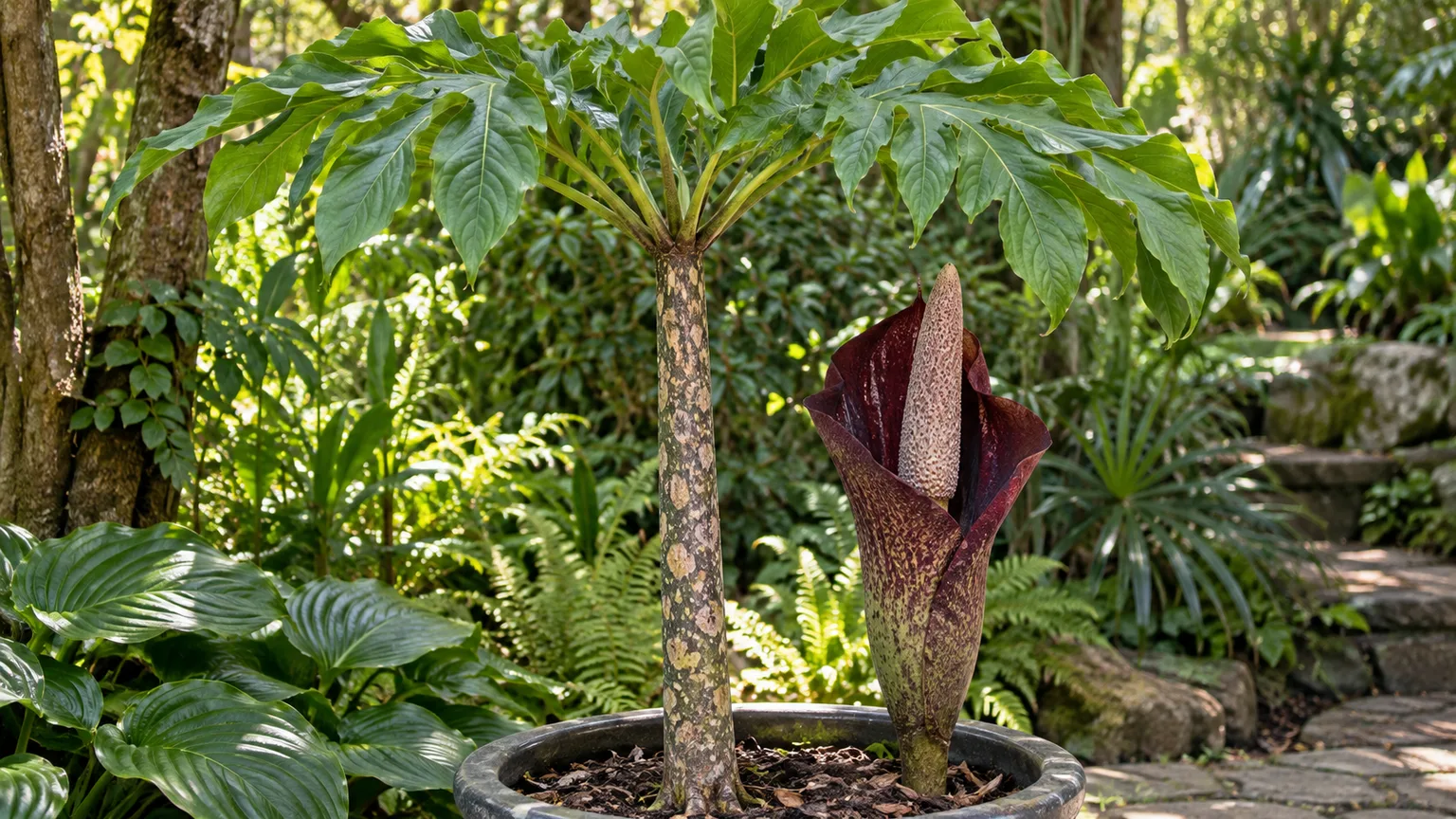
Voodoo lily (Amorphophallus konjac) is a cormous perennial for gardeners who enjoy plants with a genuine sense of drama. It may send up a dark, mottled flower stalk before any leaf appears, then follow with one enormous umbrella-like leaf on a spotted petiole. The bloom lasts only a short time and smells like rotting meat because its pollinators are carrion-seeking flies, but the leaf and the plant’s annual rhythm are just as interesting as the flower.
The most useful way to think about voodoo lily care is as a seasonal cycle rather than a list of permanent houseplant rules. Give the corm warmth, moisture, food, and filtered light while it is growing; then let the plant finish, dry down, and rest when the leaf naturally fades. NC State Extension’s plant profile describes the species as a moist-soil, dappled-shade plant with frost-sensitive foliage and an underground corm that can be propagated by offsets or seed.
Know what a voodoo lily actually is
The plant is not a true lily. It belongs to the arum family, Araceae, and the underground storage organ is more accurately called a corm, although sellers and gardeners may call it a bulb or tuber. That distinction matters because the corm’s roots grow from the upper portion rather than from a basal plate like many familiar bulbs. Planting it upside down, too shallow, or in a tight pot can leave the future leaf poorly supported.
The flower is an inflorescence made of a fleshy central spadix wrapped by a maroon to purple-brown spathe. Once the corm is mature enough, that structure may appear before the leaf, often in late winter or spring. A month or more can pass before the leaf emerges, so a spent bloom followed by an apparently empty pot is not automatically a problem. Missouri Botanical Garden’s plant profile notes that mature corms can produce a single divided leaf several feet tall and wide, while the frost-sensitive bloom and leaf are much less tolerant of cold than the buried corm.
The common name “corpse flower” also causes confusion. Voodoo lily has a foul-smelling flower, but the famous giant corpse flower is a different species, Amorphophallus titanum. Treat the names as clues to the genus, not as interchangeable plant identities.
Choose between ground planting and a container
Grow voodoo lily in the ground if your summers are warm, your soil drains reliably, and you can give the plant a sheltered spot with enough room for a leaf that may spread several feet. Ground planting buffers temperature and gives a large corm space to expand, but it makes winter decisions less flexible. A plant can survive a region’s average winter and still lose its above-ground growth to an unexpected freeze.
A container is often the better choice outside warm, frost-light climates. You can move it away from a hard freeze, relocate a blooming plant downwind, and inspect the corm during dormancy. The trade-off is that a pot dries and chills faster than garden soil, becomes top-heavy as the leaf expands, and needs enough width and depth for the roots that spread from the top of the corm.
Choose a sturdy container with open drainage holes. For a young corm, a pot at least twice the corm’s diameter gives the roots room to travel without surrounding a small root system with an oversized volume of wet mix. As the corm enlarges, increase the pot size gradually rather than jumping straight to a huge decorative container. A heavy ceramic or concrete pot is safer than a light nursery pot once the leaf is fully open.
Give the plant dappled light and steady warmth
Bright shade or filtered light is the safest starting point. Gentle morning sun may work, but hot afternoon rays can scorch the newly expanding leaf and dry the container before the roots can keep up. A woodland edge, a bright patio with overhead shade, or the protected side of a building is usually more useful than an exposed sunny bed.
Deep shade is not automatically ideal. The plant may survive with very little direct light, yet weak light can reduce the vigor needed to enlarge the corm for next year’s bloom. Aim for a compromise: enough ambient brightness to grow a strong leaf, with protection from intense midday and afternoon sun. Avoid a dark indoor corner where the plant must stretch toward a window.
Warmth is equally important during active growth. NC State Extension lists about 60°F as a minimum growing-season temperature and 68–77°F as an optimum range. Wait until the soil has warmed and frost danger has passed before moving a started plant outside. If you are acclimating a container from indoors, begin in bright shade and increase exposure gradually over a week or more.
Plant the corm with its growing point up
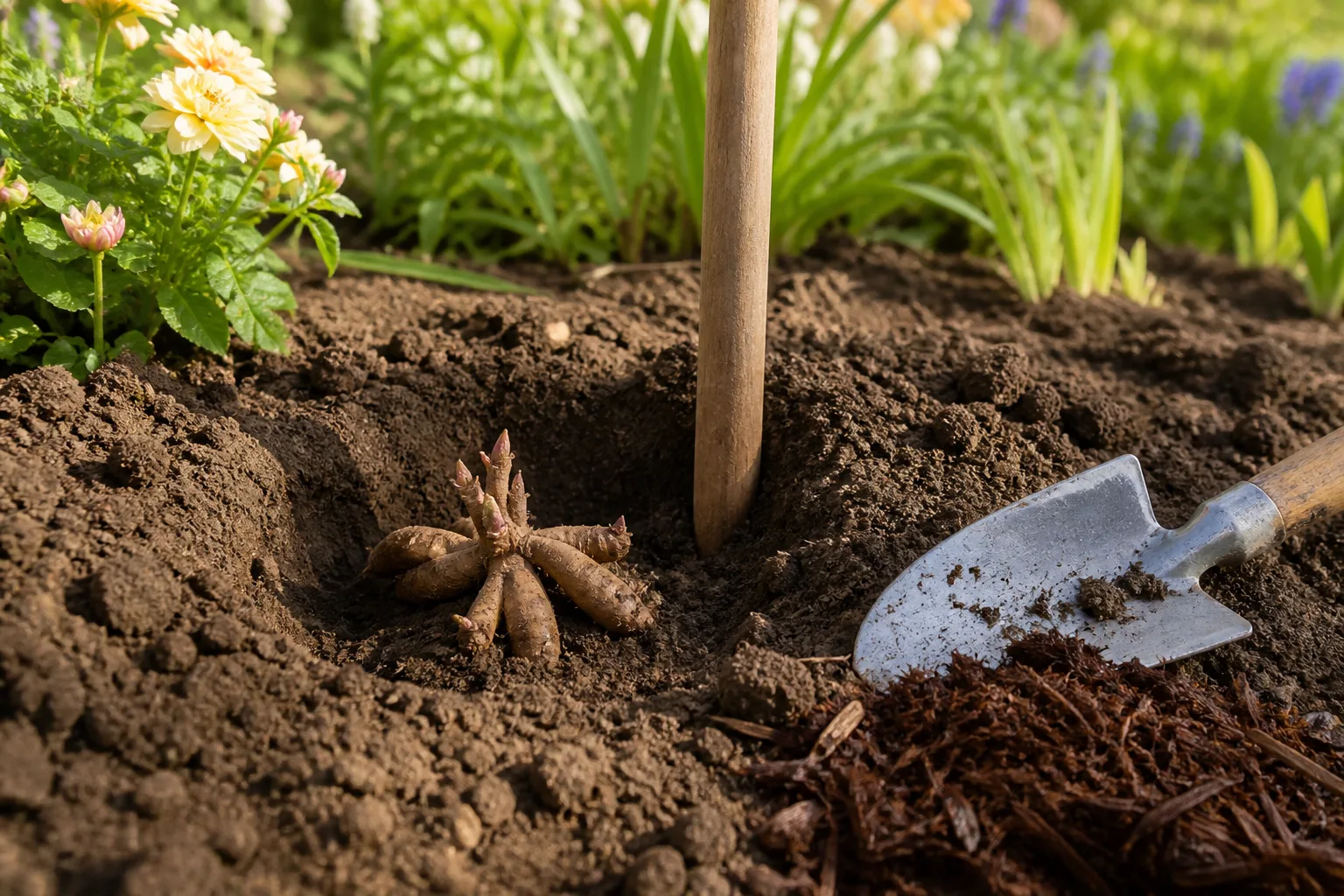
Plant in spring when the weather is reliably warm, or pot the corm indoors a little earlier if you can provide warmth and good light. Look for the central bud or emerging pinkish growth point. Set that point upward, cover the corm with soil, and water only after planting if growth is beginning or the mix is very dry.
Use the corm’s width to set depth
For many garden-sized corms, roughly 5–8 inches of soil over the top is a practical starting range, but corm width is the better rule. Wisconsin Horticulture’s konjac guide recommends placing the corm about as deep as it is wide because the supporting roots emerge from the top and spread horizontally. A very small corm does not need to be buried like a mature specimen, while a wide, top-heavy corm needs enough cover to anchor the petiole.
Do not pack wet, heavy soil tightly around the corm. Backfill gently, keep the growing point from being buried under a dense clod, and leave room for water to drain away. In a container, confirm that the corm is not pressed against the base or sidewall; roots need space to spread, and a crowded corm is harder to inspect when problems start.
Build rich soil that still drains
Voodoo lily likes fertile, humus-rich soil that stays moist while the plant is actively growing. It does not want an airless pot of mud. Mix compost or leaf mold into poor garden soil, but improve the whole planting area rather than filling a small hole with a radically different pocket that stays wet after the surrounding ground has drained.
For containers, use a quality potting mix with enough coarse material to hold structure. The precise recipe matters less than the result: the mix should absorb a thorough watering, drain from the holes, and leave the corm firm rather than soggy. Do not use heavy garden soil in a pot, and do not rely on a layer of gravel at the bottom to fix poor drainage. The drainage holes and the physical structure of the mix do the important work.
Keep mulch a little away from the petiole or emerging bloom. A thin organic mulch layer can protect an outdoor corm from temperature swings, but a constantly wet collar around the stem increases the risk of rot and makes it harder to notice a softening corm.
Water and feed through active growth
Water thoroughly when the upper part of the soil has begun to dry, then let excess water drain completely. The right interval will change with pot size, temperature, shade, wind, and leaf size, so a calendar schedule is less reliable than checking the mix. During the fastest growth, the plant may use water quickly; in a cool, shaded container, the same amount of water may linger for days.
Once the leaf is open, keep the root zone consistently moist but not stagnant. If a plant droops and the soil is dry, water slowly until the root ball is wet. If it droops while the mix is cold and wet, do not add more water; inspect the drainage and corm instead. That one decision prevents many cases of rot.
Voodoo lily uses its single leaf to build the corm that supports the next cycle, so feeding during active growth can be useful in poor soil or a container. Apply a balanced or slightly higher-phosphorus fertilizer at the product’s label rate, beginning after growth is established. Wisconsin Horticulture describes the plant as a heavy feeder during the growing season, while Gardening Know How’s care guide recommends diluted fertilizer after sprouts appear. Stop feeding as the leaf starts to senesce. Fertilizer cannot compensate for insufficient light, damaged roots, or a corm that is too small to flower.
Follow the plant’s one-leaf seasonal cycle
The plant usually produces one large compound leaf for a single growing season. That leaf may emerge after the flower, remain attractive for months, and then yellow, collapse, and disappear in late summer or fall. This is not the same as a foliage houseplant producing a bad leaf every few weeks; it is the expected end of the annual growth phase.
During the leaf’s active period, protect it from hot sun, drying wind, and sudden cold. The leaf is the plant’s solar panel, so cutting it early reduces the energy available for corm growth. Keep watering and feeding steady while it is green, then taper both as it begins to fade.
Recognize normal late-season yellowing
Yellowing that begins late in the season, progresses through the entire leaf, and occurs as the plant is naturally drying down is usually normal. Yellowing that appears early, affects only one side, follows a period of saturated soil, or is accompanied by a soft base points to a different problem.
Before adding fertilizer to a yellowing plant, check the timing and the corm. A plant finishing its season needs rest, not a last-minute feeding. A plant with wet soil may need drainage correction, not more water. A plant with crispy bleached patches likely needs less harsh light. Those clues are more useful than treating every yellow leaf as a nutrient deficiency.
Overwinter the corm without losing it
The leaf and flower are frost-sensitive even where the corm can survive a colder winter underground. Missouri Botanical Garden lists the corm as much more cold-tolerant than the above-ground growth, but local soil temperature, drainage, mulch, and exposure still matter. In a mild, reliably frost-free area, an outdoor corm may remain in place. In a colder area or an exposed container, lifting or moving the plant is safer.
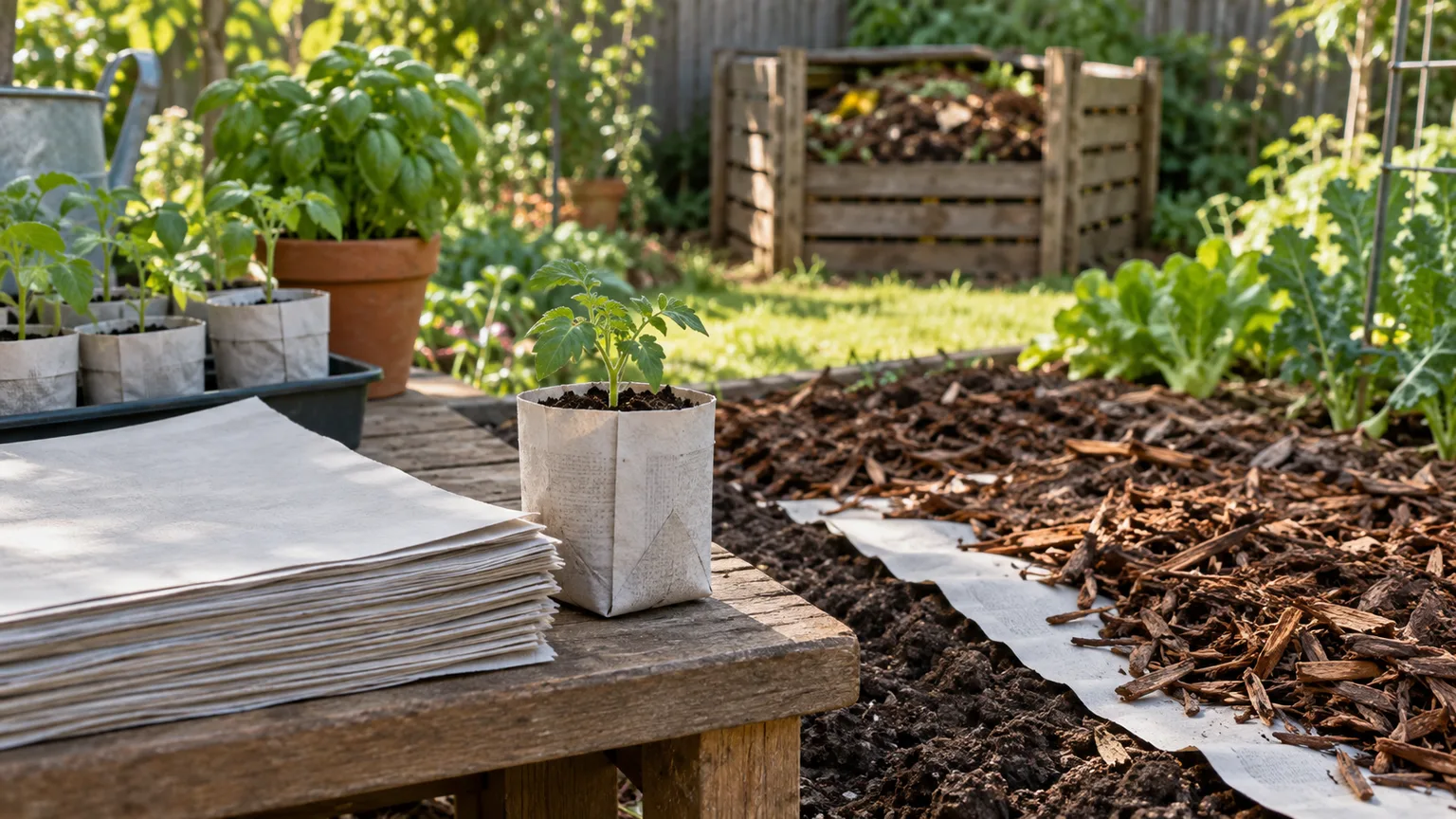
When the leaf is fully brown, stop watering and feeding. Do not cut a green or partly green leaf simply because it looks untidy. Once the stalk has finished, keep a dormant corm dry and protected from freezing. Container plants can be moved into a cool, dry garage or sheltered storage area; the storage space must not freeze, and the pot should not be left where rain can keep the dormant mix wet.
For an in-ground plant, apply a breathable layer of mulch only where the corm will remain outdoors and the soil drains well. In wet winter ground, mulch does not solve the basic problem. Dig and store the corm after the foliage dies if the site stays waterlogged or the climate regularly freezes deeply. Brush off loose soil, handle the corm gently, and inspect it before replanting in spring.
Understand the bloom, smell, and pollination
A voodoo lily does not bloom on the same schedule as a typical bedding flower. A corm must reach a substantial size and store enough energy, so a small purchase may spend several seasons producing leaves before it ever flowers. Three to five years is a realistic patience window for many plants grown from small offsets or seed, though size and conditions matter more than a promise tied to a particular calendar year.
When a mature corm flowers, the spathe opens before the leaf and releases a strong carrion-like odor. The smell is a pollination strategy, not a sign of disease. Carrion flies and related insects are drawn to the scent and the flower’s warmth. The odor usually fades quickly, but the opening day can be intense, so place a container outdoors or on the downwind side of the garden rather than beside a door, seating area, or open window.
Home-grown plants do not reliably set seed, and one flower is not guaranteed to produce berries. If pollination does occur, colorful fruit may follow, but do not handle or share it casually. For most gardeners, the useful bloom goal is observation, not food production.
Prune and handle voodoo lily safely
After the flower fades, remove the spent bloom if you want to keep the plant tidy, but do not cut the emerging leaf. If the flower opens in an enclosed room and the odor is unacceptable, moving the pot outside is usually better than trying to mask the smell. Let the leaf complete its work and prune it only after it has fully browned.
Wear gloves when planting, dividing, or inspecting the corm, and wash tools and hands afterward. The corm and other tissues contain calcium oxalate crystals; NC State Extension warns that raw material can cause a sharp, needle-like irritation in the mouth and throat. Although A. konjac is cultivated as a food crop after specialized processing, that is not a reason to taste a garden plant. Treat the raw plant as unsafe for people and pets, and contact a poison center or veterinarian promptly if ingestion occurs.
Propagate from offsets during dormancy
Offsets, also called cormels, are the most practical way to multiply a healthy voodoo lily. Wait until the leaf has finished and the plant is dormant. Lift the corm carefully, identify firm offsets with roots or clear growth points, and separate them with a clean, sharp tool. Discard any piece that is soft, leaking, foul-smelling, or deeply damaged.
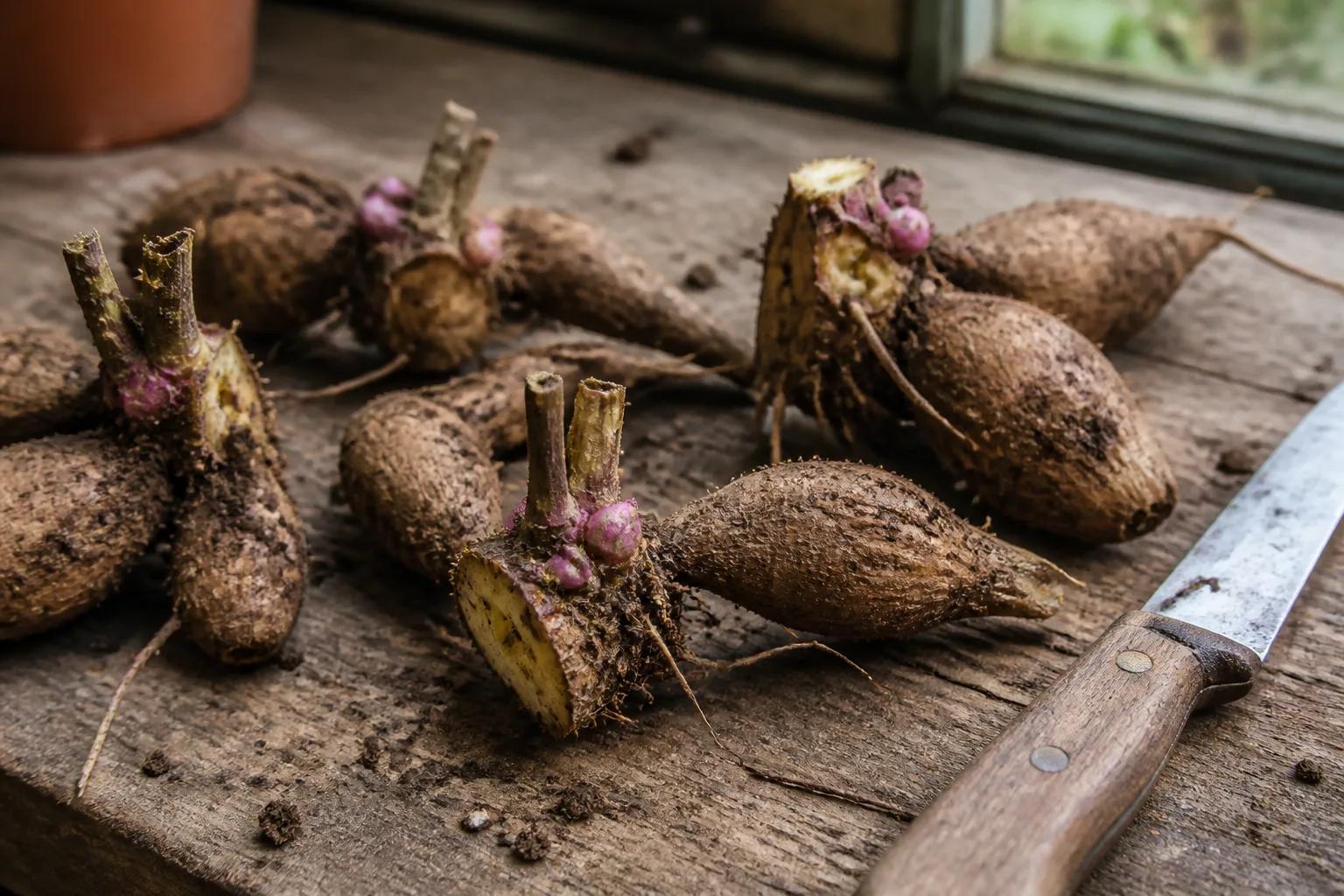
Let a fresh cut dry briefly in a clean, shaded place if it is wet, then pot each offset in a draining mix at a depth suited to its size. Keep the pot warm and only lightly moist until growth begins; a dormant offset sitting in wet soil is far more vulnerable to rot than one waiting in a dry or barely moist medium. Once a shoot appears, increase watering gradually and begin diluted feeding after the new growth is established.
Grow from seed only if you have patience
Seed is possible but slower and less predictable. If your plant produces viable berries, wear gloves while handling them, clean the seed, and sow it fresh rather than storing it dry for a long time. Gardening Know How’s propagation guide notes that voodoo lily seed does not store well and that young plants need warmth, moderate humidity, and protection from harsh light.
Use a clean seed-starting mix, cover the seed lightly, and keep it warm and evenly moist rather than waterlogged. Germination may take weeks or months, and a seedling needs multiple growing seasons to become a flowering-sized plant. Seed is worth the effort when you want genetic variation or enjoy the process; an offset is the better choice when you want a quicker, more predictable clone of the parent.
Troubleshoot yellow leaves, scorch, and rot
Start diagnosis with timing, soil moisture, and the corm rather than the leaf color alone. A voodoo lily’s leaf is naturally temporary, and the same yellow color can mean normal dormancy at the end of summer or serious root trouble during active growth.
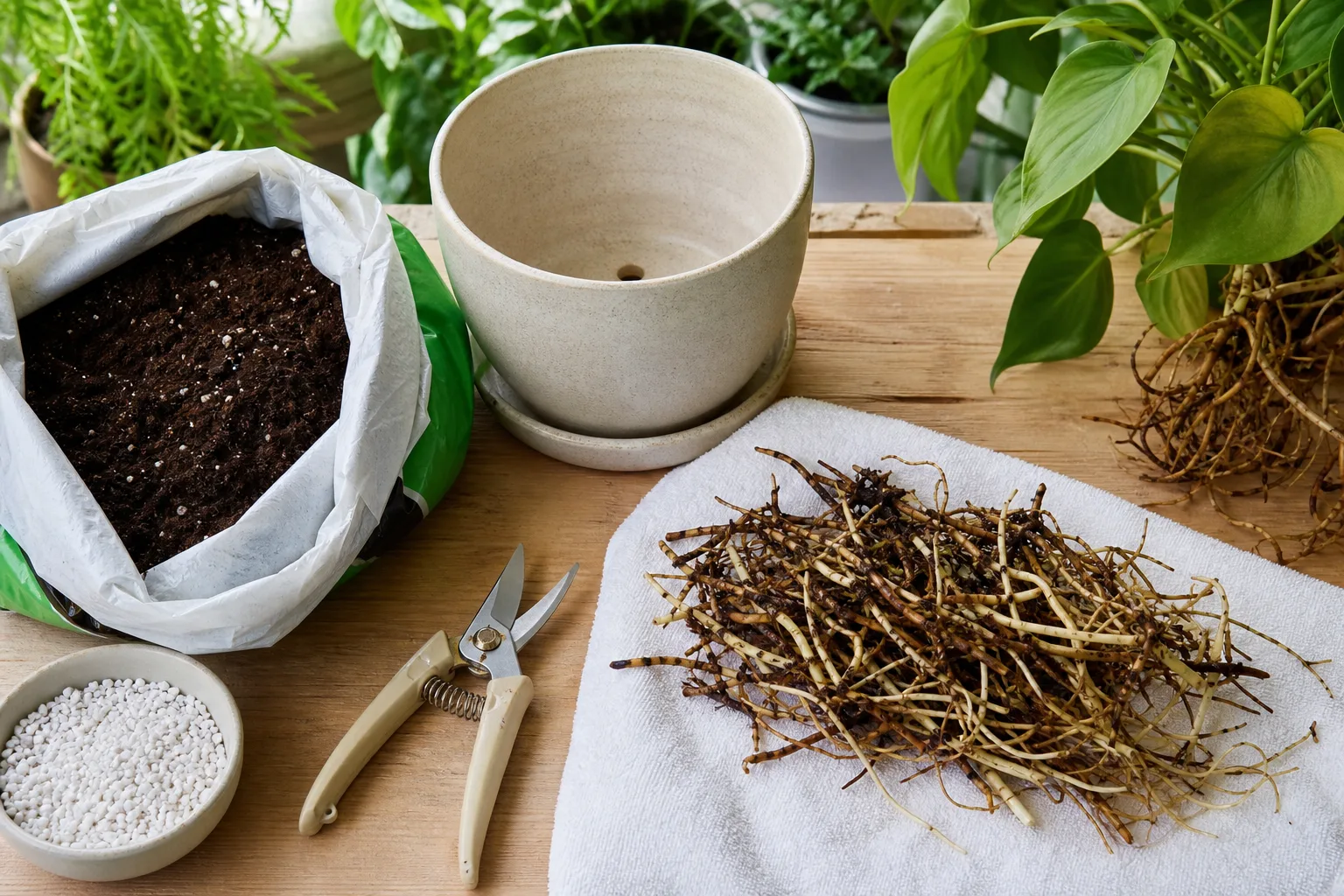
Yellowing at the end of the growing season: If the whole leaf is aging after months of growth and the corm is firm, reduce water and let it finish. Do not force it green with fertilizer.
Yellowing with wet soil or a soft base: Stop watering and inspect the corm. Rotted tissue may be soft, discolored, or foul-smelling. Remove compromised material with a sterile tool, keep healthy tissue dry enough to heal, and repot into clean, draining mix. If rot has penetrated most of the corm, saving the plant may not be realistic.
Crispy, bleached, or brown patches: Move the plant out of harsh afternoon sun and protect it from hot reflected light. Sunburned tissue will not turn green again, so judge the correction by the health of new growth.
Leaf collapse after a cold night: Frost or a sudden temperature change can damage the leaf even when the buried corm survives. Do not cut immediately while tissue is still frozen or wet; wait for thawing, then let the corm complete dormancy if it remains firm.
No flower: Check corm size and the previous season’s growing conditions. A small corm may simply be immature, and a plant that flowered last year may skip a bloom while it rebuilds. Poor light, early leaf removal, drought, or a short warm season can all reduce the energy available for flowering.
Check for pests and damaged corms
The flower’s odor does not make the plant pest-proof. Inspect the leaf undersides for sap-feeding insects and look for slug damage in damp outdoor beds. In practice, the more consequential problem is often below ground: a wounded, waterlogged, or poorly drained corm can decline before the leaf shows a clear symptom.
Buy firm, clean planting material, avoid nicking the corm while repotting, and do not reuse potting mix from a plant that rotted. Good drainage, clean tools, sensible watering, and a full dormant rest solve more problems than routine spraying. If the plant repeatedly collapses from the base, remove it from neighboring containers and investigate the corm rather than treating only the foliage.
Conclusion
Voodoo lily care becomes much simpler once you respect the plant’s rhythm. Give the corm warmth, filtered light, rich but open soil, and reliable moisture while its single leaf is building the next season’s storage; then let the leaf brown naturally, stop feeding, and keep the dormant corm dry and frost-protected.
Choose a container when winter, smell, or drainage is difficult to manage in the ground. Expect several seasons of leaves before a small corm flowers, place the short-lived bloom where its carrion scent will not surprise the household, and use firm offsets for the easiest propagation. With those decisions made in the right order, this unusual arum is less a fussy novelty than a rewarding annual performance from one remarkable underground corm.