5 Things Making Your Front Yard Look Empty
Learn why a front yard looks empty even with green grass, then use practical fixes for lawn scale, plant variety, depth, walkways, and the entrance.
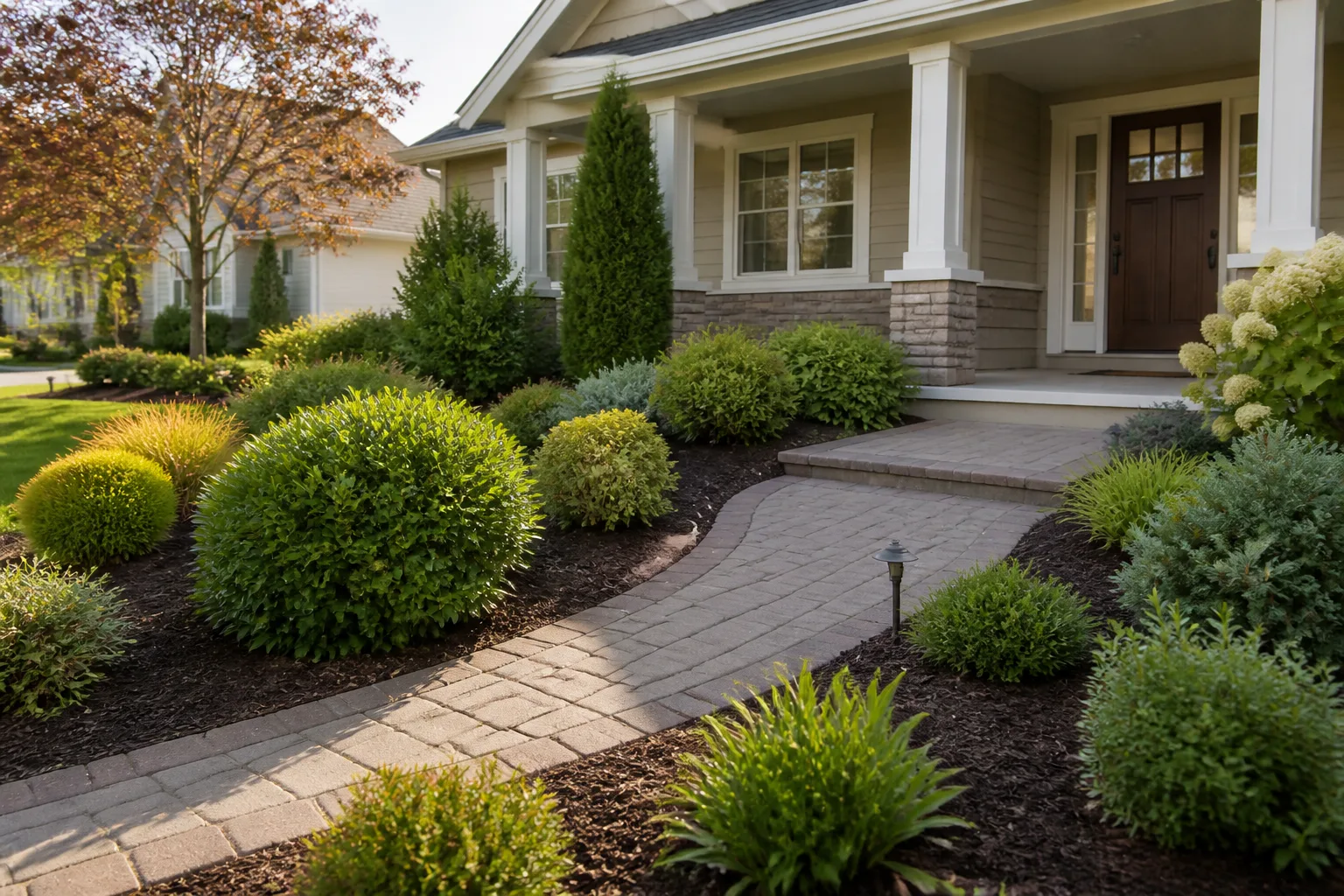
A front yard can be green, tidy, and perfectly mowed yet still look unfinished. The problem is usually not a shortage of plants. It is a mismatch between the size of the lawn, the mass of the planting, the route to the door, and the place where the eye expects the home to begin.
The useful question is not “What can I add?” It is “Where does the visual energy stop?” Stand at the street, then at the sidewalk and front door. If your eye slides across one uninterrupted surface, loses the path, or cannot find the entrance, you have found the design problem. The five fixes below are arranged around that diagnosis so you can improve the most important weak spot first.
Diagnose the emptiness before adding anything
Landscape design starts with how a site will be used as well as how it looks. Penn State Extension describes residential landscape planning as a process that includes site assessment, function, aesthetics, hardscape, softscape, plant selection, sustainability, cost, and regulatory requirements—not simply a shopping list of attractive plants (Penn State Extension’s design basics). That is a helpful guardrail for a front yard, where parking, deliveries, children, snow, stormwater, and daily entry all compete with curb appeal.
Use a 10-minute street-view audit
Take four photos from the places people actually see the yard: across the street, from the sidewalk, from the front window, and from the front door looking outward. Mark the largest blank area, the first object that catches your eye, and the feature that should catch your eye but does not. A healthy lawn that occupies nearly the entire frame is a scale problem; a full bed that blends into the house is a contrast or layering problem.
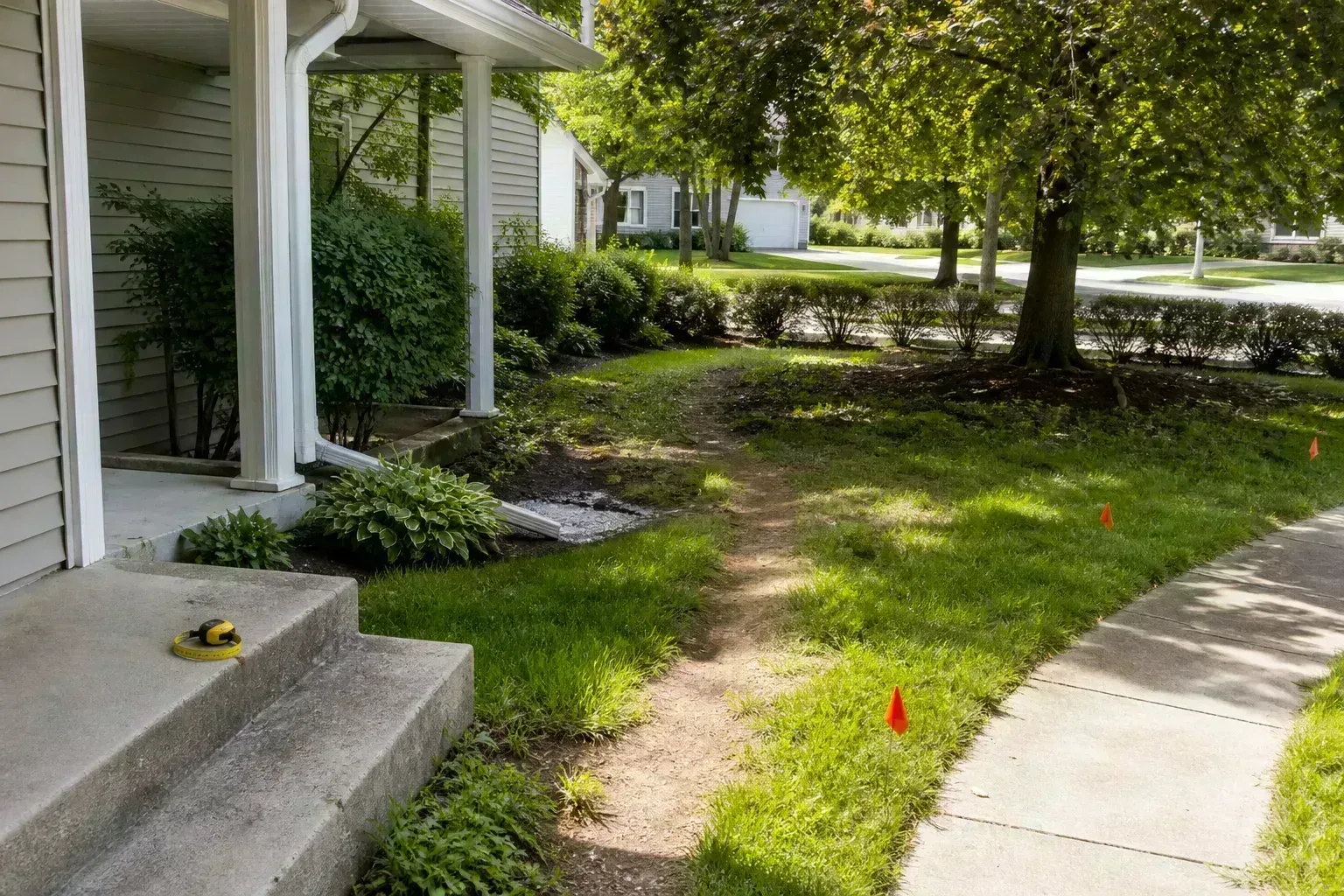
Next, trace movement with a garden hose or string before digging. It should show the route from sidewalk or driveway to the door, the swing of the gate, the place a delivery person will stand, and any turning space needed for carts or mobility devices. Also note sun at different times, roof runoff, compacted soil, salt or snow storage, and views that must remain open. If you will dig, contact the appropriate utility-marking service first; a beautiful bed is not worth a damaged line.
The RHS front-garden design guide recommends looking for unused corners, climbing opportunities on boundaries, and the amount of parking actually needed before deciding how much of a front garden to pave. That same habit works for a lawn-only yard: solve the site’s real constraints before you choose the decorative layer.
1. An unbroken lawn carries too much visual weight
A broad rectangle of grass is not automatically bad. It may be the right surface for children, dogs, recreation, stormwater infiltration, or a simple architectural style. It looks empty when its size is unrelated to the house and there is no planted mass, tree canopy, edge, or destination to interrupt the long view.
Break the lawn with one decisive planting bed
Do not begin by scattering five small shrubs across the grass. That usually creates lawn with isolated objects rather than a designed composition. Instead, choose one strong move: a broad bed that sweeps toward the entry, a tree-and-underplanting island placed away from utilities and sightlines, or a side bed that connects the sidewalk to the porch. Its outline should look intentional from the street and still leave enough usable lawn for the activities you actually do.
The bed does not need to be elaborate. A simple curved edge can make the house feel connected to the street, while a straight, architectural edge may suit a modern facade. The key is mass. Group three or five compatible plants rather than buying one of everything, and repeat a plant or material in a second location so the new bed relates to the rest of the yard.
If you want to shrink the lawn, do it in phases. A small, well-maintained patch often looks more deliberate than a half-converted yard full of bare soil and weeds. Savvy Gardening’s front-yard design guidance makes the same practical point: a gardener who removes grass before having plants or a finished plan in place can create a larger weeding problem, not a finished garden (Savvy Gardening on front-garden design). Smothering a planned area with cardboard and a suitable cover can be useful, but only after you know what will occupy the space and how water will move through it.
2. Repetition without contrast makes planting disappear
Five identical round shrubs can be healthy and expensive yet read as one low green stripe. Repetition creates rhythm, but repetition without a change in height, texture, color, or season gives the eye no reason to pause. The same is true of a bed filled with one flower that peaks for two weeks and then becomes a block of foliage.
Mix form, texture, and seasonal interest
Think in roles rather than in a random plant count. Use one or two structural forms—perhaps a small tree, upright evergreen, or arching ornamental grass—then add a middle layer of shrubs or sturdy perennials and a lower layer of edging or groundcover. Contrast a fine texture with a broad leaf, a vertical shape with a mound, or a dark evergreen with a pale or silvery foliage plant. The combinations should repeat enough to feel related, not so much that they flatten into camouflage.
Plan interest by season, not just by bloom color. One spring bulb display, a summer perennial, a shrub with fall color or berries, and winter stems or evergreen foliage can make the same bed feel present for more of the year. Fine Gardening’s garden-design course describes mixed borders as combinations of small trees, shrubs, perennials, climbers, bulbs, and annuals, with structural and seasonal layering that can also support biodiversity (Fine Gardening’s garden-design instruction). You do not need every category, but the principle is useful: a front yard should not disappear after its first flush of flowers.
Variety also means variety of performance. If every plant needs the same exact moisture and is vulnerable to the same pest, one bad season can erase the whole display. A coordinated mix of plants suited to the same conditions is more resilient than a monoculture, but it is not permission to cram incompatible plants together. Read the mature width, light requirement, soil preference, and winter hardiness for each plant before you group it.
3. One flat planting line has no depth
Foundation shrubs planted in a single row against the house can leave the middle of the yard visually vacant. The opposite mistake is a dense hedge that hides windows, crowds the walkway, and turns the facade into a wall of foliage. Depth comes from relationships between layers, not from simply adding more plants.
Build foreground, middle ground, and background
Use the house, a tree, fence, or wall as the background. Place the tallest plants where they frame rather than swallow the architecture, then bring medium shrubs or perennial masses forward, and finish with low plants that soften the edge. The layers can overlap slightly from the street view, but each should have room to grow without being forced into constant shearing.
For a narrow bed, a vertical evergreen or small tree at one end may provide enough height; you do not need a full row of tall plants. For a wide lawn, a tree can anchor the composition while a low bed links it to the door. On a slope, small terraces or level changes can create depth, but grading is a structural project: get advice if the work could redirect water toward the house, alter a retaining wall, or change drainage.
Do not plant by nursery height alone. A shrub that is twelve inches tall in a pot may be several feet wide at maturity. Mark mature circles on the ground with flour or a hose before planting. This quick test prevents the common cycle of installing a row of tiny plants, waiting, discovering that the spacing was wrong, and then pruning or moving them every year.
Texture is especially valuable when flowers are brief. Ornamental grasses, bark, evergreen leaves, seedheads, stones, and clipped forms can supply the structure that blooms temporarily provide. The goal is not to make every inch busy; it is to give the eye a foreground, a middle distance, and a backdrop to read.
4. The walkway is only a route, not a destination
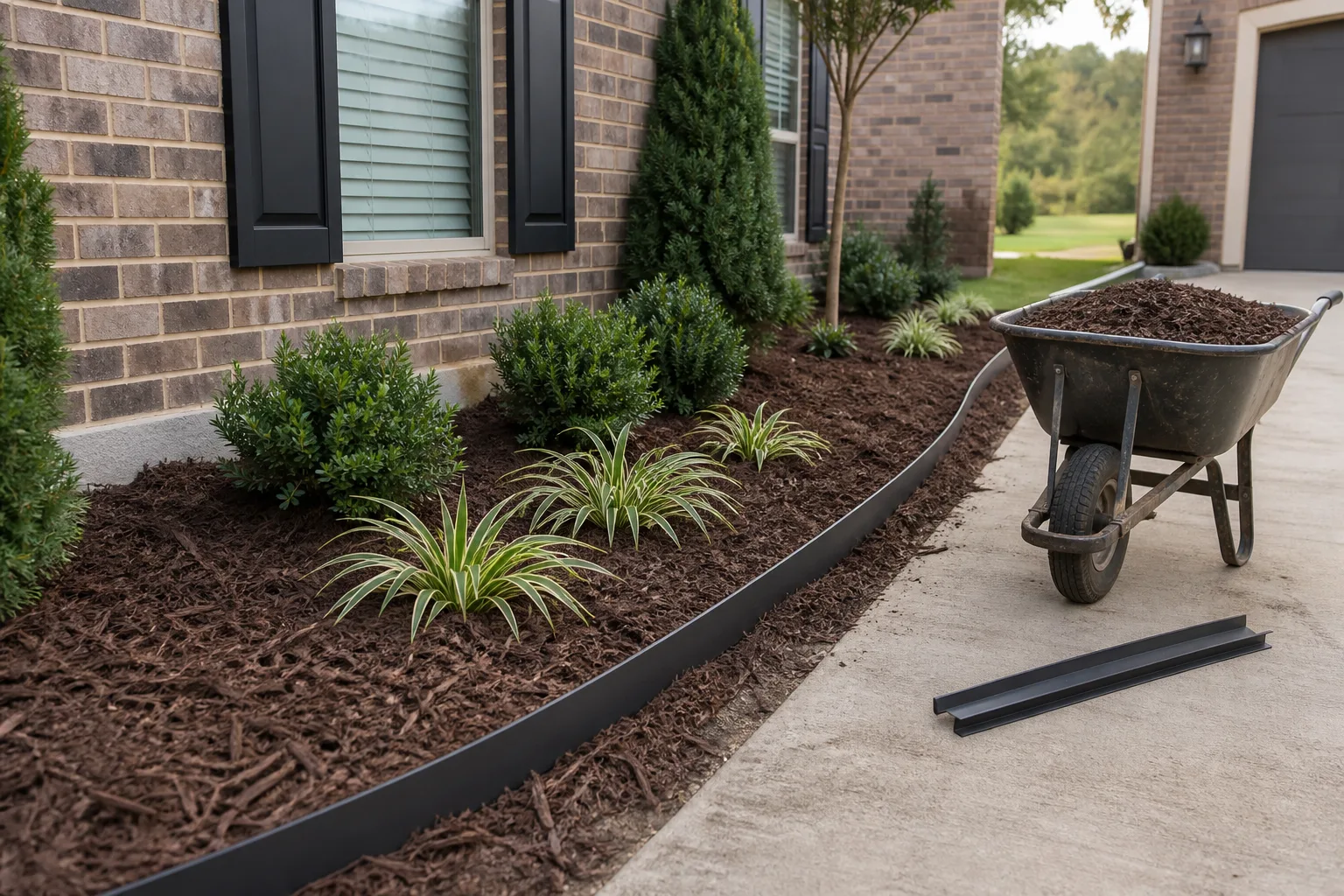
A narrow, dead-straight path cut through an expanse of lawn can make the yard feel like leftover space. It may technically lead to the door, but it does not tell visitors where to slow down, which way the entrance is, or how the path relates to the planting.
Make the path legible, proportional, and safe
First, make the route obvious. A change in material, a defined edge, a planting bed, or low lighting can separate the path from the lawn. A gentle curve can create anticipation when there is enough room to curve around a tree or bed, but do not add a winding path just for decoration. A forced curve makes a small yard harder to navigate and can push people onto the grass.
Measure the path for real use. It should accommodate the people who will walk there side by side, plus door swings, steps, bins, snow-clearing equipment, and any mobility needs. The often-repeated four-to-six-foot range can be a useful starting point for a main pedestrian path, but it is not a universal code requirement; local accessibility rules and the dimensions of the property take priority. A path that is technically wide enough but pinches at a gate or landing will still feel awkward.
Choose the surface for the site, not just the photograph. Pavers, brick, concrete, compacted gravel, and stepping stones have different drainage, snow, weed, and maintenance demands. Permeable surfaces can reduce runoff, but only when the base, slope, soil, and local conditions are designed correctly. The RHS notes that front gardens can combine parking with greenery by keeping paving to the minimum needed and using surfaces that allow rain to penetrate (RHS inspiration for front gardens). Do not make a path permeable in name only by installing it over an impermeable compacted base.
Lighting should reveal edges and changes in level rather than glare into windows or shine into the street. Keep fixtures low and consistent, and avoid packing a long path with identical bright dots. A clear daytime route, a visible front step, and a planting mass at the end often do more to make an entrance inviting than decorative lighting alone.
5. The entrance has no visual target
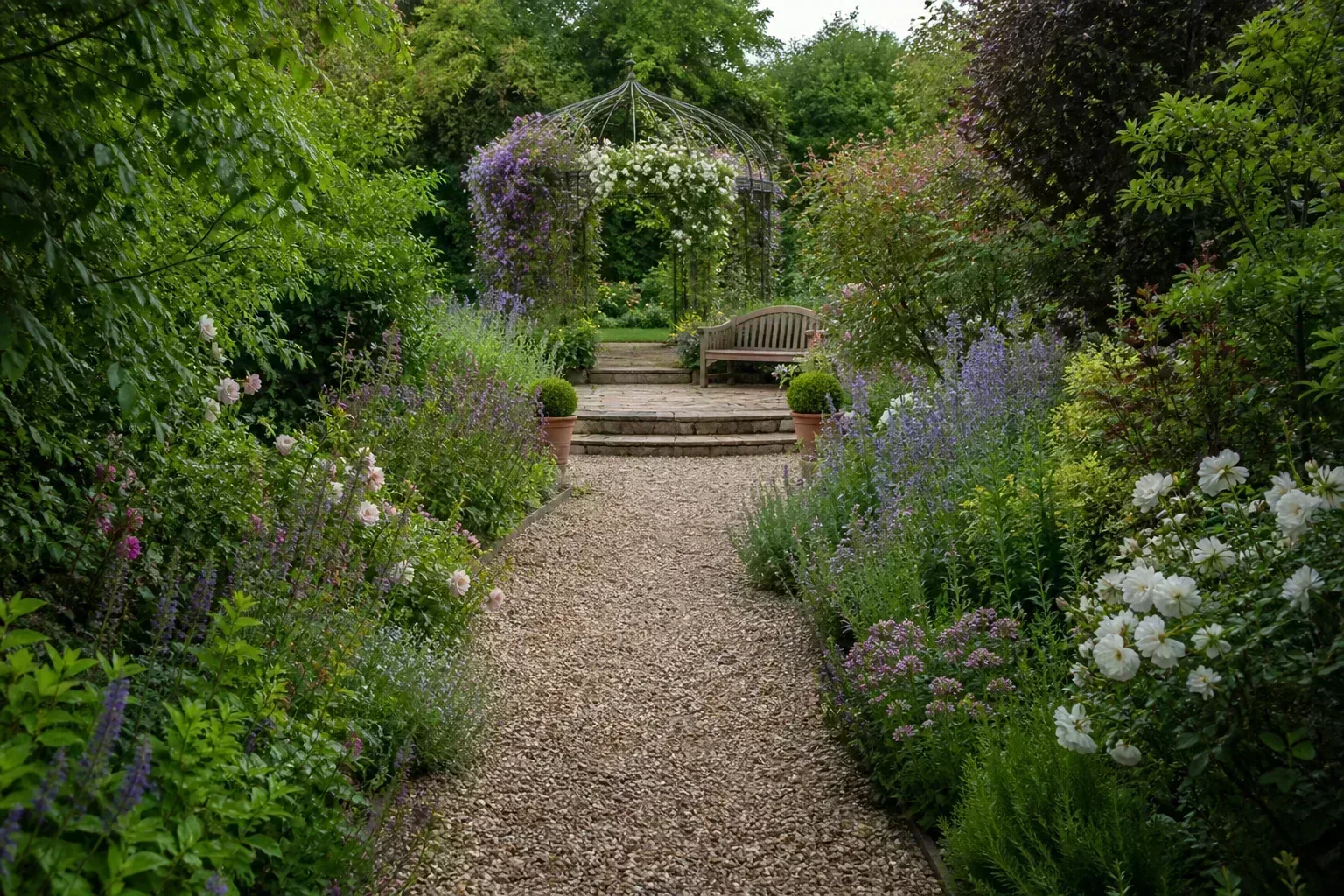
People should be able to identify the front door quickly. When the porch is hidden behind shrubs, the path ends in a blank wall, or the door has no change in height, color, light, or planting around it, the yard can feel empty even if the borders are full.
Frame the door without blocking it
Create a visual target at the last part of the journey. Two matching containers can signal symmetry at the steps, while an asymmetric tree, bench, trellis, or clipped shrub can suit a more informal house. A pergola or arbor can add height when the architecture and local rules support it, but it should frame the entrance instead of becoming a separate structure that competes with the roofline.
Keep the scale honest. A pair of tiny pots disappears beside a wide porch; oversized containers can crowd steps and become a hazard. Place plants where mature leaves will not cover house numbers, lights, handrails, door hardware, or the view from the driveway. Use one strong material or color at the door and repeat it in a bed edge, path, or container so the entrance feels connected rather than pasted on.
Seasonal containers are useful when the in-ground planting cannot change quickly, but they are not maintenance-free. They dry faster than beds, can freeze more severely, and need a plan for watering and winter storage. If a front entry is shaded, choose a design that relies on foliage, form, bark, or a well-placed light rather than forcing sun-loving flowers into a failing display.
Common fixes that create a bigger problem
Choose plants after reading the site
Buying whatever is blooming at the garden center is a fast way to create a mismatched bed. Start with sun hours, soil drainage, mature size, winter exposure, irrigation reach, and the amount of care you will actually provide. A plant database or local extension office can help you build a regional list, but a “native” label does not override a plant’s need for a particular moisture, light, or soil condition.
Use local plants when they fit the site and design goal, especially where wildlife value and drought resilience matter. Yet avoid treating native planting as a purity test. A well-designed yard may include regional natives, noninvasive ornamentals, and hardscape, as long as each element earns its space and the plants are not invasive or badly matched to the property.
Avoid over-paving and over-mulching
When a yard looks empty, it is tempting to fill it with a large patio, a wide gravel field, decorative boulders, or a thick blanket of mulch. Those materials can define space, but too much hard surface replaces visual and ecological function with a different kind of blankness. The RHS reports that front gardens can help absorb rain, support wildlife, and improve the experience of coming home when planting and hard landscape are balanced; its design guidance also emphasizes keeping paving to what is needed.
Mulch should make a bed look finished while protecting soil, not create a dark moat around every plant. Keep it away from trunks and stems, use a depth suited to the material and plants, and do not raise the grade against siding, vents, or the foundation. If a large expanse of mulch is doing all the visual work, the underlying layout probably needs stronger plant mass or a clearer edge.
A low-cost order of operations
You can often make a front yard feel fuller without rebuilding it. Start by pruning only what blocks the door, windows, path, or the intended view; remove dead plants and obvious clutter; and mow or edge the usable lawn cleanly. Then adjust the bed outline with a hose, add or sharpen an edge, and repeat one existing plant or material in a second location.
Next, spend on one backbone feature: a correctly sized tree, a compact evergreen, a group of shrubs, or a bed that links the house to the sidewalk. Add low-cost seasonal infill only after the backbone has the right light, spacing, and water. Finish with the path and entrance, because a beautiful bed still feels disconnected if visitors cannot see where to go.
Scale the plan to a small yard, large yard, or rental
In a small yard, prioritize one focal point, one coherent bed shape, and one clear route. Repeat fewer plants in larger groups, keep sightlines open, and use vertical interest sparingly so the space feels intentional rather than crowded. A slim tree, wall-trained plant, or two substantial containers can add height without consuming the entire ground plane.
In a large yard, resist the urge to sprinkle isolated features everywhere. Create two or three related zones—a lawn, a planted arrival bed, and perhaps a side or sitting area—and connect them with repeated materials or plants. A large space needs mass and rhythm more than it needs a longer shopping list.
For a rental or a yard you cannot excavate, use movable containers, a defined seating or porch zone, a clean path edge, and pruning as the first tools. Choose containers that are heavy enough not to tip, arrange them in a group with varied heights, and do not let them narrow the walkway. The design principle is the same: establish a visual target and a relationship between the house and the street, even when the planting is temporary.
Keep the front yard looking finished between blooms
The yard will look empty again if all the interest depends on one flowering window. Schedule a seasonal walk-around to check sightlines, mulch depth, path edges, drainage, and mature plant crowding. Note what is attractive in late winter, midsummer, and after the first frost; those observations are more useful than a single spring photograph.
Maintain the visual structure before chasing new color. Remove broken branches, lift or thin plants that cover the path, refresh an edge that has disappeared, and replace a plant that repeatedly fails in that spot. Keep some seedheads or leaf litter when they provide habitat and still fit the design, but clear material that blocks steps, traps water against the house, or creates a slip hazard.
Finally, judge the yard from the street after the work has settled. If you can see the door, understand the route, read the planting in layers, and still have the amount of lawn or parking your household needs, the design is doing its job. A front yard feels finished when every major element has a reason to be there—not when every patch of soil is filled.
Conclusion
An empty-looking front yard usually needs stronger relationships, not more decoration. Break up an oversized lawn with one meaningful mass, vary plant form and season, build depth from background to edge, make the walkway readable, and give the entrance a clear visual target.
Start with the ten-minute audit and fix the largest visual gap first. Check mature size, drainage, utilities, access, and maintenance before you plant, then improve the yard in phases. A modest bed with a tree, repeated shrubs, a defined path, and a visible door will feel more welcoming—and remain easier to care for—than a crowded collection of impulse purchases.